
Chhatrapati Shivaji College of Pharmacy, Deori, Gondia, Maharashtra, India
The present study focuses on the formulation and evaluation of a herbal mouthwash prepared from Tulsi (Ocimum sanctum) and Guava (Psidium guajava) leaves, both of which are rich in phytochemicals known for their antimicrobial, anti-inflammatory, antioxidant, and wound- healing properties. Conventional chemical mouthwashes, though effective, often cause undesirable effects such as tooth staining, mucosal irritation, altered taste, and dryness. This has increased the demand for safe, natural, and biocompatible herbal alternatives. In this study, fresh Tulsi and Guava leaves were collected, shade-dried, powdered, and extracted using the Soxhlet method with hydroalcoholic solvent. The obtained extracts were incorporated into a mouthwash formulation and evaluated for organoleptic properties, pH, foaming capacity, viscosity, stability, and antimicrobial activity. Phytochemical screening confirmed the presence of tannins, flavonoids, terpenoids, and essential oils responsible for therapeutic action. The prepared herbal mouthwash showed satisfactory clarity, acceptable pH (5.5–6.5), good stability, and significant antimicrobial activity against oral pathogens such as Streptococcus mutans, indicating its potential efficacy in reducing plaque, gingivitis, and oral infections.The results support that a Tulsi–Guava–based herbal mouthwash can serve as a safe, economical, and effective alternative to commercial chemical rinses. Its natural bioactive constituents not only inhibit microbial growth but also promote oral tissue healing, making it a promising formulation for long-term oral hygiene maintenance.
Mouth Wash
From the dawn of civilization to the twenty-first century, humans have recognized the importance of maintaining oral hygiene and preserving the cleanliness of the mouth and teeth.[1] Mouthwashes are liquid pharmaceutical preparations with Anti-inflammatory, antimicrobial, and analgesic properties, commonly used for their deodorant, refreshing, and antiseptic effects, as well as for controlling and reducing dental plaque. However, while many commercial mouthwashes eliminate up to 99.9% of oral bacteria, they also destroy beneficial microorganisms, potentially disturbing the natural oral microbiome and reducing its ability to prevent dental caries, gingivitis, and halitosis. [2] About 2700 BC, mouthwash was first mentioned in Ayurvedic and Chinese medicine. Mouthwash is a chemotherapy drug that patients can use as an efficient at-home dental hygiene method. [3]
Why is herbal mouthwash more beneficial?
Due to their ability to target oral infections, provide immediate pain relief, and have fewer adverse effects, herbal mouthwashes are highly sought after. Chemical mouthwashes include hydrogen peroxide and chlorhexidine, which instantly whiten, sterilize, and soothe teeth.
However, they tend to cause tooth discolouration and may have unintended side effects, while being reasonably priced. [3]A wide range of mouthwash formulations is available, each containing different active and in active ingredients. In recent years, herbal products particularly extracts of guava and tulsi have shown significant therapeutic advantages over synthetic formulations in various
experimental and clinical studies. As a result, natural mouthwashes are increasingly preferred, offering multiple potential benefits for oral health. [1] Their growing popularity is further supported by the fact that herbal mouthwashes typically avoid alcohol, artificialpreservatives, flavors, and colors, making them safer and more biocompatible alternatives. [4]
Objectives: [5]
Benefits of herbal Mouthwash: [2]
Mouth Ulcer:

Figure.1: Mouth ulcer
Mouth ulcers are painful sores that can appear anywhere inside of your mouth, including the gums, tongue, roof of mouth, inner cheeks, or lips. Most mouth ulcers are common, harmless, and heal on their own within a few weeks. [6]
A mouth ulcer is a lesion that occurs on the mucous membrane of the oral cavity. Theseulcers are painful, round or oval sores that form in the mouth, primarily on the inner surfaces of the cheeks or lips. Mouth ulcers are highly prevalent and occur in association with numerous diseases involving different pathophysiological mechanisms, although in most cases there is no serious underlying cause. Common etiological factors include nutritional deficiencies such as iron and vitamins, particularly B12 and C, inadequate oral hygiene,infections, psychological stress, constipation, mechanical trauma, food allergies, hormonal imbalance, and certain dermatological diseases. [7]
The main types of mouth ulcer are: [8]
Minor ulcers:
This are the most common (8 in 10 cases). They are small, round, or oval and are less than 10 mm across. They look pale yellow but the area around them may look swollen and red. Only one ulcer may develop but up to five may appear at the same time. Each ulcer lasts 7-10 days and then goes without leaving a scar. They are not usually very painful.
Major ulcers:
It occur in about 1 in 10 cases. They tend to be 10 mm or larger across. Usually only one or two appear at a time. Each ulcer lasts from two weeks to several months but will heal leaving a scar. They can be very painful and eating may become difficult.
Herpetiform ulcers:
It occur in about 1 in 10 cases. These are tiny pinhead-sized ulcers, about 1-2 mm across. Multiple ulcers occur at the same time but some may join together and form irregular shapes. Each ulcer lasts one week to two months. Despite the name, they have nothing to do withherpes or the herpes virus. Despite the name, they have nothing to do with herpes or the herpes virus.
Ulcerative Conditions:
Mouth ulcers are very common and are mainly due to trauma such as from ill fitting dentures, fractured teeth, or fillings. However, biopsy or other investigation should be done for patients with an ulcer of over three weeks duration to exclude malignancy or other serious conditions such as chronic infections.
Role of Herbal Mouthwash in different Oral Disorders: [9]
PLANT PROFILE:
Guava: [9]
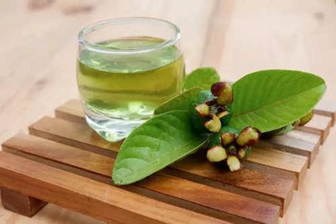
Figure.2: Guava leaves
Morphology:
The leaves of the guava Size are typically 7–15 cm long and 3–5 cm. Shape Guava leaves are elliptic to oblong in shape dark green in color. The upper surface of the leaf is smooth, while the lower surface is slightly downy
Chemical Constituent:
Guava leaves contain a variety of chemical constituents, Essential oils, flavonoid, sesquiterpene, triterpenoid, coumarin, alkaloid, and tannin molecules.
Pharmacological Actions: [10]
The pharmacological actions and the medicinal uses of aqueous extracts of guava leaves in folk medicine include the treatment of various types of gastrointestinal disturbances such as vomiting, diarrhea, inhibition of the peristaltic reflex, gastroenteritis, spasmolytic activity, dysentery, abdominal distention, flatulence and gastric pain. These extracts have also been indicated to cause disturbances of the central nervous system: insomnia, convulsions and epilepsy. Bronchitis, asthma attacks, cough, pulmonary diseases could be also treated with guava teas and could also be useful as Anti inflammatory and hemostatic agent. Moreover, aqueous extracts of guava leaves were described to be effective against a number of microbial strains and anti-rotavirus activity.
Uses:
Guava (Psidium guajava): For the herbal treatment of a number of oral conditions, Including toothaches, sore throats, inflamed gums, and ulcers, Psidium guajava has been Utilised. Guava leaf decoction has also been administered as mouthwash. In two separate Investigations. created and assessed an aqueous gel of Powdered guava leaves for the treatment of oral ulcers. They found that the powdered guava Leaves contained flavonoids and had a sizable antioxidant effect. When compared to synthetic Formulations for the treatment of oral ulcers, the herbal formulation proved to be stable, safe, And efficacious.[11]
Tulsi:[9]

Figure.3: Tulsi leaves
Morphology:
Tulsi is an herbaceous plant. The leaves are simple, opposite, and have an ovate or elliptical shape. The margins of the leaves can be smooth or slightly toothed. The flowers of Tulsi are small, arranged in terminal spikes or clusters. The fruit is a nutlet and is produced after flowering. The root system is generally fibrous. The leaves release a pleasant and distinct aroma when crushed.
Chemical Constituent:
Tulsi contains essential oils, phenolic compound, flavonoids, triterpenoids, alkaloids, vitamins, adaptogens, antimicrobial compounds.
Pharmacological Action:
Antimicrobial action:Tulsi inhibits Streptococcus mutans, Lactobacillus, and periodontal pathogens due to eugenol, ursolic acid, and essential oils. Anti- inflammatory action: Reduces gingival swelling and inflammation by suppressing prostaglandins and inflammatory mediators. Antioxidant action: Flavonoids and phenols neutralize free radicals and protect oral tissues. Anti-plaque action: Prevents bacterial adhesion to teeth and reduces dental plaque formation. Analgesic action: Eugenol provides mild pain relief in gums and teeth. Antifungal action: Inhibits Candida species, supporting good oral hygiene.
Uses:
Immune System Support: Tulasi is known for its immunomodulatory properties, helping to boost the immune system and fight off infections. Respiratory Health: It is used to treat respiratory conditions like coughs, colds, bronchitis, and asthma due to its antimicrobial and anti-inflammatory properties. Adaptogenic Properties: Tulasi is considered an adaptogen, helping the body adapt to stress and promote overall well- being. Ayurvedic Medicine : Tulasi is a key ingredient in Ayurvedic formulations and is used to balance the doshas (Vata, Pitta, and Kapha) in the body . Antioxidant Properties: Tulasi contains compounds with antioxidant properties, helping to neutralize free radicals and protect cells from damage.Anti-inflammatory Effects: The herb has anti-inflammatory properties, making it beneficial for conditions involving inflammation, such as arthritis. Anti-microbial and Anti-bacterial Properties: Tulasi has been shown to have antimicrobial and antibacterial effects, helping to combat various infections. Dental Health: Tulasi is sometimes used in oral care products due to its antimicrobial properties, promoting dental health and preventing bad breath. [3]
EVALUATION OF HERBAL MOUTHWASH:
Physical Evaluation:
PH: The pH of prepared herbal mouthwash was measured by using digital pH meter. The pH meter was calibrated using standard buffer solution. About 1ml of mouthwash was weighed and dissolved in 50 ml of distilled water and its pH was measured.
Foam Ability: 1ml of mouthwash was taken and dissolved in distilled water (about 50ml) in 100 ml graduated measuring cylinder. The measuring cylinder was shaken for about 10 minutes. Foam height was measured after 10 minutes and observation were recorded.
Test for microbial growth: The mouthwash formulation was streak plate inoculated on agar media plates, and a control was made. In the incubator, the plates were put. Then it was incubated for 24 hours at 37°C.Plates were removed after the incubation time and tested for microbiological growth.
Stability studies: A stability study was performed on herbal mouthwash, following ICH guidelines. The mouthwash was stored in a closed container at room temperature for 30 days. The evaluation was based on change in colour, odour, texture and pH analysis to assess the stability of the herbal mouthwash.
Determination of Viscosity: The internal barrier to fluid flow is known as viscosity. the ostwald viscometer was utilized to ascertain the viscosity of prepared formulation. the ostwald viscometer, dried, cleaned, and clampedvertically. using an ostwald viscometer, lmounted vertical position on a suitable stand. Mouthwash was filled in to the viscometer up to mark a. the time was counted for mouthwash to flow from A to mark B. the time was measured with a stopwatch.[9]
CONCLUSION
This review concludes that Tulsi (Ocimum sanctum) and Guava (Psidium guajava)–based herbal mouthwash is a safe, effective, and natural alternative to chemical mouthwashes. The rich phytochemicals present in both herbs provide antimicrobial, anti-inflammatory, antioxidant, and wound-healing effects, making the formulation beneficial for maintaining oral hygiene and managing conditions such as plaque, gingivitis, halitosis, and mouth ulcers. Compared to synthetic mouthwashes, it shows fewer side effects and better suitability for long-term use. Overall, Tulsi–Guava herbal mouthwash holds strong potential as a cost- effective oral care formulation, though further clinical studies are recommended to confirm its long-term efficacy and safety.
REFERENCES

Gaurav Bagadkar*, Vinita Bokade, Mayuri Ambildhuke, Vaishnavi Chaudhari, Upadesh Lade, A Comprehensive Review on Tulsi and Guava Based Herbal Mouthwash, Int. J. of Pharm. Sci., 2026, Vol 4, Issue 2, 1754-1760. https://doi.org/ 10.5281/zenodo.18619008
 10.5281/zenodo.18619008
