
Chhhatrapati Shivaji College Of Pharmacy, Deori, Dist Gondia.
Pain is a frequent clinical complaint that often requires rapid, localized, and non-invasive management. This study reports the formulation and evaluation of a topical spray for localized musculoskeletal pain containing magnesium sulphate, arnica oil (Arnica montana), Ashwagandha (Withania somnifera) root extract, and camphor. Magnesium sulphate was selected for its muscle-relaxing and analgesic adjunct properties; arnica oil was included for its traditional anti-inflammatory and bruise-resolution effects; Ashwagandha root extract was incorporated for its withanolide-mediated anti-inflammatory and adaptogenic activity; and camphor was selected as a counterirritant to provide rapid sensory analgesia and increased local blood flow. The spray was developed as a stable, easily-applied delivery system using pharmaceutically acceptable solvents, skin-safe penetration enhancers, preservatives, and a metered spray mechanism to ensure uniform droplet size and surface coverage. Pre-formulation work included solubility and compatibility testing, selection of an appropriate pump/spray system, and optimization of vehicle composition to balance solubility and dermal absorption. Evaluation comprised physicochemical characterization (pH, viscosity, clarity), spray performance (spray pattern, droplet size distribution, delivered dose), in-vitro skin permeation, accelerated stability testing, and ex-vivo/in-vivo analgesic assays.Results showed a physically stable formulation with reproducible spray characteristics, acceptable skin-friendly pH and viscosity, and enhanced local delivery of actives when suitable permeation enhancers were included. Preliminary efficacy testing indicated additive or synergistic reductions in local pain scores versus single-component controls, supporting the spray as a promising topical option for rapid symptomatic relief of localized muscular and inflammatory pain. Further randomized clinical studies are recommended to confirm clinical effectiveness and optimal dosing
Pain is a complex and subjective experience that involves both physical and emotional components, often associated with actual or potential tissue damage (1). It significantly affects the quality of life by limiting physical activity and causing discomfort in daily functioning. Musculoskeletal disorders such as joint pain, muscle pain, arthritis, and minor injuries are among the most common conditions requiring effective therapeutic management.
Conventional treatment of pain mainly involves the use of systemic medications such as nonsteroidal anti-inflammatory drugs (NSAIDs) and other analgesics. Although these drugs provide effective relief, their prolonged use is associated with adverse effects such as gastrointestinal irritation, systemic toxicity, and drug interactions (2). These drawbacks have led to the development of alternative drug delivery approaches that provide localized action with improved safety.
Topical and transdermal drug delivery systems have gained considerable attention due to their ability to deliver drugs directly to the affected area. These systems avoid first-pass metabolism, reduce systemic side effects, and improve patient compliance (3). Among various topical dosage forms, pain relief sprays are widely preferred because of their ease of application, rapid onset of action, and non-greasy nature.
Pain relief sprays are commonly formulated using active ingredients such as menthol, camphor, and methyl salicylate, which act as counter-irritants and help in relieving pain by producing cooling and warming sensations, as well as improving local blood circulation (4). In addition, essential oils like eucalyptus oil are incorporated for their analgesic, soothing, and mild anti-inflammatory properties, which further enhance the therapeutic effectiveness of the formulation (5).
However, the major challenge in topical drug delivery is the limited permeability of drugs through the skin due to the barrier function of the stratum corneum. To overcome this issue, formulation strategies such as the use of penetration enhancers are employed to improve drug absorption and effectiveness (6). Therefore, proper selection of ingredients and formulation optimization are essential for achieving desired therapeutic outcomes.
Based on these considerations, the development of a joint and muscle pain relief spray using selected active ingredients represents an effective approach for localized pain management. The present study focuses on the formulation and evaluation of such a spray to assess its physicochemical properties, safety, and overall performance.
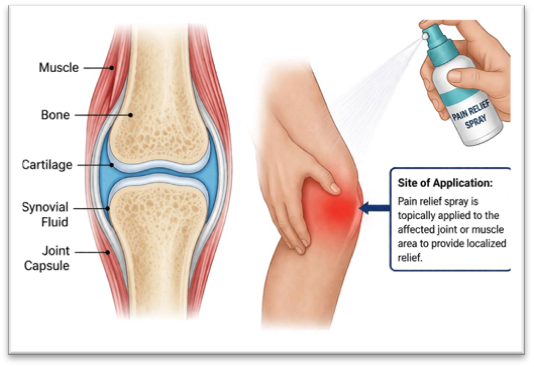
Figure .1 Structure of joint showing pain area and site of application of pain relief spray
INGREDIENTS
Botanical Name: Withania somnifera
Family: Solanaceae
Active Constituents: Withanolides, alkaloids
Pharmacological Activities: Anti-inflammatory, analgesic, antioxidant
Role in Formulation: Reduces inflammation and improves healing

Figure .2 Ashwangandha Root
2.Arnica Oil
Botanical Name: Arnica montana
Family: Asteraceae
Chemical Constituents: Sesquiterpene lactones, flavonoids, essential oils
Pharmacological Activities: Anti-inflammatory, analgesic, anti-bruise
Role in Formulation: Reduces swelling and pain
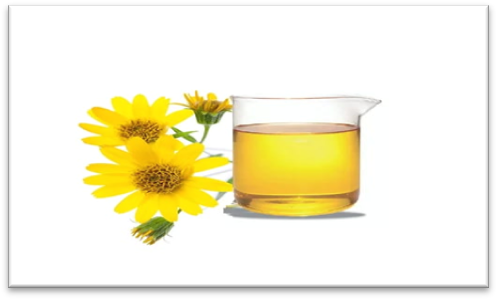
Figure . 3 Arnica Oil
3.Magnesium Sulphate
Chemical Name: Magnesium sulphate heptahydrate
Category: Mineral salt
Mechanism of Action: Reduces nerve excitability and relaxes muscles
Pharmacological Activity: Muscle relaxant, analgesic
Role in Formulation: Relieves muscle cramps and stiffness
4. Camphor: [17]
Synonym: Gum Camphor, Japan Camphor.
Biological Source: It is solid ketone,obtained from the volatile oil of CinnamomumCamphora.
Uses: It is mainly used in pain relief medication, including topical analgesic .It can also help to reduce chronic muscle and joint pain.
5 .Eucalyptus oil: [18]
Synonym: Stringy bark tree, Blue gum, Blue gum tree.
Biological Source: It is an essential oil obtained by the distillation of fresh leaves pf Eucalyptus globulus belonging to family Myrtaceae..
Uses: It is used as antiseptic, flavouring agent, deodorant, antimicrobial, and used in treatment of lung diseases, sore throat and vapour bath for ashtma EXCIPIENTS/ADDITIVES
6. Glycerine
Chemical Name: Glycerol
Category: Humectant, emollient
Mechanism of Action: Attracts and retains moisture on the skin surface, preventing dryness and irritation caused by alcohol-based sprays
Pharmacological Activity: Skin moisturizing, soothing agent
Role in Formulation: Improves skin hydration, enhances spreadability of the spray, and reduces irritation from active ingredients
7. Isopropyl Alcohol
Chemical Name: Isopropanol
Category: Solvent, penetration enhancer
Mechanism of Action: Rapidly evaporates after application, producing a cooling effect and facilitating faster penetration of active ingredients through the skin
Pharmacological Activity: Mild antiseptic, cooling and counter-irritant effect
Role in Formulation: Acts as a solvent for actives, ensures quick drying of the spray, and enhances transdermal absorption
8 .Purified Water
Chemical Name: Aqua
Category: Vehicle, solvent
Mechanism of Action: Serves as a medium for dissolving water-soluble components and maintaining formulation uniformity
Pharmacological Activity: Non-pharmacological (vehicle)
Role in Formulation: Provides the base for the spray formulation and supports proper dispersion of ingredient
9. Sodium Benzoate
Chemical Name: Sodium benzoate
Category: Preservative
Mechanism of Action: Inhibits growth of bacteria, yeast, and fungi by disrupting microbial enzymatic activity
Pharmacological Activity: Antimicrobial preservative
Role in Formulation: Enhances shelf life and prevents microbial contamination of the spray
10. Eucalyptus Oil
Chemical Name: Eucalyptus globulus oil
Category: Essential oil, fragrance agent
Mechanism of Action: Produces a cooling sensation and exhibits mild analgesic and anti-inflammatory effects through sensory nerve stimulation
INGREDIENTS AND THERE ROLE
|
Sr. No. |
Ingredients |
Role |
|
1 |
Magnesium Sulphate |
Muscle relaxant, Anti inflammatory |
|
2 |
Arnica Oil |
Analgesic ,Anti inflammatory |
|
3 |
Ashwagandha Root |
Reduce inflammation, Decreases muscle tension |
|
4 |
Camphor |
Cooling agent, Counterirritant |
|
5 |
Glycerin |
Smoothing and Skin protective |
|
6 |
Isopropyl Alcohol ( Ethanol 95%) |
Antiseptic Action |
|
7 |
Distilled Water |
Ensures purity and safety |
|
8 |
Preservative ( Sodium Benzoate) |
Protect herbal ingredients |
|
9 |
Fragrance (Eucalyptus oil) |
Muscle relaxant |
MATERIAL AND METHOD
1.Selection of Material: Ashwagandha Root
2.Collection of Plant Material : Chhatrapati Shivaji Collage Of Pharmacy , Deori.
3. Extraction of Plant Material: Ashwagandha Root
Use Soxhlet Methods extraction to obtain concentrated extracts ( Ashwagandha Root).The Soxhlet extraction method is a standard technique for extracting bioactive compounds from plant materials like Ashwagandha Root Below is a step-by-step extraction procedure using the Soxhlet apparatus.[28,29]
4. Formulation of Spray Solution Measure and prepare each ingredient according to the selected formulation. Add ethanol and distilled water to a mixing vessel as a base solvent. Gradually add essential oils (eucalyptus, then the extracts ashwangndha root then add camphor.[11]
4. Mixing and Homogenisation
Mix all components using a magnetic stirrer or homogenizer until a uniform solution is achieved.
Ensure complete dissolution of camphor and proper dispersion of oils and extracts.[12]
5. Filtration and Filling
Filter the solution using a fine muslin cloth or filtration unit to remove any particulate matter.
Fill the filtered solution into clean, sterile spray bottles.[13]
6. Packaging and Labelling
Seal the bottles properly.
Label with formulation, ingredients, usage instructions, batch number, manufacture and expiry dates, and storage instructions.[14]
EVALUATION
1) pH Determention
Measurement of pH is an important parameter for topical sprayformulation with the natural skin environment. Skin typically has a slightly acidic pH ranging from 4.5 to 6.5. A formulation outside this range could disrupt the skin potentially causing irritation or sensitization.
2) Droplet size
The droplet size plays a significant role in the performance of spray formulations. It affects how well the active ingredients are distributed and absorbed into the skin. Smaller droplets typically offer better surface coverage and quicker absorption.
3) Separability
The Spreadability is another critical characteristic, reflecting how easily the formulation can be spread across the skin After a specific time, the diameter of the spread formulation is measured.Good spreadability, generally ranging from 5.0 cm to 9.0 cm.
4) Skin irritation test
The skin irritation test is performed to ensure the dermatological safety of the formulation. A small quantity of the spray is applied to a selected area of the skin (either on human volunteers or animal models), covered, and observed after 24 hours for any signs of redness, swelling, itching, or other irritation.
5) Evaporation test
Is an important evaluation parameter for pain relief sprays, as it helps assess how quickly the solvent (such as water or Alcohol evaporates after the formulation is applied to the skin.
CONCULSION
pain relief spray containing Magnesium sulphate, Camphor, Arnica oil, and Ashwagandha root extract was successfully developed and evaluated for topical application. The combination of active ingredients provides synergistic analgesic and anti-inflammatory effects, offering rapid relief from muscle and joint pain. The formulation exhibitedgood physicochemical stability, uniform spray pattern, acceptable pH, and no signs of skin irritationOverall, the herbal spray was found to be safe, stable, and effective for topical pain management. Due to its ease of application, quick onset of action, and minimal side effects, it can be considered a promising alternative to conventional pain relief products. Further clinical evaluation is recommended to confirm its long-term safety and therapeutic efficancy
REFERENCES




Shruti Chandewar, Saloni Sahare, Pallavi Nikode, Chandrasheksar Badwaik, A Review On: Formulation And Evaluation of a Spray Containing Magnesium Sulphate, Arnica Oil, Camphor, Ashwagandha Root Extract for Pain Relief, Int. J. of Pharm. Sci., 2026, Vol 4, Issue 4, 2050-2056 https://doi.org/10.5281/zenodo.19553314
 10.5281/zenodo.19553314
