
Malla Reddy Institute of Pharmaceutical Sciences, Maisammaguda, Hyderabad, Telangana, India 500014.
One way to stop the Infections from spreading is to wash your hands with soap and water. The saponification process, which is the reaction of triglycerides and alkali that produces glycerol, is the process by which soap is made. Soap is a mixture of potassium or sodium and vegetable oil fatty acids. solid animal fats that can be liquid or soft and frothy. Paper soap is an innovation in soap production; its thin and small shape makes it easy to carry, and it can be made antiseptic by adding other ingredients, like green betel leaf (Piper betle L) extract. The purpose of this study was to characterize soap paper from betel leaf extract and explain the anti-bacterial ability of soap from with betel leaf extract. Traditionally, plants like betel have been used as medicines. Betel leaves contain secondary metabolites that can be utilized as active ingredients in the production of Paper soap. According to research methodology used included the following tests chemical tests: Saponification value, Total alkalinity, PH Test, Free F and antibacterial activity using the agar diffusion method.
A little over 98% of illness transmission occurs by means of the hands, thus washing hands with soap and water is one way to avoid this. Soap is a mixture of vegetable or animal lipids and sodium or potassium salts [1]. Solid soap is made with sodium (NaOH), and liquid soap is made with potassium (KOH) [2]. While the water-loving tail of each soap molecule can only mix with oils, the hydrophilic head of each soap molecule can mix with water. Cooking oil is one of the substances that is occasionally used to make soap. Used cooking oil constitutes rubbish oil obtained from plants used for cooking. Saponins (anti-microbial agents), flavonoids, polyphenols, and essential oils are all present in betel leaves. Beyond that, betel leaves have a unique aroma because they include 1-2% essential oil, water, protein, fat, carbohydrates, calcium, phosphorus, vitamins A, B, and C, iodine, sugar, and starch [4]. The ethanol extract of greenbetel leaf additionally include antioxidant activity. Betel leaf extract is added to used culinary solid oil soap in order to boost its quality. The majority of betel leaves' curative organoleptic, and other health benefits are attributed to their volatile volatile oils (EO). Essential oils, which are a complex mixture of numerous volatile chemicals (secondary metabolites) with a distinct betel leaf odour, can be utilized for healing purposes for a number of reasons, including pain relief and healing. It has several significant biological qualities, including antimicrobial, anti-antidiabetic, ant amoebic, anti-inflammatory, and antioxidant. Nuclear magnetic resonance spectrometry (NMR), Fourier transform infrared (FT-IR) spectroscopy, high-performance liquid chromatography (HPLC), high-performance liquid chromatography with mass spectrometry (LC-MS), gas chromatography-mass spectrometry (GC-MS), and other techniques are widely used for identifying all phytochemical compounds present in extracted EOs. The primary objective of this study was to prepare paper soap with the goal to evaluate the anti-inflammatory an antioxidant characteristics of betel leaf extracts from solvents with varying the degree of polar. The significant phytochemicals hydroxychavicol (HC) and eugenic acid (EU) exists in betel leaves. The (IUPAC) designation for HC is 3,4-dihydroxyallylbenzene while that for EU is 3-methoxy-4-hydroxyallylbenzene.
Betel Leaf
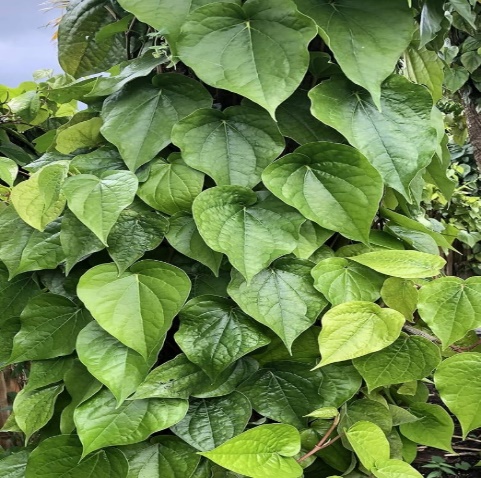
Synonyms: Betel Vine, betel pepper, pan, Sireh
Family: Piperaceae
Geographical area:
India, Sri Lanka, Bangladesh, Indonesia, and Thailand are among the tropical and subtropical Asian countries that cultivate betel leaves. Papua New Guinea, Malaysia, and the Philippines are also places where they grow.
Cultivation: High humidity and tropical climates are ideal for betel vine growth. They can withstand temperatures ranging from 10°C to 40°C, but they require fertile, well-drained soil. They require adequate irrigation and shade. Growing vines of betel. Betel vines can be supported by live plants like banana suckers or agathi when they are cultivated in beds with drainage trenches between them. The supports are fastened to the vines. Following planting, the land is irrigated once every seven days. Difficulties Extreme weather events, growing labour expenses, and climate change are some of the issues facing betel leaf agriculture. Advantages For smallholder farmers, betel vine farming can be a source of revenue.
Chemical Structure
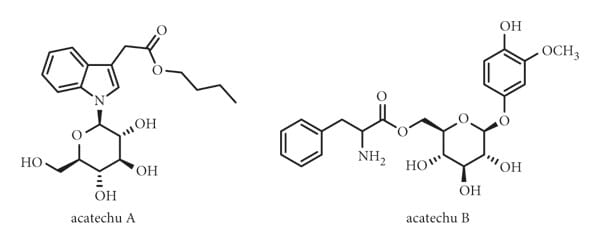
2.1 Chemicals required
Distilled water, stearic acid, betel leaves, 96% Methanol, glycerine, Methyl orange, 0.1 N KOH solution, NaOH, sodium benzoate, Rosemary oil, eugenol, palm oil and water-soluble paper were among the substances utilized.
2.2 Equipment’s Required:
Chopper, rubber ball, porcelain cup, glass funnel, Erlenmeyer, beaker, hotplate, watch glass, filter paper, measuring flask, magnetic stirrer, analytical balance, pH meter, dropper, measuring pipette, distillation set, spatula, and thermometer are among the tools used in this study.
Table 1- Materials for preparation of five soap papers
|
Materials |
Composition |
|
Distilled water |
6ml |
|
Methanol |
20ml |
|
Betel leaf’s |
10 |
|
Palm oil |
20ml |
|
Glycerine |
8ml |
|
Eugenol |
1.5ml |
|
kOH |
0.1N |
|
Methyl orange |
2-3 drops |
|
Sodium benzoate |
0.5ml |
|
Rosemary oil |
2ml |
|
Water soluble papers |
5 |
Note: NaOH In case of Solid Soap
2.3 Extraction of chemical constituents from betel leaf
2.4 Hydro Distillation Extraction
Extraction of betel leaf After choosing the young leaves, green betel leaves (P. battle) are weighed, wiped with running water, and dried in the sun for 3 days. The dried specimens are then weighed once again. The weighed leaves are then crushed into a powder using a blender and sieved through a 50-mesh screen. The leaf powder is subsequently stored in a dry container that is tightly sealed. After a 1: 5 dissolutions of the powdered dried foliage in aqueduct, which was then stirred and left to stand for three consecutive days, the extract was filtered multiple times before the solvent was taken out by the subsequent distillation the filtrate.
2.6 Making of paper soap
1.After 10 minutes of heating palm oil Rosemary oil to across 50°C and 65°C, add KOH while stirring to keep the temperature between those ranges.
2.Subsequently add the sodium benzoate and water and swirl until an emulsion forms. Slowly add the methanol and stir until the solution becomes clear, then heat to 50°C and 65°C
3.After adding the eugenol and glycerine solution and stirring until it becomes clear, then add betel leaf extract wait a minute before pouring the soap solution into the silicone mold.
4.After waiting for approximately throughout the day, the soap was taken out of the mold and cut using cutting scissors.
5.Paper soap measures 3 centimetres and has a thickness of 2 millimetre. Quality analysis is done complying with the curing process, which takes between 3and 4 weeks to complete. 6uring this time, the soap's pH will drop and the saponification process persists, and the soap is kept in an enclosed region at room temperature.
3 Types of testing
3.1 Chemical tests
a. Saponification value
By breaking the ester bonds between the fatty acids and glycerol of a triglyceride with free hydroxide, saponification produces free fatty acids and glycerol that are both soluble in aqueous solutions. Put one gram of fat in a beaker. Use ethanol or an ethanol/ether combination to dissolve the fat. Pour in 25 millilitres of 0.5N alcoholic KOH and well stir. Connect the beaker to a condenser for reflux. Put the beaker in a bath of boiling water for half an hour. Allow ambient temperature to reach in the beaker. Put the indicator phenolphthalein in the beaker. With 0.5N HCl, titrate Determine the saponification value by applying the following formula: 1g of fat ingested in milligrams of KOH equals the saponification value.
SV = ? 560 (% FC) / M
b. Total alkalinity
Use barium chloride to precipitate soap and carbonate. Calculate the solution's residual alkalinity. The alkalinity of the free potassium hydroxide is represented by the residual alkalinity.
Alkalinity = (Volume of acid used (mL) x Normality of acid x 50 x 1000) / Volume of water sample (mL)
c. PH Test
Apply a drop of water that is purified to the soap. Make a paste with the soap by spreading the water about with a gloved finger. Incorporate a
pH strip in the paste. To calculate pH, compare the strip's colour to the colour on the pH chart.
D. Free Fatty Acid test
Test By weighing a sample of two grams of soap into an Erlenmeyer, free fatty acids were investigated. As an indicator, dissolve it in 80 millilitres of neutral methanol and then add 0.3 methyl orange solution. This solution was placed in a tube with a ball bottom, a hot stone was added, it condensed, and it turned pink. After that, it was titrated with 0.1 N KOH solution until the pink hue formed (it lasted for 30 seconds).
% Free Fatty Acids= VxNx0,256wx100%
3.2 Safety tests
a. Skin irritation test
A Soap same is applied on the skin for 15 days. Then skin is observed for irritation such as redness, scaling, swelling and fissuring.
3.3 Other tests
A. Microbiological testing
The soap sample should be diluted in a phosphate buffer. Place the diluted sample onto agar media-containing plates. For a predetermined period of time, incubate the plates at certain temperature. Colonies developing on the plates should be recorded and noted. Determine how many colonies there are in the soap sample compared to a control sample.
b. Moisture content test
An analytical balance was used to weigh the cup after it had been chilled in the desiccator for ± 20 minutes after the empty petri dish had been dried for 20 minutes at 101oC. A small quantity of the samples was placed in a cup, weighed, and then baked at 101 degrees Celsius for two and a half hours. The cup was subsequently permitted to cool in a desiccator for ten minutes.
%Moisture content =x-y/z 100
C. Foaming test
Use water to dilute the soap. Give the mixture a good shake. Determine the foam's height. Take note of the foam's durability.
Foaming capacity (%) = (Volume of foam at time 0 mL) / (Volume of liquid at time 0 mL) x 100
d. paper dissolution test
On a piece of paper that can be dissolved, apply soap to both sides. Then, hang the paper to dry. Divide the paper into squares. The squares should be kept in an airtight container. Wet the paper and see how soon it dissolves.
4 Chemical constituents present in be0tel leaf
The main component of betel leaf essential oil is eugenol, an antioxidant molecule. It is utilized in perfumery, flavourings, and medicinal. A little chemical called chavibetol is present in betel plant leaves. Saponins: Influence the development of tissues during recovery from wounds due to their antibacterial and antioxidant qualities. During wound healing, tannins' antibacterial and antioxidant qualities influence tissue regeneration. Essential oils: Possess antimicrobial qualities. Polyphenols: Possess antifungal and antiseptic qualities. Chavicol: An organic substance that provides antimicrobial protection. An antioxidant substance with potential anticancer effects is hydroxychavicol. Additional components Flavonoids Estragole Eugenol methyl …
Table 2-Chemical constituents in percentage
|
S.No |
Name Of the Constituent |
% (In Percentage) |
|
|
1. |
Chavibetol acetate |
15.5% |
|
|
2. |
Chavicol |
53.1% |
|
|
3. |
Camphene |
0.48% |
|
|
4. |
Eugenol |
0.32% |
|
|
5. |
Methyl euginol |
0.48% |
|
|
6. |
Allyl catechol diacetate |
0.71% |
|
|
|
|
|
|
|
7. 8. |
a-pinene 1,8-cineole |
0.21%
0.04%
|
|
|
9. |
Safrole |
0.11% |
|
|
10. |
a-limonene |
0.14% |
|
|
11. |
ϒ-lactone, β-pinene |
0.21% |
|
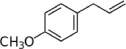
4.1 Chemical structure of components
1.Eugenol
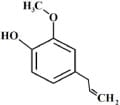
2.Hydroxychavicol
3.Methyl eugenol
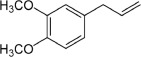
4.Chavibetol
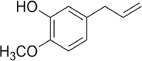
5.β-caryophyllene
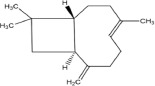
6.Chavicol
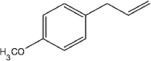
7.Safrole
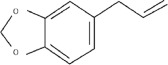
8.Estragole
5 Medicinal uses of betel leaf
5.1 Antimicrobial properties
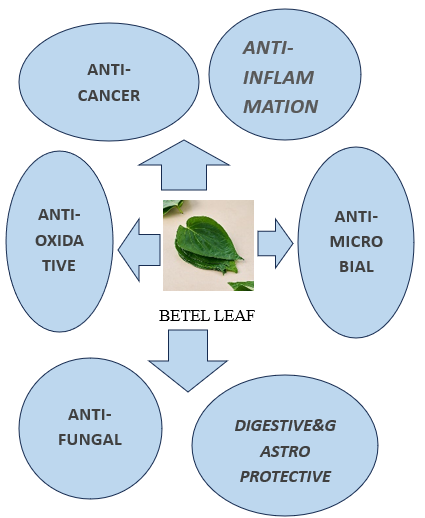
Although betel leaves have a variety of bioactive qualities, their ability to kill bacteria is by far the most noticeable one. Although betel leaves contain a variety of bioactive chemical substances, including ally pyrocatechol, chavicol, chavibetol, chavibetol acetate, and ally pyrocatechol diacetate, among others, its antibacterial properties also serve as a food preservative. It shields food ingredients from undesirable or potentially hazardous microbes E. coli, streptococcus pyrogen, pseudomonas aeruginosa, Staphylococcus aureus proteus vulgaris, and other pathogens are all susceptible to the antibacterial properties of betel leaf. Antimicrobial action is caused by bioactive sterol molecules.
5.2 Anti-Inflammation properties
The intricate biological reaction of vascular tissue to pathogens, injured cells, and irritants includes anti-inflammation. Pain, heat, redness, swelling, and loss of function are its hallmarks, and it is a natural defense mechanism. Terpenoids, flavonoids, and phenolic compounds are the primary active ingredients in betel leaf that give it its anti-inflammatory qualities. It has been demonstrated that these substances contain anti-inflammatory and antioxidant properties, which may aid in lowering bodily inflammation. Eugenol, a naturally occurring substance found in betel leaf, has been demonstrated to have analgesic and anti-inflammatory effects. Betel leaf extract has been shown in studies to help lower inflammation in a number of disorders, which might involve skin allergies, asthma, and arthritis.
5.3 Anti-cancer properties
Because the betel leaf contains polyphenol chemicals, it also exhibits another crucial anti-carcinogenic characteristic. Tobacco's carcinogenic properties are destroyed by the presence of bioactive ingredients such hydroxychavicol and chlorogenic. Apigenin and luteolin derivatives are cytotoxic to cancerous cells. The value of the expression of matrix metalloproteinases, cell invasion, migration, and other processes linked to the metastatic cascade is notably elevated at this stage. This stage is produced by high amounts of matrix metalloproteina, cell invasion, travel, and other processes linked to the metastatic cascade. The discovery of chemotherapeutic medications has been critical because this ailment may only be treated by radiation therapy or surgery.
5.4 Antioxidative
Another significant characteristic of betel leaf is its antioxidant content. This characteristic of betel leaf results from the presence of polyphenolic chemicals like chavicol and allyl pyrocatechol, among others.
5.5 Digestive and gastro proactive
It has long been believed that eating betel leaves increases salivary gland output and enhances digestion. Because of its well-known gastroprotective qualities, betel leaf extract helps prevent gastric ulcers. Oral betel leaf administration significantly increases rat intestinal mucosa and bile production, as well as pancreatic digesting enzymes, according to a preliminary study. Vitamins and minerals abound in betel leaves, which are also highly nutritious. Along with arginine, lysine, histidine, and many other essential amino acids, the leaves also contain enzymes such as catalase and diastase.
CONCLUSION
According to the research findings, betel leaf, which contains rich bioactive compounds and essential oils including pyrocatechol, eugenol, and chavibetol, has potent antibacterial and antimicrobial properties and is used to make paper soap. Positive results were obtained from tests for soap paper, including those for total alkalinity, PH, free fatty acid, skin irritation, microbiology, moisture content, foaming, and paper dissolving.
REFERENCES

Yathakula Vinay Sree*, Nenemunthala Sagarika, Nikunj Navnit, A Review on Anti-Microbial Activity Paper Soap: Formulation with Green Betel Leaf and Essential oils, Int. J. of Pharm. Sci., 2025, Vol 3, Issue 7, 2783-2790. https://doi.org/10.5281/zenodo.16165593
 10.5281/zenodo.16165593
