

We use cookies to ensure our website works properly and to personalise your experience. Cookies policy
Ashvin College of Pharmacy, Manchi Hill, Sangamner, Ahilyanagar, Maharashtra 413714
Beetroot Beta vulgaris is commonly called beetroot. This is the taproot portion of the beet plant. There are types of Beets grown in Egypt, India, Europe and Ukraine. It is used in the traditional Indian system of medicines. Beta vulgaris Linnaeus is among the top ten most powerful vegetables as an excellent source of phytochemicals. It Is also known for its high content of biologically active substance such as betalains, polyphenolic compounds, Vitamin, carotenoids and other nutrients including sodium, Potassium, and magnesium. Some parts of this plant are Used in the medicinal system as antioxidant, antidepressant, antimicrobial, antifungal and anti-inflammatory, Diuretic, expectorant and carminative. Beet (Beta vulgaris L.) as a health-promoting functional food may be Potentially beneficial in cancer. As a source of polyphenol, flavonoids, dietary nitrates and other beneficial Nutrients, beetroot supplementation may provide a holistic way to prevent cancer and manage the side effects of Chemotherapy.
Beta vulgaris L., or beetroot, is a member of the Chenopodiaceae family. Its tinge is pictorial sanguine. Common names For beetroot include beetroot, chard, spinach, ocean, theater , white and chukander . Its largely remedial rates have certain Salutary goods on the mortal body. You can consume beetroot raw, boiling, fumed, or roasted. Red beetroot contains a Lot of minerals. Beetroot has a variety of remedial uses and can help help heart complaint and some types of cancer, Including colon cancer. Other salutary composites like glycine, betaine, betacyanin, carotenoids, folates, betanins, Polyphenols, and flavonoids are abundant in beetroot.Because beetroot contains the nitrogen color betalain, which gives it antioxidant parcels, it benefits consumers’ health And well- being. In addition to its antibacterial and antiviral parcels, beetroot has the capability to stop mortal tumour Cells from proliferating. Due to its high nitrate and sugar content, beetroot is a natural mess that increases energy Situations. In addition to being high in minerals, vitamins, and other Rudiments, beetroot also contains special phytochemical substances( carotenoids, phenolic acids, and ascorbic acid) that Have a variety of remedial operations, making it a great nutritive supplement. [1] A significant portion of guests moment explosively favour” functional foods” in order to maintain their health and Ameliorate their diet. As a result, fruits and vegetables are pivotal factors of a balanced diet that can help avoid a number Of ails. The beetroot has gained fissionability lately as a possible” functional food” in this regard. Indeed though beetroot has been a chief of European cookery for a long time, little is known about its practical Counteraccusation’s. Additionally, beetroot’s nitrate has a high nutritional value. According to Webb et al. (2008), many customers use fresh Beetroot juice orally as a nitrate supplement, which improves physiological response and lowers the risk of cardiovascular And cerebrovascular disorders. Since then, beetroot has been a popular vegetable for sportsmen looking to refuel. Due to Its high nitrate and sugar content, it is one of the natural foods that gives athletes more energy. The red pigment betaine , Which is found in beetroot root, is used as a natural food colouring in dairy and meat products. Because it aids in foetal Growth, it can be consumed as a salad during pregnancy. The main market for beetroot in Tamil Nadu, India, is Mettupalayam Vegetable Commission Mandy. As a result, beetroot has gained a lot of interest as a functional food that Promotes health A diet rich in fruits and vegetables is likely to have endless health benefits. These include cardiovascular health, defence Against free radicals, constipation, and the prevention of diabetes, obesity, diverticulosis (the formation of small, easily Irritated pouches inside the colon), as well as cancers of the prostate, lung, mouth, and throat. Beta vulgaris subsp. Vulgaris Is the subspecies that includes all cultivated variants. The wild parent of these is Beta vulgaris subsp. Maritima, also called The sea beetroot, which grows over the Mediterranean, the Atlantic coast of Europe, the Near East, and India. In the Indian Traditional medical system, it is specifically utilised to increase sex hormone activity. In terms of antioxidant properties It is one of the top ten vegetables. [2]
Botanical Profile of Beetroot (Beta vulgaris L.)
Scientific Classification
Taxonomic Rank Description
Common Name
Beetroot, Garden beet, Table beet
Botanical Description
Plant Type: Biennial herb (commonly grown as an annual).
Root: Fleshy, swollen taproot, usually red to purple due to the pigment betanin (a type of betalain).
Stem: Short, erect, and branched at the flowering stage.
Leaves: Simple, alternate, petiolate; ovate to heart-shaped with prominent veins and green to reddish coloration.
Flowers: Small, greenish, and inconspicuous; borne in dense spikes; bisexual and wind-pollinated.
Fruit: A dry nutlet, often clustered together forming a seed ball (aggregated fruit).
Seeds: Small, rough, and brown; germination occurs in 5–10 days under favorable conditions.
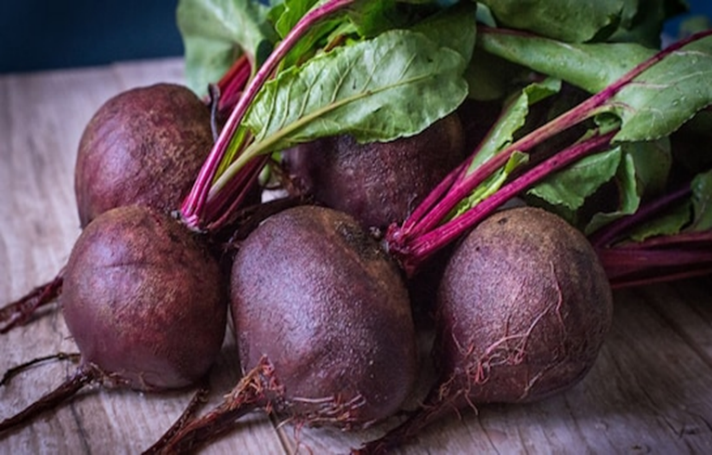
Fig – Beetroot Plant
Bioactive Compounds of Beetroot :-
Betalains :- This review emphasizes the potential of beetroot extract as an anticancer agent. Beetroot is a Nutritious plant with a history of medicinal use, offering various health benefits like antioxidant and anti-Inflammatory properties. Key bioactive compounds include betalains, flavonoids, and carotenoids, particularly Beta-carotene and lutein, known for their anticancer effects. Fermenting beets with lactic acid bacteria enhances Their nutritional value and preserves bioactive compounds. Overall, this study highlights beetroot’s promise in Cancer prevention and its potential for developing natural therapies for cancer patients. This project highlights Beetroot extract’s potential as an anticancer agent. Beetroot is nutritious and offers health benefits, including Antioxidant and anti-inflammatory properties. Its bioactive compounds, such as betalains and carotenoids like beta-Carotene, have anticancer effects. Fermentation with lactic acid bacteria enhances its nutritional value. Overall, the Study suggests beetroot may play a role in cancer prevention and natural therapies for patients [3,4].
Vitamins :- Beetroots and their derivatives are excellent sources of essential vitamins, particularly vitamin C, Vitamin A, and various B-group vitamins. The B-group encompasses eight water-soluble vitamins, which include Thiamine (B1), riboflavin (B2), niacin (B3), pantothenic acid (B5), pyridoxine (B6), biotin (B7), folate (B9), and Cyanocobalamin (B12). The highest levels of ascorbic acid, commonly known as vitamin C, are found in the pulp of the beet, while the Leaves contain the lowest amounts. The distribution of vitamin C varies among different parts of the plant, with the Order of concentration being pulp > skin > leaf > stalk for organically grown beets, and pulp > stalk > skin > leaf For those grown conventionally. This indicates that the cultivation method can significantly impact the vitamin C Content in specific plant parts. Notably, the highest concentrations of vitamin C were observed in all parts of the plants that were fertilized with Organic manure. In terms of niacin, the leaves exhibited higher levels of vitamins A, B6, and C, whereas tubers had Much greater amounts of folate. Additionally, B-group vitamins were also present in beetroot juices. The findings Indicate that organic beet juices are superior sources of vitamins when compared to those derived from Conventionally cultivated beets [5].
Carotenoids :- Beetroot is rich in carotenoids, which serve as powerful antioxidants and play a crucial role in Managing and preventing various health conditions. As photosynthetic accessory pigments, carotenoids help protect Vital biological structures, including DNA, from damage caused by free radicals generated during photosynthesis. These compounds belong to the tetra terpenoid class and are present in smaller quantities within beetroot. The primary carotenoids found in red beets are beta-carotene and lutein, both of which have significant anticancer Properties. The levels of these carotenoids vary depending on which part of the plant is examined; the highest Concentration is located in the beetroot peel, followed by the pulp, leaves, and stalks. This accumulation occurs Primarily in the green parts of the plant, specifically within chloroplasts, where a mixture of alpha and beta-carotene, Beta-cryptoxanthin, lutein, zeaxanthin, violaxanthin, and neoxanthin can be found.[6,7]
Minerals :- Beetroot is a rich source of essential natural minerals that support various functions in the human Body. Notably, the concentration of copper ions is significantly higher in the leaves, with levels being more than Double compared to the tubers. Additionally, minerals like calcium, sodium, potassium, and magnesium are found In greater amounts in the leaves as well. The levels of zinc, phosphorus, and manganese, however, remain relatively Consistent across different parts of the plant. Moreover, beetroots and their products are excellent sources of selenium, an important trace element crucial for Both humans and animals. Selenium plays a vital role in several metabolic processes, including the metabolism of Thyroid hormones and immune system functions. A deficiency in selenium has been associated with various health Issues, including cardiovascular diseases, inflammatory conditions, and even cancer. The primary selenium-containing amino acids found in dietary sources are selenomethionine (SeMet) and Methyloselenocysteine (MeSeCys), both of which have been identified in beetroot juice. This highlights the Nutritional value of beetroot as a functional food that can contribute to overall health [8].
Significance of Beetroot : -
A multipurpose wonder, beetroot (Beta vulgaris) has use in the fields of cooking, nutrition, medicine, and industry. See The profound elements that highlight beetroot’s extraordinary
Powerhouse of Nutrition:
With important vitamins (including C and B-complex), minerals (such potassium, magnesium, and iron), and dietary Fibre, beetroot is a veritable gold mine of nutrition. Its vibrant colour indicates the presence of antioxidants and Phytonutrients like betalains. Essential elements such as manganese, which supports bone health, magnesium, potassium, Sodium, phosphorus, iron, zinc, copper, boron, silica, and selenium are abundant in beetroot roots.
Heart Health:
Beetroot’s nitrates reveal a symphony of possible cardiovascular advantages, coordinating blood vessel dilatation, Improved blood flow, and controlled blood pressure to support the best possible heart health.
Exercise Results:
A portion of beetroot juice, which is high in nitrates, is said to improve endurance, increase oxygen utilisation, and Improve exercise performance. Enticed by its possible advantages for performance, athletes use beetroot in their diet.
Anti-Inflammatory Properties:
Beetroot’s crimson tapestry is adorned with bright pigments called betalains, which are known for their well-researched Anti-inflammatory and antioxidant properties. These characteristics work together to promote general health and Wellbeing.
Liver Health:
Through substances like betaine, which aid in detoxification procedures, beetroot reveals its support for liver health. Research supports this story by showing that eating beetroot improves liver function.
Digestive Health:
Beetroot, a nutritional fibre powerhouse, promotes regular bowel motions and a healthy gut environment, which improves Digestive health.
Natural Food Colouring:
Beetroot’s inherent pigments, particularly betalains, are highly prized natural food colouring agents that go beyond their Vegetable classification. Beetroot extracts provide a vibrant red masterpiece in the food business without the use of Artificial dyes.
Sugar Production:
A prominent participant in the commercial sugar industry, the renowned sugar beetroot, which resembles beetroot, Commands the stage. One of the most important chapters in the history of sugar is the extraction of sugar from these beets.
Applications in Industry:
Beetroot makes a lasting impression on industrial landscapes in addition to the gastronomic canvas. Its high sugar content Makes it a viable candidate in the search for biofuel sources, and its natural hues adorn fabrics. [12]
Benefits of Beetroot :
Advantages of beetroot Among the many health : Beetroot are heart health support, blood pressure reduction, improved exercise performance, inflammation reduction, And antioxidant protection.[9,10]
Health benefits of beetroot:-
Beetroot is gaining popularity as a ‘super food’ due to its Health beneficial value. Some of the major health benefits of Beetroot are as follow:
Several parts of beet root have numerous medicinal Properties such as anti-oxidant, anti-microbial, Antihypertensive, hepato-protective, antiinflammatory, Antihyperglycaemic, anti-cancer and diuretic. Due to its High fiber content, it prevents constipation and Promotes regularity for healthy digestive tract. Beetroot Juice improves oxygenation to the brain, slowing the Progression of dementia in older adults.
It helps to preserve brain function with nitrates that Improve blood flow and beet having the ability to Increase the production of Glutathione naturally in Body, that compound helps to prevent colon cancer [3].
Beet root wine helps the healing of gastric ulcer. It Increases the urinary output due to its rich potassium Content, and cures hypo-glycaemia. It is also helpful in Treatment of jaundice, hepatitis, nausea and vomiting Due to biliousness, tuberculosis, piles, cholera, Diarrhoea, dysentery and lowered state of body resistant After major surgical operation etc. The cellulose content Of the beet acts as a bulk residue, increases peristalsis And eases the passage of stool, hence its regular use Prevents habitual constipation and lowers blood Pressure in hypertensive persons.
CONCLUSION
Beetroot is a superfood used as therapeutic and functional Food ingredients from ancient times. This review paper Concludes the all scope of beetroot and their utilization as Value added products. It has various applications as a food Colouring ingredient in many dairy and food products. It has Number of medicinal properties such as antioxidant, anti-Microbial, anti-hypertensive, anti-inflammatory, Anti-hyperglycemic, hepato-protective, anti-cancer etc. It is A multipurpose crop having numerous health benefits Providing scientists a new door to develop various value Added products.
REFERENCES




Samadhan Kotkar, Avishkar Bhusari, Sushant Khemnar, Somnath Gavhane, A Review on Beetroot Plant, Int. J. of Pharm. Sci., 2026, Vol 4, Issue 3, 891-897. https://doi.org/10.5281/zenodo.18925491
 10.5281/zenodo.18925491