

We use cookies to ensure our website works properly and to personalise your experience. Cookies policy
Department Of Pharmacy, Shri Sai Collage Of Pharmacy, Khandala.
This review explores the growing role of automation and robotics in pharmaceutical manufacturing, highlighting their impact on efficiency, precision, and regulatory compliance. Automation technologies—ranging from robotic systems and advanced machinery to integrated software platforms—optimize critical processes such as formulation, filling, packaging, and quality control. The study discusses the evolution, advantages, and challenges of automation, emphasizing reduced human error, enhanced product consistency, and improved worker safety. Various robot types (articulated, SCARA, delta, cartesian, and collaborative) and automated equipment are analyzed for their applications in sterile and high-speed production environments. Additionally, the integration of software systems like ERP, MES, and QMS strengthens data management and traceability, supporting cGMP compliance. Despite high capital costs and skill requirements, automation remains vital for modern pharmaceutical industries, driving innovation, scalability, and sustainable production. The review concludes that automation is revolutionizing drug manufacturing, ensuring quality medicines reach patients more efficiently and reliably.
The process automation in pharmaceutical manufacturing involves the use of robotics, software, and equipment to streamline and optimise production processes such as weighing, bleprocess also enhances traceability through digital solutions like RFID and electronic batch nding, filling and packaging. Automation ensures high precision, repeatability, and compliance with regulatory standards, reducing human error and operational costs. Automation records, improving efficiency and quality control throughout the manufacturing process.[1]

Automation In Pharmaceutical Manufacturing.
Automation and robots have been increasingly popular in pharmaceutical operations due to the need for improved scalability, precision,and efficiency.With their unmatched accuracy,speed, and dependability,these technologies dramatically quicken research and production while reducing errors and unpredictability. The Pharmaceutical corporations can now more effectively tackle complicated issues like medication repurposing and personalised therapy, as well as the expanding demands of global healthcare systems. Furthermore, the robotics and automation are essential for guaranteeing product quality and regulatory compliance.[2] The success of automation process depends first of all on choosing the right equipment.[3] Automatic manufacturing and distribution process increases the demand for more standardized equipment, such as packaging and assembly equipment.[4] Nowadays, it is only possible to understand the complex processes and also effectively and efficiently handle resources, money and manpower due to computer software in the pharmaceutical sciences area. The Computer software may help relieve medical professionals from daily documentation and other clerical duties, reduce errors , increases the accuracy in data transmission and storage, and reduce the use of animals and chemicals, improve productivity and provide solutions for moment-consuming manual tasks, develop uniform standards and continuer emotely located terminal to the different information.[5]
ADVANTAGES AND DISADVANTAGES OF AUTOMATION IN PHARMACEUTICAL MANUFACTURING
ADVANTAGES
DISADVANTAGES
THE EVOLUTION OF AUTOMATION IN PHARMACEUTICAL MANUFACTURING
Pharmaceutical manufacturers use automated procedures as more than labor replacement methods because they are transforming conventional processes into highly accurate and standardized manufacturing systems. The Pharmaceutical production becomes more accurate and experiences fast production speeds and displays a consistent drug quality following the implementation of automation systems. Automation systems conducts pharmaceutical operations through manufacturing equipments and processing systems as well as the automated drug manufacturing processes which boost productivity and minimize human error.

Automation In Medicine Manufacturing
The Manufacturers are adapting to digitalization in their production processes which represents the major propelling factor. A Computerized manufacturing transformation in pharmaceutical industry creates possibilities for instant data tracking as well as predictive equipment upkeep followed by personalized product production. Smart systems allow manufacturers to use automation for supply chain optimization and batch production monitoring and inventory control which keeps pharmaceutical organizations competitive.[7]
THE FUTURE OF AUTOMATION IN PHARMACEUTICAL MANUFACTURING
The pharmaceutical industry will observe additional developments of automated medicine production systems during its progressive forward movement. Industry will face more disruptions through additive manufacturing (3D printing) technology because this will enable on-demand production of personalized medicines. The implementation of AI systems in the pharmaceutical production enables better understanding of drug activities along with patient reactions as well as multiple vital parameters to develop better focused medical treatments.

Automated Medicine Production System.
Pharmacutical automation companies delivers innovations that build more effective, scalable and stable systems. Now the upcoming years may introduce fully automated drug production processes which reduce both production expenses and also increase operational precision through minimal human involvement.[8]
TOP FIVE ROBOTS USED IN PHARMACEUTICAL MANUFACTURING
Automation/Robots are revolutionizing the pharmaceutical manufacturing, from handling sensitive drugs to maintaining sterility.
The five main categories of robots that are often used in industry for manufacturing will be covered in this point:
1 Articulated Robot
2 Collaborative Robot (cobots)
3 Cartesian Robot
4 SCARA Robot
5 Delta Robot
1. ARTICULATED ROBOT
Some of the most adaptable robots are utilized in the production of pharmaceuticals are articulated robots, sometimes referred to as 6-axis robots. Their multi-degree-of-freedom arms are perfect for intricate jobs requiring accuracy and adaptability since they replicate human motion.
Features: -
Degrees of Freedom:There are 4 to 7 degrees of freedom, with 6 being the most popular.
Range of Payload Capacity: Several kilos to several 100 kg.
Reach: The typical range of reach is 500 mm to more than 3,000 mm.
Speed: Able to accelerate and decelerate quickly, enabling highspeed activities.
Accuracy: Excellent repeatability (e.g., ±0.02 mm.
Application: -
Material Handling: Moving of completed goods and raw materials between
manufacturing lines is known as material handling.
Assembly Tasks: A medical device component assembly is
one of the assembly tasks.
Packaging: High-speed bottling and Blister are used for packaging.
Inspection: The Integrated sensors are used to perform a both visual and physical quality inspection.
Example: -
ABB IRB 120: Pick-and-place tasks in sterile settings are frequently performed by this little (ABB IRB 120) articulated robot. It is perfect for the pharmaceutical applications because of its small size and great accuracy.
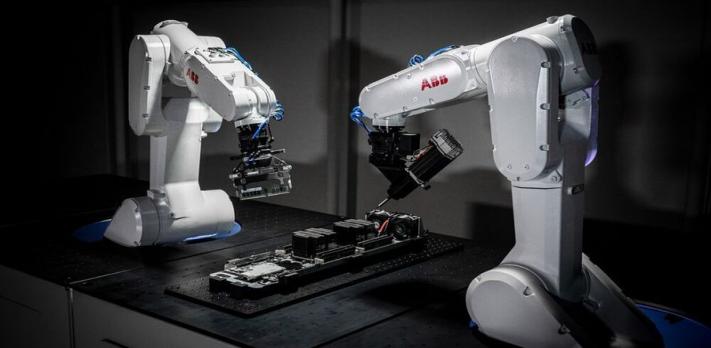
Articulated Robot- ABB IRB 120 .
The automation of labor-intensive operations has benefited greatly from articulated robots. This robots increases manufacturing speed and uniformity in addition to lowering human error. For increased precision in activities like inspection and tablet sorting, these robots frequently interact with vision systems. Additionally, they are appropriate for a variety of applications, ranging from the bulk pharmaceutical containers to lightweight syringes, due to their capacity to manage different payloads.
2. COLLABORATIVE ROBOT
Collaborative robots aslo known as cobot. The cobots and humans may collaborate securely without the need for physical barriers because to their design. They are perfect for dynamic pharmaceutical situations because of their versatility and simplicity of programming.
Features: -
Payload Capacity: usually falls between 3 and 35 kg.
Reach: The range of reach is 500 mm to 1,300 mm.
Safety Features: Integrated sensors for force and speed monitoring are among the safety features.
Programming: Easy-to-use interfaces for rapid implementation.
Precision: ±0.01 mm repeatability.
Application:-
Machine Tending: Loading and unloading machines with goods or raw materials is known as machine tending.
Lab Automation: The lab automation is the process of carrying out repeated operations like centrifuging and pipetting.
Inspection: Using delicate samples to help with quality control.
Packaging: labeling and palletizing of pharmaceutical items is known as packaging.
Example: -
Universal Robots UR5e: This type of adaptable cobot is utilized in production lines for secondary packing and in labs for accurate sample handling.
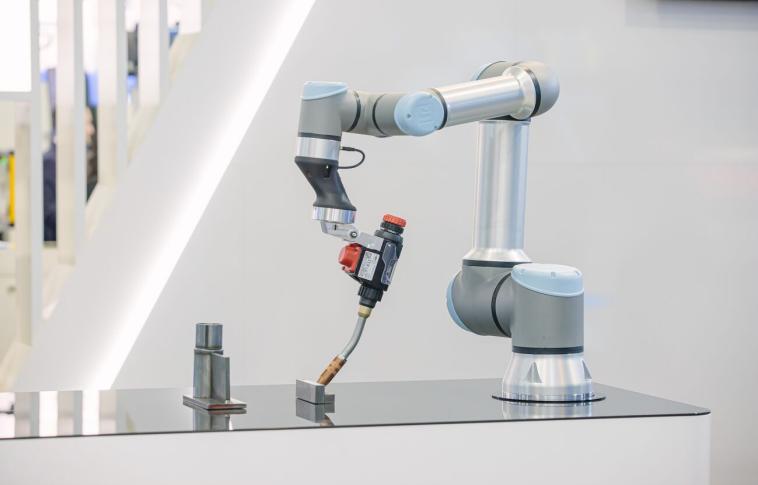
COLLABORATIVE ROBOT - Universal Robot UR5e.
The capacity of cobots to increase human productivity makes them unique. They help researchers in pharmaceutical laboratories by automating repetitive operations so that scientists may concentrate on creating new medicine and also new things. Additionally, these robots require a little retraining to adjust to shifting production needs, which makes them an affordable option for small and medium-sized businesses. They can operate near people without endangering them thanks to its safety features, such force sensing.Apart from these advantages, Collaborative robots may be used to improve the functionality of AI-based systems. Cobots are using machine learning algorithms, for example, may gradually improve their processes and increase efficiency. By keeping thorough the records of their activities, which can be examined during audits, they also play a critical part in guaranteeing compliance
3.CARTESION ROBOT
three linear axes (X, Y, Z) are used by cartesian robots, sometimes referred as gantry robots. They are perfect for applications requiring straight-line motions because of their great accuracy and solid construction .
Features :-
Axes: The 3 linear axes are included, with rotating axes available for further versatility.
Payload Capacity: A few grams to several hundred kilos is the maximum payload capacity.
Speed: Depending on the needs of the application, speed might be ranges from moderate to high.
Precision: Exceptionally high precision (at least ±0.005 mm).
Workspace:Large, rectangular work envelopes serve as the workspace.
Application:-
Dispensing: Syringes, capsules, and vials are automatically filled.
Pick and Place: Carefully managing tiny parts.
3D printing: producing medication delivery and medical device prototypes.
Inspection: Laser scanning for dimensional correctness and surface flaws.
Example :-
Cartesian Robot Series from IAI: These types of robots provide precise and sterile operations by filling vials and assembling syringes at fast speeds. The scalability and simplicity of customization of cartesian robots make them especially desirable. For real-time monitoring and feedback, they are frequently connected with sophisticated control systems in the pharmaceutical manufacturing .For regulatory compliance, this feature guarantees that the manufacturing processes stay under strict tolerance thresholds. Furthermore, enterprises may extend their manufacturing lines without having to make large expenditures because to its modular architecture.
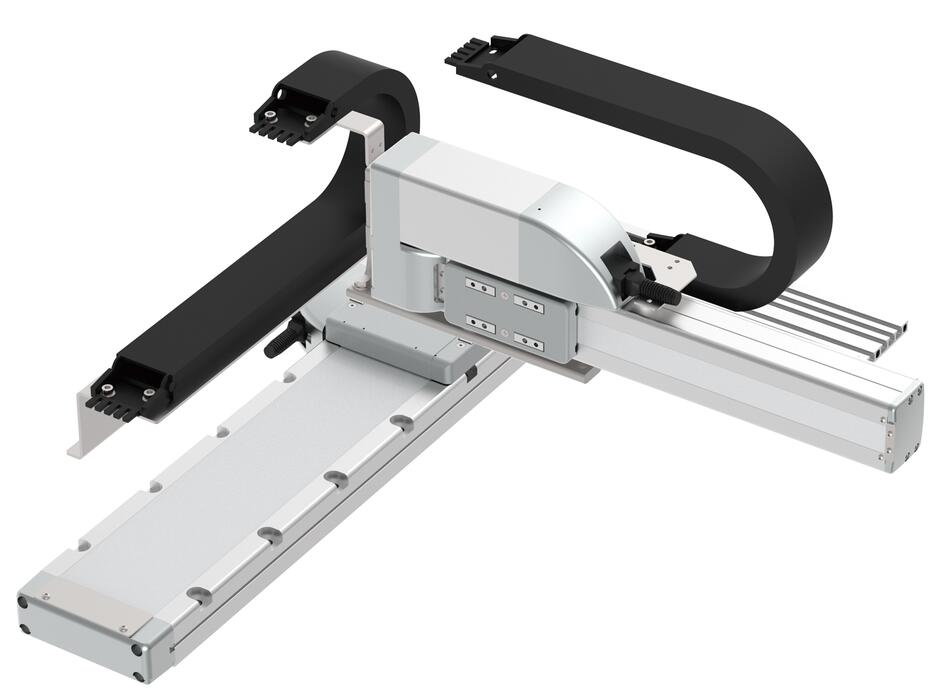
The Cartesian Robot - Series from IAI.
The cartesian robots are also capable of carrying heavy weights and work especially well in situations requiring stiffness and accuracy. For instance, these robots offer the consistency required to create parts with complex patterns in procedures like the 3D printing of a medical implants.
4. SCARA ROBOT
The assembly for Selective Compliance In horizontal operations, Robot Arms (SCARA) are renowned for their accuracy and speed. They are perfect for cramped areas because of their small size.
Features: -
Axes: X, Y, Z, and rotation around the Z-axis are the four axes.
Payload Capacity: usually falls between 1 and 20 kg.
Speed: Up to 1,000 mm/s for high-speed operations.
Precision: ±0.01 mm repeatability.
Footprint: Small design for settings with limited space.
Applications: -
Assembling: To the rapid assembling of medical components and equipment.
Pick and Place: For sorting and arranging little things, such as blister packs and medicines, is known as "pick and place."
Inspection: Visual examination for flaws at high speed.
Dispensing: Applying coatings or adhesives precisely.
Example :-
Epson LS20-B: This SCARA robot ensures accurate and reliable operations in blister packing and high-speed inspection.The Epson's SCARA robots are notable for their reliable performance in repeated and fast-paced tasks. They use cutting-edge vision technologies to guarantee precise alignment and orientation when performing operations like component assembly and labeling. They may be adjusted to different pharmaceutical processes while upholding strict quality and compliance requirements thanks to their adaptability and intuitive programming.

SCARA Robot - Epson LS20-B
Additionally, the Epson's SCARA robots include characteristics like cleanroom compliance, which makes them appropriate for the settings with low levels of contamination. In challenging production setups, these robots drastically increase throughput, guarantee consistency and lower operational mistakes.
5. DELTA ROBOT
Parallel robots, often referred to as delta robots, they are made for pick-and-place tasks that need speed and portability. They can move quickly and precisely because of their special design.
Features :-
Axes: optional rotating axis and three translational axes.
Payload Capacity: usually falls between 1 and 5 kg.
Operation speed: very fast (up to 300 picks per minute).
Precision: High repeatable precision (±0.02 mm).
Design: Parallel-arm, lightweight construction.
Applications :-
Sorting: For Sorting pills, capsules, or vials at a high pace.
Packaging: Primary and secondary packing duties are included in packaging.
Assembly: The lightweight medical equipment may be put together quickly.
Inspection: For visual examination while working at a rapid speed.
Example :-
Fanuc M-2iA: This delta robot ensures accuracy and efficiency in pharmaceutical manufacturing lines by excelling at high-speed sorting and packing jobs.The delta robots work especially well in tasks that call for accuracy and speed. Delta Robot are perfect for sorting and packaging jobs because of their lightweight construction, which enables quick acceleration and deceleration. These delta robots are frequently used in cleanroom settings in the pharmaceutical business, where their capacity to reduce contamination dangers is highly prized.

Delta Robot-Fanuc M-2iA
The delta robots are also commonly employed in situations where synchronization with conveyor systems is necessary. For example, these robots are capable of fast product identification and picking during blister pack packing, providing uninterrupted production lines.[9]
TYPES OF AUTOMATED PHARMACEUTICAL MANUFACTURING EQUIPMENTS.
Pharmaceutical manufacturing is highly controlled and regulated in safe environment. Almost each and every process can be automated; and there is a piece of pharmaceutical manufacturing equipment involved in every step. Below, we have highlighted some of common equipment used in solid dose (tablet and capsule) and liquid pharmaceutical manufacturing:
PROCESSING EQUIPMENT: -
Agitliquids: used to promote chemical reactions and to increase heat or cooling transfers.
Blowers: Used in solvent recovery and also in evaporation applications.
Boilers: Used to create steam by applying heat energy to water.
Capsule equipment: Different equipment is available to fill, polish, and sort capsules.
Capsule and tablet printers: Used for printing information like drug names or dosage on the capsules or tablets.
Centrifuges: Used for the separation of liquids of different densities, or for separation of liquids from solids.
Chillers: To lower the temperatures quickly.
Coaters: Used to coat tablets or capsules with films like a sugar film.
Cooling towers: Used for cooling liquids and condensing steam.
Dryers and Granulators: Used for drying liquid preparations into powders or granules.
Heat exchangers: Used to transfer heat from one medium to another medium.
High Pressure Homogenizers: The most efficient fluid processing equipment for particle size reduction and cell lysis.
Inspection machines: Allow for visual inspection of the product as it is moved along by rotating rollers.
Metal detectors : For detecting tramp metal (bits of metal like nuts, screws, or broken fragments of machinery) that may have contaminated the product.
Mixers : For particle size reduction and blending.
Ovens : For providing necessary heat or drying.
Pulverizers / Cone mills : Particle size reduction equipment for granules.
Tablet press : Used For producing tablets.
Tablet deduster : For removing dust created in the tablet press. Often also polishes the tablet.
Sifters : For granules or sieving powders .
Spray coating machines : Used for spray coating liquid onto a powder.
Tanks : Used For holding liquids.
PACKAGING EQUIPMENTS: -
Blister packers : Are Designed to pack tablets, capsules, softgels, injection solutions, syringes and other small medical items into blister packs. “Deblistering” machines are also available to recover tablets, capsules or
softgels from blister packs.
Bottling and filling lines : Used For filling bottles with liquids or containers with tablets, capsules or softgels.
Cappers : Designed to place the caps onto filled bottles or containers of medicines.
Cartoners : These sophisticated machines can fill small medicine boxes with blisters packs, fold and insert leaflets, and close, code, and seal the box.
Counters : To Counts capsules, tablets, softgels and any other small, solid items.
Induction Sealers : Seals aluminum foil seals to the bottle mouth.
Labeling equipment : Used For attaching or printing labels onto the packaging of boxes,bottles, containers, tubes etc.
Tube fillers : For the filling and sealing tubes of ointments, creams and gels.[10]
KEY DRIVERS FOR ADOPTING AUTOMATION MACHINERY IN PHARMACEUTICAL MANUFACTURING
There are a number of reasons why drug manufacturing companies are inclined to lean towards heavy investment in automation equipment:
The Sterile production line with automated machinery
Regulatory compliance: The Good Manufacturing Practice (GMP) standard demands accuracy, retraceability, reproducibility which the automation aids.
Increasing demand: The world population is increasing, the population ageing, and the growing access to healthcare which stimulates the consumption of medicine.
Quality assurance: The automated systems reduce the risk of contamination and also human error, and as such guarantee uniformity of the product quality.
Cost-efficiency: Although the amount to be invested in the system is high, the automation lowers labour cost over a long period and also boosts the productivity.
Time to market: Time to market can be reduced by automated systems allowing firms to meet needs in the market rapidly.
TPES OF AUTOMATION MACHINERY IN PHARMACEUTICAL MANUFACTURING
The automation machinery is very broad and it includes various types of equipment of various manufacturing phases of the production process.
1. MHS -MATERIAL HANDLING SYSTEM
The transport of raw materials in the manufacturing facility takes place through automated material handling systems. They comprise conveyor belts, automated guided vehicles (AGVs) and also robotic arms. These systems lower manual picking up, lower the chance of contamination, and guarantee exactness while transporting the materials.
2.MIXING AND BLENDING EQUIPMENT
The automated mixing machines are used in the formulation processes to make sure that an active ingredient of drugs (APIs) and excipients are mixed with a high degree of precision. This gets rid of inconsistencies and also enhances the quality of the batches. Product uniformity is achieved due to the programmable controls which make it possible to accurately duplicate mixing parameters.
3.GRANULATION MACHINERY
The powder mixtures used in tablet compression demand the use of automated granulators namely; wet and dry granulators. Such a system is under tight environmental conditions, which include the humidity and temperature, to maintain the quality of the granules.
4.TABLET PRESS, CAPSULE FILLING MACHINES
The high-end tablet presses and capsule fillers can have a production of thousands of units in a single minute. These machines have the capacity of real time monitoring, through which they monitor weight changes, damaged tablets, or capsules and avoid wastage .
5.COATING MACHINES
The automated coating systems cover tablets with the use of uniform film or sugar layers, which are needed to release the definite required dosage and to provide the product with higher stability. More advanced have the possibility of bringing about changes in the coating parameters automatically in response to environmental conditions.
6.HEADSPACE FILLING EQUIPMENT STERILE, ASEPTIC FILLING EQUIPMENT
Still in the manufacture of injectable drugs, sterile filling equipment guarantees the transfer of product free of contamination in containers like vials, syringe, or ampoules. They work under controls of environments which frequently use the restricted access barrier system (RABS) and isolators.
7.QUALITY CONTROLSYSTEM OR SYSTEM OF INSPECTION
The automated visual inspection systems come in the form of sensors, cameras and artificial intelligence to identify the defects in tablets, capsules or liquid-filled containers. They are able to inspect them on the presence of cracks, foreign elements or wrong labeling.
8.PACKAGING MACHINARY AND LABELLING MACHINARY
The blister packing, Bottling and labelling are carried out on the automated packaging lines quickly and accurately. The Serialisation codes can also be printed by integrated systems in order to conform to track and trace requirements.
BENEFITS OF AUTOMATION MACHINERY IN PHARMACEUTICAL MANUFACTURING
There are number of measurable benefits of the implementation of automation machinery in pharmaceutical manufacturing:
Sampled increase - The output is greatly boosted with machines that are able to work around the clock.
Durable and quality - Consistent and accurate products can be produced through automation which have low variability.
Occupational security - It reduces the manual transfer of dangerous items.
Data combination - The manufacturing execution systems (MES) are connected to machines which give the real-time performance data.
Regulatory compliance - The automated documentation and batch records enhance traceability.
CHALLENGES IN IMPLEMENTATING AUTOMATION
Automation has been very beneficial, automation in pharmaceutical manufacturing is not free of difficulties:
High capital investment: The expenditure of buying and installing automation devices could be enormous.
Skill gap: The employees need to undergo training in order to work and coordinate with advanced equipment.
Integration problems: New machines may be complicated and it can causes difficulty to accommodate with old systems.
Regulatory validation: GMP requirements make automated systems go through serious testing.
Technology obsolescence: The rate at which technology is rapidly changing, there are chances that the equipment may become outdated with in a short time. [11]
SOFTWARES IN PHARMACEUTICAL MANUFACTURING
The pharmaceutical manufacturing software manages the complex, highly regulated processes involved in drug and health product production. Softwares doesn’t just keep things organized; it also ensures that every step, from production schedules to quality checks, meets the strict regulations and government-mandated requirements of the pharmaceutical industry. One of the most critical functions of pharmaceutical operation software is the ability to enforce consistency and compliance across the all production activities. It meticulously tracks the raw materials, monitors each phase of production, and validates that the finished products meet the required quality benchmarks. In this way, it significantly reduces the likelihood of errors that could lead to non-compliance, product recalls, or worse.
TYPES OF PHARMACEUTICAL MANUFACTURING SOFTWARES AND THEIR CORE FUNCTIONS
The FDA and ICH pushing for faster, digital, and optimized processes, pharma solutions have become more essential for modern pharmaceutical manufacturing companies. It has been redefined the standards, refining quality management, manufacturing, and resource allocation, influencing the entire drug lifecycle—from R&D to distribution and pharmacovigilance—for those astute enough to capitalize on it.
1 ENTERPRISE RESOURCE PLANNING SYSTEMS (ERP)
Functions: It combines essential business functions like finance, inventory control, procurement, HR and production planning—into one system. It Helps to manage resources efficiently, track transactions, and keep production on schedule.
2 MANUFACTURING EXECUTION SYSTEM (MES)
Functions: Oversees the production process in real-time, from order management to equipment performance. It ensures each step of manufacturing and follows the set protocols and keeps track of production orders.
3 LABORATORY INFORMATION MANAGEMENT SYSTEM (LIMS)
Functions: It manages laboratory tasks like sample handling, and lab workflow coordination, tracking test results. It Integrates with quality control systems to ensure lab data is used effectively in pharmaceutical production.
4 QUALITY MANAGEMENT SYSTEM (QMS)
Functions: It handles all aspects of quality control, such as document management, deals with non-conformances, and oversees corrective actions. Ensures quality processes are consistent and documented.
5 SUPPLY CHAIN MANAGEMENT (SCM)
Functions: This software manages the movement of materials and products from suppliers to the production and then to the customers. It also tracks inventory and supplier performance, ensuring materials meet quality standards.
6 REGULATORY COMPLIANCE SOFTWARE (RCS)
Functions: It streamlines the documentation and reporting of pharmaceutical manufacturing companies needed to comply with regulatory standards. Manages the audit preparation, tracks changes in regulations, and ensures all processes meet current rules.
BENIFITS OF IMPLEMENTATING PHARMACEUTICAL MANUFACTURING SOFTWARES
Implementing such a solution offers substantial benefits, and the numbers prove it.
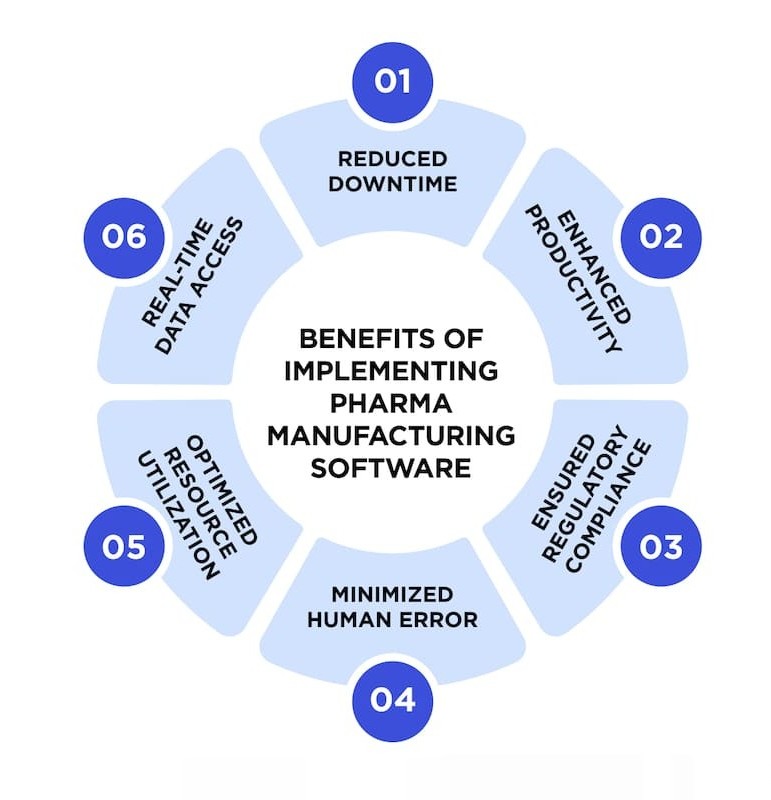
For example, companies that implement advanced pharma software often they see up to a 20% boost in the production efficiency within the first year. This improvement allows drugmakers to produce products with fewer defects, which ultimately reduces the costs and enhances quality for consumers. And that’s just the start—many other advantages arise.[12]
CONCLUSION
This review comprehensively demonstrates that automation and robotics have become indispensable components of modern pharmaceutical manufacturing. The integration of advanced robotic systems—such as collaborative robots (cobots), Cartesian, SCARA, and Delta robots—has significantly transformed manufacturing operations by improving precision, speed, flexibility, and regulatory compliance. Each robotic type serves a specialized role, from high-speed pick-and-place and packaging to precision dispensing, inspection, and aseptic handling, thereby addressing diverse production requirements within pharmaceutical environments. Automation machinery across processing, inspection, and packaging stages ensures consistency, minimizes human intervention, and reduces contamination risks—key factors for maintaining compliance with cGMP, FDA, and ICH guidelines. The deployment of automated material handling systems, granulation units, tablet presses, coating machines, and aseptic filling equipment has enhanced batch reproducibility and real-time process monitoring. This not only improves product quality but also reduces wastage, recalls, and operational deviations. Equally important is the role of pharmaceutical manufacturing software, including ERP, MES, LIMS, QMS, SCM, and regulatory compliance systems. These digital platforms form the backbone of automation by enabling data integrity, traceability, electronic batch records, and audit readiness. The integration of software with automated equipment allows real-time decision-making, predictive maintenance, and performance optimization, ultimately accelerating time-to-market while maintaining strict regulatory control. The review also highlights key drivers behind automation adoption—such as rising global medicine demand, increasing regulatory pressure, cost efficiency, and the need for sterile production. While automation offers substantial benefits, challenges such as high initial investment, system integration complexity, workforce skill gaps, validation requirements, and technological obsolescence remain critical considerations. Successful implementation therefore requires strategic planning, skilled personnel training, and continuous system upgrades.In conclusion, automation and robotics are not merely tools for operational improvement but strategic enablers of pharmaceutical manufacturing excellence. Their ability to deliver high-quality, safe, and compliant medicines at scale positions them as essential technologies for the future of the pharmaceutical industry. As artificial intelligence, machine learning, and digital twins continue to evolve, automation will further enhance adaptability, efficiency, and sustainability—ensuring faster, safer, and more reliable delivery of medicines to patients worldwide.
ACKNOWLEDGEMENT
“With the blessings of God”
I sincerely acknowledge the support and encouragement of all those who contributed to the successful completion of this review. No research work is the outcome of an individual’s effort alone, and this study would not have been possible without the guidance and cooperation of many people. I express my heartfelt gratitude to my parents for their constant encouragement, moral support, and motivation throughout my academic journey. I am also thankful to my teachers, friends, and well-wishers for their valuable support and cooperation. I extend my sincere gratitude and profound respect to my guide, Prachi Prakash Udapurkar (M.Pharm, Ph.D.), Department of Pharmacy, Shri Sai College of Pharmacy, Khandala, for her expert guidance, constructive suggestions, and continuous encouragement, without which this work would not have been possible. I am thankful to our respected Principal, Santosh Jain, and the Management for providing a supportive and conducive academic environment to carry out this research work successfully.
REFERANCES
The top 5 Robots Transforming Pharmaceutical
-manufacturing-equipment
Pharmaceutical Manufacturing with Automation Machinery. https://www.pharmafocuseurope.com/information-technology/pharmaceutical-manufacturing-with-automation-machinery
12. Vadim struk.Pharmaceutical Manufacturing Software: The Driver for Better Efficiency,August 28, 2024 https://relevant.software/blog/pharmaceutical-manufacturing-software/.
The top 5 Robots Transforming Pharmaceutical
-manufacturing-equipment
Pharmaceutical Manufacturing with Automation Machinery. https://www.pharmafocuseurope.com/information-technology/pharmaceutical-manufacturing-with-automation-machinery


Akshay Kadam*, Yashraj Agarkar, Chanchal Chavan, Santosh Jain, Prachi Udapurkar, Automation In Pharmaceutical Manufacturing A Comprensive, Int. J. of Pharm. Sci., 2026, Vol 4, Issue 2, 1215-1229. https://doi.org/10.5281/zenodo.18534745
 10.5281/zenodo.18534745