
DES Dayanand College of Pharmacy, Latur. Maharashtra, India
Colocasia esculenta (L.) Schott, commonly known as Taro or Arbi, is a perennial herb widely cultivated across tropical and subtropical regions of India and other parts of Asia. Traditionally, its corms, leaves, and petioles have been used to manage inflammatory disorders, diabetes, liver dysfunction, gastrointestinal ailments, infections, neurological conditions, and metabolic imbalances. Phytochemical investigations reveal a rich composition of bioactive compounds, including flavonoids, phenolic acids, tannins, saponins, alkaloids, glycosides, steroids, and terpenoids, which collectively contribute to the plant’s medicinal properties. Preclinical studies indicate potent antioxidant activity through free radical scavenging and enhancement of endogenous antioxidant enzymes. The plant also exhibits anti-inflammatory effects, broad-spectrum antimicrobial activity, hepatoprotective and wound-healing properties, antidiabetic and lipid-regulating effects, anticancer potential via apoptosis induction, as well as immunomodulatory, diuretic, neuroprotective, antimalarial, and metabolic regulatory activities. Despite these promising pharmacological findings, detailed mechanistic studies, comprehensive toxicological evaluation, and standardized clinical trials remain limited. Collectively, Colocasia esculenta demonstrates significant therapeutic potential as a multi-targeted phytopharmaceutical, providing a scientific basis for its traditional uses and highlighting the need for further research and development into safe, effective, and standardized medicinal formulations.
The global interest in plant-based therapeutics has substantially increased in recent years, driven by the search for safer and more effective herbal alternatives with strong evidence-based support. Phytopharmaceuticals and traditional herbal formulations continue to gain recognition for their clinical relevance in chronic metabolic, inflammatory, and neurological disorders due to their polyherbal compatibility and favourable safety profile [1,2]. Colocasia esculenta (L.) Schott, belonging to the family Araceae, is an important medicinal and food plant widely distributed in tropical and subtropical regions including India, Southeast Asia, Africa, the Pacific Islands, and the Caribbean. Commonly known as Taro, Arbi, or Kalo, the plant holds significant ethnomedicinal importance, with its corms, leaves, and petioles traditionally utilized for therapeutic and nutritional purposes [3].
Ethnobotanical records acknowledge Colocasia esculenta for its role in managing inflammatory disorders, gastrointestinal disturbances, metabolic dysfunctions, and immune-related conditions. Various parts of the plant have long been used to treat ailments such as diarrhea, wounds, infections, liver disorders, and conditions linked to oxidative stress [4]. In several traditional healing systems, including Ayurveda and folk medicine, taro leaves and corms are prescribed for alleviating neurological weakness, improving vitality, and supporting overall systemic health, suggesting a potential neuroprotective effect [5].
Phytochemical investigations have revealed that Colocasia esculenta is rich in bioactive constituents such as flavonoids, phenolic acids, sterols, tannins, alkaloids, saponins, lignans, and polysaccharides. The plant is also noted for unique starch granules and mucilage content, which contribute to its functional and medicinal properties [6]. Recent research has identified novel phenolics, antioxidants, and immunomodulatory compounds from the plant, highlighting its strong antioxidant, antimicrobial, and anti-inflammatory activities and supporting its suitability for modern drug development [7].
Pharmacological studies attribute multiple therapeutic properties to Colocasia esculenta, including antioxidant, antidiabetic, antimicrobial, hepatoprotective, wound-healing, immunomodulatory, and potential neuroprotective effects [8,9]. Despite promising evidence, comprehensive toxicological profiling, mechanistic elucidation, and standardized quality-control procedures remain inadequate. This gap limits the establishment of validated pharmacological endpoints and hinders the plant’s advancement into evidence-based therapeutics. Existing literature remains fragmented and dispersed across botanical, nutritional, and pharmacological studies, with relatively few reports addressing precise mechanisms of action or long-term safety.
Therefore, the present review aims to consolidate and systematically organize the latest findings on Colocasia esculenta, including its phytochemical composition, toxicological data, pharmacological relevance, and therapeutic potential. Additionally, this review identifies research gaps and proposes future directions for the development of Colocasia esculenta as a scientifically validated medicinal plant.
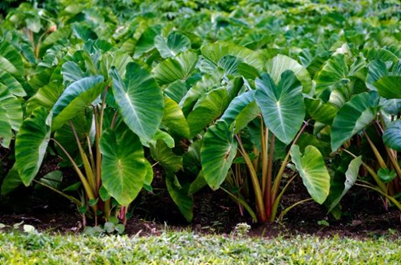
Fig 1: Colocasia esculenta
Colocasia esculenta (L.) Schott is a perennial herb belonging to the family Araceae. It is widely distributed across tropical and subtropical regions of India, Southeast Asia, Africa, the Pacific Islands, and the Caribbean. The plant grows from an underground corm and produces large, peltate leaves supported by long, fleshy petioles. Traditionally, it has been cultivated for both nutritional and medicinal purposes, with its corms, leaves, and petioles used in various therapeutic applications.
Table 1: Scientific Classification [10,24]
|
Kingdom |
Plantae |
|
Subkingdom |
Tracheobionta |
|
Superdivision |
Spermatophytes |
|
Division |
Magnoliophyta |
|
Phylum |
Tracheophyta |
|
Sub-phylum |
Euphyllophytina |
|
Class |
Liliopsida |
|
Sub-class |
Arecidae |
|
Order |
Alismatales |
|
Family |
Araceae -Arums |
|
Genus |
Colocasia schott |
|
Species |
Colocasia esculenta |
1.2 Vernacular name Plant profile
Table 2: Vernacular Names [10,11,12,24]
|
Sr.no |
Language |
Plant name |
|
1. |
Marathi |
Alu, Alluu |
|
2. |
Hindi |
Aruvi, Kacchu, Pattarveliya |
|
3. |
English |
Taro, Cocoyam, Eddo |
|
4. |
Sanskrit |
Aluki, Alukam, Alupam, Pindaluka, Pindalu |
|
5. |
Tamil |
Sempu, shamakkilangu |
|
6. |
Telugu |
Chamadumpa, Chamagadda, Chamakura |
|
7. |
Malayalam |
Chempu, Chempakizhanna |
|
8. |
Kannada |
Kesu, Kesave dantu |
|
9. |
Bengali |
Alti Kachu |
|
10. |
Malayalam |
Chempu, Madantha, Chempakizhnna |
Colocasia esculenta is a robust, erect perennial herb that develops from a swollen underground corm measuring roughly 10–15 cm in diameter. The plant bears large, peltate leaves that are typically 40–90 cm long and 30–60 cm wide, supported by smooth, fleshy petioles reaching 0.7–1.2 m in height. The inflorescence consists of a pale-yellow spathe about 15–30 cm long that encloses a shorter spadix. The spadix shows a distinct arrangement of female flowers at the base, followed by a narrow zone of neuter flowers and a longer cylindrical male portion. Fruits develop as multi-seeded berries, and seeds are minute, ovoid, and less than 2 mm in length.[3,4]
The species shows a short, upright stem that emerges above ground and expands slightly at the base of the leaf sheaths, giving rise to stolons or secondary corms. Leaves are sagittate-cordate with a clearly peltate lamina, displaying a dull surface above and a paler underside. The spathe is greenish at the tubular base and transitions to yellow along the blade, measuring 15–35 cm. The spadix, generally 8–12 cm, has a truncated sterile region and a small terminal appendix. The plant’s reproductive structures include a compact fruiting head formed by clusters of small berries, each containing ovoid seeds embedded in abundant endosperm. Diagnostic features include raphide bundles within idioblasts and well-developed aerenchyma in the petioles.[10]
Colocasia esculenta thrives in tropical and subtropical regions with warm, humid climates. It prefers fertile, moisture-retentive soils but can grow in waterlogged areas like wetlands and paddy fields. [3, 4, 5]
The plant’s fibrous roots stabilize soil, preventing erosion. Adequate moisture supports leaf and tuber growth, and it contributes to biodiversity by providing habitat for small organisms. [3, 4, 6]
Native to southern China, Sri Lanka, Bangladesh, Myanmar, Thailand, Cambodia, Vietnam, and India (Gujarat, Rajasthan, Madhya Pradesh, Maharashtra, Karnataka, Andhra Pradesh, Kerala), it is cultivated for edible tubers, leaves, and traditional medicinal uses. [12]
2. Phytochemical constituent:
Colocasia esculenta contains a wide range of phytochemicals, including flavonoids, phenolic acids, tannins, saponins, alkaloids, glycosides, steroids, and terpenoids [3,6,7]. These compounds form the core chemical profile of the plant and contribute to its nutritional and medicinal properties.
Major bioactive constituents reported from various plant parts include catechin, epicatechin, quercetin, rutin, chlorogenic acid, caffeic acid, gallic acid, β-sitosterol, stigmasterol, cycloartenol, and taraxerol [13–23]. These compounds occur alongside other metabolites such as oxalates, minerals, and carbohydrates, creating a chemically diverse profile.
These phytochemicals are typically extracted using methanol or ethanol and identified through chromatographic and spectroscopic methods, including HPTLC and GC–MS [10,19,20]. The presence of these bioactive molecules supports the ethnomedicinal uses and biological activities of C. esculenta [3,8,9].
Table 3: Phytochemical Comparison [13,14, 15,16,17,18]
|
Plant Part |
Main Phytochemical Groups |
Key Compounds Identified |
References |
|
Leaves |
Flavonoids, phenolic acids, tannins, saponins, phytosterols |
Quercetin, kaempferol, rutin, caffeic acid, ferulic acid, β-sitosterol |
Pertiwi et al., 2025; Gupta et al., 2019; Mohapatra & Rao, 2021 |
|
Petiole (Stalk) |
Flavonoids, phenolics, oxalates |
Chlorogenic acid, p-coumaric acid, soluble oxalates |
Sahu et al., 2013; Njintang et al., 2014 |
|
Corm (Tuber) |
Phenolics, trace alkaloids, tannins, saponins, carbohydrates, minerals |
Gallic acid, catechin, β-sitosterol-3-O-glucoside, cycloartenol |
Sumi et al., 2019; Kariuki et al., 2020; Hussain et al., 2022 |
|
Corm Skin |
Tannins, flavonoids, phenolic acids |
Catechin, epicatechin |
Nwachukwu et al., 2019 |
|
Root Fibers |
Terpenoids, phenolic compounds |
Taraxerol, stigmasterol, lignin derivatives |
Adewale et al., 2018 |
|
Whole Plant |
Triterpenoids, steroids, glycosides, flavonoids |
β-sitosterol, lupeol, taraxerol, luteolin |
Banerjee et al., 2020 |
3. Ethnopharmacology [3,4,5,14,24,25]
Colocasia esculenta, commonly called taro or “Arvi / Arbi” in India, has been utilized traditionally in Ayurvedic, folk, and other indigenous medical systems for a long time, with its use recorded across South and Southeast Asia as well as parts of Africa.
4. Pharmacological Activities of Colocasia esculenta
4.1 Antioxidant Activity
Studies on Colocasia esculenta reveal its strong antioxidant potential in both laboratory and animal studies. Extracts from leaves and corms, especially methanolic and ethanolic ones, effectively scavenge free radicals in assays such as DPPH, ABTS, and FRAP, with EC?? values around 42–65 µg/mL. These effects are linked to phytochemicals such as flavonoids, phenolic acids, anthocyanins, and carotenoids that neutralize reactive oxygen species by donating electrons or hydrogen atoms. In animal models, treatment with extracts reduces oxidative stress markers such as malondialdehyde (MDA) while enhancing antioxidant enzymes like superoxide dismutase and catalase. This antioxidant activity may also support cardiovascular protection, reduce tissue damage, and delay aging. Continuous research suggests that the antioxidant properties of C. esculenta could have broader implications in preventing oxidative stress-related diseases [23,29,35,37].
4.2 Anti-inflammatory Activity
Leaf and corm extracts of C. esculenta demonstrate considerable anti-inflammatory effects. In vitro studies show inhibition of protein denaturation by 60–72%, indicating stabilization of cellular proteins under stress conditions. In vivo experiments, including carrageenan-induced paw edema in rats, reveal significant reductions in swelling following extract administration. Flavonoids, phenolic acids, and alkaloids in the extracts likely suppress inflammatory mediators like TNF-α, IL-6, and nitric oxide. Additionally, the antioxidant nature of these compounds contributes to reduced oxidative damage at inflamed sites, further protecting tissues. This dual antioxidant and anti-inflammatory effect explains its traditional use in managing inflammatory disorders and supports its potential in modern therapeutics [1,5,24,30].
4.3 Antimicrobial Activity
C. esculenta extracts have been tested against a range of bacterial and fungal pathogens. Methanolic, aqueous, and ethanolic extracts of leaves and corms inhibit Gram-positive bacteria such as Staphylococcus aureus and Bacillus subtilis, and Gram-negative bacteria like Escherichia coli and Klebsiella pneumoniae. The extracts also show antifungal activity against Candida albicans and Aspergillus species. These effects are mainly due to flavonoids, phenolics, oxalates, and saponins, which disrupt microbial cell walls, interfere with metabolic enzymes, and reduce pathogen viability. The antimicrobial potential of C. esculenta suggests its usefulness in treating infections and as a natural preservative in food and pharmaceutical applications [20,17,28,35].
4.4 Hepatoprotective Activity
Research demonstrates that C. esculenta provides protective effects to the liver against chemical-induced damage. Oral administration of extracts from leaves and corms lowers elevated liver enzymes such as ALT, AST, ALP, and bilirubin in rats exposed to hepatotoxic agents. Histological studies show reduced necrosis, minimal inflammation, and restoration of normal hepatic architecture. The hepatoprotective effect is attributed to antioxidant activity, scavenging of free radicals, and stabilization of liver cell membranes by flavonoids, polyphenols, and carotenoids. These results suggest that C. esculenta may help prevent liver damage caused by drugs, toxins, or oxidative stress [12,32,36,37].
4.5 Antidiabetic Activity
C. esculenta exhibits significant hypoglycemic effects in experimental diabetic models. Extracts of leaves, corms, and petioles reduce fasting blood glucose levels, improve glucose tolerance, and elevate insulin levels in alloxan- and streptozotocin-induced diabetic rats. The extracts inhibit carbohydrate-hydrolyzing enzymes such as α-amylase and α-glucosidase, slowing glucose absorption in the intestines. Dietary fiber in corms also contributes to lower postprandial glucose levels. Moreover, these extracts enhance insulin sensitivity and may protect pancreatic β-cells from oxidative damage. These findings support the potential of C. esculenta as a natural antidiabetic agent [28,8,9,33].
4.6 Antihyperlipidemic Activity
Studies show that C. esculenta can modulate lipid profiles in hyperlipidemic models. Ethanolic and aqueous corm extracts significantly reduce total cholesterol, LDL, VLDL, and triglycerides while increasing HDL levels. Polyphenols, saponins, and dietary fibers contribute by enhancing lipid metabolism, inhibiting intestinal cholesterol absorption, and protecting lipids from oxidative damage. The extracts also increase lipoprotein lipase activity, promoting clearance of circulating lipids. These effects suggest potential applications in preventing or managing cardiovascular diseases associated with hyperlipidemia [10,11,31,36].
4.7 Anticancer Activity
Experimental studies indicate that extracts of C. esculenta possess cytotoxic effects on various cancer cell lines, including gastric, colon, and breast cancers. Methanolic and ethanolic extracts inhibit cell proliferation, induce apoptosis, and cause cell cycle arrest. In vivo animal studies report decreased tumor volume and slower disease progression after treatment. Bioactive compounds such as flavonoids, anthocyanins, and phenolics are responsible for modulating oxidative stress, inhibiting inflammatory pathways, and disrupting cancer cell signaling. These findings highlight the potential of C. esculenta as a source of natural anticancer agents [30,12,13,38].
4.8 Diuretic Activity
Studies indicate that C. esculenta extracts can enhance urine production and electrolyte excretion. Both aqueous and ethanolic extracts of leaves and corms have been shown to increase urinary volume and sodium and potassium excretion in rat models. The activity is likely due to potassium salts, flavonoids, and saponins, which influence renal tubular function and promote water clearance. This property supports its traditional use in managing fluid retention and mild edema, while also suggesting potential applications in regulating blood pressure and kidney function [28,29,35].
4.9 Immunomodulatory Activity
Phytochemical-rich extracts of C. esculenta, particularly from leaves and corms, have shown immunomodulatory potential in vitro and in animal studies. The extracts can stimulate phagocytic activity, enhance natural killer (NK) cell function, and modulate cytokine levels such as TNF-α and IL-6. Such activity may enhance host defense mechanisms and provide adjunctive benefits in managing infections or inflammatory conditions. These effects are attributed mainly to flavonoids, phenolic compounds, and polysaccharides present in the plant [28,30,33].
4.10 Anti-obesity and Metabolic Regulation
Ethanolic extracts of C. esculenta corms have been shown to regulate lipid accumulation, reduce body weight gain, and improve glucose and lipid metabolism in high-fat diet-induced obese rats. The effects are attributed to the plant’s dietary fiber, saponins, and polyphenolic content, which enhance lipid catabolism and reduce oxidative stress. These studies indicate potential applications in managing metabolic syndrome and obesity-related complications [10,11,36].
4.11 Antimalarial Activity
Leaf and corm extracts of C. esculenta have demonstrated moderate in vitro antiplasmodial activity against Plasmodium falciparum. Phytochemicals such as flavonoids, phenolics, and tannins may interfere with parasite metabolism, inhibit heme detoxification, and modulate oxidative stress, which contributes to the observed antiplasmodial effect. Although traditional medicine reports its use for febrile illnesses, modern studies are limited and suggest the need for more in vivo evaluations [31,35,37].
CONCLUSION
Colocasia esculenta is a traditionally important medicinal and nutritional plant with a rich phytochemical profile that contributes to its wide range of pharmacological activities. Studies show its antioxidant, anti-inflammatory, antimicrobial, hepatoprotective, antidiabetic, lipid-lowering, anticancer, immunomodulatory, diuretic, neuroprotective, antimalarial, and metabolic regulatory effects, supporting its use in managing inflammation, oxidative stress, metabolic disorders, infections, liver dysfunction, and neurological conditions.
Although preclinical findings are promising, challenges remain in standardizing extracts, understanding precise mechanisms, and assessing safety in humans. Future research should aim to optimize extraction and formulation methods, identify active compounds, and perform thorough toxicological and clinical evaluations. Employing modern biotechnological approaches such as nanotechnology and metabolomics could enhance the effectiveness, consistency, and safety of C. esculenta preparations, paving the way for developing scientifically validated herbal therapies for global health needs.
REFERENCES



Yogeshwari Mali, Prapti Jadhav, Nikita R. K., Mohazzib Husain, Wadulkar R. D., Satpute K. L., Colocasia esculenta (Taro): A Comprehensive Review of Phytochemistry, Pharmacology, and Therapeutic Applications, Int. J. of Pharm. Sci., 2025, Vol 3, Issue 12, 3670-3678. https://doi.org/10.5281/zenodo.18062210
 10.5281/zenodo.18062210
