
Department of Pharmaceutics, Teerthanker Mahaveer College of Pharmacy, Teerthanker Mahaveer University, Moradabad-244001, India.
The goal of this study was to create and evaluate an oral sustained-release drug delivery system for the commonly prescribed pain reliever paracetamol. We produced hydrophilic matrix-based tablets with different concentrations of hydroxypropyl methylcellulose using the dry granulation method. The tablets had a dosage of 400 mg and were designed for once-a-day use. We assessed the formulations for the release of paracetamol over 24 hours, using USP type I dissolution testing equipment. The physical characteristics of the tablets were also evaluated. The in-vitro drug release tests showed that the tablets containing 12% HPMC of the total tablet mass achieved good results and controlled the release for 20 hours. The in-vitro release data of the prepared formulations closely followed Korsmeyer-Peppas and Higuchi kinetics. We compared the selected formulation to a commercial product based on the drug release profile and found a similarity factor (f2) greater than 50. We also analyzed the chosen formulation in relation to a paracetamol extended-release tablet made using the wet granulation technique. In conclusion, the dissolution characteristics and the fit of the mathematical models indicate that we can effectively manage the release of paracetamol using hydrophilic matrix systems.
The oral route remains the most widely used and preferred method of drug administration because of its simplicity, non-invasive nature, cost-effectiveness, and patient convenience. However, conventional immediate-release formulations often necessitate multiple daily doses to sustain therapeutic plasma concentrations. Such frequent dosing can lead to considerable fluctuations in drug levels, reduced clinical efficacy, poor patient adherence, and an increased likelihood of adverse effects. In recent years, sustained-release (SR) and controlled-release dosage forms have gained significant attention as they can maintain steady plasma concentrations for extended periods, reduce dosing frequency, and ultimately improve therapeutic outcomes and patient compliance. [1,2]. Paracetamol (acetaminophen) is one of the most frequently used analgesic and antipyretic agents worldwide. It is prescribed for the management of mild to moderate pain and fever associated with various conditions. Although paracetamol is rapidly absorbed following oral administration, its short elimination half-life of approximately 2–3 hours necessitate repeated dosing to maintain effective plasma levels. This can be inconvenient for patients, particularly those requiring long-term therapy for chronic pain conditions. Developing a sustained-release oral formulation of paracetamol capable of providing prolonged therapeutic activity would therefore be advantageous in improving patient adherence and ensuring more consistent drug exposure. [3,4]. Among the various technologies available for sustained drug delivery, hydrophilic matrix systems have emerged as one of the simplest and most cost-effective approaches. These systems typically incorporate hydrophilic polymers such as hydroxypropyl methylcellulose (HPMC) into the tablet matrix. When exposed to gastrointestinal fluids, the polymer swells and forms a gel barrier at the tablet surface. This hydrated layer regulates fluid penetration and controls drug diffusion from the matrix, resulting in a gradual and predictable release profile. By modifying the polymer concentration, viscosity grade, or type, the drug release rate can be finely tuned. Compared with other controlled-release technologies, hydrophilic matrices require fewer processing steps, do not rely on specialized coating equipment, and are relatively easy to scale up, making them highly suitable for commercial manufacturing. [4]. The granulation method plays a key role in determining the characteristics of matrix tablets. Dry granulation is particularly advantageous for moisture- or heat-sensitive materials, as it avoids the use of solvents and involves minimal processing. This method can yield tablets with good mechanical strength and reproducible drug release properties, making it an attractive alternative to wet granulation for sustained-release formulations. [5]. The present investigation focuses on the development of sustained-release matrix tablets of paracetamol using different concentrations of HPMC (3000 Cps) through the dry granulation technique. The prepared tablets were subjected to physicochemical characterization and in-vitro dissolution studies for 24 hours using USP type I apparatus. Release data were analyzed using kinetic models to elucidate the drug release mechanism, and the optimized formulation was compared with a marketed sustained-release product to assess similarity in release behavior. This work aims to establish hydrophilic matrix tablets prepared by dry granulation as a viable and effective approach for producing once-daily sustained-release paracetamol formulations. [6,7]
MATERIALS AND METHODS:
MATERIALS: Paracetamol, HPMC 3000cs, Microcrystalline cellulose, Dibasic calcium phosphate anhydrous, Aerosil, Magnesium stearate) were provided by departmental chemical store of Teerthanker Mahaveer College of Pharmacy.
METHOD:
Dry granulation technique was employed to prepare the tablets. HPMC 3000cs was first passed through a 40# sieve. The sifted material was mixed for a suitable time in a laboratory-scale bin blender. After mixing, it was coated with Magnesium Stearate, also sifted through a #40 sieve, for 5 minutes. The coated mixture was compressed in a vertical roller compactor under the right conditions to produce the desired granular product. Additional granular Magnesium Stearate was then applied to the granules for another 5 minutes to assess their flow characteristics. Tablets were formed using 21.58 x 8.6 mm capsule-shaped punches on a 10-station mini press tableting machine. Six different formulations were created, each with different concentrations of HPMC 3000cs. These tablets were evaluated for drug release to see how polymer concentration affected drug discharge. [4,8].
Table 1. Formulation Table
|
Quantity (mg) per Tablet |
||||||
|
|
F1 |
F2 |
F3 |
F4 |
F5 |
F6 |
|
Paracetamol |
400.00 |
400.00 |
400.00 |
400.00 |
400.00 |
400.00 |
|
Microcrystalline cellulose |
526.48 |
490.48 |
460.48 |
430.48 |
370.48 |
310.48 |
|
Dibasic calcium phosphate anhydrous |
20.00 |
20.00 |
|
20.00 |
20.00 |
20.00 |
|
HPMC 3000Cs |
134.00 |
170.00 |
230.00 |
230.00 |
290.00 |
350.00 |
|
Aerosil |
5.00 |
5.00 |
5.00 |
5.00 |
5.00 |
5.00 |
|
Magnesium Stearate |
15.00 |
15.00 |
15.00 |
15.00 |
15.00 |
15.00 |
|
Total |
1100.0 |
1100.0 |
1100.0 |
1100.0 |
1100.0 |
1100.0 |
Pre-compression Parameters:
Angle of repose
The angle of repose was determined using the fixed funnel method. A funnel was kept vertically in a stand at a specific height above a piece of paper that was spread out on a horizontal surface. The funnel was closed and a granule was added. The funnel was then opened, releasing the grains onto the paper in a smooth, conical pile. After determining the height and radius of the heap, the angle of repose was calculated using the following formula.[9]
Ø= tan-1 h/r
Where Ø = Angle of repose, h =height of heap and r = radius
Bulk Density
The bulk volume was measured after a predetermined amount of granules were carefully levelled without compacting them in a 25 ml measuring cylinder. The bulk density was computed using the formula.[10]
Bulk density = Weight of granules/ bulk volume
Tapped Density
The tapped density was measured using digital bulk density equipment. The measuring cylinder was filled with a predetermined number of granules, tapped 100 times, and the tapped volume was noted. The tapped density was computed using the formula.[11]
Tapped Density = Weight of granules / tapped volume
Compressibility Index
The compressibility index (CI), also known as Carr's Index, measures a powder's flowability by indicating its capacity to reduce volume under pressure. It is calculated using the bulk and tapped densities of a powder; lower compressibility index values indicate better flow characteristics.[12]
Compressibility Index= [Tapped density- Bulk density/Tapped density] ×100
Hausner’s Ratio
Hausner’s Ratio was determined by following formula:
Hausner’s Ratio= Tapped density / Bulk density
Preparation of calibration curve
Exactly 100 milligrams of paracetamol were used in a 100 microgram per ml volumetric flask. Enough buffer solution was added to the mark (stock solution) to fill it. The standard solution, which was divided into two micro gram per ml, four micro gram per ml, six micro gram per ml, eight micro gram per ml, and ten micro gram per ml, was used to fill ten micro gram per ml of the capacity with phosphate buffer of pH 7.2. The absorbance of these solutions was measured at a suitable wavelength using spectrophotometry.[13]
Evaluation of tablet:
Hardness
The hardness measurement procedure includes testing the tablets' crushing strength. It gives the table its breaking power, and the tablets' actual hardness shows how strong they are. The hardness was measured using a Pfizer hardness tester. It is possible to measure the hardness of ten tablets. The Value of hardness was measured in kg/cm2. Average hardness was noted. Both before and after compression, the tablets' hardness was evaluated.[14]
Weight variation test
To investigate weight variance, twenty tablets of each formulation were chosen at random during compression, and an electronic balance was used to calculate the average weight of each tablet. Every tablet was also weighed.[15]
Limit: Weight of individual tablet should be in the limit of average weight ±5%
Friability
The test was carried out using a ROCHE FRIABILATOR. Ten tablets were taken, carefully weighed, dedusted, and placed in a drum prior to testing. The tablets were removed after the drum had rotated 100 times. Removed loose dust from the tablets as before, and weighted accurately.[16]
In-vitro dissolution profile
The in vitro releases of paracetamol from different batches were tested for two hours in an acidic pH and eight hours in phosphate buffer using a USP-II paddle-type dissolution apparatus. Distinct release patterns were seen for different polymer concentrations. Most of the formulations released more than 80% to 90% during the 10-hour study period, based on the release data of various formulations. F5, which had a higher HPMC content than the others, showed better sustained release characteristics as more HPMC creates a thicker, stronger gel layer around the tablet, which slows the drug release down.[17]
Kinetics analysis of developed formulations
To understand the mechanism and rate-controlling parameters influencing the drug release from the Paracetamol matrix tablets, the dissolving data for each of the five formulations (F1–F5) was fitted to zero-order, first-order, and Higuchi kinetic models. [18]
Mechanisms of drug release:
To understand the drug release process from the matrix tablets, the release data were fitted to the following equations:
Zero-order equation: Q = k0t, where Q is the amount of drug released at time t, and k0 is the release rate.
First-order equation: log (100 - Q) = log100 - k1t, where Q is the percentage of drug released at time t, and k1 is the release rate constant.
Higuchi’s equation: Q = k2 t1/2, where Q is the percentage of drug released at time t, and k2 is the diffusion rate constant.
Korsmeyer-Peppas formula: Mt / M∞ = ktn, where Mt/M∞ is the fractional release of solute, t is the time of release, k is the kinetic constant, and n is an exponent. [19]
After evaluating the initially formulated tablets containing 20-25% HPMC for drug release, it was noted that only 36-69% of the drug was released over 24 hours. To improve drug discharge for complete dissolution, two additional formulations with HPMC 3000Cs at 12.0% and 15% were tested. The physical properties and dissolution profiles of these formulations were assessed. The reduced polymer concentration was balanced with an increased amount of lactose, which acted as a pore former to enhance drug release. [20]
A similarity factor (f2) analysis was conducted on the in vitro release characteristics of the commercial Paracetamol sustained-release tablets (SR) Lanol ER [Hetero Drug Ltd., India], following the same conditions used for the test product’s release evaluation. The similarity index between the two formulations was calculated using the data gathered from their drug release profiles. [21]
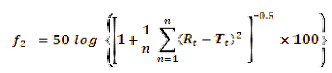
Where, n = quantity of pull points, Rt = Reference profile at time moment t and Tt = Test profile at the same time moment.
RESULTS AND DISCUSSION:
The ER tablets of Paracetamol were created since there was no existing literature on the formulated dosage form and Paracetamol was a preferred medication for numerous patients. Dry granulation was the utilized method for producing SR formulations, as alternative methods did not yield acceptable flow characteristics due to the lightness of the drug.
Granules Characteristics
The lubricated granules were assessed for granules specifications bulk density, tapped density, compressibility index, Hausner ratio, and particle size distribution. The outcomes are summarized in Table 3. The flow characteristic represented by the empirical value of the compressibility index indicates that every batch exhibited acceptable flow properties. Particle size distribution of lubricated granules appears to be consistent across all produced batches with no notable variation in Granulometry. This implies that the impact of the formula composition is likely to have minimal influence on the granule’s properties.
Table 3: Properties of Prepared Granules
|
Granules Parameter |
F1 |
F2 |
F3 |
F4 |
F5 |
F6 |
|
Bulk Density |
0.510 |
0.507 |
0.510 |
0.550 |
0.549 |
0.549 |
|
Tapped Density |
0.800 |
0.710 |
0.700 |
0.700 |
0.710 |
0.680 |
|
Compressibility Index |
22.90 |
18.00 |
15.60 |
18.60 |
23.00 |
18.70 |
|
Hausner Ratio |
1.32 |
1.22 |
1.18 |
1.22 |
1.30 |
1.21 |
|
Particle Size distribution |
|
|
|
|
|
|
|
% Retains on Sieve #60 ASTM |
52.3 |
45.3 |
52.1 |
53.3 |
53.3 |
53.3 |
|
% Passed through Sieve #60 ASTM |
43.8 |
50.2 |
44.2 |
41.3 |
41.4 |
43.4 |
Physical Properties
The findings for weight variation, hardness, thickness, friability, and drug content are presented in Table 4. All the formulations created demonstrated adherence to the official standards for weight uniformity. The drug content was determined to be nearly 100% of the labeled amount. claim for paracetamol all the formulations. The hardness and fragility, indicators of the tablets' strength, were determined to be >12 Kp and <1% correspondingly, these figures were within acceptable ranges. Thus, all the physical metrics of the compressed matrices were determined to be largely within control limits.
Table 4: Physical properties of prepared formulations
|
Test |
F1 |
F2 |
F3 |
F4 |
F5 |
F6 |
|
Individual tablet weight (mg) |
1092 – 1109 |
1096 – 1114 |
1095 – 1114 |
1082 – 1119 |
1190 - 1110 |
1098 – 1120 |
|
Hardness (KP) |
13.8 – 17.2 |
12.8 – 18.0 |
16.4 – 19.0 |
12.0– 17.1 |
13.3 – 18.4 |
15.2 – 18.5 |
|
Friability (%) |
0.0 |
0.08 |
0.05 |
0.06 |
0.11 |
0.10 |
|
Drug Content (%) |
96.6 |
95.3 |
91.8 |
92.0 |
94.2 |
95.4 |
In-vitro release investigations and impact of binder levels:
Since the medication under investigation had limited solubility in water, moderate molecular weight HPMC is utilized as a polymer to regulate the release of the drug from a matrix at concentrations ranging from 12 to 30% w/w in tablets produced. The impact of polymer concentration on the drug release from matrix tablets was examined for those containing 12%, 15%, 20%, 25%, and 30% of the polymer. (Formulations F1 to F6). Fig. 1 illustrates that the quantity of HPMC utilized influences the drug's release rate.
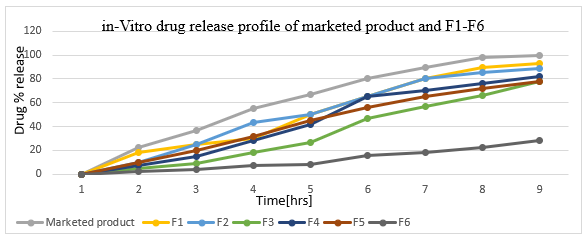
Figure 1. in-Vitro drug release profile of marketed product and F1-F6
Tablets with 12% and 15% HPMC exhibited over 80% release in 20hrsand the release of the drug was fully achieved at 24 hours. Meanwhile, tablets composed of 20 – 30% of HPMC showed a more delay and incomplete rug release at 24 hours. Upon additional assessment of Tablets lacking dry binder and their dissolution profile pattern, there was no notable difference in Granulometry, tablets physical characteristics and dissolution behavior. Therefore, assessed batches revealed that an increased percentage of the polymer results in greater drug release inhibition, and a concentration of 12% HPMC K4M demonstrated comparable release profiles to the commercial product. There was no notable difference between formulations F3 and F4 created with 0% and 2.5% of binder concentration in relation to Granules characteristics, Tablet physical attributes. Furthermore, there was no substantial impact on the drug release profile (Fig. 2), and the influence of HPMC as a rate-controlling polymer is observed to be predominant. The final decision regarding binder concentration will be determined based on additional variation studies following the freezing of polymer concentration.
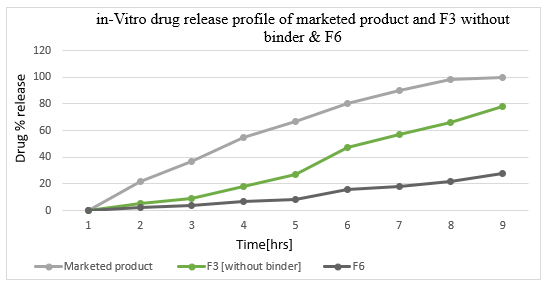
Figure 2. In-Vitro drug release profile of marketed product and F3 without binder & F6
Similarity Factor for formulation selection and comparison with wet granulation tablet dosage: The main objectives of dissolution testing are threefold: (1) for quality control, to ensure the consistency of products across different batches; (2) to aid in forecasting bioavailability for the purpose of formulation development; and (3) as an indicator of variation when modifications are introduced to a current formulation. Therefore, to evaluate the release pattern from two distinct formulations of the identical drug, f2 factor can be utilized. Similarity factor assessment between the manufactured tablets and Lanol ER tablets (advertised) for the launch of Paracetamol indicated an f2 factor (f2 = 60) that exceeds 50. As illustrated in Fig. 3, the f2 factor verifies that the release of paracetamol the obtained tablets resembled the commercially available tablet.
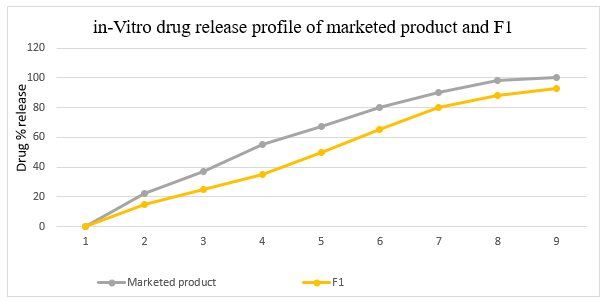
Figure 2. In-Vitro drug release profile of marketed product and F1
The selected paracetamol ER Tablets formulation is contrasted with tablets produced by a marketed product Thus, to analyze the release pattern of two distinct formulations of the identical drug, the f2 factor can be utilized. Similarity factor evaluation between the produced tablets (formulated product and marketed product) for the release of Paracetamol exhibited an f2 factor (f2 = 72.3) exceeding 50. As illustrated in Fig. 4, the f2 factor validates that the release of paracetamol from the prepared tablets was similar to that of the marketed product.
Drug release mechanism:
The release data acquired from the in-vitro dissolution investigation of different formulations was analyzed using mathematical models. The kinetic models utilized were First order, Higuchi equation (matrix system), and Korsmeyer-Peppas model. Table 5 presents the results from the model fitting for all six formulations examined (F1-F6), along with their R2 values and K constant, and exponential value. The comprehensive curve fitting indicated that the medication release from the sustained release matrix tablets adhered to either the Higuchi equation or the Korsmeyer- Peppas model. The exponential factor "n" values ranged from 0.2871 to 0.3637, suggesting the Fickian diffusion- controlled medication release. The correlation coefficient R2 was at times better suited for the Matrix system and at other times for the Korsmeyer-Peppas equation, which was suitable for sustained release systems. Nevertheless, considering the minimal variation in the R2 values for the drug release Paracetamol, the analysis of the release data utilizing these mathematical models can be entirely empirical.
Table 5: Release kinetics of the prepared formulations
|
|
R2 |
|
|
|||
|
|
Zero- order |
1st order |
Higuchi |
Korsmeyer- Peppas |
n |
k |
|
F1 |
0.7980 |
0.9221 |
0.9621 |
0.9599 |
0.3237 |
26.63 |
|
F2 |
0.7570 |
0.9285 |
0.9541 |
0.9273 |
0.28 07 |
14.93 |
|
F3 |
0.7356 |
0.9587 |
0.9578 |
0.9605 |
0.2784 |
27.22 |
|
F4 |
0.6834 |
0.9402 |
0.9664 |
0.9639 |
0.2952 |
31.16 |
|
F5 |
0.5266 |
0.8626 |
0.9193 |
32.65 |
0.2771 |
- |
|
F6 |
0.6198 |
0.9105 |
0.9427 |
31.88 |
0.26 03 |
- |
CONCLUSION:
The goal of this study was effectively accomplished by employing the dry granulation process to formulate and assess a sustained-release matrix tablet containing paracetamol using hydroxypropyl methylcellulose (HPMC 3000Cs) as a hydrophilic polymer. The main goal, which was to create a once-daily controlled-release dosage form that would guarantee constant therapeutic impact and uniform drug release, was successfully accomplished. Good flow characteristics, mechanical strength, and homogeneity were confirmed by the acceptable pre- and post-compression parameters of all created formulations. The medication release rate was shown to be inversely proportional to the polymer concentration based on the in-vitro dissolution results. With a similarity factor (f?) of 72.3 (>50), the tablet containing 12% HPMC 3000Cs offered the most desirable controlled release profile among the different formulations, maintaining drug release for up to 20 hours and nearly matching the performance of the marketed product (Lanol ER). This validated the developed formulation's repeatability and pharmacological equivalency. The optimised formulation was found to match the Higuchi and Korsmeyer–Peppas models, according to kinetic modelling, suggesting a Fickian diffusion-controlled release mechanism. The performance of HPMC as a rate-controlling polymer in obtaining consistent and extended drug release from hydrophilic matrices is confirmed by these results. The dry granulation method is a reliable, scalable, and solvent-free technique for creating sustained-release matrix tablets of paracetamol, according to the study's findings. The optimised formulation provides a competitive alternative to the commercially available extended-release product in addition to fulfilling the design goals of longer drug release and dose reduction. Future research concentrating on stability testing and in-vivo bioequivalence tests may further demonstrate its potential for commercial use and an increase in patient compliance.
REFERENCES

Abdul Ahad Noor, Vikrant1, Sourav, Teetu Kumar, Harshit Gupta, Esha Agarwal, Shweta Raghav, Keshav Saini, Narendra Kumar, Gulshan Rathore*, Controlled Release of Paracetamol from HPMC-Based Hydrophilic Matrix Tablets: A Dry Granulation Approach and Kinetic Modeling, Int. J. of Pharm. Sci., 2025, Vol 3, Issue 10, 1241-1251 https://doi.org/10.5281/zenodo.17340336
 10.5281/zenodo.17340336
