
Shraddha Institute of Pharmacy, Kondala Zambre, Washim-444505.
The oral cavity serves as a critical interface between the external environment and the body’s internal systems, playing a fundamental role in digestion, respiration and defence against pathogens. However, its constant exposure to microbial agents makes it highly susceptible to oral infections such as halitosis, gingivitis and dental caries—conditions increasingly linked to systemic disorders like cardiovascular disease and diabetes. While mechanical cleaning methods are essential, mouthwashes provide additional antimicrobial coverage, especially in hard-to-reach areas. This project focuses on the formulation and evaluation of a herbal mouthwash utilizing scientifically validated medicinal plants including Ocimum sanctum (Tulsi), Mentha piperita (Peppermint), Zingiber officinale (Ginger) and Cinnamomum zeylanicum (Cinnamon). These ingredients were selected for their proven antimicrobial, anti-inflammatory and antioxidant properties. The study aims to develop a safe, stable and sensory-acceptable herbal formulation that promotes oral freshness and microbial protection. Evaluation involves physicochemical analysis, stability assessment and antimicrobial testing against oral pathogens. This work contributes to the advancement of natural, eco-friendly oral care solutions and supports the integration of traditional herbal wisdom with modern pharmaceutical practices.
Oral hygiene is an integral yet often underappreciated component of overall health. More than a means to ensure fresh breath or an attractive smile, the oral cavity functions as a frontline defence against microbial invasion and plays a pivotal role in both digestion and respiration. Given its constant exposure to environmental agents, the mouth is particularly prone to microbial colonization and related disorders, which, if left unaddressed, can extend their impact beyond local infection to influence systemic health.(8)
The rising incidence of oral diseases such as dental caries, gingivitis, periodontitis, and halitosis underscores the need for comprehensive preventive care. These conditions are now being increasingly associated with chronic illnesses including cardiovascular disease, diabetes, and respiratory infections, highlighting the interconnectedness of oral and systemic health. Traditional oral hygiene practices like brushing and flossing form the baseline of daily care, but they often fall short in targeting hard-to-reach areas or providing sustained antimicrobial effects.(5) Mouthwashes serve as valuable adjuncts in maintaining oral cleanliness, yet conventional synthetic formulations raise concerns about side effects, chemical residues, and long-term safety. In response, there is growing momentum toward herbal alternatives—driven by consumer demand for natural products and backed by emerging scientific validation.(13) This study explores the formulation of a novel herbal mouthwash harnessing the therapeutic properties of botanicals such as Tulsi, peppermint, and cinnamon. These plants are renowned for their antimicrobial, anti-inflammatory, and antioxidant capabilities, rooted in centuries of traditional medicine. The research aims to develop a stable, effective, and palatable mouthwash that not only controls oral pathogens and odour but also aligns with the principles of natural, sustainable healthcare. By integrating modern scientific rigor with herbal wisdom, this study seeks to offer a safer and more holistic solution for everyday oral hygiene.(19)
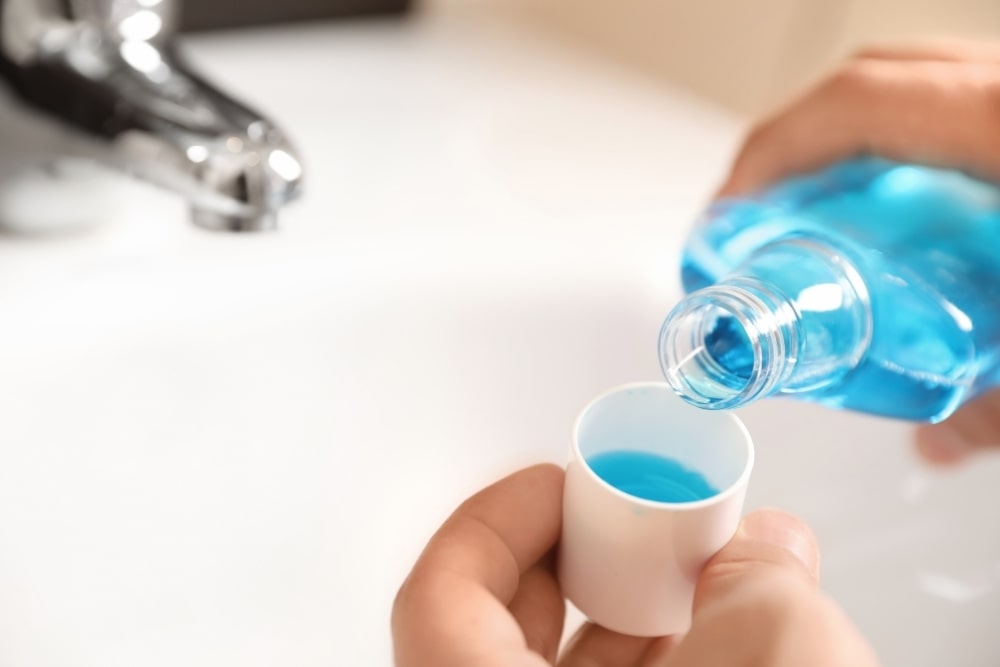
Figure 1: Mouthwash
Material and Equipment’s:
The following materials were used in the formulation and evaluation of the herbal mouthwash.
Table 1: Material & Equipment’s
|
Sr. No. |
Material |
Source/Purpose |
|
1 |
Liquorice Powder (Glycyrrhiza glabra) |
Herbal extract for antimicrobial and soothing properties |
|
2 |
Cinnamon Oil (Cinnamomum verum) |
Essential oil for antimicrobial and flavouring agent |
|
3 |
Mentha Piperita Oil (Mentha piperita) |
Peppermint oil for breath freshness and antimicrobial action |
|
4 |
Sodium Lauryl Sulphate |
Anionic Surfactant |
|
5 |
Ethanol (Alcohol) |
Solvent and preservative agent |
|
6 |
Glycerine |
Humectant and sweetening agent |
|
7 |
Purified Water |
Vehicle/solvent for formulation |
Equipment’s Use:
Table 2: Equipment’s Use
|
Sr. No. |
Equipment |
Purpose/Use |
|
1 |
Measuring Cylinder |
For accurate measurement of liquids |
|
2 |
Beakers |
For mixing and preparation of mouthwash |
|
3 |
Magnetic Stirrer with Hot Plate |
For uniform stirring and gentle heating |
|
4 |
pH Meter |
To measure and adjust the pH of the formulation |
|
5 |
Digital Weighing Balance |
For precise weighing of solids and liquids |
|
6 |
Glass Rod |
Manual stirring during preparation |
|
7 |
Volumetric Flask |
For volume adjustments and standard solutions |
|
8 |
Conical Flask |
For mixing and microbial testing purposes |
|
9 |
Filter Paper and Funnel |
For filtration during formulation |
Methods of Formulation:
The herbal mouthwash was formulated using natural ingredients known for their antimicrobial, anti-inflammatory, and breath-freshening properties. All steps were conducted under aseptic conditions to ensure safety and stability.
Cinnamon and peppermint oils were measured and emulsified with Tween 80 using a magnetic stirrer at room temperature to create a stable oil-in-water emulsion.
Ginger powder was added to purified water and stirred for 30–45 minutes to extract active phytoconstituents. The mixture was visually monitored for uniform dispersion.
Ethanol and glycerine were mixed separately to act as a co-solvent, preservative, and humectant, improving mouthfeel and microbial stability.
The ginger extract, alcohol-glycerine mixture, and emulsified oils were combined under continuous stirring to ensure homogeneity and prevent phase separation.
A solution of glycerol (sweetener), saccharin sodium (flavour enhancer), and sodium benzoate (preservative) was added gradually with stirring to enhance taste and shelf life.
6. pH Adjustment:
Citric acid was added dropwise while monitoring with a digital pH meter to achieve a final pH between 5.5 and 6.5—suitable for oral use.
The volume was adjusted with purified water, stirred for 15 minutes, and filtered through muslin cloth or Whatman paper to ensure clarity
The final product was filled into sterilized amber bottles, labelled with batch and storage details, and stored in a cool, dry place (<25°C) for further evaluation.
Formulation Table
Table 3: Formulation Table
|
Sr No. |
Ingredients |
F1 |
F2 |
F3 |
Functions |
|
1 |
Tulsi Extracts |
10 ml |
10 ml |
14.5 ml |
Antibacterial |
|
2 |
Ginger powder |
2 g |
1.8 g |
1.5 g |
Anti- Inflammatory |
|
3 |
Glycerol |
6.5 ml |
6.5 ml |
6 ml |
Sweetening Agent |
|
4 |
SLS |
2.5 g |
2.5 g |
2 g |
Surfactant |
|
5 |
Distilled Water |
q. s |
q. s |
q. s |
Vehicle |
|
6 |
Mentha Piperita Oil |
1.25ml |
0.50ml |
0.75 |
Fragrance Agent |
|
7 |
Cinnamon Oil |
0.2 ml |
0.1 ml |
0.2 ml |
Flavorings Agent |
Evaluation Study
The formulated mouthwash was evaluated for its colour, odour, taste and appearance:
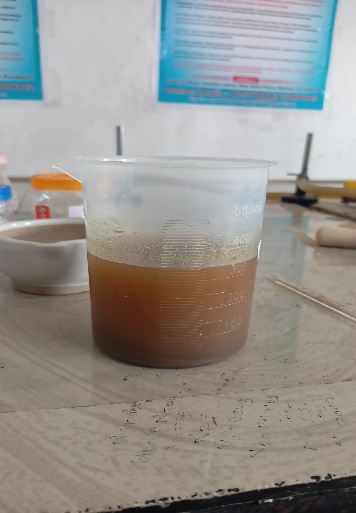
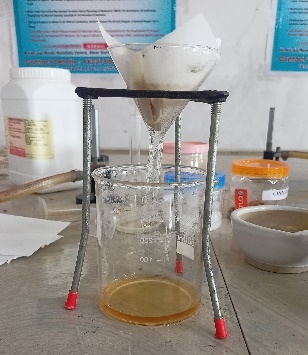
Figure 8: Ocimum Sanctum Extraction
C) Freshness Retention Test
To evaluate how long the mouthwash maintains a feeling of oral freshness after use.
Procedure:
D) Foaming Test
To determine the foaming capacity and stability of the mouthwash, which reflects its cleansing action.
Materials:
Procedure:
The presence of sodium lauryl sulphate (SLS) contributed to foam generation, which is desirable for mechanical cleansing during rinsing.
RESULT AND DISCUSSION
The formulated herbal mouthwash underwent a series of evaluations to assess its physicochemical properties, organoleptic characteristics, antimicrobial efficacy, and overall stability. Three formulations (F1, F2, F3) were developed with varying concentrations of key ingredients such as Tulsi extract, Ginger, cinnamon oil, and peppermint oil.
A) Organoleptic Evaluation
All formulations displayed acceptable colour, odour, taste, and appearance. Formulation F3 was found to be the most pleasant in terms of taste and aroma, owing to the higher content of peppermint and cinnamon oils. There were no signs of phase separation, turbidity, or sedimentation in any formulation at the initial stage, indicating good emulsion stability.
B) pH Determination
The pH values of the formulations ranged between 5.6 and 6.3, which falls within the physiologically acceptable range for oral products. This pH is suitable for maintaining oral tissue integrity without causing irritation, while also supporting the stability of herbal activities.
C) Foaming Test
Foaming ability was tested to assess the cleansing action of the formulations, particularly the effect of sodium lauryl sulphate. All formulations produced adequate foam upon agitation, with F1 showing the highest initial foam volume due to its slightly higher surfactant concentration. Foam stability was retained for at least 2 minutes, indicating good cleansing potential suitable for oral hygiene applications.
D) Freshness Retention Test
To evaluate the duration of freshness post-rinse, volunteers rated the sensation of freshness at intervals (immediately, 15 min, 30 min, 1 hour). F3 retained a noticeable fresh feeling for up to 1 hour, while F1 and F2 began to diminish around 30 minutes. This prolonged effect in F3 is linked to the synergistic action of menthol from peppermint oil and cinnamon’s aromatic compounds, which mask odour and inhibit volatile sulphur compound-producing bacteria.
SUMMARY
Oral health is vital to overall well-being, yet conventional mouthwashes often come with side effects such as irritation and dry mouth. Herbal alternatives, using ingredients like Tulsi, Ginger, Cinnamon, and Peppermint, offer a safer solution with proven antimicrobial and anti-inflammatory properties. In this study, a scientifically formulated herbal mouthwash was developed and evaluated. It demonstrated good pH balance, clarity, taste, stability, and significant antibacterial activity, supporting its effectiveness and suitability for regular use.
CONCLUSION
The study confirms that herbal mouthwashes can provide effective, side-effect-free oral care. The formulation offered strong antimicrobial protection, pleasant taste, and stability without synthetic additives. These findings support the integration of herbal mouthwashes into daily oral hygiene routines as safe, natural, and sustainable alternatives. Future clinical trials will help validate their broader health benefits and long-term efficacy.
REFERENCES

Ashay Lakade*, Ajay Jadhav, Kedar Shete, Shubham Tikait, Dr. Swati Deshmukh, Formulation And Evaluation of Herbal Mouthwash for Maintaining Freshness and Protection, Int. J. of Pharm. Sci., 2025, Vol 3, Issue 5, 3936-3942. https://doi.org/10.5281/zenodo.15497787
 10.5281/zenodo.15497787
