

We use cookies to ensure our website works properly and to personalise your experience. Cookies policy
Department of Pharmacy, Indore Institute Of Pharmacy.
Insomnia is a prevalent sleep disorder associated with stress, anxiety, and lifestyle changes, often managed with synthetic drugs that may produce adverse effects. This study focuses on the formulation and evaluation of a herbal capsule as an alternative sedative treatment using traditional medicinal plants, namely Jatamansi (Nardostachys jatamansi), Brahmi (Bacopa monnieri), and Tagar (Valeriana wallichii). These herbs are well known in Ayurveda for their calming, sedative, and neuroprotective properties.The herbal extracts were prepared by cold maceration, followed by drying, blending with excipients, and encapsulation using a manual filling method. Pre-formulation studies indicated good flow properties with a bulk density of 0.264 g/cm³, tapped density of 0.326 g/cm³, Hausner’s ratio of 1.23, Carr’s index of 16.87%, and an angle of repose of 32.08°. Evaluation parameters such as organoleptic properties, weight variation, pH (5.67), and disintegration complied with acceptable limits.Stability studies revealed that the formulation remained stable under ambient and moderate temperature conditions, showing no degradation up to 50°C for 6 hours. However, degradation was observed at higher temperatures (55°C and above) and increased humidity levels, indicating sensitivity to extreme storage conditions. The results suggest that the formulated herbal capsule is stable, safe, and potentially effective as a natural sedative for managing insomnia. This formulation may serve as a promising alternative to conventional therapies with minimal side effects.
In today’s world, many people struggle with stress, anxiety, and facing sleeping problems, they can cause some side effects because of this, there is growing interest in natural remedies that can help in reducing the sleeping problems without any harmful effects. Insomnia is technically defined as a sleep disorder. Drowsiness or persistent sleepiness that causes disability or discomfort during the day despite adequate opportunities and periods of sleep at least three times a week for at least one month. Plants have been used by all cultures throughout history. (1)
A good number of single drugs too are described in Ayurvedic literatures which give relief from Anidra. by taking into consideration of facts, this Formulation study was planned to evaluate the effect of Tagara (Valeriana wallichii) Jatamansi (Nardostachys jatamansi) and Brahmi (Bacopa monnieri) clinically in the management of insomnia and to Evaluate the effect of drugs in the management of Insomnia.(13)
Drug Details-
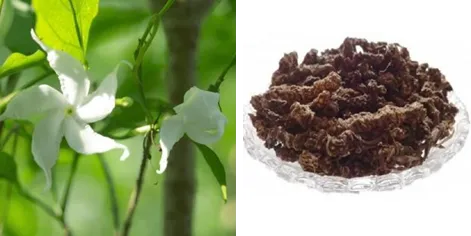
Tagar Also known as Valeriana wallichii (Indian valerian) occurring in the Northwestern Himalayas has been utilized for a significant stretch in Ayurveda. Equivalent names, activities, restorative purposes, compound medications having Valeriana wallichi, the internal administration, and local applications have been recalled from Samhita and Nighantu. On the side of its literary and ethnomedicinal benefits, a sharp and important inquiry from PUBMED and Scopus research doors has been gathered. (2)
Family: Valerianacea Genus: Valeriana Species: wallichii
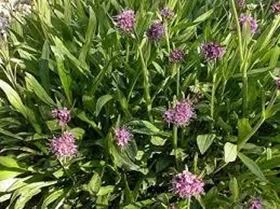
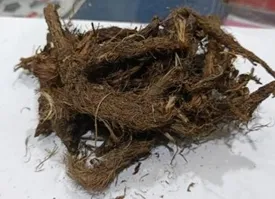
Jatamansi is the dried rhizome of Nardostachys Jatamansi. The plant is found in Himalayas at in an altitude 3000-5000 meters and is met with east of kumaon to Sikkim. It contains ketone jatamansone which is same as valeranone mentioned in valerian. It has been utilized for hysteria, sedative and it’s a spasmolytic.tranquilizing activity, antiestrogenic activity furthermore, Jatamansone has also been linked to anti-hypertensive, anti-arrhythmic, anti-asthmatic, nematicidal, and antibacterial effects.(12)
Family: Valerianaceae Genus: Nardostachys Species: Jatamansi
Bhrami is the freash or dried herd of bacopa monnieri. The plant found in swampy areas of india, commonly found as a weed in crop fields and other wast places throughout india up to an altitude of 600 m and also in Pakistan, sri lanka, etc. the drug contains triterpenoid saponin glycosides. The corresponding triterpene acids obtained on hydrolysis of the glycosides are indocentoic and isothankunic acids.(11)
Family: Scrophulariaceae
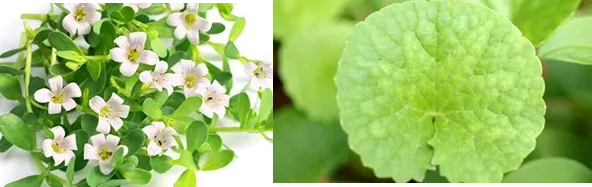
Genus: Bacopa
Species: Bacopa monnieri
MATERIALS AND METHOD
Material procurement
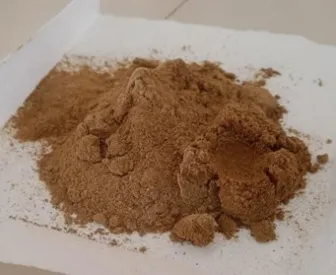
Tagar, jatamansi and brahmi powered (helps to reduce insomnia) are collected from the local market. starch (as binder) and ethanol, dist. Water, Talc (as lubricant) these all ingredient was collected from college laboratory.
Table 1: composition of herbal capsule
|
S.No. |
Ingredient |
Quantity (gm) |
|
1 |
Brahmi |
6 |
|
2 |
Tagar |
6 |
|
3 |
Jatamansi |
2 |
|
4 |
Potato Starch |
4 |
|
5 |
Talc |
2 |
Preparation
1. Preparation of Plant Extracts
The dried plant materials of Tagar (Valeriana wallichii), Jatamansi (Nardostachys jatamansi), and Brahmi (Bacopa monnieri) were procured and authenticated. The materials were cleaned, shade-dried, and coarsely powdered using a mechanical grinder.
Each powdered drug was subjected to cold maceration in a hydroalcoholic solvent (ethanol:water, 70:30 v/v) for 4–5 days at room temperature with intermittent shaking. The extracts were then filtered using muslin cloth followed by Whatman filter paper. The filtrates were concentrated and dried to obtain solid extracts, which were stored in airtight containers until further use. (8)
2. Weighing and Blending
Accurately weighed quantities of dried extracts (Brahmi 6 g, Tagar 6 g, Jatamansi 2 g) and
excipients (starch 4 g as binder) were taken. The ingredients were blended uniformly using a mortar and pestle or mechanical blender to ensure homogeneity.(9)(10)
3. Sieving
The mixture was passed through a #60 sieve to obtain a uniform particle size, improving flow properties and ensuring uniform filling.
4. Addition of Excipients
Talc (2 g) was added gradually as a lubricant to enhance flowability and prevent sticking during capsule filling. The mixture was mixed thoroughly to ensure even distribution.
5. Capsule Filling
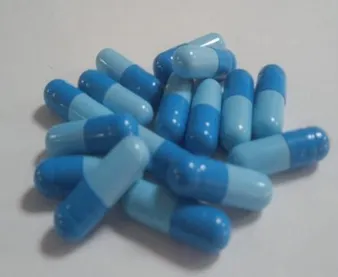
The prepared mixture was filled into hard gelatin capsules (size ‘0’) using a manual capsule filling machine. The capsules were visually inspected for uniformity, sealed, and stored in airtight containers.
PRE- FORMIULATION PARAMETER
Bulk density was carried out in 100 ml dried measuring cylinder. Pouring of dried granules in measuring cylinder and calculated by using the following formula;
Bulk density = Mass of the granules/Bulk volume of the granules
2. Tapped density
Tapped density was carried out by pouring of dried granules in 100ml measuring cylinder.100 tapping was done, note down the volume and calculate by using the following formula;
Tapped density= Granules weight/Volume of tapped granules
3. Hausner’s ratio
Hausner’s ratio is the ratio of the tapped density of granules to the bulk density of granules. Calculated by using the following formula.
Hausner’s ratio= Tapped density/Bulk density
4. Carr’s index
Carr’s index or compressibility index is determined by the following formula.
Carrs index % = Tapped density – bulk density × 100
Tapped density
5. Angle of repose
The angle of repose serves as an important flowability indicator for powders. Materials with angles greater than 40° exhibit poor flowability, while lower values indicate better flow properties,For pharmaceutical and herbal powder applications, angle of repose is a standard evaluation parameter used alongside other methods like compressibility index and Hausner ratio to assess powder flow characteristics Angle of repose was determined by using the funnel method. Following formula was used to calculate the angle of repose.
ϴ = Tan-1(h/r)
Where
h = height of granule cone formed.
r = radius of the granule cone formed. (6)(7)
EVALUTION PARAMETERS
1. Organoleptic characters
Color, odor, taste and texture were observed.
2. Description
About 20 Capsules were taken, the content were removed from the shell and was spread evenly on petri dish and the observation was recorded.
3. Average net weight
About 20 filled capsule weights were taken and noted individually in milligrams up to one decimal. The filled powder was removed from the capsules, then accurately 20 empty capsules weight was taken and the weight was noted down orderly in milligrams up to one decimal. The average mass of the filled weight was determined and reported in terms of milligrams.
4. Weight variation
About 20 Filled capsules were weighed and the weight of each capsule was noted individually in milligrams up to one decimal. The filled powder was removed from the capsules. Accurately 20 empty capsules were weighed and the weight of each capsule was noted individually in milligrams up to one decimal. The percentage variation of the highest and lowest weight of the Capsules with maximum and minimum weight was calculated and reported in terms of milligrams. (5)
5. Determination of pH
750 mg of Capsule powder was macerated with 100 mL water in a closed container. Shaken frequently to about 15 minutes once and left undisturbed for one hour. A rapid filtration was performed, the filtrate was collected and the pH was measured.
6. Disintegration test
The disintegration test was performed by placing the capsule inside the 6 tubes of the testing apparatus along with a disc. The basket rack assembly was suspended in water maintained at 37 ± 1°C. Then, the apparatus was operated till the Capsules get disintegrated and their residue passes through the mesh. The time was noted down. If the Capsules adhere to the disc, then the test should be repeated without the discs added to the tube. (3)
7. Stability study
The stability study experiment is carried out to determine the effect of accelerated conditions on the quality of pharmaceutical formulation. In the proposed work durability of the herbal capsules is examined by exposing to increased temperature, humidity conditions. The effect of above factors was seen on the herbal capsules 20 and is well depicted from the Table no.3&4 (4)
RESULTS AND DISCUSSION
Table no. 2 Result of Pre formulation parameter
|
S.no. |
Pre formulation parameter |
Result |
|
1. |
Bulk density |
0.264 g/cm3 |
|
2. |
Tapped density |
0.326g/cm3 |
|
3. |
Hausner’s ratio |
1.23 |
|
4. |
Carr’s index |
16.87% |
|
5. |
Angle of repose |
32.08˚ |
Table no.3 Result of Temp. studies
|
S.no. |
Storage Condition |
Testing Temperature (°C) |
0.5 h |
1 h |
3 h |
6 h |
Result |
|
1 |
Ambient |
30 |
- |
- |
- |
- |
No degradation in 4 h |
|
2 |
Warm (30–40°C) |
35 |
- |
- |
- |
- |
No degradation in 4 h |
|
3 |
Accelerated |
50 |
- |
- |
- |
- |
No degradation in 4 h |
|
4 |
Accelerated |
55 |
- |
- |
+ |
+ |
Degraded after 6 h |
|
5 |
Accelerated |
60 |
- |
- |
+ |
+ |
Degraded after 2 h |
Note: (+) Degradation and (-) No change
Table no.4 Result of relative humidity
|
S.no. |
Temperature (°C) |
30% RH |
50% RH |
70% RH |
90% RH |
|
1 |
30 |
- |
- |
- |
- |
|
2 |
35 |
- |
- |
+ |
+ |
|
3 |
55 |
- |
- |
+ |
++ |
|
4 |
65 |
- |
- |
++ |
+++ |
Note: (+) Degradation and (-) No change
1. Organoleptic Characters
Color, odor, taste and texture of capsule were Pale green colored powder, Characteristic blend of earthy and slightly pungent scents, bitter and smooth respectively.
2. Description
Size ‘0’ capsules, containing Pale green colored granular powder were observed.
3. Weight variation of net content
As per the API specification, the percentage deviation is 10% if the average weight of the capsule is less than 300 mg. The percentage deviation for the formulated herbal capsules was not more than ± 2.68%
4. Determination of pH
The pH of the formulated capsule powder was measured.The pH was found to be 5.67, which is slightly acidic to neutral. This pH range is favorable for the dissolution and absorption of active ingredients in the gastrointestinal tract, as the body’s stomach pH typically ranges from 1.5 to 3.5.
REFERENCES




Nandani Morya, Tarun Atude, Gyanendra Patel, Nimita Manocha, Formulation and Evolution of Herbal Capsule for Alternative Sedative Treatment, Int. J. of Pharm. Sci., 2026, Vol 4, Issue 5, 6635-6640, https://doi.org/10.5281/zenodo.20390837
 10.5281/zenodo.20390837