

We use cookies to ensure our website works properly and to personalise your experience. Cookies policy
Oyster Institute of Pharmacy, Nagonachi Wadi, Chhatrapati Sambhajinagar
Since ancient times, there has been awareness among people regarding the use of plants for the essential need of a healthy and beautiful skin. With good activity and comparatively lesser or nil side effects with the synthetic drugs, herbal formulations always have garnered a lot of attention. The best thing of herbal cosmetics is they provide the body with nutrients and other useful minerals because the Natural face care uses tropical face washes and face creams made of ingredients available in nature, much of the recent literature review plant derived ingredients, which may include herbs, flowers, roots, flowers and essential oil.
1.1 Face Wash
A. Definition:
A cleanser is a facial care product that is used to remove makeup, dead skin cells, oil, dirt, and other types of pollutants from the skin of the face. This helps to unclose pores and prevent skin conditions such as acne. A cleanser can be used as part of a skin care regimen together with a toner and moisturizer. The products that are used to wash your face without drying it out are called face washes.
1.2 Categories of therapeutic agents used in face wash:
A. Antibacterial:
Antibacterial cleaners inhibit the growth of bacteria on the skin. The antibacterial face washes are not only effective in cleaning your face but also helps in getting rid of the acne and skin breakouts that are pretty common in those with greasy or oily skin types.
B. Anti acne:
Acne cleansers are highly effective excess sebum without causing your skin to dry. Different types of antiacne drugs are used for different treatment purposes, depending on the severity of the condition.
C. Anti-inflammatory:
It is property of substance or treatment that reduce inflammation or swelling. Anti-inflammatory drugs make up about half of analgesic, remedying pain by reducing inflammation as opposed to opioids, which affect the central nervous system to block pain signalling to the brain.
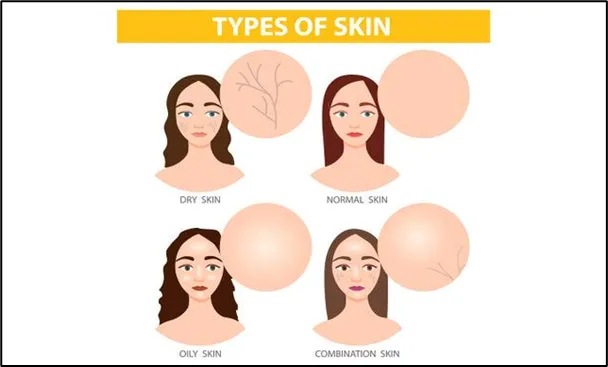
Figure 1: Type of skin
1.3 Advantages of Herbal Cosmetics over Synthetic Cosmetics:
These agents are gaining popularity as nowadays most women prefer natural products over chemicals for their personal care to enhance their beauty as these products supply the body with nutrients and enhance health and provide satisfaction as these are free from synthetic chemicals and have relatively less side-effects compared to the synthetic cosmetics.
A. Compatible with all Skin Types:
Natural cosmetics are suitable for all skin types. No matter if you are dark or fair, you will find natural cosmetics like foundation, eye shadow, and lipstick which are appropriate irrespective of your skin tone. Coal tar is recognized as a human carcinogen and the main concern with individual coal tar a colour (whether produced from coal tar or synthetically) is they can cause cancer. But natural colours that are obtained from herbs are safer.
B. Wide Selection to Choose from:
There exist a large variety of herbal extracts, to name a few Andrographis Paniculata (Kaleigh), Asparagus Racemases (Shahawar), Boswellia Serrata (Calcifugal), Asphalt (Shulamit) etc.
C. Not Tested on Animals:
Andrographis Paniculata (Kaleigh), However, natural cosmetics need not be tested on animals.
D. No Side Effects:
With natural cosmetics, one need not worry about these. The natural ingredients used assure no side effects; one can apply them anytime, anywhere. And are suspected of interfering with hormone function.to clear up mild to moderately severe acne. Isotretinoin (Accutane) is an oral drug that is prescribed only for very severe, disfiguring acne.
1.4 Properties of Face Wash:
When choosing a face wash, it is important to look for one with the following properties:
1. A good face wash should be stable and have a pleasant appearance.
2. The face wash should soften on application to the skin, making it easy to spread.
3. The face wash should spread easily on the skin without dragging or feeling oily or greasy.
4. After the water has evaporated, the residue of the face wash should not become viscous.
5. The physical action of the face wash should be of flushing the skin and opening pores, rather than absorbing into the skin.
6. A thin emollient film should remain on the skin after use, providing a protective barrier and keeping the skin hydrated.
1.5 Various Herbs used in Cosmetics:
1.6 Additives used in Face Wash
A. Gelling Agent:
Gelling Agents are ingredients that will turn your water, or oil, phase into a gel, which is thickened but, without stiffness. Emulsions thickened with Gelling Agents will be more mobile, and fluid, than rather than stiff. Some of these gels will thin when force is applied (thixotropic)
B. Preservative:
Some of these organisms can secrete poisonous substances (“toxins”), which are dangerous to human health and can even be fatal.
Examples; methyl paraben, propyl paraben.
C. Humectants:
Humectants are a hygroscopic substance used to keep things moist; it is the opposite of a desiccant. It is often a molecule with several hydrophilic groups, most often hydroxyl groups. Humectants attract and retain the moisture in the air nearby via absorption, drawing the water vapor into and/or beneath the organism/object's surface.
1.7 Function of Face Wash:
1. Face wash is a facial care of cosmetic used to clean the skin
2. Rejuvenating the skin cells elevate stress
3. Removes oil, dirt and impurities.
Reduces microbial flora of skin Leave skin fresh and breathing. Gel based face wash gel A gel is a solid jelly like material that can have properties ranging from soft and weak to hard and tough. Gels are defined as a substantially dilute cross linked system, which exhibits no flow when in the steady state. By weight, gels are mostly liquid, yet they behave like solids due to a three-dimensional cross-linked network within the liquid. It is the cross linking within the fluid that gives a gel its structure (hardness) and contributes to the adhesive stick (tack).
In this sense, gels are a dispersion of liquid molecule within solid, where solid is continuous phase and liquid is discontinuous phase. Thomas Graham, a Scottish chemist, coined the word "gel" by borrowing it from gelatine in the nineteenth century. Herbs for skin whitening Using substances, mixtures, or physical treatments to lighten skin tone is known as skin whitening. Treatments for skin whitening function by lowering the skin's melanin content. Many substances have been demonstrated to be effective at lightening the skin; some have positive effects (such as antioxidants and nutrients), while others pose a serious risk to health (for example, those containing mercury).
The development of new skin-care cosmetics, such as natural bleaching agents like melanin biosynthesis or tyrosinase inhibition, which are able to modulate the metabolism of pigmentation for human colour, is made possible by the search for naturally active compounds from organic herbal medicines or Traditional Chinese Medicines (TCMs). Antioxidants that are active in the oxidative stress of ageing skin cells may support skin health, whereas skin and it play a crucial protective role in skin whiteness. Melanin can be overproduced as a result of chronic sun exposure, melasma, or other hyper pigmentation diseases. Melanin is biosynthesized by melanocyte cells in the basal layer of the epidermis.
Thus, melanin overproduction such as hyperpigmentation of darkened age spots is reduced by bleaching agents, whereas melanin and other pigmenting agents are intended to increase pigmentation for sun protection. The prevention of ultraviolet (UV) exposure, the suppression of melanocyte metabolism and proliferation, the inhibition of tyrosinase activity, or the removal of melanin through corneal ablation have all been described as ways to inhibit melanin biosynthesis. The first two steps of this pathway—the hydroxylation of tyrosine (one of the nonphenolic compounds) to L-dopa (L-3,4-dihydroxyphenylalane; one of the o-diphenols) and the oxidation of L-dopa to dopaquinone—are catalysed by the enzyme known as tyrosinase (one of o-quinones).
Then, through a series of nonenzymatic reactions, these o-quinones are converted into melanin. Tyrosinase thus becomes the primary target enzyme for screening and the discovery of new inhibitory compounds, and tyrosinase inhibitors are significant components of cosmetics and skin-whitening agents. To stop the occurrence of these melanin overproduction or hyper pigmentation disorders, a continuous search for tyrosinase inhibitors derived from natural plants or TCMs is under way.
Reactive oxygen species (ROS) and other free radicals produced by oxidative stress in skin cells or by exposure to UV radiation have been shown to be improperly processed in order to increase melanin biosynthesis, damage DNA, and possibly promote the proliferation of melanocytes. Antioxidants and other free radical or ROS scavengers are known to lessen hyperpigmentation. Although free radicals are scavenged by plant-derived antioxidants, it is thought that the nature and concentration of these compounds vary among various plant species. However, 1, 1- diphenyl-2 picryl hydroxyl (DPPH) is a stable radical, and the DPPH free radical-scavenging assay is a straightforward and well-liked method for evaluating a compound's capacity to scavenge free radicals or its antioxidant activity.
Ingredients' uses Numerous cosmetic and pharmaceutical companies are concentrating on research that will change skin pigmentation as attention is being paid to skin appearance. Today, a wide variety of substances are known to be capable of reducing skin pigmentation. Numerous of these active ingredients have tyrosinase-inhibiting properties that result in decreased total melanin production. Today, tyrosinase inhibitors include substances like kojic acid, arbutin, Evodia urticaria, and various plant or herbal extracts.
Additionally, molecules like nicotinamide and soybean have been shown to affect the transfer of melanin from melanocytes to keratinocytes, resulting in a lighter overall tone for the skin. To remove too much melanin from the skin, people frequently use substances like retinoic acid that increase the desquamation of the skin.
2. METHODS AND MATERIALS:
Ingredients:
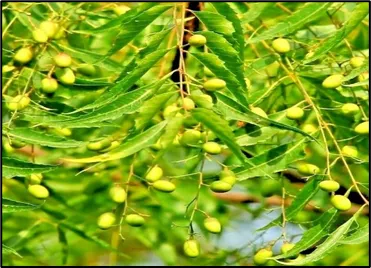
Figure 2: Neem Leaves
Botanical name: Azadirachta indica.
Family: Meliaceous.
Uses: All parts of the neem tree- leaves, flowers, seeds, fruits, roots and bark have been used traditionally for the treatment of inflammation, infections, fever, skin diseases, dental disorders and help you deep clean and flush out any impurities that are hidden within your pore. Its antifungal properties really help remove bacteria that can often clog pores and cause acne.
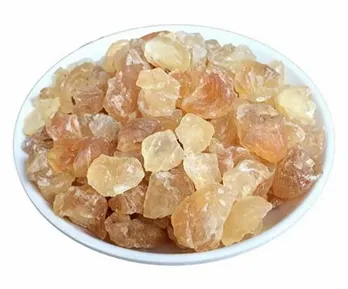
Figure 3: Tragacanth
Botanical name: Astragalus Gummier.
Family: Fabaceae.
Part used: Dried gummy exudate (gum/resin) obtained from the stem and branches of the plant.
Uses in face wash:
Figure 4: Glycerin
Benefits of Glycerine for Skin:
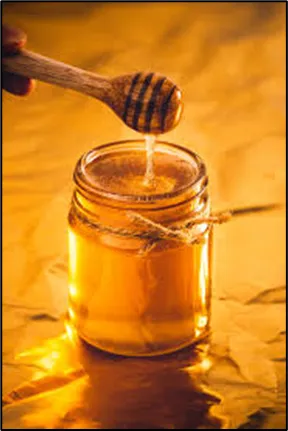
Figure 5: Honey
Botanical Name: Asie Mellifera
Uses: Used as thickening agent. Honey is use as a natural sweetener.
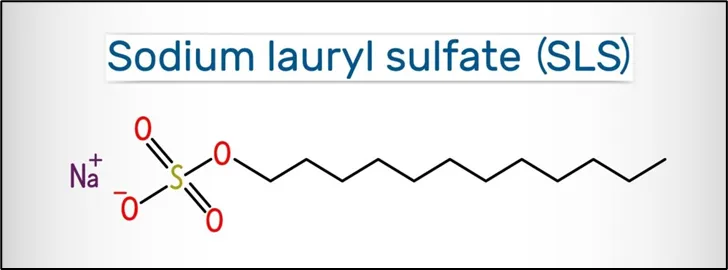
Figure 6: SLS
IUPAC Name: Sodium lauryl sulphate.
Other Names: Sodium monododecyl sulphate.
Chemical Formula: NaC12H25SO4.
Molar Mass: 288.372 g/mol.
Density: 1.01 g/ cm3.
Melting point: 206 °C (403 °F; 479 K).
Use: Foaming against.
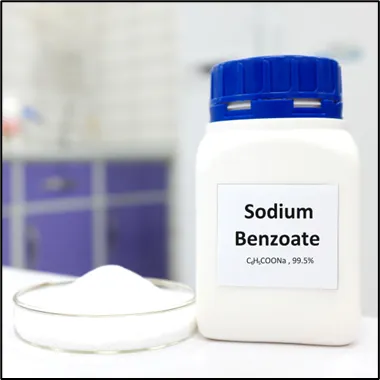
Figure 7: Sodium Benzoate
IUPAC Name: Sodium benzoate
Molar mass: 144.4 g/mol
Formula: C7H5NaO2
Density: 1.497 g/cm3
Melting point: 410oC (770oF;689 K)
Use: Preservative and Stabilizer
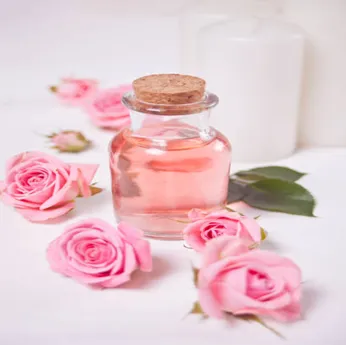
Figure 8: Rose Water
Botanical name: Rosa damascene (commonly used source)
Family: Rosaceae
Part used: Fresh petals/flowers
Uses in face wash:
Preparation Method:
To Prepare Mild Neem Face Wash:
|
Sr. No. |
Ingredients |
Uses |
Quantity Taken |
|
1 |
Honey |
Thickening Agents, Antiseptic, Astringent |
5 ml |
|
2 |
Neem Extract |
Anti-Inflammatory |
10 ml |
|
3 |
Glycerin |
Anti-irritant, Oral hygiene |
4 ml |
|
4 |
Rose Water |
Natural oil balancer, Odouring agent |
10 ml |
|
5 |
Sodium Benzoate |
Preservative |
2.5 gm |
|
6 |
Sodium Lauryl Sulphate (SLS) |
Foaming agent |
20 gm |
|
7 |
Tragacanth |
Thickening agent and Stabilizer |
1 gm |
Evaluation Of Face Wash (Neem Face Wash):
|
Sr.no |
Parameters |
Marketed preparation |
Formulated batch |
|
1 |
Colour |
Light green |
Dark green |
|
2 |
Consistency |
Semisolid |
Semisolid |
|
3 |
Wash ability |
Good |
Good |
|
4 |
PH |
7.6 |
7.4 |
|
5 |
Irritation test |
Non irritant |
Non irritant |
|
6 |
Foam ability |
Excellent |
Good |
|
7 |
Spread ability |
Easily spreadable |
Easily spreadable |
|
8 |
Appearance |
Good |
Good |
Observation Table: Graphical Representation of Subjective Evaluation test Of Face Wash
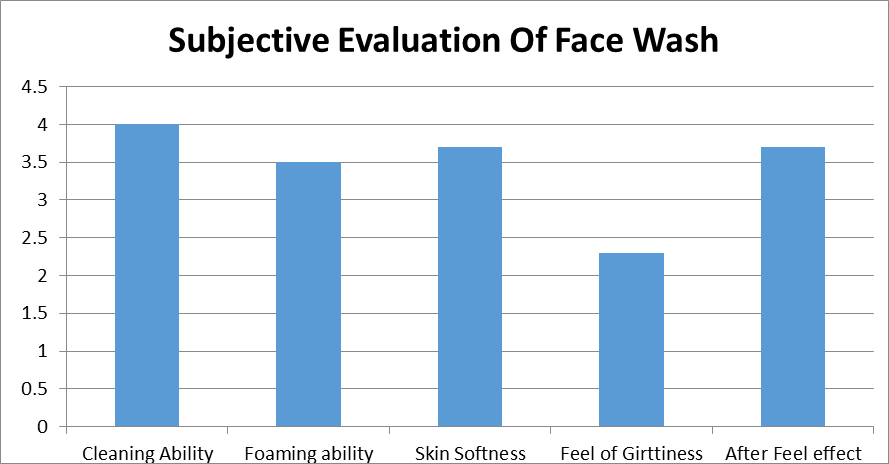
Graph 1: Subjective Evaluation of Face wash
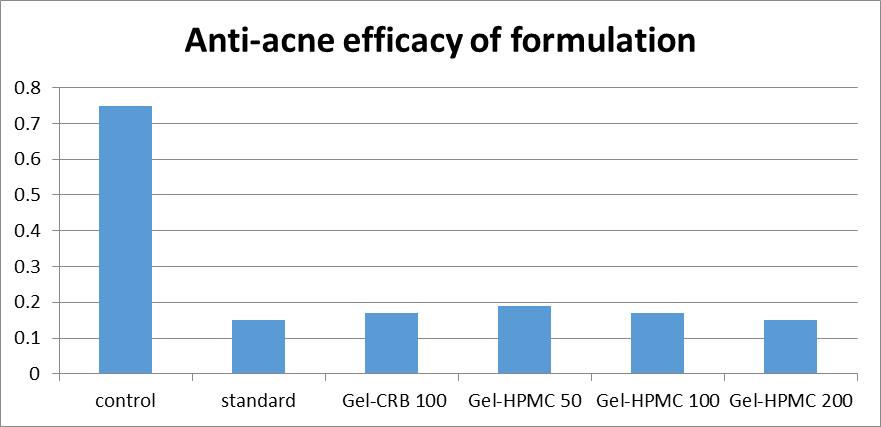
Graph 2: Anti-acne efficacy of formulation
On X –Axis = Formulation
On Y-Axis = Absorbance
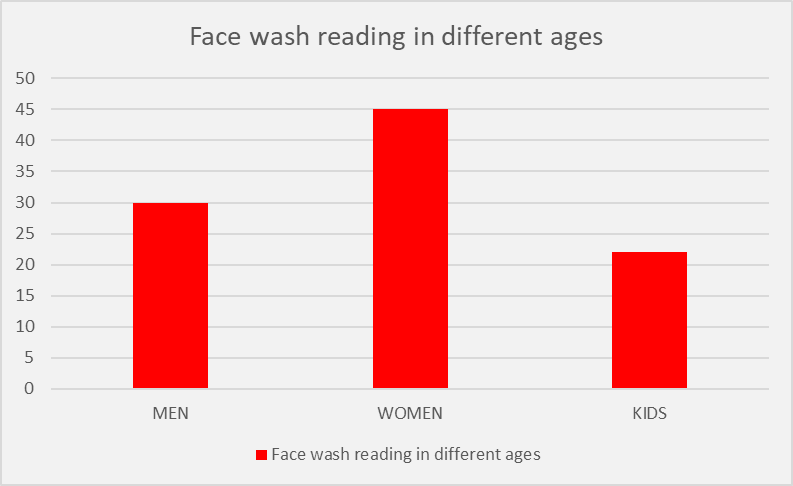
Graph 3: Face wash reading in different
CONCLUSION:
A formulated face wash gel containing neem leaves extract, honey, and orange-peel extract was successfully developed using tragacanth as a gelling agent. The formulation was subjected to various evaluations including colour, Odor, consistency, pH, spread ability, washability, grittiness, and foam ability, which yielded acceptable results. These findings suggest that the prepared formulation may be effective for its intended use, but further testing may be necessary before it can be utilized in practical applications.
Prepared formulation of face wash is one of the most well recognized acne treatment herbal face wash not only moisturised, they also use as cleanser. Herbal formulation has growing demand in the world market.
RESULT:
The colour of the formulations was brownish yellow and the intensity of the colour increased with the increase in concentration of the extract in the gel. This might be due to the brownish yellow colour of the combined extracts. The viscosity and the pH of the formulations are given in Table The results showed that pH and viscosity were significantly changed as the concentration of extract increased. The pH value of the products varied from 6.9-7.3.
REFERENCES

Tabrez Pathan, Akash Bodhke, Mahananda Belkhede, Prem Nikam, Rohini Suradkar, Ekta Waghmare, Ravindra Hanwate, Formulation and Evaluation of Neem Face Wash, Int. J. of Pharm. Sci., 2026, Vol 4, Issue 5, 6626-6635. https://doi.org/10.5281/zenodo.20390359
 10.5281/zenodo.20390359