
The Oxford College of Pharmacy, Hongasandra, Bommanahalli, Bengaluru, Karnataka, India.
Aim: The current study’s objective was to formulate and evaluate a liposome loaded anti-aging cream in order to improve the absorption and to show long lasting effect. Tinospora cordifolia and Centella asiatica was incorporated into the liposome which shows antioxidant and anti-inflammatory activity. Liposome delivery system was preferred due to its greater solubility, permeability, and bioavailability. It carries drug which shows increased drug penetration. Materials and methods: Liposome were prepared using ethanol injection method. Soya lecithin act as main phospholipid and stabilize the formulation. Cholesterol provides stability as well as it controls permeability which prevents leak out of encapsulated drug. Liposome was incorporated into cream base. Evaluation was carried out for both liposomes include zeta potential and FESEM & cream include physical appearance, homogeneity, pH, spreadability, viscosity, and washability. Results And Discussion: FTIR studies shows that the extracts and excipients were compatible with each other. Zeta potential indicates that the liposome has minimal aggregation with consistent size distribution and FESEM confirms the successful formation of liposome (particle size 141.6 nm and 176.2 nm). The cream shows white and homogenous with a soft and smooth texture. It was easily washable and spreadable. Antioxidant studies confirmed that the cream showed strong antioxidant activity. Conclusion: Liposome loaded anti-aging cream provides an effective and biocompatible platform for controlled and targeted dermal delivery of plant-derived compounds, improving therapeutic performance and cosmetic benefits.
Creams are the formulation that are generally employed on the surface of skin typically appearing as viscous emulsions or semisolid blend of oil in water or water in oil.1 Herbal cream has been employed for centuries for natural remedies for various skin disease and cosmetic purposes. Plant based ingredients are utilized for formulation of herbal cream to protect, maintain and to restore the properties of skin.2 Creams are infused with herbal extracts that provide antioxidant properties and act as a natural defense, these ingredients neutralize free radicals, soothe inflammation and enhance the skin’s natural healing mechanism.3
Antioxidants are the molecules which are capable of neutralizing the free radicals by giving or receiving electrons to eliminate unpaired electrons. Natural compounds like phenolics (phenols and polyphenols), flavonoids, carotenoids, steroids, and thiol compound show antioxidant property.4
Antioxidants show protection to biological system by two mechanisms:
Aging of the skin is marked by a rise in wrinkles, age spots, dryness, thinning, and a loss of elasticity. The process of skin aging is influenced not only by internal factors but also by external environmental elements like UV radiation, air pollution, smoking, and poor nutrition, all of which can speed up skin aging and increase the number of senescent cells present in the skin.6
Intrinsic aging of skin refers to the deleterious mechanisms that occur over time in the three layers of tissue. Many theories attempt to explain the aging and one of those theories states that aging process is a consequence of multiple damages that accumulate at the intra and extracellular levels, including damage to the genome or epigenome, telomere shortening, loss of proteostasis, and even mitochondrial dysfunction.7
Physiological aging occurs as the body grows older, the extracellular matrix of the skin gradually deteriorated. This natural breakdown weakens the skin’s structural support, resulting in thinner and more delicate skin leads to visible appearance of wrinkles.8
Liposomes are small, globular vesicles comprises of one or more concentric lipid bilayers enclosing an internal aqueous compartment. These membranes are made from natural or synthetic lipids, and due to its unique bilayer structure, liposomes are widely used for entrapping hydrophilic and lipophilic substances.9 The name “Liposome” was taken from the Greek words “Lipo” that denotes as “fat” whereas “soma” indicated body, meaning lipid-based body or structure.10 These liposomes were initially developed in year 1961 by Alec D. Bangham.11
This study explores the formulation of liposome loaded anti-aging cream utilizing Tinospora cordifolia and Centella asiatica, which are known for its antioxidant, anti-inflammatory and immunomodulatory properties. When compared to conventional formulation, topical liposomal formulations can be less harmful, more effective and show long lasting effects.
MATERIALS AND METHODS
2.1 DRUGS AND CHEMICALS
Active ingredients
Other excipients
2.2. Selection of plant
Tinospora cordifolia (family Menispermacea) and Centella asiatica (family Umbellifereae) were gathered from the neighborhoods of Bengaluru, Karnataka.
The fresh leaves of Tinospora cordifolia and Centella asiatica were collected. They were identified and authenticated by taxonomist at Central Ayurveda Research Institute, Bengaluru, Karnataka.
2.3. Extraction of Tinospora cordifolia
The leaves of Tinospora cordifolia were cleaned and dried into small pieces and pulverized in blender. The powder was stored in a container at room temperature. 100 g of powder was extracted using the repeated maceration method with 50% methanol (v/v) in macerator for three days. The filtrate was then filtered and evaporated using rotary vacuum evaporator. Further the extract was collected, weighed and refrigerated until further processing.12
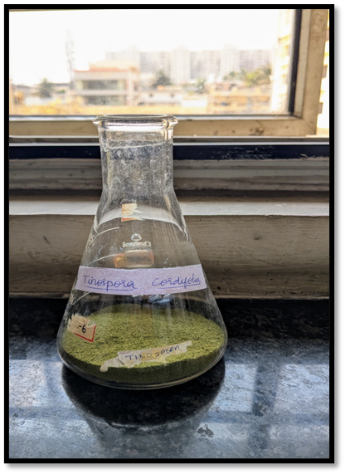
Fig 1: Extract of Tinospora cordifolia
2.4. Extraction of Centella asiatica
The leaves were cleaned, shade dried and pulverized in blender. The powder was stored in an air tight container at room temperature. 100 g of powder was extracted using maceration method with 50% methanol (v/v) in macerator for three consecutive days. The filtrate was then filtered and evaporated using rotary vacuum evaporator. Further the extract was collected, weighed and refrigerated until further processing.13
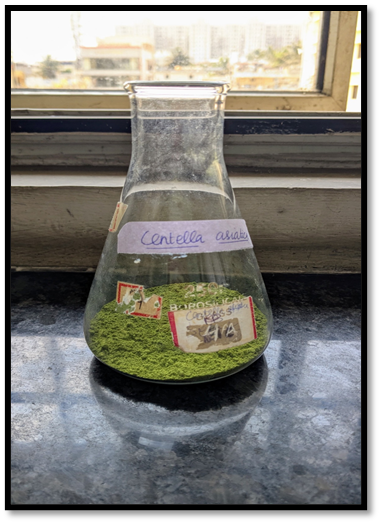
Fig 2: Extract of Centella asiatica
2.5. FTIR studies
FTIR studies were conducted to determine the drug’s compatibility with the excipients.
2.6. Formulation of liposome
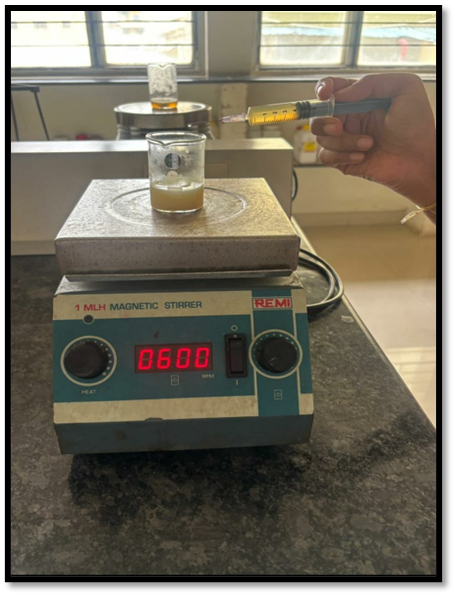
Fig 3: Liposome preparation
2.7. Formulation of liposome loaded anti-aging cream
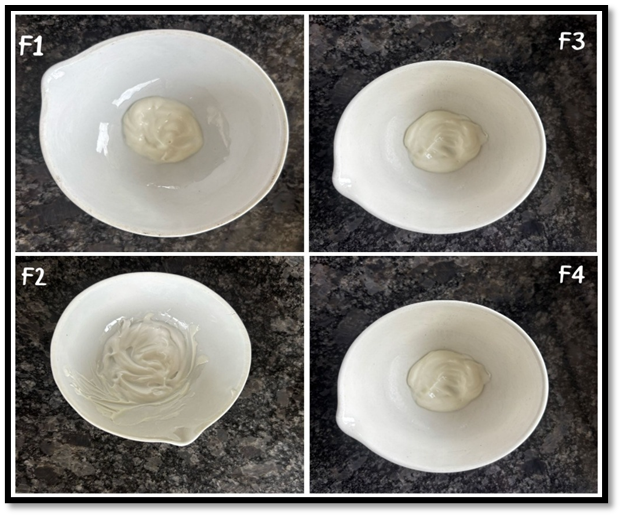
Fig 4: Formulation of cream
Table 1: Composition of cream (10 g)
|
INGREDIENTS |
F1 |
F2 |
F3 |
F4 |
|
LIPOSOME |
0.5 g |
1.0 g |
1.25 g |
1.5 g |
|
BORAX |
0.2 g |
0.2 g |
0.2 g |
0.2 g |
|
BEES WAX |
3.0 g |
3.0 g |
3.0 g |
3.0 g |
|
METHYL PARABEN |
0.05 g |
0.05 g |
0.05 g |
0.05 g |
|
PROPYL PARABEN |
0.02 g |
0.02 g |
0.02 g |
0.02 g |
|
LIQUID PARAFFIN |
2.8 g |
2.8 g |
2.8 g |
2.8 g |
|
ROSE OIL |
3 drops |
3 drops |
3 drops |
3 drops |
|
DISTILLED WATER |
q.s |
q.s |
q.s |
q.s |
2.8. Evaluation of the formulation
Evaluation parameters of Liposome
2.8.1. Zeta potential determination for particle size
Zeta potential is a measure of the magnitude of the electrostatic charge repulsion or attraction between particles, and is one of the fundamental parameters known to affect stability in terms of dispersion, aggregation or flocculation, and can be applied to improve the stability of formulations of dispersed systems.
The sample was analyzed by Zetasizer Nano ZS (Make: microtrac, Model: Nanotrac-USA). The stock solution of nanomaterials is prepared at a concentration of 10 mg/ml in double distilled water was ultrasonicated using ultrasonic bath for 5 min, followed by transferring the same into the liquid cell and measured for the particle size and zeta potential. Further the stability of nanomaterials was evaluated by using zeta potential analysis.
2.8.2. Field emission scanning electron microscopy (FESEM)
A drop of liposome (liquid form) was spread on conducting carbon tape which was already pasted on aluminum stub (base) of FESEM (TESCAN, Model: Mira3) chamber. The stub was kept in oven at 100ºC for 10 hours to ensure total moisture removal. The image was captured using electron detector which detects the secondary electron emitted from sample when high energy electron beam with high voltage (kV) strikes on sample surface.
Evaluation parameters of Cream
2.8.3. Physical appearance
The physical appearance of the cream can be observed by its color, roughness, and was graded.
2.8.4. Homogeneity
The formulation was tested for the homogeneity by visual appearance and by touch.
2.8.5. Washability
Washability test was carried out by applying small amount of cream on slide then washing with tap water.
2.8.6. pH of the cream
The pH meter was calibrated using standard buffer solution. About 0.5 g of cream was weighed and dissolved in 50 ml of distilled water and its pH was measured using digital pH meter.
2.8.7. Spreadability
The spreadability of cream formulation was determined by using parallel plate method. An adequate amount of sample is taken between two glass slides and a weight of 10 g is applied on the slides for 5 minutes.
Spreadability can be expressed as,
S= m×lt

where,
2.8.8. Viscosity
The viscosity of all the semisolid preparation was measured by using Brookfield viscometer. Approximately around 10 g of sample was taken in a sample holder. The temperature was maintained at around 25 ± 0.5ºC. Further a constant rpm of 20 was maintained for viscosity measurement. The spindle was fixed to the viscometer head and allowed to rotate as specified at 20 rpm. Over a period of 60 sec till a constant reading was displayed on the viscometer screen. The readings were tabulated and reported.
2.8.9. Antioxidant activity (DPPH Assay)
The DPPH scavenging assay is a simple chemical experiment for the primary evaluation of any compound for its simplicity and low cost for free radical scavenging activity.
The cream’s free radical scavenging ability was tested using DPPH solution at 517 nm.
DPPH [1,1-diphenyl-2-picryl hydrazyl] is a stable free radical with purple color. Antioxidants reduce DPPH to 1,1-diphenyl-2-picryl hydrazine, colorless compound which is measured at an absorbance of 517 nm.
Preparation of 0.1 mM DPPH Solution:
Accurately weigh 3.6 mg of DPPH and transfer in to a 1000 ml of volumetric flask, add methanol to dissolve DPPH completely and make up to the mark with methanol.
Sample and control solution preparation:
Prepare different concentration of ascorbic acid and cream at varying concentration in methanol (1, 2, 4, 8, 16, 32, 64 µg/ml).
For the control, replace the test sample with 2 ml of methanol.
Procedure:
Up to 3 ml of ethanolic DPPH solution was added with the 0.5 ml sample solution. At 517 nm DPPH and sample shows its absorbency was taken by UV spectrophotometer after 30 minutes and then comparison was made between the absorbance of a sample and the absorbance of ascorbic acid (standard).
Then, the percentage inhibition was calculated by the following equation:
Scavenging activity %= (A Control-A Sample)A Control ×100

where,
IC50 is the concentration of the sample required to inhibit 50% of DPPH radicals. Plot % scavenging vs. concentration and calculate the IC50 using regression analysis.
RESULTS AND DISCUSSION
3.1. FTIR studies
FTIR studies of herbal extracts (Tinospora cordifolia and Centella asiatica) and excipients was performed as shown in figure since, all the functional groups were intact. It was found that the drug and excipients were compatible with each other.
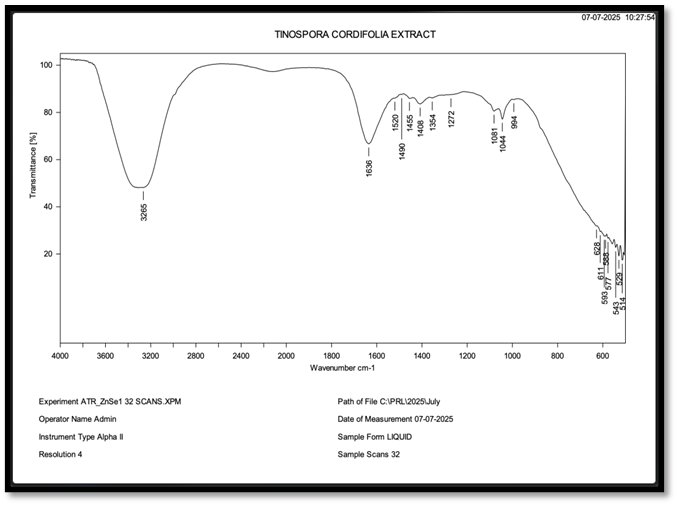
Fig 5: FTIR report for Tinospora cordifolia
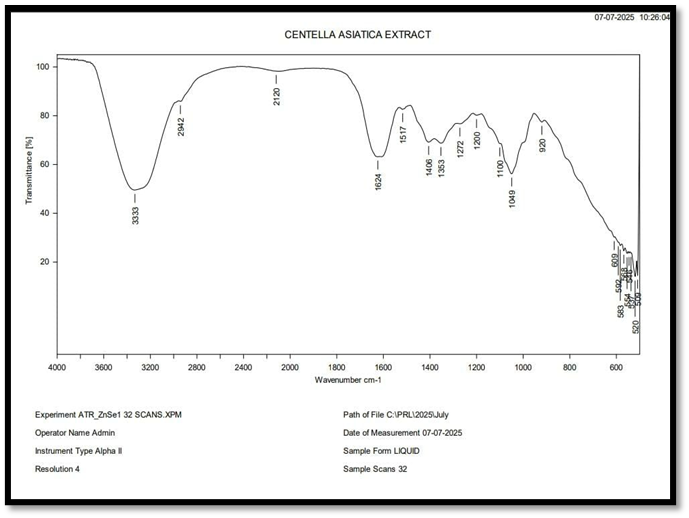
Fig 6: FTIR report for Centella asiatica
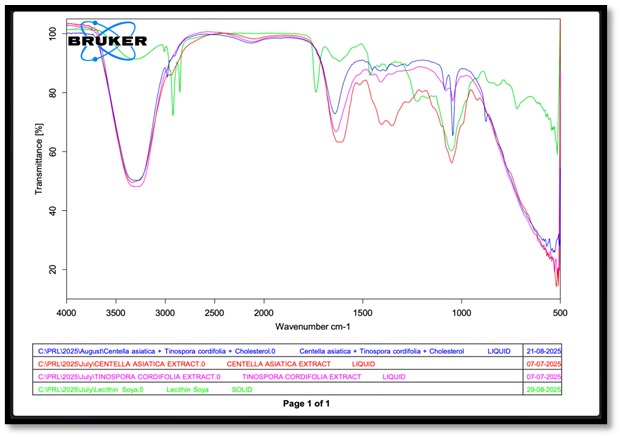
Fig 7: FTIR report for comparison
3.2. Zeta potential determination for particle size
The particle size distribution graph indicates a narrow and consistent distribution within the nanometer range. The peak occurs near 100 nm, suggesting most particles are around this size. The sharp peak and steep cumulative curve imply uniform particle size and minimal aggregation. Such a distribution is ideal for applications requiring controlled nanoscale properties, such as cosmetics, coatings, or pharmaceutical formulations.
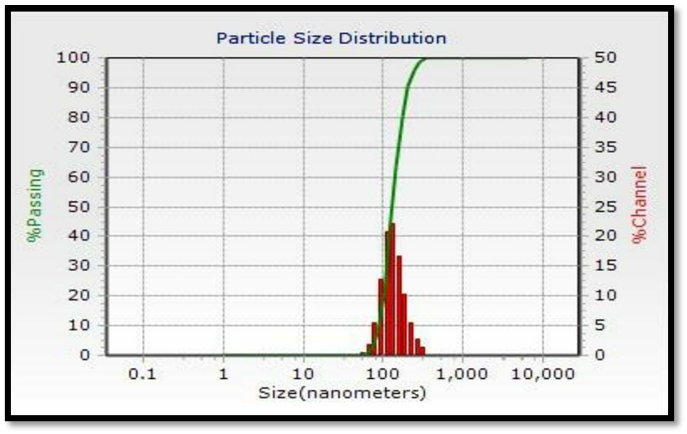
Fig 8: Particle size distribution
Interpretation:
Conclusion: The sample demonstrates a well-dispersed nanoparticle system with consistent size distribution suitable for industrial or research applications requiring nanoscale uniformity.
3.3. Field emission scanning electron microscopy (FESEM)
The particle size of formulated liposome was found to be 141.6 nm and 176.2 nm.
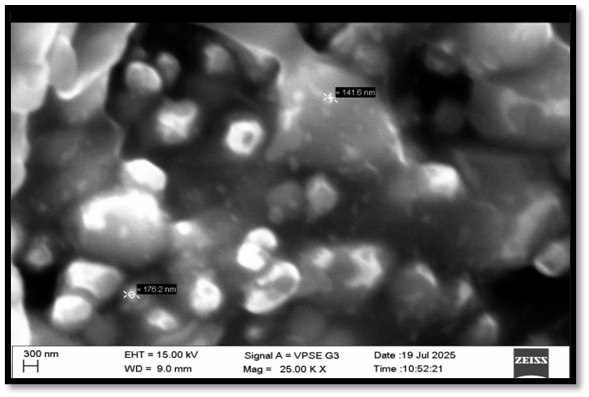
Fig 9: FESEM results conforming presence of liposomes at 300nm
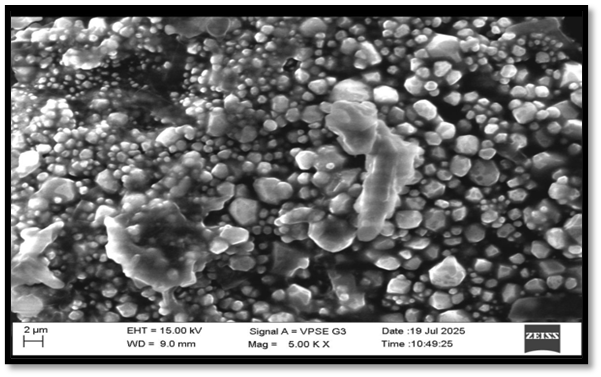
Fig 10: FESEM result conforming presence of liposomes at 2µm
The FESEM images confirms the successful formation of liposome. The observed spherical morphology and particle sizes (ranging from 300 nm to 2 µm) indicate efficient encapsulation and distribution of liposomes within the cream. This confirms the stability and integrity of liposomal vesicles in the prepared formulation, suitable for enhanced drug delivery and skin penetration.
3.4. Physical appearance
The prepared cream was white and homogenous with a smooth and soft texture. The cream was easily spreadable.
Table 2: Organoleptic parameters
|
Formulation (F) |
Appearance |
Colour |
Odour |
Texture |
|
F1 |
Clear |
White |
Pleasant |
Soft |
|
F2 |
Clear |
White |
Pleasant |
Soft |
|
F3 |
Clear |
White |
Pleasant |
Soft and smooth |
|
F4 |
Clear |
Buff colour |
Pleasant |
Soft |
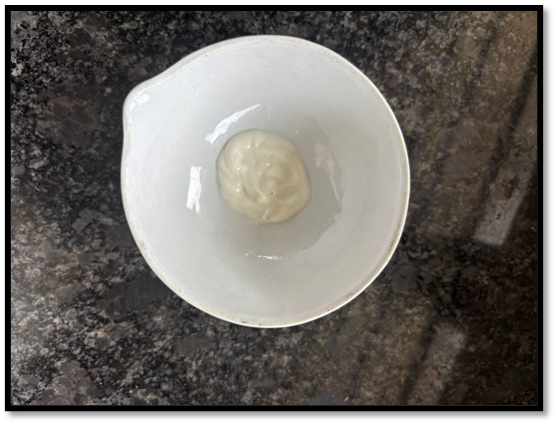
Fig 11: Physical appearance of cream
3.5. Homogeneity
All formulations show uniform distribution of liposome in cream. This was confirmed by visual appearance and by touch. The appearance and touch of the cream was good.
3.6. Washability
All formulation shows easy washable when the cream on slide was washed with tap water.
Table 3: Washability parameter
|
Formulation (F) |
Washability |
|
F1 |
Washable |
|
F2 |
Washable |
|
F3 |
Washable |
|
F4 |
Washable |
3.7. pH of the cream
pH of cream was determined using digital pH meter and found to be in the range from 6.1 to 6.4, indicating that the cream is non-irritating and suitable for topical application.
Table 4: pH of cream
|
Formulation (F) |
pH of the cream |
|
F1 |
6.42 |
|
F2 |
6.20 |
|
F3 |
6.13 |
|
F4 |
6.46 |
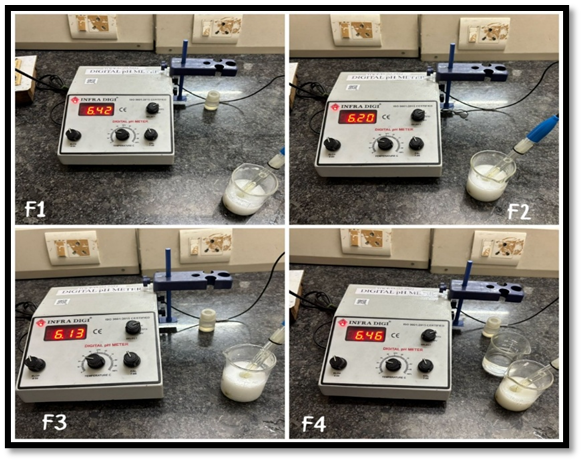
Fig 12: pH of cream formulation
3.8. Spreadability
The spreadability value for the formulation was found to be in the range 55-70 g.cm/5 min.
Table 5: Spreadability of cream
|
Formulation (F) |
Spreadability (g.cm/5min) |
Average Spreadability |
||
|
Trial 1 |
Trial 2 |
Trial 3 |
||
|
F1 |
60 |
62 |
60 |
60.67 |
|
F2 |
68 |
72 |
66 |
68.67 |
|
F3 |
70 |
68 |
72 |
70.00 |
|
F4 |
56 |
52 |
58 |
55.33 |
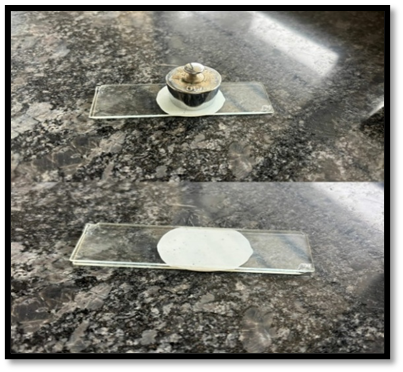
Fig 13: Spreadability of cream formulation
3.9. Viscosity
Viscosity of cream was measured using Brookfield Ametek carrying spindle no. as T/F. The viscosity of cream can generally fall between approximately 1500 cP to 120,000 cP.
Table 6: Viscosity of cream
|
Trial No |
Name of the sample |
Speed (RPM) |
Temperature (ºC) |
Viscosity (cP) |
|
Trial 1 |
Cream |
20 |
24.7 |
79,200 |
|
Trial 2 |
25.2 |
80,100 |
3.10. Antioxidant activity
The antioxidant activity of liposome loaded antiaging cream was assessed using DPPH radical scavenging activity and by taking ascorbic acid as standard.
Formulation shows maximum percentage inhibition of about 93.8% (640 µg/ml)
The results were compared with a standard antioxidant (Ascorbic acid) to determine the effectiveness of the formulation in neutralizing free radicals.
IC50 was calculated by plotting graph between concentration and %RSA.
Table 7: Calculation of % RSA and IC 50 from DPPH Assay of Ascorbic acid
|
Calculation of % RSA and IC 50 from DPPH Assay |
||||
|
Conc (µg/ml) |
Control |
Sample |
% RSA |
IC 50 (µg/ml) |
|
0 |
0.650 |
0.650 |
0 |
16.7 |
|
1 |
0.650 |
0.540 |
16.9 |
|
|
2 |
0.650 |
0.430 |
33.8 |
|
|
4 |
0.650 |
0.300 |
53.8 |
|
|
8 |
0.650 |
0.180 |
72.3 |
|
|
16 |
0.650 |
0.090 |
86.2 |
|
|
32 |
0.650 |
0.040 |
93.8 |
|
|
64 |
0.650 |
0.010 |
98.5 |
|
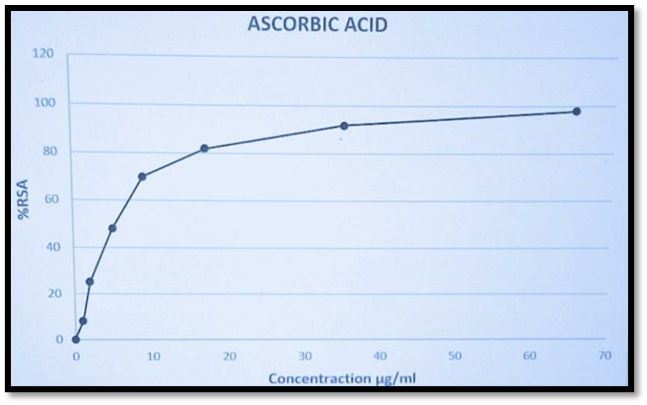
Fig 14: Interpretation of results of ascorbic acid
Table 8: Calculation of % RSA and IC 50 from DPPH Assay of Cream
|
Calculation of % RSA and IC 50 from DPPH Assay |
||||
|
Conc (µg/ml) |
Control |
Sample |
% RSA |
IC 50 (µg/ml) |
|
0 |
0.650 |
0.650 |
0 |
127.08 |
|
10 |
0.650 |
0.600 |
7.7 |
|
|
20 |
0.650 |
0.540 |
16.9 |
|
|
40 |
0.650 |
0.470 |
27.7 |
|
|
80 |
0.650 |
0.325 |
50.0 |
|
|
160 |
0.650 |
0.180 |
72.3 |
|
|
320 |
0.650 |
0.090 |
86.2 |
|
|
640 |
0.650 |
0.040 |
93.8 |
|
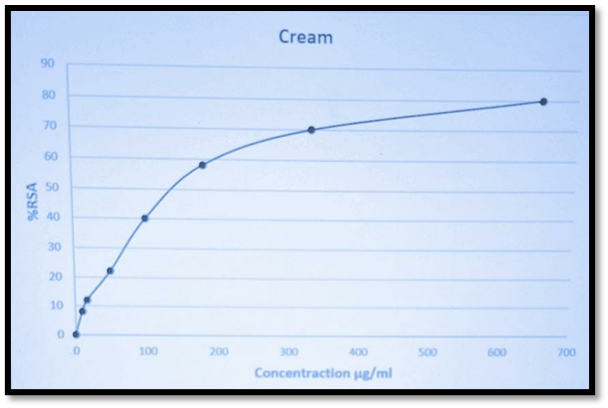
Fig 15: Interpretation of results of cream
CONCLUSION
The formulation and evaluation of liposome loaded anti-aging cream using Centella asiatica and Tinospora cordifolia was successfully formulated and evaluated. The cream was formulated as water-in-oil (W/O) emulsion, ensuring ease of application and better skin compatibility. Physicochemical evaluations confirmed its white and homogeneous with a soft and smooth texture. The cream was easily spreadable, easily washable, and appropriate pH (6.13).
The antioxidant study revealed that the cream exhibited significant free radical scavenging activity (93.8% inhibition), indicating strong anti-aging potential. The presence of bioactive compounds from Centella asiatica and Tinospora cordifolia contributed to the cream’s ability to protect against oxidative stress, a key factor in skin aging.
The present study highlights the potential of herbal ingredients in skincare, promoting both cosmetic needs and skin health. The successful formulation of the liposome loaded anti-aging advances the integration of traditional herbal knowledge with modern cosmetic science, encouraging further exploration of natural resources. The results encourage more research into herbal cosmetics and the use of other natural resources to improve skincare. The creation of this liposome cream is a step forward in combining traditional herbal knowledge with modern cosmetic science.
REFERENCES


R. Uma Prabha, Nandhini. R, Nanditha. R, Navya. R. Reddy, Neelakanta, Nisarga. S. T., Formulation and Evaluation of Liposome Loaded Anti-Aging Cream, Int. J. of Pharm. Sci., 2026, Vol 4, Issue 1, 100-113. https://doi.org/10.5281/zenodo.18130563
 10.5281/zenodo.18130563
