

We use cookies to ensure our website works properly and to personalise your experience. Cookies policy
Poona College of Pharmacy, Pune-411038
This research involves preparing a topical herbal gel using Moringa oleifera leaf extract and examining its potential as a natural antimicrobial product. The leaves were processed through maceration to obtain an extract containing important phytochemicals such as flavonoids, phenolic compounds, tannins, and alkaloids. These constituents are known to provide antibacterial, antioxidant, and soothing effects on the skin. The extracted material was incorporated into a carbopol gel base and evaluated for physical characteristics, including colour, consistency, pH, spreadability, and ease of washing. Phytochemical analysis verified the presence of key secondary metabolites, and antimicrobial testing showed that the gel produced a noticeable zone of inhibition against Staphylococcus aureus, indicating beneficial antibacterial activity. The prepared gel displayed acceptable pH for skin use, a smooth texture, uniform appearance, and good spreading behaviour. Overall, the findings suggest that Moringa oleifera extract can be effectively formulated into a topical gel and may serve as a promising herbal alternative for skincare and microbial protection.
1.1 Antibacterial Drugs
Antibacterial drugs are agents used to prevent and treat bacterial infections by either killing bacteria (bactericidal) or inhibiting their growth (bacteriostatic). These drugs play a crucial role in modern medicine, helping manage infectious diseases, support surgical procedures, and prevent complications. Over time, however, the overuse and misuse of antibiotics have led to the emergence of resistant strains of bacteria, posing serious global health challenges. As a result, there is a growing urgency to discover and develop novel antibacterial agents that are effective, safe, and less prone to resistance. [1]
1.2. Herbal Drugs: Nature’s Medicine
Herbal drugs are formulations derived from plants and their extracts, long used in traditional medicine systems for the treatment of various diseases. These natural remedies are widely valued for their therapeutic efficacy, lower toxicity, and fewer side effects. The global shift towards plant-based medicines is driven by the increasing demand for natural, eco- friendly, and culturally accepted healthcare solutions. Moreover, the abundance of bioactive compounds in plants offers a rich reservoir for drug discovery and pharmaceutical innovation.
1.3. Moringa: The Miracle Tree
Moringa is a genus that includes 13 species of trees and shrubs. The most widely distributed of these species is Moringa oleifera, which grows across the tropical zone. It originated in the Himalayas and is known by many common names, including ben oil tree, drumstick tree, and horseradish tree. Moringa has been dubbed “the miracle tree” because of its many properties that are beneficial to human health and well-being. Almost all parts of the tree are used, either for nutrition or in traditional medicines.
Moringa is an important component of traditional medicines throughout South Asia and many parts of Africa. Moringa has been used for pain relief, treatment for headaches, fevers, and rheumatism and treatment for bug bites. More studies on various parts of Moringa have been undertaken to determine the feasibility of Moringa in the treatment of cancer. In addition to nutritional and medicinal benefits, Moringa is used in fertilizer, pesticides, contraceptives, perfume, animal food, and as a cleaning agent. Moringa leaves are particularly nutritious, as they contain gram-for-gram more Vitamin A than carrots, more calcium than milk, more iron than spinach, more Vitamin C than oranges, and more potassium than bananas. Moringa leaves are used to treat scurvy and malnutrition. Due to the high iron content in the leaves, they have been prescribed for anemia in the Philippine
Moringa leaves and seeds have been used to remove contaminants from water. Moringa seeds are used to create a powder that can eliminate harmful bacteria in water, making it safe for human consumption. Seeds form a coagulant which reduces the turbidity of water. The seeds also contain a protein which inhibits coliform bacteria 2. This protein is the Moringa oleifera cationic protein (MOCP), and it kills bacteria by fusing the bacteria’s cell membranes.
Moringa roots have a high medicinal potency. They are anti-inflammatory and, as such, have been used as traditional medicines in Senegal and India to treat rheumatism, stomatitis and pain caused by arthritis. The roots are pounded and mixed with salt to form a poultice . The poultice is used to relieve kidney and lower back pain . Moringa roots are believed to be good for the throat, bronchitis, and pile. Despite its widespread applications, however, little is known about Moringa roots, particularly its chemical composition and its potential to treat contaminated water. [2,3,4]
1.4 Bioactive Components of Moringa and Their Antibacterial Potential
The antibacterial activity of Moringa is primarily attributed to its phytochemical composition. Key bioactive compounds include:
Moringa (Moringa oleifera) is rich in a variety of bioactive compounds such as flavonoids, phenols, alkaloids, tannins, and vitamins A, C, and E. These compounds contribute significantly to its antimicrobial and antioxidant properties. The presence of isothiocyanates and niazimicin has shown promising results in inhibiting bacterial growth. Studies have revealed that Moringa extracts are particularly effective against Staphylococcus aureus, Escherichia coli, and Pseudomonas aeruginosa. These bioactives disrupt bacterial cell walls and inhibit essential enzymatic activity, leading to cell death. The antioxidant components also help in maintaining skin health and enhancing wound healing. The synergistic action of multiple compounds in Moringa offers a broad-spectrum antibacterial effect. Thus, Moringa stands out as a powerful natural alternative for controlling microbial infections. [6]
1.5 Why Herbal Over Synthetic?
The growing resistance of pathogens to synthetic antibiotics has pushed the pharmaceutical industry and researchers to seek alternatives. Herbal drugs provide several benefits over synthetic ones:
1.6 Formulations Prepared Using Moringa Extract
In this project, a gel formulation was prepared using Moringa oleifera leaf extract due to its rich antibacterial and skin- beneficial properties. The gel base was developed using carbopol, glycerin, and other safe excipients to ensure a smooth texture and easy application. The extract was obtained through maceration, a gentle extraction method that preserves the active compounds like flavonoids, phenols, and vitamins. The resulting gel is non-sticky, easily spreadable, and has a pleasant herbal fragrance. It is designed for topical application to aid in wound healing, acne prevention, and skin nourishment. The Moringa gel provides both antimicrobial and antioxidant benefits, helping protect the skin from microbial infections while supporting skin regeneration. Compared to synthetic gels, this herbal formulation offers a more natural and skin-friendly alternative. Its preparation is simple, cost-effective, and scalable, making it a potential candidate for commercial herbal skincare products. [5]
1.7 Role of These Formulations in Antibacterial Activity
Formulations containing Moringa extract exhibit strong antibacterial properties due to the presence of active phytochemicals. When applied topically, these products can inhibit the growth of pathogenic bacteria on the skin, helping in the treatment of acne, wounds, and skin infections. The anti-inflammatory nature of Moringa also reduces redness and swelling in infected areas. Studies have shown that Moringa- based gels and creams outperform some synthetic products in antibacterial tests.
These formulations create a protective barrier while nourishing the skin with vitamins and antioxidants. Regular use may prevent microbial recurrence due to Moringa’s sustained antibacterial effect. In addition, Moringa formulations promote faster healing and tissue regeneration. Their natural origin makes them suitable even for sensitive skin types, making them ideal for daily use. [7,8]
3. Need for work
The prevalence of antimicrobial resistance has emphasized the urgent need to explore plant-based alternatives that are both efficacious and safe. Moringa oleifera is readily available, cost-effective, and sustainable, making it suitable for large-scale formulation development, especially in resource-limited settings.
Topical gels offer enhanced penetration of active constituents, faster relief, and reduced systemic side effects compared to oral medications. Incorporating Moringa extract into a gel base ensures uniform drug distribution and prolonged contact with the skin, thereby improving therapeutic outcomes.
Additionally, the antioxidant properties of Moringa help in skin regeneration and protection against environmental stressors, such as UV radiation and pollutants. This dual action of antimicrobial and antioxidant activity positions Moringa gel as a multifunctional formulation suitable for daily use.
Despite its potential, there is a gap in standardized protocols for extracting and formulating Moringa into stable gel preparations. This work aims to bridge that gap by focusing on optimized extraction methods, gel formulation parameters, and evaluation of its physicochemical and antimicrobial properties.
Ultimately, the research seeks to contribute to the growing field of phytopharmaceuticals and promote the integration of traditional medicine into modern therapeutic practices. [9]
4. Aim & objective
Aim:
To formulate and evaluate the antimicrobial and skin-nourishing properties of gel and using Moringa oleifera extract.
Objective:
5. Excipient Profile
1. Moringa
Drug Name: Moringa oleifera
Synonyms: Drumstick tree, Horseradish tree, Sajna, Shigru
Molecular Formula: Varies depending on the constituent; primary active compound quercetin: C15H10O7
Molecular Weight:
For Quercetin: 302.24 g/mol
Mechanism of Action:
Moringa oleifera exerts its antimicrobial and antioxidant effects through multiple phytoconstituents like flavonoids, tannins, and phenolic acids. These inhibit microbial enzymes, disrupt bacterial membranes, neutralize free radicals, and reduce oxidative stress and inflammation at the cellular level. [10,11]
Solubility:
Moringa leaf powder: Slightly soluble in water
Moringa extracts: Soluble in ethanol, methanol, and hydroalcoholic solvents
Indication: Used in the treatment and prevention of skin infections, wound healing, inflammation, oxidative damage, acne, and bacterial/fungal conditions.
Properties: Antimicrobial, Antioxidant, Anti-inflammatory, Antifungal, Astringent, Vitamin-rich (A, C, E), Immunomodulatory
Adverse Reactions:
Generally considered safe for topical use; however, in rare cases, mild skin irritation or allergic reactions may occur, especially in sensitive individual.
2. Carbopol 940 is used as a gelling agent. Its molecular formula is (C3H4O2)n. It appears as a white, fluffy powder. It swells in water but is insoluble in oils. The pH before neutralization ranges between 2.5 and 3.5. As a polymeric substance, it does not have a defined melting point. It is a synthetic polymer of acrylic acid that forms high-viscosity gels when neutralized, making it ideal for topical formulations.
3. Methyl Paraben serves as a preservative. Its molecular formula is C8H8O3. It appears as a white crystalline powder. It is slightly soluble in water but freely soluble in ethanol. It has a pH range of 4.0 to 7.0 and a melting point between 125–128°C. Methyl paraben is widely used for its broad-spectrum antimicrobial properties and stability under normal storage conditions.
4. Glycerine acts as a humectant and moisturizer. Its molecular formula is C3H8O3. It is a clear, viscous liquid that is miscible with both water and alcohol. It has a neutral pH and a boiling point of 290°C. Glycerine helps retain moisture in the skin, enhances product texture, and improves the spreadability of the formulation.
5. Triethanolamine (TEA) functions as a pH adjuster and neutralizer. Its molecular formula is C6H15NO3. It appears as a clear, viscous liquid, miscible with water and ethanol. The pH range is between 7.0 and 9.0. It has a melting point of 21°C and a boiling point of 335°C. TEA is commonly used to neutralize carbopol and provide a stable gel structure.
6. Propylene Glycol is used as a solvent and penetration enhancer. Its molecular formula is C3H8O2. It is a clear, hygroscopic liquid, miscible with water and ethanol. It has a pH range of 5.0 to 7.0 and a boiling point of 188.2°C. Propylene glycol enhances the solubility of active ingredients and promotes their penetration into the skin, while also acting as a humectant. [12,13]
Authentication certificate
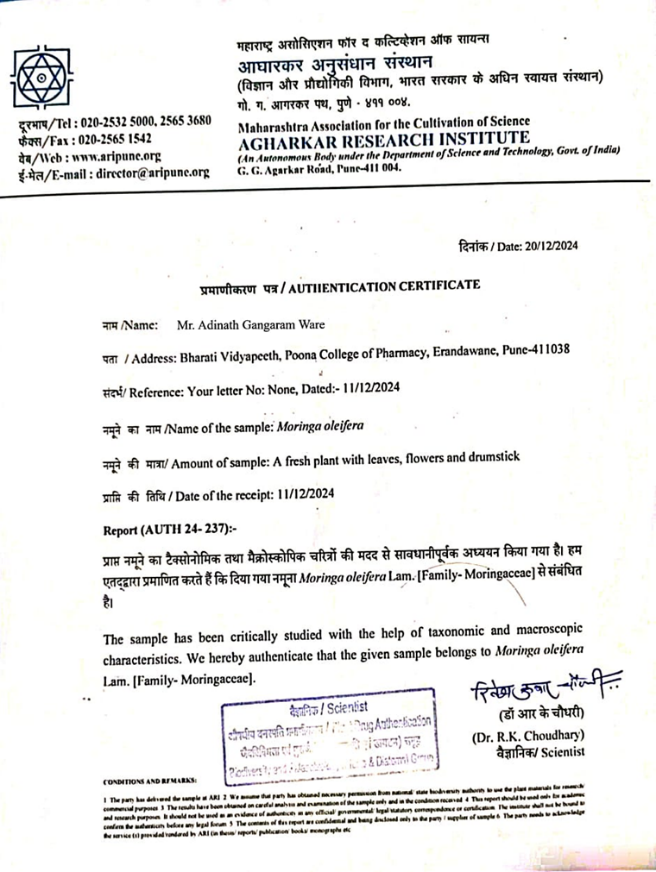
Fig 1. Authentication of moringa
6. Method of preparation
Extraction:
The extraction was carried out using the maceration technique. Fresh Moringa oleifera leaves were washed thoroughly, shade-dried for 5–7 days, and grounded into a fine powder. Approximately 50 g of leaf powder was soaked in 500 mL of acetone in a conical flask and kept at room temperature for 72 hours with occasional shaking. The mixture was then filtered using Whatman filter paper no. 1. The filtrate was concentrated using a water bath at 40–50°C and air dried until a semi-solid mass was obtained and stored in for further use. [14,15]
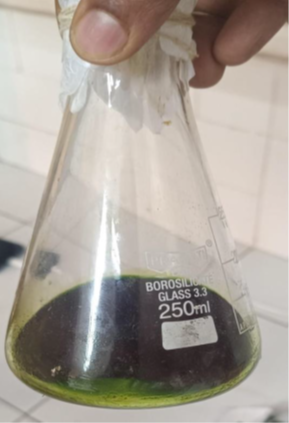
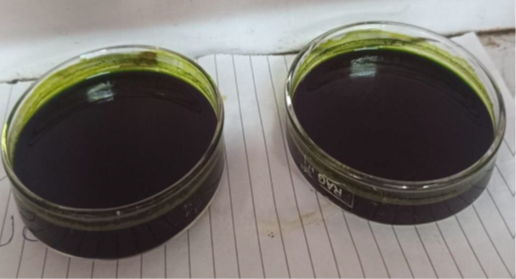
Fig 2. Maceration Fig 3. Drying
7. Formulation of Gel:
The gel formulation is created by extracting bioactive compounds from Moringa oleifera leaves using the maceration method. The extract is filtered and concentrated, retaining antioxidants, polyphenols, and vitamins. A gel base is prepared using gelling agents like carbopol, ensuring proper viscosity and texture. The Moringa extract is mixed into the gel base, along with preservatives to prevent microbial growth. The pH is adjusted to match the skin’s natural level for compatibility. The gel is tested for antimicrobial, moisturizing, and antioxidant properties. It is also assessed for skin penetration and efficacy. Finally, the formulation is stored under controlled conditions for further use. [16,21]
Composition of Gel:
Composition of Gel:
Table no .1 Composition of gel
|
Composition |
Batch no.-1 |
Batch no.-2 |
|
Carbapol (g) |
1 |
1.5 |
|
Triethanolamine (g) |
0.05 |
0.05 |
|
Glycerin (ml) |
2 |
2.5 |
|
Propylene Glycol (ml) |
10 |
10 |
|
Moringa extract |
3% |
3% |
|
Aquadest |
100 |
100 |
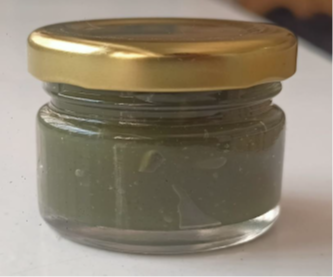
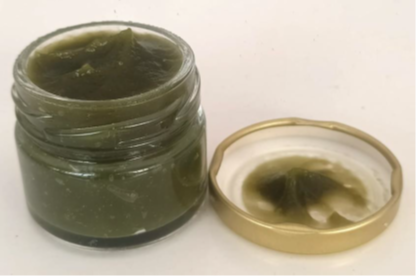
Fig no.4 Moringa Gel
8. Experimental work.
The evaluation of a herbal gel formulation is essential to ensure its safety, effectiveness, and consumer acceptability. Various physicochemical and biological parameters are assessed to confirm the quality and stability of the product. Tests such as appearance, odour, and pH help determine the gel’s aesthetic appeal and compatibility with the skin. Spreadability and washability indicate ease of application and removal. The skin irritation test ensures the formulation is non-irritant and safe for topical use. Antibacterial activity provides insight into the gel's therapeutic potential, especially for treating microbial skin infections. [17,22]
Phytochemical tests
Alkaloids (Mayer’s Test): Add a few drops of Mayer’s reagent to the extract; a cream-colored precipitate indicates the presence of alkaloids.
Flavonoids (Alkaline Reagent Test): Add a few drops of ethanol 70 % solution to the extract; an intense yellow color that confirms flavonoids.
Polyphenols (Ferric Chloride Test): Add 1–2 drops of 5% ferric chloride solution to the extract; a deep blue or green color indicates the presence of polyphenols.
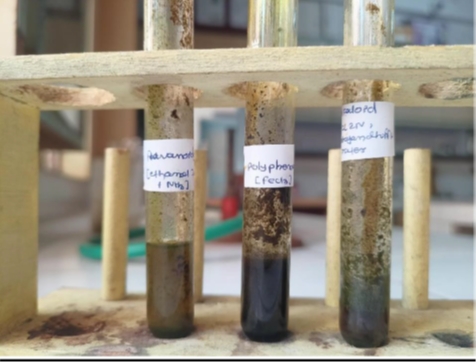
Fig .5 no Qualitative screening of Phytochemical Constituent of Moringa
9. Results
Phytochemical tests
Table No.- 2 Qualitative screening of Phytochemical Constituent of Moringa
|
Phytochemical Test |
Result |
|
Alkaloids |
Present |
|
Flavonoids |
Present |
|
Tannins / Polyphenols |
Present |
Alkaloids were found to be present, indicating potential antimicrobial and analgesic properties. Flavonoids were present, suggesting antioxidant, anti-inflammatory, and skin-soothing effects. Tannins were detected, which contribute to antimicrobial and astringent properties.
The prepared gel appeared green, smooth, and homogenous, with no visible lumps or phase separation. It exhibited a mild, pleasant herbal aroma, indicating good organoleptic quality.
Acceptable Range: 5.0 – 7.0 (suitable for topical application)
The pH values of the gel batches were found to be within the acceptable range for skin application. The batch 1 shows the pH of 6.3, suggesting the formulation is non-irritant and skin-friendly.
Table no.3 pH testing
|
Batch No. |
pH |
|
Batch no. 1 |
6.3 |
|
Batch no. 2 |
6.2 |
|
Marketed formulation |
6.4 |
5 – 15 g·cm/sec (indicates ease of application)
The spreadability of the gel was found to be good, with an average value of 10.5 g·cm/sec. This indicates that the gel spreads easily over the skin surface, ensuring uniform application.
Table no.4 Spreadability Test
|
Batch no. |
Weight Applied (g) |
Time Taken (sec) |
Diameter of Spread (cm) |
Spreadability (g·cm/sec) |
|
Batch no. 1 |
10 |
10 |
5.8 |
5.9 |
|
Batch no. 2 |
10 |
10 |
6.1 |
6.1 |
|
Marketed preparation |
10 |
10 |
5.8 |
5.8 |
Average Spredability was found to be 5.9 g.cm/sec
Gel should be easily removable with water, leaving no residue.
The gel was easily washed off with water, indicating good washability and user convenience without leaving any stickiness orresidue. –
The gel exhibited moderate antibacterial activity against S. aureus with zone of inhibition measuring 17 mm. This indicates the efficacy of Moringa oleifera in contributing to the antimicrobial property of the gel.
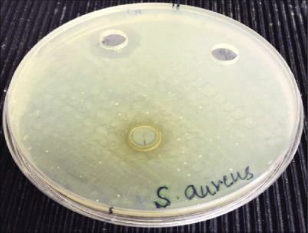
Fig no.6 Antimicrobial test
10. CONCLUSION:
In conclusion, the development of a gel formulation using Moringa oleifera extract shows strong potential as a natural antibacterial and antifungal agent. The maceration method effectively extracted bioactive compounds like vitamins A and E, flavonoids, and phenols, contributing to its therapeutic properties. This formulation offers a safer alternative to synthetic agents, suitable for skincare and treating minor infections.
Its simple preparation and the availability of Moringa enhance accessibility and sustainability, especially in regions where the plant is abundant. The gel supports microbial protection and nourishes the skin, aligning with demand for plant-based, eco-friendly products.
This project encourages further research into Moringa’s role in wound healing and skin care. Future efforts could refine the gel’s texture, shelf life, and stability. Overall, the study highlights the importance of combining traditional knowledge with modern science to create effective, sustainable healthcare solutions. [1,20,23]
11. Future Directions
12. Conflict of Interest
There are no conflicts of interest related to this investigation.
REFERENCE



Adinath Ware, Harshdeep Patil, Yogeshwar Chaudhari, Formulation and Evaluation of Moringa oleifera Extract Gel, Int. J. of Pharm. Sci., 2025, Vol 3, Issue 11, 4650-4660. https://doi.org/10.5281/zenodo.17750191
 10.5281/zenodo.17750191