
DR. Shivajirao Kadam College of Pharmacy Kasabe Digraj, Sangli, Maharashtra, India.416416.
Parasitic infections caused by helminths pose a significant public health and economic burden globally. The use of synthetic anthelmintic drugs, such as albendazole, is common; however, issues such as drug resistance and side effects necessitate the exploration of alternative treatments. This study investigates the anthelmintic properties of Duranta erecta leaf extract and compares its efficacy to albendazole.The study involved the preparation of methanolic of Duranta erecta leaves, which were tested on Eisenia Fetida (Indian earthworm) as a model organism. The anthelmintic activity was assessed based on the time taken for paralysis and death of the worms at (10mg/ML)concentration and compared with standard albendazole (10 mg/mL). Phytochemical screening revealed the presence of bioactive compounds, including alkaloids, flavonoids, and saponins, which may contribute to the extract's activity. Results showed that Duranta erecta extracts exhibited significant anthelmintic activity in a concentration-dependent manner, with the methanolic extract demonstrating higher efficacy . While albendazole remained more potent overall, the extracts displayed comparable activity at higher concentrations. This study highlights the potential of Duranta erecta as a natural anthelmintic agent and suggests further exploration into its bioactive compounds for the development of plant-based anthelmintic drugs.
Anthelmintics are a class of medications used to treat infections in humans and animals caused by parasitic worms. These worms, which include nematodes (roundworms), cestodes (tapeworms), and trematodes (flukes), are responsible for a wide range of diseases globally. Anthelmintics work by Targeting various physiological processes of the worms, such as their nervous systems, metabolism, or structural integrity, leading to their immobilization or death [9]. In emerging nations, people and communities are increasingly using therapeutic herbs. Due to its effectiveness, affordability, accessibility, cultural acceptance, and alleged lack of adverse effects when compared to synthetic pharmaceuticals, the use of herbal medicines has increased [1,3]. Plants are a great source of medications because they produce a variety of bioactive molecules with therapeutically valuable components. In USA, about 25 percent medications are made from herbal resources [2, 3]. Various elements impart distinct characteristics and qualities to plants. The Verbenaceae family, to which Duranta belongs, comprises 35 species [3] This plant is native to regions of South and Central America, Africa, and Asia. Commonly known as "golden dewdrop," Duranta erecta (synonymous with D. repens) is an upright, sprawling shrub that typically grows to a height of one to three meters[4] .In many Ghanaian houses, it is cultivated as an ornamental plant or hedge [5,6].Angels Whisper, Brazilian Sky Flower, Duranta, Golden Dew Drop, Golden Tears, and Pigeon Berry are some of its other names. Chemical compounds found in its leaves, bark, fruit, and flowers exhibit antioxidant, antibacterial, antifungal, anthelmintic , and anticancer properties ,This properties are due to phytochemicals such as alkaloids ,flavonoids ,terpenoids and saponins etc.[7].
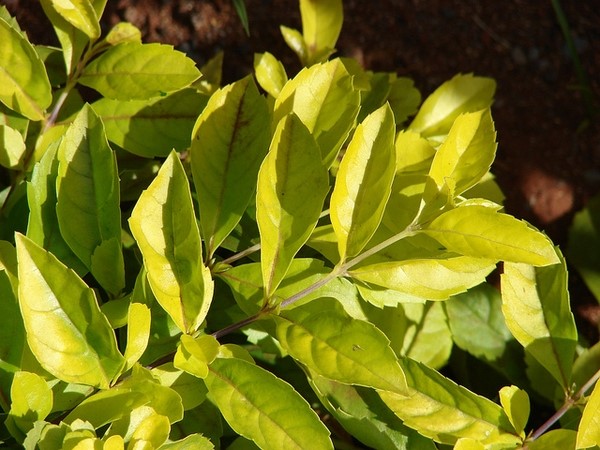
Fig- Leaves of Duranta erecta.
It is also cultivated in India and other tropical region around the world. The plant is admired for it’s attractive flowers and ornamental berries.
1.1] Scientific identification of plant:
Scientific name: Duranta erecta
Family: verbenaceae
Kingdom: Plantae
Genus: Duranta
Species: Duranta erecta
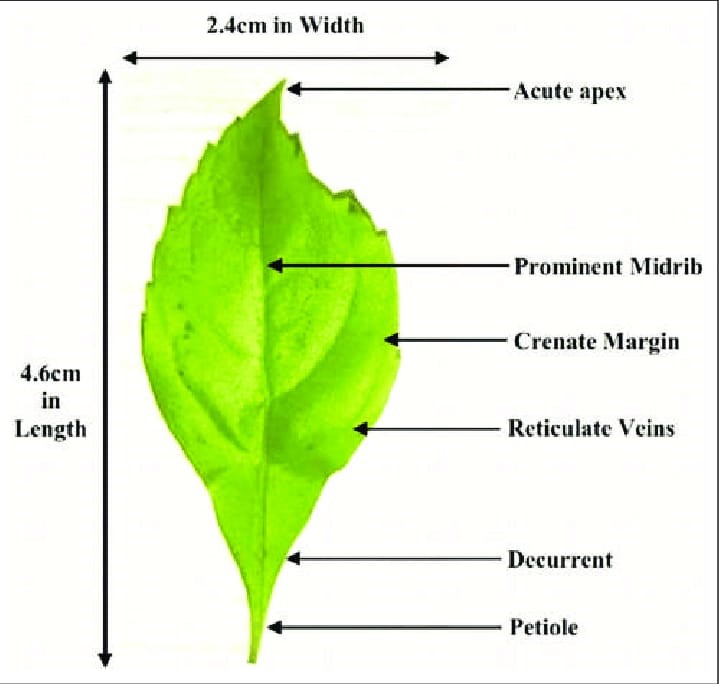
1.2] Properties of Duranta erecta:
Anticancer, Antioxident, Antihelmentic, Antifungal, Larvicidal and Antibacterial.
1.3] Botanical identification:
The botanical description is as follows:
Overall Qualities Growth Habit:
A small tree or sprawling shrub with a maximum height of 3–6 meters (10–20 ft). Its branches arch and its growth habit is dense and spreading.
Habitat: Usually found in hedges, roadsides, and gardens in tropical and subtropical areas.
Type of Leaves: Oval to elliptic, simple. Arrangement: Whorled or opposite. Dimensions: 2–8 cm in length and 1-4 cm in width.
Texture: a little shiny and smooth. Entire to slightly serrated margin.
Blooms Color: Light blue with a white throat, lavender, or purple. Shape: Tubular, with thin racemes of five petal lobes.
Dimensions: Compact, with a diameter of 1-2 cm. Arrangement: Inflorescence clusters that hang from the branches.
Fragrance: Not very strong. In warm climates, the blooming season is nearly year-round.
Fruit Type: Drupe, which resembles berries. Color: When fully grown, bright orange or yellow. Dimensions: tiny, round, with a diameter of roughly 1 cm. Toxicity: If consumed, poisonous to humans and certain animals.
Bark and Stem Stem: Soft and green at first, it becomes woody as it ages. Bark: rough and light brown. The root system is expanding and fibrous. Function: Prefers well-drained soils but is tolerant to a variety of soil types. The significance of ecology and ornamentation Pollinators: Draws hummingbirds, butterflies, and bees. Uses: Well-liked as a container plant, hedge, or decorative shrub. Although Duranta erecta is prized for its colorful blooms, ornamental foliage, and fruit, caution should be exercised because of its toxicity.
1.4] Chemical constituents:
Alkaloids ,Flavonoids such as luteolin and derivatives, Saponins, Tannins ,Terpenoids, Essential oils, toxic compounds and other compounds such as Carbohydrates ,Fats, Proteins
2] MATERIALS AND METHODOLOGY
2.1] Solvents: methanol, chloroform, conc. sulphuric acid,0.1?rric chloride, Ethylacetate, Glacial acetic acid, Hexane,
2.2] Collection of plant leaves : The leaves of Duranta erecta are collected from Bramhanal , Sangli 416416,Maharashtra,India ON 29/10/2024.Authenticated by dr. Patangrao Kadam college, Sangli.
2.3] Preparation of extract:
3] Thin layer chromatography:
3.1] TLC plate preparation: slurry of silica gel G poured on to a glass slide to make a thin layer .and then dried into the hot air oven for 10 min. Preparation of developing chamber: The TLC developing chamber may consist of a glass jar with a lid or a beaker topped with a watch glass . The solvent is poured into the chamber and then solvent and chamber saturation is carried out with a filter paper by putting it inside the beaker with the covered lid Sample application in TLC plate: Samples are diluted and then applied on the plate using a micro syringe or by a micro capillary tube for qualitative work. Detection of the spots: The compounds are detected by the UV light or by treating the plate with visualizing agents such as iodine chamber. Evaluation of chromatogram: The evaluation of the detected spots on the plate is done by qualitative and quantitative methods. Qualitative analysis such as; Rf, Hrf and values are detected.
3.2] TLC for Flavonoids:
Mobile phase: Ethyl acetate: formic acid: glacial acetic acid: water
Stationary phase: silica gel G.
Visualizing agent: Iodine chember
3.3] TLC for Alkaloid:
Mobile phase: Methanol: chloroform (3:7)
Stationary phase: silica gel G
Visualizing agent: Iodine chember
3.4] TLC for Terpenoid:
Modible phase: chloroform: hexane (9:1)
Stationary phase: silica gel G
Visualizing agent: Iodine chamber.
4]Anthelmintic activity of Duranta Erecta
Helminth infections are among the most common diseases in developing countries, primarily caused by intestinal nematodes. These infections often lead to gastroenteritis, which results from mixed infections involving various species of stomach and intestinal worms. Such infections can cause symptoms like weakness, loss of appetite, reduced feed efficiency, and weight loss. Anthelmintic drugs are used to eliminate or expel parasitic helminths from the body.
4.1] Collection of worms: for the anthalmentic activity the worms of Eisenia Fetida (redworms) are collected from Earth green organics from Khatav, Sangli 416416. Maharashtra ,India. They are carried to the laboratory in a properly ventilated bag with ample nourishment.
4.2] Biological description: Biological name of warm is Eisenia Fetida , known under another common names Redworm, brandling worm, panfishworm, trout worm. Length of worm increases upto 1-1.5 foot. 1500-2000 species of Eisenia Fetida are available .Life span is about 20 years. For their survival conditions like moisture maintaining is important.
4.3] In Vitro Anthelmentic activity :
Procedure :
RESULT AND DISCUSSION
The average yield of dried powder obtained from duranta ertecta leaves was 7.69% w\w. the powder was dark greenish colour .
5.1] Phytochemical Tests:
|
Parameters |
Results |
|
Colour |
Dark greenish |
|
Odour |
Pungent |
|
Taste |
Bitter |
|
State |
Powder |
|
Test for alkaloids |
+ve |
|
Test for flavonoids |
+ve |
|
Test for saponin |
+ve |
|
Test for tannin |
+ve |
|
Test for terpenoids |
+ve |
|
Test for steroid |
+ve |
5.2] Thin Layer Chromatography:
Flavonoid: for detection of flavonoid By using mobile phase ethyl acetate ,formic acid ,glacial acetic acid and water in 10:1.1:1.1:2.7 ratio respectively and the RF value was found 0.32 and HRF value 32%.
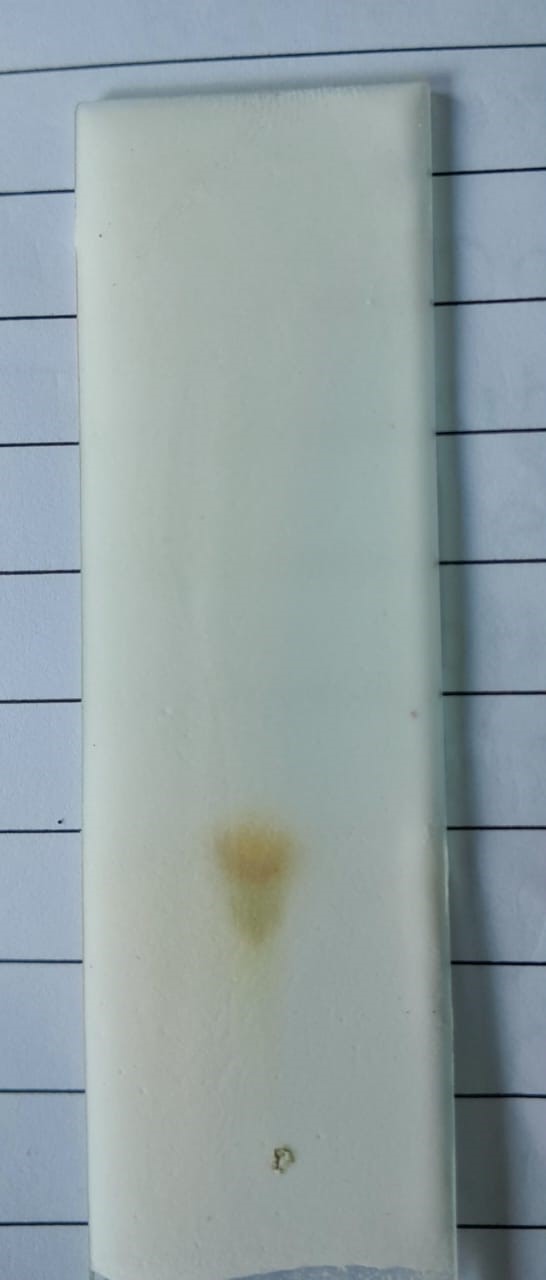
Fig: TLC of flavonoid
Alkaloid: For detection of alkaloid by using mobile phase chloroform and methanol 7:3 respectively and the RF value was found 0.432 and HRF valur 43%.
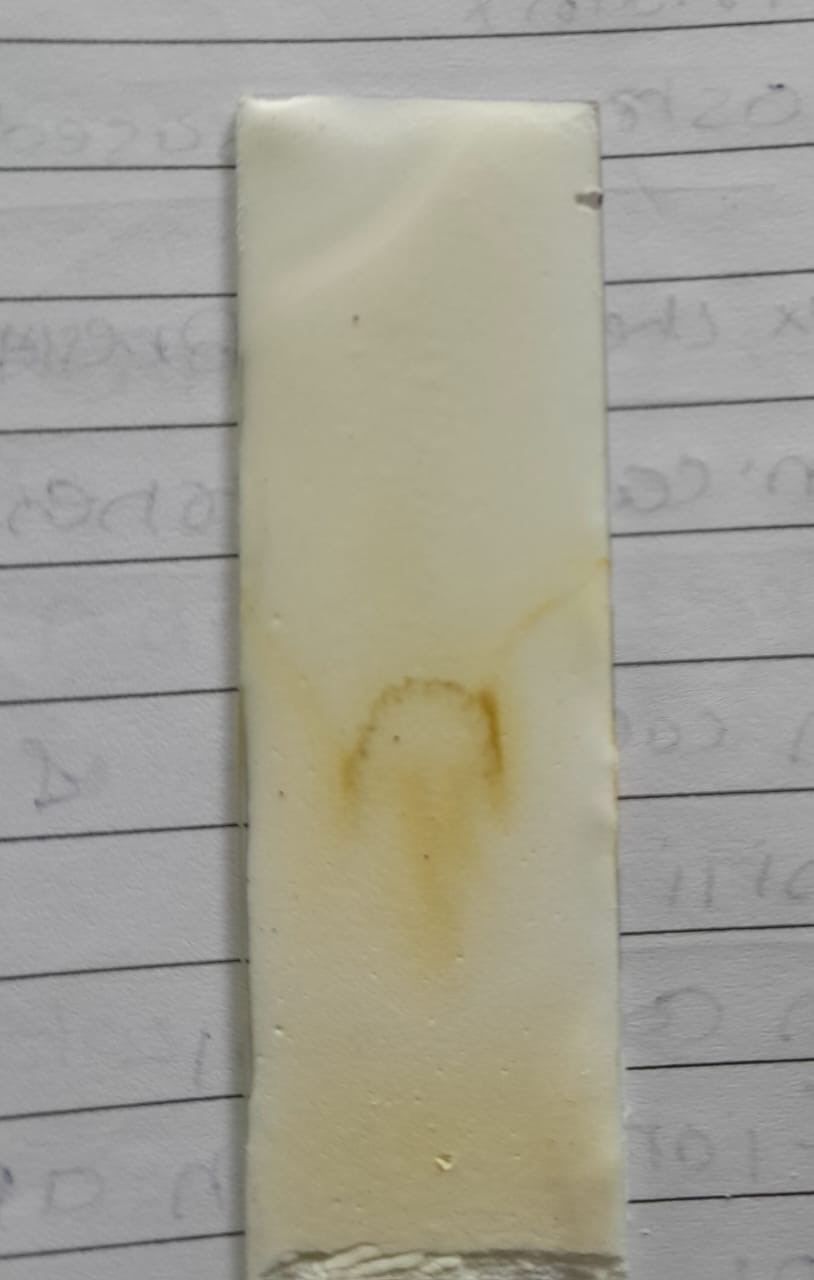
Fig: TLC of alkaloid
Terpenoid: For detection of terpenoids by using mobile phase chloroform and hexane 9:1 respectively and the RF value was found 0.40 and HRF value 40%
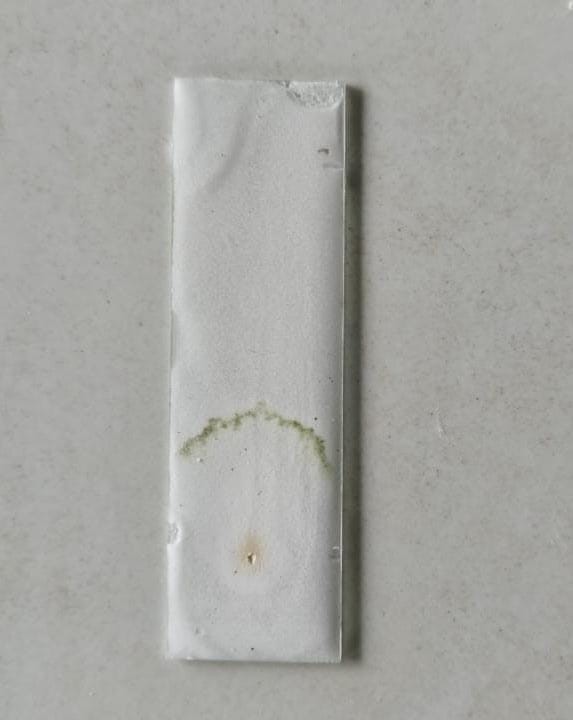
Fig : TLC of terpenoid
5.3] Anthalmentic Activit of Duranta Erecta
In the present experiment comparison between methanolic extract of duranta erecta leaves and Albendazole is shown below:
|
Sr .no |
Groups |
Concentration (mg/ml) |
Paralysis time(min) |
Death time(min) |
|
1 |
Control |
- |
No effect |
No effect |
|
2 |
Standard (Albendazole) |
10mg/ml |
63 min |
88 min |
|
3 |
Test (methanolic extract D. erecta) |
10mg/ml |
13.44min |
18.49 min |
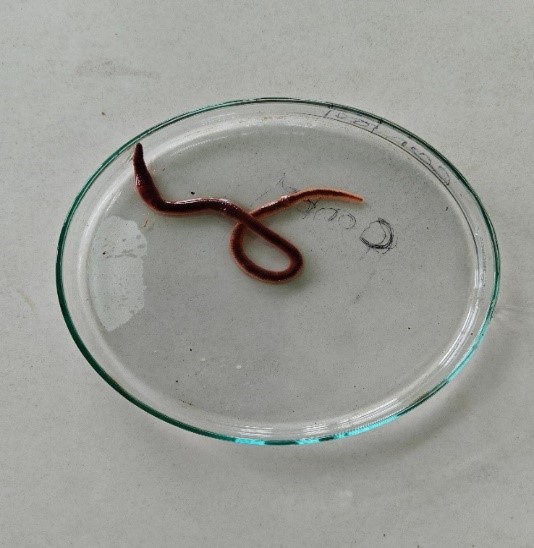
Fig: Control Group
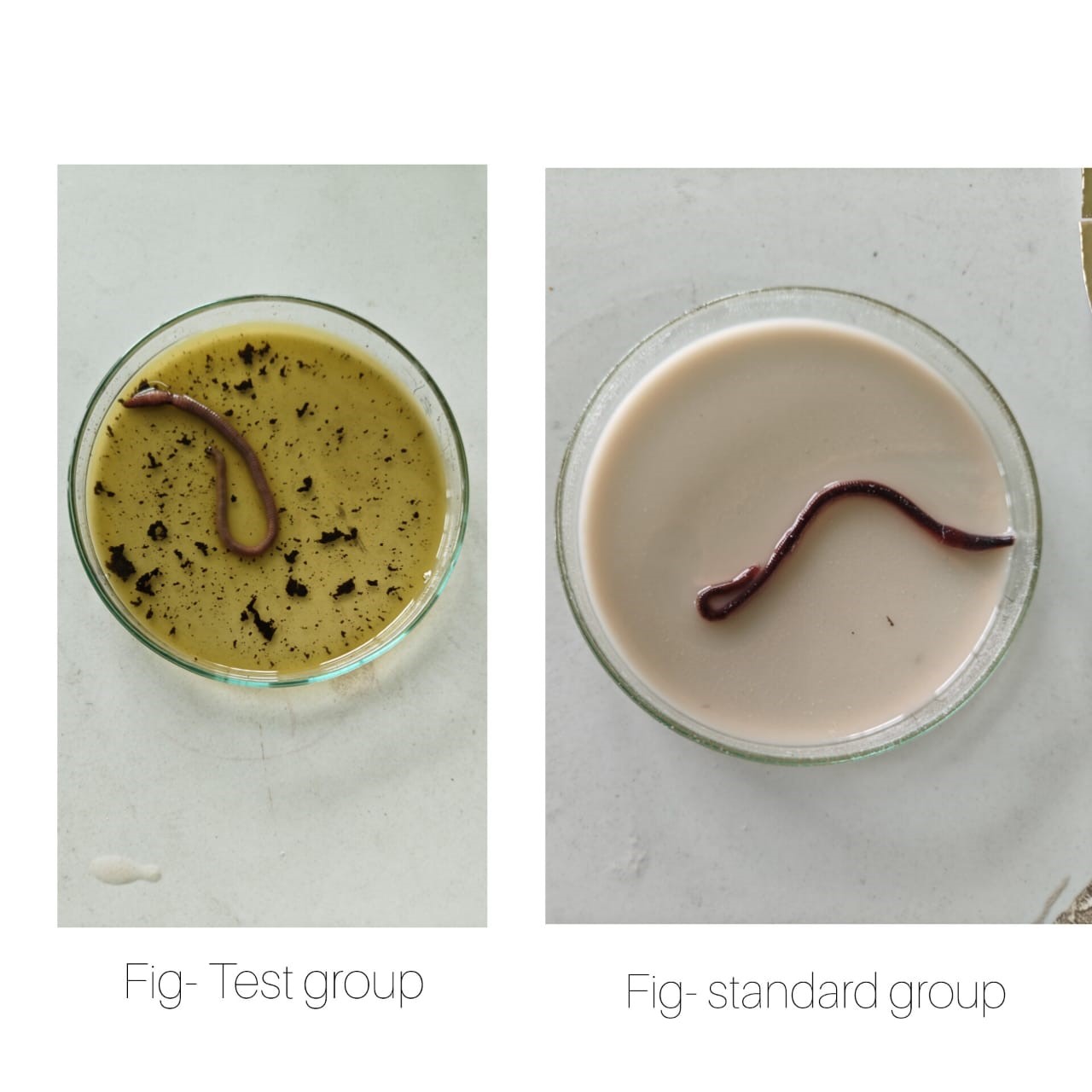
The study comparing the anthalmentic activity of duranta erecta methanolic extract and Albendazole, the leaves extract of Duranta erecta shows the better Anthelmentic acivity than Albendazole this acivity due to presence of alkaloids, flavonoids, terpenoids, saponins. The results shown in above table.
5.4] CONCLUSION: In, conclusion the Duranta erecta leaves can be considered as important source of natural products that have anthelmintic potential, however in the present study, in vitro anthelmintic activity of duranta erecta formd primary platform for further phytochemical and pharmacological studies. The leaves of duranta erecta extract have potential efficacy to paralysis and death of parasitic worms as compared to Albendazole.
6] ACKNOWLEDGEMENT: We would like to express our heartfelt gratitude to Dr Shivajirao kadam college of pharmacy, Kasabe Digraj, sangli. And Dr Patangrao kadam college sangli. for their support and resources during the course of this research. Our sincere thanks go to Assistant professor Maruri.Y. Choundikar for their guidance and valuable feedback, which greatly contributed to the completion of this work.
7] Conflict of interest statement: We confirm that there are no conflicts of interest to disclose.
REFERENCES




Sanika Chougule, Mayuri Choundikar*, Dhairyasheel Chavan, Vinayak Mane, In Vitro Anthalmentic Activity and Phytochemical Screening of Methanolic Extract of Duranta Erecta Leaves, Int. J. of Pharm. Sci., 2025, Vol 3, Issue 2, 1470-1476. https://doi.org/10.5281/zenodo.14885691
 10.5281/zenodo.14885691
