
Department of Pharmaceutics, Arunai College of Pharmacy, Velu Nagar, Thenmathur, Tiruvannamalai, Tamilnadu, India.
Background: Body mass index (BMI) is a widely used indicator of nutritional status and is strongly associated with metabolic, cardiovascular, and pulmonary health outcomes. Early screening of BMI-related physiological parameters may help identify individuals at risk for non-communicable diseases.Objective: To evaluate the relationship between BMI and metabolic (blood glucose), cardiovascular (blood pressure), and pulmonary (PEFR and spirometry) parameters and to assess lifestyle-related risk factors among adults.Methods: A six-month observational screening study was conducted among 146 adult participants in a college setting. Anthropometric measurements were recorded and BMI was calculated. Cardiovascular status was assessed using blood pressure measurement. Metabolic status was evaluated using random blood glucose estimation. Pulmonary function was assessed using peak expiratory flow rate (PEFR) and spirometry. Data were analyzed using descriptive statistics.Results: Most participants had normal blood glucose levels (120/80 mm Hg). while cardiovascular variations were observed, including elevated blood pressure and hypertension in a subset of individuals. Pulmonary function impairment was prominent, with reduced PEFR observed in a large proportion of participants. BMI distribution showed presence of underweight, overweight, and obese individuals, suggesting early physiological deviations associated with lifestyle factors.Conclusion: Pulmonary and cardiovascular parameters demonstrated early functional changes even in populations with relatively stable metabolic status. BMI-based screening combined with lifestyle awareness programs may facilitate early detection and prevention of chronic non-communicable diseases.
Body mass index (BMI) is an established anthropometric indicator used to classify nutritional status and assess obesity-related health risk. Elevated BMI is associated with increased morbidity and mortality due to non-communicable diseases, particularly cardiovascular disorders, diabetes mellitus, and chronic respiratory diseases. Global estimates indicate a rapid increase in overweight and obesity prevalence, with high BMI contributing substantially to the global burden of disease. Obesity results from chronic imbalance between energy intake and expenditure and is influenced by genetic, behavioral, and environmental factors. Adipose tissue functions as an endocrine organ releasing inflammatory mediators such as tumor necrosis factor-alpha and interleukin-6, which contribute to insulin resistance, vascular dysfunction, and systemic inflammation. These mechanisms link BMI with metabolic dysregulation, cardiovascular strain, and pulmonary impairment. Pulmonary function is influenced by body composition, physical activity, and lifestyle behaviors. Increased adiposity restricts thoracic expansion, reduces lung compliance, and impairs respiratory muscle efficiency, resulting in reduced peak expiratory flow rate (PEFR) and spirometric indices. Previous studies have demonstrated a negative association between BMI and pulmonary function parameters, particularly in overweight and obese individuals (Namita et al., 2019; Khan et al., 2021). Cardiovascular function is also strongly influenced by BMI. Excess body weight increases cardiac workload, reduces vascular elasticity, and elevates blood pressure, thereby increasing risk of hypertension and cardiovascular disease. High BMI is recognized as a major modifiable risk factor contributing to global cardiovascular mortality (Asztalos et al., 2025).
Metabolic health, particularly glucose regulation, is closely related to adiposity. Increased BMI is associated with insulin resistance and impaired glucose metabolism, which may progress to diabetes mellitus if unaddressed. Early detection of metabolic abnormalities through screening programs can facilitate preventive interventions. Despite growing evidence linking BMI with systemic physiological changes, limited community-based screening studies have simultaneously evaluated metabolic, cardiovascular, and pulmonary parameters within a single population. Therefore, the present study was designed to assess these health domains in relation to BMI and to promote awareness regarding lifestyle-related risk factors.
METHODOLOGY
Aim:
To screen and evaluate metabolic, cardiovascular, and pulmonary health parameters in relation to Body Mass Index (BMI) among adult participants and to create awareness regarding lifestyle-related risk factors and preventive health practices.
Objectives:
To assess metabolic health parameters such as Body Mass Index (BMI) and blood glucose levels among the selected population.
To evaluate cardiovascular health status by measuring blood pressure .
To assess pulmonary function using PEFR and spirometery test.
To identify individuals at risk of lifestyle-related diseases such as diabetes, hypertension, obesity, and respiratory disorders.
To create awareness about lifestyle-related risk factors and the importance of early detection and preventive health practices.
Study Design:
A community-based observational screening study with a health awareness intervention was conducted.
Study Setting and Duration:
The study was carried out in a college campus over a period of six months.
Study Population:
Adult participants aged 17–60 years were included. Both male and female participants who provided informed consent were enrolled.
Sample Size and Sampling Technique:
A total of 146 participants were selected using random sampling based on willingness to participate.
Inclusion Criteria
Adults aged 17–60 years
Both genders
Willing to provide informed consent
Exclusion Criteria
Individuals <17 years or >60 years
Pregnant women
Seriously ill or hospitalized individuals
Participants unwilling to participate
Data Collection Procedure
Data were recorded using a structured data collection form including demographic and lifestyle variables.
Anthropometric Assessment
Height and weight were measured and BMI was calculated using:
BMI = Weight (kg) / Height (m²)
Metabolic Assessment
Random blood glucose was measured using a glucometer and recorded in mg/dL.
Cardiovascular Assessment
Blood pressure was measured using a sphygmomanometer under standardized resting conditions.
Pulmonary Assessment
Pulmonary function was evaluated using:
Peak expiratory flow rate (best of three readings)
Spirometry measurement of respiratory performance
Awareness Intervention
Participants received education using pamphlets regarding lifestyle modification, weight control, physical activity, smoking cessation, and preventive health practices
Data Analysis
Data were entered into MS Excel and analyzed using descriptive statistics including frequency, mean, and percentage.
Ethical Considerations
Written informed consent was obtained from all participants and confidentiality was maintained.
OBSERVATIONS & RESULT
Totally 146 participants were enrolled in this study based on the inclusion and exclusion criteria.
DEMOGRAPHIC DATA:
GENDER-WISE DISTRIBUTION:
This study population consisting of 60 males (41%) and 86 females (59%). Majority of participants were females.
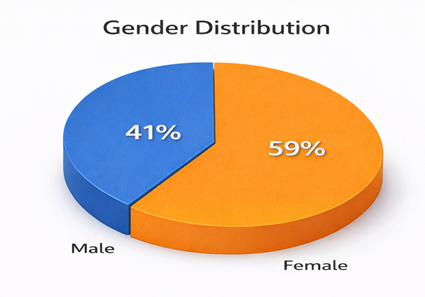
FIGURE 1 - GENDER DISTRIBUTION
LIFESTYLE HABITS:
Out of 146 participants, 3 participants consumed fast food daily, 81 participants consumed fast food weekly, 53 participants consumed fast food monthly and 12 participants reported no fast food consumption. The majority of participants consumed fast food on a weekly basis.
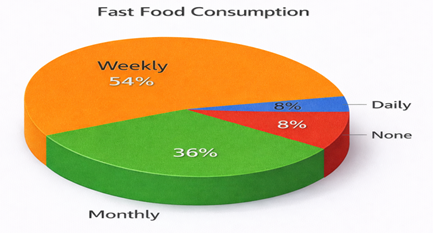
FIGURE 2: FAST FOOD CONSUMPTION
15 participants followed a vegetarian diet, 3 participant followed a non-vegetarian diet, and 129 participants consumed both vegetarian and non-vegetarian food. This shows that the majority of participants followed a mixed diet pattern.
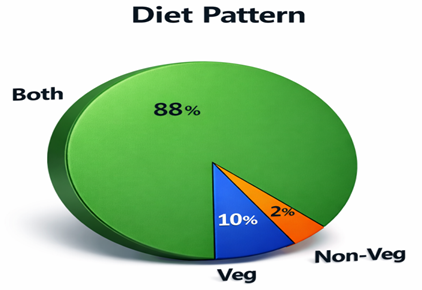
FIGURE 3: DIET PATTERN
CAFFEINE INTAKE, SMOKING, ALCOHOL CONSUMPTION:
The combined pie chart illustrate the distribution of caffeine intake, alcohol consumption and smoking habits among participants. More than half of the participants (56.5%) reported daily caffeine consumption, while 21.8% consumed caffeine rarely and 21.8% did not consume caffeine.
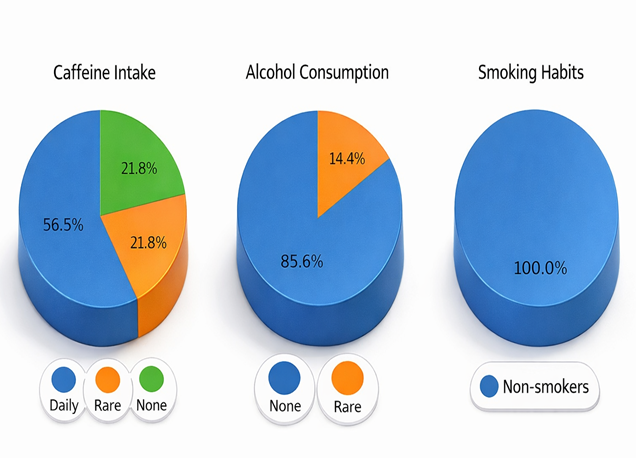
FIGURE 4: CAFFEINE INTAKE, ALCOHOL CONSUMPTION AND SMOKING HABITS
Alcohol consumption was low, with 85.6% of participants reporting no alcohol intake and only 14.4% consuming alcohol rarely. Notably, none of the participants reported daily. Smoking habits showed a highly favorable pattern, with 100% of participants identified as non-smokers.
MOBILE USAGE:
The below given pie charts shows that the majority of participants (56.6%) use mobile phones for 2 to 4 hrs per day. About 29.0% use mobile phones for less than 2hrs, while 14.4% report continues usage for upto 24hrs.
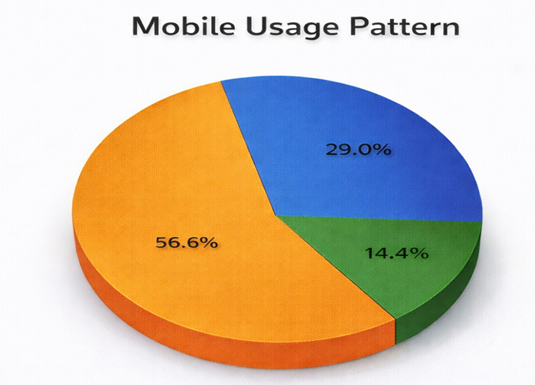

FIGURE 5: MOBILE USAGE PATTERN
STRESS AND PHYSICAL ACTIVITY:
STRESS LEVEL:
Based on stress assessment, 22 participants had stress levels, 86 participants had moderate stress levels and 40 participants had high stress levels. The majority of participants experienced moderate stress.

FIGURE 6: STRESS LEVEL
EXERCISE:
Majority of participants (88) reported no regular exercise, indicating a predominantly sedentary lifestyle. Meanwhile, 26 participants engage in workouts, 24prefer outdoor physical activities, and only 9 regularly attend the gym.
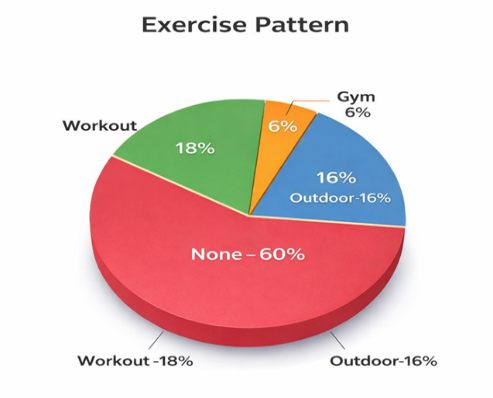
FIGURE 7: EXERCISE PATTERN
HEALTH STATUS:
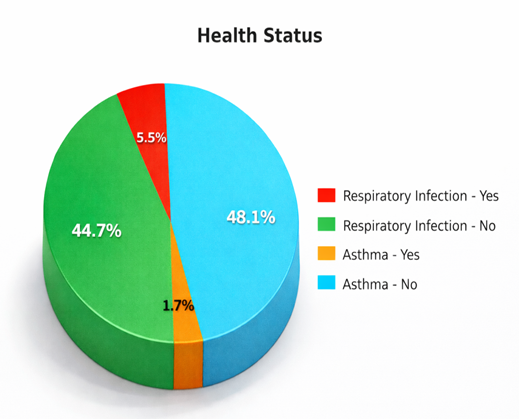
FIGURE 8: HEALTH STATUS
The results indicate that 5.5% of participants reported respiratory infection, while 44.7% did not have respiratory infection. Asthma was reported by only 1.7%of participants, whereas 48.1%were not affected by asthma. Overall, the majority of participants were free from respiratory illness.
BMI CLASSIFICATION:
Among the participants, 43 were under weight, 78 fell within the normal BMI range(forming the majority),20 were overweight,5 were classified as obese class-I , and one belong to obese class-II. Overall, the finding indicates that most student maintain a normal body weight, reflecting a generally healthy nutritional status.
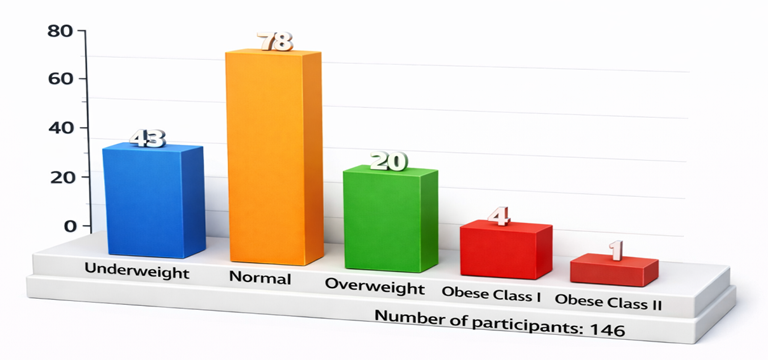
FIGURE 9: BMI CLASSIFICATION
METABOLIC PARAMETERS:
RANDOM BLOOD GLUCOSE TEST:
Among 146 participants assessed, 136 individuals had normal blood glucose values, whereas 10 participants showed abnormal readings. Overall, the finding reflect a favorable metabolic health status in the population. The result indicate that a large proportion of the participants had blood glucose levels within the normal range.
CARDIOVASCULAR PARAMETER:
The cardiovascular status of the participants was assessed by measuring blood pressure. The findings showed that the majority of participants had blood pressure values within the normal range.
Out of 146 participants, 96 individuals had normal blood pressure, indicating good cardiovascular health. Low blood pressure was observed in 32 participants, while 4 participants showed elevated blood pressure levels. Additionally, 10 participants were categorized under Stage 1 hypertension and 4 participants under Stage 2 hypertension.
Overall, the results suggest that most participants maintained normal blood pressure levels.
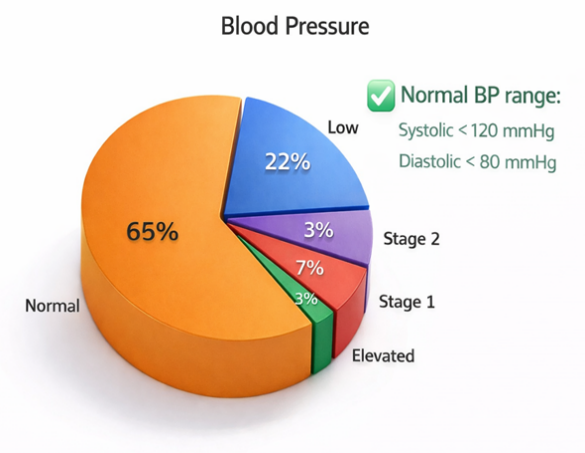
FIGURE 10: BLOOD PRESSURE
PULMONARY PARAMETERS – LUNG FUNCTION ASSESSMENT
PEAK EXPIRATORY FLOW RATE (PEFR)
The PEFR results indicated that a considerable number of participants had reduced expiratory flow. Out of the assessed participants, 131 showed low PEFR values, while 63 participants had normal values. Only 2 participants demonstrated very good PEFR, suggesting that optimal lung function was observed in a small proportion of the study population.
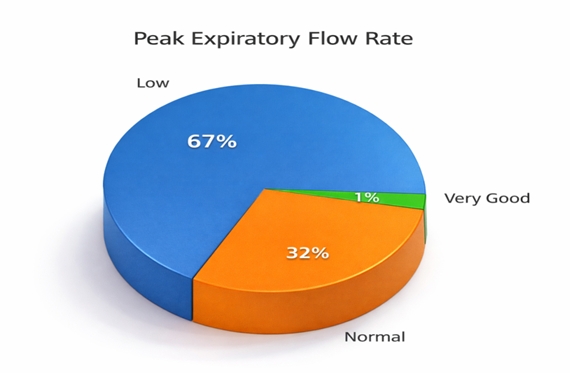
FIGURE 11: PEAK EXPIRATORY FLOW METER
SPIROMETER
Spirometry assessment revealed a similar pattern. Low spirometric values were observed in 97 participants, whereas 42 participants exhibited normal lung function. A small number of participants (7) demonstrated very good spirometry results, indicating above-average pulmonary performance.
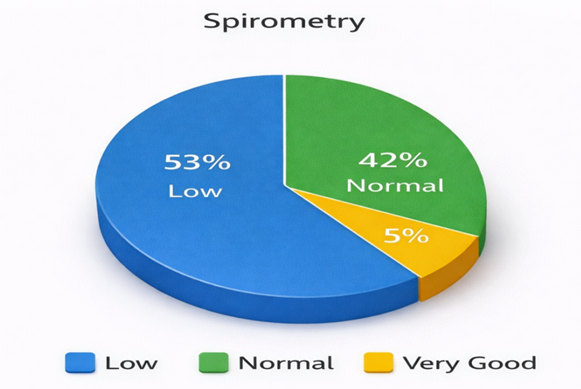
FIGURE 12: SPIROMETER
DISCUSSION
The present observational screening study was conducted among 146 adult participants to evaluate metabolic, cardiovascular, and pulmonary health parameters in relation to Body Mass Index (BMI) and lifestyle characteristics. The findings provide important insights into early physiological variations in a college-based population and highlight the relevance of BMI and lifestyle behaviors in determining overall health status.
BMI Distribution and Lifestyle Influence
The majority of participants were within the normal BMI range (78 participants), while a considerable proportion were underweight (43 participants) and overweight or obese (26 participants combined). This distribution suggests that although general nutritional status appears acceptable, a significant segment of the population remains vulnerable to weight-related health risks. The high prevalence of sedentary lifestyle factors observed in this study — including lack of regular exercise (majority reporting no exercise), moderate to high stress levels, and prolonged mobile usage — may contribute to these deviations in BMI. These findings support existing literature that emphasizes the strong association between sedentary behavior and abnormal BMI.
Metabolic Health and Blood Glucose
The metabolic assessment revealed that 136 out of 146 participants had normal random blood glucose values. This indicates that overt metabolic dysfunction was relatively low in the study population. The absence of strong metabolic disturbances may be attributed to the relatively young age group and low prevalence of obesity in the sample. However, the presence of abnormal glucose levels in a subset of participants indicates the need for continued monitoring and preventive strategies. Previous research has suggested that BMI alone may not always strongly predict blood glucose abnormalities unless accompanied by long-term lifestyle risk factors.
Cardiovascular Findings
Cardiovascular assessment demonstrated early variations in blood pressure among participants. Although the majority maintained normal blood pressure, a notable proportion showed hypotension, elevated blood pressure, or stages of hypertension. These findings suggest that cardiovascular parameters may begin to show early physiological changes even in relatively young populations. Increased BMI is known to elevate cardiac workload and reduce vascular elasticity, which may explain the presence of hypertensive trends in some participants. The results support the concept that cardiovascular risk may develop before significant metabolic abnormalities become apparent.
Pulmonary Function and BMI Relationship
Pulmonary function assessment revealed the most prominent deviation among all parameters studied. A large proportion of participants demonstrated reduced PEFR and spirometry values, indicating compromised lung function despite the low prevalence of diagnosed respiratory illness. This suggests that reduced pulmonary performance may occur subclinically and may be influenced by BMI variations, physical inactivity, stress, and environmental exposure.Top of Form
Previous studies have reported a negative association between BMI and pulmonary function, where increased adipose tissue restricts chest expansion and reduces lung compliance. Additionally, underweight individuals may also demonstrate reduced respiratory muscle strength, which can impair expiratory performance. Therefore, both extremes of BMI observed in this study may contribute to reduced pulmonary efficiency.
Comparative Impact of Health Parameters
When comparing the three major health domains assessed, pulmonary parameters appeared to be the most affected, followed by cardiovascular variations, while metabolic parameters remained relatively stable. This pattern suggests that functional changes in lung and cardiovascular performance may emerge earlier than metabolic disturbances in populations with sedentary lifestyle patterns.
Role of Awareness and Preventive Screening
An important component of this study was the health awareness intervention conducted after screening. The identification of individuals with abnormal BMI, blood pressure, glucose levels, or pulmonary performance enabled targeted education regarding lifestyle modification. Preventive awareness programs are essential in young populations, as early behavioral changes can significantly reduce the future burden of non-communicable diseases.
Public Health Implications
The findings of this study emphasize the importance of routine health screening in institutional settings. Even in populations with predominantly normal BMI and minimal metabolic disturbances, early deviations in cardiovascular and pulmonary function may exist. This highlights the need for integrated screening programs focusing not only on disease detection but also on preventive health promotion.
Limitations Affecting Interpretation
The interpretation of findings should consider certain methodological limitations. The study used convenient sampling within a college population, which may limit generalizability. The cross-sectional design prevents causal inference between BMI and health parameters. Additionally, metabolic and cardiovascular assessment was limited to screening-level measurements, and advanced diagnostic tests were not included.Bottom of Form
CONCLUSION
The present study was conducted among 146 participants to assess metabolic, cardiovascular, and pulmonary health parameters and to evaluate their association with Body Mass Index (BMI) and lifestyle factors. The gender-wise distribution showed that 41% were males and 59% were females, indicating a female-predominant study population. Anthropometric measurements, blood pressure assessment, random blood glucose testing, pulmonary function tests, and lifestyle evaluation were carried out to obtain a comprehensive understanding of the participants’ overall health status.
The metabolic assessment revealed that the majority of participants (136 out of 146) had normal blood glucose levels, while only 10 participants exhibited abnormal values. This finding indicates that blood glucose levels were not significantly affected in the study population, and the overall prevalence of overt metabolic disturbance was relatively low. Therefore, based on the present data, metabolic parameters appear to be comparatively stable among most participants. In contrast, cardiovascular evaluation showed early variations in blood pressure levels. Although 96 participants had normal blood pressure, a considerable number presented with low blood pressure (32), elevated blood pressure (4), Stage 1 hypertension (10), and Stage 2 hypertension (4). While severe hypertension was minimal, the presence of elevated and hypertensive cases suggests early cardiovascular risk, indicating that cardiovascular parameters were moderately affected in this population. Pulmonary function assessment demonstrated a more noticeable impact. Peak Expiratory Flow Rate values were low in 131 participants, and spirometry results showed reduced lung function in 97 participants. Despite the low prevalence of asthma (5 cases) and respiratory infections (16 cases), reduced pulmonary performance was evident in a substantial proportion of the study group. This suggests that pulmonary parameters were comparatively more affected than metabolic parameters, possibly due to sedentary habits, stress, environmental exposure, and low levels of physical activity. BMI analysis showed that although 78 participants were within normal weight, a significant proportion were underweight (43) and overweight/obese (26 combined). Lifestyle factors such as medium to high stress levels, lack of regular exercise (88 reporting no exercise), increased mobile usage, and high caffeine intake may contribute to these early physiological deviations. Recent research studies indicate that sedentary lifestyle and abnormal BMI are strongly associated with early cardiovascular and respiratory dysfunction, even in the absence of marked metabolic abnormalities. In conclusion, the present study suggests that while blood glucose levels were largely unaffected, cardiovascular variations and notably reduced pulmonary function were evident. Therefore, regular screening, lifestyle modification, stress management, and early preventive interventions are essential to reduce future risk of chronic non-communicable diseases.
Pharmacy Intercession:
In our study, we provided awareness and conducted screening regarding metabolic, cardiovascular, and pulmonary health parameters along with Body Mass Index (BMI). The students assessed BMI to identify underweight, overweight, and obese individuals and measured blood pressure to detect individuals at risk of hypertension and other cardiovascular complications. Blood glucose levels were monitored to identify participants at risk of diabetes and metabolic disorders. Pulmonary parameters were also evaluated to assess respiratory function and detect early signs of breathing abnormalities.
The participants were educated about the importance of maintaining normal BMI, controlled blood pressure, optimal blood glucose levels, and healthy lung function. Awareness was created regarding the complications associated with uncontrolled hypertension, diabetes mellitus, obesity, and respiratory diseases. We also provided counseling on lifestyle modification measures such as balanced diet, regular physical activity, weight management, smoking cessation, alcohol avoidance, and the importance of periodic health check-ups.
Participants with abnormal findings were advised to seek medical consultation for further evaluation and management. Through this intervention, we contributed to improving awareness, promoting preventive healthcare practices, and encouraging early detection of diseases.
LIMITATION:
The study was conducted only among college students(college); therefore, the findings may not be generalizable to other age groups or the general population.
The study was carried out using only the facilities and resources available within the college setting, which may have limited the scope and accuracy of certain assessments.
The duration of the study was limited to six months; hence, long-term changes and trends in health parameters could not be evaluated.
Cardiovascular assessment was limited to blood pressure measurement only; other cardiovascular parameters such as lipid profile, ECG, and heart rate variability were not included.
Metabolic assessment was limited to blood glucose measurement only; other metabolic indicators such as lipid profile, HbA1c, and insulin resistance were not assessed.
Pulmonary assessment was restricted to PEFR and spirometry only; advanced pulmonary investigations were not performed.
The study involved only screening of metabolic, cardiovascular, and pulmonary parameters. Therefore, the findings cannot be considered as a confirmed diagnosis, and participants with abnormal values require further clinical evaluation and laboratory investigations for diagnosis.
REFERENCES

Dr. Aishvarya vijayakumar, Dr. Senthilkumar S. K., Subashe S., Sudha E., Sureshkumar K., Suruthi E., Surya S, Influence Of Body Mass Index with Metabolic, Cardiovascular and Pulmonary Health Parameters: An Observational Screening and Awareness Study., Int. J. of Pharm. Sci., 2026, Vol 4, Issue 3, 1221-1231. https://doi.org/10.5281/zenodo.18978398
 10.5281/zenodo.18978398
