View Article

Abstract

The microbead is a potential multiparticulate drug delivery platform for controlled release system with excellent performance profile compared to the conventional dosage forms based on uniform drug delivery, low dosing schedule, and increased bioavailability. It reviews the development and testing of drug-loaded microbeads, emphasizing the potential of such microbeads for sustained, targeted, and site-specific drug release. Crucial sections describe the complex pathways of controlled release, such as diffusion, erosion, swelling, and osmotic pressure-mediated kinetics as described in mathematical models, such as Korsmeyer–Peppas, and zero-order profiles. Different approaches to preparation are examined, including ionotropic gelation, emulsification, coacervation, spray drying, extrusion, and their influence on particle size, drug entrapment efficiency (usually between 44-90%), and release profiles, are elucidated. Comparison to other dosage forms, such as for instance tablets, capsules or nanoparticles, highlights the lower incidence of dose dumping and increased adherence of the patient. In future perspectives stimulus-responsive smart microbeads, nanotechnology hybrids, personalized medicine applications all show promise over the forthcoming horizon. But questions of scale and regulatory obstacles remain to be answered. Finally, in light of this information, drug-loaded microbeads would provide for a next-generation controlled release system that can provide patients with powerful chronic therapies. This article, in synthesis of recent developments, directs researchers of pharmaceutical sciences to the development of an enhanced version of the drug for optimal therapeutic outcomes.

Keywords

Microbeads, controlled release, ionotropic gelation, drug entrapment, sustained delivery, multiparticulate systems, release kinetics, polymer matrices

Introduction

Microbeads, discrete spherical microparticles ranging from 1-1000μm, have emerged as a cornerstone in controlled drug release systems, enabling precise modulation of drug pharmacokinetics. Unlike single-unit dosage forms, microbeads distribute evenly in the gastrointestinal tract, minimizing local irritation and inter-subject variability. Their matrix or reservoir structure incorporates biocompatible polymers like alginate, chitosan, and pectin, facilitating entrapment of hydrophilic or hydrophobic drugs. Pioneered in the 1970s with alginate gels for insulin delivery, microbeads evolved through ionotropic gelation advancements in the 1990s. Recent milestones include FDA-approved multiparticulates like Nucleon capsules (1990s) and nanocomposite hybrids post-2010, shifting from synthetic to natural polymers for biocompatibility. (1–4)Microbeads in pharmaceuticals are classified primarily by structure, release profile, functional properties, and targeting mechanism, distinguishing them from microcapsules or nanoparticles for optimized controlled drug delivery.(5,6)
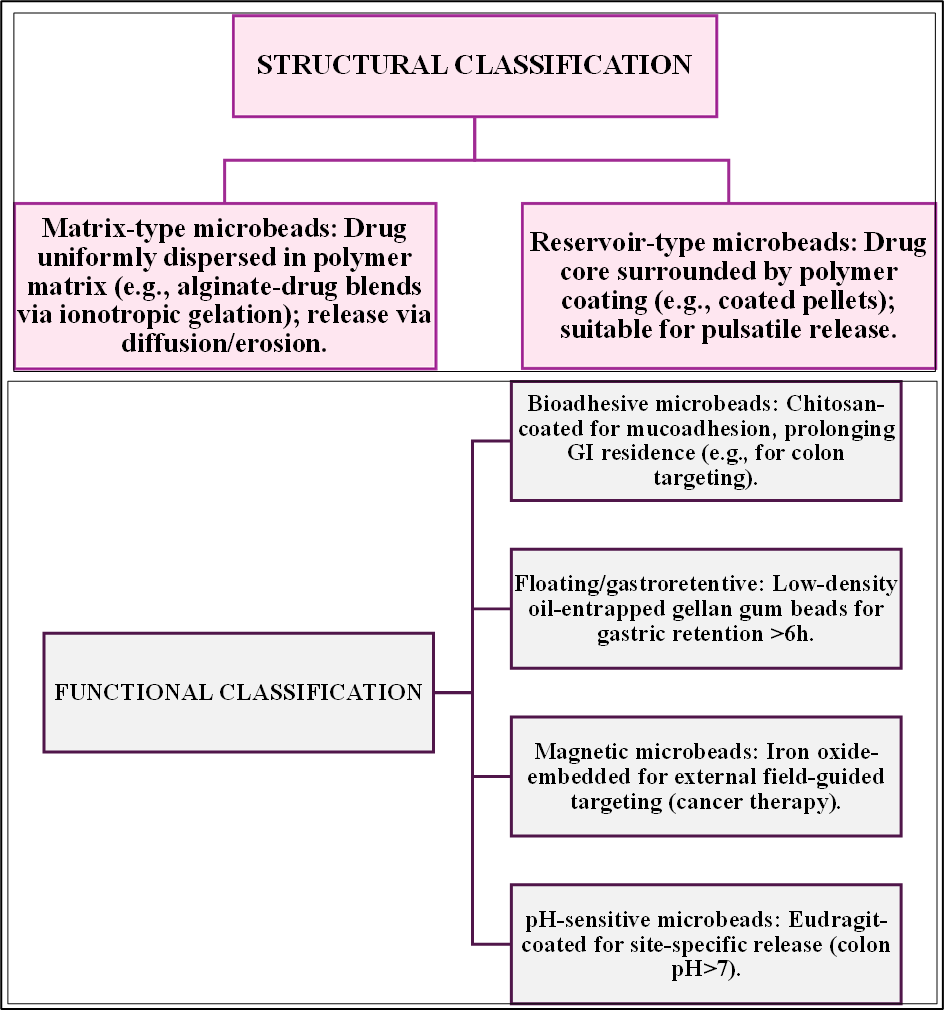


Figure No. 01 Structural & Functional Classification of Microbeads(4,7, 8,9)


  • Release-Based Classification


Table No. 01 Release Based Classification of Microbeads(10)

Type

Mechanism

Example Polymers ?

Sustained release

Diffusion/swelling

HPMC, xanthan gum

Pulsatile release

Coating rupture

Ethylcellulose rupturable

Delayed release

Enteric coating

Eudragit S100

Extended release

Erosion/matrix

PLGA, natural gums


  • Size-Based Multiparticulate

Smaller sizes enhance absorption and targeting, while larger improve handling and compliance; measured via optical microscopy/laser diffraction.


Table no. 02- Detailed Classification Size-Based Classification of Microbeads(8,11–14)

Size Range (μm)

Designation

Key Characteristics

GI Transit Behaviour

Typical Applications

Examples/ Notes

1-100

Nano microbeads

Ultra-fine, high surface area; often hybrid with NPs; PDI <0.2 via microfluidics

Rapid systemic absorption; colon reach

Targeted delivery (cancer, ocular); high bioavailability boost

Doxorubicin-loaded chitosan (burst <20%)

100-500

Small microbeads

Optimal for uniform dispersion; high entrapment (70-95%); ionotropic gelation yields

Even GI spread; minimal dose dumping

Sustained oral release; mucoadhesive

Alginate-nebivolol (427-697 μm); floating gellan

500-1000

Large microbeads

Discrete, free-flowing; robust matrices; spray-dried or extrusion

Gastric retention; slower transit

Gastroretentive; taste-masked suspensions

Pectin-HPMC (792-961 μm); sprinkleable up to 2.5 mm FDA limit

>1000 (up to 2500)

Mini-pellets/beads

Larger, chewable; lower surface: volume ratio

Phased release; sprinkle dosing

Paediatric/geriatric; extended release

Eudragit-coated (1-2.4 mm safe per FDA)


  1. POLYMERS USED FOR MICROBEADS-

Common polymers in microbead formulations enable controlled drug release by forming matrices that modulate diffusion, swelling, erosion, or ionotropic gelation. (15)

  • Natural Polymers(16,17)

Sodium alginate stands out as the most widely used due to its ability to form rigid gels via Ca²? cross-linking, achieving high entrapment (70-95%) and pH-independent sustained release over 8-24 hours for drugs like simvastatin or aceclofenac. Chitosan, a cationic polymer, provides mucoadhesion and enhances permeability, often combined with alginate for polyelectrolyte complexes that reduce burst release. Other naturals include pectin, gellan gum, and guar gum for biodegradable matrices; albizia, cissus, irvingia, and khaya gums offer natural alternatives with varying viscosities for sustained profiles.

Recent advances in natural gum-based microbeads have focused on enhancing controlled release through improved gastric retention, site-specific targeting, and biocompatibility, leveraging gums like gellan, karaya, guar, xanthan, and alginate blends.(14)

Key Innovations(11,18)

Gellan gum-based floating microbeads for acyclovir delivery use ionotropic emulsion-gelation with oil entrapment, achieving >90% entrapment efficiency, sustained release over 12 hours, and prolonged gastric retention (up to 6 hours in rabbits), boosting bioavailability by 2-3-fold via upper GIT absorption. Colon-targeted gellan gum microbeads exploit divalent cation gelation (Ca²?/Mg²?) for pH/enzyme-sensitive swelling in colonic fluids, minimizing gastric loss and enabling zero-order kinetics for therapeutics like 5-ASA; spray drying scales production while preserving mechanical strength. Hydrogel networks of sodium alginate-gellan gum (varying ratios) for valacyclovir show diffusion-controlled release (Higuchi model fit), with SEM confirming porous matrices ideal for prolonged oral delivery and reduced dosing frequency. Guar and xanthan gums in glipizide microspheres via orifice ionic gelation yield mucoadhesive particles (size 200-500μm) with smoother surfaces at optimal gum: drug ratios (1:0.25-0.5), sustaining release up to 10 hours.


Table no. 03 Comparison of Gums(12,14)

Gum Type

Key Advance

Release Profile

Application

Gellan

Floating/colon-targeted

Sustained (12-24h)

Antivirals

Guar/ Xanthan

Mucoadhesive microspheres

8-10h controlled

Hypoglycemics

Karaya

Oil-entrapped buoyancy

Zero-order

Gastric retention


These developments emphasize eco-friendly, scalable methods for chronic therapies, addressing scale-up and in vivo correlation challenges.

  • Synthetic Polymers(9,19)

Hydroxypropyl methylcellulose (HPMC) and ethylcellulose act as release retardants in coatings, creating diffusion barriers for zero-order kinetics. Eudragit polymers (e.g., Eudragit S100, RL/RS) provide pH-sensitive release for colon targeting. Poly (lactic-co-glycolic acid) (PLGA) and polylactic acid (PLA) enable erosion-based release, ideal for hydrophobic drugs.


Table no. 04 Comparison Table of Various Polymers.(16,20)

Polymer Type

Examples

Key Properties

Common Applications

Natural Anionic

Sodium alginate, pectin

Ionotropic gelation, swelling

Oral sustained release

Natural Cationic

Chitosan, gellan gum

Mucoadhesion, biocompatibility

Buccal/colon delivery

Cellulosic

HPMC, ethyl-cellulose

Viscosity control, coatings

Matrix systems

Acrylic/ Synthetic

Eudragit, PLGA

pH-sensitivity, biodegradability

Targeted release


These polymers are selected based on drug solubility, desired kinetics, and biocompatibility, often blended for optimized performance.

  1. PREPARATION METHODS FOR MICROBEADS(20,21)

Preparation methods for pharmaceutical microbeads include conventional techniques like ionotropic gelation and advanced scalable processes, selected based on drug properties, polymer type, and desired release profile.

  • Conventional Methods(22)
  • Ionotropic Gelation: Polymer-drug solution (e.g., 2% sodium alginate + drug) extruded dropwise into cation bath (2-10% CaCl?), curing 15-60 min; yields spherical beads (200-1000 μm), 70-98% entrapment; ideal for hydrophilic drugs.
  • Emulsion Gelation: Polymer solution emulsified in oil phase (vegetable/paraffin oil + Tween 80), cross-linked with cations; suits hydrophobics, reduces burst via evaporation.
  • Polyelectrolyte Complexation: Oppositely charged polymers (alginate-chitosan) mixed, precipitating spontaneously; mild, no cations needed.
  • Advanced Methods(23,24)
  • Spray Drying: Atomized polymer-drug slurry into hot air (100-200°C); uniform <100 μm beads, industrial scale.
  • Extrusion-Spheronization: Granulated mass extruded, spheronized into pellets; robust for matrices.
  • Coacervation: Phase separation coats drug cores; solvent/non-solvent induced.
  • Microfluidics: Precise droplet generation for monodisperse beads (PDI<0.1).


Table no. 05 Comparison of various methods(25)

Method

Pros

Cons

Yield/Size (μm)

Best For

Ionotropic Gelation

Simple, biocompatible, high EE

Size variability, pH-sensitive

70-98%/200-1000

Hydrophilic drugs

Emulsion Gelation

Handles hydrophobics, smooth

Emulsifier residues

60-90%/100-800

Lipophilic actives

Polyelectrolyte

No heat/chemicals, strong adhesion

Limited polymers

80%/300-900

Mucoadhesive

Spray Drying

Scalable, uniform

Heat-sensitive drugs

90%/<100

Mass production

Table no.06 Comparison with Other Dosage Forms(26)

Dosage Form

Advantages over Microbeads

Disadvantages vs. Microbeads

Release Control

Patient Compliance

Tablets

High dose uniformity

Dose dumping risk, GI transit variability

Matrix/ diffusion

Lower (swallowing)

Capsules

Taste masking

Single-unit failure, burst release

Coating-based

Moderate

Nanoparticles

Smaller size, targeting

Stability issues, toxicity; harder scale-up

Diffusion/erosion

High, but IV often

Pellets

Similar multiparticulate

Larger size (1-2 mm), less uniform

Coating

Comparable


Microbeads offer significant advantages in drug delivery by providing controlled and sustained release, ensuring even distribution across the GI tract to minimize dose dumping and inter-subject variability, while reducing dosing frequency, side effects, and peak-trough fluctuations through mechanisms like diffusion or erosion in polymer matrices such as alginate or chitosan. They enhance bioavailability for poorly soluble drugs (BCS II/IV), enable targeting (e.g., colon via pH-sensitive coatings), improve patient compliance via taste masking and compatibility with liquids/suspensions, and support combination therapies in multiparticulate form.

  • Sustained Release Microbeads- Sustained release microbeads extend drug availability over prolonged periods, typically 8-12 hours, through gradual diffusion or matrix erosion following first-order kinetics where release rate declines as drug concentration decreases. These systems, often using polymers like alginate, HPMC, or gellan gum, aim to reduce dosing frequency and maintain therapeutic levels longer than conventional forms, though profiles vary with GI pH, transit time, and enzyme activity, potentially causing inconsistent absorption or initial burst (10-30%).
  • Controlled Release Microbeads- Controlled release microbeads deliver drugs at a precise, constant rate via zero-order kinetics, independent of environmental factors, using advanced designs like osmotic pumps, rupturable coatings (Eudragit), or stimuli-responsive matrices (pH/redox-sensitive pectin). This ensures predictable plasma profiles with minimal fluctuations, ideal for narrow therapeutic index drugs, enabling site-specific targeting such as colon delivery for IBD therapeutics.
  • Advantages of microbeads
  • Therapeutic Consistency: Maintain steady plasma levels within therapeutic range, avoiding toxicity from bursts.
  • Improved Compliance: Fewer doses (1-2x/day), ideal for chronic conditions like hypertension or diabetes.
  • Targeted Delivery: Gastroretentive floating, mucoadhesive, or magnetic variants for site-specific action.
  • Stability: Protect drugs from gastric degradation; high entrapment (70-98%).
  • Disadvantages of microbeads
  • Formulation Challenges: Initial burst release, pH-sensitive swelling (e.g., alginate disintegration), and poor stability in colonic conditions require coatings or blends.
  • Manufacturing Issues: Scale-up difficulties, size variability without microfluidics, harsh conditions (heat/solvents) limiting heat-sensitive drugs.
  • Higher Costs: Complex processes like spray drying increase expenses vs. tablets.
  • GI Retention Variability: Smaller sizes (<200μm) may pass too quickly; larger risk aggregation.


Table no. 07 Comparison Table(27,28)

Aspect

Advantages

Disadvantages

Release Profile

Predictable, sustained (up to 24h)

Potential burst (10-30% initial)

Patient Factors

High compliance, reduced side effects

Variable GI transit affects absorption

Production

Versatile polymers, targeted options

Scale-up, reproducibility issues

Cost/Efficacy

Bioavailability boost for insoluble drugs

Higher cost, excipient needs

 
  • Mechanisms Of Drug Release from Controlled Release Microbeads (19)-

Involves diffusion, swelling/erosion, osmotic pressure, and stimuli-responsive processes, each tailored by polymer matrix design to achieve zero-order or predictable kinetics.

Diffusion-Controlled

Drug molecules diffuse through polymer pores or matrices following Fick's law or Higuchi model: Q=D(2C-Cs)Cst

, where Q is cumulative release, D diffusion coefficient, C total concentration, and Cs

solubility. Common in reservoir systems (coated cores) or dense matrices like ethylcellulose/alginate microbeads; initial lag followed by steady release up to 24h.


Swelling/Erosion-Controlled

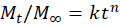
Hydrophilic polymers (e.g., HPMC, gellan gum) imbibe fluid, swell to enlarge mesh size (Peppas: Mt/M=ktn

, n>0.45 anomalous), then erode via hydrolysis/enzymatic degradation. Surface erosion yields zero-order; bulk erosion shows burst. Aceclofenac alginate microbeads exemplify pH-dependent swelling in neutral media.


Osmotic Pressure-Controlled

Semi-permeable coatings (e.g., cellulose acetate) allow water influx, generating hydrostatic pressure that ruptures pores or expands core, expelling drug at constant rate. Nifedipine osmotically active microbeads maintain steady release independent of pH.

Stimuli-Responsive

  • pH-Sensitive: Eudragit S100 dissolves at colonic pH>7 for IBD drugs.
  • Enzyme-Triggered: Protease-degradable gelatin in tumors.
  • Redox/Ion-Exchange: Thiolated pectin-DOX reduces in glutathione-rich cancer cells.

Hybrid mechanisms predominate in natural gum microbeads, optimized via coatings to minimize burst (<20%).

FUTURE ASPECTS

Future aspects of drug-loaded microbeads for controlled release are set to transform pharmaceutical delivery by integrating nanotechnology, smart materials, and personalized medicine. Stimuli-responsive "smart" microbeads—featuring pH-sensitive Eudragit blends, thermosensitive PNIPAAm copolymers, or enzyme-triggered chitosan-gelatin hybrids—enable precise site-specific activation, such as colon-targeted gellan gum microbeads that dissolve only in IBD microenvironments to minimize systemic exposure and boost efficacy for chronic conditions. Nanohybrid systems combining microbeads with liposomes, solid lipid nanoparticles, or metal-organic frameworks (MOFs) achieve >95% drug loading and dual-release kinetics, exemplified by doxorubicin-alginate-MOF conjugates for redox-triggered cancer therapy. 3D printing and microfluidics facilitate patient-specific dosing with monodisperse beads (PDI<0.1), using AI-optimized designs to tailor size (100-500 μm) and polymer ratios, addressing GI transit variability. Sustainable biodegradable exudate gums (karaya, khaya) and marine polysaccharides (agarose, fucoidan) replace synthetics, providing mucoadhesion for oral peptides and vaccines, while layered microbeads support combo therapies for diabetes-hypertension and floating-magnetic hybrids extend gastric retention >12h. Innovations like core-shell architectures and FDA QbD frameworks tackle GMP scale-up, IVIVC, and burst release challenges, with Phase II trials for PLGA-biologics-loaded microbeads signaling market entry by 2030 and ICH Q12 enabling chronotherapy, gene delivery, and implantable depots.

CONCLUSION

Drug-loaded microbeads have widely regarded themselves as an innovative tool in the field of controlled drug release, which can close the distance between traditional dosage form and more modern therapeutics due to their multi-particle structure, high entrapment efficiencies (70-98%) and the flexibility in release mechanisms ranging from diffusion-based Higuchi kinetics, through stimulus-responsive zero-order profiles, and beyond. Through providing a uniform GI distribution, dose-reducing characteristics and enhanced bioavailability for BCS Class II/IV medications, microbeads have superior patient compliance and therapeutic consistency to tablets and capsules, whereas natural polymers like alginate, gellan gum, and chitosan offer new eco-friendly solutions with mucoadhesive and gastroretentive properties. Preparation steps such as ionotropic gelation and spray-drying allow for scalable solutions, despite burst release and scale-up reproducibility problems that should be resolved in future by improvements of nanohybrids, 3D printed personalized beads and QbD scaffolds. With rapid clinical translation as clinical translation speeds up—demonstrated by trials of microbeads now under way, through Phase II: biologics and oncology application is part of a new era, and emerging phase II trials for biologic technologies like microbeads represent a significant advancement in precision medicine, chronotherapy and combination therapies for treating chronic diseases with precision treatment strategies to enhance the outcomes of chronic diseases and reduce the side effects and healthcare costs. The article highlights their central importance in the pharmaceutical landscape of drug development as they provide a basis for formulation scientists toward the next-gen, multiparticulate system of such a wide set of next generation multi-drug solutions in pharmaceutical sciences.

REFERENCES         

    1. Li J, Wu H, Jiang K, Liu Y, Yang L, Park HJ. Alginate Calcium Microbeads Containing Chitosan Nanoparticles for Controlled Insulin Release. Appl Biochem Biotechnol. 2021 Feb;193(2):463–78. doi:10.1007/s12010-020-03420-9
    2. Patil JS, Kamalapur MV, Marapur SC, Shiralshetti SS, Kadam DV. Ionotropically Gelled Chitosan-alginate Complex Hydrogel Beads: Preparation, Characterization and In-vitro Evaluation.
    3. Finotelli PV, Da Silva D, Sola-Penna M, Rossi AM, Farina M, Andrade LR, et al. Microcapsules of alginate/chitosan containing magnetic nanoparticles for controlled release of insulin. Colloids and Surfaces B: Biointerfaces. 2010 Nov;81(1):206–11. doi:10.1016/j.colsurfb.2010.07.008
    4. Poncelet D, Babak V, Dulieu C, Picot A. A physico-chemical approach to production of alginate beads by emulsification-internal ionotropic gelation. Colloids and Surfaces A: Physicochemical and Engineering Aspects. 1999 Sep;155(2–3):171–6. doi:10.1016/S0927-7757(98)00709-2
    5. Cheewatanakornkool K, Niratisai S, Manchun S, Dass CR, Sriamornsak P. Characterization and in vitro release studies of oral microbeads containing thiolated pectin–doxorubicin conjugates for colorectal cancer treatment. Asian Journal of Pharmaceutical Sciences. 2017 Nov;12(6):509–20. doi:10.1016/j.ajps.2017.07.005
    6. Reis CP, Ribeiro AJ, Neufeld RJ, Veiga F. Alginate microparticles as novel carrier for oral insulin delivery. Biotech & Bioengineering. 2007 Apr;96(5):977–89. doi:10.1002/bit.21164
    7. Lin H, Lin S, Lin Y, Ho H, Lo Y, Sheu M. Release characteristics and in vitro–in vivo correlation of pulsatile pattern for a pulsatile drug delivery system activated by membrane rupture via osmotic pressure and swelling. European Journal of Pharmaceutics and Biopharmaceutics. 2008 Sep;70(1):289–301. doi:10.1016/j.ejpb.2008.03.021
    8. Dhote V, Mishra DK. Formulation and Characterization of Microbeads as a Carrier for the  Controlled Release of Rioprostil. Asian Journal of Pharmacy and Pharmacology 2015; 1(1):27-32. Asian Journal of Pharmacy and Pharmacology 2015; 1(1):27-32.
    9. Patel H, Srinatha A, Sridhar BK. External Cross-linked Mucoadhesive Microbeads for Prolonged Drug Release: Development and In vitro Characterization. Indian J Pharm Sci. 2014 Sep;76(5):437–44. PubMed PMID: 25425758; PubMed Central PMCID: PMC4243261.
    10. Dubey R, Dubey BK, Pandey GK, Yadav SK. Formulation and Characterization of Alginate Microbeads of Clonidine Hydrochloride by Ionotropic Gelation Technique. J Drug Delivery Ther. 2019 Apr 15;9(2-s):271–5. doi:10.22270/jddt.v9i2-s.2510
    11. Debasis Nayak, Saravanan Kaliyaperumal. Development and effect of drug release from simvastatin loaded sodium alginate micro beads. World J Bio Pharm Health Sci. 2022 Dec 30;12(3):348–58. doi:10.30574/wjbphs.2022.12.3.0259
    12. Dhone SD, Kumawat NS, Kharat DR, Parashar KS, Jagatap VR, Sonawane RO. Formulation Development and Evaluation of Sustained Release Ranolazine Microbeads using Natural Polymer. J Drug Delivery Ther. 2023 Apr 15;13(4):54–64. doi:10.22270/jddt.v13i4.5795
    13. Kim SK. Marine Biochemistry: Applications [Internet]. 1st ed. Boca Raton: CRC Press; 2022 [cited 2026 Mar 10]. Available from: https://www.taylorfrancis.com/books/9781003303916 doi:10.1201/9781003303916
    14. B. Medha Gayatri, A. V. Vasanthi. Alginate Microbeads Technology for Pharmaceutical Applications. IJARSCT. 2024 Nov 27;492–505. doi:10.48175/IJARSCT-22475
    15. Bhusari Y, Khopade A, Morkhade D, Junghare V, Arokar V. Formulation and Analysis of Tintiri Mucilage Based Sustained Release Hydrogel Beads for Hydroxyzine HCl. AJPR. 2025 May 5;127–33. doi:10.52711/2231-5691.2025.00021
    16. Abhishek Kumar and Meenakshi Bharkatiya *. PREPARATION AND EVALUATION OF FLOATING MICRO BEADS FOR GASTRO  RETENTIVE DRUG DELIVERY SYSTEM OF ANTIULCER DRUG. IJPSR. 13(9).
    17. Fontes GC, Calado VMA, Rossi AM, Rocha-Leão MHMD. Characterization of Antibiotic-Loaded Alginate-Osa Starch Microbeads Produced by Ionotropic Pregelation. BioMed Research International. 2013;2013:1–11. doi:10.1155/2013/472626
    18. Ramana EV, Naseem. DEVELOPMENT, CHARACTERIZATION AND ANTIBACTERIAL PROPERTIES OF SILVER NANOPARTICLES LOADED SODIUM ALGINATE/XANTHAN GUM MICROBEADS FOR DRUG DELIVERY APPLICATIONS. Int J App Pharm. 2023 May 7;278–84. doi:10.22159/ijap.2023v15i3.47028
    19. Dwivedi A, Mansoori N, Dubey M, Namdeo A. Formulation and Evaluation of Micro Beads of Clonidine for the Treatment of Anxiety and Hypertensive Disorder. J Drug Delivery Ther. 2023 Jul 15;13(7):127–33. doi:10.22270/jddt.v13i7.5920
    20. Shaik Khaja Moinuddin, Pradeep Kumar M, Sandeep Kumar G, Perugumi Ramya, Konda Sravya Sree, Kavya K. A review on micro beads: Formulation, technological aspects, and extraction. GSC Biol Pharm Sci. 2024 Feb 28;26(2):059–66. doi:10.30574/gscbps.2024.26.2.0043
    21. Preparation and Evaluation of Cepharadine Microbeads Containing Various Polymers.
    22. Manubolu K, Kumari YR. A REVIEW ON MICROBEADS – PHARMACEUTICAL CARRIER DRUG DELIVERY SYSTEM. Vol. 12. 12(19).
    23. Ivone M, Denora N, D’Amico V, Mareczek L, Mueller LK, Arduino I, et al. Microbeads produced by prilling/vibration technique: A new way to use polyvinyl alcohol in pediatric and veterinary formulations. Journal of Drug Delivery Science and Technology. 2024 Sep;99:105974. doi:10.1016/j.jddst.2024.105974
    24. M. Bhupathyraaj *, A. Ahuja, Jayasekher and S. Pole. FORMULATION OF MICRO BEADS: A REVIEW. IJPSR. 12(1).
    25. Patel DH, editor. Bioresponsive Polymers: Design and Application in Drug Delivery [Internet]. 1st ed. Includes bibliographical references and index.: Apple Academic Press; 2020 [cited 2026 Mar 11]. Available from: https://www.taylorfrancis.com/books/9781000507676 doi:10.1201/9780429325243
    26. MICROBEADS - A PROMISING TECHNOLOGY  FOR CONTROLLED DRUG DELIVERY: A  REVIEW.
    27. Karpe MS. Development and Evaluation of Controlled Release Mefenamic acid Loaded nano Sponge Capsules for the Treatment of Rheumatoid Arthritis. RJPT. 2025 May 7;1968–74. doi:10.52711/0974-360X.2025.00281
    28. Y Shareef M. Determination of Microbeads from Paste in Some Pharmaceuticals and Personal Care Products. PDRAJ. 2021;4(1). doi:10.23880/pdraj-16000121


Reference

    1. Alginate Calcium Microbeads Containing Chitosan Nanoparticles for Controlled Insulin Release. Appl Biochem Biotechnol. 2021 Feb;193(2):463–78. doi:10.1007/s12010-020-03420-9
    2. Patil JS, Kamalapur MV, Marapur SC, Shiralshetti SS, Kadam DV. Ionotropically Gelled Chitosan-alginate Complex Hydrogel Beads: Preparation, Characterization and In-vitro Evaluation.
    3. Finotelli PV, Da Silva D, Sola-Penna M, Rossi AM, Farina M, Andrade LR, et al. Microcapsules of alginate/chitosan containing magnetic nanoparticles for controlled release of insulin. Colloids and Surfaces B: Biointerfaces. 2010 Nov;81(1):206–11. doi:10.1016/j.colsurfb.2010.07.008
    4. Poncelet D, Babak V, Dulieu C, Picot A. A physico-chemical approach to production of alginate beads by emulsification-internal ionotropic gelation. Colloids and Surfaces A: Physicochemical and Engineering Aspects. 1999 Sep;155(2–3):171–6. doi:10.1016/S0927-7757(98)00709-2
    5. Cheewatanakornkool K, Niratisai S, Manchun S, Dass CR, Sriamornsak P. Characterization and in vitro release studies of oral microbeads containing thiolated pectin–doxorubicin conjugates for colorectal cancer treatment. Asian Journal of Pharmaceutical Sciences. 2017 Nov;12(6):509–20. doi:10.1016/j.ajps.2017.07.005
    6. Reis CP, Ribeiro AJ, Neufeld RJ, Veiga F. Alginate microparticles as novel carrier for oral insulin delivery. Biotech & Bioengineering. 2007 Apr;96(5):977–89. doi:10.1002/bit.21164
    7. Lin H, Lin S, Lin Y, Ho H, Lo Y, Sheu M. Release characteristics and in vitro–in vivo correlation of pulsatile pattern for a pulsatile drug delivery system activated by membrane rupture via osmotic pressure and swelling. European Journal of Pharmaceutics and Biopharmaceutics. 2008 Sep;70(1):289–301. doi:10.1016/j.ejpb.2008.03.021
    8. Dhote V, Mishra DK. Formulation and Characterization of Microbeads as a Carrier for the  Controlled Release of Rioprostil. Asian Journal of Pharmacy and Pharmacology 2015; 1(1):27-32. Asian Journal of Pharmacy and Pharmacology 2015; 1(1):27-32.
    9. Patel H, Srinatha A, Sridhar BK. External Cross-linked Mucoadhesive Microbeads for Prolonged Drug Release: Development and In vitro Characterization. Indian J Pharm Sci. 2014 Sep;76(5):437–44. PubMed PMID: 25425758; PubMed Central PMCID: PMC4243261.
    10. Dubey R, Dubey BK, Pandey GK, Yadav SK. Formulation and Characterization of Alginate Microbeads of Clonidine Hydrochloride by Ionotropic Gelation Technique. J Drug Delivery Ther. 2019 Apr 15;9(2-s):271–5. doi:10.22270/jddt.v9i2-s.2510
    11. Debasis Nayak, Saravanan Kaliyaperumal. Development and effect of drug release from simvastatin loaded sodium alginate micro beads. World J Bio Pharm Health Sci. 2022 Dec 30;12(3):348–58. doi:10.30574/wjbphs.2022.12.3.0259
    12. Dhone SD, Kumawat NS, Kharat DR, Parashar KS, Jagatap VR, Sonawane RO. Formulation Development and Evaluation of Sustained Release Ranolazine Microbeads using Natural Polymer. J Drug Delivery Ther. 2023 Apr 15;13(4):54–64. doi:10.22270/jddt.v13i4.5795
    13. Kim SK. Marine Biochemistry: Applications [Internet]. 1st ed. Boca Raton: CRC Press; 2022 [cited 2026 Mar 10]. Available from: https://www.taylorfrancis.com/books/9781003303916 doi:10.1201/9781003303916
    14. B. Medha Gayatri, A. V. Vasanthi. Alginate Microbeads Technology for Pharmaceutical Applications. IJARSCT. 2024 Nov 27;492–505. doi:10.48175/IJARSCT-22475
    15. Bhusari Y, Khopade A, Morkhade D, Junghare V, Arokar V. Formulation and Analysis of Tintiri Mucilage Based Sustained Release Hydrogel Beads for Hydroxyzine HCl. AJPR. 2025 May 5;127–33. doi:10.52711/2231-5691.2025.00021
    16. Abhishek Kumar and Meenakshi Bharkatiya *. PREPARATION AND EVALUATION OF FLOATING MICRO BEADS FOR GASTRO  RETENTIVE DRUG DELIVERY SYSTEM OF ANTIULCER DRUG. IJPSR. 13(9).
    17. Fontes GC, Calado VMA, Rossi AM, Rocha-Leão MHMD. Characterization of Antibiotic-Loaded Alginate-Osa Starch Microbeads Produced by Ionotropic Pregelation. BioMed Research International. 2013;2013:1–11. doi:10.1155/2013/472626
    18. Ramana EV, Naseem. DEVELOPMENT, CHARACTERIZATION AND ANTIBACTERIAL PROPERTIES OF SILVER NANOPARTICLES LOADED SODIUM ALGINATE/XANTHAN GUM MICROBEADS FOR DRUG DELIVERY APPLICATIONS. Int J App Pharm. 2023 May 7;278–84. doi:10.22159/ijap.2023v15i3.47028
    19. Dwivedi A, Mansoori N, Dubey M, Namdeo A. Formulation and Evaluation of Micro Beads of Clonidine for the Treatment of Anxiety and Hypertensive Disorder. J Drug Delivery Ther. 2023 Jul 15;13(7):127–33. doi:10.22270/jddt.v13i7.5920
    20. Shaik Khaja Moinuddin, Pradeep Kumar M, Sandeep Kumar G, Perugumi Ramya, Konda Sravya Sree, Kavya K. A review on micro beads: Formulation, technological aspects, and extraction. GSC Biol Pharm Sci. 2024 Feb 28;26(2):059–66. doi:10.30574/gscbps.2024.26.2.0043
    21. Preparation and Evaluation of Cepharadine Microbeads Containing Various Polymers.
    22. Manubolu K, Kumari YR. A REVIEW ON MICROBEADS – PHARMACEUTICAL CARRIER DRUG DELIVERY SYSTEM. Vol. 12. 12(19).
    23. Ivone M, Denora N, D’Amico V, Mareczek L, Mueller LK, Arduino I, et al. Microbeads produced by prilling/vibration technique: A new way to use polyvinyl alcohol in pediatric and veterinary formulations. Journal of Drug Delivery Science and Technology. 2024 Sep;99:105974. doi:10.1016/j.jddst.2024.105974
    24. M. Bhupathyraaj *, A. Ahuja, Jayasekher and S. Pole. FORMULATION OF MICRO BEADS: A REVIEW. IJPSR. 12(1).
    25. Patel DH, editor. Bioresponsive Polymers: Design and Application in Drug Delivery [Internet]. 1st ed. Includes bibliographical references and index.: Apple Academic Press; 2020 [cited 2026 Mar 11]. Available from: https://www.taylorfrancis.com/books/9781000507676 doi:10.1201/9780429325243
    26. MICROBEADS - A PROMISING TECHNOLOGY  FOR CONTROLLED DRUG DELIVERY: A  REVIEW.
    27. Karpe MS. Development and Evaluation of Controlled Release Mefenamic acid Loaded nano Sponge Capsules for the Treatment of Rheumatoid Arthritis. RJPT. 2025 May 7;1968–74. doi:10.52711/0974-360X.2025.00281
    28. Y Shareef M. Determination of Microbeads from Paste in Some Pharmaceuticals and Personal Care Products. PDRAJ. 2021;4(1). doi:10.23880/pdraj-16000121

Photo
Sakshi Divate
Corresponding author

Department of Pharmaceutics, Konkan Gyanpeeth Rahul Dharkar College of Pharmacy and Research Institute, Karjat, Maharashtra.

Photo
Dr. Sanghadeep Sukhadeo Gajbhiye
Co-author

Department of Pharmaceutics, Konkan Gyanpeeth Rahul Dharkar College of Pharmacy and Research Institute, Karjat, Maharashtra.

Photo
Dr. Swapnil Phalak
Co-author

Department of Pharmaceutics, Konkan Gyanpeeth Rahul Dharkar College of Pharmacy and Research Institute, Karjat, Maharashtra.

Photo
Dr. Mohan Kale
Co-author

Department of Pharmaceutics, Konkan Gyanpeeth Rahul Dharkar College of Pharmacy and Research Institute, Karjat, Maharashtra.

Sakshi Divate, Dr. Sanghadeep Sukhadeo Gajbhiye, Dr. Swapnil Phalak, Dr. Mohan Microbead Innovations in Controlled Drug Release: Advanced Formulation Strategies and Therapeutic Potential Int. J. of Pharm. Sci., 2026, Vol 4, Issue 4, 908-917 https://doi.org/10.5281/zenodo.19437694

More related articles
A Review on Formulation and Evaluation of BI- Laye...
Salve Bhumika, Zanjad Aniket, Kalamkar Tejas, Deshmukh Komal, ...
Nano Herbal Drug Delivery System: Bridging Ayurved...
Sakshi Dattu Waje, Ashwini Shankar Ippar, Riya valu zole , Appasa...
Nipah Virus Endemicity In Southern India: A Compre...
Aditi G. Asole, Madhuri D. Game, Mrunal D. Thakare, ...
Related Articles
Design And Characterization Of In Situ Gel Formulations...
Ankit Arun Kumar Jaiswal, Harshada Shankar Chavan, Ashwini Bhimashankar Karnakoti, Dr. Amol Borade, ...
Approaching The Spectrum Of Coma: A Case Study On Various Ways To Recover Patien...
Indranil Chatterjee, Sourav Mandal, Suchetan Sarkar, Sagarika Ghosh, ...
Analytical Method Development and Quantification of Genotoxic and Carcinogenic I...
Kiran Pokharkar, Dr. Deepak Pareek, Dr. Swarup Prabhune, ...
Review On : Advancement in anticancer Drug development...
Akshada M. Gaikwad , Sai S Shirsath , Vrunda D Nikam , Dipali I Pawar , Dnyaneshwari P. Jadhav , ...
A Review on Formulation and Evaluation of BI- Layered Tablet of Divalproex Sodiu...
Salve Bhumika, Zanjad Aniket, Kalamkar Tejas, Deshmukh Komal, ...
More related articles
A Review on Formulation and Evaluation of BI- Layered Tablet of Divalproex Sodiu...
Salve Bhumika, Zanjad Aniket, Kalamkar Tejas, Deshmukh Komal, ...
Nano Herbal Drug Delivery System: Bridging Ayurveda and Nanotechnology...
Sakshi Dattu Waje, Ashwini Shankar Ippar, Riya valu zole , Appasaheb Kuhile, ...
A Review on Formulation and Evaluation of BI- Layered Tablet of Divalproex Sodiu...
Salve Bhumika, Zanjad Aniket, Kalamkar Tejas, Deshmukh Komal, ...
Nano Herbal Drug Delivery System: Bridging Ayurveda and Nanotechnology...
Sakshi Dattu Waje, Ashwini Shankar Ippar, Riya valu zole , Appasaheb Kuhile, ...