
School of pharmacy, G.H. Raisoni University, Saikheda, Dist- Pandhurna, Madhya Pradesh, India- 480337
Mimosa pudica which belongs to the family (Fabaceae),the sensitive plant ,it is widely used in traditional medicine for its various activity like wise inflammatory, pain and wound healing disorder. In recent the phytochemical and pharmacological studies show that the mimosa pudica it contains the antioxidant like flavonoids, phenolics, tannis, alkaloids, and other bioactive components. The anti inflammatory effects in vitro and in vivo the experimental models like (carrageenan paw edema, protein denaturation assays, etc.) it demonstrate reduction of anti inflammatory mediators and oxidative components by following extract treatmemt.as the early study the formulation efforts(liposomal entrapping,polymeric carriers,mucilage-based controlled release) the aim to improve bioavailability and target delivery plant extracts. Here we have synthesize the available evidence on the phytochemical profile and photochemical properties relevant to inflammation control, molecular and physiological pharmacology, and innovative formulation strategies to translate M.pudica bioactives into therapeutics we had identify knowledge gaps between the phytochemical characterization and toxicity and pharmacokinetic data)and it propose the research prorities to accelerate safe and well based development.
Mimosa pudica it is a well-known plant for its rapid movement. In the evening the leaflets fold together and the leafs drops in downward direction.and it then re-opens at sunrise (1). This type of motion is termed as nyctinastic movement. the leaves are closes during darkness and reopens in light. The leaves are dropping because of stimulus, in conditions such as touching, warming and shaking. The stimulus transmitted to the neighbouring leaves. These types of movements of plant are known as seismonastic movements(2). This movement happens due to loss of turgor pressure. The movement is caused by a rapid loss of pressure in cells which are situated in leaves to droop right before one’s eyes.
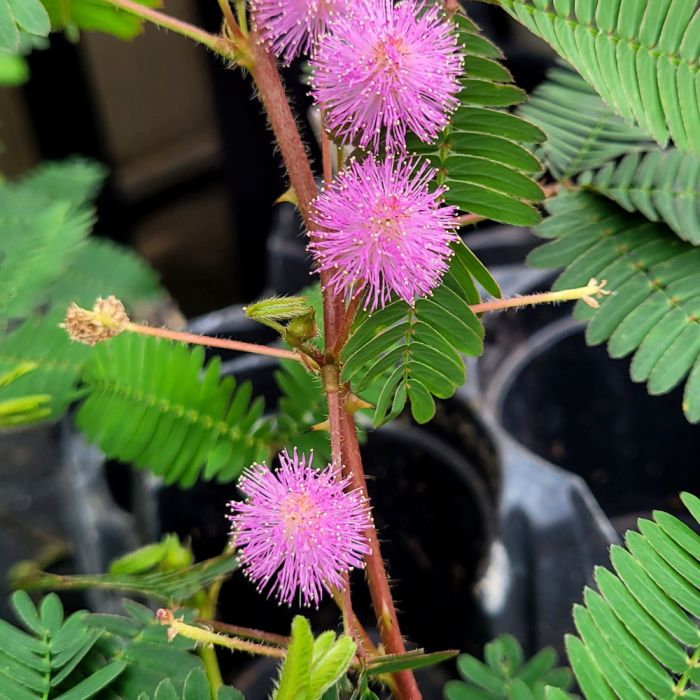
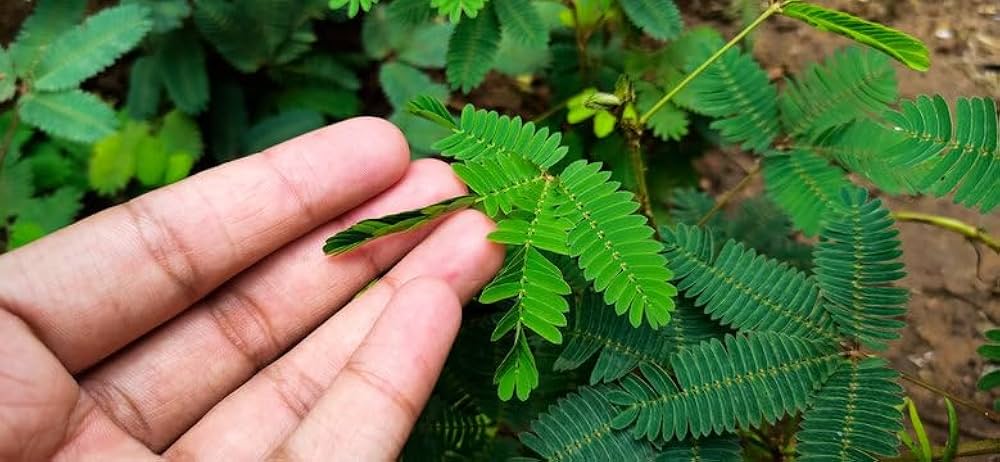
Figure.1: Plant of mimosa pudica
Scientific classification
Kingdom: Plantae
Division: Magnoliophyta
Class: Magnoliopsida
Order: Fabales
Family: Fabaceae
Subfamily: Mimosoideae
Genus: Mimosa
Species: M.pudica
Traditional use
In ayurveda it has been declared that its root are bitter,acrid,alexipharmic,and it is used in treatment of leprosy,dysentery,vaginal and uterine complaints,inflammations and blood diseases.In unani healthcare system its root is resolvent,alternative,and useful in the treatment of diseases which is arising from blood impurities and bile,bilious,fevers,piles,jaundice,and leprosy etc.Decoction of root is used with water to gargle to reduce toothache.it is very useful in diarrhea,bleeding piles and urinary infections. It fastens the wound healing process. It is mainly used in herbal preparations for gynecological disorders.it has an medicinal properties to cure skin diseases(3). it is also used in conditions like bronchitis, weakness etc.it is also used to treat neurological problems.The in mimosa pudica has an capacity of controlling bleeding and which fastens the process of healing of wounds.it is usually recommended in diarrhea,and bleeding piles.it is also used in herbal preparations of gynecological disorders. Its extract used to cure skin disases. Some of bams doctors also recommended it for bronchitis, weakness. There are five parts of plant leaves,flowers,stems,roots,and fruits are used in medicines in the traditional healthcare sytems.In india the different parts of the plant have an different treating diseases since from long period.As recent researches show that the extract of this plant that can be used for checking child birth.some authors also reported that this plant can replace as contraceptive pills if research is done properly(4).
Phytochemistry
In several studies it has shown that the biochemical substances which is involved in the contractility of the leaves. Fresh tissues which give nor-epinephrine, d-pinitol and b-sitosterol. The leaves containing alkaloids. An alkaloid mimosine has been isolated from the plant and the preliminary phytochemical screening of M. pudica leaf extract showed the presence of the bioactive components such as terpenoids,flavonoids,glycosides, alkaloids, quinine, phenols, tannis, saponins and coumarins(5).
Phytochemical screening of mimosa pudica leaf extract

Seismonastic movement of leaves
When the plants are shaken its function of folding their leaves immediately such leaf movements is mediated by specialized motor organs,the pulvini,and a swelling at the base of leafstalk.The pulvini cells changes its turgor pressure which is present cells and due to water moving in and out of these cells,and multiple ion concentrations play a major role in the manipulation of the water movement.The parenchymatous motor cells in the pulvini are the units of contractibility in the response it also contains water and nutrient conducting strands.upon some physical stimulations like touch,wind,heat and extreme light,electrical signals are triggered,translated to chemical signal which generate action potential and migration of potassium from the motor cell to intercellular spaces in the various pulvini and decreases the trigger pressure.the calcium ions are mainly located in the tannin vacuole and released upon stimulation(3).
Pharmacological activity
Anti-inflammatory activity:Inflammation is a part of the complex biological response of the vascular tissues to harmful stimuli,such are the pathogens,damaged cells or irritants.it is also identified by the swelling on joints,joint pain,redness,and stiffness.currently inflammation is treated by NSAIDs these drugs cause increased the chances of blood clot which resulting heart attack and strokes.therefore the developments of potent anti-inflammatory drugs from natural products are highly consideration.An anti-inflammatory activity which refers to the pharmacological potential of the substances which suppress or inhibit the inflammatory pathways. Inflammation it is a complex biological response which involve in immune cells and vascular tissues and while it is protective and uncontrolled inflammation to the various diseases like asthma, cancer, neurodegeneration. The ethanolic extract of the leaves of M.pudica at the doses of 200and 400mg/kg was tested for anti-inflammmatory and analgesic activity. The extract which is produced dose dependent and significant inhibition of carrageenan induced paw oedema. the analgesic activity was found in the acetic acid which is induced in writhing model as compared to tail flick model.and the presence of flavonoids in the ethanolic extract may be contributory to its analgesic and anti-inflammatory(2).
Wound healing activity: wound healing activity it is an process in which the skin or the body tissues repair itself after the injury.the agents with wound healing activity which accelerate the natural process by enhancing cell migration,collagen synthesis,and tissue remodelling.There are various phases of wound healing in which the inflammatory phase in which the blood clot form and stops bleeding and white blood cells remove dead cells and microbes.the proliferative phase where fibroblasts form the new tisssues.
as in the plant extract on mimosa pudica its root methanolic extract showed very good wound healing activity. The methanolic extract exhibited good wound healing activity probably due to presence of phenols constituents(6).
Antimicrobial activity: An antimicrobial activity which refers to an ability of the substances like the plant extract,chemical compound,or a drug to kill or inhibit the growth of microorganisms such as the bacteria,fungi,viruses,parasites etc.
As the anti microbial activity of methanolic extract of mimosa pudica was tested against the aspergillus fumigates,citrobacter divergens and klebsiella pneumonia at the different concentrations of 50,100 and 200 ug/disc. The antimicrobial activity was result to the presence of bioactive constituents like terpenoids, flavonoids, glycosides, alkaloids, quinines, phenols, Tannis, saponins and coumarin(7).
Antiulcer activity: The plant based anti ulcer agents many herbal plants show anti-ulcer activity due to the presence of bioactive compounds like flavonoids, tannis, saponnis, terpenoids, etc. For example M.pudica which reduces gastric acid and which prevent from oxidative damage.
The antiulcer potential of an ethanolic extract of M.pudica leaves was evaluated by pylorus ligation, aspirin and ethanol induced ulcer models. The etanolic extract of the leaves of M.pudica was given by an oral route at the specific dose of 100mg/kg b.w. The extract, dose dependently reduce, the total acidity, ulcer index, and an increase in pH of gastric juice in pylorus ligated ulcer model(8).
1.2. Inflammatory control mechanism
Anti-inflammatory activity which refers to the ability of the natural substances which prevent or reduce the inflammation. It involves a complex interaction between immune cells, blood vessels. when it is uncontrolled, it contributes to chronic diseases like arthritis, asthma, and cardiovascular disorders(9). An agent with an anti-inflammatory potential act through multiple mechanisms of action, which include inhibition of pro-inflammatory enzymes as cyclooxygenase (COX)and lipoxygenase (LOX), which are responsible for the prostaglandin and the leukotriene synthesis. These suppressing the pathways which leads to reduced pain, redness, and swelling. Inflammatory control mechanism which involves the complex biological processes which regulate and resolve inflammation(10).The cytokine regulation which balances between the pro-inflammatory and anti-inflammatory cytokines. The NF-kB signalling pathway which regulates inflammatory gene expression. The COX enzyme modulation which control the prostaglandin production (9).
3. pharmacological evidences for anti-inflammatory activity
3.1 In vitro assays
The multiple in vitro assays demonstrate anti-inflammatory potential of M. pudica extracts.an protein denaturation and membrane stabilization assays show inhibition which is comparable to the reference of anti-inflammatory agents at higher concentrations. The cellular assays document decreased production of inflammatory mediators the nitric oxide in LPS-stimulated macrophages, and reductions in pro-inflammatory cytokines in some of the reports(11).
3.2 In vivo models
In in vivo models pharmacology includes acute and chronic inflammation models.such as the carrageenan-induced paw edema and cotton-pellet granuloma tests.The etanolic/aqueous extracts produced dose-dependent inhibition of edema and granuloma formation, which indicates the effects in birth the exudative and proferative phases of inflammation.
The experimental ulcerative colitis models: The hydroalcoholic leaf extracts attenuated colitis severity with suoression of MPO activity and rodent model(12).
Antioxidant activity: The removing of reactive oxygen species which reduces oxidative triggers of inflammation.
The modulation of cytokine production: It decrease the production of the IL-1beta,TNF-alpha and other mediators which reported in select studies.
Inhibition of inflammatory enzymes: The evidence which indicates the attenuation of myeloperoxidase (MPO) and possible effects on COX/LOX pathways in some assays.
The membrane stabilization and protein denaturation prevention: It contributes to reduce mediator release during acute inflammation(13).
3.4 Safety and toxicology
The preclinical toxicity data which are spares but generally suggest low acute toxicity at the doses used in efficacy studies.However it standardized chronic toxicity, genotoxicity and ADME (absorption,distribution,metabolism,excretion) studies are lacking,and quality control of extracts (batch standardization, quantification of active markers) is inconsistent across reports .These gaps impede translation.
4. Novel formulation strategies to improve delivery and efficacy
4.1 Rationale for formulation
The plant extracts often contain polar and non-polar constituents with poor oral bioavailability, variable stability, and rapid metabolism. For M. pudica, formulation aims includes in the improving solubility and permeability, protecting labile phytochemicals, enabling controlled or targeted release, and enabling topical penetration for local inflammatory conditions (11).
4.2 Liposomes and modified liposomal systems
The liposomal entrapment of M.pudica extracts has been explored to enhance cellular uptake and stability. The modified liposomes have been reported to encapsulate M.pudica extract and augment anticancer efficacy in cell models by analogy these platforms can be repurposed to deliver anti-inflammatory phytocomplexes to the inflamed tissues with improved retension and reduced systemic exposure.liposomal systems also facilitate topical/dermal delivery when formulated into gels or the creams.
4.3 Polymeric nanoparticals and chitosan carriers
The polymeric nanoparticles which improve the oral and topical delivery by enhancing mucosal adhesion,controlling release,and protecting actives from degradation.The chitosan has mucoadhesive and permeation enhancing properties that aid oral or nasal delivery of M.pudica fractions for an systemic or localized inflammatory diseases. Reviews of plant bioactive delivery highlight these materials as promising for botanical extracts.
4.4 Mucilage and seed-based controlled release excipients
M.pudica seeds which produce mucilage which has been evaluated as a natural polymer for sustained release matrices. Studies show seed mucilage can modulate drug release profiles and may be co-utilized to generate the sustained-release formulations containing anti-inflammatory actives. This dual use of plant as both active source and excipient is attractive for low-cost localized therapies.
4.5 Standardization and marker compounds
The successful formulation which requires marker-guided standardization (for example the quantifying of dominant flavonoids or phenolic content by HPLC/LC-MS) and stability studies it ensure batch to batch consistency of the formulation. The analytical fingerprinting and validated assays for bioactivity of the enzymes should be accompanying formulation development.
5. Critical gaps and future research priorities
CONCLUSION
The mimosa pudica which contains the promising mix of antioxidant and anti-inflammatory and phytochemicals by a preclinical research which show the diverse efficacy in inflammation models. The rational formulation strategies are polymeric nanoparticles, mucilage matrices liposomes are addressing the bioavailability and stability issues, but it progresses to clinical application which require standardized phytochemical characterization and as early human trials. The given ethnomedical history and preliminary evidence, M.pudica coordinated in development to evaluate its safety and therapeutic potential as an anti-inflammatory botanic.
REFERENCES



Vasudha Sharma, Dhanshri Tambakhe, Nilam Nehare, Mimosa pudica in inflammation control photochemistry, pharmacology and novel formulation strategies, Int. J. of Pharm. Sci., 2026, Vol 4, Issue 3, 2506-2512. https://doi.org/10.5281/zenodo.19147896
 10.5281/zenodo.19147896
