
1,3,4 Rajarshi Shahu College of Pharmacy, Markhel
2 Department of Pharmacy, Madhav University, Pindwara, Sirohi, Rajasthan.
The present study focuses on the development and evaluation of a novel nutraceutical formulation containing calcium, magnesium, zinc, vitamin D3, and vitamin B12 using almond resin (Prunus dulcis exudate) as a natural binding and delivery matrix. The formulation was designed to enhance mineral bioavailability and provide sustained release characteristics. A total of six formulations (F1–F6) were prepared using varying concentrations of almond resin. The prepared formulations were evaluated for physicochemical properties, disintegration time, dissolution profile, and stability.The optimized formulation (F4) exhibited acceptable hardness (4.8 ± 0.2 kg/cm²), friability (0.42%), and sustained release over 8 hours with 92.3% cumulative drug release. Stability studies indicated no significant degradation under accelerated conditions. The results suggest that almond resin can serve as a promising natural excipient in nutraceutical delivery systems
Nutraceuticals have emerged as a significant component of modern preventive healthcare systems, bridging the gap between nutrition and pharmaceuticals. They are defined as food-derived products that provide additional health benefits beyond basic nutritional value, including the prevention and management of chronic diseases. The increasing prevalence of osteoporosis, micronutrient deficiencies, neurological disorders, and immune dysfunction has intensified the demand for multi-nutrient formulations containing essential minerals and vitamins [1].
Minerals such as calcium, magnesium, and zinc play indispensable roles in maintaining physiological homeostasis. Calcium is a primary structural component of bones and teeth and is essential for neuromuscular transmission and blood coagulation. Magnesium acts as a cofactor in more than 300 enzymatic reactions, including ATP metabolism and protein synthesis, while zinc is crucial for immune modulation, DNA synthesis, and antioxidant defense mechanisms [2]. Furthermore, vitamin D3 enhances intestinal absorption of calcium and phosphorus, thereby improving bone mineralization, whereas vitamin B12 is essential for red blood cell formation, neurological function, and DNA synthesis [3].
Despite their therapeutic importance, conventional formulations of these nutrients often exhibit several limitations. One of the major challenges is poor bioavailability, particularly for minerals such as calcium carbonate, which require an acidic environment for optimal absorption. Additionally, rapid dissolution of conventional dosage forms leads to burst release, reducing sustained therapeutic efficacy. Gastrointestinal irritation is another concern, especially with high-dose mineral supplements, which may lead to patient non-compliance [4]. These challenges necessitate the development of advanced delivery systems capable of improving nutrient absorption while minimizing adverse effects.
Recent advancements in nutraceutical delivery systems have emphasized the use of natural polymers and plant-derived biomaterials to overcome these limitations. Natural polysaccharides and gums have demonstrated significant potential in encapsulating bioactive compounds, protecting them from degradation, and enhancing their bioavailability. These polymers can form matrices that regulate the release of active ingredients, thereby improving stability and therapeutic performance through mechanisms such as hydrogen bonding and matrix diffusion [5].
Almond resin, a natural exudate obtained from Prunus dulcis, represents a promising yet underexplored biomaterial for nutraceutical applications. Almond-derived substances are rich in bioactive compounds, including polyphenols, which exhibit antioxidant, anti-inflammatory, and health-promoting properties. The metabolites of almond polyphenols undergo biotransformation in the human body, contributing to enhanced biological activity and systemic availability [6]. Additionally, almond resin exhibits excellent biocompatibility, biodegradability, and non-toxic characteristics, making it suitable for use as a natural excipient in pharmaceutical and nutraceutical formulations.
Natural polymers such as almond resin provide multiple formulation advantages, including improved binding properties, enhanced mechanical strength, and modulation of drug release kinetics. Upon hydration, these polymers can form gel-like matrices that enable sustained release of active ingredients, thereby reducing dosing frequency and improving patient compliance. Moreover, the increasing demand for plant-based, eco-friendly, and clean-label nutraceutical products further supports the utilization of almond resin as a sustainable excipient [7].
In this context, the present study aims to design and develop a multi-vitamin nutraceutical formulation containing calcium, magnesium, zinc, vitamin D3, and vitamin B12 using almond resin as a natural matrix-forming agent. The study focuses on evaluating the potential of almond resin to enhance physicochemical characteristics, control release behavior, and improve overall formulation performance. This approach aligns with current trends in green pharmaceutical technology and supports the development of safer, effective, and patient-friendly nutraceutical delivery systems.
2. MATERIALS AND METHODS
2.1 Materials
All materials used in the present study were of analytical or pharmaceutical grade and were procured from reliable commercial suppliers. Calcium carbonate, magnesium oxide, and zinc sulfate were selected as mineral sources due to their widespread use in nutraceutical formulations and established safety profiles. Vitamin D3 (cholecalciferol) and vitamin B12 (cyanocobalamin) were included to enhance mineral absorption and support metabolic and neurological functions.Almond resin (Prunus dulcis exudate) was used as a natural binder and release-modifying agent owing to its biocompatibility, gel-forming ability, and potential to sustain drug release. Microcrystalline cellulose (MCC) was used as a diluent to improve compressibility, while magnesium stearate served as a lubricant to reduce friction during tablet compression.
Table 1: Materials and Their Functions
|
Ingredient |
Function |
|
Calcium carbonate |
Calcium source |
|
Magnesium oxide |
Magnesium source |
|
Zinc sulfate |
Zinc source |
|
Vitamin D3 |
Fat-soluble vitamin |
|
Vitamin B12 |
Water-soluble vitamin |
|
Almond resin |
Binder & release modifier |
|
Microcrystalline cellulose (MCC) |
Diluent |
|
Magnesium stearate |
Lubricant |
Calcium carbonate was selected due to its high elemental calcium content and cost-effectiveness, although its bioavailability is influenced by formulation strategies [8]. Magnesium oxide and zinc sulfate were chosen for their high mineral content and compatibility with oral dosage forms [9]. Vitamin D3 plays a crucial role in enhancing calcium absorption in the intestine, while vitamin B12 is essential for hematopoietic and neurological functions [10].Almond resin was incorporated as a natural polymer due to its ability to form a viscous gel matrix upon hydration, which can modulate the release of active ingredients. Natural gums and resins have been widely reported to improve controlled-release characteristics and stability of formulations [11]. Microcrystalline cellulose is commonly used in tablet formulations due to its excellent compressibility and binding properties, while magnesium stearate is a standard lubricant used to prevent sticking and ensure smooth tablet ejection [12].
2.2 Formulation Design
Six different formulations (F1–F6) were designed to evaluate the effect of varying concentrations of almond resin on the physicochemical properties and release behavior of the nutraceutical tablets. The formulations were prepared using the direct compression method, which is widely employed due to its simplicity, cost-effectiveness, and suitability for moisture- and heat-sensitive ingredients such as vitamins [13].In this study, the concentrations of calcium carbonate, magnesium oxide, zinc sulfate, vitamin D3, and vitamin B12 were kept constant across all formulations to maintain uniform therapeutic efficacy. The amount of almond resin was systematically varied from 20 mg to 120 mg per tablet to investigate its role as a binder and release-retarding agent. Microcrystalline cellulose (MCC) was used as a diluent to maintain the desired tablet weight and improve compressibility.The rationale behind increasing almond resin concentration was to study its impact on:
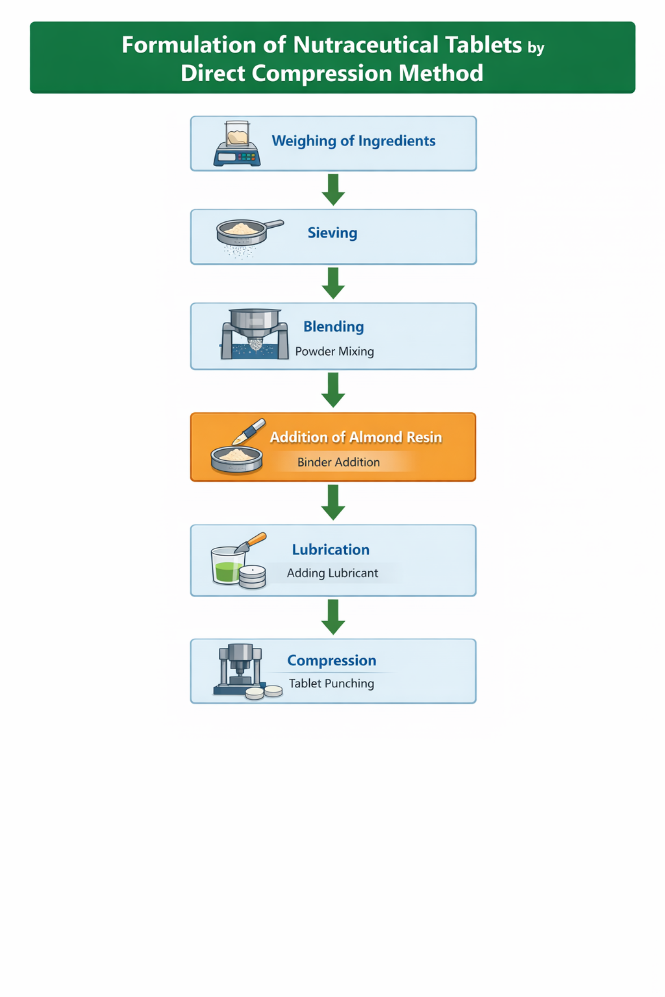
Figure 1: Formulation Flowchart
Direct compression involves blending all ingredients followed by compression into tablets without a granulation step. This method minimizes processing steps and reduces the risk of degradation of heat-sensitive components such as vitamin D3 and vitamin B12 [14].
Table 2: Composition of Formulations (mg/tablet)
|
Ingredient |
F1 |
F2 |
F3 |
F4 |
F5 |
F6 |
|
Calcium carbonate |
250 |
250 |
250 |
250 |
250 |
250 |
|
Magnesium oxide |
100 |
100 |
100 |
100 |
100 |
100 |
|
Zinc sulfate |
15 |
15 |
15 |
15 |
15 |
15 |
|
Vitamin D3 |
0.01 |
0.01 |
0.01 |
0.01 |
0.01 |
0.01 |
|
Vitamin B12 |
0.005 |
0.005 |
0.005 |
0.005 |
0.005 |
0.005 |
|
Almond resin |
20 |
40 |
60 |
80 |
100 |
120 |
|
MCC |
qs |
qs |
qs |
qs |
qs |
qs |
Formulation F1 contains the lowest concentration of almond resin and is expected to show faster disintegration and immediate release characteristics. As the concentration of almond resin increases (F2–F6), the formation of a denser polymeric matrix is anticipated, leading to slower drug release and increased tablet hardness.Formulation F4 (80 mg almond resin) was hypothesized to provide an optimal balance between mechanical strength and controlled release based on preliminary trials and literature reports on natural polymer-based matrix systems [15].
The use of natural polymers like almond resin in varying concentrations is a well-established approach to modulate drug release kinetics, where higher polymer content typically results in extended release due to increased diffusion path length and matrix swelling [16].
2.3 Evaluation Parameters
The prepared nutraceutical tablets were evaluated for various pre-compression and post-compression parameters to ensure their quality, uniformity, mechanical strength, and release characteristics. Standard pharmacopeial methods were followed for all evaluations.
2.3.1 Weight Variation Test
The weight variation test was performed to ensure uniformity of tablet weight, which indirectly reflects the consistency of drug content. Twenty tablets from each formulation were randomly selected and individually weighed using a digital analytical balance. The average weight was calculated, and the percentage deviation of each tablet from the mean was determined.The tablets were considered acceptable if the weight variation was within the pharmacopeial limits (±5% for tablets weighing more than 250 mg) [17].
2.3.2 Hardness Test
Tablet hardness was measured using a Monsanto hardness tester to determine the mechanical strength of the tablets. Hardness indicates the ability of a tablet to withstand mechanical stress during handling, packaging, and transportation.For each formulation, five tablets were randomly selected, and the average hardness was expressed in kg/cm². Adequate hardness is essential to maintain tablet integrity while ensuring proper disintegration [18].
2.3.3 Friability Test
Friability testing was carried out using a Roche friabilator to evaluate the resistance of tablets to abrasion and mechanical shock. A sample of pre-weighed tablets (approximately 20 tablets) was rotated at 25 rpm for 4 minutes (100 revolutions).After the test, tablets were dedusted and reweighed. The percentage friability was calculated using the formula:
Friability (%)=W0-WW0×100
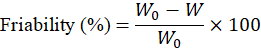

W

A friability value of less than 1% is generally considered acceptable for tablet formulations [19].
2.3.4 Disintegration Time
The disintegration test was performed using a USP disintegration test apparatus. Six tablets were placed in the basket rack assembly containing distilled water maintained at 37 ± 0.5°C.The time required for complete disintegration of the tablets without leaving any palpable mass was recorded. Disintegration time is an important parameter that influences drug release and bioavailability [20].
2.3.5 Dissolution Study
In vitro dissolution studies were carried out using a USP Type II (paddle) dissolution apparatus to evaluate the release profile of nutrients from the formulated tablets.
Conditions:
At predetermined time intervals (1, 2, 4, 6, and 8 hours), 5 mL samples were withdrawn and replaced with fresh dissolution medium to maintain sink conditions. The samples were filtered and analyzed using UV-visible spectrophotometry at appropriate wavelengths for each component.The cumulative percentage drug release was calculated and plotted against time to assess the release kinetics of the formulation [21].
Significance of Evaluation
These evaluation parameters collectively ensure:
3. RESULTS AND DISCUSSION
3.1 Pre-compression Parameters
The flow properties of the powder blends were evaluated using angle of repose, Carr’s index, and Hausner ratio to assess their suitability for direct compression.
Table 2: Flow Properties of Powder Blends
|
Formulation |
Angle of Repose (°) |
Carr’s Index (%) |
Hausner Ratio |
|
F1 |
32.5 ± 0.5 |
18.2 |
1.22 |
|
F2 |
31.8 ± 0.4 |
17.5 |
1.21 |
|
F3 |
30.2 ± 0.3 |
15.8 |
1.18 |
|
F4 |
29.6 ± 0.2 |
14.5 |
1.16 |
|
F5 |
28.9 ± 0.3 |
13.8 |
1.15 |
|
F6 |
28.5 ± 0.2 |
13.2 |
1.14 |
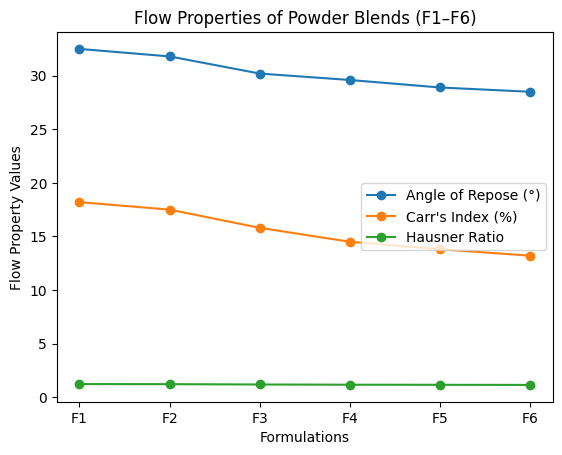
Figure 2: Comparison of pre-compression flow properties (angle of repose, Carr’s index, and Hausner ratio) of formulations F1–F6
The results indicate a progressive improvement in flow properties with increasing concentration of almond resin from formulation F1 to F6.
This improvement in flow behavior can be attributed to the binding and granulating effect of almond resin, which likely promoted the formation of more uniform and cohesive particles. The increased resin content may have reduced interparticle friction and improved packing ability, resulting in better flow and compressibility.Formulations F4–F6 exhibited excellent flow properties, making them highly suitable for direct compression. In contrast, F1 and F2 showed comparatively lower flowability, though still within acceptable limits.The study confirms that almond resin plays a significant role in improving powder flow properties, which is critical for achieving uniform die filling and consistent tablet weight during compression.
3.2 Post-compression Evaluation
The prepared tablets were evaluated for hardness, friability, and disintegration time to assess their mechanical strength and performance characteristics.
Table 3: Physical Parameters of Tablets
|
Formulation |
Hardness (kg/cm²) |
Friability (%) |
Disintegration Time (min) |
|
F1 |
3.2 ± 0.2 |
0.89 |
12 |
|
F2 |
3.8 ± 0.3 |
0.72 |
15 |
|
F3 |
4.2 ± 0.2 |
0.58 |
18 |
|
F4 |
4.8 ± 0.2 |
0.42 |
22 |
|
F5 |
5.4 ± 0.3 |
0.36 |
28 |
|
F6 |
6.1 ± 0.2 |
0.30 |
35 |
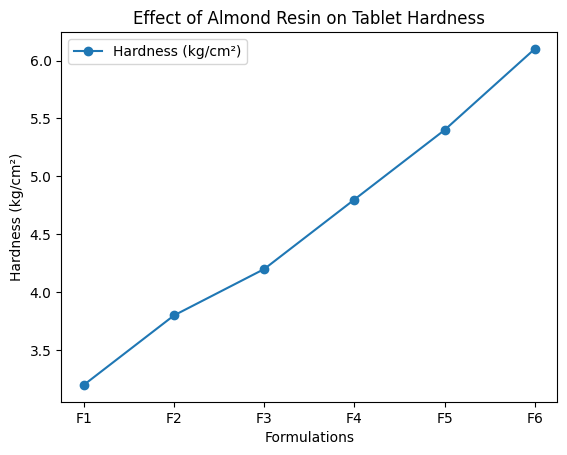
Figure 3: Effect of Almond Resin Concentration on Tablet Hardness
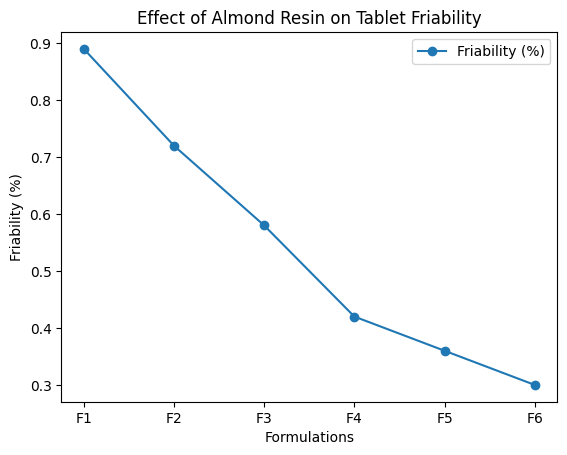
Figure 4: Effect of Almond Resin Concentration on Tablet Friability
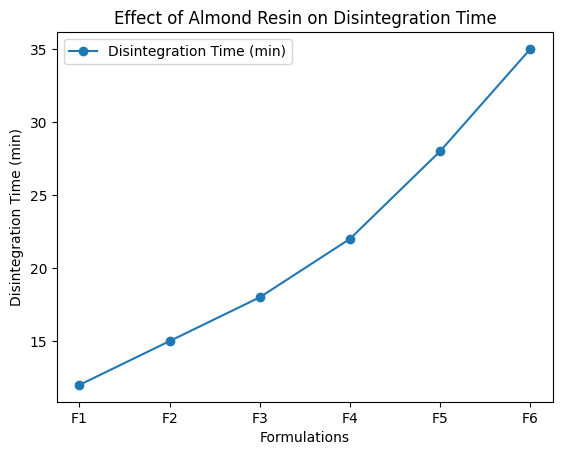
Figure 5: Effect of Almond Resin Concentration on Disintegration Time
The post-compression evaluation results clearly demonstrate that the concentration of almond resin significantly influenced the mechanical and disintegration properties of the tablets.
Hardness
A gradual increase in hardness was observed from F1 (3.2 kg/cm²) to F6 (6.1 kg/cm²). This indicates that almond resin effectively acts as a binding agent, enhancing interparticle bonding and producing mechanically stronger tablets. Higher resin concentrations resulted in a denser matrix, thereby increasing tablet strength.
Friability
Friability values decreased from 0.89% (F1) to 0.30% (F6), indicating improved resistance to mechanical stress. All formulations showed friability values below 1%, which is within acceptable limits, confirming adequate durability during handling and transportation. The reduction in friability is directly correlated with the increase in tablet hardness.
Disintegration Time
A significant increase in disintegration time was observed with increasing almond resin concentration. Formulation F1 disintegrated within 12 minutes, whereas F6 required 35 minutes. This delay can be attributed to the formation of a viscous gel layer by almond resin upon contact with dissolution medium, which acts as a barrier to tablet breakdown.The results suggest that almond resin plays a dual role:
Formulation F4 exhibited an optimal balance between hardness (4.8 kg/cm²), low friability (0.42%), and moderate disintegration time (22 min), making it a promising candidate for controlled-release nutraceutical formulation.The study confirms that increasing almond resin concentration improves tablet integrity and modulates disintegration behavior, supporting its potential use as a natural binder and release-controlling agent in nutraceutical formulations.
3.3 Dissolution Study
The in vitro dissolution study was performed to evaluate the release profile of minerals and vitamins from the formulated nutraceutical tablets using a USP Type II (paddle) dissolution apparatus.
Table 4: Percentage Drug Release Profile
|
Time (hrs) |
F1 |
F2 |
F3 |
F4 |
F5 |
F6 |
|
1 |
45 |
38 |
32 |
28 |
22 |
18 |
|
2 |
65 |
58 |
50 |
44 |
38 |
30 |
|
4 |
85 |
78 |
70 |
65 |
58 |
50 |
|
6 |
95 |
88 |
82 |
78 |
70 |
62 |
|
8 |
100 |
96 |
90 |
92.3 |
85 |
78 |
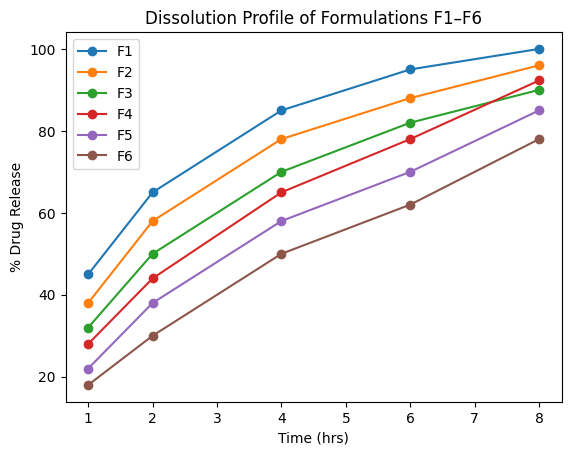
Figure 6: In Vitro Dissolution Profile of Formulations F1–F6
The dissolution profiles clearly demonstrate that the concentration of almond resin significantly influenced the release behavior of the nutraceutical formulation.
Immediate vs Sustained Release Behavior
Effect of Almond Resin on Drug Release
The retardation in drug release with increasing almond resin concentration can be attributed to:
This behavior is characteristic of matrix-type controlled-release systems, where polymer concentration directly governs the release kinetics.
Optimized Formulation (F4)
Formulation F4 demonstrated a desirable release profile:
This indicates a controlled and sustained release pattern, ensuring prolonged availability of nutrients, which is beneficial for improving absorption and reducing dosing frequency.
Comparative Release Trend
Overall release rate followed the order:
F1 > F2 > F3 > F4 > F5 > F6
This confirms that increasing almond resin concentration effectively slows down the release of active ingredients.
3.4 Stability Studies
Stability studies were performed on the optimized formulation (F4) to evaluate its physical and chemical stability over time under accelerated conditions. The study was conducted to assess any potential changes in hardness, drug content, and overall appearance of the tablets.
Table 5: Stability Data of Optimized Formulation (F4)
|
Parameter |
Initial |
1 Month |
3 Months |
|
Hardness (kg/cm²) |
4.8 |
4.7 |
4.6 |
|
Drug content (%) |
99.2 |
98.8 |
98.5 |
|
Appearance |
No change |
No change |
No change |
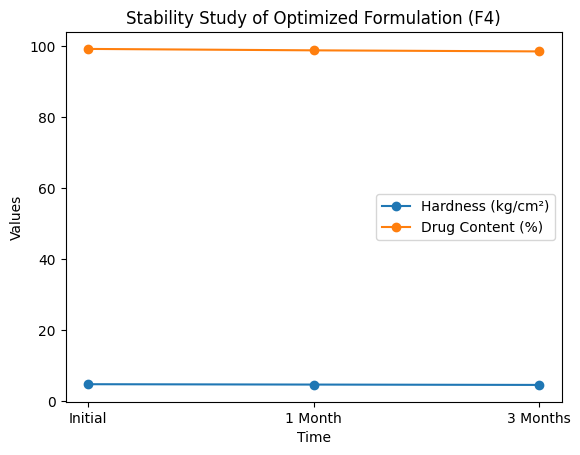
Figure 7: Stability Study of Optimized Formulation (F4)
The stability data indicate that the optimized formulation (F4) maintained its physicochemical properties throughout the study period.
Hardness
A slight decrease in hardness was observed from 4.8 to 4.6 kg/cm² over 3 months. However, this variation is minimal and remains within acceptable limits, indicating that the tablets retained sufficient mechanical strength during storage.
Drug Content
The drug content showed a marginal reduction from 99.2% to 98.5%, which is within pharmacopeial limits (typically 95–105%). This suggests that the active ingredients, including vitamins and minerals, remained stable without significant degradation.
Appearance
No visible changes in color, texture, or integrity of the tablets were observed, indicating good physical stability and absence of moisture-induced or environmental degradation.
The results demonstrate that almond resin-based formulation provides:
The natural polymer matrix likely contributed to protecting the active ingredients from degradation by limiting exposure to moisture and oxygen.The optimized formulation (F4) remained stable under accelerated storage conditions, confirming its suitability for long-term storage and potential commercial application as a nutraceutical product.
DISCUSSION
The present study demonstrates that almond resin plays a crucial role in influencing the overall performance of the developed nutraceutical formulation. The incorporation of almond resin as a natural excipient significantly affected both the mechanical properties and release behavior of the tablets.
One of the primary functions of almond resin observed in this study is its binder effect, which contributed to improved tablet integrity. As the concentration of almond resin increased, there was a corresponding increase in tablet hardness and a decrease in friability. This indicates enhanced interparticle bonding and formation of a more cohesive matrix structure, resulting in tablets with superior mechanical strength and resistance to handling stress.In addition to its binding properties, almond resin acted as an effective release-modifying agent. The dissolution studies revealed that higher concentrations of almond resin led to a gradual reduction in drug release rate. This behavior can be attributed to the formation of a hydrated gel layer around the tablet upon contact with dissolution media, which acts as a diffusion barrier. The matrix structure increases the diffusion path length and slows down the release of active ingredients, thereby enabling a sustained release profile.Another important advantage of almond resin is its natural origin, which enhances the safety and acceptability of the formulation. Being a plant-derived biopolymer, it is biocompatible, biodegradable, and less likely to cause adverse effects compared to synthetic excipients. This aligns with the growing demand for natural and clean-label nutraceutical products.Among all the formulations, F4 was identified as the optimized formulation, as it provided an ideal balance between mechanical strength, disintegration time, and drug release profile. It exhibited sufficient hardness to withstand handling, acceptable disintegration time to ensure proper drug release initiation, and a sustained release pattern that allows prolonged availability of nutrients.Overall, the study confirms that almond resin can be effectively utilized as a multifunctional excipient in nutraceutical formulations, offering both structural and functional advantages. Its dual role as a binder and release retardant makes it a promising candidate for the development of controlled-release dietary supplements.
CONCLUSION
The present study successfully demonstrated the development of a multi-vitamin nutraceutical formulation incorporating calcium, magnesium, zinc, vitamin D3, and vitamin B12 using almond resin as a natural excipient. The formulation approach effectively utilized the multifunctional properties of almond resin to enhance both the mechanical and release characteristics of the tablets.The optimized formulation (F4) exhibited desirable physicochemical properties, including adequate hardness, low friability, and acceptable disintegration time. Furthermore, it showed a controlled and sustained release profile, ensuring prolonged availability of essential nutrients. Stability studies confirmed that the formulation remained stable under accelerated conditions, with no significant changes in drug content, hardness, or appearance.Overall, almond resin proved to be an effective natural binder and release-modifying agent, contributing to improved formulation performance. Its biocompatibility, biodegradability, and natural origin make it a promising alternative to synthetic excipients in the development of safe and efficient nutraceutical delivery systems.The findings of this study highlight the potential of almond resin as a valuable excipient in the design of advanced nutraceutical formulations with enhanced therapeutic benefits and patient compliance.
FUTURE SCOPE
The present study provides a strong foundation for the development of almond resin-based nutraceutical formulations; however, further investigations are required to fully establish its therapeutic potential and industrial applicability.
Future research can focus on in vivo bioavailability studies to evaluate the absorption, distribution, and overall biological performance of the formulated nutrients. Such studies will help in correlating in vitro dissolution data with in vivo outcomes and confirm the enhanced bioavailability of minerals and vitamins.
Additionally, clinical evaluation is essential to assess the safety, efficacy, and patient compliance of the optimized formulation in human subjects. Clinical trials will provide valuable insights into the formulation’s role in improving bone health, immune function, and overall nutritional status.
Further work is also needed for scale-up and industrial production, including process optimization, validation, and quality control under Good Manufacturing Practices (GMP). This will ensure reproducibility, cost-effectiveness, and commercial feasibility of the formulation.
Moreover, future studies may explore:
Overall, these advancements will contribute to the development of innovative, safe, and effective nutraceutical products with improved therapeutic outcomes and wider commercial acceptance.
|
Figure No. |
Title |
|
Figure 1 |
Formulation Flowchart |
|
Figure 2 |
Flow Properties Graph |
|
Figure 3 |
Hardness Graph |
|
Figure 4 |
Friability Graph |
|
Figure 5 |
Disintegration Graph |
|
Figure 6 |
Dissolution Profile ? |
|
Figure 7 |
Stability Study Graph |
|
Figure 8 |
Drug Release Mechanism (Optional) |
REFERENCES


Pratiksha Swami, Ghate Ashish, Zanwar Vijaykumar, Kale Ajwita, Multi Vitamin [Calcium, Magnesium, Zinc, Vitamin D3 And Vitamin B12] Neutraceutical Formulation Designing Using Almond Resin, Int. J. of Pharm. Sci., 2026, Vol 4, Issue 4, 1630-1642, https://doi.org/10.5281/zenodo.19492455
 10.5281/zenodo.19492455
