
Department Of Pharmaceutics, Rajgad Dnyanpeeth’s College Of Pharmacy Bhor,Pune 412206
The blood-brain barrier (BBB) constitutes a formidable obstacle in the pharmaceutical domain for addressing central nervous system (CNS) pathologies, as approximately 98% of macromolecular compounds and exceeding 99% of small molecular entities are unable to traverse it using standard administration routes[1][2]. Nanostructured Lipid Carriers (NLCs) in conjunction with intranasal administration signify a revolutionary approach in targeting the CNS by circumventing the BBB through olfactory and trigeminal neuronal channels. This thorough examination explores contemporary approaches to intranasal nose-to-brain delivery employing NLC-based systems, encompassing nasal anatomy, preparation techniques, analytical procedures, and clinical use in various neurological conditions. NLCs manifest considerable benefits relative to initial-generation solid lipid nanoparticles, demonstrating improved physical consistency, increased capacity for pharmaceutical payloads, and superior compatibility with biological systems. The convergence of nanoscale technologies with intranasal administration strategies presents an advantageous method for enhancing medication effectiveness in treating brain disorders while diminishing systemic toxicity. Current breakthroughs in molecular surface engineering, multi-agent delivery approaches, environmentally-responsive formulations, and visualization methodologies continue to broaden the healing applications of NLC-based intranasal methods. Notwithstanding substantial progress in laboratory settings, progression to human trials remains a critical hurdle demanding stringent verification of safety and therapeutic outcomes, refinement of manufacturing procedures, and adherence to regulatory requirements for intranasal colloidal formulations
The central nervous system (CNS) poses extraordinary difficulties for therapeutic interventions owing to the existence of the blood-brain barrier (BBB), an exceptionally selective biological interface that restricts entry of the majority of pharmaceutical compounds[1][2]. This barrier comprises endothelial layers connected by occluding junctions containing membrane-spanning molecules including occludin, claudins, and cell adhesion proteins (JAMs) that sustain the barrier's protective function[3]. Traditional pathways of drug administration (via mouth, bloodstream) exhibit inadequate outcomes for treating brain disorders because roughly 98% of large compounds and over 99% of smaller compounds cannot penetrate the BBB[4]. This inherent constraint has catalyzed the innovation of novel methodologies capable of surpassing or circumventing the BBB while preserving drug efficacy and minimizing unwanted physiological effects[5].The intranasal (IN) administration pathway has surfaced as an encouraging non-invasive option for delivering medications directly to the cerebral tissue[6]. The olfactory area within the nasal passages represents a distinctive anatomical location where the brain makes direct physiological contact with the external setting via olfactory and trigeminal neuronal linkages[7]. These nerve pathways supply a direct conduit for medication transport from the nasal lining to the brain, effectively avoiding the BBB and circulating system[8]. The combination of intranasal administration with state-of-the-art particulate systems constitutes a paradigm transition in neurological targeting approaches.Nanostructured Lipid Carriers (NLCs) represent a progression beyond first-generation lipid-based nano-systems, specifically created to overcome shortcomings of preceding lipid nanoparticle formulations (SLNs)[9]. NLCs are constructed from a blend of solid and liquid oils distributed in a water-based matrix containing suitable emulsifiers and co-emulsifiers, generating a less organized lipid framework that minimizes medication loss and facilitates substantial drug incorporation[10]. Integration of fluid oil elements into the lipid base establishes architectural irregularities that diminish the density of the nanoparticle interior, thereby improving medication placement and long-term stability[11]. Because of their naturally compatible, environmentally biodegradable, and non-harmful composition, NLCs present considerable gains compared to synthetic polymer-based carriers for neurological therapies[12].This exhaustive analysis examines the existing landscape of intranasal brain-directed administration utilizing lipid nanocarrier-based preparations, incorporating structural features, creation approaches, evaluation instruments, and applications in handling diverse brain pathologies. Joining cutting-edge particle technology with intranasal distribution methods establishes a favorable framework for boosting therapeutic agent potency in brain conditions while decreasing general body-wide toxicity and negative reactions seen in customary medical interventions.
2. Anatomy and Physiology of Nasal Cavity
2.1 Anatomical Features of Nose
The nasal passages constitute a uniquely adapted anatomical framework with distinguishing characteristics rendering it a prime target for directing pharmaceuticals to the brain[13]. The smell-sensing epithelium, positioned in the upper nasal area, represents the singular location in the human organism where neural tissue maintains open contact with the surrounding atmosphere[14]. This specialized cell layer includes somewhere between 10-20 million smell-sensitive neuronal cells that establish direct synaptic connections with the olfactory processing center[15]. The smell-sensing cell layer has an extensive absorption interface and enjoys rich blood circulation, granting direct pathways to cerebral regions through neuronal relay processes[16].The fifth cranial nerve (trigeminal), featuring three principal branches (eye-associated, upper-face-related, and lower-face-related), likewise originates in the nasal passages and furnishes an alternate route for delivering medications directly to the brain[17][18]. In distinction to the olfactory route, which is dedicated to scent perception, the trigeminal system reacts to discomfort, heat/cold, and surface stimulation, with its branches permeating through the nasal lining[19]. Both the olfactory and trigeminal neuronal systems connect within the deep brain structures and link to diverse cerebral areas, furnishing concurrent mechanisms for straight medication transport to the brain[20].
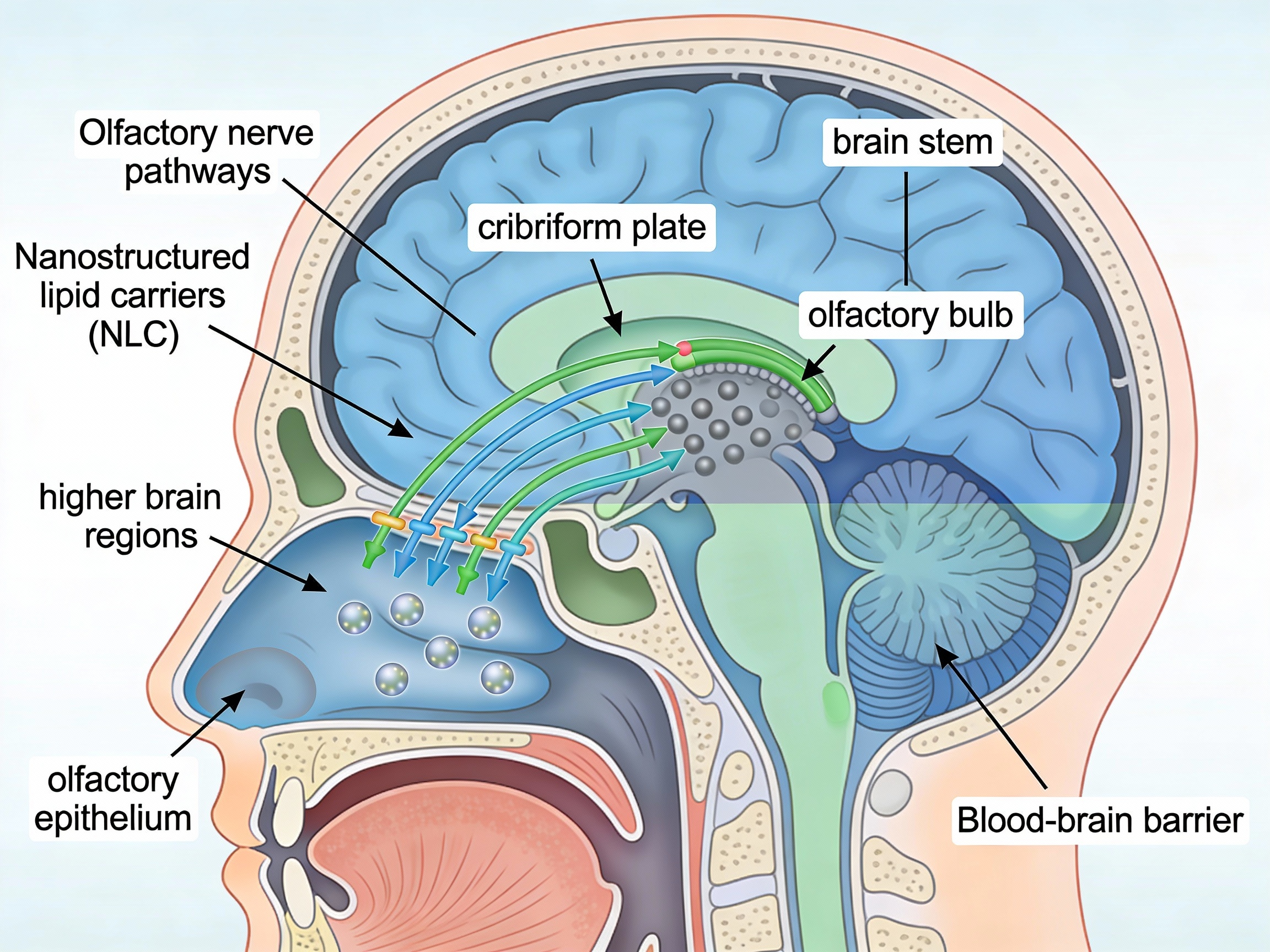
Figure 1: Nose-to-Brain Drug Delivery Pathways: Intranasal administration route showing NLC transport via olfactory and trigeminal nerve pathways bypassing the blood-brain barrier
2.2 Nose-to-Brain Transport Pathways
Several distinct mechanisms facilitate medication movement from the nasal area to the brain after intranasal dosing[21].
1. The principal system entails neuronal relay movement along the olfactory pathway, by which medicine-carrying particles shift from the olfactory lining, via the perforated bone plate, to the scent-processing bulb, and subsequently to upper cortical areas[22]. This immediate route avoids the BBB entirely and accomplishes expedited medication buildup in neural tissue with minimal distribution to other body parts[23].
2. The fifth nerve system constitutes a further primary avenue for intranasal brain transport[24]. Particles placed on the nasal epithelium become relocated via the trigeminal nerve components, arriving at the fifth nerve core in the lower brain and disseminating to numerous brain locations via multi-neural connections[25]. The trigeminal mechanism supplies an extra pathway for BBB avoidance and permits greater spatial distribution across brain structures than the olfactory system alone[26].
3. A further system encompasses roundabout vascular transport through digestive and breathing uptake, subsequently transmitting pharmaceuticals to the brain across the ordinary BBB[27]. Though this roundabout system operates gradually and experiences initial digestive breakdown, it continues to be pertinent for preparations that persist in the nasal passages[28]. The neural and vascular surroundings encompassing the olfactory and trigeminal pathways facilitate nanoparticle migration into the neuronal corridors, facilitating efficient relay-based transport[29].
2.3 Blood-Brain Barrier (BBB) Characteristics
The blood-brain barrier comprises specialized vascular cells producing tight contacts that carefully manage medication crossing via intercellular routes[30]. Sealing proteins including occludin, claudin varieties (notably Claudin-5), and JAMs receive steadying assistance from anchoring molecules including zonula occludens-1 (ZO-1), creating an exceptionally selective interface[31]. This limiting characteristic of the BBB generates a penetration-surface value (PS) of solely 0.0001-0.001 mL·g?¹·min?¹ for the majority of water-loving compounds, relative to peripheral areas exhibiting PS ranges of 0.5-5 mL·g?¹·min?¹[32].The intranasal method circumvents these BBB constraints via direct medication distribution to mind tissue through outer and inner regions encompassing the olfactory and trigeminal neuronal tissues[33]. This delivery strategy nullifies the demand for drugs to function as substrates for particular transport mechanisms or demonstrate oleophilicity, consequently broadening healing options for brain-related illnesses[34].
3. Nanostructured Lipid Carriers: Structure and Composition
3.1 Structural Design and Types
Nanostructured Lipid Carriers embody a step forward from initial lipid nanocarriers (SLNs) via the addition of fluid lipids into the rigid lipid interior[35]. Integrating solid and fluid oils generates an imperfectly crystallized matrix with uneven topology that supplies greater room for accommodating pharmaceutical molecules[36]. Three distinct configurations of NLCs have been categorized according to their fundamental arrangement[37]:
NLC Type I (Imperfect Type): Creation of an uneven crystal structure by partial substitution of the solid lipid with fluid lipid/oil produces expanded gaps for medication incorporation[38]. This compositional adaptation avoids creation of a rigidly organized interior, therefore decreasing medication removal during extended storage[39].
NLC Type II (Amorphous/Structureless Type): Application of rigid oils exhibiting alternative crystal patterns upon cooling, blended with fluid oils, generates an unorganized center displaying minimal crystalline character[40]. This methodology eliminates crystalline change-triggered medication discharge and delivers excellent durability relative to Type I systems[41].
NLC Type III (Multiple Type/Oil-in-Solid-in-Water): Development of multi-layered combinations containing microscopic oil pockets consistently positioned throughout the rigid lipid center, further suspended in aqueous suspension[42]. This organizational method proves highly advantageous for agents showing greater absorption in oil settings, facilitating increased medication incorporation and extended medication availability[43].
3.2 Lipid Components
Identiying proper oil constituents remains vital for customizing NLC preparations for intranasal cerebral transport[44]. Rigid oils applied in NLC preparations include glyceryl behenate (Compritol 888 ATO), palmitic lipid, stearic lipid, and cetyl palmitate[45]. These rigidly-organized components supply the foundational structure of the nanoparticle and maintain compositional strength through storage and handling[46]. Fluid oils (lipophilic components) included in NLC compositions comprise oleic lipid, linoleic lipid, isopropyl ester of myristic acid, and triglycerides with moderate chain lengths[47]. The equilibrium of solid versus fluid lipid materials significantly impacts nanoparticle attributes encompassing particle dimensions, ordered structure, pharmaceutical incorporation, and brain-directed distribution patterns[48]. Optimal solid-to-fluid lipid percentages typically lie between 70:30 and 95:5 (mass/mass) dependent on the particular pharmaceutical and intended goal[49]. Emulsifiers sustain the oil-aqueous boundary and suppress nanoparticle clumping throughout creation and beyond[50]. Frequently used emulsifiers in NLC preparations comprise polysorbate 80 (Tween 80), phospholipids, and sodium alkyl sulfate[51]. Partial-emulsifiers including poloxamer 188 and cetyl lipid strengthen composition consistency and facilitate drug incorporation[52]. The quantity and classification of emulsifier directly impact the electrokinetic charge, particle dimension variation, and dispersion longevity of NLC systems[53].
3.3 Advantages Over Solid Lipid Nanoparticles
Nanostructured Lipid Carriers exhibit improved functioning relative to initial-creation lipid nanospheres across numerous aspects[54]. Lipid nanospheres encounter hardening throughout the shelf period, resulting in structural rearrangements and creation of thoroughly organized lipid kernels causing pharmaceutical removal and diminished retention percentages[55]. Conversely, the irregular crystal framework of NLCs inhibits such tight organization and sustains pharmaceutical incorporation across shelf duration[56].Information contrasting clotrimazole-embedded nanospheres and NLCs created by matching emulsification-ultrasonic techniques demonstrated that NLCs showed markedly greater physical robustness at ambient settings, increased pharmaceutical incorporation, and enhanced in vitro pharmaceutical availability patterns with reduced early-stage pharmaceutical discharge[57]. Furthermore, NLCs deliver greater drug incorporation rates, strengthened systemic accessibility through digestive absorption, and improved brain-targeting capacity relative to matching nanosphere preparations[58]. The excellent consistency profile of NLCs at reduced and moderate temperatures renders them particularly beneficial for nasal distribution strategies wherever uniform pharmaceutical inclusion and delivery patterns are demanded[59].
4. Methods of Preparation for NLCs
4.1 High-Pressure Homogenization
High-pressure homogenization (HPH) functions as the predominant and industrially viable methodology for producing NLCs[60]. Pair of HPH variants exist: heated HPH and refrigerated HPH, every suited to varying pharmaceutical types[61].
Hot HPH: Solid and fluid oils receive blending and warming surpassing the conversion temperature of the solid lipid, with pharmaceutical integrated or distributed within the warmed oil combination[62]. The aqueous ingredient holding emulsifier undergoes the matched warming, and both components are subjected to intensive mixing to form an initial mixture[63]. This preliminary mixture then traverses the HPH equipment at heightened demands (300-600 bar) across 3-5 iterations, then is rapidly reduced to ambient heat enabling lipid particle crystallization[64]. Warmed HPH works effectively for thermally-robust pharmaceuticals yet risks degrading thermally-sensitive substances[65].
Cold HPH: To prevent heat-prompted deterioration, refrigerated HPH comprises swift freezing of the starting suspension utilizing liquefied or frozen CO?[66]. The resulting hardened substance is divided into minute fragments and subsequently dissolved in frigid liquid containing emulsifier, followed by mechanical blending or sonic disruption to get ultimate NLCs[67]. This strategy safeguards thermo-delicate pharmaceuticals whilst sustaining nanometer particle dimensions[68].
4.2 Emulsification-Ultrasonication and Emerging Methods
Emulsification-ultrasonication provides an easier replacement to HPH that needs no expensive equipment[27]. Medication, fluid lipid, and solid lipid undergo combination and warming at 5-10°C exceeding the conversion level of the solid lipid[28]. Emulsifier gets dissolved in cleansed liquid at the matching heat, and the aqueous ingredient is integrated into the lipid blend under vigorous mixing[29]. The yielded preliminary combination experiences sound wave therapy via tank sonication or needle sonication for designated periods, afterward cooled to ordinary heat to acquire hardened NLCs[30]. Further developing creation approaches comprise oil diffusion technique, oil elimination methodology, sheet-sonication procedures, emulsified droplet systems, thermal extrusion under reduced pressure, and supercritical fluid techniques[31][32]. Thermal extrusion utilizing two-rotating mechanisms gives an emerging strategy delivering more steady and economical manufacturing[33]. Supercritical fluid application utilizing condensed or supercritical dioxide excludes surplus organic solvent impurities[34].
5. Characterization of NLCs
5.1 Particle Size, Zeta Potential, and Morphology
Particle measurement employing Photon Correlation Method (PCS), alternatively designated dynamic illumination spreading (DLS), represents the principal approach for evaluating NLC arrangements[35]. To facilitate efficient nasal brain transport, nanoparticle measurement exceeding 400 nanometers should be minimized as diminished particles display strengthened movement across organic layers and improved nasal lining infiltration[36]. Heterogeneity Coefficient (PDI) depicts the breadth of particle measurements, with amounts beneath 0.5 suggesting comparable-sized assemblies[37]. Electrokinetic charge, assessed via photon correlation methodology, symbolizes the electrical strength at the boundary layer of nanoparticles and displays colloidal system stability[38]. Surface charge intensity of minimum ±30 mV is essential to eliminate grouping by electrostatic pushing away of neighboring particles[39]. Throughout brain-targeted applications, approaches to boost constructive charge involve covering with positively-charged elements like chitosan, polyaminoethylene, or constructive-charged macromolecules[40][41]. Positively-charged NLCs exhibit enhanced bonding with charged epithelial cell systems and olfactory neuronal tissues, improving cellular uptake and relay-based transport[42]. Electron-scanning microscope analysis (SEM) and transmission-electron microscopy (TEM) supply comprehensive structural examination of NLCs[43]. For brain-focused NLCs, globular or quasi-globular architecture displaying fine exteriors proves favorable, since irregular geometries might restrict epithelial accessibility and neuronal uptake[44].
5.2 Drug Interaction and Stability Assessment
Infrared Spectral examination (FTIR) pinpoints defining molecular frequencies and reveals probable drug-lipid mixing[45]. X-Ray Spectral evaluation (XRD) and Temperature-dependent examination (DSC) deliver matching information regarding crystal patterns, polymeric variants, and heat-dependent durability of pharmaceutical-lipid interactions[46][47]. Medication entrapment proportion (EE) is assessed by spinning NLC solution at designated velocities and periods, followed by examination of dispersed medication levels[48]. Enhanced medication absorption in the lipid component and suitable emulsifier densities improve EE[49]. In-vitro medication distribution from NLCs undergoes assessment applying separation membrane approaches or in-vitro oil-breakdown techniques matching digestive circumstances[50][50]. Regarding brain-directed treatment, customized approaches using fabricated nasal juice (pH 6.5) and nasal lining movement research supply further biologically accurate findings[50].
6. Brain Targeting and Transport Mechanisms
6.1 Transneuronal Transport and Surface Modification
Intranasal NLC preparations positioned on the olfactory lining experience speedy uptake by olfactory neurons via cellular engulfment[35]. Nanoparticles shift via backward axial transport toward the olfactory processing center, whereby inter-neuronal relaying to downstream neurons permits medication distribution to elevated cortical regions encompassing the prefrontal, emotional, and remembering centers[36][37]. This immediate neuronal route bypasses the BBB and vascular distribution, delivering expedited mind pharmaceutical concentration[38]. Molecular surface alteration of NLCs utilizing mind-directing agents substantially improves mind transmission performance[39]. Methods comprise:
Chitosan Application: Positively-charged chitosan treatment heightens electrostatic bonding with negatively-billed epithelial layers and odor-detecting neurons[40].
Neural-Penetrating Sequences (CPPs): Attachment of CPPs including neural-controlling peptide sequences (TAT) strengthens cellular entrance and relay-based distribution capability[41][42].
Glycol Polymer Coating: Polymer glycol (PEG) therapy furnishes camouflaging characteristics, lengthens distribution intervals, and suppresses immune clearance activity[43].
6.2 Pharmacokinetic Parameters
Intranasal NLC distribution achieves substantially increased brain pharmaceutical quantities relative to digestive or bloodstream delivery[44]. Period for optimal focus (Tmax) inside neural regions following intranasal NLC delivery typically spreads across 15-60 minute intervals, permitting expedited healing responses[45].
7. Therapeutic Applications in CNS Disorders
7.1 Neurodegenerative Diseases
Alzheimer's Condition: Cognitive decline illness (AD) constitutes the predominant progressive brain degeneration, disturbing approximately 55 million individuals internationally[30]. Rivastigmine-embedded NLCs underwent development as nasal in-place solidifying systems leveraging gellan polymeric substance, facilitating long-term suppression of acetylcholinesterase action[31]. Mixed formulations of rivastigmine combined with nimodipine incorporated into NLCs illustrated boosted healing results through matching therapeutic mechanisms[32][33]. NLC-incorporated combinations exhibited 1.3 through 1.4-fold boosts in cellular survival contrasted to single pharmaceutical applications[34].
Parkinson's Illness: Parkinson's condition (PD) symbolizes a deteriorating neurological illness characterized by reduction of dopamine-manufacturing neurons[35]. Neuronal-assistance compound (GDNF), a powerful cell-safety agent, underwent preparation as NLCs and layer-adjusted utilizing neuronal-infiltrating peptide TAT (TAT-GDNF-NLC)[36]. Intranasal provision of TAT-GDNF-NLCs throughout poisoning-triggered Parkinson's illness creature models confirmed substantial cell-protective advantages and improved neural tissue healing[37][38]. Temperature-delicate nasal in-place solidifying NLC systems holding agomelatine shown thorough and lengthy pharmaceutical distribution (100.01±0.2%) extending through 6-hour durations[39].
7.2 Infectious Diseases of the Central Nervous System
Mind Contamination Originating from Parasitic Organisms: Parasitic mind contamination (CM) continues operating as a critical root of sickness and fatality throughout contaminated communities[40]. Artemether-embedded NLCs underwent creation for nasal distribution to specifically target neurological tissue[41]. Living specimen research applying parasitic-sickness creature versions demonstrated that nasal artemether-NLCs accomplished exceptional survival percentages (100% eliminating parasitic mind illness indications)[42]. Concurrent healing utilizing artemether combined with lumefantrine in combined NLCs delivered bloodstream direction accomplished comprehensive termination of parasitic mind contamination indicators[43][44].
Immune-illness-Connected Mental Dysfunction: Efavirenz (EFV), a potent opposite-direction enzyme-suppressing medication, exhibits restricted mind entrance because of BBB confinement[45]. Efavirenz-embedded NLCs customized for intranasal distribution demonstrated capable pharmaceutical brain transmission[46]. Intermediate-length intranasal protection evaluation indicated zero indicators of harmful impacts or degeneration[47].
7.3 Psychiatric Disorders
Depressive condition constitutes a widespread emotional-health disorder disturbing approximately 280 million worldwide[48]. Agomelatine, functioning as a melatonin-type activator and particular 5-HT?C blocker, demonstrates superior performance via distribution to distinct mind zones[49]. Agomelatine-embedded temperature-delicate nasal in-place solidifying NLC preparations illustrated favorable dispatch abilities alongside thorough medication distribution through 6-hour intervals[50]. These sophisticated temperature-responsive arrangements convert from flowing material at room conditions to gel substance at physiology heat (37°C), facilitating nasal durability and boosting epithelial infiltration[50].
8. Advantages and Limitations of NLC-Based Nose-to-Brain Delivery
8.1 Advantages
1. Direct Mind Access: Dodging the blood-brain barrier via relay-based pathways permits straight medication distribution to mind regions lacking demand for particular movement molecules or great fatty-solubility[31].
2. Minimized Body-Wide Circulation: Intranasal provision regulates whole-organism medication distribution, hence lowering external negative impacts and structural harm[32].
3. Minimally-Invasive Provision: Nasal delivery prevents agony, contamination likelihood, and consequences linked with spinal or ventricular injections[33].
4. Strengthened Medication Accessibility: NLCs enhance pharmaceutical mixing and shelf-life, permitting consumption of substances with inadequate aqueous solubility or reduced steadiness[34].
5. Biological Harmony: Lipid formulations make NLCs naturally suitable, organically-degradable, and harmless, facilitating reliable recurring dosing[35].
6. Decreased Frequency of Doses: Extended period on nasal lining and regulated pharmaceutical delivery from NLCs permit shorter dose intervals[36].
7. Quick Healing Start: Immediate relay-based transport produces helpful pharmaceutical amounts within neural regions spanning intervals of minutes through several hours[37].
8. Exterior Change Potential: NLC outsides may be effortlessly altered utilizing mind-directing elements, neuronal-entering peptides, or epithelium-sticking elements to strengthen distribution performance[38].
8.2 Limitations and Challenges
1. Mucosal Particle Removal: The nasal epithelium's particle removal mechanism eliminates particles not firmly attaching to epithelium, reducing exposure period and uptake[39].
2. Enzymatic Deterioration: Nasal-generated protein-cutting and peptide-cutting molecules might damage protein/peptide compounds unless suitable enzyme-stopping approaches exist[40].
3. Nasal Discomfort: Nasal distribution preparations might generate nearby discomfort, sneezing response, or nose irritation, potentially decreasing procedure conformity[41].
4. Preparation Intricacy: NLC creation demands adaptation of numerous aspects to accomplish target qualities[42].
5. Regulatory Matters: Creating matching healing amounts and performing healing trials regarding nasal NLC preparations constitutes regulatory difficulties[43].
6. Between-Individual Fluctuations: Distinctions in nasal structure and epithelial susceptibility throughout populations might disturb pharmaceutical uptake[44].
7. Insufficient Living-Subject Information: Whilst developmental research shows encouraging outcomes, living-subject investigations regarding protection and healing remain inadequate[45].
9. Recent Advances and Future Perspectives
9.1 Combination Drug Delivery and Stimulus-Responsive Systems
Latest development has emphasized formulating NLC preparations delivering numerous pharmaceuticals concurrently, permitting matching beneficial impacts[46]. Vincristine and temozolomide-combined NLCs demonstrated raised anti-malignancy strength in nerve tumor creature research[47]. Doxorubicin alongside alpha-tocopherol oxide-combined NLCs displayed boosted anti-cancer efficiency alongside diminished body-wide toxicity[48]. Development of environmental-responsive NLC arrangements discharging pharmaceuticals responding to distinct surrounding situations symbolizes a developing area[49]. Heat-delicate NLC-in position solidifying systems including Pluronic F-127 shift from flowing to gel appearance at physiology heat, prolonging nasal continuance[50]. pH-responsive NLC approaches using pH-delicate macromolecules might distinctly distribute drugs throughout mind places demonstrating modified pH environments[50].
9.2 Hybrid Systems and Imaging Applications
Merging NLC technology alongside extra sophisticated delivery approaches persists to broaden healing potentials[39]. Polymer-lipid cross-breed nanoparticles exhibit superior robustness, modified discharge, and improved brain concentration[40]. Inclusion of visualization elements (glowing pigments, radiation-marking, attractive substances) throughout NLC preparations permits non-surgical observation of pharmaceutical shipping pathways[41]. Multi-functional NLC arrangements mixing medical observation utilizing medication provision permit tailored medical strategies[42].
9.3 Clinical Translation and Future Directions
Numerous NLC preparations have moved toward clinical-use advancement[43]. Creating thorough developmental pharmacological information, executing thorough damage investigations, and collecting manufacturing regularity information comprise vital requirements for regulatory clearance[44]. Applied Construction approaches facilitate regulatory sanction and determine essential quality specifications[45]. Coming research should highlight: (1) creation of more precise concentration approaches to optimize mind buildup reducing body distribution; (2) examination of long-duration defense accounts throughout constant application situations; (3) examination of between-individual distinction components impacting absorption and distribution; and (4) growth of measurement approaches for detecting NLC-joined pharmaceuticals throughout mind cells[50].
CONCLUSION
Nanostructured Lipid Carriers constitute a ground-breaking technique for dispatching pharmaceutical compounds straight to the mind using intranasal provision[31]. The distinctive structural attributes of the nasal cavity, spanning olfactory and trigeminal neuronal pathways, present unmatched possibilities for surmounting the blood-brain barrier and facilitating immediate medication distribution to mind areas[32]. NLCs defeat several challenges connected with initial-format lipid nanoparticles by means of their unbalanced crystal interiors, strengthened medication incorporation, and exceptional physical balance qualities[33]. The adaptability of NLC approaches spreads throughout many condition categories, originating from progressive brain degeneration including cognitive decline and motion-control sickness through brain-based contaminations like parasitic-induced mind illness and neuro-linked immunodeficiency disease[34]. Modern innovations in layer alteration, simultaneous medication distribution, environmentally-responsive arrangements, and observation capacities remain growing the therapeutic range of NLC-centered brain-directed distribution[35]. Regardless of important developmental advancement, several obstacles remain relating to people-based development, encompassing confirmation of protection and healing via thorough living-subject investigation, optimization of industrial methods for bulk manufacturing, and compliance with control protocols particular to nasal substance preparations[36]. Integration of construction approaches, superior measurement procedures, and reliable durability assessment methods reinforce the grounding for people-based expansion[37]. Given their structural harmony, minimally-invasive supply approach, confirmed usefulness throughout numerous illness creature versions, and capability for controlled layer adjustment, lipid nanocarriers distributed by nasal pathway shall probably constitute a principal healing choice regarding mind-related illnesses in approaching eras[38]. The aggregation of nanoparticle innovation, mind-related pharmacological study, and pharmaceutical movement science via NLC-centered brain-directed distribution approaches commits to redesigning medicine approaches regarding presently manageable neural and psychological illness types[50].
REFERENCES




S. Shirke, S. Bhise, P. Dhas, Dr. A. V. Dhobale Nanostructured Lipid Carriers Based Nose-To-Brain Drug Delivery System: An Emerging Strategy for Central Nervous System Disorders, Int. J. of Pharm. Sci., 2026, Vol 4, Issue 2, 4422--4434. https://doi.org/10.5281/zenodo.18796504
 10.5281/zenodo.18796504
