
MET’s Institute of Pharmacy, MET Bhujbal Knowledge City, Nashik, Maharashtra, India
Bacopa monnieri (BM), a traditional Ayurvedic herb known for its cognitive-enhancing and neuroprotective properties, has shown promising potential in mitigating neurodegenerative disorders, particularly Alzheimer’s disease, which disproportionately affects women. This review highlights the phytochemical profile of BM, emphasizing its dammarane-type triterpenoid saponins (bacosides) as primary active constituents. Experimental and clinical studies demonstrate BM’s efficacy in improving memory, reducing oxidative stress, and modulating neuroinflammation, with notable benefits observed in female populations vulnerable to neurocognitive decline due to estrogen reduction during menopause. Unlike synthetic BACE1 inhibitors, BM compounds exhibit safer and flexible inhibition of pathological enzymes implicated in Alzheimer’s, preserving essential physiological functions. While high doses in males have shown reversible reproductive effects, low-dose BM administration in females appears effective with minimal side effects, suggesting potential synergistic neuroprotection alongside declining estrogen levels. Further in vivo and in vitro investigations are warranted to establish BM as a viable adjunct or alternative therapy for cognitive impairment and neurodegeneration in women.
Bacopa monnieri (synonyms- brahmi, water hyssop, herb of grace, Indian pennywort, jalanimba) is a long established ayurvedic medicine which is studied for its ability to improve cognitive function, intellect, memory and focus which helps to scale down major neurological symptoms of Alzheimer, Parkinson, ADHD, depression and dementia. The use of BM is not limited to brain but also shows significant effect in treating catarrhal complaints, high blood sugar typically due to stress, gastrointestinal disturbances due to tobacco abuse, hysteria, epilepsy, antioxidant, anticarcinogenic, etc. This herb has been used for over 5000 years and is mentioned in Medhya rasayana, which means it helps with rejuvenation. Thus ayurveda believes to call it as an agent used for insomnia, epilepsy and anxiety like disorders. This plant belongs to Scrophulariaceae (figwort, snapdragon) family as a non-aromatic nootropic medicinal herb. Importantly, this review focuses specifically on the cognitive and neurobiological impacts of Bacopa monnieri in women, a group that epidemiological and experimental research has identified as having a significantly greater risk of developing neurodegenerative disorders like Alzheimer’s disease and other types of dementia. Variations in estrogen levels, mitochondrial susceptibility, and sex-specific neuroinflammatory mechanisms are acknowledged as key factors contributing to this heightened vulnerability. Given the evident association between female neurocognitive decline and memory dysfunction, Bacopa monnieri presents itself as a compelling botanical candidate for preventive and therapeutic strategies. Studies on clinical trials and animal research that focus on female models have shown promising outcomes in improving memory, reducing oxidative stress, and enhancing brain signals. In this context, the exploration of Bacopa monnieri as a natural, low-toxicity cognitive enhancer is especially pertinent for women at risk of neurological impairment, offering a potentially valuable alternative or adjunct to conventional pharmacotherapy. Due to insufficient human trials and its effect on pregnant and lactating females it is not advised to that category of indivisuals.
PLANT DESCRIPTION:
Bacopa monnieri is characterised by its compact growth habit and light purple flowers. They belong to a category of creeping succulents that thrive in wet swamps and sandy areas annually.
Morphological description :
Leaves: they are simple, oblong, and opposite, usually measuring up to 2cm. Crushed foliage has a subtle citrus scent.
Flowers: light purple to whitish pink in colour, usually measuring up to 3 cm
Fruits: capsules that modify into calyx later. They appear in the summer.
This plant species is mainly found in areas like India, Pakistan, Afghanistan, Nepal, Sri Lanka, Africa, and Australia.
IMPORTANT PHYTOCONSTITUENTS:
The findings show that Bacopa monnieri is mainly made up of secondary metabolites, which makes it pharmacologically useful. 'Brahmine' was the first phytoconstituent to be isolated in the laboratory by Bose and Bose in 1931. Subsequent research efforts have led to the identification of multiple pharmacologically active constituents within the plant. These include saponins—notably bacoside, betullic acid, and hersaponin—along with alkaloids such as herpestine (influence serotonin & dopamine) and brahmine (neuromodulatory effects). Additionally, the presence of various alcohols, flavonoids, sterols, glycosides, sugars, and amino acids has also been documented.
The main way Bacopa monnieri helps improve brain function is because of its dammarane-type triterpenoid saponins, which are called bacosides. These compounds make up a big part of the plant's active ingredients when measured by dry weight. The information about the active compouns are extracted from
National Center for Biotechnology Information. PubChem Taxonomy Summary for Taxonomy 263974, Bacopa monnieri. https://pubchem.ncbi.nlm.nih.gov/taxonomy/Bacopa-monnieri.

BACOSIDE A (38%)
Molecular Formula: C41H68O13
Contains bacopaside ll, bacopaside X, bacopaside A3, bacopasaponin C
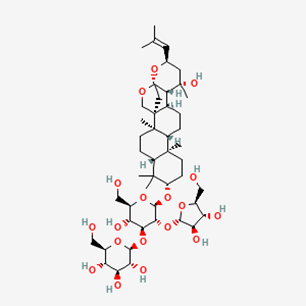
Bacoside A3 (0.14% to 0.85%)
Molecular Formula: C47H76O18
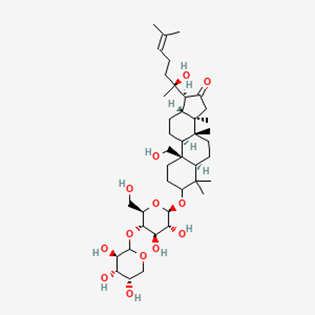
Bacoside B (0.65%)
Molecular Formula: C41H68O13
Contains bacopaside lV , V, N, N2
Alzheimer’s disease is a progressive pathological condition that affects the brain and is the most common cause of dementia, accounting for almost 80% of all cases. It causes a slow and permanent loss of thinking skills, such as memory, understanding language, making decisions, and controlling behavior. This makes it hard for people to do everyday tasks. Dementia is a general term for a condition that slowly affects a person's thinking and daily living abilities in many areas.
The underlying etiology of Alzheimer’s is still unknown, but it is connected to harmful changes in the brain, like clumps of beta-amyloid protein and twisted strands of tau protein.
These changes cause stress in the brain, affect how the brain uses energy, and damage and kill brain cells. This leads to a decrease in a brain chemical called acetylcholine, which is important for memory and learning.
Right now, treatment mainly helps with the symptoms.
Pharmacological agents such as cholinesterase inhibitors and NMDA receptor antagonists like memantine are commonly employed in the management of moderate to advanced stages of Alzheimer’s disease. While these therapies may temporarily alleviate symptoms and modestly preserve functional abilities, they do not alter the underlying neurodegenerative process. Despite advancements in diagnostic modalities—such as cerebrospinal fluid biomarker analysis and neuroimaging techniques—definitive diagnosis still relies on post-mortem histopathological examination of brain tissue. Ongoing research efforts are focused on identifying disease-modifying treatments that target the core pathological mechanisms of Alzheimer’s, with the ultimate goal of halting or significantly slowing cognitive decline.
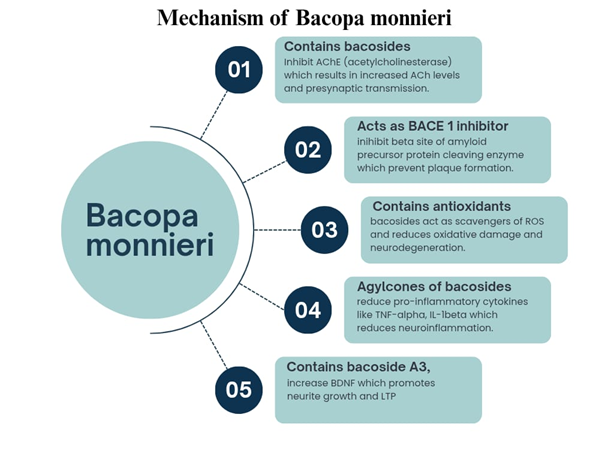
Alzheimer’s disease is mainly known for two main features: the buildup of amyloid-β (Aβ) plaques outside brain cells and tangles inside brain cells. These plaques and tangles mostly appear in areas like the hippocampus and the gray matter of the brain's outer layer. These Aβ plaques are made from short pieces of a protein called amyloid precursor protein (APP), which are cut by two enzymes: β-secretase (BACE1) and γ-secretase.
Many man-made drugs that block BACE1 have been made, such as atabecestat(liver toxicity), lanabecestat and verubecestat( no cognitive improvement) but showed toxic effects at clinical stages of trial.
In contrast, recent in silico studies utilizing molecular docking and dynamic simulations have highlighted Bacopa monnieri as a promising natural alternative for BACE1 inhibition
Chemicals derived from this plant exhibit a more effective, potentially safer inhibition to their synthetic counterparts.
These plant chemicals form strong and wide interactions with important parts of BACE1, like the part where the enzyme works (catalytic dyad), the flap region, and areas with oily molecules.
Unlike man-made inhibitors, which completely stop BACE1 from working, the chemicals from Bacopa allow some flexibility in the enzyme’s shape. This limited blocking is better because stopping BACE1 entirely can cause detrimental neurophysiological effects.
This distinct way of working suggests that Bacopa monnieri might lower harmful Aβ levels while preserving essential physiological roles like axonal guidance and synaptic maintainance.
EXPERIMENTAL ANALYSIS OF BACOPA MONNIERI AS A TREATMENT DRUG IN NEUROLOGICAL DISORDERS
|
EXPERIMENTAL POPUPLATION |
DOSE OF DRUG |
OUTCOME/ RESULT |
SIDE EFFECTS |
|
140 swiss albino mice neonate and young female mice |
doses of 40, 80 or 120 mg/kg body weight along with PBDE-209 (20 mg/kg body weight) |
restored the levels of oxidants and the activities of antioxidant enzymes in frontal cortex and hippocampus of neonates against PBDE-209-induced toxicity |
|
|
35 healthy subjects (75% female), 60–78 years, with an education corrected score of 25 or above on the MoCA and a score of 9 or below on GDS. |
Participants receive BM (CDRI 08) 320 mg/2x/day/3 months |
the delayed recall subscale showed a significant improvement. There was a significant increase in Cyclic AMP response element-binding protein phosphorylation and a significant reduction of NF-κB phosphorylation |
Nausea, stomach pain, and diarrhea. |
|
42 patients (64% women; >47 years) with a significant degree of anhedonia (SHAPS score ≥ 3) and with major depression (DSM 5.0) with no satisfactory response after 4 weeks treatment with citalopram. |
Patients received citalopram or citalopram associated with BM (300 mg)/4 weeks. |
There was a significant improvement in the Hamilton depression rating scale, Snaith–Hamilton Pleasure Scale. strength, and difficulties questionnaire. |
|
|
80 healthy subjects, 60 years or more; 25 men and 55 women). |
After a 1-week run-in period, subjects received a mix of antioxidants (BM, astaxanthin lycopene, and vitamin B12) or placebo daily/8 weeks. |
counteracting cognitive discount related to brain aging, such as improvement in trial-making test (TMT) scores, and augmentation in letter fluency evaluated by the verbal fluency test. |
Exacerbation of sinusitis |
|
17 healthy patients, 13 women and 4 men, 18–44 years. |
Patients received 320 mg of BM, and 640 mg of BM 1 h, and 2 h after consuming a placebo. A 7-day washout separated the treatments. |
There were positive cognitive effects and mood effects; cortisol levels were reduced. |
|
|
54 patients, 60% women and 30% men, without clinical signs of dementia, 65 years or older. |
Patients received BM extract, 300 mg/day or a similar placebo for 12 weeks. |
There was an amelioration of Rey Auditory Verbal Learning Test delayed word recall memory scores compared to placebo. Depression, anxiety, and heart rate decreased. |
Stomach upset |
|
Swiss albino mice |
50, 100 and 200 mg/kg (sample extract) |
Confirmed antidepressant-like effect of methanolic extract of B. monniera |
|
|
72 healthy and AD mice |
100 mg/kg (methanolic extract) |
Memory and learning deficits restored to normal levels. |
|
To shed light on the statistics, women are disproportionately affected by Alzheimer’s disease and dementia, with a prevalence ratio of approximately 2:1 compared to men. This disparity becomes particularly evident in individuals over the age of 40—a period during which a significant proportion of women undergo menopause. The onset of menopause leads to a marked decline in estrogen levels, a hormone known to play a crucial neuroprotective role, thereby potentially increasing vulnerability to neurodegenerative conditions
While most women experience vasomotor symptoms during menopause, such as hot flashes and night sweats, the impact of menopause extends far beyond, influencing multiple organ systems. The marked decline in estradiol (E2) levels—a hallmark of menopause—has been closely linked to neurological alterations, including cognitive impairment, disrupted sleep patterns, and mood disturbances. Estradiol plays a critical role in modulating key neurochemical pathways, including cholinergic and dopaminergic systems, as well as mitochondrial function. Additionally, it influences brain structure by affecting regional brain volumes and synaptic connectivity. These neurobiological changes have been implicated in the pathophysiology of various neuropsychiatric and neurodegenerative disorders, such as Alzheimer’s disease, depression, and schizophrenia.
In both real-life and lab-based experiments, giving 17β-estradiol to nerve cell cultures has shown a big improvement in how well the nerve cells survive and develop. These effects have been observed across various brain regions, including the hypothalamus, amygdala, cerebral cortex, midbrain, and hippocampus. Estradiol appears to exert neuroprotective actions by attenuating apoptotic pathways, thereby markedly reducing neuronal cell death.
Parallel to this, Bacopa monnieri, a well-known neuroprotective herb, has shown cognitive-enhancing and memory-restorative properties in numerous in vivo studies. The mechanisms underlying its efficacy include antioxidant activity, cholinergic modulation, and attenuation of neuroinflammation. However, prolonged administration at high doses has been associated with transient suppression of spermatogenesis and reduced fertility in male animal models—effects that are notably reversible upon cessation of treatment.
In contrast, studies focusing on female subjects remain limited, yet the available data suggest a favorable cognitive outcome. These outcomes are also backed by many observational tests like ANOVA, Modified Morris water maze (MWM), radial arm maze (RAM), measurement of SOD and GSH-Px activities on female albino mice. Nonetheless, concerns have been raised regarding potential adverse effects on reproductive health and pregnancy with extended high-dose usage. Since estradiol naturally helps protect the brain and supports thinking, it's possible that giving small amounts of Bacopa monnieri to women, especially when estrogen levels are dropping, like during menopause, might work better together to protect the brain with fewer side effects.
Such combinatorial action may enhance mitochondrial function, mitigate oxidative stress, and reduce neuronal apoptosis, thereby supporting memory retention and cognitive performance. Notably, experimental findings in female rodent models have consistently shown a greater therapeutic response compared to males. These observations underscore the potential of Bacopa monnieri, when strategically dosed, to serve as a promising adjunct or alternative to conventional synthetic neurotherapeutics, pending further validation through robust in vitro and in vivo investigations.
RESULT:
CONCLUSION:
Thus, with a more comprehensive analysis in vivo and in vitro, Bacopa monnieri can be a promising drug to improve cognitive function, memory, and Alzheimer's, as well as many other neurodegenerative diseases, particularly in women at low doses and with fewer side effects.
REFERENCES

Tanvi Pandulkar, Anushka Deore, Neuroprotective and Cognitive-Enhancing Potential of Bacopa monnieri in females: A Promising Therapeutic Perspective, Int. J. of Pharm. Sci., 2025, Vol 3, Issue 12, 4252-4259. https://doi.org/10.5281/zenodo.18109187
 10.5281/zenodo.18109187
