

We use cookies to ensure our website works properly and to personalise your experience. Cookies policy
1 Jayoti Vidyapeeth Women’s University, Jaipur,
2 Sunrise University Rajasthan,
3,4,5,6,7,8,9 Maharishi Markandeshwer (Deemed to be) University
The current review includes extensive information about the chemical components, bioactivities of active compounds, pharmacological effects, medicinal applications, and micro propagation of Nyctanthes arbor-tristis, as well as the importance of further exploring available information. Night jasmine, or Parijat, is the common name for Nyctanthes arbor-tristis Linn. We have also emphasized that more vast research is required to properly explore this miraculous medicinal plant, which is inexpensive and widely available. It is a very valuable medicinal herb of India that has been grown for both ornamental and medicinal purposes. Researchers have been looking into new active principles derived from time-tested plants that were used as medicinal solutions by indigenous peoples for centuries. Almost every part of the plant has medicinal value and is thus extensively researched and can thus be commercially exploited. The shrub grows naturally in the world's tropical and subtropical regions and is one of the most important medicinal herbs in India. It is now considered as a significant source of several innovative products for the development of medicines for various diseases (like Alzheimer’s), as well as for the advancement of some manufactured goods. The plant has a long history in pharmacology thanks to early research. Due to its pharmacological qualities, the plant Nyctanthes arbour tristis has been the subject of much investigation.
Nyctanthes arbor-tristis (Oleaceae) is known as 'Night Jasmine' or 'Harsinghar' (Hindi) because its blossoms have a powerful and pleasant aroma that lasts all night. After midnight, the blossoms begin to fall, and by daybreak, the plant has become bland .The Greek words 'Nykhta' (Night) and 'anthos' (flower) were combined to create the generic name 'Nyctanthes.' The particular name 'arbor-tristis,' which means 'the sorrowful tree,' is said to be derived from the tree's dreary appearance throughout the day. (Reema Srivastava, Nyctanthes arbor-tristis: A Wonder Indian Herbal Drug Needs Healthcare Attention, 2018). Conventional medicine is a medication or treatment that is based on the traditional usage of plants, animals, or their products, other natural substances (including certain inorganic compounds), cultural traditions, and physical manipulations, including disease. (Hetal Bhalakiya, Tradtional medicinal uses, phytochemical profile and pharmacological activities of nycanthes arbortris , 2019) . The plant, which may reach a height of 20 to 25 feet, is native to India, where it grows wild in the sub-Himalayan region and is also grown as an attractive plant in Indian gardens. The whole plant is frequently used as a component of traditional home medicines for ailments including cancer, fever, sciatica, anorexia, expectorant, fever, diabetes, etc. (Ranjana Dubey, 2019) Nyctanthes arbor-tristis is used as a laxative, diuretic, anti-venom, digestive, mild bitter tonic, and expectorant in Ayurveda, Siddha-Ayurveda, and Unani medicine. (Jaspal Singh, 2021). The pigment nyctanthin is found in the bright orange corolla tube of Nyctanthes flowers, and Buddhist monks used it to colour their robes. Flower is described in Ayurveda as astringent, stomachic, and carminative, as well as stimulating menstruation. Flower extracts were studied for a variety of qualities. The antimalarial cyclohexyl ethanoid rengyolone, which is active against Plasmodium falciparum, was isolated from an ethanol extract of flowers using activity-guided fractionation. A pure compound, NCS-2, isolated from chloroform extract, on the other hand, is larvicidal against early instars of the common filarial vector, Culex quinquefasciatus. Antibacterial, cytotoxic, and antifungal properties are found in a variety of floral extracts. The flower 115 yielded a benzofuranone 3, 3a, 7, 7a-tetrahydro-3a hydroxy-6(2H)-benzofuranone with high antibacterial action against both gramme positive and gramme negative microorganisms Flower extract has a higher anti-diabetic efficacy than leaf extract. Similarly, flower has immunostimulant qualities, and ethanol extract therapy eradicated entamoeba histolytica infections in rat caecum. (Tom K M, 2016) The plant showed antiviral activity against Semliki Forest virus and Encephalomyocarditis virus while leaves were used to reduce the enlargement of the liver spleen. The plant is very famous for its pharmacological properties from antique science. General research has been done on the plant Nyctanthes arbor tristis because of its pharmacological properties. (RAHUL KUMAR VISHWAKARMA, 2022)
2. TAXONOMICAL CLASSIFICATION
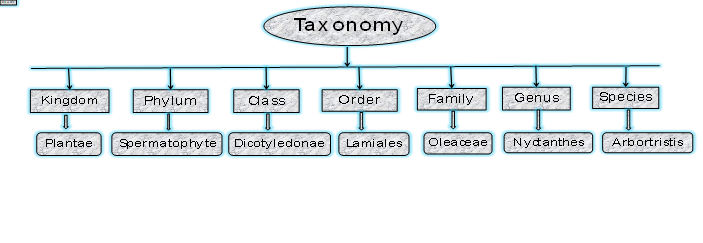
(Reema Srivastava, Nyctanthes arbor-tristis: A Wonder Indian Herbal Drug Needs Healthcare Attention, 2018), (Himanshi Rawat1, 2021), (Jaspal Singh, 2021).
3. DIFFERENT NAMES OF PLANT
The plant is known as Harsinghar (Unani), Pavazha motif (Siddha), Paarijaata, Shephaali, Shephaalikaa, Mandaara (Ayurvedic) Harsingar, Parja, Har, Siharu, Saherwa, Seoli, Nibari, Shefali (Hindi), Parijatha, Parijata, Parijataka, Sephalika, Tree of Sorrow, Night Jasmine, Coral Jasmine. (English), Sephalika, Harsingar, Sephalika, Seoli, Sheoli, (Bengali), Jayaparvati, Parijatak, (Gujarati), Parijata, Harashingar ,Goli, (Kannada), Pardic, Parijatak, Parzonto, Parzot,(Konkani), Pavilamalli, Parijatam, Pavizhamalli, parijatakom ,Mannapu, (Malayalam), Khurasli, Parijataka, Purijat, Kharbadi, Kharassi, (Marathi), Shingadahar, Harashingar, Gangaseuli, Jharasephali, Godokodiko, Gunjoseyoli, Singaraharo (Oriya) , Harsinghar (Punjabi), Manjhapu, Pavala- Malligai Pavazha-Malligai (Tamil) Swetasarasa, Paghada, Karchia, Karuchiya, Kapilanagadustu, Pagadamalle, Parijat, Sepali (Telugu), Gulejafari, Harsingar (Urdu) , Coral Jasmine (Filipino), Srigading (Sundanese, Javanese),(Indonesian), Salikaa (Lao), Seri Gading (Mlay), Karanikaa (Thai), Iai Tau, (Vietnamese). (Jaspal Singh, 2021), (Yadav, 2020), (Hetal Bhalakiya, Tradtional medicinal uses, phytochemical profile and pharmacological activities of nycanthes arbortris , 2019)
4. MORPHOLOGY
Nyctanthes Arbor-tristis a massive shrub with quadrangular branches and flaky, rough, grey bark, Linn can reach a height of 10 meters. The leaves are simple, decussately opposite, rough, hairy, 6–12 cm long, 2–6, 5 cm wide, and have an entire border. The blooms are often seen in groups of two to seven at the terminal points of the branches or in the axils of the leaves. These have an orange-red centre to their 5-8 lobed white corolla and a fragrant, sessile, companulate calyx. The disgrace is unclearly bifid, and two stamens are placed close to the tip of the corolla tube. The snow-white petals, which are used in devotion, have dew drops resting on them. Fruits are dark, flat, compressed capsules that range in form from heart-shaped to circular, with two parts, each carrying a single seed. Testa are thick, the outer layer of big transparent cells is extensively vascularized, and seeds are exalbuminous. Radicals are inferior and cotyledons are flat. (Champa Rani, 2012)
5. GEOGRAPHICAL DISTRIBUTION
It may be found in India's outer Himalayas, Jammu, Nepal, and Tripura, and blooms from July to October. (Reema Srivastava1, 2018) It's also common in Bangladesh, the Indo-Pak subcontinent, and South-East Asia, both tropical and sub-tropical. It is found across the Indo-Malayan area, including the Terai regions, as well as Burma and Ceylon. It grows as undergrowth in dry deciduous woods and tolerates mild shade. Thailand is also home to this species. (Hetal Bhalakiya, Tradtional medicinal uses, phytochemical profile and pharmacological activities of nycanthes arbortris , 2019) .
6. MEDICINAL USES
For many years, Nyctanthes arbor-tristis has been employed by indigenous peoples in India (Orissa and Bihar), as well as in the Ayurveda, Siddha, and Unani systems of medicine. Different sections of the plant have been studied for their medicinal effects. Seeds are used as an anthelminthic, in alopecia, bilious pyrexia, and for treating scurfy scalp affections, piles, and skin problems in powdered form.

7. PHYTOCHEMISTRY
Phytosterols, phenolics, tannins, flavonoids, glycosides, and saponins were found in phytosterols, phenolics, tannins, flavonoids, glycosides, and saponins in the leaf, fruit, and seeds of NA. The biggest classes of compounds generated by this plant are secondary metabolites such as glycosides and alkaloids. (Indu Mittal, 2021) (Table 1). In vitro, extracts from the seeds, flowers, and leaves have immunostimulant, hepatoprotective, antileishmanial, antiviral, and antifungal properties. A glycoside and two alkaloids, one soluble in water and the other in chloroform, are found in the bark. Alkaloids, tannins, and glycosides are found in its roots. NA's stem includes naringenin, 4'-0-B-glucapyranosyl-cc-xylopyranoside, and B-sitosterol glycosides. (Reema Srivastava, Nyctanthes arbor-tristis: A Wonder Indian Herbal Drug Needs Healthcare Attention, 2018). Flower extracts, on the other hand, have hepatoprotective action against CCl4-induced liver damage in rats and a membrane-protective function against H2O2-induced damage in chick cells. The orange-colored calyx has more antioxidant activity than the other sections, and crocetin, a carotenoid aglycone with strong membrane stabilizing properties, was extracted from it.. (Tom K M, 2016) . Polysaccharides, iridoid glycosides, henylpropanoid glycosides, ß-sitosterol, ß-amyrin, hentri-acontane, benzoic acid, glycosides, nyctanthoside-a iridoid, nyctanthic acid, Friedelin and lupeol and oleanolic acid, irido. This plant also yielded iridoid glucosides (arbortristosides- A, B, and C) and 6-ßhydroxyloganin. Phytochemical analyses indicated the existence of tertiary alkaloids, primarily 7-(-anilino-p-nitrobenzyl)-8-quinolinol and quaternary alkaloids belonging to protoberberines and aporphines, as well as quaternary alkaloids belonging to protoberberines and aporphines. Tannic acid, methyl salicylate, amorphous glucosides, mannitol, resin, ascorbic acid, carotene, and traces of a volatile oil were discovered in the leaves. Essential oils, colouring matter (nyctanthin), mannitol, tannin, and glucose are all found in flowers. Alkaloids, tannins, and glucosides make up the roots. (Milind M. Meshram Swatee B. Rangari Shashank B Kshirsagar Suraj Gajbhiye, 2012)
8. CHEMICAL CONSTITUENTS
Table 1: Chemical constituents of Nyctanthes arbortristis
|
PLANT PART |
CHEMICAL CONSTITUENTS |
|
REFERENCES |
|
Leaves |
D-mannitol, β--sitosterole, Flavanol glycosides-Astragaline, nicotiflorin, oleanolic acid, nyctanthic acid, tannic acid, ascorbic acid, methyl salicylate, carotene, friedeline, lupeol, mannitol, glucose and fructose, iridoid glycosides, benzoic acid. |

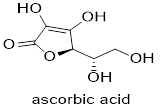
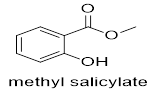
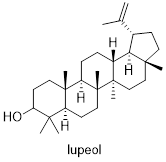
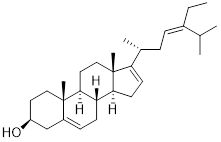
β--sitosterole 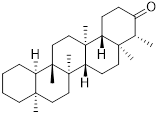
friedeline 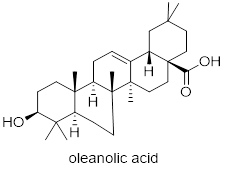
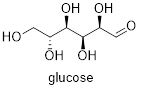
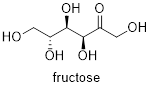

|
(Jaspal Singh, 2021) (Himanshi Rawat1, 2021) (Indu Mittal, 2021) |
|
Flowers
|
Essential oil, nyctanthin, d-mannitol, tannin and glucose, carotenoid, glycosides viz β-monogentiobioside ester of α-crocetin (or crocin-3), β-monogentiobioside-β-D monoglucoside ester of α-crocetin, β-digentiobioside ester of α-crocetin |
|
(Jaspal Singh, 2021) |
|
Seeds
|
Arbortristoside A&B, Glycerides of linoleic oleic, lignoceric, stearic, palmitic and myristic acids, nyctanthic acid, 3-4 secotriterpene acid. |
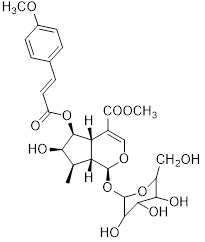
Arbortristoside A 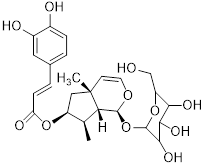
Arbortristoside B 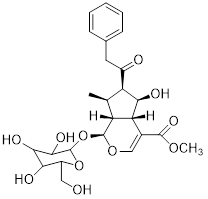
Arbortristoside C 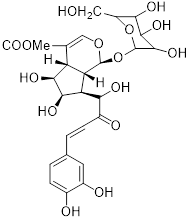
Arbortristoside D 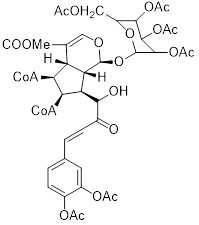
Arbortristoside E |
(Himanshi Rawat1, 2021), (Jaspal Singh, 2021) |
|
Stem
|
Glycoside-naringenin-4’-0-β-glucapyranosyl-α-xylopyranoside and β-sitosterol |

β-sitosterol |
(Himanshi Rawat1, 2021), (Jaspal Singh, 2021) |
|
Flower Oil
|
α-pinene, p-cymene, 1- hexanol methyl heptanone, phenyl acetaldehyde, 1-deconol and anisaldehyde. 6-o-trans-cinnamoyl-7-o-acetyl-6β-hydroxyloganin |
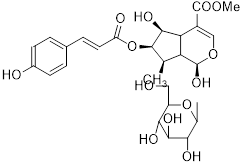
6-o-trans-cinnamoyl-7-o-acetyl-6β-hydroxyloganin 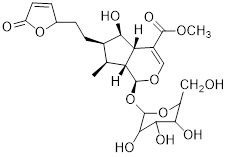
Arborside C 
6β-hydroxyloganin |
(Himanshi Rawat1, 2021), (Jaspal Singh, 2021) |
|
Bark |
Glycosides and alkaloids |
|
(Jaspal Singh, 2021) |
9. CHEMICAL CONSTITUENTS AND MECHANISM PRESENT IN DIFFERENT PARTS OF NIGHT JASMINE AND THEIR PHARMACOLOGICAL ACTIVITIES
|
Pharmacological Activity |
Nyctanthes arbor-tristis |
Chemical constituents |
Extracts/ pure compounds |
In vitro /In vivo study |
Mechanism |
|
Antipyretic |
Leaves |
D-mannitol, β-sitosterole, Flavanol glycosides-Astragaline, Nicotiflorin, Oleanolic acid, Nyctanthicacid, tannic acid, ascorbic acid, methyl salicylate, carotene, friedeline, lupeol, mannitol, Glucose and fructose, iridoid glycosides, benzoic acid. |
Water-soluble
|
In vivo (Albino rats)
|
Showed antipyretic effect in various type of fevers |
|
|
Leaves, Seed, Flower, Stem, and Root |
Glycoside-naringenin-4?-0-β-glucapyranosyl-α-xylopyranosideandβ-sitosterol |
50% ethanolic
|
In vivo (Balb/c mice) |
Arbor-tristosides of ethanolic extracts of seeds showed significant activity |
|
|
Leaves
|
|
Aqueous
|
In vivo (mice)
|
Can be applied as an anti-immunosuppressive agent. |
|
Anti-inflammatory Analgesic |
Stem Bark
|
|
Methanolic
|
In vivo (adult albino rats) |
Extract prevents the nociceptive component, which may be the cause of inhibition of prostaglandins and related products. The exact mechanism of action required to be studied |
|
|
Leaves
|
D-mannitol, β-sitosterole, Flavanol glycosides-Astragaline, Nicotiflorin, Oleanolic acid, Nyctanthicacid, tannic acid, ascorbic acid, methyl salicylate, carotene, friedeline, lupeol, mannitol, Glucose and fructose, iridoid glycosides, benzoic acid. |
95 % ethanolic
|
In vivo (albino rats and mice) |
Justified its use in various inflammatory conditions as per the Ayurvedic system of medicine |
|
|
Leaves
|
|
90% ethanolic
|
In vivo (Rats) |
Showed promising result in the acute model than the chronic model. Further Human trials required to prove safety and efficacy for long term use |
|
|
Flowers |
D-mannitol, β-sitosterole, Flavanol glycosides-Astragaline, Nicotiflorin, Oleanolic acid, Nyctanthicacid, tannic acid, ascorbic acid, methyl salicylate, carotene, friedeline, lupeol, mannitol, Glucose and fructose, iridoid glycosides, benzoic acid. |
|
|
|
|
Antibacterial activity |
Leaves and Bark |
|
|
In vitro
|
Potential antimicrobial activity reported |
|
|
Flower
|
|
Ethanolic extract |
In vitro
|
Moderate activity exhibited |
|
|
Leaves
|
D-mannitol, β-sitosterole, Flavanol glycosides-Astragaline, Nicotiflorin, Oleanolic acid, Nyctanthicacid, tannic acid, ascorbic acid, methyl salicylate, carotene, friedeline, lupeol, mannitol, Glucose and fructose, iridoid glycosides, benzoic acid. |
Ethanolic, Methanolic, Petroleum ether, and Aqueous extracts
|
In vitro
|
Petroleum ether extract exhibited significant antimicrobial activity against tested pathogens
|
|
|
Whole plant material
|
|
Aqueous, Ethanol, Benzene, Petroleum ether, and Chloroform extracts |
In vitro
|
Broad-spectrum antimicrobial activity against a panel of bacteria
|
|
|
Fruit
|
|
Petroleum ether and Methanolic extracts |
In vitro
|
The methanolic extract showed the best antibacterial activity |
|
|
Flower
|
|
Alcoholic extract utilized for the synthesis of silver nanoparticles |
In vitro
|
Showed antibacterial and cytotoxic activities
|
|
|
Bark
|
|
Ethanolic
|
In vivo (Male Wistar Albino rats) |
Showed safe and strong activity
|
|
|
Leaves
|
|
Ethanolic
|
In vitro
|
Showed moderate activity against S. aureus. Hence, active bio-active compounds need to be isolated and also checked for In vitro and In vivo toxicity |
|
|
Seeds
|
Arbortristoside A&B, Glycerides of linoleic oleic, lignoceric, stearic, palmitic and myristic acids, nyctanthic acid, 3-4 secotriterpene acid |
|
|
|
|
Hepatoprotective, |
Flower
|
|
Ethanolic and Aqueous
|
In vivo (Wistar rats) |
The probable mechanism of action was proposed against CCl4-induced liver toxicity. The active component responsible for hepatoprotection need to be isolated and synthesized for pharmaceuticals |
|
|
Leaves
|
D-mannitol, β-sitosterole, Flavanol glycosides-Astragaline, Nicotiflorin, Oleanolic acid, Nyctanthicacid, tannic acid, ascorbic acid, methyl salicylate, carotene, friedeline, lupeol, mannitol, Glucose and fructose, iridoid glycosides, benzoic acid |
Ethanol, Aqueous, Methanolic
|
In vivo (Albino Wistar rats)
|
Hepatoregenerative potential exhibited by protecting against membrane fragility and preventing the decline of glutathione level
|
|
|
Flower
|
|
Petroleum ether, Chloroform, and Ethyl acetate extracts |
In vitro
|
Chloroform and Ethyl acetate extracts showed effective activity
|
|
|
Leaves
|
|
Methanolic
|
In vitro
|
Showed significant activity against Staphylococcus epidermidis and Salmonella paratyphi A |
|
|
Leaves, Flower, Fruits, and Seeds |
|
Ethyl acetate and Chloroform extracts |
In vitro
|
Both extracts showed better efficacy for gram harmful bacteria than gram-positive. |
|
|
Leaves
|
|
Ethanolic
|
In vitro
|
Maximum antibacterial activity exhibited and so this extract would become a part of the study for bioactive drug development |
|
|
Stem bark
|
|
Petroleum ether, Chloroform, and Ethanol extracts |
In vitro
|
Chloroform extract showed significant activity
|
|
|
Root barks
|
|
Aqueous, Ethanolic, Petroleum ether, and Chloroform extracts |
In vitro
|
Showed significant bacterial activity |
|
Anti-viral |
Seeds |
|
n-Butanol fraction of 50% ethanolic extract, Arbortristoside A, and Arbortristoside C, Butanol fraction |
In vitro & In vivo (Swiss albino mice) |
Arbortristoside A (Iridoid glycoside) possesses antiviral activity against enveloped virus |
|
|
Leaves |
|
Ethanolic
|
In vivo (Swiss albino Rats) |
Both cellular and humoral immunity stimulation were reported. Elucidation of the exact mechanism is in progress |
|
|
Leaves |
|
Aqueous
|
In vivo (Swiss albino male mice) |
Flavonols glycoside of N. arbor influences humoral and cell-mediated immune system of mice. Mechanism of immunomodulatory and probable use in immunocompromised individuals are to be investigated |
|
Antidiabetic activity
|
Leaves Root, Leaves and flower
|
|
50% Ethanolic, Chloroform, Methanol, |
In vivo (Sprague-Dawley rats |
The antidiabetic effect is possibly due to the antioxidant compounds present in the extracts which neutralize the oxidative stress in diabetic condition |
|
Antidiarrheal activity
|
Bark
|
|
80% methanolic
|
In vitro
|
Cure of dysentery |
|
Antifilarial activity
|
Leaves |
|
Ursolic acid |
In vitro |
May serve as a promising agent in the treatment of Bancroftian filariasis |
|
|
Leaves, Fruits |
|
99% ethanolic |
In vitro |
Leaves extract showed effective activity against malaria |
|
|
Flower |
Essential oil, nyctanthin, d-mannitol, tannin and glucose, carotenoid, β-monogentiobioside-β-D mono glucoside ester of α-crocetin, glycosides viz β-monogentiobioside ester of α-crocetin(orcrocin-3), β-di gentiobioside ester of α-crocetin |
(Ethanolic) Rengyolone 1 and its acetate derivative |
In vitro |
Possessed ant plasmodial activity. This compound further needs to be studied in vivo for its pharmaceutical approach |
|
|
Stem bark, Leaves, Root, Seed, and Flower |
|
50% ethanolic
|
In vitro and In vivo (Mouse |
Leaves extract showed both in vitro and in vivo activity, whereas root and seed extracts showed only in vitro but not in vivo |
|
|
Leaves |
|
Herbal Formulation preparation (250mg powder/5 ml suspension) |
In vivo (Human trial) |
Great improvement in the vital signs of malaria within the first week of treatment. This may prove beneficial in the long run |
|
|
Leaves |
|
Fresh paste of leaves |
In vivo (Human trial) |
Showed significant activity against malaria and good tolerability. A standardized formulation need to be prepared |
|
|
Leaves |
|
Ethanolic |
In vitro |
Hypothetically leaves of this plant possess the said activity because of iridoid glycosides present in leaves. Further continuous investigation to be done for new antimalarial drug discovery |
10. PHARMACOLOGICAL ACTIVITIES
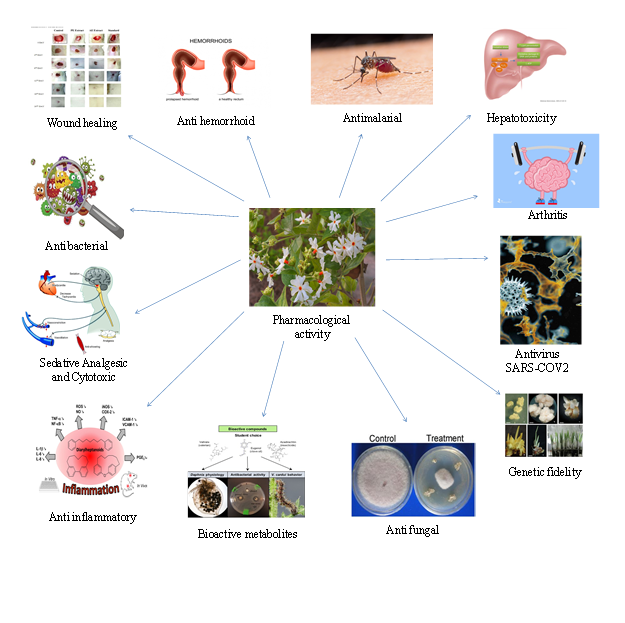
Table: Pharmacological activities of Nyctanthes arbor-tristis Linn
|
SR. NO |
ARBOR-TRISTOSIDE |
PHARMACOLOGICAL ACTIVITY |
REFERENCES
|
|
1. |
Genetic fidelity |
In full-strength MS media with 1650 mg/l NH4NO3, 1900 mg/l KNO3, and 87.64mM sucrose in the presence of 5 mg/l BAP, the most axillary shoots grew. The maximum direct shoot induction rate, mean number of shoots per explant, and average shoot length were achieved on MS medium supplemented with 5mg/l 6-benzylaminopurine (BAP). High-frequency regeneration from seedling-derived nodal segments was accomplished on MS media supplemented with 5 mg/l BAP.. |
(Awadhesh Kumar Mishra, 2019) |
|
2. |
Anti-inflammatory activity |
In various autoimmune and inflammatory illnesses, TNF-, IL-1, and IL-6 are well-known pro-inflammatory cytokines, while IL-10 is a well-known anti-inflammatory cytokine. Adjuvant induced arthritic mice were given a water soluble ethanolic extract of Nyctanthes arbortristis (leaf) and Crocus sativus (stigma) orally for 47 days at doses of 23.72 and 100 mg/kg body weight, respectively. |
(Brijesh Rathore, 2017) |
|
3. |
Anti -inflammatory and antioxidant, anticancer activity |
At 40 g/mL, isolated betulinic acid demonstrated considerable percentage inhibition on COX-1 (99.43%), COX-2 (92.63%), 5-LOX (84.43%), NO (97.43%), TNF (93.67%), HepG2 cell cytotoxicity (99%), and percentage free radical scavenging effect (79.18%). With an IC50 of 18.03 g/mL, methanol and n-butanol extracts of Nyctanthes arbor-tritis leaves demonstrated reduced percentage inhibition (50%) of anti-inflammatory, anticancer, and weaker DPPH scavenging effects. The crude ethyl acetate extract has an IC50 of 145.48 g/mL. The melting point, FT-IR, 1H NMR, 13C NMR, and LC-MS data were all used to identify the isolated molecule as betulinic acid, and all of these results were matched to published data. |
(Birendra Nath Karan, 2018) |
|
4. |
Hepatotoxicity Activity |
Extract dose of 500 mg/kg, body weight significantly declined the levels of AST, ALT, ALP and TBL at (p < 0.001), approximately compound silymarin and reversed the levels of LPO, GSH, SOD, CAT as compared to silymarin dose. The activities of alanine aminotransferase (ALT), aspartate aminotransferase (AST), alkaline phosphatase (ALP), and total bilirubin levels were estimated at dosages of 125, 250, and 500 mg/kg, body weight (TBL). |
(Sachin Chaudhary, April 29, 2018.) |
|
5. |
Antimalarial activity |
The leaf extract has antimalarial activity (NAT IC50 of 24.92 g/ml and chloroquine IC50 of 21.73 g/ml). Two previous investigations found that the antimalarial activity of the leaf paste had pharmacological effects in clinical trials. The pharmacological activity appears to be produced by the iridoid glycosides found in the ethanolic extract. Saponins, alkaloids, terpenes, flavonoids, and glycosides were found in an ethanolic extract of NAT leaves, according to phytochemical analysis. |
(Dr. Debasis Bisoi, 2020) |
|
6. |
Arthritis activities |
The main ingredients of ethyl acetate extract may be divided into three categories: terpenes, terpenoids, fatty acids, and iridoid glycosides. In ethyl acetate extract, GC-MS analysis confirmed the presence of terpenes, terpenoids, fatty acids, and iridoid glycosides. Nyctanthes arbor-tristis alleviated experimental rheumatoid arthritis, with ethyl acetate extract having the most inhibitory efficacy, according to recent research. Iridoid glycosides have been found in benzoic and cinnamic acid esters in N. arbor-tristis leaf extracts. Arborside-A, Arborside-B, and Arborside-C were previously found as iridoid glycosides in the leaf extract of N. arbortristis. C isoarborside, C isoarborside, C isoarborside, C is Comparative investigation revealed that ethyl acetate extracts inhibited paw edema the most. |
(Maliha Uroos, 2017) |
|
7. |
Sedative, Analgesic and Cytotoxic activities |
At dosages of 250 and 500 mg/kg, the extracts demonstrated antinociceptive action in mice when tested using the acetic acid-induced writhing test and the formalin-induced paw licking test (p.o.). At dosages of 200 and 400 mg/kg, both extracts demonstrated strong sedative depression properties in a thiopental sodium-induced sleeping duration trial and an open field test (p.o The sedative, analgesic, and cytotoxic properties of the ethanolic extract (NAE) and methanol extract (NAM) of Nyctanthes arbor-tristis L. leaves were investigated in this work. |
(Ashfia Fatima Khan*, 2017) |
|
8. |
Anti-hemorrhoid activity |
Its effectiveness was further proven by a reduction in rat ileum spasticity (in vitro), rectoanal coefficient (1.11 0.03), necrosis (1.78 0.03), and congestion (1.06 0.08). When compared to the usual medicine hydrocortisone (0.93 0.03), inflammation due to hemorrhoid’s was shown to decrease at both provided levels, however it was found to be more significant at 100mg/Kg (0.76 0.05). |
(Das et al., 2021) |
|
9. |
Antifungal activity, Antibacterial activity |
The stem of Nyctanthes arbor-tristis (Harsingar) was studied phytochemically, and 21a-hydroxyfriedel-4-(23)-en-3-one, b-sitosterol, 1-triacontanol, friedel-1-ene-3-one, pelargonic acid, and lignoceric acid were isolated. The chloroform and ethyl acetate fractions had the highest percent growth inhibition against the Mycogone perniciosa fungus, at 83.96 and 82.29 percent, respectively. At a concentration of 2000 g/mL, extract/fractions of Nyctanthes arbor-tristis stem were tested for antifungal efficacy against two plant pathogenic fungus, bacteria with 11- and 3.50-mm inhibitory zones. Rhizoctonia solani and Mycogone perniciosa, as well as three phytopathogenic bacteria (Rhizoctonia solani, Mycogone perniciosa, and Bacillus thuringiensis). |
(Sumona Kumari, 2017) |
|
10. |
Wound healing activity |
Both types of wounds showed good wound healing potential after treatment with gel containing crocetin phytosomes, as the epithelization period was significantly (P 0.001) reduced in the excision wound model from 26 to 9 days, and the breaking strength of repaired skin was significantly (P 0.001) increased in the incision wound model from 328.8 to 857.0 gm, as compared to the control group. The gel, which contained phytosomes equivalent to 1% w/w crocetin, was subsequently tested for wound healing activity in Wister albino rats by applying it to incision and excision wounds. |
(Manasi Varadkar, 2021) |
|
11. |
Anti-virus Activity (SARS-CoV-2)
|
Humans are in a state of terror as a result of the worldwide SARS-CoV-2 outbreak. Covid-19 viruses infect specific human cells via the cell-surface receptor ACE2 and quickly begin viral replication inside the human body. Antibodies can inhibit the virus from entering the cell by attaching to the spike head and preventing it from connecting with the ACE2 receptor. Many different forms of research will be conducted in order to discover the specific vaccination that will stop the virus from spreading. However, no vaccination or particular treatment has yet to be developed, which is a major source of concern throughout the world. During this pandemic, strengthening the immune system is the most effective strategy to combat the virus. Ayurveda has been acknowledged as the finest immunity booster for animals and mammals since ancient times. With significant compounds like Withaferins, various alkaloids, steroids, and amino acids, herbal plants like Nyctanthes arbor-tristis L. and Withania somnifera have strong immunomodulatory, anti-inflammatory, anticancer, oxidant inhibition, and carcinopreventive activities. This article is based on a brief description of the medicinal plants' pharmacological characteristics, active components, and prospective therapeutic uses. |
(Padhy, 2020) |
|
12 |
Bioactive metabolites and antioxidant activity.
|
Pretreatment of nodal explants in liquid MS media with 100 M N-phenyl-N′-benzothiazol-6-yl-urea for 4 days resulted in the greatest number of shoots (17.40 1.02) per explant, with an average shoot length of 5.96 0.08% cm at the end of 8 weeks. Preincubating the cut-end of shoots for 1 week in half-strength MS medium containing 6 M indole-3-butyric acid, followed by implantation into half-strength MS media, resulted in an average of 6.20 0.049 roots per shoot. The genetic fidelity of these in vitro-generated plantlets was confirmed using start codon targeted polymorphism (SCoT) marker analysis, which was followed by comparisons of bioactive metabolites (ursolic acid, rengyolone, arbortristoside-A, and nyctanthoside), antioxidant-rich phytochemicals, and radical scavenging activities. This improved in vitro culture approach should help conserve N. arbor-tristis germplasm while also meeting the demands of the herbal industry in the synthesis of medicinal compounds. |
(Panigrahi, Genetic homogeneity assessment of in vitro-regenerated plantlets of Nyctanthes arbor-tristis L. and comparative evaluation of bioactive metabolites and antioxidant activity, 2019) |
11. SIDE EFFECTS AND TOXICITY
There are no documented negative effects when taken in the prescribed amount, however the bitter taste of the leaves may produce nausea and vomiting in some people. It can lower blood sugar levels in diabetic patients, so keep an eye on them. Acute toxicity has been documented in various clinical investigations, and a high dosage can have unfavourable consequences. (Abha Tripathi, 2021)
12. CONCLUSION
Nyctanthes arbor-tristis is a valuable medicinal plant that contains a variety of beneficial metabolites, including alkaloids, phytosterols, phenolics, tannins, flavonoids, glycosides, and saponins. Anticancer activity, antiparasitic activity, antimalarial activity, immunostimulant activity, hepatoprotective activity, anti-inflammatory activity: antiviral activity, anti-diabetic activity, anti-allergy activity, anti-histaminic and anti-tryptaminergic activity, anti-aggressive activity, anti-filarial activity, anti-leishmanial activity, antioxidant activity, antiarthritic activity are all preliminary pharmacological research
The determination of biochemical parameters such as brain AChE activity, GSH estimation, MDA estimation, and NO estimation aided the in-vivo investigation of Nyctanthes arbor-tristis. The potential of this plant in the treatment of a variety of ailments makes it a clinically interesting plant. Indeed, the moment has arrived to put decades of Nyctanthes arbor-tritis expertise to good use through current drug research methodologies.
REFERENCE


Renu Lata, Megha Mittal, Dr. Aakash Jain, Dr. Jasmine Jain, Dr. Hema Choudhry, Dr. Parveen Parihar, Sarila, Manisha, Ayushi Maloo, Pharmacological Evaluation of Nyctanthes arbor-tristis, Int. J. of Pharm. Sci., 2025, Vol 3, Issue 11, 2787-2807. https://doi.org/10.5281/zenodo.17646062
 10.5281/zenodo.17646062