View Article

Abstract

Mucosal drug delivery represents a promising route for systemic and local therapy but is often limited by the protective mucus barrier. Mucojets, a class of self-propelling mucoadhesive drug delivery systems, have emerged as a novel strategy to overcome these challenges. By combining propulsion mechanisms with mucoadhesion, mucojets can penetrate the mucus layer and efficiently deliver therapeutic agents. Recent advances in formulation design, propulsion strategies, and polymer technologies have expanded their applicability to oral, nasal, pulmonary, buccal, and gastrointestinal drug delivery. Potential applications include the delivery of peptides, proteins, vaccines, and gene-based therapeutics. Future research is expected to focus on clinical translation, scale-up, regulatory acceptance, and integration with smart drug delivery platforms, making mucojets a versatile tool in modern pharmaceutics.

Keywords

Mucojets, Mucosal drug delivery, Mucoadhesion, Self-propelling systems, Targeted drug delivery

Introduction

Why mucosal surfaces are attractive for drug delivery

  • Mucosal surfaces include the oral cavity, nose, lungs, and gastrointestinal (GI) tract.
  • These surfaces are easy to access, meaning drugs can be given without injections (non-invasive).
  • They have high blood supply, so drugs can enter the bloodstream quickly.
  • They offer good patient compliance because administration is simple and painless.

These surfaces are convenient and effective for delivering drugs systemically or locally.

Challenges with mucosal delivery

  • Mucus barrier: A sticky layer that traps and clears foreign particles, including drugs.
  • Enzymatic degradation: Enzymes in saliva, nasal secretions, or the gut can break down drugs, especially proteins and peptides.
  • Rapid clearance: Mucus moves continuously, which can wash away drugs before absorption.

These factors reduce the amount of drug that actually gets absorbed, i.e., lower bioavailability.

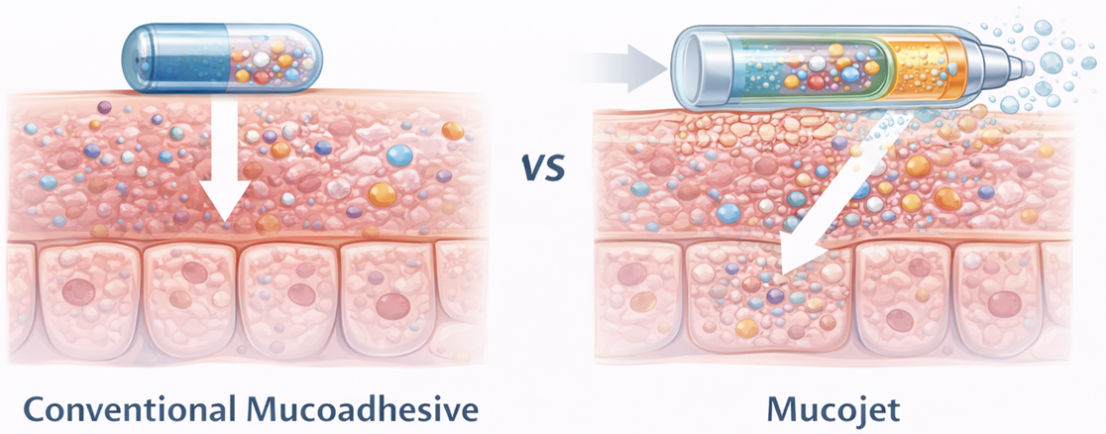
Limitations of conventional mucoadhesive systems

  • Traditional systems use mucoadhesive polymers (like chitosan or carbopol) that stick to mucus.
  • They increase residence time, but rely on passive adhesion and diffusion of the drug.
  • Problem: They often cannot penetrate the dense mucus layer effectively, so drugs may not reach the underlying tissue efficiently.

How mucojets solve these problems

  • Mucojets are self-propelling systems, meaning they generate mechanical thrust.
  • This thrust allows them to actively move through the mucus barrier rather than waiting for diffusion.
  • Once they reach the mucosal tissue, they adhere and release the drug locally or systemically.

Significance:

  • Combines active propulsion + mucoadhesion.
  • Enhances bioavailability: More drug reaches the target tissue.
  • Improves therapeutic outcomes: Better absorption, controlled delivery, and more effective treatment.

Conventional mucoadhesive systems stick to mucus but often fail to penetrate it. Mucojets actively push through the mucus, stick to the tissue, and release drugs efficiently, overcoming a major limitation in mucosal drug delivery.
Design and Formulation of Mucojets

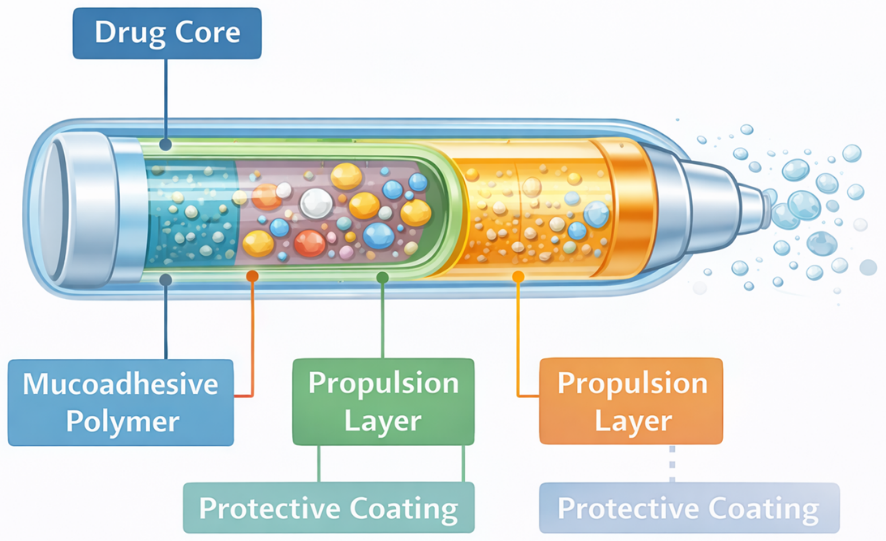
Core Drug Components

  • The “payload” of the mucojet, i.e., the therapeutic agent it carries.
  • Examples: Small molecules (like conventional drugs), peptides (short proteins), intact proteins, vaccines, or gene-based therapeutics (DNA/RNA).
  • Key considerations:
    • Route of administration: Oral, nasal, pulmonary, buccal, etc. – some drugs are better suited for specific routes.
    • Stability: Sensitive drugs (like proteins) can degrade if not protected.
    • Target tissue: Where the drug needs to act (local vs. systemic effect).

The core drug is chosen based on what you want to treat, where, and how safely it can get there.

Mucoadhesive Polymers

  • Purpose: Help the mucojet stick to the mucus layer so it is not cleared away too quickly.
  • Common polymers:
    • Chitosan: Natural polymer, good adhesion, enhances penetration.
    • Carbopol: Synthetic polymer, strong mucoadhesion.
    • Alginate: Natural polymer, biocompatible and safe.
  • Additional benefits:
    • Prevent premature removal by mucus flow.
    • Control the release of the drug over time.

Polymers are the “glue” that keeps the mucojet in place for effective drug delivery.

Propulsion Mechanisms

Mucojets are self-propelling, which means they actively push themselves through mucus instead of relying on diffusion:

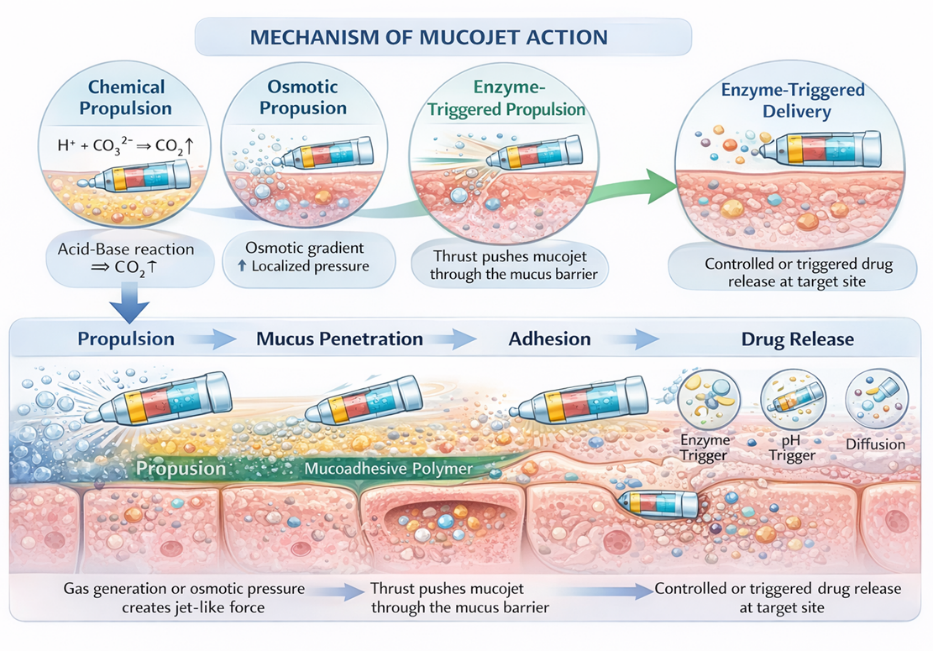
  1. Chemical propulsion:
    1. Acid-base reaction generates gas (usually CO?).
    2. The gas creates a thrust that propels the mucojet forward.
  2. Osmotic propulsion:
    1. Osmotic gradients (differences in solute concentration) create localized pressure, moving the mucojet.
  3. Enzyme-triggered propulsion:
    1. Specific enzymes in mucus trigger chemical reactions, generating directional movement.

The propulsion system gives mucojets the ability to actively move through the mucus, improving penetration and drug delivery.

Additional propulsion strategies include magnetic guidance using external fields, enabling directional control.

Protective Coatings and Targeting Strategies

  • Protective coatings:
    • Protect the drug from enzymatic degradation in mucus.
    • Ensure stability until the mucojet reaches the target tissue.
    • Can help direct the movement of the mucojet.
  • Targeting strategies:
    • Add ligands or molecules that recognize specific receptors on mucosal cells.
    • Ensures drug is delivered specifically where it is needed.

Coatings and targeting help the mucojet reach the right place safely and effectively.

Formulation Challenges and Strategies

  • Challenges:
    • Scalability: Producing large batches consistently.
    • Propulsion control: Ensuring the mucojet moves at the correct speed and distance.
    • Biocompatibility: Materials must be safe for tissues.
  • Strategies to overcome challenges:
    • Polymer optimization: Choosing the right polymer type and concentration.
    • Microfabrication techniques: Precise manufacturing of small mucojets.
    • Quality-by-Design (QbD): Systematic approach to ensure consistent quality, safety, and efficacy.

Formulating mucojets is complex, but careful material selection, design, and quality control can solve these challenges.
Mechanism of Action

1. Interaction with the Mucus Barrier

  • Mucus is a sticky, gel-like layer covering mucosal surfaces (oral, nasal, GI tract).
  • Challenge: It traps and removes foreign particles, including drugs, limiting absorption.
  • Mucojets solution:
    • The mucoadhesive polymers (like chitosan or carbopol) help the mucojet stick to the mucus, preventing it from being washed away too quickly.
    • At the same time, the mucojet actively moves through the mucus, rather than relying on passive diffusion.

Mucojets combine adhesion and active movement to penetrate mucus efficiently.

2. Jet Propulsion Principles (Self-Propulsion Mechanisms)

  • Mucojets move using self-generated propulsion, which can be achieved in a few ways:
    • Gas generation: Chemical reactions (e.g., acid-base reactions) produce gas like CO?, creating a thrust.
    • Osmotic pressure: Differences in solute concentration generate a pressure gradient that pushes the device forward.

Effect: This creates a jet-like force, allowing the mucojet to actively penetrate the dense mucus layer and reach underlying tissues.

3. Mucoadhesion and Tissue Penetration

  • Once the mucojet reaches the tissue:
  • The mucoadhesive polymer layer anchors it to the mucosal surface.
  • This prevents the device from being cleared and allows the drug to remain at the target site.
  • The combination of propulsion + adhesion ensures effective tissue penetration.

Mucojets move through mucus and then stick firmly, positioning the drug for maximum absorption.

4. Controlled or Triggered Drug Release

  • After reaching the target site, the drug is released in a controlled manner.
  • Release mechanisms:
    • Diffusion: Drug slowly diffuses from the mucojet into surrounding tissue.
    • pH changes: Certain polymers or coatings dissolve under specific pH conditions (like stomach or intestine).
    • Enzymatic triggers: Enzymes present in the mucus or tissue degrade the coating, releasing the drug.

Mucojets can deliver drugs at the right place and time, ensuring precise and effective therapy.
Therapeutic Applications

1. Oral Delivery of Peptides/Proteins

  • Examples: Insulin, GLP-1 analogs, vaccines.
  • Problem: Normally, oral delivery of proteins is difficult because they are degraded by stomach acid and digestive enzymes.
  • Mucojet solution:
    • Actively propels through mucus and adheres to intestinal mucosa.
    • Protects proteins from degradation.
    • Enhances absorption into the bloodstream, improving bioavailability.

Benefit: Non-invasive alternative to injections for peptide and protein drugs.

2. Nasal and Pulmonary Delivery

  • Examples: Vaccines, peptides, systemic therapeutics.
  • Advantages:
    • Nasal mucosa is highly vascularized, allowing rapid systemic absorption.
    • Pulmonary delivery targets the lungs directly, useful for respiratory diseases.
  • Mucojet contribution:
    • Penetrates mucus in the nasal or pulmonary tract.
    • Improves drug retention and absorption.
    • Can deliver both local (lungs/nasal cavity) and systemic therapy.

3. Buccal and Sublingual Delivery

  • Purpose: Drugs absorbed in the mouth enter the bloodstream directly, bypassing the liver, avoiding first-pass metabolism.
  • Use case: Rapid action drugs, like certain cardiovascular or analgesic agents.
  • Mucojet role:
    • Adheres to the buccal/sublingual mucosa.
    • Propels through saliva and mucus for efficient absorption.

Benefit: Faster onset of action and higher bioavailability.

4. Gastrointestinal Localized Therapy

  • Examples: Treatment of Inflammatory Bowel Disease (IBD), H. pylori infections, and ulcers.
  • Problem: Conventional oral drugs may be absorbed too early or degraded before reaching the target site.
  • Mucojet role:
    • Delivers drugs directly to the affected intestinal region.
    • Anchors to the mucosa and releases the drug locally, increasing therapeutic efficacy and reducing side effects.

5. Gene and Biologic Delivery

  • Examples: DNA, RNA, protein therapeutics.
  • Challenge: Nucleic acids and biologics are usually degraded in the GI tract or cleared by mucus.
  • Mucojet role:
    • Actively penetrates the mucus barrier.
    • Anchors to mucosa and releases therapeutic nucleic acids or proteins at the target site.

Benefit: Enables non-invasive delivery of advanced biologics, which are otherwise difficult to administer.

Advances in Mucojet Research

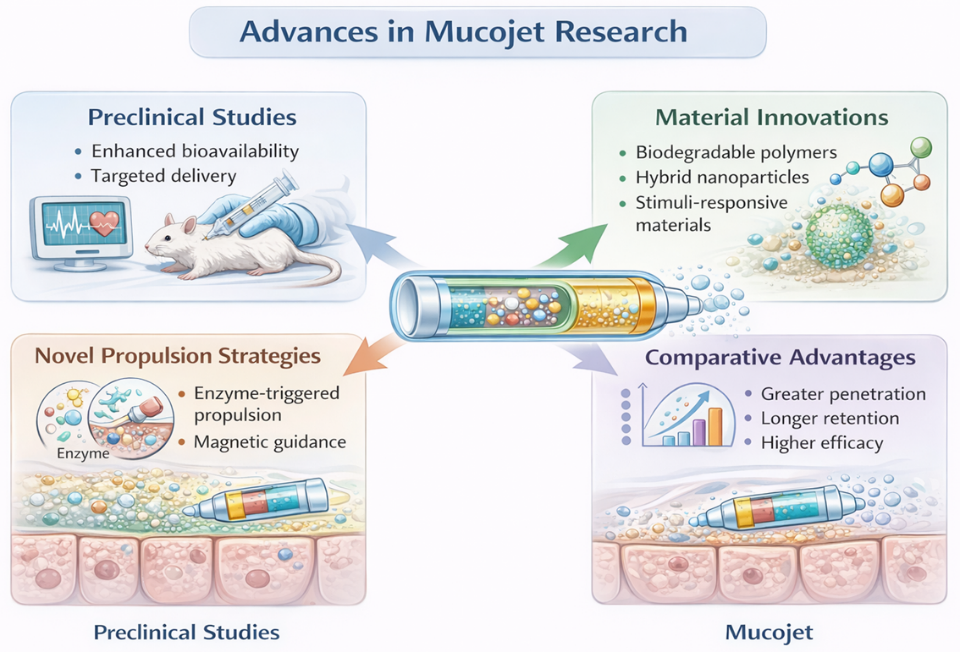
1. Preclinical Studies

  • Research conducted in animal models to evaluate the effectiveness and safety of mucojets before human trials.
  • Key findings:
    • Mucojets enhance bioavailability of drugs compared to conventional systems.
    • Allow targeted drug delivery to specific mucosal tissues (oral, nasal, GI).
    • Demonstrate reduced drug clearance, meaning the drug stays longer at the target site.

Importance: Validates the potential of mucojets to improve therapeutic outcomes before clinical translation.

2. Material Innovations

  • Goal: Improve safety, stability, and efficiency of mucojets.
  • Examples of innovations:
    • Biodegradable polymers: Safe, break down naturally after drug delivery.
    • Hybrid nanoparticles: Combine multiple materials for better drug encapsulation, stability, or penetration.
    • Stimuli-responsive materials: Release drugs in response to pH, enzymes, or temperature, allowing controlled or targeted delivery.

Impact: Advanced materials enhance efficacy, biocompatibility, and versatility of mucojets.

3. Novel Propulsion Strategies

  • Purpose: Improve the ability of mucojets to actively penetrate mucus.
  • Recent approaches:
    • Enzyme-triggered propulsion: Utilizes mucosal enzymes to generate movement.
    • Magnetically guided mucojets: External magnetic fields steer the mucojet to precise locations.
    • Hybrid propulsion systems: Combine chemical, osmotic, or magnetic forces for optimized control and efficiency.

Benefit: These innovations allow precise navigation and better penetration, enhancing drug delivery outcomes.

4. Comparative Studies

  • Goal: Compare mucojets with traditional mucoadhesive systems.
  • Findings:
    • Mucojets show superior penetration through dense mucus.
    • Exhibit longer retention at mucosal surfaces.
    • Provide higher therapeutic efficacy, meaning more drug reaches the target tissue effectively.

Conclusion: Mucojets have demonstrated superior performance compared to conventional carriers in several preclinical studies, demonstrating their potential as next-generation mucosal drug delivery systems.
Quality-by-Design (QbD) and Regulatory Perspectives

Selection of GRAS-Listed Excipients and Safety Considerations

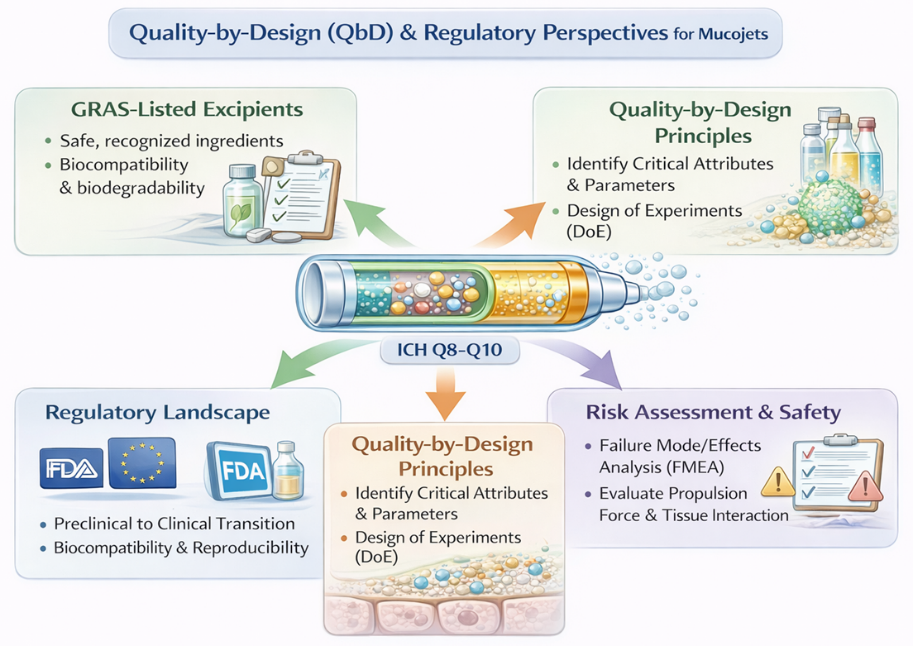
Regulatory acceptance of mucojet-based drug delivery systems (mucojets) is strongly influenced by the selection of formulation excipients. The use of Generally Recognized as Safe (GRAS) materials—including biopolymers such as chitosan, alginate, cellulose derivatives, and lipid-based excipients—provides a favorable safety foundation and aligns with regulatory expectations for novel drug delivery platforms. These materials exhibit established biocompatibility, biodegradability, and minimal immunogenicity, thereby reducing toxicological risk and facilitating translational development. Moreover, reliance on GRAS excipients can streamline regulatory review by leveraging existing safety data and prior human exposure.

Implementation of Quality-by-Design (QbD) Principles

Quality-by-Design (QbD), as outlined in ICH Q8 (Pharmaceutical Development), ICH Q9 (Quality Risk Management), and ICH Q10 (Pharmaceutical Quality System), provides a structured framework for the rational development of mucojets. Application of QbD begins with the definition of the Quality Target Product Profile (QTPP), which encompasses intended route of administration, site of action, dosage form, and release characteristics.

Key Critical Quality Attributes (CQAs) for mucojets include particle or device size, propulsion efficiency, mucoadhesive strength, drug loading, release kinetics, and stability. These attributes are directly influenced by Critical Material Attributes (CMAs)—such as polymer molecular weight, excipient composition, and propulsion agent concentration—and Critical Process Parameters (CPPs), including fabrication methods, coating thickness, and curing or drying conditions. The use of Design of Experiments (DoE) enables systematic optimization of these variables, ensuring robust performance and minimizing batch-to-batch variability.

Risk Assessment and Safety Evaluation

Given their active propulsion capability, mucojets require rigorous risk assessment beyond that of conventional mucoadhesive systems. Particular attention must be paid to the magnitude and duration of propulsion force, which should be sufficient to penetrate the mucus barrier without causing epithelial damage or discomfort. Additionally, prolonged mucoadhesion and repeated tissue interaction necessitate evaluation of local irritation, inflammation, and mucosal integrity.

Risk management tools such as Failure Mode and Effects Analysis (FMEA) and hazard analysis are essential for identifying potential failure points related to propulsion control, tissue compatibility, and unintended biodistribution. These assessments support the establishment of safe design limits and contribute to a comprehensive control strategy in line with ICH Q9.

Regulatory Landscape and Developmental Challenges

Mucojet technology is currently positioned at an early-to-intermediate stage of clinical development, and regulatory pathways for actively propelled mucosal delivery systems are still emerging. Regulatory agencies, including the U.S. Food and Drug Administration (FDA) and the European Medicines Agency (EMA), require extensive characterization data addressing biocompatibility, biodegradability, toxicology, and long-term safety, particularly for repeated administration.

In addition to conventional pharmaceutical requirements, regulators emphasize reproducibility of propulsion behavior, manufacturing scalability, and consistency of drug release profiles. The absence of standardized regulatory guidelines specific to self-propelling drug delivery systems presents a challenge; however, early engagement with regulatory authorities and alignment with QbD principles can significantly de-risk development. Demonstrating a strong control strategy and a science-driven development approach will be critical for successful clinical translation and eventual commercialization.

Overall Perspective

The integration of QbD-driven formulation design, strategic selection of GRAS excipients, comprehensive risk assessment, and proactive regulatory planning is essential for advancing mucojets from experimental platforms to clinically viable drug delivery systems. As regulatory frameworks evolve to accommodate active and smart delivery technologies, mucojets represent a promising paradigm with the potential to reshape mucosal drug delivery.
FUTURE PERSPECTIVES AND CHALLENGES

Clinical Translation Hurdles

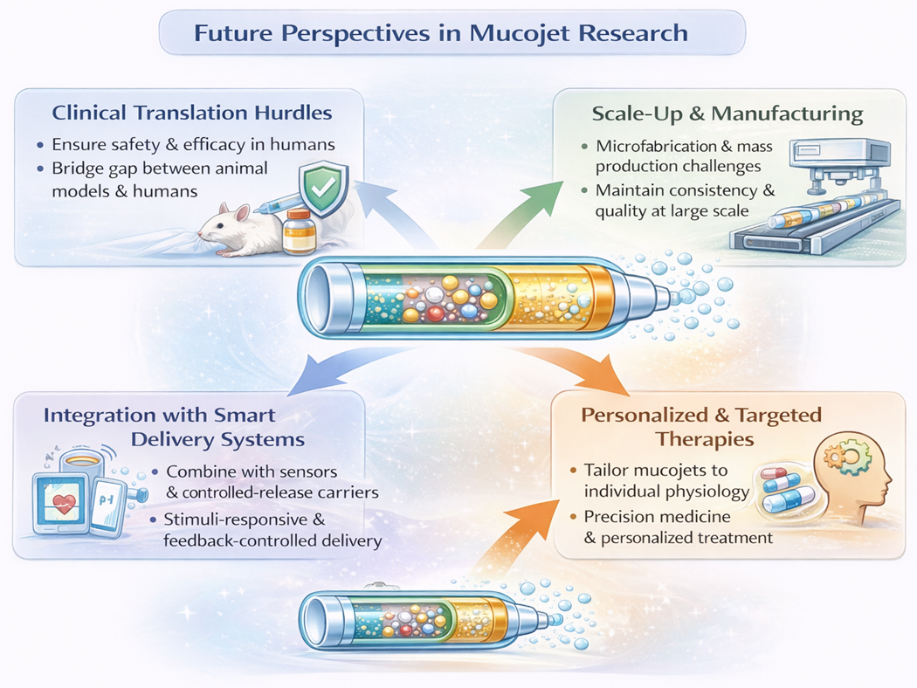
Despite promising preclinical outcomes, the successful translation of mucojets into clinical practice remains a major challenge. Ensuring long-term safety, tolerability, and reproducibility in humans is essential, particularly given the active propulsion mechanism and prolonged interaction with mucosal tissues. Comprehensive toxicological studies, dose optimization, and evaluation of repeated administration are required to demonstrate clinical efficacy without inducing mucosal irritation or damage. Bridging the gap between animal models and human physiology remains a critical step toward regulatory approval.

Scale-Up and Manufacturing Challenges

The manufacturing scalability of mucojets poses significant technical challenges. Many mucojet systems rely on microfabrication, precision coating, or layered assembly, which may be difficult to translate into cost-effective, large-scale production. Achieving batch-to-batch consistency, controlled propulsion behavior, and uniform drug loading at an industrial scale requires advanced manufacturing technologies and robust quality control strategies. Addressing these challenges will be crucial for commercial viability.

Personalized and Targeted Therapies

Future developments in mucojet technology may enable personalized drug delivery, where formulations are tailored to individual patient physiology, disease state, or mucosal characteristics. Customization of mucoadhesive strength, propulsion force, and release kinetics could allow mucojets to adapt to variations in mucus thickness, pH, and enzymatic activity. Such patient-specific approaches align with the broader trend toward precision medicine, offering improved therapeutic outcomes with reduced side effects.

Integration with Smart Drug Delivery Systems

An emerging and promising direction is the integration of mucojets with smart drug delivery technologies. Combining mucojets with stimuli-responsive materials, biosensors, or controlled-release platforms could enable real-time responsiveness to physiological cues such as pH, enzyme levels, or inflammation markers. This integration may allow on-demand drug release, feedback-controlled dosing, and enhanced targeting, positioning mucojets as part of next-generation intelligent drug delivery systems.

Overall Outlook

While several scientific and regulatory challenges remain, continued advancements in material science, microengineering, and pharmaceutical manufacturing are expected to accelerate the development of mucojets. With systematic optimization and regulatory alignment, mucojets hold significant potential to transform mucosal drug delivery by enabling active, targeted, and patient-friendly therapeutic interventions.
CONCLUSION

Mucojets represent a major advancement in mucosal drug delivery because they address one of the most persistent challenges in this field—the mucus barrier. Unlike conventional systems that rely only on passive diffusion and adhesion, mucojets uniquely combine active propulsion with mucoadhesive properties, enabling them to actively penetrate mucus and deliver drugs more effectively to underlying tissues.

Recent progress in formulation design, propulsion mechanisms, and material science has significantly expanded the scope of mucojets. These advances have made it possible to deliver complex therapeutic agents, particularly biologics, vaccines, and gene-based therapies, which traditionally suffer from poor stability and low bioavailability at mucosal surfaces.

Looking ahead, continued research focused on clinical translation, scalable manufacturing, and regulatory alignment will be essential for the successful adoption of mucojets in real-world healthcare settings. If these challenges are addressed, mucojets have the potential to become a mainstream and transformative drug delivery platform, offering safer, non-invasive, and more effective treatments—ultimately leading to improved patient outcomes and enhanced therapeutic efficacy.

REFERENCES

  1. Cone RA. Barrier properties of mucus. Adv Drug Deliv Rev. 2009;61(2):75–85.
  2. Lai SK, Wang YY, Wirtz D, Hanes J. Micro- and macrorheology of mucus. Adv Drug Deliv Rev. 2009;61(2):86–100.
  3. Ensign LM, Cone R, Hanes J. Oral drug delivery with polymeric nanoparticles: The gastrointestinal mucus barriers. Adv Drug Deliv Rev. 2012;64(6):557–570.
  4. Sosnik A, das Neves J, Sarmento B. Mucoadhesive polymers in the design of nano-drug delivery systems for administration by non-parenteral routes. Adv Drug Deliv Rev. 2014;76:154–170.
  5. Andrews GP, Laverty TP, Jones DS. Mucoadhesive polymeric platforms for controlled drug delivery. Eur J Pharm Biopharm. 2009;71(3):505–518.
  6. Bernkop-Schnürch A, Dünnhaupt S. Chitosan-based drug delivery systems. Eur J Pharm Biopharm. 2012;81(3):463–469.
  7. Carlsen A, Sitti M. Bio-hybrid cell-based actuators for microsystems. Small. 2014;10(19):3831–3851.
  8. Wang J. Can man-made nanomachines compete with nature biomotors? ACS Nano. 2009;3(1):4–9.
  9. Gao W, Wang J. The environmental impact of micro/nanomachines: A review. ACS Nano. 2014;8(4):3170–3180.
  10. Li J, Esteban-Fernández de Ávila B, Gao W, Zhang L, Wang J. Micro/nanorobots for biomedicine: Delivery, surgery, sensing, and detoxification. Sci Robot. 2017;2(4):eaam6431.
  11. Esteban-Fernández de Ávila B, Angsantikul P, Ramírez-Herrera DE, Soto F, Teymourian H, Dehaini D, et al. Hybrid biomembrane–functionalized nanorobots for concurrent removal of pathogenic bacteria and toxins. Sci Robot. 2018;3(18):eaat0485.
  12. Wu Z, Chen Y, Mukasa D, Pak OS, Gao W. Medical micro/nanorobots in complex media. Chem Soc Rev. 2020;49(22):8088–8112.
  13. Tang S, Zhang F, Gong H, Wei F, Zhuang J, Karshalev E, et al. Enzyme-powered Janus platelet cell robots for active and targeted drug delivery. Sci Robot. 2020;5(43):eaba6137.
  14. Lin Z, Fan X, Sun M, Gao C, He Q, Xie H. Magnetically actuated peanut colloid motors for cell manipulation and cargo transport. ACS Nano. 2018;12(3):2539–2545.
  15. Schattling P, Jochum FD, Theato P. Multi-stimuli responsive polymers – the all-in-one talents. Polym Chem. 2014;5(1):25–36.
  16. Peppas NA, Sahlin JJ. Hydrogels as mucoadhesive and bioadhesive materials: A review. Biomaterials. 1996;17(16):1553–1561.
  17. Woodley J. Enzymatic barriers for GI peptide and protein delivery. Crit Rev Ther Drug Carrier Syst. 1994;11(2–3):61–95.
  18. des Rieux A, Fievez V, Garinot M, Schneider YJ, Préat V. Nanoparticles as potential oral delivery systems of proteins and vaccines. J Control Release. 2006;116(1):1–27.
  19. Date AA, Hanes J, Ensign LM. Nanoparticles for oral delivery: Design, evaluation and state-of-the-art. J Control Release. 2016;240:504–526.
  20. Goldberg M, Langer R, Jia X. Nanostructured materials for applications in drug delivery and tissue engineering. J Biomater Sci Polym Ed. 2007;18(3):241–268.
  21. Qiu Y, Park K. Environment-sensitive hydrogels for drug delivery. Adv Drug Deliv Rev. 2012;64(1):49–60.
  22. Mitragotri S, Burke PA, Langer R. Overcoming the challenges in administering biopharmaceuticals: Formulation and delivery strategies. Nat Rev Drug Discov. 2014;13(9):655–672.
  23. Thanki K, Gangwal RP, Sangamwar AT, Jain S. Oral delivery of anticancer drugs: Challenges and opportunities. J Control Release. 2013;170(1):15–40.
  24. Yu LX. Pharmaceutical quality by design: Product and process development, understanding, and control. Pharm Res. 2008;25(4):781–791.
  25. ICH Harmonised Guideline. Pharmaceutical Development Q8(R2). International Council for Harmonisation; 2009.
  26. ICH Harmonised Guideline. Quality Risk Management Q9. International Council for Harmonisation; 2005.
  27. ICH Harmonised Guideline. Pharmaceutical Quality System Q10. International Council for Harmonisation; 2008.
  28. U.S. Food and Drug Administration. Guidance for Industry: PAT — A Framework for Innovative Pharmaceutical Development, Manufacturing, and Quality Assurance. FDA; 2004.
  29. EMA. Reflection paper on pharmaceutical development of medicines for paediatric use. European Medicines Agency; 2013.
  30. Chen G, Roy I, Yang C, Prasad PN. Nanochemistry and nanomedicine for nanoparticle-based diagnostics and therapy. Chem Rev. 2016;116(5):2826–2885.

Reference

  1. Cone RA. Barrier properties of mucus. Adv Drug Deliv Rev. 2009;61(2):75–85.
  2. Lai SK, Wang YY, Wirtz D, Hanes J. Micro- and macrorheology of mucus. Adv Drug Deliv Rev. 2009;61(2):86–100.
  3. Ensign LM, Cone R, Hanes J. Oral drug delivery with polymeric nanoparticles: The gastrointestinal mucus barriers. Adv Drug Deliv Rev. 2012;64(6):557–570.
  4. Sosnik A, das Neves J, Sarmento B. Mucoadhesive polymers in the design of nano-drug delivery systems for administration by non-parenteral routes. Adv Drug Deliv Rev. 2014;76:154–170.
  5. Andrews GP, Laverty TP, Jones DS. Mucoadhesive polymeric platforms for controlled drug delivery. Eur J Pharm Biopharm. 2009;71(3):505–518.
  6. Bernkop-Schnürch A, Dünnhaupt S. Chitosan-based drug delivery systems. Eur J Pharm Biopharm. 2012;81(3):463–469.
  7. Carlsen A, Sitti M. Bio-hybrid cell-based actuators for microsystems. Small. 2014;10(19):3831–3851.
  8. Wang J. Can man-made nanomachines compete with nature biomotors? ACS Nano. 2009;3(1):4–9.
  9. Gao W, Wang J. The environmental impact of micro/nanomachines: A review. ACS Nano. 2014;8(4):3170–3180.
  10. Li J, Esteban-Fernández de Ávila B, Gao W, Zhang L, Wang J. Micro/nanorobots for biomedicine: Delivery, surgery, sensing, and detoxification. Sci Robot. 2017;2(4):eaam6431.
  11. Esteban-Fernández de Ávila B, Angsantikul P, Ramírez-Herrera DE, Soto F, Teymourian H, Dehaini D, et al. Hybrid biomembrane–functionalized nanorobots for concurrent removal of pathogenic bacteria and toxins. Sci Robot. 2018;3(18):eaat0485.
  12. Wu Z, Chen Y, Mukasa D, Pak OS, Gao W. Medical micro/nanorobots in complex media. Chem Soc Rev. 2020;49(22):8088–8112.
  13. Tang S, Zhang F, Gong H, Wei F, Zhuang J, Karshalev E, et al. Enzyme-powered Janus platelet cell robots for active and targeted drug delivery. Sci Robot. 2020;5(43):eaba6137.
  14. Lin Z, Fan X, Sun M, Gao C, He Q, Xie H. Magnetically actuated peanut colloid motors for cell manipulation and cargo transport. ACS Nano. 2018;12(3):2539–2545.
  15. Schattling P, Jochum FD, Theato P. Multi-stimuli responsive polymers – the all-in-one talents. Polym Chem. 2014;5(1):25–36.
  16. Peppas NA, Sahlin JJ. Hydrogels as mucoadhesive and bioadhesive materials: A review. Biomaterials. 1996;17(16):1553–1561.
  17. Woodley J. Enzymatic barriers for GI peptide and protein delivery. Crit Rev Ther Drug Carrier Syst. 1994;11(2–3):61–95.
  18. des Rieux A, Fievez V, Garinot M, Schneider YJ, Préat V. Nanoparticles as potential oral delivery systems of proteins and vaccines. J Control Release. 2006;116(1):1–27.
  19. Date AA, Hanes J, Ensign LM. Nanoparticles for oral delivery: Design, evaluation and state-of-the-art. J Control Release. 2016;240:504–526.
  20. Goldberg M, Langer R, Jia X. Nanostructured materials for applications in drug delivery and tissue engineering. J Biomater Sci Polym Ed. 2007;18(3):241–268.
  21. Qiu Y, Park K. Environment-sensitive hydrogels for drug delivery. Adv Drug Deliv Rev. 2012;64(1):49–60.
  22. Mitragotri S, Burke PA, Langer R. Overcoming the challenges in administering biopharmaceuticals: Formulation and delivery strategies. Nat Rev Drug Discov. 2014;13(9):655–672.
  23. Thanki K, Gangwal RP, Sangamwar AT, Jain S. Oral delivery of anticancer drugs: Challenges and opportunities. J Control Release. 2013;170(1):15–40.
  24. Yu LX. Pharmaceutical quality by design: Product and process development, understanding, and control. Pharm Res. 2008;25(4):781–791.
  25. ICH Harmonised Guideline. Pharmaceutical Development Q8(R2). International Council for Harmonisation; 2009.
  26. ICH Harmonised Guideline. Quality Risk Management Q9. International Council for Harmonisation; 2005.
  27. ICH Harmonised Guideline. Pharmaceutical Quality System Q10. International Council for Harmonisation; 2008.
  28. U.S. Food and Drug Administration. Guidance for Industry: PAT — A Framework for Innovative Pharmaceutical Development, Manufacturing, and Quality Assurance. FDA; 2004.
  29. EMA. Reflection paper on pharmaceutical development of medicines for paediatric use. European Medicines Agency; 2013.
  30. Chen G, Roy I, Yang C, Prasad PN. Nanochemistry and nanomedicine for nanoparticle-based diagnostics and therapy. Chem Rev. 2016;116(5):2826–2885.

Photo
Prajwal Gosavi
Corresponding author

Shiva Trust’s Godavari College of Pharmacy, Manori, Nashik - 422004, Maharashtra, India

Photo
Akanksha Nirmal
Co-author

Shiva Trust’s Godavari College of Pharmacy, Manori, Nashik - 422004, Maharashtra, India

Photo
Harshal Hatkar
Co-author

Shiva Trust’s Godavari College of Pharmacy, Manori, Nashik - 422004, Maharashtra, India

Prajwal Gosavi, Akanksha Nirmal, Harshal Hatkar, Self-Propelling Mucoadhesive Drug Delivery Systems (Mucojets): Advances, Applications, and Future Perspectives, Int. J. of Pharm. Sci., 2026, Vol 4, Issue 1, 816-827. https://doi.org/10.5281/zenodo.18199263

More related articles
Triazole-Linked Benzimidazoles as Dual-Action Ther...
Pavankumar Chopade, Arya Suresh Bawankar, Aalim Nasir Khan, ...
Overview of Lapatinib: Chemistry, Pharmacology, an...
Akash Darekar, Dr. V. M Satpute, Ghodake S. R., ...
A Prospective Observational Study To Assess The Kn...
Clelia kb, Ramakrishna Shabaraya A, Sudhamshu K Tantry, ...
Tinea Incognito: A Comprehensive Review of Steroid-Modified Dermatophytosis and ...
Dr. D. Krishna Priyanka, D. Gayathri, Joanna Grace Pullagura, D. V. Krishna Reddy, SK. Asfiya Sharme...
Development And Validation of RP HPLC Method For Simultaneous Estimation of Amlo...
Shinde Mahesh, Jondhale Vidhyatai, Pingale A. P., Dhikale G. K., Derle D. V., ...
Related Articles
A Review on Transdermal Drug Delivery System...
Wasim Bagwan, Kumbhar Shivam, Kotsulwar Sohan, Nilewad Mahesh, ...
Formulation and Evaluation of Instant Energy Bar ...
Nagesh Masal, Amol Ban, Akshay Mohite , Supriya Mohite, ...
‘’Folate From Strawbeeries’’ A Sustainable Solution for Anemia, Preventi...
Mounika K., K. B. Ilango, Ajith M. S., Babu S., Kalpana D., Nishanth Kannan B., Ramya R., Selvakumar...
Triazole-Linked Benzimidazoles as Dual-Action Therapeutics: Antimicrobial and An...
Pavankumar Chopade, Arya Suresh Bawankar, Aalim Nasir Khan, ...
More related articles
Triazole-Linked Benzimidazoles as Dual-Action Therapeutics: Antimicrobial and An...
Pavankumar Chopade, Arya Suresh Bawankar, Aalim Nasir Khan, ...
Overview of Lapatinib: Chemistry, Pharmacology, and Clinical Applications...
Akash Darekar, Dr. V. M Satpute, Ghodake S. R., ...
A Prospective Observational Study To Assess The Knowledge, Attitude And Percepti...
Clelia kb, Ramakrishna Shabaraya A, Sudhamshu K Tantry, ...
Triazole-Linked Benzimidazoles as Dual-Action Therapeutics: Antimicrobial and An...
Pavankumar Chopade, Arya Suresh Bawankar, Aalim Nasir Khan, ...
Overview of Lapatinib: Chemistry, Pharmacology, and Clinical Applications...
Akash Darekar, Dr. V. M Satpute, Ghodake S. R., ...
A Prospective Observational Study To Assess The Knowledge, Attitude And Percepti...
Clelia kb, Ramakrishna Shabaraya A, Sudhamshu K Tantry, ...