

We use cookies to ensure our website works properly and to personalise your experience. Cookies policy
SNJB’S Shriman Sureshdada Jain Collage of Pharmacy, Chandwad, Nashik, Maharashtra, India
Ultraviolet (UV) radiation is one of the principal environmental stress factors that lead to photoaging, oxidative stress, and DNA damage as well as photocarcinogenesis. Although the traditional sunscreens provide protection against the UVA and UVB radiation, its performance is usually affected by the photodegradation of organic UV filters, the lack of skin retention, possible irritation and the uneven film coverage. The investigations of lipid-based nanocarrier systems in particular, solid lipid nanoparticles (SLNs) and nanostructured lipid carriers (NLCs) have been suggested as the means to mitigate these concerns and enhance the photoprotective effect. SLNs are surfactant-stabilized colloidal carriers that are made of solid physiological lipids, which offer controlled release, occlusivity, increased skin hydration and native UV-scattering capabilities. Nevertheless, they have moderate crystallinity which can lead to low drug loading and possible drug release during storage. The second-generation lipid nanoparticle formulation is called nanostructured lipid carrier and it is a composition of solid and liquid lipids that forms an imperfect lipid matrix, enhancing the encapsulation efficiency, stability, and photoprotection over time. The photostability of the encapsulated UV filters, uniformity of the film formed, extended skin residence time, and reduction of systemic absorption of the molecular UV filters can be enhanced by both SLNs and NLCs. In this review, the design criteria, modes of preparation, physicochemical analysis, formulation methods (such as hydrogel formulation) as well as mechanisms of enhanced SPF and broad-spectrum protection of SLN- and NLC-formulations have been discussed in length. In addition, the elements of safety, regulatory matters, and future translational issues are also discussed. To sum up, SLNs and NLCs are very promising pharmacocosmetic technologies in the context of next-generation sunscreens with improved efficacies, stability, and safety profiles.
Solar irradiation causes ultraviolet (UV) radiation that is one of the most noticeable environmental stresses that induce deleterious skin responses including photoaging, inflammation, oxidative damage, DNA damage, and photocarcinogenesis of the skin.[1, 2] The traditional sunscreens, despite their popularity, have certain disadvantages, such as the tendencies of photodegradation of UV-absorbing substances, low retention on the skin, possible irritation, as well as inconsistent covering the UVA and UVB spectrums. The above limitations have prompted the discovery of novel carriers that may enhance the effectiveness, stability and safety of the photoprotective molecules. The development of nanotechnology has been in the forefront of nano systems using lipids in the creation of topical photoprotection. Among them, solid lipid nanoparticles (SLNs) and nanostructured lipid carriers (NLCs) are some of the promising carriers due to their unique physicochemical properties, biocompatibility and ability to entrap a wide range of hydrophobic and hydrophilic active ingredients. The SLNs were originally intended to replace polymeric delivery systems and emulsions in pharmaceutical applications, which lead to the creation of nanosized particles, a solid lipid core at physiological temperatures and room temperature. They have properties of controlled release and stabilization of the encapsulated agents, and have a potentially occlusive property, which gives a desirable effect of skin hydration and actives being maintained within the stratum corneum. Nevertheless, although these are the advantages, SLNs can possess certain drawbacks, including low loading capacity and drug can expel during storage due to crystallization of lipids. [3-7]To solve these problems, a second-generation lipid nanoparticle was created by incorporating liquid lipids to the solid lipid backbone, nanostructured lipid carriers (NLCs). This gave a defective lipid structure, which enhances a higher payload capacity, less expulsion of drugs, and long-lasting stability as compared to SLNs. NLCs have proven to be better at offering photostability to the encapsulated UV filters and controlled release, retaining desirable cosmetic characteristics in the area of photoprotection.[8] Further, both SLNs and NLCs may be used as carriers of UV filters but also as particulate systems where a secondary UV light scattering mechanism is offered, thereby an added UV light scattering mechanism to the action of photoprotection. The recent studies in the development of formulations have revealed that chemical UV filters added to NLC or SLN can lead to the enhancement of the value of sun protection factor (SPF) and UVA/UVB protection and photostability of sunscreen active ingredients, when subjected to long-term UV radiations. Moreover, they can develop such formulae that optimizes the skin permeability profiles and reduces systemic absorption of sunscreening factors. There is also the increasing trend of nanocarrier development whereby antioxidant agents are coupled with traditional sunscreening agents to create a synergies effect in the protection of the photons. Considering the growing body of literature that justifies the use of lipid nanoparticle based photoprotective formulations, this review attempts to comprehensively address the reasons, design considerations and how photoprotection of SLNs and NLCs in sunscreen and topical UV-protective formulations are enhanced.[9-11]
SKIN ANATOMY AND DRUG PENETRATION PATHWAYS/ROUTES
Anatomy and Functions of the Skin
The largest organ is the skin in the human body. The mean size of the skin in an adult male is approximately 2 m2. The main activities of the skin include protection of water loss, protection against mechanical forces, cooling through perspiration, and absorption protection of foreign bodies [12]. The skin is composed of three layers starting with the outer, it is the epidermis, dermis and the thirdly the hypodermis or subcutaneous tissue. The functions of each of the layers are distinct and important constituents of the skin. The epidermis is a thin stratified layer of epithelium which derives its origin in the ectoderm and is used as a barrier (physical and chemical) between the internal body and the external environment. It is composed of melanocytes, Merkel cells, and Langerhans cells that are located above a dermis that contains the nervous and vascular plexuses. Since there are no blood vessels in the epidermis, the diffusible molecules that enter the systemic circulation of the body must enter the epidermis via the dermo-epidermal layer. The waste materials are eliminated by diffusion at the dermo-epidermal junctions and the skin surface and is completely fed by the dermis below. It is further separated into two segments, the nonviable epidermis and the viable epidermis. The nonviable epidermis consists of 70 percent water and the keratinizing epithelial cells, which are responsible of the creation of the stratum corneum, which is the outermost layer of the skin that is engaged in homeostatic and defensive functions. Epidermal differentiation leads to the stratum corneum, which is 10-20 um thick and inactive metabolically. It is made of between 15 and 30 layers of dead, swollen and completely keratinized corneocytes in a lipid matrix. It looks more mortar and brick like, and the moist keratinous cells of the skin resemble the bricks in a mortar of extra-cellular lipid materials. Extra-cellular lipids consist of two lamellar layers, as major crystalline and minor in liquid lipid layers [13]. The stratum corneum is directly under the viable epidermis which is approximately 50-100 um thick. It is not similar to the stratum corneum as it is physiologically more related to other living cellular tissues and has more enzymes which aid in metabolism. The epidermis also forms the corneal layer as well as breaks down foreign substances. The immune system of the skin also includes Langerhans cells. The dermis is a connective tissue which is placed between the epidermis and subcutaneous tissue. It consists of proteins (collagen), elastin tissue, interfibrillar glycosaminoglycan gel, salt and water. There are other elements in the extra-cellular space that are incorporated within the dermis such as blood and lymphatic vessels, hair follicles, nerve endings, and glands (sebaceous and sweat glands. The dermis takes care of support, protection, and nourishment of the skin, regulation of temperature, and sensations. Besides the fibroblasts, the dermis has adipocytes, mast cells and histiocytes that assist in supporting the structure and functionality of the dermis.[14]
ROUTES TO PENETRATION (SKIN).
The skin is not completely adoption of topically applied substances. Three routes of penetration of topical applied compound through the skin are not new: (i) the hair follicle route; (ii) the intracellular route. The significance of these routes in relation to transcutaneous absorption of substances depends on the length and the number of courses each route takes, the solubility and diffusion of the substance in each area [15].
The Shunt Route
The connections between epidermis and dermis may occur via hair follicles, which have connections to the systemic blood circulation at the follicles base. Hair follicles or sweat glands offer a shunt pathway of passage of penetrant through the stratum corneum. As indicated, it has already been seen that nanoparticles enter deeper into the follicles in comparison to large free molecules. This resulted in designing and directing nanosystems to hair follicles, and they were able to store drugs and transport them to the systemic bloodstream. Specific cell targeting such as the epithelial stem cell and melanocytes can be done by loading particles via hair follicles. Naturally, particle size is a very crucial aspect in penetration. Ladenman and others demonstrated that nanoparticles of 320 nm diameter swept hair follicles much more than the non-particulate materials of the same molecular weight. Besides, it is found that the amount of drugs that the hair follicles can hold over a period of time and how fast they can be absorbed by the body is more effective than other routes. This means that smaller particles have the capacity to penetrate and accumulate more easily as compared to larger particles. According to this theory, the physical properties of the particle play a significant role in follicle penetration as compared to the chemical ones. It is needed that data on other physical properties that might influence follicle penetration, including the shape and roughness of the particle surface should be known [16].
Intracellular Route Intracellular (transcellular) route:
It is the route that entails the corneocyte and intercellular lipids diffusion. The agents that take this pathway take advantage of the faults within the corneocytes, where they develop water-filled pores. Diffusion of the compound takes place through the corneocytes that are separated off the cell membrane and corneocytes that are filled with keratin. This pathway is not regarded as the route of choice in dermal diffusion due to extremely low permeability of corneocytes and the fact that the more hydrophilic corneocytes have to be isolated and the lipid intercellular layers of the stratum corneum have to be isolated of the stratum corneum and vice versa a number of times. The intracellular route might be more substantial in case a penetration enhancer is employed since this might alter the protein structure of corneocytes and, consequently, their permeability. The most common entry point of most compounds is the intercellular pathway especially at a steady-state condition. The solutes move through intercellular lipids through diffusion through horny cells of stratum corneum, viable cells of epidermis, and dermis. It had been hypothesized that intercellular lipids, and not corneocyte proteins, are the main impediments to epidermal permeability. Due to the small amount of occupancy, the intercellular pathway was then excluded as the main entry point of the skin permeation process. Further research has found out that there is a significant increase in the intercellular volume fraction, which was not considered before. These data show that intercellular pathway is an important barrier to skin permeation.[17]
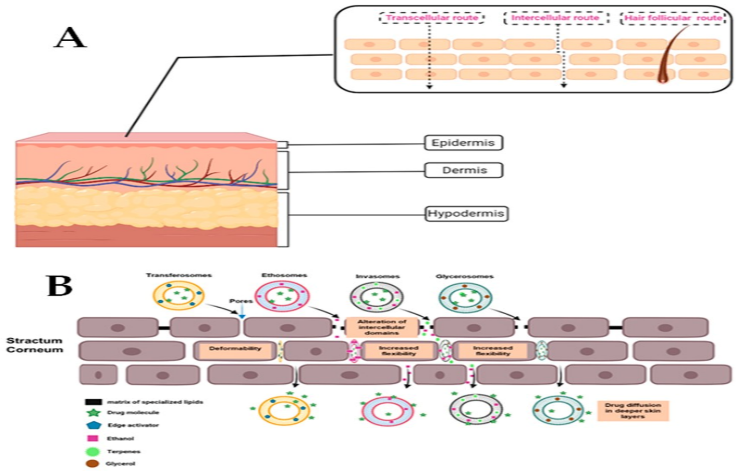
Fig. 1 Graphic representation of the structure of the skin and pathways of skin penetration of na noparticles (A) and the mechanisms involved in advanced vesicular skin penetration (B). Adapted with permission from [18] and Elsevier B.V Netherland.
SOLID LIPID NAOPARTICLES (SLNs) and (NLCs)
Fundamentals :
These carrier systems dissolve or disperse the drug as a molecular suspension into a solid lipid matrix which restricts the mobility of the drug and thus provides a controlled and sustained delivery of the drug. The SLNs, which were introduced in early 1990s, are submicron colloidal carriers between50 and 1000 nm, comprised of physiological lipids in water or an aqueous surfactant solution [19,20]. SLNs have been prepared using a wide range of solid and physiologically stable lipids at room temperature (triglycerides, free fatty acids and free fatty alcohols). These lipids are predominantly physiological in nature, relatively cheap, and non-toxic and thus SLNs have been an attractive carrier system to deliver topical drugs. Depending on the lipids, the type of lipids utilized will have different physicochemical properties of SLNs, including the particle size, the drug entrapment efficiency, and the drug release rate. The SLN formula is made up of solid lipids (0.1-30%), water, and emulsifiers (0.5-5% w/w). SLNs can be prepared in a variety of different ways, with some of the most commonly used ones being simple, solvent-free, and organic, including high-pressure homogenisation (HPH) which is easy to scale. The effective utilization of several quality by design methodologies in developing SLN-based products is being reported in many scientific publications and is becoming an added value to the pharmaceutical companies. Additional benefits of SLNs as skin delivery include the effective UV-blocking capacity, enhancement of skin moisture, higher protection of the entrained drug, and their possible application on broken skin [21]. Nevertheless, SLNs also have certain drawbacks including low drug loading capacity and release of the drug entrapped in the SLNs not under control due to polymorphic transitions and crystallization of the lipid matrix during storage. In order to overcome these disadvantages, there is a second generation of the lipid nanoparticles called lipid nanostructure lipid carriers (NLCs). The NLC matrix is a mixture of solid and liquid lipids arranged in a different manner in space. When liquid lipids are added to the solid matrix, they defect the crystal lattice structure of nanoparticles to increase the drug loading capacity and solubility as well as reduce the leaching properties of the nanoparticles in comparison with SLNs. The liquid lipids and solid are typically combined in 30/70 or 0.1/99.9 proportions and the concentration of surfactant range is between 1.5 and 5% (w/v). The combination of three processes, i.e. adhesiveness, occlusiveness, and skin hydration, is said to be the reason of the better penetration of the SLNs and NLCs into the skin [22-25]. The SLN/NLC physiological lipid composition is linked to adhesiveness and is the one that commences interaction with the stratum corneum, where it influences its lipid reorganization and thereby enhances penetration of the molecules. The fact that the nanoparticles are small also contributes towards augmenting their adhesiveness and surface area of contact. The effect of occlusiveness is relative to the concentration of lipids, volume of sample used, particle size, and crystallinity of particles. The above properties work in order to prevent the transepidermal water loss and the intergaps opening between the corneocytes, which aids in the penetration of therapeutic agents into the skin layers[26-28].
Table 1. A brief description of particulate carrier systems
|
Nanosystems |
Basic Composition |
Methods of Preparation |
Benefits |
Limitations |
Referance |
|
Solid-lipid nanoparticles (SLNs) |
Cosurfactant, surfactant and Solid Lipid |
High-pressure homogenisation, Emulsification, Double emulsion technique, Solvent diffusion |
Enhanced bioavailability and chemical stability of both hydrophobic and hydrophilic drugs. Biocompatibility. Narrow size offers targeted and controlled drug delivery. |
Unpredictable gelation tendency. Lower drug loading capacity and drug expulsion during phase transition or lipid. |
[29-32] |
|
Nanostructured lipid carrier (NLCs) |
Surfactant, cosurfactant, Blend of solid and liquid lipids |
Ultrasound and High-pressure homogenisation |
Reduced risk of drug release during storage High drug loading capacity |
Irritation observed due to some surfactants. |
[33-36] |
DEFINATION AND CHARACTERISTICS
Solid lipid nanoparticles (SLNs) are colloidal carrier systems (ranging between 50 and 400 nm) based on physiological lipids but solid at room and body temperature. They consist of a core of lipid matrix that is solid and held together by the surfactants in an aqueous dispersion. The lipophilic compounds which can be encapsulated into the solid lipid core include organic UV filters. The principal characteristic of SLNs is the creation of a monolithic lipid film on the skin surface upon topical application. The occlusive effect is caused by the lipid film and leads to the decrease of transepidermal water loss and the enhancement of the skin hydration[37]. The active substances are evenly distributed in nanoscale and high surface area of SLNs, which improves coverage and photoprotective activity. The inherent properties of SLNs are also those of UV-scattering due to their particulate nature. They may be used in combination with organic and inorganic UV filters, which can increase the sun protection factor (SPF) by synergistic effects, which include improved formation of the film, decreased photodegradation of encapsulated filters, and increased skin residence time[38].Moreover, the solid matrix will be able to safeguard labile UV filters against direct UV radiation exposure thereby enhancing photostability and reducing systemic absorption. On the whole, SLNs are a prospective pharmacosmetic approach to advanced sunscreen preparation because of their biocompatibility, stability, occlusive activity, and previous ability to increase photoprotective properties[39].
SLN BENEFITS OF TOPICAL COSMETIC
SLNs have been reported to introduce certain advantages to topical cosmetic formulation, particularly in sunscreen products. Due to the nanosize and the high refractive index, SLNs have the ability to enhance UV-blocking by enhancing light scattering in the UV wavelength. This drug in combination with a homogenous skin surface film-forming process can enhance surface adhesion and decreases formulation gaps and thus gives greater photoprotective effect.[38] SLNs have the ability to entrap lipophilic organic UV filters (e.g., cinnamates, benzophenones, dibenzoylmethane derivatives) and, in combination preparations, inorganic filters (e.g., titanium dioxide or zinc oxide). The organic filters are protected against photodegradation by the solid lipid matrix and their absorption efficiency is maintained. Furthermore, the formulations that are made using SLN might reduce direct contact of the skin of molecular UV filters, which might reduce irritation and systemic penetration. Importantly, a number of studies have found that the incorporation of UV filters to SLNs could enhance the sun protection factor (SPF) through synergistic effects, such as elevated film homogeneity, the increase in skin residence time, and the additional UV scattering which could allow lower concentration of chemical filters without affecting efficacy. This is especially crucial in the creation of new sunscreens, where safety, regulatory acceptability and cosmetic acceptability are importance. Inorganic and Organic UV Filters[40].
ORGANIC (CHEMICAL) UV FILTERS
Organic UV filters are molecular substances that protect the skin against the ultraviolet radiation by absorbing the UV radiation and changing the energy stored into heat. Some of these compounds are ethylhexyl methoxycinnamate (octinoxate), UVB filter and avobenzone (butyl methoxydibenzoylmethane), filter which filters UVA rays. These molecules are conjugated aromatic based which makes them to absorb photons in specific UV ranges effectively. Nevertheless, organic UV filters too, have certain flaws. They are prone to degradation under UV after extensive contact with UV radiation leading to lowered skin protection and even formation of reactive intermediates. Furthermore, there are organic UV filters that may be absorbed to the living epidermis, which act as a concern regarding systemic toxicity, irritation and long-term safety[41].
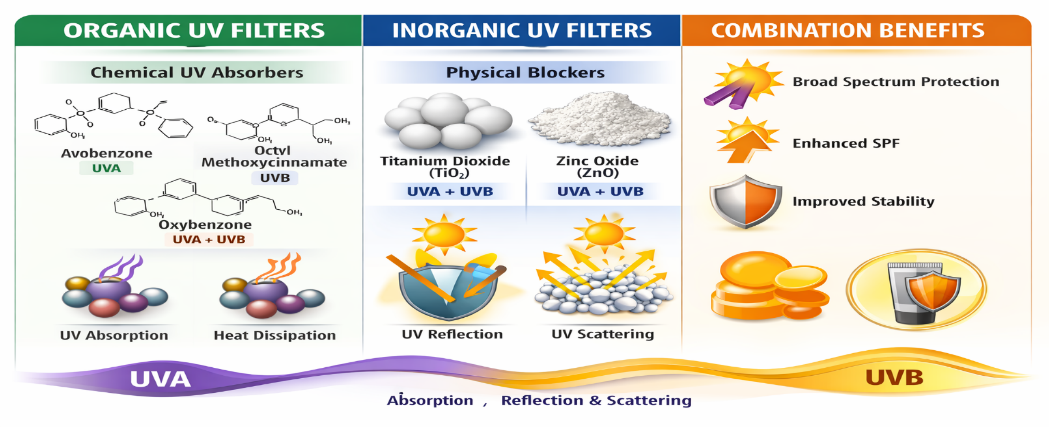
Fig. 2 Comparison of organic and inorganic UV filters and their combined photoprotective benefits[43]
INORGANIC (PHYSICAL) UV FILTERS.
Inorganic UV filters, such as titanium dioxide (TiO2) and zinc oxide (ZnO) act primarily as refractants, scattered light absorbers, and absorbers of UV radiation. These are inorganic filters that are known to shield the skin against the UVAs and UVB rays as well as being photostable in comparison with the organic filters. Nonetheless, micron-sized inorganic filters have the potential to bring about unintended whitening of the skin. Inorganic filters that are nanosized are less opaque but must be examined closely in regard to safety. These filters work by the mechanism of action which is primarily the physical attenuation of UV radiation which makes them applicable in sunscreens applied to sensitive skin and children[42].
COMBINATIONS OF ORGANIC AND INORGANIC FILTERS IN SLN-BASED SYSTEMS
Solid lipid nanoparticle (SLN) systems that integrate organic and inorganic UV filters are an efficient combination of both methods towards enhanced photoprotection. Organic UV filters provide wavelength-selective absorption whereas the inorganic particles give a wider spectrum of scattering and reflection. Various other benefits are offered in SLN systems: 1) Photostability of organic UV filters: the stability of organic UV filters is enhanced by the encapsulation that occurs within the solid lipid matrix. 2) Better coverage and formation of films. 3) Reduced penetration of molecular UV filters through the skin. 4) SLNs and inorganic particles are more severely scattered by UV. The resulting synergistic effect tends to result in an increase in the overall levels of chemical UV filter that can even enable a reduction in the number of broad-spectrum SPF protection. These systems are a novel pharmacosmetic approach which tries to maximize safety, stability and protective effect[43].
Table no. 2 Comparison of organic and inorganic UV filters in sunscreen formulation [41,42]
|
Feature |
Organic Filters (Chemical) |
Inorganic Filters (Physical) |
|
Mechanism |
Absorption (heat) |
Reflection/Scattering/Absorption |
|
Broad Spectrum |
Low to Moderate (needs cocktail) |
High (especially ZnO) |
|
Photostability |
Often unstable (needs stabilizers) |
High |
|
Cosmetic Feel |
High elegance (clear) |
White cast (if not nanosized) |
|
Best For |
Daily use, chemical combinations |
Sensitive skin, children, high exposure |
SLN PREPARATION AND CHARACTERIZATION FOR SUNSCREENS
Preparation Techniques
High-energy and low-energy processes can be used to manufacture solid lipid nanoparticles (SLNs) to sunscreens. Among them, the most popular one is hot high-pressure homogenization (HPH). Lipid phase containing UV filters is heated above its melting point in this process, and it is combined with a hot aqueous surfactant solution. High-pressure homogenization is subsequently applied to the pre-emulsion to create nanosized particles when cooled followed by lipid recrystallization. The cold homogenization takes place in conditions that the UV filters are thermally labile thereby minimizing degradation. The other technique is microemulsification whereby there is the preparation of hot microemulsion of melted lipid, surfactant and co-surfactant with water. This is stirred in cold water and produces SLNs. Solvents emulsification-evaporation and ultrasonication are also other techniques that have been used but they are not as popular in the mass production of cosmetics. The surfactant concentration and lipid (ex: glycerol monostearate, cetyl palmitate) selection of sunscreen formulations are significant in order to effectively encapsulate and form a skin film[44].
Characterization Metrics
Physicochemical characterization of SLNs is an essential step towards the stability, efficacy as well as reproducibility of SLN-based sunscreens. Particle Size and Polydispersity Index (PDI) Particle size is measured using dynamic light scattering (DLS). Topical formulations should be between 100-300nm in desirable size. Smaller particles that have a narrow size distribution are used to enhance a good surface coverage and UV scattering capacity.
Zeta Potential: Zeta potential is determined through the method of electrophoretic mobility. Zeta potential of over +-20 mV shows that there is enough electrostatic stabilization to prevent particle aggregation.
Entrapment Efficiency (EE%) : To determine the effectiveness of the UV filter entrapping in the lipid matrix, a value is measured in terms of percent (EN). Increased EE% is desirable to enhance the photostability and limit direct contact of free chemical UV filters with the skin.
The Test of Thermal Behavior: Differential scanning calorimetry (DSC) is used to test the crystallinity of lipids. The level of crystallinity influences the drug loading and release of the SLNs. In Vitro SPF Determination: UV-Visible spectrophotometry is usually used to determine sun protection factor (SPF) of SLN formulations. Mansur equation technique involves the determination of absorbance in UVB (290-320 nm) to derive the SPF values. The effectiveness of incorporating SLN results in increased SPF as opposed to traditional emulsions because of the increased uniformity of the film and light scattering[45].
FORMULATION STRATEGIES
SLNs In Hydrogel Systems
The use of solid lipid nanoparticles (SLNs) as a topical sunscreen product formulation is a novel idea in incorporating solid lipid nanoparticles into hydrogel matrices. Hydrogels normally composed of polymers such as carbopol, HPMC or poloxamers serve as an acceptable, non-greasy vehicle with an improved feel and spreadability than traditional emulsions. The formulation is made lighter and fast absorbing, thus patient friendly due to the hydrogel base. Hydrogels can be formulated under the formulation perspective as a rigid and flexible matrix that can be used to spread SLNs equally without interfering with its integrity. In addition, the need to use high concentration surfactant can also be reduced with the use of hydrogel thereby avoiding any irritation. The SLNs with the hydrogel to create a dual-functional system contain the lipid nanoparticles that enhance UV protection and hydrogel that is easy to apply and evenly distributed[38].
SLN–Hydrogel Interaction
The interaction between the SLN and hydrogel network is significant in the activities of the sunscreens. Topically applied SLNs form a monolayer of lipid on the stratum corneum and the hydrogel network maintains the even distribution and long-lasting retention of the sunscreen. Potentiation of these two ingredients enhances the photoprotective effect of sunscreens in the following mechanisms: By improving skin adhesion It enhances the homogeneity of the film. Through augmenting UV scattering and absorption. Through minimization of the gaps in the formulation. Rheology of the hydrogel system is also affected by the addition of SLNs. In most applications, it can be seen that hydrogels with SLNs exhibit a pseudoplastic (shear-thinning) behavior that allows the sunscreen to be easily applied to the skin under the influence of shear forces, and that system is able to maintain its integrity in the absence of shear. One of such aspects is the rheology which directly correlates to the values of SPF because the better the sunscreen spreads and the more evenly it is distributed the higher is the UV coverage[40].
Nanostructured Lipid Carriers (NLCs) versus SLNs.
Whereas the SLNs are made up of solid lipids only, nanostructured lipid carriers (NLCs) are made of solid and liquid lipids mixture. This structural disparity lowers the crystallinity of the matrix in NLCs, raising the drug loading capacity and reducing the expulsion of captured UV filters during storage. In sunscreen applications NLCs can provide: Better long-term photostability, Increased encapsulation efficiency, Increased lipid matrix flexibility, Decreased polymorphic transitions. Increased lipid matrix flexibility. But SLNs offer better effects of occlusiveness because they have a high-ordered crystalline structure. Thus, stability, loading capacity, and the ability to form a film are the variables in the selection of SLNs or NLCs. The comparative analysis between SLNs and NLCs is useful to optimize the broad-spectrum photoprotective systems. Improved Photoprotection Processes[46].
IMPROVED PHOTOPROTECTION PROCESSES.
Synergistic SPF Enhancement
It is indicated that solid lipid nanoparticles (SLNs) take part in photoprotection both due to their carrier properties and their physicochemical nature. SLNs can reflect UV radiation and scatter partially due to their small size (nanosize) and high refractive index. The scattering effect causes an increase in optical path length of the UV photons hence increasing the probability of absorption of the UV photons by the organic UV filters incorporated. SLNs when combined with molecular UV filters and /or inorganic filters (e.g., TiO 2, ZnO ) tend to achieve higher SPF than the additive effect. This is due to the synergistic effect of enhanced dispersion and uniform surface coverage as well as due to two UV protection mechanisms, one of which is absorption by organic filters and another is scattering/reflection by nanoparticles[39].
Occlusion and Skin Retention
Formation of an occlusive layer of lipids on the stratum corneum is one of the distinctive merits of SLNs. This will assist in minimizing the transepidermal water loss (TEWL) thereby enhancing the hydration of the skin and putting the sunscreen formulation into close contact with the skin surface. The enhanced hydration leads to the slight swelling of the corneocytes thereby decreasing the intercellular spaces thereby assisting in the retention of the UV filters on the outermost skin layers. It is found that the residence time and the wash-off of the SLN-based systems are lower than the conventional creams[46].
Photo stability
The effectiveness of sunscreens is a significant issue of the film. The SLNs assist in creating a continuous film whose nanoparticulate layer is uniform and, therefore, eliminate micro-scale heterogeneities prevalent in emulsions and, therefore, reduce SPF. A homogeneous film is useful in delivering an even degree of UV coverage in the surface area. In addition, the direct contact with the UV radiation and oxidative destruction of the labile organic UV filters is prevented by the encapsulation within the solid lipid matrix. The reduced mobility of the crystalline lipid core by low molecular weight contributes to the limitation of photochemical reactions, thereby enhancing photostability[47].
SAFETY & REGULATORY CONSIDERATIONS
Particle Size Effects on Skin Penetration and Irritation
Particle size is a significant issue that determines the safety profile of solid lipid nanoparticles (SLNs) within topical sunscreens. The size of most of the SLNs used in cosmetic formulations is between 50-300 nm, which, as a rule, is insufficient to penetrate deeper than the stratum corneum. Different studies that have been carried out in vitro and in vivo have demonstrated that properly designed lipid nanoparticles are predominantly localized on the skin surface or in the superficial layers of the corneocytes, thereby avoiding systemic uptake[48]. The core is also solid lipid which prevents the deep tissue penetration as opposed to polymeric nanoparticles due to its occlusiveness and film forming characteristics. Nevertheless, the smaller particles (less than 100 nm) might theoretically show higher follicular deposition. Therefore, particle size distribution, surface charge (zeta potential), and surfactant concentration need to be optimized to prevent irritation and the destabilization of barriers. Others that influence irritation potential are Concentration and type of surfactants, Lipid type, Occlusive potential and skin contact. Optimized SLN formulations have been reported to offer lesser amount of irritation as compared to high levels of free molecular UV filters because the latter may lead to increased contact with viable epidermal cells[49].
Regulatory Guidelines and Labelling Requirements.
Guidelines of sunscreen products differ depending on the region and usage of nanoparticles imposes a new dimension of intricacy. United States (FDA) FDA is the United States governmental body that regulates sunscreens as over the counter (OTC) drugs. The level of SPF should be taken through standardized procedures in vivo, and UVA protection should be based on broad-spectrum protection. The approved UV filters are found in the OTC sunscreen monograph. Though FDA does not prohibit nanoparticulate such as nano-TiO 2 or ZnO, the manufacturer should provide information concerning safety on non-penetration and non-toxicity[50]. European Union Standards Around the European Union, sunscreens are regulated by cosmetic regulations, enforced by the European Commission, and reviewed scientifically by the European Scientific Committee on Consumer Safety (SCCS). The key regulatory standards are: - Meeting the SPF and UVA protection standards, - labeling nanomaterials in the list of ingredients with the suffix (nano), - pre-market safety review, with toxicological examination of nanoparticulate components. Nano-scale UV filters such as TiO2 and ZnO can be used at a specified range of concentrations provided it meets the criteria of purity and coating. Specific Aspects of Safety to SLNs: SLNs are composed of physiological lipids (e.g. triglycerides, fatty acids) but regulatory agencies require data on particle size distribution, physical and chemical stability data, dermal toxicity and irritation studies, dermal toxicity and irritation studies, phototoxicity testing and systemic exposure risk assessment. Interestingly, available evidence shows that lipid nanoparticles in sunscreens serve as surface retention improvers from the surface, but not systemic absorbers, and therefore, are not harmful when well-formulated[51]. Prospects and Challenges in the Future. Nonetheless some scientific, technological and regulatory challenges have to be overcome in an attempt to translate successful laboratory findings to commercial products in the form of solid lipid nanoparticle (SLN)-based sunscreen hydrogels[52,53].
FUTURE PROSPECTS & CHALLENGES
SLN Hydrogel Production Scale-Up
Majority of the SLN preparations are made in laboratory level using techniques such as high-pressure homogenization or microemulsification. There are however, challenges in the large scale production of SLNs including, Particle size distribution, Directing lipid matrix polymorphic transitions. Avoiding aggregation during storage. Reproducibility of batches Optimization of energy input, cooling rate and surfactant concentration is also required in large-scale production to preserve efficacy of entrapment and photoprotective qualities. The further complication of the process is that the rheological properties, gel and lipid interactions, and physical stability of the formulation must be optimized due to the addition of SLNs to hydrogel formulations. The economically viable processes and GMP compliant ones will be a requirement in the translation of this technology to an industrial level[54].
Clinical Verification of SPF and UVA/UVBs Measures
Even though numerous in vitro studies have demonstrated enhanced SPF and UV absorption of the encapsulated SLNs, there is still no extensive clinical validation of these findings. The regulatory acceptance should be approved of: In vivo SPF analysis Standardized. Certification of wide-spectrum (UVA/UVB) activity. Testing of water-resistance. Photostability at realistic conditions. The research in the future ought to be directed towards clinical trials between SLN hydrogels and traditional emulsions. Consistency of the in vitro SPF measurement (UV-Vis spectroscopy and diffuse reflectance) and in vivo results is also necessary[55].
REFERENCES




Hemal Nehete, Vandana Daga, Shubham Jadhav, Sakshi Mahalpure, Solid Lipid Nanoparticles and Nanostructured Lipid Carriers for Enhanced Photoprotection, Int. J. of Pharm. Sci., 2026, Vol 4, Issue 3, 1765-1780. https://doi.org/10.5281/zenodo.19062907
 10.5281/zenodo.19062907