
Department of Pharmaceutical Chemistry, Narasaraopeta Institute of Pharmaceutical Science, Narasaraopet, Andhra Predesh, 5200601, India
The current research work presents the synthesis, characterization, and biological evaluation of ?, ?-unsaturated carbonyl compounds synthesized through Claisen-Schmidt condensation reactions. Substituted aromatic aldehydes, cinnamaldehyde, and p-diethylamino benzaldehyde, were allowed to react with acetophenone and acetone in the presence of basic conditions using ethanolic sodium hydroxide as a catalyst. The reaction worked well at a controlled temperature to yield four different ?, ?-unsaturated carbonyl compounds in good yields. The synthesized compounds were purified through recrystallization and characterized through physicochemical analysis, such as melting point determination. The confirmation of the synthesized compounds was done through spectroscopic analysis, such as IR, which confirmed the presence of conjugated carbonyl (C=O) and olefinic (C=C) functional groups, thus confirming the formation of the ?, ?-unsaturated system. The biological activity of the synthesized compounds was tested against certain microbial strains to determine their antimicrobial activity. The results showed that the derivatives had promising activity, thus confirming that ?, ?-unsaturated carbonyl compounds have significant pharmacological properties. The study thus shows an effective and efficient method for the synthesis of biologically active ?, ?-unsaturated carbonyl compounds through Claisen-Schmidt condensation reactions
The Claisen-Schmidt condensation reaction was discovered by German chemists. This reaction was discovered independently by Rainer Ludwig Claisen and J. Gustav Schmidt. Their research was published in 1880-1881. R. L. Claisen investigated the general condensation reactions of carbonyl compounds. J. G. Schmidt investigated the condensation of aromatic aldehydes with aldehydes or ketones. The reaction is a mixed aldol-type condensation reaction. α, β-Unsaturated carbonyl compounds are an important class of organic compounds. These compounds contain a carbonyl group conjugated with a carbon-carbon double bond. These compounds are generally prepared by the Claisen-Schmidt condensation reaction, which is a special type of crossed aldol condensation reaction. The Claisen-Schmidt Condensation reaction includes the reaction of an aromatic aldehyde with an aliphatic ketone in the presence of a base. The ketone molecule is the enolisable compound in this reaction. When a base like sodium hydroxide or potassium hydroxide is added, it makes an enolate ion. The enolate ion attacks the carbonyl carbon of the aromatic aldehyde, and then it loses water to make an α, β-Unsaturated carbonyl compound. These compounds have a large conjugated system, which is responsible for their stability and reactivity. α, β-Unsaturated carbonyl compounds are of immense interest in medicinal chemistry because of their diverse biological activities.
ALDEHYDE:
An aldehyde is an organic compound that has the functional group –CHO. This means that the carbonyl carbon (C=O) is linked to at least one hydrogen atom. R-CHO is the general formula for aldehydes. The carbonyl group is very polar because the electronegativity of carbon and oxygen atoms is very different. This makes aldehydes very reactive in nucleophilic addition reactions. Benzaldehyde and cinnamaldehyde are two examples of aromatic aldehydes that are used as condensating agents. Aldehydes are important in organic synthesis because they are used to make alcohols, acids, and α, β-unsaturated compounds.
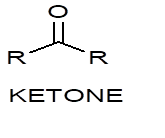
KETONE:
Ketones are organic compounds that have a carbonyl group (C=O) that is connected to two carbon atoms. The general formula for them is R–CO–R′. In ketones, a hydrogen atom is not directly attached to the carbonyl carbon. This is different from aldehydes. Ketones can undergo nucleophilic addition reactions and form enolate ions in the presence of a base due to the presence of α-hydrogen atoms. Acetone and acetophenone are two common ketones that people use in Claisen–Schmidt condensation reactions.
α, β UNSATURATED CARBONYL COMPOUNDS:
α, β-Unsaturated carbonyl compounds are conjugated systems where a carbonyl group (C=O) is directly joined to a carbon–carbon double bond (C=C). R-CH=CH-C(=O)-R′ is the general structure. The conjugation of the double bond with the carbonyl group makes the molecule more stable and reactive, especially when it comes to electrophilic and nucleophilic attacks. The Claisen-Schmidt condensation of ketones and aldehydes is a common way to make α, β-unsaturated carbonyl compounds. These compounds are important in medicinal chemistry because they have a lot of biological activity, such as being antimicrobial, anti-inflammatory, and anticancer.
α, β-UNSATURATED CARBONYL COMPOUND
METHODOLOGY:
List of Chemicals:
The following chemicals are used in this experiment
List of Apparatus:
The following apparatus are used during experiment
Beakers, Glass rod, Volumetric flask, Weiging balance, Funnel, Tripoid stand, Measuring cylinder, Spatula, Hot plate, Hot air oven, Water bath, Whatmanfilter paper, Test tubes, Melting point Apparatus, Mortor and pestile.
Principle:
The Claisen–Schmidt condensation reaction is based on a base-catalyzed crossed aldol condensation between an aromatic aldehyde that doesn't have α-hydrogen and a ketone that does. The reaction happens when an enolate ion forms, then a nucleophile adds to it, and finally the compound loses water to become an α, β-unsaturated carbonyl compound. A strong base, like sodium hydroxide, takes an α-hydrogen from the ketone in the first step to make a reactive enolate ion. The enolate ion acts as a nucleophile and attacks the electrophilic carbonyl carbon of the aromatic aldehyde. This makes a β-hydroxy ketone intermediate. In the last step, the intermediate loses water to become a conjugated α, β-unsaturated carbonyl compound. Therefore, the basic idea entails:
General reaction for Claisen-Schmidt condensation:
Procedure For Synthesis of α, β-Unsaturated Carbonyl Compounds:
Melting Point Determination:
The melting points were determined by the open capillary method using a digital melting point apparatus and recorded the melting range.
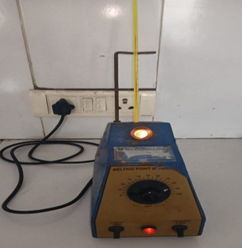
Fig.1: Melting Point Apparatus
Solubility Studies:
Solubility studies were carried out in different solvents such as water, ethanol, methanol, chloroform, and dimethyl sulfoxide (DMSO). The solubility behavior was observed and recorded.
Anti-Microbial Activity:
Antimicrobial activity refers to the ability of natural, synthetic, or semi-synthetic substances to inhibit the growth of or destroy microorganisms, including bacteria, fungi, viruses, and parasites. It is a critical, measurable property in medicine and hygiene for treating infections and controlling germ spread.
Method: Determination of zone of inhibition by Agar well diffusion method.
Principle:
The antimicrobial activity was determined by the agar well diffusion method. This method is based on the diffusion of an antimicrobial agent from a well into an agar medium previously inoculated with the test microorganism. The test compound diffuses radially outward through the agar medium and its concentration gradually decreases with increasing distance from the well. If the microorganism is sensitive to the compound, it inhibits the growth of bacteria around the well and produces a clear circular area known as the zone of inhibition. The diameter of this zone is measured in millimeters (mm) and indicates the antimicrobial potency of the compound. A larger zone of inhibition shows greater antibacterial activity, whereas absence of a clear zone indicates resistance of the organism to the test compound.
Microorganism Used:
Standard: Metronidazole
Preparation of Nutrient Agar Media:
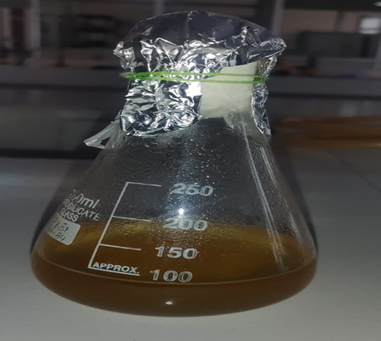
Fig.2: Nutrient Agar Media
The medium was prepared, sterilized by autoclaving at 121°C for 15 minutes, and poured into sterile Petri plates for solidification.
Procedure:
The bacteria were s read on sterile agar plates. The plates were incubated at 37°C for 24-48 hours, and well-isolated colonies showing typical characteristics of Lactobacillus and E. coli were selected and sub cultured to obtain a pure culture. A loopful of the pure culture was transferred into sterile saline solution and mixed thoroughly to prepare a uniform bacterial suspension. Sterilized agar medium was poured into sterile Petri dishes to a uniform depth of 4-5 mm and allowed to solidify. The prepared bacterial suspension was evenly spread over the surface of the solidified agar using a sterile cotton swab to ensure uniform distribution of the microorganism. Using a sterile cork borer of 6-8 mm diameter, wells were made carefully in the agar medium and the agar plugs were removed aseptically. The synthesized α, β-Unsaturated Carbonyl Compounds (S1-S4) were dissolved in suitable solvent to prepare the test solutions. A measured quantity of each test solution was introduced into the respective wells using a sterile micropipette. Metronidazole was used as the standard drug and was added into one well. The plates were allowed to stand at room temperature for some time to permit diffusion of the compounds into the agar medium. The Petri dishes were then incubated at 37°C for 24-48 hours under suitable conditions. After incubation, the plates were examined for the presence of clear zones around the wells. The diameter of the zone of inhibition was measured in millimeters, and the average values were calculated. The antimicrobial activity of the synthesized α, β-Unsaturated Carbonyl Compounds was determined by comparing their zone of inhibition with that produced by the standard drug.
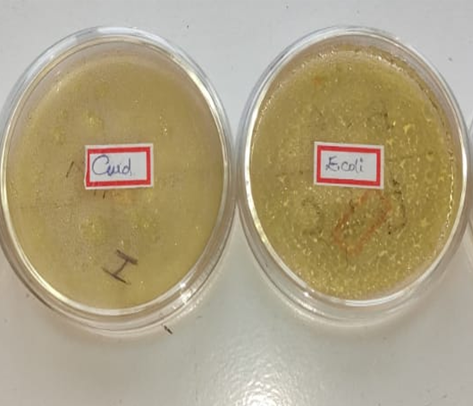
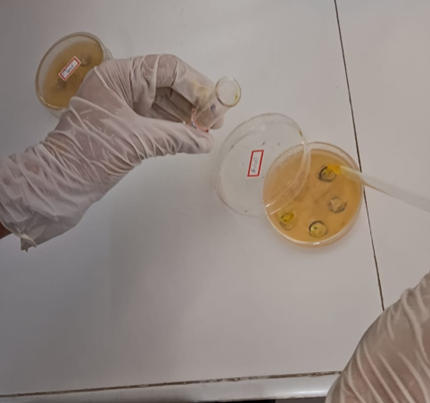
Fig.3: Preparation of Agar plates for antimicrobial activity
IR Spectroscopy:
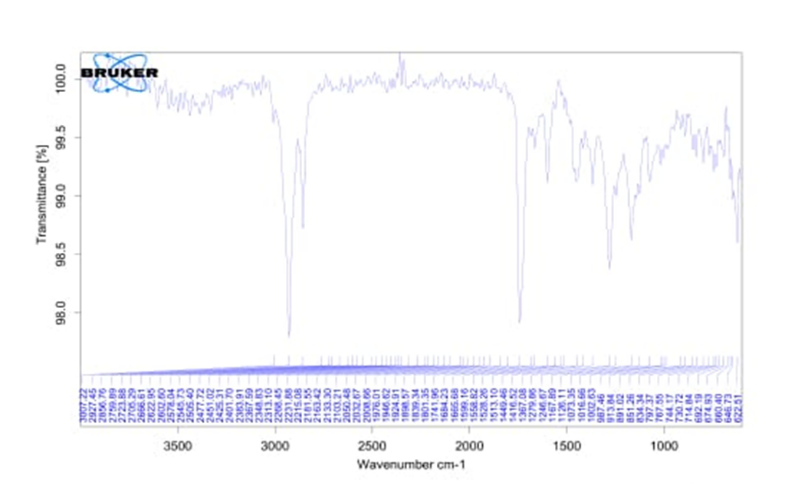
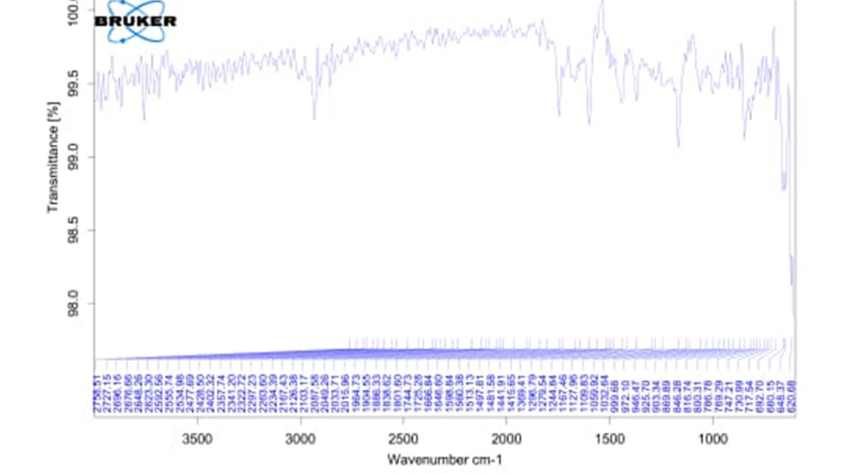
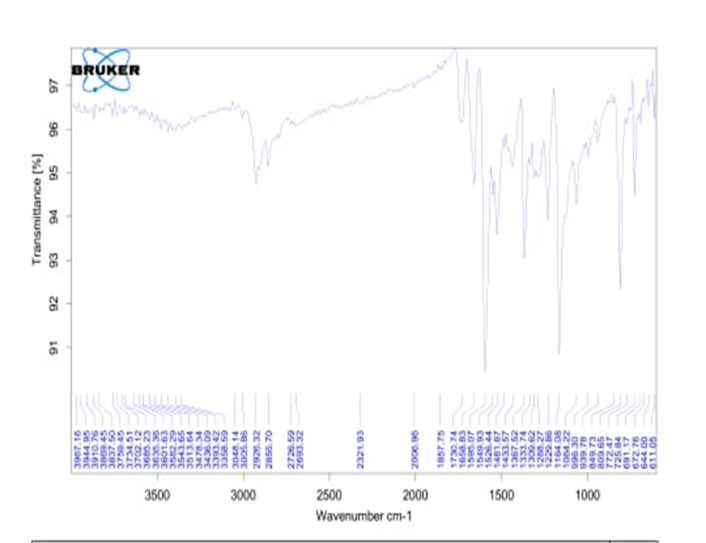
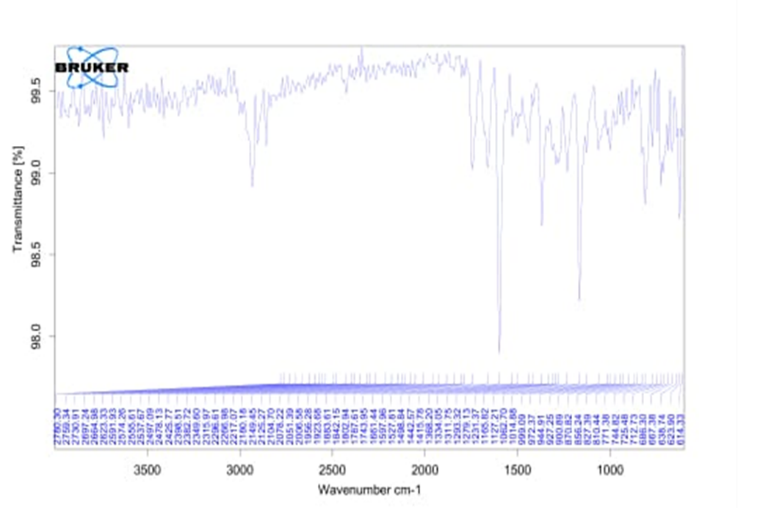
The confirmation of the structural elements in the synthesized α, β-unsaturated carbonyl compounds was done using infrared (IR) spectroscopy. The IR spectra were obtained in the range of 4000-400 cm?¹ using the FT-IR method. The presence of a strong absorption band in the region 1650-1685 cm?¹ due to the conjugated carbonyl (C=O) stretching vibration in all compounds indicated the formation of α, β-unsaturated ketones. The appearance of olefinic C=C stretching bands in the region 1600-1625 cm?¹ further reinforced the conjugated structure. The aromatic C-H stretching vibrations were seen in the region 3000-3100 cm?¹. In the dimethylamino-substituted compounds, the characteristic C-N stretching bands were seen in the region 1200-1350 cm?¹. The absence of aldehydic C-H stretching bands further confirmed the completion of the condensation reaction. In general, the IR results confirmed the successful synthesis of the target conjugated enone compounds.
Compound-1:
Compound-2:
Compound-3:
Compound-4:
RESULTS AND DISCUSSIONS:
Table.1: Melting Point Determination
|
S.NO |
Name of the compound |
Melting Range (°c) |
|
1 |
Sample-1 |
110-112°C |
|
2 |
Sample-2 |
125-128°C |
|
3 |
Sample-3 |
210-214°C |
|
4 |
Sample-4 |
184-190°C |
Table.2: Solubility Test
|
S.NO |
Name of the solvent |
Sample-1 |
Sample-2 |
Sample-3 |
Sample-4 |
Standard |
|
1 |
Water |
- |
- |
- |
- |
- |
|
2 |
Ethanol |
- |
+ |
+ |
+ |
+ |
|
3 |
Ethyl Acetate |
+ |
+ |
+ |
+ |
+ |
In this solubility test “+” indicates soluble and “-” indicates insoluble.
Table.3: Antimicrobial activity of Compounds
|
S.NO |
Name of the Compound |
Anti-Microbial activity using Lactobacillus |
Anti-Microbial activity using E-Coli |
|
1 |
Sample-1 |
+ |
+ |
|
2 |
Sample-2 |
+ |
+ |
|
3 |
Sample-3 |
+ |
+ |
|
4 |
Sample-4 |
+ |
+ |
|
5 |
Standard |
+ |
+ |
In this Anti-Microbial activity “+” indicates presence of antimicrobial activity.
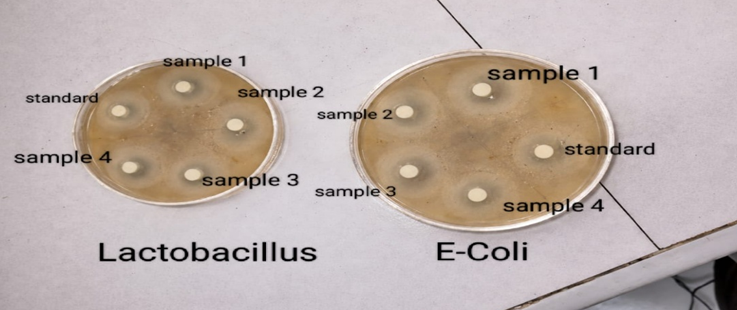
Fig.4: Antimicrobial activity of synthesized compounds against Lactobacillus and Escherichia coli
Spectral Analysis:
The synthesized α, β-unsaturated carbonyl compound was characterized by spectral analysis using IR spectroscopy.
Sample-1:
Sample-2:
Sample-3:
Sample-4:
CONCLUSION
The present study successfully synthesizes four α, β-unsaturated carbonyl compounds using the Claisen-Schmidt condensation reaction between substituted aromatic aldehydes and ketones. The synthesized compounds were purified and identified using the melting point technique and IR spectroscopy, which confirmed the presence of conjugated carbonyl and olefinic functional groups. The agar well diffusion method of biological evaluation confirmed that the synthesized compounds have antimicrobial activity against the selected microbial strains. The current study thus confirms that the Claisen-Schmidt condensation reaction is an effective method for synthesizing biologically active α, β-unsaturated carbonyl compounds.
REFFRENCES








Ch. Anusha, J. N. Suresh Kumar, M. Durga Bhavani, Y. Mounika Devi, K. Bhavana, G. Kiran, K. Sowmya, Y. Sai Synthesis, Characterization and Biological Evaluation of ?, ?-Unsaturated Carbonyl Compounds via Claisen-Schmidt Condensation., Int. J. of Pharm. Sci., 2026, Vol 4, Issue 3, 516-526. https://doi.org/10.5281/zenodo.18884875
 10.5281/zenodo.18884875
