

We use cookies to ensure our website works properly and to personalise your experience. Cookies policy
S.N.D College of Pharmacy, Babhulgaon.
A surge in technological innovation is transforming the pharmacy industry toward digitalization. This review examines the transformative effects of digital technologies on the global pharmacy landscape. We demonstrate how innovations such as artificial Intelligence, block chain, and online platforms are altering pharmacy services and education. The paper offers a thorough overview of the rise of online pharmacy platforms and highlights the essential roles of telepharmacy and telehealth during the COVID-19 pandemic. Furthermore, it addresses the growing cosmeceutical market in the realm of online pharmacies, the regulatory hurdles encountered worldwide, and the impact of the private sector on healthcare technology. Artificial Intelligence (AI) has emerged as a powerful solution for tackling challenges associated with data management and complex numerical problems. This innovation has resulted in numerous technological progressions across nearly all sectors, including engineering, architecture, education, accounting, business, and healthcare, among others. In healthcare, AI has made remarkable progress, particularly in organizing and storing vital information like patient records, medication inventories, sales data, and more . A variety of automated devices, software, and applications including diagnostic tools such as MRI and CT scans have been developed to improve and streamline healthcare practices. Undeniably, AI has transformed healthcare, making it more efficient and effective, and the pharmacy sector has also benefited from these advancements. In recent years, interest has grown significantly in applying AI technology to analyze and interpret key areas in pharmacy, including drug discovery, dosage form design, poly-pharmacology, and hospital pharmacy. Acknowledging the increasing significance of AI, we aimed to develop an all-encompassing report that would aid every practicing pharmacist in grasping the most significant advancements facilitated by this field.
1.Introduction to background of Pharmacy in Digital Healthcare:
In recent years, the healthcare sector has experienced a considerable change, primarily fueled by technological progress. One of the most remarkable developments is telepharmacy, a service enabling patients to obtain pharmaceutical care from a distance. As the healthcare system continues to develop, it is crucial for both patients and healthcare providers to comprehend telepharmacy and its potential effects (1).
Telepharmacy involves the delivery of pharmaceutical services using telecommunications technology. This modern approach allows pharmacists to assist patients who cannot physically go to a pharmacy. Whether due to location, mobility challenges, or time limitations, telepharmacy provides a means to improve access to medication management and advice. As the healthcare landscape progresses, telepharmacy emerges as an essential element in guaranteeing that patients obtain the necessary care, no matter their situation (2).
Technology is essential to the practice of telepharmacy. It employs a range of digital tools, such as video conferencing, mobile apps, and secure messaging, to link pharmacists with patients. This setup facilitates immediate communication, prescription checks, and medication counseling, allowing patients to receive care from their own homes. The participation of artificial intelligence (AI) and machine learning algorithms significantly boosts the operational efficiency of telepharmacy services. These technologies can scrutinize patient data to detect possible medication interactions or compliance issues, enabling pharmacists to take proactive measures (3).
In addition, electronic health records (EHRs) are vital to the telepharmacy process. They allow pharmacists to retrieve a patient’s medication history, allergies, and other pertinent health information, ensuring the delivery of safe and effective care. By harnessing technology, telepharmacy not only simplifies medication management but also improves patient safety. Moreover, the capability to securely exchange information among healthcare providers promotes a collaborative approach to patient care, ensuring that everyone involved is informed and in agreement about treatment plans (4).
Digital technology is spearheading a significant transformation in the global pharmacy sector, aiming to enhance productivity, efficiency, and adaptability in healthcare services. In the pharmacy sector, the adoption of digital technologies such as automation, computerization, and robotics is crucial for reducing costs and improving service delivery. Anticipated to grow rapidly, the digital pharmacy market is experiencing substantial expansion, with projections indicating a market volume of approximately USD 23.6 billion by 2032. This growth illustrates the Increasing dependency of the pharmacy sector on digital technologies and the potential they hold (5).
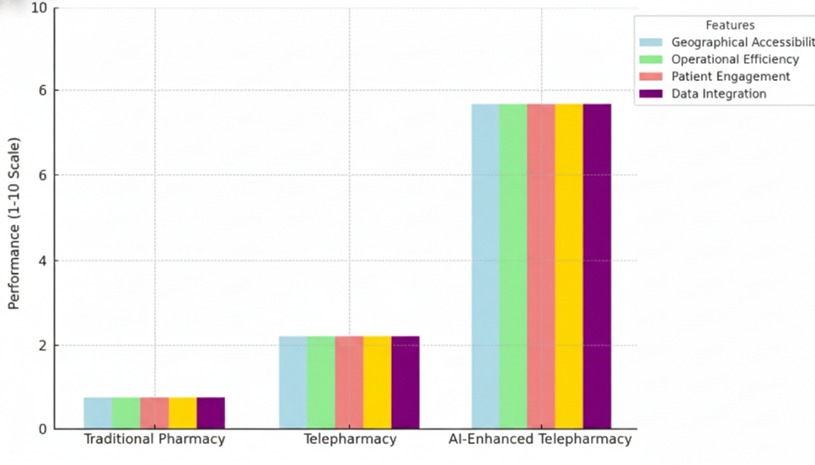
Figure:1. Diagram illustrating the evolution from traditional pharmacy to telepharmacy enhanced by Al and ML, emphasizing the transition facilitated by digital tools and intelligent systems.
1.2.Need of Innovation in Pharmaceutical Care:
At present, pharmaceutical care is perceived as the commitment of pharmacists to maximize the benefits of patients' pharmacological treatments, making them accountable for supervising their pharmacotherapy (6). As the field has shifted from a product-centered approach (dispensing medications) to a focus on patients, the requirements for clinical training have evolved. This transformation is gradual but ongoing, beginning with a philosophical shift aimed at redefining Pharmacy from a commodity-driven trade into a clinical practice within community pharmacies (7).
Since its inception, there has been significant discussion regarding the definition of pharmaceutical care, stemming from the variations in Pharmacy systems and healthcare structures across different nations. Additionally, several obstacles to its implementation persist, primarily related to challenges in education, skills, resources, and the environment (8).
A significant volume of data is presently being released in biomedical journals to demonstrate the clinical, economic, and humanistic effectiveness of pharmaceutical care. Therefore, the purpose of this review is to examine the progression of this practice from its inception to the present day. Additionally, we have assessed various implementation programs conducted in multiple countries, which highlight the need for continuous innovation and adaptation of pharmaceutical care models to meet modern healthcare demandsEuropean countries, the United States, and Latin America, concentrating on clinical, economic, and humanistic results, as well as the current understanding of drug therapy problems (DTP) viewed as shortcomings in medication therapy(9, 10).
1.3.Importance of AI and Telepharmacy:
The incorporation of Artificial Intelligence (AI) in telepharmacy has greatly improved operational effectiveness by decreasing errors, cutting costs, and optimizing workflows (1, 11). These innovations allow telepharmacy providers to deliver high-quality services on a larger scale while minimizing resource usage.
AI-based systems are proficient at recognizing and addressing prescription mistakes, such as incorrect dosages, duplicate prescriptions, and possible drug interactions. Research indicates that AI-enabled prescription verification tools cut processing errors by up to 40%, significantly boosting patient safety (12). In addition, automated inventory management systems identify inconsistencies in stock levels and avert errors in medication distribution (13).
AI technologies enhance resource management, resulting in considerable cost reductions for telepharmacy providers. Automated tasks like prescription validation, inventory control, and patient follow-ups lessen the need for manual processes (14). A telepharmacy project in the U.S. reported a 25% decrease in operational expenses following the adoption of AI solutions for routine duties (15). Moreover, predictive analytics decrease waste by accurately anticipating medication demand, thereby reducing inventory holding costs (16).
AI-driven tools optimize telepharmacy workflows by automating repetitive tasks and integrating seamlessly with electronic health records (EHRs) (17). For example, virtual assistants manage routine patient questions, allowing pharmacists to concentrate on more complex clinical tasks (18). These systems also promote real-time communication between pharmacists and patients, ensuring efficient service delivery. By minimizing errors, cutting costs, and refining operations, AI improves the overall effectiveness of telepharmacy systems. These advancements not only elevate service quality but also empower telepharmacy providers to expand their operations effectively, serving larger patient populations without compromising care standards (19).
2.Definition and Concept of Artificial Intelligence:
Artificial Intelligence (AI) is an interdisciplinary area focused on building systems that can execute tasks usually requiring human cognitive abilities—such as reasoning, learning, and making decisions (20). It incorporates elements from computer science, data analytics, neuroscience, linguistics, and engineering to create intelligent algorithms that can analyze large datasets and extract valuable insights (21). Essentially, AI allows machines to detect patterns, anticipate outcomes, and enhance their capabilities through ongoing learning. Machine learning (ML), a branch of AI, trains algorithms using data to identify connections and generate educated predictions, while deep learning (DL) utilizes multilayered neural networks that replicate human brain functions for complex challenges such as image and speech recognition (22, 23). AI is extensively utilized across various fields for activities like data analytics, forecasting, classification, natural language processing, and intelligent automation revolutionizing healthcare, pharmacy, and research by providing precision and efficiency (24).
2.1. Application of AI in Drug Discovery:
Artificial Intelligence (AI) has transformed the drug discovery landscape by accelerating target identification, molecule screening, and predictive modeling; however, it still faces notable challenges and limitations (25, 26). A primary obstacle is data availability AI systems require large, high-quality datasets for effective training, yet pharmaceutical data are often limited, inconsistent, or biased, potentially affecting prediction accuracy (27).
Ethical and fairness concerns also persist. Biased or unrepresentative training datasets can lead to flawed or inequitable outcomes, emphasizing the importance of transparency and explainable AI (XAI) techniques that clarify decision-making processes (28, 29). XAI enhances interpretability, helping researchers understand model reasoning and ensure equitable application in therapeutic innovation. Moreover, AI should complement rather than replace experimental science. Its predictions must be validated by human expertise to ensure clinical relevance and accuracy (30). Integrating AI with traditional experimental approaches such as combining computational predictions with in vitro and in vivo validation can substantially shorten development timelines and improve success rates in drug discovery (31).
3.Telepharmacy:
3.1.Concept of Telepharmacy
Telepharmacy is generally described as the practice of pharmacy conducted from a distance using telecommunications technology (32). Telepharmacists supervise various aspects of hospital pharmacy operations and offer support that advances hospital clinical efforts. This setup promotes high-quality patient care.(33)
Tele pharmacists carry out the same functions as on-site hospital pharmacists like:
Telepharmacy can significantly impact hospitals and healthcare facilities facing numerous challenges. Telepharmacy services can supply crucial resources to healthcare establishments so they can address various needs, including staffing shortages or increased patient volumes.(34)
Even when a local pharmacy seems to adequately serve its healthcare facility, a well-equipped telepharmacy provider can lead to substantial and quantifiable enhancements in clinical, operational, and financial outcomes. By implementing telepharmacy, facilities can access exclusive tools, resources, and a wealth of expertise that, when combined, guarantee the delivery of exceptional quality care to patients. A telepharmacy provider often has the ability to utilize their scale to offer services that greatly exceed what a local pharmacy team can manage independently. (35)
3.2. Evaluation of Telepharmacy:
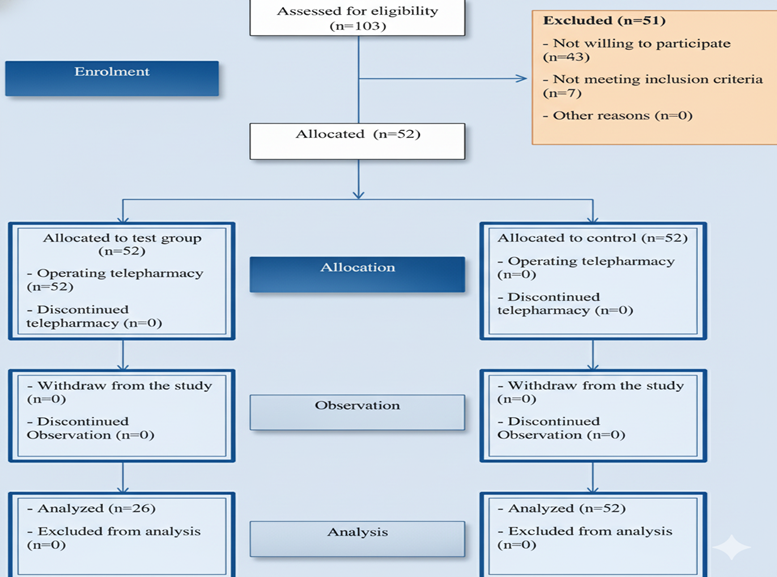
Figure.2. Evaluation of Telepharmacy
3.3. Telepharmacy during Pandemic (COVID-19)
In cember 2019, a coronavirus known as SARS-CoV-2 was discovered in Wuhan, China. Following its emergence, the virus rapidly spread, affecting regions across the globe. As of now, the World Health Organization (WHO) reports over 203 million confirmed cases of Coronavirus Disease 2019 (COVID-19) and more than 4 million deaths worldwide (36). Initially, measures such as social distancing and mask-wearing were put in place to help curb the transmission of the virus. Shortly after, research and development efforts were initiated to seek emergency authorization for vaccines aimed at providing protection against the virus (37).
However, individuals infected with COVID-19 predominantly reported respiratory symptoms, including cold-like symptoms, coughing, and difficulty breathing. In early Spring 2021, a review of existing literature was carried out, which was subsequently updated in Summer 2021 to incorporate studies published after March 2020. The search utilized keywords such as “telemedicine,” “telehealth,” “pharmaceutical care services,” “medication review,” “adherence counseling,” “community pharmacy,” “ambulatory setting,” “inpatient or hospital setting,” and “during COVID-19,” along with various combinations of these terms. Publications that were dated prior to March 2020, not published in English, lacking references to pharmaceutical care, or not relevant to telepharmacy were excluded from the review (38,39).
4. Integration of AI and Telepharmacy
4.1. Prescription Assessment and Error Identification:
AI technologies can systematically examine prescriptions to spot dosage mistakes, drug interactions, and allergy alerts. This minimizes human error and enhances patient safety (40).
AI-powered chatbots and virtual aides can offer medication information to patients around the clock. They can also translate details into the patient’s native language, helping bridge communication gaps in rural or remote locations (41).
AI-supported mobile applications provide reminders to patients regarding dosage schedules, refills, and missed doses. This is particularly beneficial for individuals with chronic conditions like diabetes and hypertension, where consistent medication is vital (41,42).
Wearable technologies such as glucose monitors or smartwatches can constantly monitor health metrics. AI systems scrutinize this information to identify unusual trends and alert pharmacists or healthcare professionals. For instance, a rapid rise in blood pressure can trigger an immediate warning (42).
By evaluating a patient’s medical background, genetics, and lifestyle, AI can suggest customized treatment plans. Telepharmacy ensures that such personalized care is accessible to patients residing in rural or underserved areas (43).
AI can predict medication demand, track expiration dates, and adjust stock levels. This helps avoid shortages in telepharmacy systems and guarantees the ongoing availability of essential drugs (43).
The combination of AI and telepharmacy minimizes travel expenses, wait times, and healthcare burdens for patients. It also broadens pharmacy services to remote regions where traditional pharmacies may not be present (44).
5. Benefits of AI + Pharmacy:
The influence of AI in the pharmaceutical industry is notably revolutionary. Recently, a growing number of pharmaceutical companies have begun incorporating AI technologies into their operations. This development has the potential to foster innovation and enhance the efficiency of the sector. As previously noted, AI can profoundly affect various elements of pharmaceutical processes, such as speeding up drug discovery, refining clinical trials, and tailoring patient care (44).
Let’s explore the most prevalent and promising uses of AI in pharmaceuticals, along with the advantages that AI offers for each application.
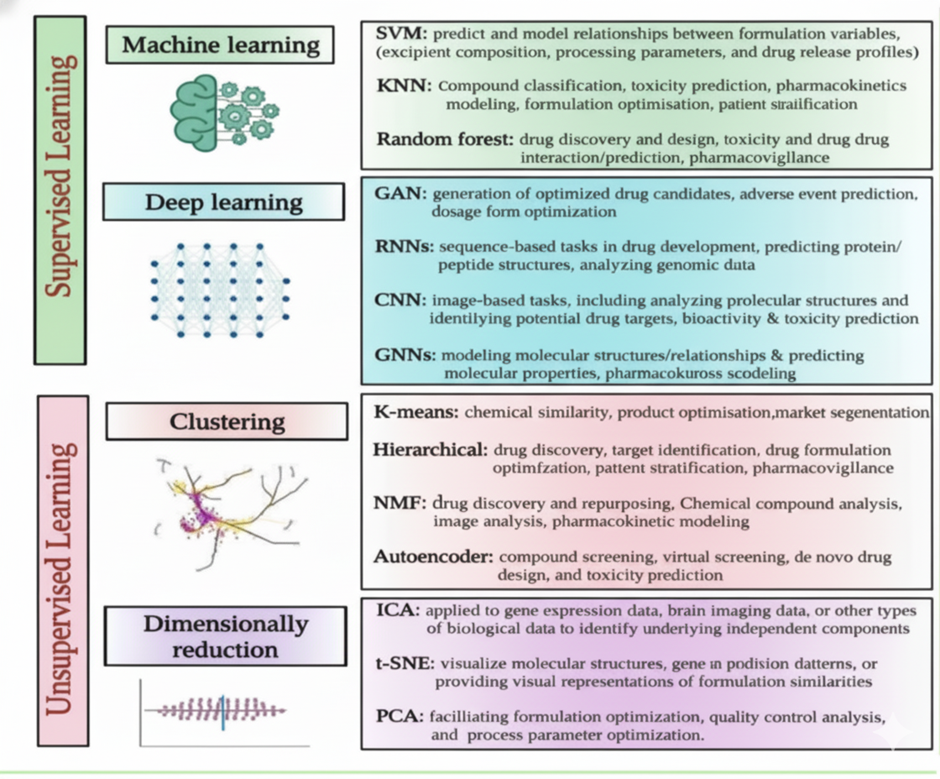
Figure.3.Application of Machine Learning and Deep Learning and Deep Learning in Drug Discovery and development.
6.Challenges and Limitations
6.1. Concerns Regarding Data Privacy and Security:
The extensive implementation of AI and ML in telepharmacy brings to light important issues related to data privacy and security. As these technologies handle large volumes of sensitive patient information, it is critical to maintain the confidentiality and integrity of this data (45).
Protecting Patient Information: Telepharmacy systems depend on electronic health records (EHRs) and real-time patient data, which makes them susceptible to cyber threats. Security breaches can result in unauthorized access, data alteration, or theft of personal health information. In 2022, breaches in healthcare data represented 25% of all documented cyber incidents worldwide, highlighting the sector’s vulnerability (46). To counteract these risks, the implementation of advanced encryption methods, secure data storage options, and routine security evaluations are necessary. AI technologies can also contribute proactively by detecting potential threats and addressing security irregularities in real time (47).
Adherence to Regulations: It is essential to comply with data protection laws such as the General Data Protection Regulation (GDPR) in Europe and the Health Insurance Portability and Accountability Act (HIPAA) in the United States. These regulations impose strict requirements for data collection, processing, and storage.
For instance, HIPAA mandates that telepharmacy providers secure the transmission of patient data and establish access controls (48).
Patient Authorization and Openness: AI-powered telepharmacy platforms must secure explicit consent from patients prior to collecting and utilizing their data. Moreover, patients should be informed regarding the purposes of their data usage, storage, and sharing. Clear data management policies help foster trust and promote the broader use of telepharmacy services. Even with improvements in data security technologies, challenges such as insider threats, outdated infrastructures, and advancing cyber-attack strategies continue to exist. Tackling these problems demands a comprehensive approach that includes technology updates, employee training, and cooperation among telepharmacy providers and cybersecurity specialists (47).
6.2.Technical and Infrastructure Challenges:
The successful deployment of AI-driven telepharmacy systems relies on strong digital infrastructure and trained staff. Nonetheless, technical obstacles remain, especially in under-resourced areas (49).
Digital Infrastructure: A dependable internet connection and cutting-edge hardware are essential for telepharmacy platforms. Rural and isolated regions frequently struggle with inadequate infrastructure, leading to restricted access to telepharmacy services. For instance, a study conducted in sub-Saharan Africa revealed that 40% of potential telepharmacy users encountered connectivity problems, which hindered real-time consultations and data sharing (50). It is imperative for governments and private sectors to invest in enhancing digital infrastructure to close this gap.
Interoperability: Merging AI systems with current electronic health record (HER) platforms presents notable difficulties. Non-compatible data formats and the absence of standardization obstruct smooth information exchange between telepharmacy services and other healthcare systems. Creating interoperable frameworks is vital for facilitating efficient data transfer and collaboration (49,51).
Skilled Workforce: AI-driven telepharmacy systems depend on well-trained personnel capable of operating and maintaining these technologies. However, a lack of skilled workers, particularly in developing areas, restricts the scalability of telepharmacy services (52).
Maintenance and Upgrades: AI systems necessitate regular updates to keep pace with advancements in medical knowledge and cybersecurity threats. Many healthcare environments face resource limitations, which complicates the effective upkeep of these systems. Collaborations between telepharmacy providers and technology companies can help tackle these issues by offering cost-effective solutions and continuous support (52).
6.3. Ethical and Socioeconomic Barriers:
The adoption of AI and ML in telepharmacy introduces ethical and socioeconomic issues that affect the fair delivery of healthcare (53).
Algorithmic Bias: AI systems trained on biased data can reinforce inequalities within the healthcare system. For instance, algorithms that primarily utilize data from urban areas might not sufficiently cater to the needs of rural or marginalized populations (54).
Equity in Access: Socioeconomic inequalities influence patients’ capacity to utilize telepharmacy services. Individuals from low-income backgrounds may not have access to the necessary digital technologies, such as smartphones or consistent internet service, to effectively engage with these services (55).
Ethical Considerations: The implementation of AI in telepharmacy brings forth ethical dilemmas regarding the transparency of decision-making. Patients and providers might not fully understand how AI systems generate specific recommendations, which can lead to a lack of trust (54,55).
Tackling these barriers necessitates joint efforts from technologists, healthcare professionals, and policymakers. Investments in digital infrastructure, inclusive data practices, and educational initiatives are essential to guarantee that telepharmacy services are available and fair for all communities (53).
7.Future Perspectives
The incorporation of Artificial Intelligence (AI) in telepharmacy is advancing quickly and is anticipated to transform pharmaceutical care by improving accessibility, personalization, and overall system efficiency.
AI-enabled telepharmacy will provide professional pharmaceutical care to distant and underserved areas, helping to decrease healthcare disparities (56).
Advanced AI systems will deliver real-time therapeutic suggestions based on individual patient medical, genetic, and behavioral information (57).
AI will facilitate customized drug therapies through genomic and pharmacogenomic assessments, leading to better treatment results (57).
The merger of AI with Internet-of-Things (IoT) devices will aid in ongoing health monitoring and the early identification of irregularities (58).
Blockchain technology will ensure secure data exchange and medication tracking within telepharmacy networks (56).
AI-centric telepharmacy models will foster international partnerships and consistent digital health standards (57).
Automation and predictive analytics will lower operational expenses, enhance inventory management, and reduce medication errors (58).
Pharmacists will evolve from traditional dispensing roles to more patient-focused, technology-enhanced clinical care supported by AI (56).
CONCLUSION:
The incorporation of Artificial Intelligence (AI) within telepharmacy marks a pivotal advancement in contemporary pharmaceutical services, merging state-of-the-art technology with remote healthcare delivery. As healthcare systems worldwide endeavor to enhance efficiency, accessibility, and focus on patients, the amalgamation of AI and telepharmacy presents an innovative approach to connect pharmacists with patients, especially in rural and underserved regions.
Telepharmacy, which encompasses the provision of pharmaceutical services through telecommunication and digital means, has already shown its importance during global health emergencies like the COVID-19 pandemic. It guarantees ongoing access to medication counseling, prescription verification, and monitoring without necessitating in-person consultations. However, its capabilities are notably augmented when integrated with AI technologies.
Artificial Intelligence introduces powerful resources such as machine learning, natural language processing, and data analytics into the field of telepharmacy. These innovations facilitate intelligent decision support systems, automated medication management, predictive analytics for potential adverse drug reactions, and even AI-powered chatbots for basic patient engagement. Consequently, AI enables pharmacists to provide safer, quicker, and more tailored care even from a distance.
The joint application of AI and telepharmacy boosts medication adherence, improves clinical decision-making, minimizes human error, and enhances accessibility for individuals in remote locations. It also promotes cost-effective healthcare provision and aids in the early identification of possible health risks.
Despite these encouraging developments, there are significant challenges, including concerns about data privacy, regulatory restrictions, and the necessity for a solid digital infrastructure. Ethical matters and patient acceptance also remain critical areas needing focus.
In summary, the integration of AI and telepharmacy is transforming pharmaceutical practice, paving the way for a future where remote care is not merely an alternative but a formidable standard of care, rendering pharmacy services more anticipatory, predictive, and centered around patients
REFERENCES


Vaishnavi Khilari*, Rohan Kherud, Pranav Sonawane, Telepharmacy in the Era of Artificial Intelligence: Transforming Remote Healthcare Delivery and Patient Safety, Int. J. of Pharm. Sci., 2025, Vol 3, Issue 11, 960-973 https://doi.org/10.5281/zenodo.17543347
 10.5281/zenodo.17543347