

We use cookies to ensure our website works properly and to personalise your experience. Cookies policy
1,4 Independent researcher, Maharashtra India
2,3,5 New Montfort Institute Of Pharmacy Ashti Wardha, Maharashtra India.
Hair is one of the most important external features of the human body and plays an important role in appearance and self-confidence. Dandruff is a common scalp disorder associated with itching, scaling, dryness, redness, and hair fall. The present study was carried out to formulate and evaluate a herbal anti-dandruff shampoo containing Trigonella foenum-graecum (Fenugreek) and Hibiscus rosa-sinensis (Hibiscus). Herbal shampoos are gaining popularity because they are safe, economical, biodegradable, and possess fewer side effects compared to synthetic shampoos. The formulation was prepared using herbal extracts along with sodium lauryl sulphate, glycerin, tragacanth, citric acid, methyl paraben, rose oil, and distilled water. Different formulations were prepared and evaluated for various physicochemical parameters such as pH, appearance, foam stability, wetting time, dirt dispersion, washability, and skin irritation. The prepared formulation showed good cleansing action, stable foam formation, satisfactory pH, and no irritation to the skin. The results demonstrated that the prepared herbal shampoo can be considered as a fean defective alternative to synthetic anti-dandruff shampoos.
1.1 Hair
Hair is one of the external barometers of internal body conditions. It is an important part of human body derived from ectoderm and is protective appendages on the body associated with sebaceous glands, sweat glands. Hair care products are the preparation which are meant for cleansing, modifying the texture, changing of the color, providing nourishment to the hair and giving the healthy look to the hair. Shampoo is described as a cosmetic preparation meant for washing hair of accumulated sebum, scalp debris and residue of hair grooming preparations. Herbal shampoo is a cosmetic preparation which uses herbs from plants and it is meant for washing of hair and scalp just like a regular shampoo. It is an alternative to the synthetic shampoo available in market. Synthetic shampoo causes harmful effects on hairs, skin and eyes so community got attracted towards the herbal products, due to negligible side effects and less cost. The objective of the present research work is to formulate and evaluate an herbal shampoo with various herbs for multipurpose use by eliminating all traditionally incorporated synthetic ingredients. This shampoo clears sebum, dirt, dandruff, promotes hair growth, strengthens, and darkens hair. Moreover, it also acts as a conditioning agent. This herbal shampoo powder performs all these actions without affecting or damaging hair.1
1.2 Dandruff:
Dandruff is becoming the major and common problem of hair nowadays. It is the condition that produces flakes on scalp skin, followed by itching on skin. Dandruff is a non inflammatory and chronic condition which is characterised in the most common dermatological skin problem, related to the scalp that is eminent by an excessive range of scalp tissue being affected. The main cause of dandruff is not visible properly, but there are multiple factors such as, oily scalp, poor hygiene leading to fungal infection and it appears more often if the hair is not washed for a week. The use of dirty water and at poor families where anti-dandruff tools are expensive, it occurs frequently. A yeast-like fungus, Malassezia, feeds on oils on the scalps of most adults, dry skin, sensitivity to hair care products or contact dermatitis, other skin conditions, such as psoriasis and eczema are also the causative factors behind dandruff. It causes embarrassment in public places and hair loss. A high level of sebum occurs by dandruff on the skin in various areas. Its symptoms are redness, flakes, and itching of the scalp, hair breakage, and unexpected hair colour and skin discoloration.2
Symptoms of dandruff mainly include the following: -
• presence of fragments (scaling)
• itching of the scalp
• redness around the scalp3
Types of Dandruff:
1. Oily Dandruff
World Journal of Pharmacy and Pharmaceutical Sciences Other sort of dandruff is named oily dandruff or Pityriasis steatoides. It arises on the scalp skin with varied intensity of sebum production. It appears mainly frequently in young men next puberty. Inflammation of various intensity develops on the scalp skin alongside the looks of oily scales of dirty yellow color which will form lesions. These lesions are often related with pruritis of various intensity.
2. Dry Dandruff
(universal) dandruff known to be caused by Pityri as is simplex and is characterized by excessive development of minute scales of white grayish or ash color accumulate on the scalp area. Scales visible on the scalp are divided cells of keratinized layer whose renewal cycle is pathologically impact. During this sort of Dandruff, no excessive hair loss is observed.
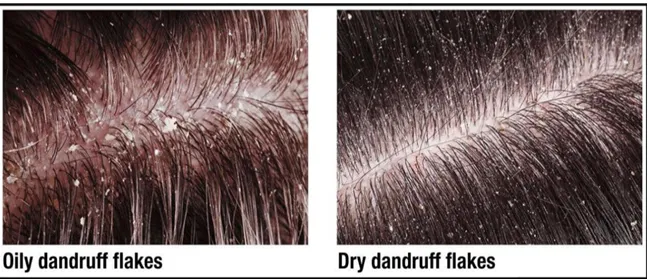
Fig. no.1 Types of dandruff
1.3 ANATOMY OF HAIR:
Hair grows from hair follicles situated within the fatty layer of the scalp. At the base of each hair follicle is a hair bulb where the growth mechanism for producing hair occurs. Hair Follicle get their nourishment from the blood vessels within the dermis. The cells divide and develop to produce the hair shaft. While the hair is still developing underneath the epidermis, it maintains a soft form. Once the pushes past the epidermis, its outside layer hardens into keratin. The hair follicle anchors the hair In to the scalp and Is made up the papilla and bulb, which are located beneath the scalp. The bulb can be found at the bottom of each strand containing the active cells which grow the hair around the papilla.
Parts of the Hair:
1. Hair Papillae: The papilla is responsible for regulating the hair cycle and hair growth, and is also comprised of androgen receptor that is sensitive to the presence of DTH.
2. Matrix: The matrix surrounds the dermal papillae and contains all the active cells needed for hair growth and for development of the different parts of the hair, particularly the outer root sheath, the inner root sheath and their hair shaft.
3. Hair Shaft: The hair shaft is the solitary part of the hair follicle that fully exist the surface of the skin. The hair shaft is made of three layers: the medulla, cortex, and the cuticle.
a) Medulla: The medulla is described as an unsystematic and unstructured area located in the innermost region of the hair shaft and is not always present
b) Cortex: The cortex is made up of keratin and is responsible for giving hair its strength and durability, as well as water uptake.
c) Cuticle: The cuticle is the hair’s outer protective layer and is connected to the internal root sheath. It is a complex structure with a single molecular layer of lipids that helps hair repel water.
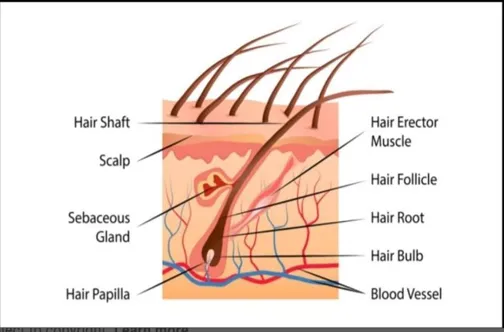
Fig no. 2. Structure of hair
HAIR PHYSIOLOGY:
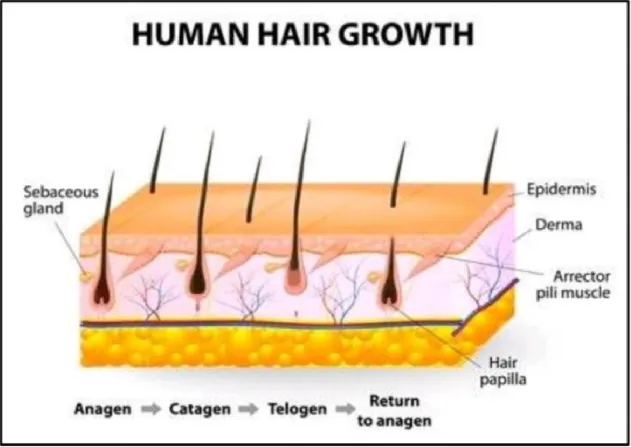
Fig. no. 3 Hair physiology4
1.4 Herbal Shampoo:
Definition of herbal shampoo:
Shampoos are most probably used as beautifying It is a hair care product that is used for cleanse scalp and hair in our daily life. Shampoos are most likely utilized as beautifying agents and are sticky solution of detergents containing suitable additives preservatives and active Ingredients. It is usually applied on wet hair, Massaging into the hair, and cleansed by rinsing with water. The purpose of using herbal shampoo is used to remove dirt that is make up on the hair without stripping out much of the sebum. Many artificial shampoos are present in the current market both medicated and non medicated, however, shampoo popularized due to natural origin which is safe, increases consumers demand and free from side effects. HS is defined as a preparation with surfactant (surface active material) in-suitable form liquid solid or power which when used under the conditions specified will remove surface grease, dirt an skin debris from the hair shaft and scalp without affecting adversely the hair, scalp or health of the user. HS has so many types are powder, liquid, lotion, cream, jelly, aerosol, specialized HS (Conditioning, Anti-dandruff,). But the future of HS is going to be herbal Shampoo. It contains the natural ingredients with herb extract. It helps hairs to improvise their standard of moisture, shine, growth, thickening, strength of hair roots. Shampoos are may be the most widely used the cosmetic product for cleansing hairs and scalp in your daily life. A shampoo is Shampoos are may be the most widely used the cosmetic product for cleansing hairs and scalp in your daily life.5
1.5 Herbal Antidandruff Shampoo:
A herbal antidandruff shampoo is a cosmetic preparation that contains plant- based ingredients with antifungal, antibacterial, cleansing, and conditioning properties. It is formulated using natural extracts like Neem, Tulsi, Aloe vera, Shikakai, Lemon, and Rose extract, which not only cleanse the scalp but also nourish hair roots, promote growth, and prevent dandruff recurrence.
1.6 Advantages of Herbal Antidandruff Shampoo:
Advantages
▪ Natural and safe – Free from harsh chemicals like sulfates and parabens.
▪ Biodegradable and eco-friendly – Do not pollute the environment.
▪ Mild and non-irritant – Gentle on scalp and suitable for long-term use.
▪ Multifunctional action – Provide antifungal, antibacterial, and hair- conditioning effects.
▪ Cost-effective and easily available – Herbs are commonly accessible and economical.
Disadvantages:
▪ Short shelf life – Absence of strong preservatives reduces product stability.
▪ Batch-to-batch variation – Herbal extracts may vary in potency depending on source and season. ▪ Less foam formation – Due to natural surfactants, the lathering is lower than synthetic shampoos. ▪ Longer treatment duration – Results may appear slowly compared to chemical products.
▪ Be stable, safe, and easy to rinse off.
1.7 Concept of Herbal Anti-Dandruff Shampoo:
The concept of a herbal anti-dandruff shampoo is based on the idea of using natural plant-derived ingredients to cleanse the scalp, remove dandruff, and maintain the overall health of hair without causing adverse effects. Unlike synthetic shampoos that contain harsh chemicals, herbal shampoos use ingredients obtained from medicinal plants, which are rich in bioactive compounds like alkaloids, flavonoids, glycosides, saponins, and essential oils. In ancient systems of medicine, especially Ayurveda, herbs such as Neem, Tulsi, Aloe vera, Shikakai, and Lemon have been used for centuries to treat scalp disorders. The herbal concept focuses not only on removing visible dandruff flakes but also on treating the root cause which may be fungal infection (Malassezia furfur), excess sebum production, or poor scalp hygiene.6
1.8 Types of Shampoo:
Shampoos are of the following types:
Powder Shampoo: It is available in the form of dry powder, initially it was prepared from dry soaps, but nowadays dry synthetic detergents are used for their preparation.Powder shampoo is prepared where addition of water or other solvent reduces the activity of the components, especially in case of medicated shampoo. Nowadays, these shampoos are not used due to the difficulty experienced in their application.
Liquid Shampoo: These are clear liquid preparations that are most widely used. They are usually made by using detergent of low cloud point. Some of these shampoos may be transparent.
Cream Shampoo: These are called as lotion shampoos which are modification of clear liquid cream shampoos. Solubilizing agents such as magnesium stearate is also used to dissolve the added pacifiers.
Jelly shampoo: These are transparent and thick usually made by incorporating a gelling agent, (e.g. Cellulose). There is great use in hair salons and beauty parlors. The principle ingredient is detergent which can be used either alone or in combination with soap. By altering the proportion of detergent, gel of required consistency can be obtained. Addition of methyl cellulose to clear liquid shampoo and its subsequent thickening also gives rise to gel shampoo.
Aerosol Shampoo: They are called aerosol shampoos because they are packed in aerosol containers. Their formulation, preparation and packing is complicated as an additional propellantis included. The propellant added must be compatible and should not reduce the activity of shampooing ingredients. The container opening is provided with a valve. Shampoo comes out as foam when the valve is pressed. Hence also called as foam type shampoo.
Keratin Shampoo: When your shampoo(or any hair care product) is infused with keratin oil, you reap benefits that nourish and condition the hair. This helps it look shiny and smooth. It also helps to fight frizz, tame fly always, and protect against damage caused by styling tools like a straightening iron or blow dryer.
Specialized shampoo: Specialty shampoos are marketed to people with dandruff, color- treated hair, gluten or wheat allergies, an interest in using an organic product, infants and young children ("baby shampoo" is less irritating).
Conditioning shampoo: Conditioning shampoos are formulated to provide the dual benefit of a shampoo as well as conditioner. It is a sophisticated hair care product, which has a shampoo and conditioner in one. Along with gentle cleaning of hair to remove dirt, conditioning shampoos condition the hair to keep it shiny and flexible.
Anti-Dandruff shampoo: A shampoo is a preparation of a surfactant in a suitable forms- liquids, solids or powder which when used under the specialized condition will remove surface grease, dirt, and skin debris from the hair and scalp without affecting users.6
1.9 Ideal characters of shampoo:
• It should effectively and completely remove dust, excess sebum.
• You should wash your hair thoroughly.
• More foam should be produced
• The shampoo should be easily removed by washing with water.
• They should leave the hair dry, soft, shiny and manageable.
• You must give the hair a pleasant smell.
• It should not make the hand rough and cracked.
• It should not cause side effects or cause irritation to the skin or eyes.9
1.10 Composition of herbal shampoo:
2. LIST OF INGREDIENTS USED IN FORMULATION
Table no 1: List of Ingredients used in formulation
|
Sr.no |
Ingredients |
Uses |
|
1 |
Fenugreek |
Cleaning, Softening, Anti-microbial, Prevent dandruff Moisturize the skin Reduce hair loss Make hair strong and add shines to the hair |
|
2 |
Hibiscus |
Anti-dandruff agent, prevent split end, Anti-dandruff agent, prevent split end. |
|
3 |
Sodium lauryl sulphate |
Fat Emulsifiers, Wetting agent, Detergent in Cosmetic |
|
4 |
Glycerin |
Humectant, prevent dryness of scalp, |
|
5 |
Tragacanth |
Acts as a thickening agent |
|
6 |
Citric acid |
Ph adjuster |
|
7 |
Methyl paraben |
Used as Preservative. |
|
8 |
Rose oil |
Flavoring agent |
|
9 |
Distilled water |
Acts as a vehicle(solvent) |
3. DRUG AND POLYMER PROFILE
1. Fenugreek
Fig no. 4 Fenugreek
🔹 Scientific name :Trigonella foenum-graecum
🔹 Synonyms: Methi, Greek hay, Fenugreek
🔹 Biological Source: It consists of dried ripe seeds of Trigonella foenum-graecum
🔹 Family: Fabaceae
🔹 Morphological Characters:
🔹 Chemical Constituents:
🔹 Uses:
2. Hibiscus
Fig.no.5 Hibiscus
🔹 Synonyms: China rose, Jaswand
🔹 Biological source: consists of fresh or dried of hibiscus rosa-sinensis
🔹 Morphological Characters
🔹 Chemical Constituents
🔹 Uses
4. METHODOLOGY
4.1 MATERIAL AND METHOD:
Table no.2 : formulation table of herbal anti-dandruff shampoo
|
Sr. no |
Ingredients |
F1 |
F2 |
F3 |
|
1 |
Fenugreek extract |
5 ml |
5 ml |
5 ml |
|
2 |
Hibiscus extract |
5 ml |
5 ml |
5 ml |
|
3 |
Sodium lauryl sulphate |
10 ml |
11 ml |
12 ml |
|
4 |
Glycerin |
3.75 ml |
3.75 ml |
4.4 ml |
|
5 |
Tragacanth |
0.5 g |
0.6 g |
0.6 g |
|
6 |
Citric acid |
0.5 g |
0.5 g |
0.5 g |
|
7 |
Methyl paraben |
0.2 g |
0.2 g |
0.2 g |
|
8 |
Rose oil |
0.5 ml |
0.5 ml |
0.5 ml |
|
9 |
Distilled water |
q.s. |
q.s. |
q.s. |
5. PROCEDURE:
Collection of powder: Powder are collected from local market.
Preparation of herbal extract:
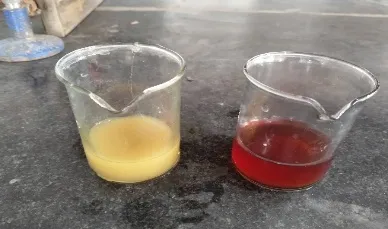
Fig.no. 6 Extraction of fenugreek and hibiscus
1.Fenugreek extract:
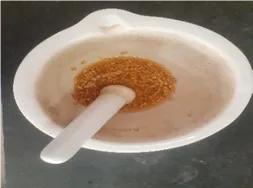
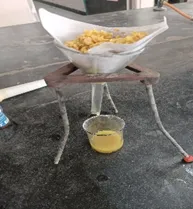
Fig.no. 7 fenugreek seeds grind Fig.no.8 fenugreek extraction process
2. hibiscus extract:
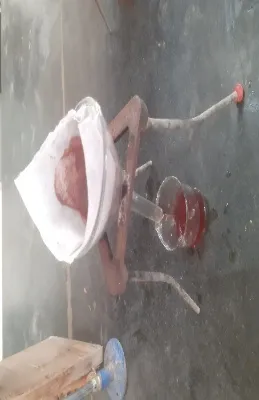
Fig.no. 9 Hibiscus extraction process
Preparation of herbal anti-dandruff shampoo:
1. Prepare Thickener Solution: Take 30–40 g distilled water, Add thickener slowly (sprinkle)
Stir for 5–10 min, allow to hydrate (15–30 min), Forms viscous base
2. Add Surfactant:Add required SLS slowly, Stir gently to avoid foam
3. Add Humectant:Add glycerin, Mix properly
4. Add Herbal Extracts: Add fenugreek extract, Add hibiscus extract, Stir for uniform mixing
5. Add Preservative: Dissolve methyl paraben in small warm water/glycerin, Add to mixture
6. Adjust pH:Dissolve citric acid in little water, Add dropwise, Adjust pH to 5–6
7. Fragrance: Add rose oil at the end, Mix gently
8. Make up Weight: Add distilled water q.s. to 100 ml, mix gently to get uniform shampoo
9. Packaging: Transfer into clean container, Label properly
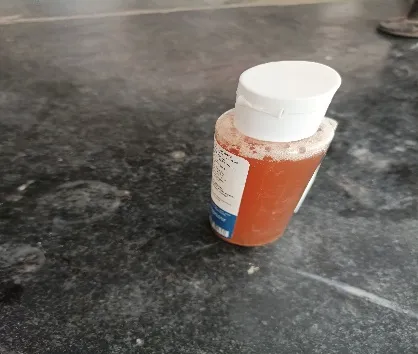
Fig.no. 10. Prepared herbal anti dandruff shampoo
6. EVALUATION PARAMETER
To evaluate the prepared formulations, quality control tests including visual assessment and physicochemical controls such as pH, density, viscosity, surface tension, foam volume, foam stability and wetting time were performed using standard protocols.
1) Physical appearance/visual inspection:
The formulation prepared was evaluated for the clarity, color, odor and foam producing ability and fluidity.
2) Consistency:
The consistency of formulated cream were determined by hand. Take pinch of shampoo and rubbed it with finger.
5) Foaming ability or foam stability:
Method: Take 5 mL of shampoo from each batch, dilute with water, and shake for 15–20 seconds. Observe the foam formation.
Expected Result: The shampoo should produce a rich, stable lather.
Method:
• Take 5 mL of shampoo from each batch.
• Dilute with 10 mL of distilled water in each test tube.
• Shake vigorously for 15–20 seconds.
• Measure foam height and assess stability after 1 minute.
6) Skin Irritation Test:
Prepared herbal shampoo was applied on skin for 5 minutes after that washed. It showed no irritation or inflammation to the skin. So it passed irritation test.
7) Washability test:
The ease of removal of the shampoo applied was examined by washing the applied part with water.
Easily washable
8) Determination of pH:
A 10% v/v shampoo solution was constituted in distilled water and the pH of the solution was measured by using a calibrated pH meter.
Method: Measure the pH of each batch using a digital pH meter.
• Expected Result: The pH should fall within the range of 4.5–6.5 to ensure scalp safety and effectiveness.
RESULT
Table no. 3. Evaluation parameter
|
Sr.no |
Evaluation Test |
F1 |
F2 |
F3 |
|
1 |
Colour |
Light Brown |
Brown |
Dark brown |
|
2 |
Odour |
Pleasant rose odour |
Pleasant rose odour |
Pleasant rose odour |
|
3 |
Transparency |
Non- transparance |
Non- transparance |
Non- transparance |
|
4 |
Texture |
Gritty |
Gritty |
Gritty |
|
5 |
PH |
5.4 |
5.6 |
5.7 |
|
6 |
Foaming ability or foam stability |
Moderate foam |
Good foam |
Good foam |
|
7 |
Skin Irritation test |
No irritation |
No irritation |
No irritation |
|
8 |
Washability test |
Easily washable |
Easily washable |
Easily washable |
To evaluate the prepared formulations, quality control tests including visual assessment and physicochemical controls such as pH, density, viscosity, surface tension, foam volume, foam stability and wetting time were performed using standard protocols.
DISCUSSION
A herbal anti-dandruff shampoo is a cosmetic preparation made from plant-based ingredients used to cleanse the hair and scalp while reducing dandruff and improving hair health. In the present study, a herbal shampoo was formulated using Trigonella foenum-graecum (fenugreek) and Hibiscus rosa-sinensis (hibiscus) due to their conditioning and anti-dandruff properties.
The extracts were prepared by aqueous extraction and incorporated into the formulation along with Sodium lauryl sulphate as a cleansing agent, Glycerin as a humectant, and suitable excipients for viscosity and stability. Different batches were prepared and evaluated for parameters such as pH, viscosity, foaming ability, and appearance.
The results showed that the formulated shampoo possessed good cleansing action, acceptable foaming properties, and satisfactory stability.
CONCLUSION
From the present study, it can be concluded that a stable and effective herbal anti-dandruff shampoo can be successfully formulated using fenugreek and hibiscus extracts. The natural ingredients not only provided anti-dandruff and conditioning effects but also improved the overall quality and acceptability of the formulation.
The use of reduced concentration of synthetic surfactant helped in minimizing irritation while maintaining adequate cleansing action. Natural polymers effectively enhanced the viscosity and stability of the shampoo. Among the prepared batches, the optimized formulation showed a good balance of viscosity, foaming ability, pH, and overall performance.
Thus, the formulated herbal shampoo can be considered a safe, effective, and economical alternative to synthetic shampoos, with added benefits of natural ingredients. Further studies can be carried out to evaluate long-term stability and clinical efficacy.
REFERENCES


Gauri Bhalkar, Irshad Ahmad, Aishwarya Shrirao Yadnesh Zade, Shruti Shrirao, Development And Evaluation of Herbal Anti-Dandruff Shampoo Containing Trigonella Foenum-Graecum and Hibiscus Rosa-Sinensis, Int. J. of Pharm. Sci., 2026, Vol 4, Issue 7, 2763-2773, https://doi.org/10.5281/zenodo.21352304
 10.5281/zenodo.21352304