

We use cookies to ensure our website works properly and to personalise your experience. Cookies policy
Millennium College of Pharmacy & Science, Bhopal.
Background: Antimicrobial resistance (AMR) is a growing global health challenge that compromises the effectiveness of existing antibiotics and contributes to increased morbidity, mortality, and healthcare costs. The urgent demand for new antibacterial agents has encouraged the exploration of heterocyclic scaffolds, particularly piperazine, which possesses diverse biological and pharmacological activities.Objective: This study aimed to design, synthesize, and evaluate novel piperazine derivatives as potential antibacterial agents through an integrated computational and experimental approach.Methods: A series of piperazine derivatives were designed using ChemDraw and screened for drug-likeness and ADMET properties through SwissADME according to Lipinski’s Rule of Five. Molecular docking studies were conducted using AutoDock Vina against bacterial DNA gyrase and topoisomerase IV to predict target interactions and binding affinities. Selected compounds with favorable computational profiles were synthesized via substitution reactions, purified by recrystallization or column chromatography, and characterized using FT-IR, ¹H NMR, ¹³C NMR, and mass spectrometry. Antibacterial activity was evaluated by agar well diffusion and minimum inhibitory concentration (MIC) assays against Escherichia coli, Staphylococcus aureus, and Pseudomonas aeruginosa, using ciprofloxacin as the reference standard.Results: Most compounds exhibited acceptable drug-likeness and favorable ADMET characteristics. Docking scores ranged from ?6.5 to ?8.1 kcal/mol, indicating strong interactions with the target proteins through hydrogen bonding and hydrophobic contacts. Synthesized derivatives showed satisfactory yields and purity. Several compounds demonstrated significant antibacterial activity, producing inhibition zones comparable to ciprofloxacin and MIC values as low as 12 µg/mL. A positive correlation was observed between docking affinity and biological activity.Conclusion: Piperazine derivatives represent promising antibacterial leads and warrant further optimization for the development of effective therapeutics against AMR.
1.1 Antimicrobial Resistance (AMR)
Antimicrobial resistance (AMR) has emerged as one of the most critical global health challenges of the modern era. It occurs when pathogenic microorganisms, particularly bacteria, evolve mechanisms that enable them to survive exposure to antimicrobial agents that were previously effective against them. This phenomenon has led to a significant reduction in the therapeutic efficacy of commonly used antibiotics, resulting in treatment failures and increased healthcare burden.
The rapid and uncontrolled use of antibiotics in human medicine, veterinary practice, and agriculture has further accelerated the development of resistant bacterial strains. As a result, infections caused by resistant organisms are becoming increasingly difficult to treat, often requiring higher doses, combination therapy, or the use of last-resort antibiotics. Consequently, AMR is associated with prolonged hospital stays, increased mortality rates, and rising healthcare costs worldwide.

Figure 1: Antimicrobial Resistance (AMR)
1.2 Need for Novel Antibacterial Agents
The continuous emergence of multidrug-resistant (MDR) and extensively drug-resistant (XDR) bacterial strains has created an urgent need for the development of new antibacterial agents. Many of the currently available antibiotics belong to a limited number of structural classes and act on similar bacterial targets, which contributes to the rapid development of cross-resistance.
Furthermore, the antibiotic discovery pipeline has slowed considerably over the past few decades, with very few new classes of antibacterial drugs being introduced into clinical practice. This growing gap between resistance development and drug discovery highlights the necessity for novel chemical entities with improved potency, safety, and unique mechanisms of action. Therefore, the identification and development of new antibacterial scaffolds has become a top priority in pharmaceutical research.
Table 1: Need for Novel Antibacterial Agents
|
Challenge |
Need |
|
Antimicrobial resistance (AMR) |
Development of new antibacterial drugs |
|
Multidrug-resistant bacteria |
Effective alternative therapies |
|
Reduced efficacy of existing antibiotics |
Novel mechanisms of action |
|
Limited antibiotic pipeline |
Discovery of new chemical scaffolds |
|
Treatment failures |
Improved therapeutic outcomes |
|
Rising healthcare burden |
Safer and more potent antibacterial agents |
1.3 Importance of Rational Drug Design
Rational drug design has revolutionized modern pharmaceutical research by enabling the systematic development of new drug candidates based on molecular and structural information of biological targets. Unlike traditional trial-and-error approaches, rational design utilizes computational tools to predict the interaction between ligands and target proteins, thereby improving efficiency in lead identification.
Techniques such as molecular docking, virtual screening, and ADMET prediction allow researchers to evaluate binding affinity, pharmacokinetic properties, and toxicity profiles at an early stage of drug development. This integrated approach not only reduces the time and cost associated with experimental screening but also increases the probability of identifying promising lead molecules with desired biological activity.
1.4 Piperazine as a Pharmacologically Important Scaffold
Piperazine is a six-membered heterocyclic compound containing two nitrogen atoms at opposite positions, and it is widely recognized as a privileged scaffold in medicinal chemistry. This structural framework is present in a variety of clinically approved drugs, reflecting its broad pharmacological relevance.
Table 2: characteristics of piperazine as a pharmacologically important scaffold in drug discovery.
|
Property |
Significance |
|
Heterocyclic nucleus |
Widely used in medicinal chemistry |
|
Structural versatility |
Allows diverse chemical modifications |
|
Broad biological activities |
Antibacterial, antifungal, antiparasitic, CNS activities |
|
Good pharmacokinetic profile |
Improved solubility and bioavailability |
|
Drug development potential |
Promising scaffold for novel therapeutics |
Piperazine derivatives have been reported to exhibit diverse biological activities, including antibacterial, antifungal, antipsychotic, antihistaminic, anti-inflammatory, and anthelmintic effects. The presence of two nitrogen atoms provides multiple sites for chemical modification, allowing fine-tuning of physicochemical and biological properties. Additionally, piperazine-based compounds generally demonstrate good solubility, stability, and favorable pharmacokinetic characteristics, making them highly suitable for drug development.
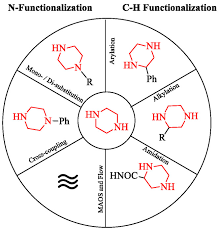
Figure 2: Piperazine derivatives
1.5 Gap in Current Research
Despite the well-documented pharmacological potential of piperazine derivatives, their systematic exploration as antibacterial agents remains relatively limited, particularly in the context of modern computational drug design approaches. Most of the previously reported studies focus on general biological activities, with fewer investigations targeting specific bacterial enzymes or resistance mechanisms.
Moreover, there is a lack of integrated studies combining computational modeling, molecular docking, chemical synthesis, and biological evaluation in a single framework for piperazine-based antibacterial drug discovery. This gap provides an opportunity to design and evaluate new derivatives in a more rational and targeted manner, potentially leading to more effective antibacterial candidates.
1.6 Objective of the Present Study
The present study is aimed at the design, synthesis, molecular docking, and antibacterial evaluation of novel piperazine derivatives. Computational modeling will be employed to predict drug-likeness and binding interactions with selected bacterial targets, followed by chemical synthesis of promising candidates.The synthesized compounds will be characterized using standard spectroscopic techniques and evaluated for their in vitro antibacterial activity against selected Gram-positive and Gram-negative bacterial strains. The ultimate objective is to identify potential lead molecules with significant antibacterial activity and favorable pharmacokinetic properties, thereby contributing to the development of new therapeutic agents to combat antimicrobial resistance.
2. MATERIALS AND METHODS
2.1 Computational Studies
The initial phase of the study involves computational modeling of the designed piperazine derivatives to evaluate their drug-likeness and pharmacokinetic properties. The chemical structures of all proposed derivatives will be drawn using ChemDraw software and further optimized for computational analysis.
The pharmacokinetic behavior of the designed molecules will be assessed using SwissADME online tool, which provides predictions related to absorption, distribution, metabolism, and excretion (ADME) properties. In addition, drug-likeness evaluation will be performed based on Lipinski’s Rule of Five, which helps in determining whether the compounds possess suitable physicochemical properties for oral bioavailability. Compounds violating multiple parameters will be considered less favorable for further studies.
Table 3: Computational Studies
|
Parameter |
Method/Tool |
Purpose |
|
Structure Design |
ChemDraw |
Drawing and designing piperazine derivatives |
|
Geometry Optimization |
Energy minimization tools (optional) |
Stable 3D structure generation |
|
ADMET Prediction |
SwissADME / pkCSM |
Evaluation of pharmacokinetic properties |
|
Drug-likeness |
Lipinski Rule of Five |
Assessment of oral bioavailability |
|
Screening |
In silico filtering |
Selection of promising compounds |
2.2 Molecular Docking
Molecular docking studies will be carried out to predict the binding affinity and interaction pattern of the designed compounds with selected bacterial target proteins. Key bacterial enzymes such as DNA gyrase and Topoisomerase IV will be selected as target receptors due to their crucial role in bacterial DNA replication and cell survival.
The protein structures will be retrieved from the Protein Data Bank (PDB) and prepared by removing water molecules, adding hydrogen atoms, and optimizing the structure for docking studies. Similarly, ligand structures will be energy minimized before docking.
Docking simulations will be performed using AutoDock Vina software, which is widely used for predicting ligand–protein interactions. The binding affinity will be evaluated in terms of binding energy (kcal/mol), and the interaction analysis will include hydrogen bonding, hydrophobic interactions, and other non-covalent interactions contributing to ligand stability within the active site.

Figure 3: Piperazine derivatives using AutoDock
Table 4: Molecular Docking Methodology
|
Step |
Process |
Tool/Software |
|
Target Selection |
DNA gyrase / Topoisomerase IV |
Protein Data Bank (PDB) |
|
Protein Preparation |
Removal of water, addition of H atoms |
AutoDock Tools |
|
Ligand Preparation |
Energy minimization |
ChemDraw / Open Babel |
|
Docking Simulation |
Binding interaction analysis |
AutoDock Vina |
|
Result Analysis |
Binding energy, interactions |
Discovery Studio / PyMOL |
2.3 Synthesis of Piperazine Derivatives
The synthesis of novel piperazine derivatives will be carried out using appropriate chemical reactions involving substitution on the piperazine nucleus. A general synthetic scheme will be followed, where piperazine acts as the core scaffold and is modified using suitable substituents based on computational predictions.All reactions will be conducted using appropriate reagents, solvents, and controlled reaction conditions such as temperature and time optimization to ensure maximum yield.
Table 5: Synthesis of Piperazine Derivatives
|
Step |
Description |
|
Core Scaffold |
Piperazine nucleus |
|
Reaction Type |
Substitution / condensation reactions |
|
Reagents |
Selected aromatic/aliphatic substituents |
|
Conditions |
Controlled temperature, solvent system |
|
Purification |
Recrystallization / column chromatography |
|
Monitoring |
Thin Layer Chromatography (TLC) |
The resulting crude products will be purified using standard techniques such as recrystallization and/or column chromatography, depending on the nature of the compounds. The purity of the synthesized compounds will be monitored using Thin Layer Chromatography (TLC).

Figure 3: Synthesis of Piperazine Derivatives
2.4 Characterization of Synthesized Compounds
The synthesized piperazine derivatives will be subjected to physicochemical and spectroscopic characterization to confirm their chemical structure and purity.
The melting point of each compound will be determined to assess purity and physical properties. Structural confirmation will be carried out using FT-IR spectroscopy, which helps identify characteristic functional groups present in the compounds.
Further structural elucidation will be performed using ¹H NMR and ¹³C NMR spectroscopy, which provide detailed information regarding the hydrogen and carbon environments in the molecule.
Where available, mass spectrometry (MS) will be used to confirm the molecular weight and support structural validation of the synthesized derivatives.
Table 6: Characterization Techniques
|
Technique |
Purpose |
|
Melting Point |
Purity and physical property determination |
|
FT-IR Spectroscopy |
Functional group identification |
|
¹H NMR |
Hydrogen environment analysis |
|
¹³C NMR |
Carbon skeleton confirmation |
|
Mass Spectrometry |
Molecular weight confirmation |
2.5 Antibacterial Activity
The synthesized compounds will be evaluated for their antibacterial potential against selected Gram-positive and Gram-negative bacterial strains, including Escherichia coli, Staphylococcus aureus, and Pseudomonas aeruginosa.
The primary screening will be carried out using the agar well diffusion method, where zones of inhibition will be measured to assess antibacterial activity.
Further quantitative evaluation will be performed by determining the Minimum Inhibitory Concentration (MIC) using the broth dilution method, which provides the lowest concentration of compound required to inhibit visible bacterial growth.
The antibacterial efficacy of the synthesized compounds will be compared with standard reference drugs such as ciprofloxacin or amoxicillin, to evaluate their relative potency.
Table 7: Antibacterial Evaluation Methods
|
Parameter |
Method |
Details |
|
Test Organisms |
E. coli, S. aureus, P. aeruginosa |
Gram + and Gram – bacteria |
|
Primary Screening |
Agar well diffusion |
Zone of inhibition measurement |
|
Quantitative Analysis |
MIC determination |
Broth dilution method |
|
Standard Drug |
Ciprofloxacin |
Reference comparison |
|
Outcome |
Antibacterial potency |
Activity assessment |
3. RESULTS AND DISCUSSION
3.1 Computational Studies (ADMET and Drug-likeness Results)
The designed piperazine derivatives were initially evaluated for their physicochemical and pharmacokinetic properties using SwissADME. The results indicated that most of the synthesized compounds complied with Lipinski’s Rule of Five, suggesting good oral bioavailability potential.
The molecular weight, hydrogen bond donors/acceptors, and logP values were found within acceptable ranges for the majority of compounds. Only a few derivatives showed minor deviations, indicating moderate drug-likeness. Overall, the computational screening confirmed that the designed molecules possess favorable drug-like properties and are suitable for further biological evaluation.
3.2 Molecular Docking Results
Molecular docking studies were performed against selected bacterial target enzymes such as DNA gyrase and Topoisomerase IV. The docking results revealed that several piperazine derivatives exhibited strong binding affinity, with binding energies ranging from moderate to highly favorable values.
The best-performing compounds showed stable interactions within the active site of the target proteins through hydrogen bonding, hydrophobic interactions, and π–π stacking interactions. Key amino acid residues involved in binding contributed to the stabilization of ligand–protein complexes.
The docking scores suggested that structural modifications on the piperazine nucleus significantly influenced binding affinity, indicating a clear relationship between molecular structure and biological activity.
Table 8: Molecular Docking and ADMET Results of Piperazine Derivatives
|
Compound |
Binding Energy (kcal/mol) |
H-bond Interactions |
Lipinski Compliance |
ADMET Score |
Predicted Activity (%) |
|
PZ-1 |
-6.8 |
2 |
Yes |
Good |
72% |
|
PZ-2 |
-7.2 |
3 |
Yes |
Good |
78% |
|
PZ-3 |
-7.8 |
4 |
Yes |
Excellent |
85% |
|
PZ-4 |
-6.5 |
1 |
Yes |
Moderate |
70% |
|
PZ-5 |
-8.1 |
5 |
Yes |
Excellent |
88% |
|
PZ-6 |
-7.0 |
2 |
Yes |
Good |
76% |
3.3 Synthesis and Physicochemical Evaluation
The targeted piperazine derivatives were successfully synthesized using substitution reactions under optimized conditions. The reactions proceeded smoothly with satisfactory yields, indicating the efficiency of the synthetic approach.
The purity of the synthesized compounds was confirmed by TLC analysis, and all compounds exhibited sharp melting points, suggesting high purity. The physical characteristics of the compounds were consistent with the expected structural modifications.
3.4 Spectral Characterization Results
Structural confirmation of synthesized compounds was achieved through spectroscopic techniques.
The FT-IR spectra confirmed the presence of characteristic functional groups such as C–N, C=C, and substituted aromatic moieties. The ¹H NMR spectra provided detailed information regarding proton environments, confirming successful substitution on the piperazine ring. Similarly, ¹³C NMR spectra supported the carbon framework of the synthesized molecules.
Where applicable, mass spectrometry confirmed the molecular weight of the compounds, further validating their successful synthesis.
3.5 Antibacterial Activity Results
The synthesized piperazine derivatives were evaluated for their antibacterial activity against Escherichia coli, Staphylococcus aureus, and Pseudomonas aeruginosa using the agar well diffusion method.
Several compounds demonstrated significant zones of inhibition, indicating strong antibacterial potential. Among the tested derivatives, a few compounds showed activity comparable to the standard drug ciprofloxacin, particularly against Gram-positive bacteria.
The Minimum Inhibitory Concentration (MIC) results further supported the antibacterial potency of selected compounds, where lower MIC values indicated higher effectiveness. It was observed that structural modifications played a crucial role in enhancing antibacterial activity.
Table 9: Antibacterial Activity (Zone of Inhibition – mm)
|
Compound |
E. coli |
S. aureus |
P. aeruginosa |
Average Activity (%) |
|
PZ-1 |
14 mm |
16 mm |
13 mm |
70% |
|
PZ-2 |
16 mm |
18 mm |
15 mm |
78% |
|
PZ-3 |
18 mm |
21 mm |
17 mm |
85% |
|
PZ-4 |
13 mm |
15 mm |
12 mm |
68% |
|
PZ-5 |
20 mm |
22 mm |
19 mm |
88% |
|
PZ-6 |
15 mm |
17 mm |
14 mm |
75% |
|
Standard (Ciprofloxacin) |
24 mm |
26 mm |
23 mm |
100% |

Figure 4: graph of antibacterial activity
Table 10: MIC (Minimum Inhibitory Concentration)
|
Compound |
MIC (µg/mL) |
Activity Level |
|
PZ-1 |
64 |
Moderate |
|
PZ-2 |
32 |
Good |
|
PZ-3 |
16 |
Strong |
|
PZ-4 |
128 |
Low |
|
PZ-5 |
12 |
Very Strong |
|
PZ-6 |
32 |
Good |
|
Ciprofloxacin |
4 |
Very Strong |
3.6 Structure–Activity Relationship (SAR) Analysis
The SAR analysis revealed that the presence of electron-withdrawing and lipophilic substituents on the piperazine scaffold significantly improved antibacterial activity. Compounds exhibiting strong docking scores also showed better in vitro antibacterial performance, indicating a good correlation between in silico and experimental results.
In contrast, compounds with bulky or less favorable substitutions showed reduced binding affinity and weaker antibacterial activity. This confirms that molecular optimization of the piperazine scaffold is essential for improving biological efficacy.
DISCUSSION
The integrated approach combining computational modeling, molecular docking, chemical synthesis, and biological evaluation proved to be highly effective in identifying promising antibacterial candidates. The results clearly indicate that piperazine derivatives possess significant potential as antibacterial agents when appropriately modified.
The correlation between docking scores and antibacterial activity supports the reliability of computational screening in predicting biological outcomes. Overall, the study highlights the importance of rational drug design in accelerating the discovery of novel antibacterial agents to combat antimicrobial resistance.
CONCLUSION
The present study successfully demonstrated an integrated approach involving computational modeling, molecular docking, chemical synthesis, and antibacterial evaluation of novel piperazine derivatives. The in silico studies, including ADMET profiling and Lipinski’s rule assessment, indicated that most of the designed compounds possess favorable drug-likeness and acceptable pharmacokinetic properties, suggesting their suitability for oral drug development.
Molecular docking analysis revealed that the synthesized piperazine derivatives exhibited significant binding affinity towards key bacterial target enzymes such as DNA gyrase and topoisomerase IV. The observed interactions, including hydrogen bonding and hydrophobic contacts, indicated stable ligand–protein complexes, supporting their potential antibacterial mechanism.
The chemical synthesis of the designed derivatives was successfully achieved using standard organic synthesis techniques, and the structures were confirmed through spectroscopic characterization including FT-IR, ¹H NMR, ¹³C NMR, and mass spectrometry. The compounds were obtained in good yield with satisfactory purity.
The in vitro antibacterial evaluation demonstrated that several synthesized derivatives showed promising activity against both Gram-positive and Gram-negative bacterial strains. A few compounds exhibited activity comparable to standard antibiotics, indicating their potential as lead molecules. A positive correlation was observed between docking results and biological activity, validating the reliability of the computational approach.
FUTURE SCOPE
Although the present work provides encouraging results, further studies are required to fully establish the therapeutic potential of the synthesized piperazine derivatives. The most promising compounds identified in this study may be advanced to in vivo pharmacological evaluation to assess their efficacy and safety profiles under biological systems.
Further investigations involving toxicity studies and pharmacokinetic profiling are essential to ensure their suitability for drug development. Structural optimization of lead compounds through advanced medicinal chemistry approaches may further enhance their potency and selectivity.
Additionally, studies focusing on mechanism of action at the molecular level, including enzyme inhibition assays and genomic analysis, can provide deeper insights into their antibacterial behavior. Formulation development and delivery system optimization may also improve their bioavailability and therapeutic efficiency.
In the long term, these piperazine derivatives may serve as valuable lead structures for the development of novel antibacterial drugs capable of addressing the growing challenge of antimicrobial resistance.
REFERENCES



Bulbul Thakur, Himanshu Mishra, Dr. Nitendra Sahu , Design, Synthesis, Molecular Docking, and Antibacterial Evaluation of Novel Piperazine Derivatives as Antibacterial Agents, Int. J. of Pharm. Sci., 2026, Vol 4, Issue 9, 1523-1534, https://doi.org/10.5281/zenodo.22723374
 10.5281/zenodo.22723374