

We use cookies to ensure our website works properly and to personalise your experience. Cookies policy
School of Pharmaceutical Science and Research, Sardar Patel University, Madhya Pradesh, India-481001.
Wound healing is a complex process that may be delayed by microbial infection, Wound inflammation, oxidative stress, and increasing antimicrobial resistance. Centella asiatica (L.) Urban, traditionally known as Mandookaparni in Ayurveda, has long been used for wound management and skin disorders. Its major triterpenoid phytoconstituents, including asiaticoside, madecassoside, Asiatic acid, and madecassic acid, contribute to wound repair through stimulation of collagen synthesis, fibroblast proliferation, angiogenesis, re-epithelialization, and modulation of inflammation. Piper nigrum contains piperine, its principal alkaloid, which possesses reported antibacterial, anti-inflammatory, and antibiofilm properties. The present study aims to develop and optimize a topical herbal emulgel containing extracts of C. asiatica and P. nigrum for potential wound management. The extracts will be prepared using suitable extraction techniques and evaluated for relevant phytoconstituents, followed by incorporation into an emulgel using appropriate oil-phase components, surfactants, and gelling agents. Formulations will be optimized by evaluating appearance, homogeneity, pH, spreadability, viscosity, extract/marker content, and stability. The optimized formulation will be evaluated for antimicrobial activity against selected wound-associated microorganisms and, where feasible, in-vitro wound-healing potential.
Currently available for wound care, but the management of chronic wounds remains challenging because of their complex nature. Which created a need for newer therapeutic approaches that can address the different factors involved in delayed or impaired wound healing³.Nowadays, medical experts have presented considerable interest in plant-based drugs as they are recognized as safe, low-cost and more suitable for chronic wounds⁴'⁵.
An innovative approach is needed to address the limitations of the previously mentioned topical dosage forms, such as utilizing an emulgel—a gel-based emulsion⁶.
*Corresponding Author: Disha Chouhan
Address: School of Pharmaceutical Science and Research, Sardar Patel University, Madhya Pradesh, India-481001
Email□ʌV: dishapatleqa@gmail.com, groupofspsrfinalyaer@gmail.com
Relevant conflicts of interest/financial disclosures: The authors declare that there search was conducted in the absence of
Table 1: Mechanism Based Chart of Centellaasiatica Healing Mechanism
| Mechanism/effect | Major constituents | Mechanism of healing | References |
|---|---|---|---|
| Collagen synthesis | Aciaticoside, madecassoside. | Promotes collagen formation, particularly type 1 and 3 collagen, supporting extracellul-ar matrix formation and tissue repair. | [13] |
| TGF-ß/Smad pathway | Asiaticoside, Madecassoside. | Modulates TGF-ß/sm-ad signalling,promoti-ng fibroblast activity and collagen synthesi-s. | [13] |
| Fibroblast proliferation | Asiaticoside, madecassoside. | Stimulates fibroblast activity,contributing to collagen formation and wound healing contraction. | [13] |
| Re-epithelialization | C.asiatica extract,tri - terpenes. | Supports keratinocyte migration and regeneration of the epidermal layer. | [12] |
| Angiogenesis | Asiaticoside and other triterpenes. | Promote new blood vessel formation, imp-roving oxygen and nu-trient supply for healing tissue. | [11] |
Centella asiatica and it's constituents Centella asiatica belongs to family Apiaceae. It is also known as Gotu kola Mandookaparni which is mentioned in the Ayurveda (Sushruta Samhita)⁷.C. asiatica contains a variety of important bioactive compounds, particularly triterpenoid saponin and their aglycones. The major triterpene
indocentelloside⁸. The primary phytochemical which contributes in pharmacological activity are asiaticoside, asiatic acid , madecassoside, and madecassic acid⁸'⁹. Several studies have reported that different extracts of Centella asiatica, (TECA, ethanolic and methanolic extracts), may help in the management of various skin conditions and promote wound healing. These extracts and compounds have been investigated for their potential in healing skin wounds, burn injuries, eczema,
excoriations and scars such as hypertrophic and keloid scars⁹'¹⁰.Various mechanism of wound healing of centella asiatica cons. are mantioned in table[1].
Piper nigrum and Its Pharmacological Importance
Piper nigrum L., commonly known as black pepper, belongs to the family Piperaceae. It is an important medicinal plant that has been traditionally used in various systems of medicine. The fruits of P. nigrum contain several biologically active constituents, including alkaloids, volatile oils, flavonoids, phenolic compounds, and terpenoids. piperine is considered the principal pungent alkaloid and one of the most extensively studied bioactive compounds of black pepper¹⁴'¹⁵.
Antimicrobial Activity of Piperine
Microbial infection is an important factor that can delay wound healing, particularly in chronic and contaminated wounds. Therefore, the investigation of natural compounds with antimicrobial properties has attracted considerable interest in pharmaceutical research.
Piperine has demonstrated antimicrobial activity against several microorganisms in experimental studies. Its antibacterial effects have been investigated against organisms including Staphylococcus aureus, Escherichia coli, Pseudomonas aeruginosa, and certain Mycobacterium species. Studies have suggested that piperine may interfere with bacterial membrane functions, affect microbial virulence, influence biofilm-associated processes, and inhibit certain bacterial efflux mechanisms. These activities may contribute to its ability to suppress microbial growth¹⁶'¹⁷.
Combination of centella asiatica with piper nigrum
The combination of Piper nigrum and Centella asiatica has attracted interest because of the complementary pharmacological properties of their bioactive constituents. Centella asiatica is rich in triterpenoid compounds, particularly asiaticoside, madecassoside and asiatic acid, which have been associated with different processes involved in wound repair. Piperine, the major pungent alkaloid of Piper nigrum, possesses antioxidant and anti-inflammatory properties and has also been extensively investigated as a natural bioenhancer.
Experimental evidence supports the potential wound-healing benefits of this combination. Patel et al. reported that a combination of methanolic extracts of C. asiatica and P. nigrum produced greater antioxidant activity than C. asiatica extract alone. The EC50 values of the combination were reduced by 41.5%, 7.28% and 43.42% in nitric oxide, superoxide and DPPH radical-scavenging assays, respectively, compared with C. asiatica alone¹⁸.
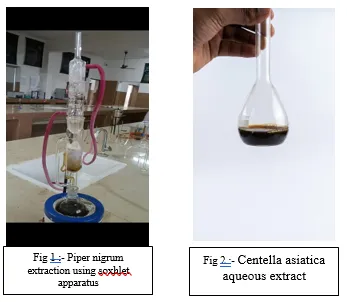
[Figure - see the formatted PDF]
RESULTS:-
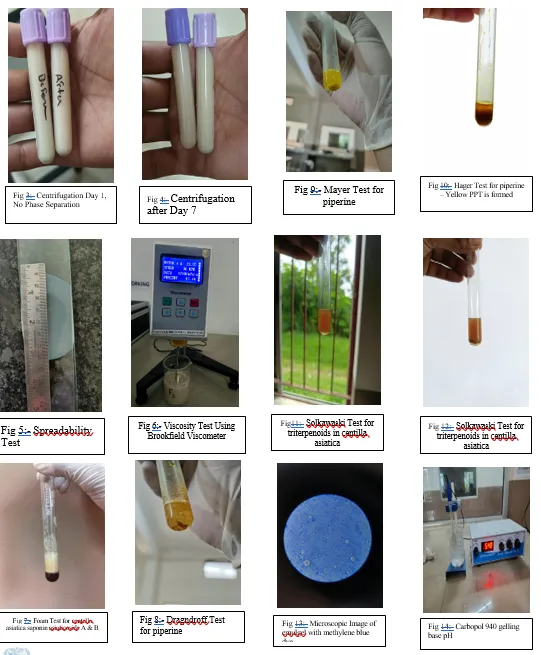
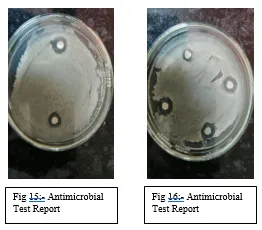
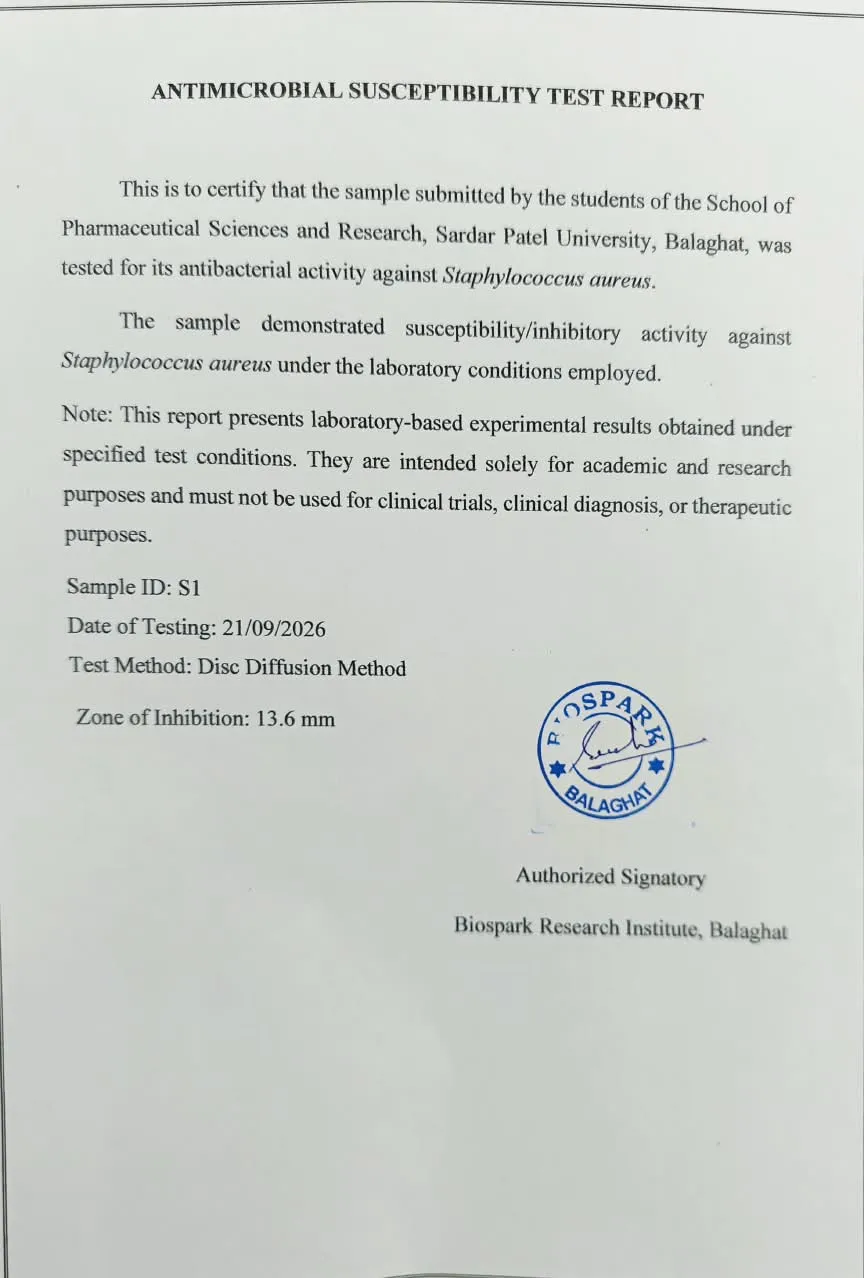
Figure 17: Antimicrobial Susceptibility Test Report
CONCLUSION:-
Wound healing is a complex process that may be delayed by microbial infection, inflammation, oxidative stress, and increasing antimicrobial resistance. Centella asiatica (L.) Urban, traditionally known as Mandookaparni in Ayurveda, has long been used for wound management and skin disorders. Its major triterpenoid phytoconstituents, including asiaticoside, madecassoside, Asiatic acid, and madecassic acid, contribute to wound repair through stimulation of collagen synthesis, fibroblast proliferation, angiogenesis, re-epithelialization, and modulation of inflammation. Piper nigrum contains piperine, its principal alkaloid, which possesses reported antibacterial, anti-inflammatory, and antibiofilm properties. Piperine has demonstrated activity against important wound-associated pathogens such as S. aureus and P. aeruginosa, with studies also indicating potential activity against certain multidrug-resistant bacterial strains and bacterial resistance mechanisms. Therefore, combining C. asiatica and P. nigrum may provide complementary wound-healing and antimicrobial benefits. The present study aims to develop and optimize a topical herbal emulgel containing extracts of C. asiatica and P. nigrum for potential wound management. The extracts will be prepared using suitable extraction techniques and evaluated for relevant phytoconstituents, followed by incorporation into an emulgel using appropriate oil-phase components, surfactants, and gelling agents. Formulations will be optimized by evaluating appearance, homogeneity, pH, spreadability, viscosity, extract/marker content, and stability. The optimized formulation will be evaluated for antimicrobial activity against selected wound-associated microorganisms and, where feasible, in-vitro wound-healing potential. The developed C. asiatica–P. nigrum emulgel may offer a promising plant-based approach for supporting the management of infected and difficult-to-heal wounds, particularly where antimicrobial resistance presents a therapeutic challenge.
REFERENCES


Khan Kaif, Talmale Tejashvini, Pardhi Uma, Dhomne Dev, Dr. Disha Chouhan, Development of a Polyherbal Emulgel of Centella Asiatica and Pipernigrum: A Novel Approach for Wound Management, Int. J. of Pharm. Sci., 2026, Vol 4, Issue 11, 285-291. https://doi.org/10.5281/zenodo.23914265
 10.5281/zenodo.23914265