

We use cookies to ensure our website works properly and to personalise your experience. Cookies policy
Ashokrao Mane Institute of Pharmacy, Ambap.
This study aimed to formulate and evaluate a herbal anti-acne face wash using extracts of Annona squamosa and Clitoria ternatea, known for their antimicrobial, anti-inflammatory, antioxidant, and wound-healing properties. The extracts were prepared by maceration and incorporated into a gel-based face wash formulation. The prepared formulation showed good physicochemical properties such as suitable pH, smooth texture, good spreadability, stability, and no skin irritation. Phytochemical screening confirmed the presence of beneficial compounds like flavonoids, alkaloids, tannins, and saponins. Overall, the formulated herbal face wash was found to be safe, stable, and effective for the management of acne-prone skin.
Annona squamosa (Custard Apple or "Sitaphal") is highly valued in pharmaceutical research for its potent antimicrobial and wound-healing properties, making it an excellent candidate for topical formulations. Its extracts contain bioactive compounds like acetogenins, flavonoids, and alkaloids that significantly enhance tissue repair, collagen synthesis, and epithelialization. Beyond its dermatological applications, it is traditionally recognized for its anti-inflammatory, antioxidant, and antidiabetic potential.(1)
Clitoria ternatea is primarily valued in pharmaceutical formulations for its potent antioxidant and anti-inflammatory properties, which accelerate wound healing and tissue repair. It also serves as an effective antimicrobial agent for skin protection and acts as a natural pH indicator. Beyond topical uses, it is traditionally recognized for its nootropic (memory-enhancing) and anxiolytic (stress-relieving) effects.(2)
Acne vulgaris is a chronic inflammatory skin condition that primarily affects the pilosebaceous units, leading to the formation of comedones, papules, pustules, nodules, and, in severe cases, cysts. It is one of the most common dermatological disorders, impacting millions of individuals worldwide, particularly adolescents and young adults. The condition arises due to a combination of factors, including excessive sebum production, abnormal keratinization, bacterial colonization, and immune-mediated inflammation. Additionally, genetic predisposition, hormonal fluctuations, environmental factors, and dietary habits contribute to acne pathogenesis .
The anti acnefacewash was designed to be non-greasy, easily absorbable, and cosmetically elegant to ensure patient compliance. To assess the efficacy and safety of the developed formulation, various parameters were evaluated, including physicochemical properties, stability, pH compatibility with human skin, antimicrobial activity, and anti-inflammatory potential. Additionally, skin irritation tests were conducted to determine the formulation’s suitability for long-term topical use. By harnessing the therapeutic benefits of natural plant extracts, this research seeks to contribute to the development of safe and effective herbal-based acne treatments, addressing the growing demand for eco-friendly and non-toxic dermatological solutions (3,4)
Herbal anti acne facewash:
An effective herbal anti-acne face wash is defined by its ability to cleanse the skin while delivering bioactive compounds that address the root causes of acne. Unlike synthetic cleansers that often rely on harsh surfactants like Sodium Lauryl Sulfate (SLS), herbal formulations utilize natural saponins and plant extracts to maintain the skin’s delicate acid mantle. These products are characterized by their multimodal therapeutic action: they simultaneously act as antimicrobial agents against C. acnes, anti-inflammatory agents to reduce erythema (redness), and sebum regulators to prevent pore clogging. Furthermore, the absence of parabens and artificial fragrances reduces the risk of contact dermatitis, making these formulations particularly suitable for sensitive or "acne-prone" skin types.
An ideal herbal anti-acne face wash is characterized by a synergistic blend of botanical extracts that provide antimicrobial, anti-inflammatory, and antioxidant activities. Unlike synthetic alternatives, it aims to manage acne vulgaris by inhibiting the growth of Cutibacterium acnes and Staphylococcus epidermidis while simultaneously regulating sebum production and providing a keratolytic effect to prevent pore clogging. Physically, the formulation must exhibit a skin-compatible pH (5.5–6.5) to maintain the acid mantle, high spreadability for ease of application, and excellent washability to ensure no greasy residue remains. Furthermore, it should act as a gentle exfoliant, removing dead skin cells and impurities without stripping the skin of essential moisture, thereby promoting tissue repair and reducing the risk of post-inflammatory hyperpigmentation.(5,6)
Advantages of Herbal Anti-Acne Face Wash (7)
Disadvantages of Herbal Anti-Acne Face Wash (8,9)
2. AIM AND OBJECTIVES
Aim
To design, formulate, and evaluate a stable and effective herbal anti-acne face wash utilizing natural plant extracts with significant antimicrobial and anti-inflammatory properties.
Objectives (10)
3. NEED OF WORK
Need of work :(11,12)
The "need of work" (or rationale) for developing an herbal face wash centers on addressing the limitations of conventional, synthetic anti-acne treatments while catering to the growing consumer demand for safer, sustainable alternatives. While synthetic agents—such as clindamycin or benzoyl peroxide—are effective at combating acnecausing bacteria like Cutibacterium acnes, their prolonged use is often associated with adverse effects, including skin irritation, dryness, disruption of the natural skin barrier, and the increasing global concern of bacterial resistance. Furthermore, modern consumers are becoming more conscious of the long-term impact of chemical-laden products and are actively seeking biocompatible, "green" cosmetic solutions. By utilizing potent, naturally occurring phytoconstituents—such as those found in Clitoria ternatea and Annonasquamosa—pharmaceutical researchers can develop formulations that offer a synergistic approach, providing antimicrobial, anti-inflammatory, and antioxidant benefits. Consequently, the development of an herbal face wash is not merely a cosmetic endeavor but a therapeutic one, aiming to provide a safe, patientcompliant, and effective alternative that maintains skin health without the toxicity or sensitivity issues commonly associated with modern chemical entities.
Importance of antiacne facewash:(13)
The shift toward herbal-based anti-acne face washes in dermatological treatment is driven by the critical need to balance therapeutic efficacy with long-term skin health. Unlike many synthetic chemical agents—which, while potent, often compromise the skin barrier or induce bacterial resistance through single-target mechanisms—herbal formulations offer a multifaceted, synergistic approach to acne management. By integrating phytoconstituents known for their concurrent antimicrobial, antiinflammatory, and antioxidant properties, these washes effectively mitigate the key factors in acne pathophysiology—such as Cutibacterium acnes proliferation and follicular hyperkeratinization—without causing the excessive dryness or contact dermatitis frequently associated with conventional medications. Furthermore, their superior safety profile allows for consistent, daily use, which is essential for successful acne management, thereby improving patient compliance and supporting the restoration of the skin’s natural, healthy homeostasis while addressing the root causes of the condition rather than merely treating the symptoms.
Role of Annona squamosal in antiacne tratement:
Annonasquamosa, commonly known as the custard apple, plays a significant role in anti-acne treatment primarily due to the diverse array of bioactive phytochemicals present in its leaves and extracts, such as annonaceousacetogenins, flavonoids, alkaloids, and terpenoids. Its effectiveness against acne is largely attributed to its potent antimicrobial activity, which disrupts the cellular integrity and metabolic pathways of acne-causing pathogens—specifically Cutibacterium acnes and Staphylococcus epidermidis—thereby inhibiting bacterial proliferation within the pilosebaceous unit. Furthermore, Annonasquamosa exhibits substantial anti-inflammatory and antioxidant properties, which are critical for reducing the redness (erythema), swelling, and oxidative stress associated with inflammatory acne lesions. By suppressing pro-inflammatory mediators and neutralizing free radicals that exacerbate tissue damage, the plant extract aids in the resolution of acne breakouts and promotes skin healing, making it a highly promising natural candidate for incorporation into topical formulations that seek to restore skin homeostasis while avoiding the resistance issues associated with conventional synthetic antibiotics.(14,15) Role of clitoria ternatea in antiacnefacewash:
Clitoria ternatea (Butterfly Pea) serves as a potent bioactive agent due to its rich phytoconstituent profile, primarily comprising flavonoids, anthocyanins (such as ternatins), and triterpenoids. Its role in acne treatment is largely attributed to its significant anti-inflammatory and antioxidant activities, which directly address the pathophysiology of acne—specifically the oxidative stress and inflammatory response triggered by Cutibacterium acnes and environmental factors. By inhibiting the activity of pro-inflammatory enzymes and cytokines, the extract helps reduce the redness, swelling, and irritation characteristic of inflamed acne lesions. Furthermore, its ability to scavenge free radicals and inhibit lipid peroxidation protects skin cells from oxidative damage, promoting a more stable environment for skin healing and repair.
When incorporated into a topical face wash, these multifaceted properties not only provide a soothing effect on existing breakouts but also contribute to long-term skin health by maintaining the structural integrity of the dermal matrix.(16)
4. PLANT PROFILE
4.1 PLANT PROFILE OF CLITORIA TERNATEA
Clitoria ternatea, belonging to the family Fabaceae, are among the largest and most diverse families of flowering plants, encompassing over 765 genera and more than 20,000 species worldwide[10]
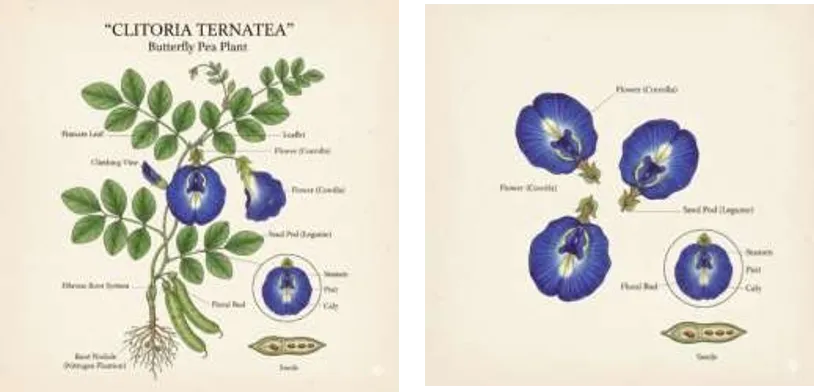
Figure 1: Clitoria Ternatea
Botanical classification:
Table 1: Botanical Classification:
| Rank | Classification |
|---|---|
| Kingdom | Plantae |
| Phylum | Tracheophyta/magnoliophylum |
| Class | Magnoliopsida/equisetopsida |
| Family | Fabaceae(leguminasae) |
| Genus | Clitoria |
| Species | Clitoria ternatea linn |
Common Names[11]
Table 2: Common Names of Clitoria Ternatea
| Language | Common Names |
|---|---|
| Hindi, Bengali, Oriya | अपराजिताorঅপরাজিতাorଅପରାଜିତା |
| Gujarat | Koyala, Bismar, and Garani |
| Kannada | Billisaiuga, Satugadagida |
| Telugu | Dintana, Gilarnika, Neela-ghentana, Sankhupuvvu |
| Tamil | Kakkanam, Kakatan, Kavachi, Kuruvilai |
| Punjab | Dhanattar |
| Rajasthan | Koyalri, Titlimatar |
| English | Blue pea vine, mussel-shell climber, butterfly pea, and pigeon wings |
Morphological characteristics:
The pea blossoms are about 4 cm long and 3 cm wide, with five petals. A banner with two wings, two keels, and a bright yellow insignia in the middle. The pea plant is one example. This legume climbing plant has incredibly thin leaves that are 1.5–3.5 cm and 2.5–5 cm in length. Every single width. This plant is evergreen and has fibrous roots. Nitrogen can be fixed by its massive nodules for use by other plants. Rhizobia are bacteria. Black seeds are used by the perennial plant Clitoria ternatea to reproduce. The colourful pods range in length from 7 to 11 cm. The culinary industry uses the root and leaves to create herbal and medicinal beverages. Teaching. The butterfly peas are the most popular in world
This plant is a hardy climber that adapts well to warm climates and can grow in a variety of soil types. It has nitrogen-fixing ability (being a legume), which improves soil fertility. Its special features include bright blue flowers rich in anthocyanins, along with flavonoids and tannins that give it strong antioxidant, anti-inflammatory, and medicinal properties.
These compounds contribute to its use in wound healing and herbal formulations.[12,13]
Chemical constituents [14]
Flavonoids: These are plant antioxidants that help reduce inflammation and protect cells from oxidative damage. They also support tissue repair and improve wound healing.
Anthocyanins: Natural pigments responsible for blue/purple colour with strong antioxidant activity. They help in reducing oxidative stress and promote skin regeneration.
Alkaloids: Bioactive compounds with antimicrobial and analgesic properties. They help prevent infection and may reduce pain at the wound site.
Tannins: Polyphenolic compounds with astringent and antimicrobial effects. They help in wound contraction, reduce bleeding, and protect against infections.
Pharmacological activity
4.2 Plant profile of Annona Squamosa
Annona squamosa is a small tropical fruit-bearing tree belonging to the family Annonaceae. It is commonly known as custard apple or sitaphal and is widely cultivated in India and other warm regions of the world. The plant is valued for its sweet, creamy fruit as well as its medicinal properties. Different parts of the plant, including leaves, bark, seeds, and roots, are used in traditional medicine. It contains various bioactive compounds such as flavonoids, alkaloids, and tannins, which contribute to its therapeutic effects. Annona squamosa is known for its antioxidant, antimicrobial, and anti-inflammatory activities. Due to these properties, it is widely studied for its potential in wound healing and other pharmaceutical applications.[16]
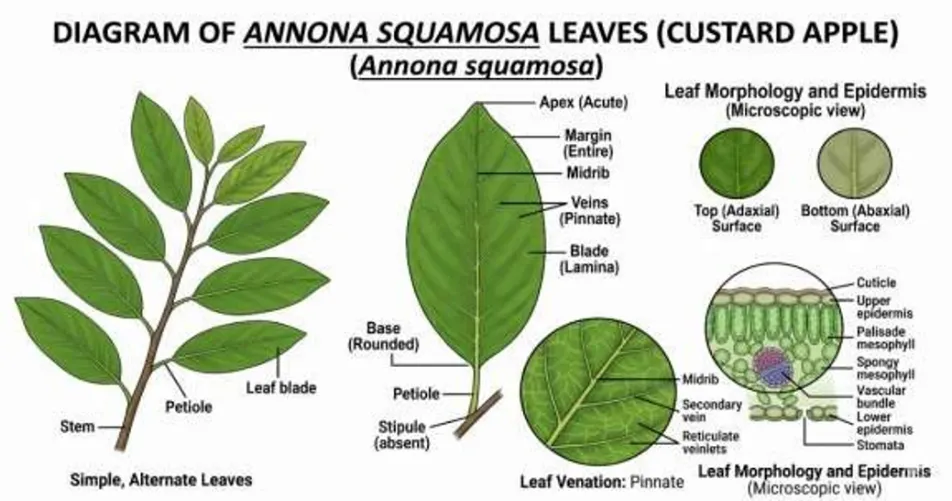
Figure 2: Anonna Squamosa
Table 3: Taxonomic Classification of Annona Squamosa
| Level | Taxonomic Rank | Scientific Name | Common Name / Description |
|---|---|---|---|
| I | Kingdom | Plantae | Plants |
| II | Subkingdom | Tracheobionta | Vascular plants |
| III | Super division | Spermatophyta | Seed plants |
| IV | Division | Magnoliophyta | Flowering plants |
| V | Class | Magnoliopsida | Dicotyledons |
| VI | Subclass | Magnoliidae | — |
| VII | Order | Magnoliales | — |
| VIII | Family | Annonaceae | Custard apple family |
| IX | Genus | Annona | — |
| X | Species | Annona squamosa | Sugar apple [3,4] |
*Regional Name:
Table 4: Regional Names of Annona Squamosa
| Language | Name(s) |
|---|---|
| English | Custard Apple, Sugar Apple, Sweet-sop |
| Hindi | सीताफल(Sitaphal) |
| Kannada | ಸೀತಾಫಲ(Sitaphala) |
| Malayalam | സീതാഫലം(Sitaphalam),അത്തച്ചക്ക(Attachaka) |
| Sanskrit | सीताफलम् (Sitaphalam) |
| Tamil | சீதாப்பழம்(Sitaaphalam),அட்டா(Atta) |
| Telugu | సీతప్ఫ లం(Sitappalam)[3,4] |
Morphological characteristics:
The pea blossoms are about 4 cm long and 3 cm wide, with five petals. A banner with two wings, two keels, and a bright yellow insignia in the middle. The pea plant is one example. This legume climbing plant has incredibly thin leaves that are 1.5–3.5 cm and 2.5–5 cm in length. Every single width. This plant is evergreen and has fibrous roots. Nitrogen can be fixed by its massive nodules for use by other plants. Rhizobia are bacteria. Black seeds are used by the perennial plant Clitoria ternatea to reproduce. The colourful pods range in length from 7 to 11 cm. The culinary industry uses the root and leaves to create herbal and medicinal beverages. Teaching. The butterfly peas are the most popular in world.
This plant is a hardy climber that adapts well to warm climates and can grow in a variety of soil types. It has nitrogen-fixing ability (being a legume), which improves soil fertility.
Its special features include bright blue flowers rich in anthocyanins, along with flavonoids and tannins that give it strong antioxidant, anti-inflammatory, and medicinal properties.
These compounds contribute to its use in wound healing and herbal formulations.(45)
Chemical constituents
Flavonoids: These are plant antioxidants that help reduce inflammation and protect cells from oxidative damage. They also support tissue repair and improve wound healing.
Anthocyanins: Natural pigments responsible for blue/purple colour with strong antioxidant activity. They help in reducing oxidative stress and promote skin regeneration.
Alkaloids: Bioactive compounds with antimicrobial and analgesic properties. They help prevent infection and may reduce pain at the wound site.
Tannins: Polyphenolic compounds with astringent and antimicrobial effects. They help in wound contraction, reduce bleeding, and protect against infections.(46)
Pharmacological activity
Chapter 5 Material and Equipment’s
5. MATERIAL AND EQUIPMENTS
Table 5: Material and Equipment
| Sr. No. | Chemicals | Manufacturer |
|---|---|---|
| 1 | Ethanol | ------- |
| 2 | Carbopol 934 | THERMOSILE FINE CHEM INDUSTRIES |
| 3 | Propylene glycol | THERMOSILE FINE CHEM INDUSTRIES |
| 5 | Propyl paraben | MOLYCHEM |
| 6 | Triethanolamine | LOBA CHEM PVT.LTD |
| 7 | Sodium lauryl suphate | THERMOSILE FINE CHEM INDUSTRIES |
| 8 | Glycerin | THERMOSILE FINE CHEM INDUSTRIES |
| 9 | Rose water | THERMOSILE FINE CHEM INDUSTRIES |
Table 6: Instruments and Manufacturer
| Sr. No. | Instruments | Manufacturer |
|---|---|---|
| 1 | Electronic analytical weighing balance | EQUIP-TRONICS |
| 2 | Electrical water bath | LABLINE |
| 3 | pH meter | EQUIP-TRONICS |
| 4 | Brookfield Viscometer (LVDV-60) | LABMAN |
| 5 | Heating mantel | LABLINE |
EXPERIMENTAL METHODS
COLLECTION OF PLANTS
The development of a clitoria ternata and annova sqamosa Extract facewash for antiacne Treatment requires the collection of high-quality plant materials and pharmaceutical excipients. The selection and procurement of these materials play a crucial role in ensuring the efficacy, safety, and stability of the final facewashformulation.
Collection of Plant Materials (clitoria ternatea Flowers and anova squamosa leaves)
Plant materials was systematically collected to ensure the highest concentration of bioactive compounds. (22)
Clitoria ternatea flowers:
Annona squamosal leaves:
EXTRACTION OF PLANT MATERIALS
The maceration extraction technique was used to obtain concentrated bioactive compounds from both clitoria ternetia and annona squamosal facewash preparation. This method was widely used due to its simplicity, cost-effectiveness, and ability to preserve thermo labile compounds while efficiently extracting flavonoids, alkaloids, terpenoids, tannins and phenolic compounds. (25)
Procedure for Maceration Extraction
1. Preparation of extract
The collected clitoria ternatea flowers and anova squamosa leaves were dried under shade conditions to preserve the phytochemical integrity of the active compounds. Once dried, the plant materials were finely ground using a mechanical grinder to increase surface area, thereby improving the efficiency of extraction. The powdered material was accurately weighed for extraction.
2. Solvent Selection
Choosing an appropriate solvent is crucial for efficient extraction of bioactive compounds. Ethanol (70%) was used as they effectively extract flavonoids, alkaloids, terpenoids, and phenolic compounds—essential for anti acnetreatment. A solvent-to-sample ratio of 10:1 (v/w) was maintained to ensure optimal extraction
3. Maceration Process
The powdered plant materials were soaked in the selected solvent inside a closed glass container or maceration vessel. The mixture was agitated occasionally to improve solvent penetration and diffusion of bioactive compounds. The maceration process was carried out at room temperature for 48-72 hours to ensure maximum extraction of phytochemicals.
4.Filtration and Solvent Recovery
After maceration, the extract was filtered using Whitman filter paper or a Buchner funnel to remove solid residues The solvent was then evaporated under reduced pressure using a rotary evaporator, yielding a concentrated extract.
5.Drying and Storage of Extracts
The obtained extracts were air-dried or freeze-dried to form a semi-solid or powdered form, ensuring long-term stability. Extracts were stored in amber glass vials under controlled temperature conditions to prevent degradation of bioactive compounds.
This maceration-based extraction ensures high bioavailability of clitoria ternatea and anova squamosa extracts, making them suitable for incorporation into the facewash formulation for anti acne treatment. (26)
Procurement of excipient
Pharmaceutical-grade excipients were procured from certified suppliers to ensure the stability, texture, absorption, and effectiveness of the facewash.
These excipients such as Carpool 934, Glycerine, Methylparaben, Triethanolamine (TEA), Distilled Water play a crucial role in maintaining the facewash's structural integrity, bioavailability and skin compatibility. (27)
Table 7: Excipient and Their Function
| Excipient | Function in Gel Formulation |
|---|---|
| Carbopol 934 | Gelling agent for viscosity and stability |
| Glycerin | Humectant to retain moisture |
| Methylparaben | Preservatives to prevent microbial growth |
| Triethanolamine (TEA) | pH adjuster for skin compatibility |
| Rose Water | Base for the gel formulation |
PRELIMINARY PHYTOCHEMICAL INVESTIGATION
After extracting bioactive compounds from clitoria ternatea flowers and anova squamosa leaves, a preliminary phytochemical screening was conducted to identify the presence of key secondary metabolites responsible for their therapeutic properties. Various qualitative tests are used to detect different classes of phytochemicals
1. Detection of Alkaloids
Both plants are known to contain alkaloidal compounds.
• Mayer’s Test: Add a few drops of Mayer’s reagent (Potassium Mercuric Iodide) to the extract. A cream-colored precipitate indicates presence.(28)
2. Detection of Flavonoids
Highly relevant for the anthocyanins in Clitoria ternatea.
• Shinoda Test: Add a few magnesium turnings and concentrated Hydrochloric acid (HCl) dropwise to the extract. A pink, scarlet, or crimson red color appears within minutes.(29)
3. Detection of Phenolics and Tannins
o Blue-black colour: Indicates hydrolysable tannins. o Brownish-green colour: Indicates condensed tannins.
4. Detection of Saponins
• Froth Test: Dilute the extract with distilled water to 20ml and shake vigorously in a graduated cylinder for 15 minutes. A persistent layer of foam (1 cm or more) indicates saponins.(31,32)
5. Detection of Glycosides
PREFORMULATION STUDY
Preformulation studies are essential to ensure the development of a stable, effective, and safe facewash dosage form. This stage of development involves characterizing the physicochemical properties of the drug substances and assessing their interaction with various formulation components.
Goals of Preformulation Study
EXPERIMENTAL DESIGN
Procedure for the facewash Formulation
The formulation of clitoreaternatia and annonasquamosa involves the preparation of a stable facewash base, the incorporation of bioactive plant extracts, and the adjustment of physicochemical properties to ensure optimal therapeutic efficacy.(36)
Phase A: Gel Preparation (The Base)
1. Dispersing: Slowly sprinkle the gelling agent (e.g., 1g Carbopol 940) into 50ml of distilled water while stirring constantly to avoid clump formation.
2. Hydration: Allow the mixture to hydrate for 1–2 hours (or overnight) until a clear, uniform dispersion is formed.
Phase B: Extract & Surfactant Incorporation
3. Surfactant Addition: Slowly add the surfactant (e.g., 10–15% SLES) to the hydrated gel base. Stir gently to avoid excessive foaming.
4. Extract Addition: Dissolve your weighed extracts (Annonasquamosa and Clitoria ternatea) in a small amount of water or propylene glycol. Add this into the gel base while stirring.
Phase C: Additives & Neutralization
5. Humectants & Preservatives: Add Glycerin (approx. 5%) and your chosen preservative.
6. pH Adjustment (Critical): While stirring, add Triethanolamine drop-
wise.Carbopol is acidic; adding Triethanolamine thickens the gel and brings the pH to a skin-friendly level then forms the mixture transform from a thin liquid to a thick, transparent gel.(37)
FORMULATION TABLE
The facewash is developed to topically deliver bioactive compounds from clitoria ternatea extract (anti-inflammatory) and annonasquamosa leaves extract (antiacne) using a biocompatible facewash base that ensures stability, controlled release, and user acceptability. Formulating a facewash incorporating clitoria ternatea extract and annonasquamosa extract involves both pharmaceutical science and cosmetic formulation theory. The goal was develop a stable, bioactive, and biocompatible fcewash with effective release of active compounds from the clitoria ternatea and annonasquamosa extracts. (38)
Table 8: Formulation Table
| Category | Ingredient | Quantity (%) | Role in Formulation |
|---|---|---|---|
| Active 1 | Annona squamosa Extract |
2.0 – 5.0 | Antimicrobial & Antiinflammatory |
| Active 2 | Clitoria ternatea Extract | 1.0 – 2.0 | Antioxidant & Natural Pigment |
| Gelling Agent |
Carbopol 940 | 1.0 – 1.5 | Provides viscosity and gel structure |
| Surfactant | Sodium Lauryl Ether Sulfate (SLES) |
10.0 – 15.0 | Primary cleansing & foaming agent |
| Humectant | Glycerin / Propylene Glycol |
5.0 | Prevents skin dryness (Moisturizer) |
| Neutralizer | Triethanolamine (TEA) | q.s.* | Adjusts pH and thickens the Carbopol |
| Preservative | Methylparaben / Propylparaben |
0.2 | Prevents microbial growth |
| Vehicle | Rose Water | q.s. 100 | Continuous phade / Solvent |
EVALUATION OF THE FACEWASH
1. Organoleptic and Physicochemical Evaluation
These tests assess the "shelf appeal" and basic chemical safety of the formulation.
2. Performance & Rheological Tests
These evaluations determine how the product behaves during actual use.
• Foam Ability and Stability:
3. Stability Testing
This ensures the herbal extracts do not degrade or separate over time.
• Accelerated Stability Studies: Samples are placed in a stability chamber at 40°C ± 2°C / 75% ± 5% RH.
4. Safety & Irritancy Studies
Even "natural" products can cause reactions.
RESULT
The formulated clitoria ternatea and annona squamosa facewash was subjected to various physicochemical, antioxidant, antimicrobial, and stability evaluations to determine its suitability as a natural wound healing formulation. The results obtained from different evaluation parameters are discussed in detail below.
Table 9: Extractive Values of Clitoria Ternatia and Annona Squamosa
| Sample | Extraction method | Solvent used | Wt. of sample | Extraction yield (%w/w) |
|---|---|---|---|---|
| Clitoria Ternatea | Maceration | Ethanol | 10gm | 10 %w/w |
| Annona Squamosa | Maceration | Ethanol | 10gm | 10 %w/w |
a) Organoleptic Evaluation
The organoleptic properties of the facewash, including colour, odor, texture, and appearance, were evaluated to ensure aesthetic acceptability and user compliance.
Table 10: Parameters and Observation
| Parameter | Observation |
|---|---|
| Color | Cobalt blue |
| Odor | Slightly herbal |
| Appearance | Uniform, no Separation |
| Texture | Smooth, non-sticky |
b) pH Measurement
The pH of the facewash is an essential factor in ensuring skin compatibility and preventing irritation. The measured pH of the facewash ranged between 4.5 and 5.5, which is close to the natural pH of human skin (4.75-5.75). This confirms that the formulation is mild, nonirritating, and safe for acne-prone skin, preventing excessive.
Dryness or disruption of the skin barrier.
pH of facewash: 5
c) Phytochemical Screenings
After extracting bioactive compounds from the Annona Squamosa and Clitoria Ternatia, a preliminary phytochemical screening is performed to detect the presence of key secondary metabolites responsible for their therapeutic properties. Various qualitative tests were carried out to identify these bioactive compounds.
Table 11: Phytochemical Screenings
| Sr. No | Tests | Observation | Result |
|---|---|---|---|
| 1 | Mayer’s Test | Formation of a creamy white precipitate | Presence of alkaloids was confirmed |
| 2 | Shinoda Test | Pink, scarlet, or crimson red colour appears within minutes. | Presence of flavonoids was confirmed |
| 3 | Lead Acetate Test | Bulky white precipitate | Presence of phenolics was confirmed |
| 4 | Froth Test | Formation of persistent froth | Presence of saponins was confirmed |
| 5 | Ferric Chloride Test | Formation of a dark blue/black colour | Presence of tannins was confirmed |
d) Viscosity and Rheological Behaviour
Viscosity plays a vital role in the stability, application, and retention of topical formulations. The viscosity of the facewash was found to be measured using a Brookfield viscometer. This is an ideal property for topical facewash, ensuring proper consistency and adherence to the skin.
Table 12: Viscosity and Rheological Behaviour
| Batch | Viscosity (cps) | Rheological Behaviour | Observations |
|---|---|---|---|
| F1 | 3,000 | Pseudo plastic | Thick, stable, easy to apply |
e) Spread ability
Spreadability determines how easily a formulation spreads over the skin surface, ensuring effective application and absorption. The spreadability of the hydrogel was 12.45 cm/sec, indicating good application properties. The facewash was neither too thick nor too fluid, allowing smooth application without excessive friction. The results confirm that the facewash spreads evenly, ensuring effective skin coverage and absorption.
Table 14: Spread Ability
| Batch | Spread ability | Observations |
|---|---|---|
| F1 | 12.45 | Good spread, minimal effort required |
f) Stability Study
The stability of the formulation was evaluated under different storage conditions (4°C, 25°C, and 40°C) over 90 days. The facewash was tested for physical appearance, pH, viscosity, and microbial contamination.
Table 15: Stability Study
| Parameter | Initial | 30 Days | 60 Days |
|---|---|---|---|
| Colour | Cobalt blue | No Change | No Change |
| pH | 5.0 | 5.4 | 5.4 |
| Consistency | Moderate | Slightly Loose | Moderate |
g) Skin Irritation Test
The absence of adverse effects suggests that the facewash is well-tolerated and suitable for application on sensitive skin
Table 16: Skin Irritation Study
| Batch | Irritation Observed | Result |
|---|---|---|
| F1 | None | Safe |
CONCLUSION
The present study successfully developed and evaluated an Annona squamosa and clitoria ternatea extract facewash for the treatment of acne. The combination of Annona squamosa and Clitoria ternatea represents a promising phyto-cosmeceutical approach. The resulting facewash serves as more than a simple cleanser; it acts as a therapeutic agent capable of neutralizing free radicals, inhibiting microbial growth, and promoting skin rejuvenation. The formulation acts as a multi-targeted anti-acne agent. promotes tissue repair, significantly reducing the risk of post-acne scarring. Overall, this study highlights the potential of herbal-based facewash formulations as a safe, effective, and natural alternative for acne management
AshokraoManeInstituteofPharmacy,Ambap
REFERENCES


Prerana Sutar, Viraj Mahajan, Dr. N. Chougule, Formulation and Evaluation of Polyherbal Anti-Acne Face Wash Containing Annona Squamosa and Clitoria Ternatea Extracts, Int. J. of Pharm. Sci., 2026, Vol 4, Issue 10, 2140-2155. https://doi.org/10.5281/zenodo.23365176
 10.5281/zenodo.23365176