

We use cookies to ensure our website works properly and to personalise your experience. Cookies policy
Department of pharmacy, Yashodeep college of pharmacy Sarlgoan Murbad Maharashtra India.
Nanotechnology drug delivery systems (NDDS) employ drug carriers at the nanoscale or nanostructured designs to improve the delivery of pharmaceutical agents. Traditional drug formulations frequently suffer from limited water solubility, rapid breakdown, low bioavailability, non-specific distribution, toxicity issues, and an inability to cross biological membranes. Carriers at the nanoscale—including liposomes, polymeric nanoparticles, lipid nanoparticles, solid lipid nanoparticles, nanostructured lipid carriers, nano emulsions, polymeric micelles, dendrimers, nano gels, and inorganic nanoparticles—can be designed to better protect drugs, alter pharmacokinetics, enable controlled release, and, in certain cases, accumulate at diseased sites. Recent advances have encompassed platforms for nucleic acid delivery via lipid nanoparticles, stimuli-responsive particles, ligand functionalization for targeting, extended drug delivery, and sophisticated analytical methods. Applications span cancer therapy, anti-infective treatment, vaccines, gene silencing, neurodegenerative diseases, inflammatory conditions, and ocular drug delivery. Nevertheless, the successful development of these systems demands rigorous assessment of particle size and distribution, surface characteristics, drug loading, drug release, stability, sterility, potential immunogenicity, manufacturing reproducibility, and clinical benefits. Passive accumulation is highly unpredictable in humans, and small size by itself does not guarantee specific targeting or the safety of nanoparticles. This narrative review examines the various platforms for Nano carriers, delivery modes, applications, characterization, advantages, and limitations.
Drug delivery systems are essential in pharmaceutical science because they help an active pharmaceutical ingredient reach its intended site of action at a suitable concentration and for a sufficient duration. Yet the therapeutic performance of many drugs is constrained by issues such as poor aqueous solubility, chemical or enzymatic degradation, rapid systemic clearance, limited membrane permeability and unintended distribution into healthy tissues. These limitations can lower bioavailability and therapeutic effectiveness while raising the risk of adverse effects. Developing delivery strategies that enhance drug stability, control release and improve delivery to diseased tissues therefore remains a key area of pharmaceutical research [7,8].Nanotechnology has emerged as one way of tackling some of these challenges by enabling the design of engineered nanoscale drug delivery systems. Such systems can be engineered to encapsulate, associate with or transport small-molecule drugs and biological payloads, including nucleic acids. Depending on their composition and physicochemical properties, Nano carriers may shield sensitive drugs from degradation, improve apparent
solubility, alter pharmacokinetic behavior, facilitate cellular uptake or provide controlled release. These effects depend on the formulation and should not be assumed for every Nano carrier or therapeutic agent .Key Nano carrier platforms include liposomes, lipid nanoparticles (LNPs), solid lipid nanoparticles (SLNs), nanostructured lipid carriers (NLCs), polymeric nanoparticles, polymeric micelles, dendrimers and selected inorganic systems. Their structures, drug-loading mechanisms, release behavior and manufacturing requirements vary. Liposomes consist of one or more lipid bilayers surrounding an aqueous compartment and can accommodate suitable hydrophilic and lipophilic drugs. LNPs have become especially important for nucleic-acid delivery because they can help protect RNA and support its delivery into cells . Clinical use of Nano medicines shows that some platforms can be translated successfully, yet each product still requires product-specific evidence of quality, safety and efficacy.Nanotechnology-based delivery systems are under investigation across therapeutic areas such as oncology, infectious diseases, vaccination and genetic disorders. Research strategies include altering carrier composition, adjusting surface properties, using ligands to influence interactions with selected cells, and designing formulations that respond to particular biological or environmental conditions. Even so, delivery to a diseased tissue is not assured. Biological barriers, protein adsorption, clearance mechanisms and differences between patients can influence nanoparticle distribution and performance Several challenges continue to hinder clinical translation, including formulation stability, reproducible manufacturing, drug-loading capacity, release characteristics, scale-up, potential immunological effects, toxicity and regulatory assessment. Therefore, suitable characterization and quality-control testing are essential. Relevant attributes may include particle size and size distribution, morphology, surface properties, drug content, encapsulation efficiency, in-vitro release, impurities, and stability, depending on the formulation. Regulatory guidance stresses evaluating the characteristics and risks of the specific product rather than assuming that all nanomaterials behave alike [7,8,12].
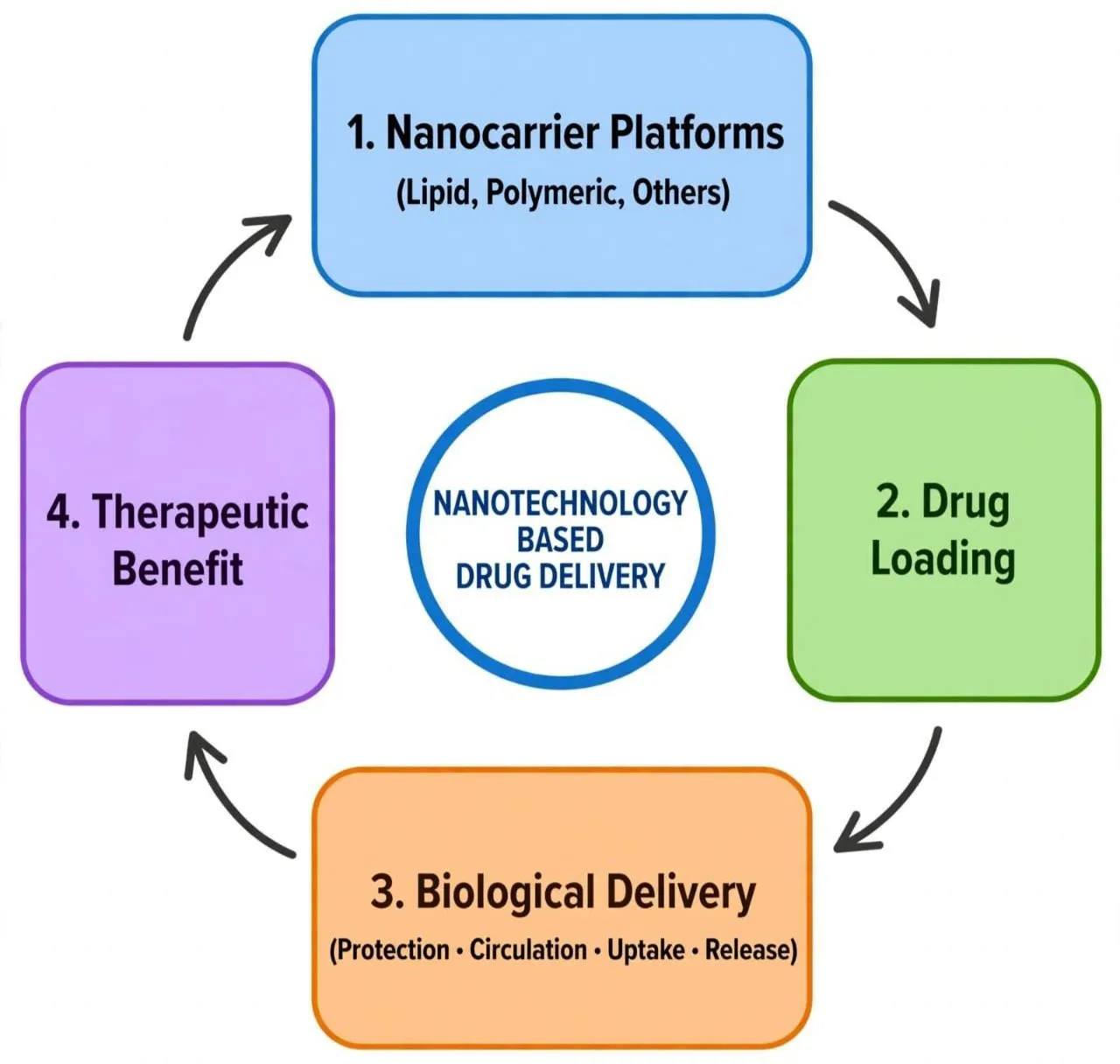
Figure None: 1Introductions of Nanotechnology _Based Drug Delivery System.
2. Review Methodology
This work has been prepared as a *narrative review* aimed at supporting undergraduate-level learning in pharmaceutics. Because it is neither a systematic review nor a meta-analysis, it makes no claim to comprehensive literature coverage, structured screening, or formal bias assessment.
The literature was reviewed and organized around broad themes, including:
a) various nanocarrier systems,
b) drug delivery mechanisms and stimuli-responsive release,
c) therapeutic applications,
d) methods for physicochemical characterization, and
e) regulatory and safety considerations for nanomaterials.
3. Overview of Major Nanocarrier Systems
3.1 Liposomes
Liposomes are vesicular carriers enclosed by one or more phospholipid bilayers. Cholesterol is often added to regulate membrane rigidity and permeability. Because of their dual nature, they can transport water-soluble drugs within their central aqueous compartment and lipid-soluble drugs inside the bilayer. Factors including particle size, lipid type, surface charge, and surface engineering such as PEGylation affect their fate in vivo. Liposomal encapsulation can alter drug pharmacokinetics, prolong circulation time, and restrict distribution to non-target tissues.[1,2,3].
3.2 Polymeric Nanoparticles
These are submicron colloidal systems in which the drug is entrapped, dissolved, or surface-adsorbed on a polymeric matrix. In terms of structure, they come in two types:
a) Nanospheres - in which the drug is distributed homogeneously throughout the polymer matrix, and
b) Nanocapsules - in which a distinct drug-containing core is surrounded by a polymeric membrane.
The polymers used may be synthetic and biodegradable, such as PLGA, PLA, or PCL, or of natural origin, such as chitosan, alginate, gelatin, and albumin. The polymer chosen determines compatibility with the drug, stability, biodegradation behavior, and release kinetics. PLGA remains the most extensively studied polymer owing to its biocompatibility and regulatory acceptance.[9,10,27]
3.3 Lipid-Based Nanoparticles
- SLNs and NLCs
Lipid nanoparticles use physiological lipids as carriers for a variety of drugs.Solid Lipid Nanoparticles (SLNs)consist solely of lipids that are solid at both room and body temperature.Nanostructured Lipid Carriers (NLCs)* are produced by mixing solid lipids with liquid lipids. This produces an imperfect crystal lattice that accommodates more drug and, compared with SLNs, reduces drug leakage during storage.[14,15]
3.4 Polymeric Micelles and Nanoemulsions
Polymeric Micelles form through the spontaneous assembly of amphiphilic block copolymers. They have a lipophilic interior that can solubilize poorly soluble drugs and a hydrophilic outer corona that provides stability. Their ultra-small size is advantageous for penetration, but they may disassemble upon extensive dilution in blood, leading to early release.Nano emulsions are transparent dispersions of oil and water that are kinetically stable and are stabilized by surfactant/co-surfactant mixtures, with droplet sizes usually below 200 nm. They are valuable for improving the solubility and oral bioavailability of lipophilic active substances.[16,32].
3.5 Nanocrystals
Drug nanocrystals consist of nearly 100% pure drug particles in the nanometer range, generally below 1000 nm, stabilized with a minimal quantity of surfactant or polymer. No additional carrier is involved. Reducing particles to nanosize greatly increases surface area, thereby improving the dissolution rate and apparent solubility, as explained by the Noyes-Whitney and Ostwald-Freundlich principles. This is particularly beneficial for BCS Class II/IV drugs that have poor water solubility. Their formulation demands careful control of aggregation, crystal growth and polymorphic changes.[18]
3.6 Dendrimers and Nanogels
Dendrimers are highly ordered, branched macromolecular structures featuring a central core, internal void spaces and a large number of functional groups on their periphery. Drug molecules can be loaded into the voids or conjugated onto the surface. Their well-defined structure enables precise tuning for targeted and gene delivery, though concerns remain regarding synthesis complexity and toxicity associated with surface charge.
Nanogels are nanosized, cross-linked hydrogel particles capable of absorbing water and encapsulating hydrophilic molecules. They can be engineered to respond to pH, temperature or other stimuli.
3.7 Inorganic and Metallic Nanoparticles
This group comprises gold nanoparticles, superparamagnetic iron oxide nanoparticles, mesoporous silica nanoparticles and quantum dots. They are mainly being investigated for diagnostic imaging, magnetic targeting, photothermal ablation and theranostic uses. Their functional properties derive from the inorganic core. Nevertheless, factors such as prolonged organ retention, clearance pathways, surface reactivity and dose-related toxicity require critical evaluation. Evidence of research activity should not be taken as clinical approval.[4]
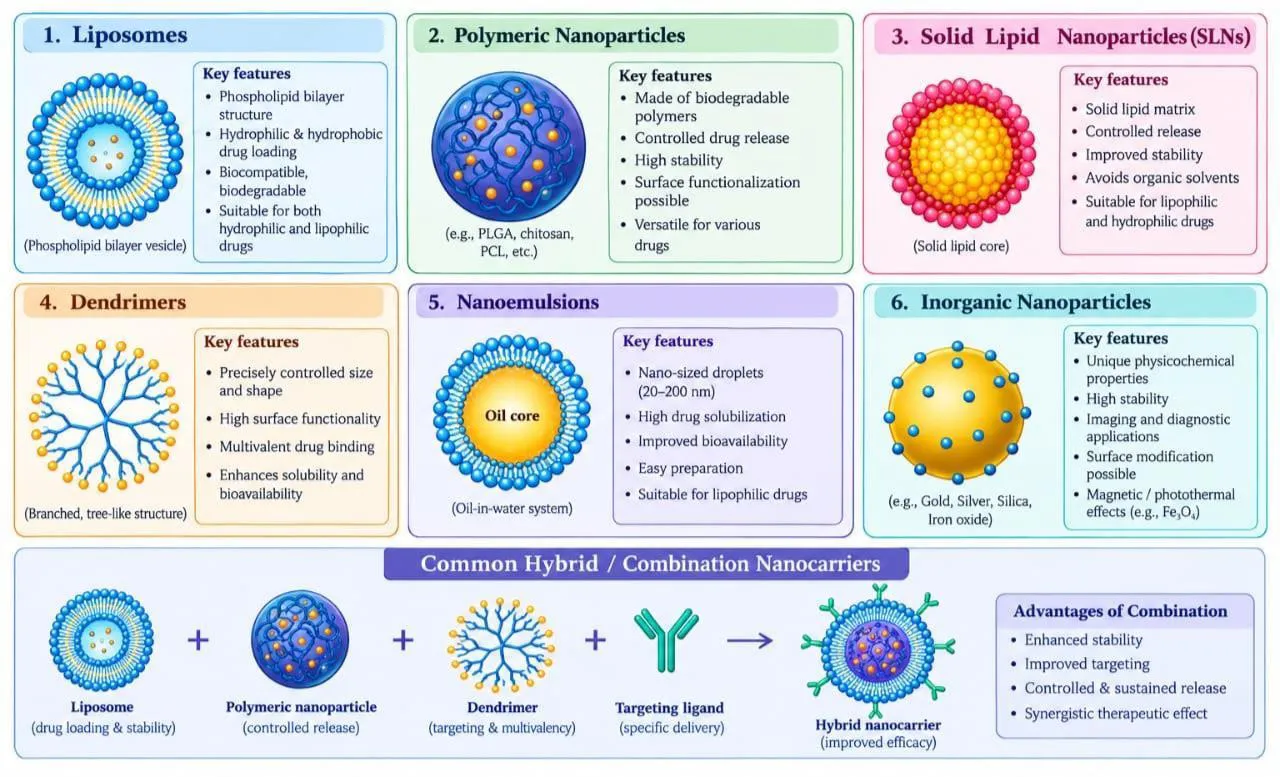
Figure None: 2 Major Nanocarrier System
4. Delivery and Targeting Mechanisms
There are multiple ways in which nanocarriers can affect the drug delivery profile. Firstly, a carrier may protect the cargo from degradation by encapsulation or association. Secondly, carrier composition may change the circulation time, distribution into particular tissues and elimination characteristics of a nanocarrier. Thirdly, a carrier can release the payload gradually due to diffusion, polymer decomposition, reorganization of lipids or due to changes in surrounding environment. Finally, certain carriers can promote cellular internalization and delivery inside a cell. The end result of drug delivery will depend on the administration route, protein coating, immunogenicity of the preparation, tissue barriers and physicochemical properties of the formulation.
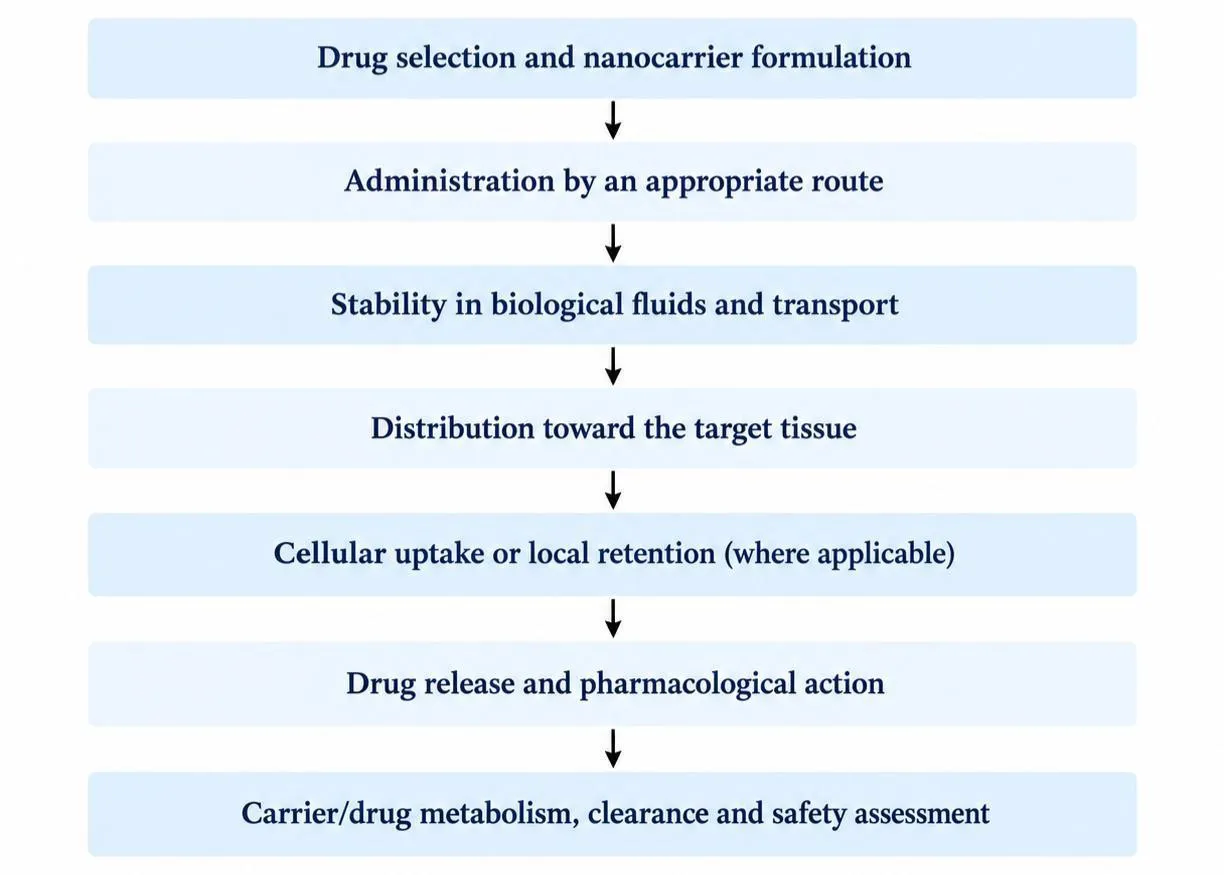
Figure None: 3 General Pathway of Nanocarrier -Mediated Drug Delivery
5. Recent Advances
A major development has been the use of lipid nanoparticles to deliver nucleic acids, including messenger RNA. Nucleic acids are vulnerable to degradation and do not readily cross cell membranes unaided. Carefully designed lipid systems can package RNA, protect it and support delivery into cells. Clinical success of mRNA vaccines demonstrated the feasibility of this platform at scale, although performance varies by payload, route and indication. Related research explores RNA therapeutics for rare diseases, cancer immunotherapy and gene regulation.
Other advances include more reproducible microfluidic manufacturing, improved analytical methods, biodegradable materials, ligand-conjugated particles and systems that respond to local biological conditions. Long-acting injectable formulations and depot systems are being investigated to reduce dosing frequency. Artificial intelligence and computational modelling may assist formulation screening, prediction of material properties and analysis of complex datasets; their predictions still require experimental validation. A key trend is moving beyond proof-of-concept studies toward scalable manufacturing, well-defined critical quality attributes and clinically meaningful outcomes.
6. Therapeutic Applications
6.1 Oncology (Cancer Treatment)
1. Enhanced drug delivery: Nanotechnology facilitates delivering anticancer medicines to the needed regions of the human body.
2. Decreased adverse effects: Liposomes and nanoparticles can modify drug behavior in the human body and may help reduce some adverse effects of conventional drugs.
3. Targeted medicine delivery: Nanocarriers are being developed to deliver drugs to tumorous cells and other cancerous cells.
4. Combined treatment: Nanoparticles may help deliver several therapeutic drugs at once, for example, anticancer drugs and nucleic acid drugs.[22,30].
5. Limitations: Tumorous tissues vary between patients. Poor drug delivery into tumors and elimination of nanoparticles by the human immune system may decrease the effectiveness of the treatment.
6.2 Vaccines and Infectious Diseases
1. Vaccine delivery: Lipid nanoparticles may help to protect and deliver genetic material used in certain vaccines.
2. Enhanced immune reaction: Liposomes and polymer nanoparticles are being developed to improve antigen delivery and support immune reactions.
3. Antimicrobial drug delivery: Nanocarriers may help deliver antimicrobial drugs to infected tissues and cells that contain pathogens.
4. Protection of drug molecules: Some nanocarriers help to protect delicate drug molecules and improve their delivery.
5. Considerations about safety: Human immune reaction, interactions with biological fluids [17,18,19]
6.3 Drug Delivery to the Brain and Eye
1. Brain drug delivery: Nanocarriers are under investigation as a way to enhance how medicines are delivered to the brain and central nervous system.
2. Blood–brain barrier: The blood–brain barrier blocks many drugs from reaching the brain. Nanocarriers engineered for this purpose may assist certain medicines in crossing this barrier.
.Improved ocular delivery: Nanotechnology has the potential to enhance the solubility, penetration and retention of medicines in various regions of the eye.
4.Prolonged drug action: Certain nanosystems may help medicines stay at the treatment site for a longer time.
Safety considerations: Nanocarriers require careful evaluation to prevent harm to delicate brain and eye tissues.
Limitations: Not every nanoparticle is able to cross the blood–brain barrier. Their capacity to reach the target tissue depends on their composition, properties and formulation.
6.4 Therapies for Inflammation, Metabolic Conditions and Gene-Based Treatment
1. Anti-inflammatory treatment: Nanocarriers may enhance the delivery of anti-inflammatory drugs to affected tissues.
2. Delivery of insulin and peptides: Nanotechnology is under study as a means to improve the delivery of insulin and other peptide-based medicines.
3. Gene-based therapy: Lipid nanoparticles and other nanocarriers can assist in delivering nucleic acids used in gene-based treatments.
4. Intracellular delivery: Nanoparticles designed for this purpose may help therapeutic molecules enter cells and carry out their intended functions.
5. Reduced systemic exposure: Targeted delivery systems may limit exposure of healthy tissues to certain medicines and potentially reduce side effects.
6. Challenges in drug delivery: Drug delivery can be affected by enzymatic degradation, mucus barriers, immune responses and the trapping of nanoparticles within cellular compartments.
7. Safety and effectiveness: Each formulation must be assessed for safety, effectiveness and possible unintended effects, especially in gene-based therapies.
8. Clinical applications: Additional research and clinical evidence are required to establish the benefits of each nanocarrier for specific diseases.
7. Characterization and Quality Control
Nanomedicines call for standard pharmaceutical quality testing along with measurements that address nanoscale properties. Critical quality attributes should be chosen based on the product's composition, its intended route of administration and its mechanism of action. Typical assessments cover particle size and size distribution,
morphology, surface charge, drug content, encapsulation efficiency, free drug, in-vitro release, pH, viscosity where applicable, residual solvents, degradation products, sterility, endotoxins and stability. Not all tests are relevant to every platform; methods need to be justified and validated for the specific product.Dynamic light scattering is commonly used to estimate hydrodynamic size and polydispersity, whereas electron microscopy can help visualize morphology. Zeta-potential measurements give insight into electrokinetic surface properties under defined conditions. Drug content and impurities can be quantified using high-performance liquid chromatography or other appropriate analytical methods. Differential scanning calorimetry and related techniques may be used to characterize thermal behaviour, while suitable microbiological tests are used to assess sterile products. Because sample preparation, dilution, instrument settings and data interpretation can all affect results, a single measurement should not be regarded as complete characterization.[11,13].
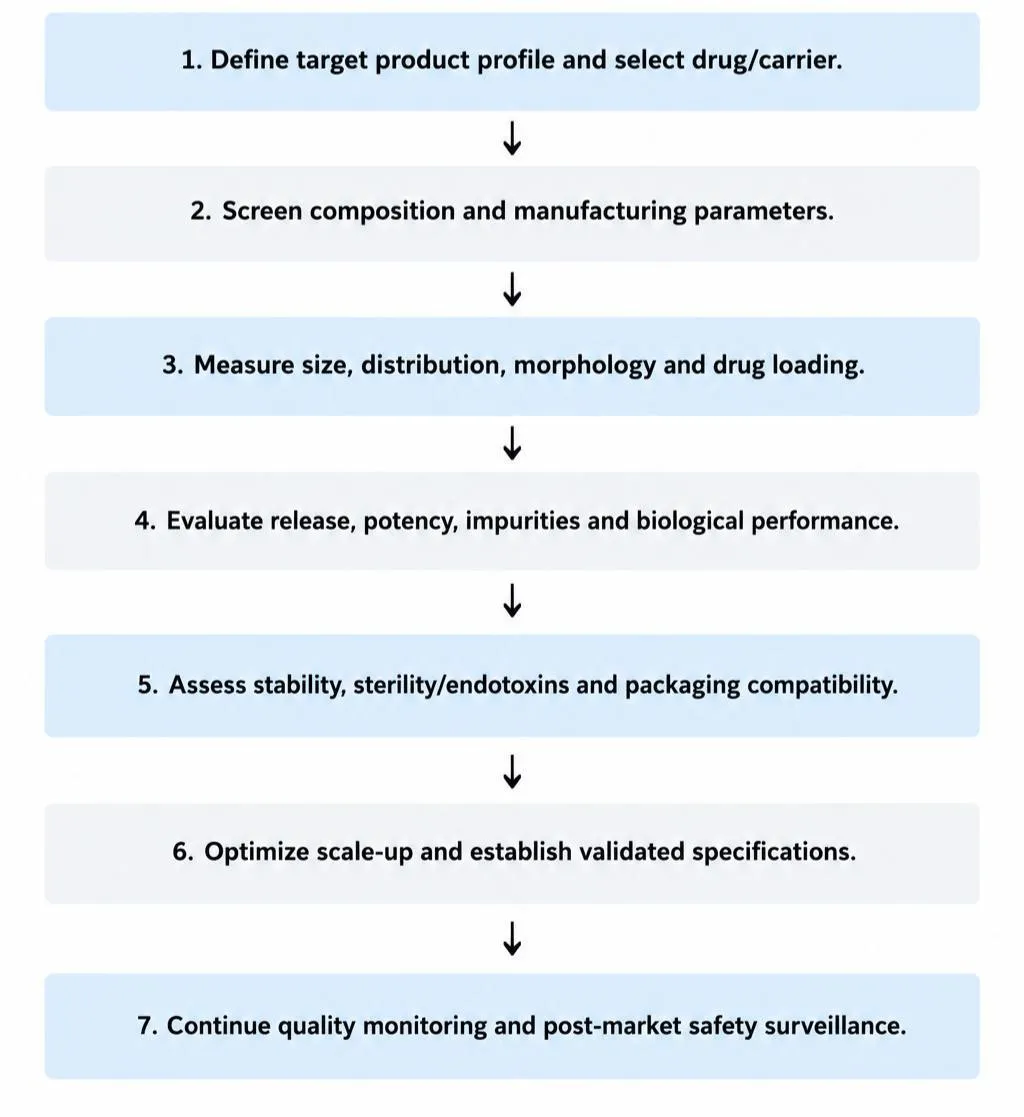
Figure None: 4. Characterization and Quality Control.[11,13]
9. Advantages and Limitations
8.1 Advantages
1. Enhanced drug solubility: Nanotechnology can enhance the dissolution and delivery of drugs with poor water solubility.
2. Safeguarding drug molecules: Nanocarriers can shield sensitive drugs and biological molecules from degradation, which helps preserve their stability.
3. Enhanced drug delivery: Nanoparticles can alter how drugs are distributed in the body and help deliver them more effectively to the target site.
4. Controlled and sustained release: Certain nanocarriers release drugs gradually over time, which may lessen the need for frequent dosing.
5. Delivery of biological molecules: Nanotechnology can help deliver substances such as proteins, peptides and nucleic acids that might otherwise be difficult to deliver.
6. Fewer side effects: Some nanocarrier formulations can limit drug exposure to certain healthy tissues, potentially reducing some adverse effects.
7. Combining diagnosis and treatment: Certain nanosystems can support both disease imaging and treatment, helping researchers track therapeutic responses.
8. Greater patient convenience: Depending on the formulation, nanotechnology-based medicines may make administration simpler or reduce dosing frequency.[4,5,6]
8.2 Limitations
1. High manufacturing cost: Developing and producing nanomedicines can require specialised equipment, advanced technology and skilled personnel.
2. Manufacturing complexity: It can be challenging to produce nanoparticles with consistent size, shape and composition.
3. Scale-up difficulties: A formulation that performs well in the laboratory may be hard to manufacture at a large scale while keeping the same quality.
4. Stability problems: Some nanoparticles may aggregate, leak drug or undergo chemical degradation during storage.
5. Sterilization challenges: Certain nanocarriers may be affected by sterilization methods, which makes it difficult to maintain product quality and safety.
6. Possible immune reactions: Some nanoparticles may trigger the immune system or cause unwanted inflammatory responses.
7. Potential toxicity: The safety of nanocarriers depends on their materials, size, composition, dose and duration of exposure.
8. Uncertain long-term effects: More research may be needed to understand how some nanoparticles are distributed, broken down and eliminated from the body.
9. Interactions with biological components: Nanoparticles can interact with blood proteins and immune cells, which may affect how they move and behave in the body.
10. Differences between laboratory and clinical results: Some nanomedicines show promising results in animal studies but may offer more limited benefits in human clinical trials.
11. Storage and accessibility: The availability of some nanotechnology-based medicines may be constrained by special storage requirements and high treatment costs.
12. Need for further research: Careful evaluation of each formulation is necessary to determine its safety, effectiveness, quality, and suitability for clinical use.
9. Safety and Regulatory Considerations
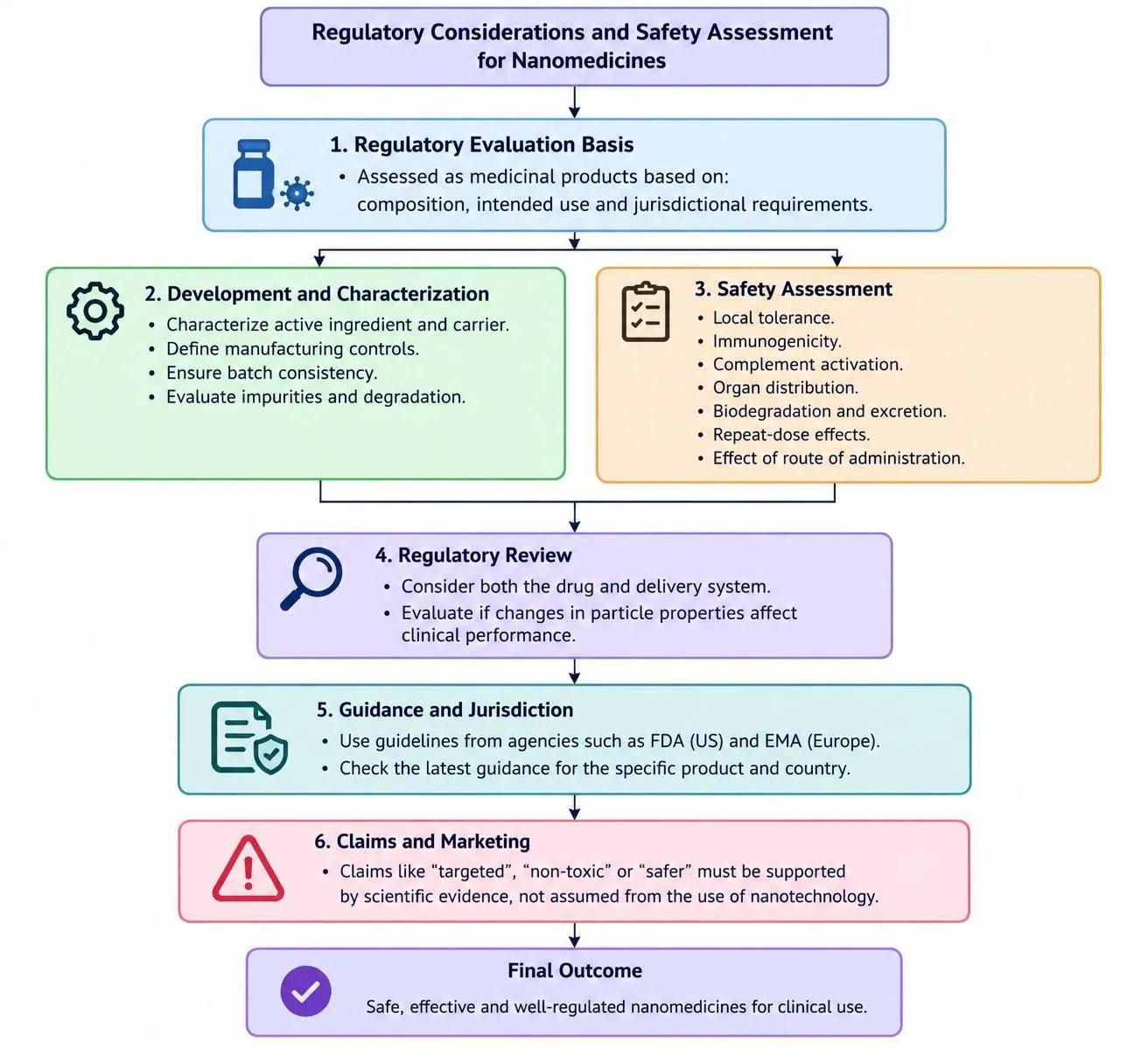
Figure None: 4 Safety and Regulatory Consideration.
10. Future Perspectives
Future advances will hinge on linking material design with performance that is clinically meaningful. Promising avenues include carriers that are more biodegradable, improved delivery of RNA and proteins, personalized formulation strategies, combination products, better prediction of biological interactions, and robust methods for scale-up. Standardized reference materials, together with complementary analytical techniques, could enhance comparisons among laboratories. More representative disease models and carefully designed clinical trials are required to determine which patients benefit and why. Environmental fate and occupational safety should likewise be taken into account during manufacturing and disposal. A practical aim is not to make every medicine nanoscale, but to choose nanotechnology when it addresses a defined therapeutic problem better than a suitable conventional formulation. Product design should start with the target product profile and incorporate quality, safety, efficacy, manufacturability and affordability from the earliest stages.
CONCLUSION
Nanotechnology-based drug delivery is a varied and continually evolving field of pharmaceutical science. Liposomes, polymeric nanoparticles, lipid nanoparticles, micelles, nanocrystals and other platforms provide different ways to enhance solubility, protect payloads, modify drug release and deliver complex therapeutics. Clinical progress with selected liposomal medicines and nucleic-acid delivery demonstrates the potential of these technologies. Yet nanoparticle size by itself does not guarantee targeting, efficacy or safety. Thorough characterization, reproducible manufacturing, stability testing, biological evaluation and well-designed clinical studies are indispensable. The most successful nanomedicines will be those in which the carrier delivers a measurable, clinically relevant advantage and the product can be manufactured consistently.
REFERENCES


Mayuri Vyapari, Kalyani Shinde, Pallavi Mohape, Nanotechnology-Based Drug Delivery Systems: Recent Advances and Applications, Int. J. of Pharm. Sci., 2026, Vol 4, Issue 11, 4962-4972. https://doi.org/10.5281/zenodo.24549169
 10.5281/zenodo.24549169