One of the most endocrinopathies where the issue is with hormones throughout reproductive age is polycystic ovarian syndrome. Irvin Stein and Michael Leventhal, two doctors, provided the first description of it in 1935. According to the Rotterdam criteria, PCOS is defined as the occurrence of two out of the three primary characteristics, primarily oligo ovulation, anovulation, hyperandrogenism, and polycystic ovary. PCOS symptoms include irregular periods, pelvic pain, acne, hirsutism, amenorrhea, obesity, polycystic ovary, depression, insulin resistance, infertility, and others. The most important thing is to diagnose PCOS, which includes a pelvic exam, a blood test, and an ultrasound. As a result, we can determine whether a woman has PCOS or not. Ayurvedic and allopathic medications are both available. Ayurveda has a cure that has no side effects. Ayurvedic medicines include Shatapushpa. Shatavari powder is used to treat menstrual disorders caused by vitta vitiation. The majority of therapy in allopathy today is focused on the patient's primary complaints. Treatment focuses on symptom reduction. Metformin is the drug of choice for treating insulin resistance. Letrozole appears to be more effective than clomiphene citrate in treating infertility caused by polycystic ovarian syndrome. Weight loss medications such as Orlistat, Sibutramine, Rimonabant, and others are available. Women with PCOS should eat a healthy diet. They should live a healthy lifestyle.
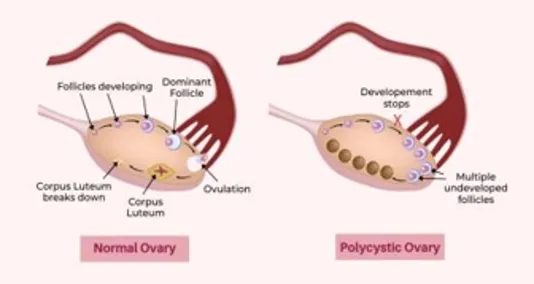
Follicles develop on the ovaries during each menstrual cycle. Eggs develop within those follicles, and one that matures faster than others and is released into the fallopian tubes is known as ovulation. The remaining follicles will be absorbed by the ovary. Polycystic ovaries are characterised by larger-than-normal ovaries containing a series of undeveloped follicles that resemble a bunch of grapes.
When cysts cause hormonal imbalance and a pattern of symptoms develops, this is referred to as a syndrome. Polycystic ovary syndrome is the name given to a metabolic condition in which a woman has polycystic ovaries as well as a specific pattern of other symptoms indicating a hormonal imbalance in reproductive and other hormones.[1]
Fig.1: Normal and polycystic ovary[2]
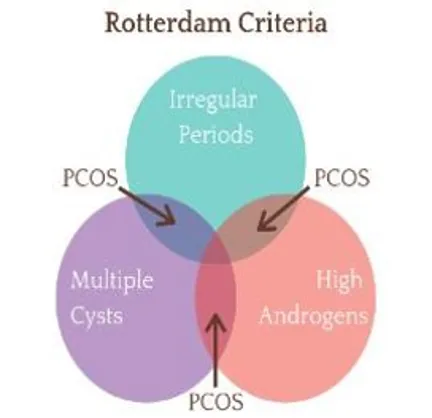
Irvin Stein and Michael Leventhal coined the term Polycystic Ovary Syndrome (PCOS) in 1935, so PCOS is also known as Steinleventhal Syndrome. PCOS is the most common female endocrinopathy. PCOS is defined by the Rotterdam 2003 criteria as the presence of two of three key criteria: oligo ovulation and anovulation, hyperandrogenism, and polycystic ovaries.[3]
Fig.2 Rotterdamcriteria[4]
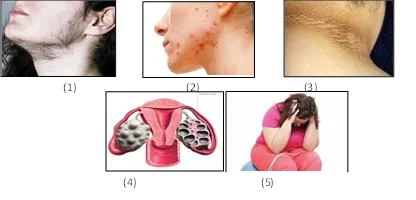
Polycystic ovary with a large number of cysts no larger than 8mm in size. Other symptoms of PCOS include irregular periods, amenorrhea, acne, excessive hair growth on the face, chest, and lower abdomen (hirsutism), hair loss (alopecia), pelvic pain, and so on. [5]
Moderate abdominal pain during periods, acne, and excessive skin growth on the neck or armpit, also known as skin tags. Some patients experience bone pain, hair loss, and constipation.
According to studies, women with a family history of polycystic ovaries are 50% more likely to develop PCOS. PCOS has been identified as the most common cause of menstrual irregularities in 4-12% of women of reproductive age. PCOS affects 5-10% of women during their adolescence. PCOS affects up to 6-7% of the world's population.
However, the prevalence varies greatly depending on the country. PCOS is becoming more common in India, with nearly 35% of women suffering from it.[6]
1.1 Pathogenesis
Pathogenesis is the process by which a disease or disorder manifests itself. PCOS pathogenesis occurs in the following ways,
a) A change in gonadotropic releasing hormone causes an increase in LH secretion (Luteinising hormone).
b) Insulin resistance and hyperinsulinemia.
c) Increase in ovarian androgen production.
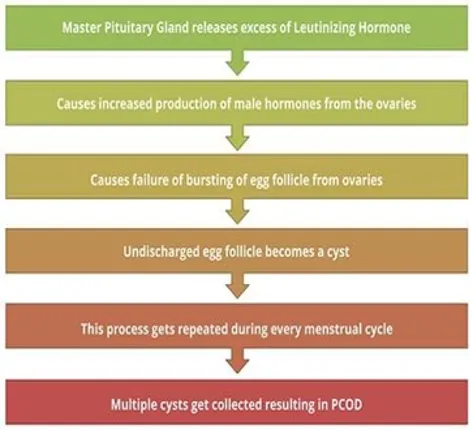
Luteinising Hormone
LH hypersecretion is the leading cause of infertility and miscarriage in PCOS women.[7]
Fig.3: Hypersecretion of LH [8]
Insulin resistance Hyperinsulinemia
Hyperinsulinemia is defined as an increase in the amount of insulin circulating in the blood relative to the amount of glucose. It is caused by a variety of metabolic diseases and conditions, one of which is PCOS.[9]
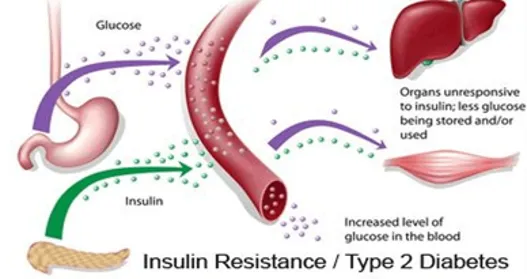
Insulin resistance is defined as a response to the normal action of the hormone insulin.
Type 2 diabetes mallitus develops because of insulin resistance. By the age of 40, 30-40% of women with
PCOS have impaired glucose tolerance, and 10% develop type 2 diabetes mellitus. [10]
Fig.4: Insulin resistance [11]
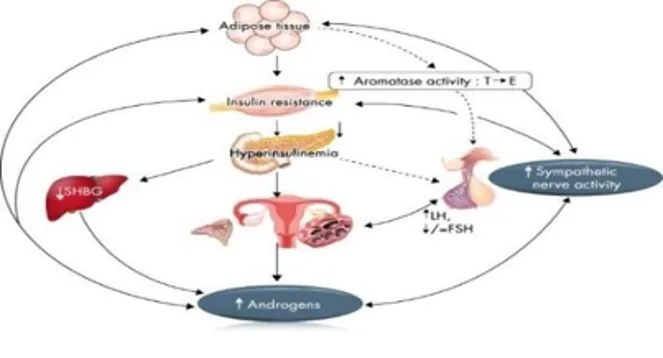
Hyperandrogenism and Androgen excess:
One of the primary symptoms of PCOS is hyperandrogenism. Androgen levels are elevated in 60-80% of PCOS women.
Acne, hirsutism, androgenic alopecia are clinical manifestations of hyperandrogenism in women with PCOS (hair loss). Insulin has the potential to influence gonadotropin secretion.[12]
Fig.5: Pathophysiology of polycystic ovarian syndrome [13]
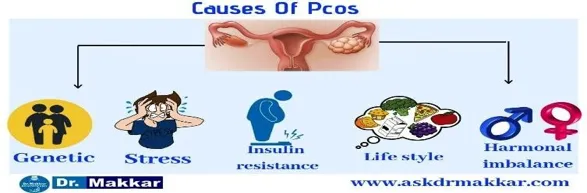
1.2 Causes:
Causes of polycystic ovarian syndrome (PCOS) are as follows:
Stress
Genetic susceptibility
Obesity
Hormonal imbalance
Sedentary lifestyle
Insulin resistance
Increased level of insulin (Hyperinsulinemia)
Excess level of male hormone (Androgen)
Diabetes
Contraceptive pills
Cushing’s syndrome
Congenital adrenal hyperplasia [14]
Fig.7: Causes of polycystic ovarian syndrome (PCOS) [15]
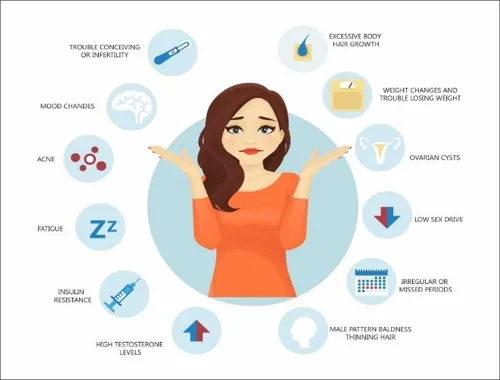
1.3 Sign and Symptoms:
Symptoms of polycystic ovarian syndrome are as follow;
Fig.9: Symptoms of Polycystic Ovarian Syndrome [21
Amenorrhea:
Amenorrhea is defined as the absence of periods for more than three menstrual cycles in a row.
Amenorrhea is classified into two types: primary and secondary. Primary amenorrhea is a condition in which there is no onset of periods during puberty, implying that menarche takes longer than usual.
When a girl's periods are regular but suddenly stop for a few months, this condition is known as secondary amenorrhea. Hormonal imbalance, stress, physical fitness, and weight gain or reduction all contributed to this happening.[22]
Oligomenorrhea
Women with oligomenorrhea have irregular, infrequent menstrual blood flow.
This is due to hormonal imbalance.[23]
Hirsutism:
Hirsutism is defined as excessive hair growth on the face, chest, and lower abdomen of PCOS women.[24]
Polycystic ovary:
Polycystic ovaries are characterised by a large number of cysts that are no larger than 8mm in size and produce more follicles than usual each month.
Cysts are egg-containing follicles that do not develop normally as a result of hormonal imbalance.[24]
Infertility:
Polycystic ovary syndrome serves as the commonest cause of infertility.
This is because PCOS disrupts the menstrual cycle, ovulation, and causes hormonal imbalances, as well as obesity, insulin resistance, acne, hair growth on the face and chest, and the development of male pattern baldness, among other things. [22]
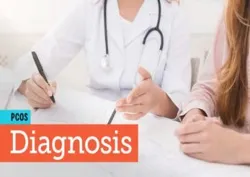
1.4 Diagnosis:
The first step in preventing the development of serious consequences related to PCOS is to get a proper diagnosis. The steps below are taken to determine whether a female has PCOS or if something else is causing symptoms:
1. Medical history: Doctors typically inquire about the patient's menstrual cycle, weight changes, allergies, family health, family history, and so on. [25]
Fig.10: Diagnosis of PCOS [26]
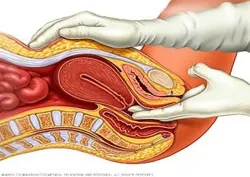
2. Pelvic test: During the pelvic exam, the doctor will look for signs of menstruation, growth, or any other abnormalities in the reproductive organs.[25]
Fig.11: Pelvic test [25]
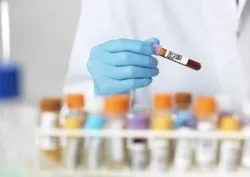
3. Blood test:
A blood test is used to determine the levels of several hormones in order to rule out potential causes of menstrual problems or excess androgen that mimic PCOS.
Additionally, blood test includes level of glucose and triglyceride.[25]of menstrual problems or excess androgen that mimic PCOS.
Fig.12: Blood test [27]
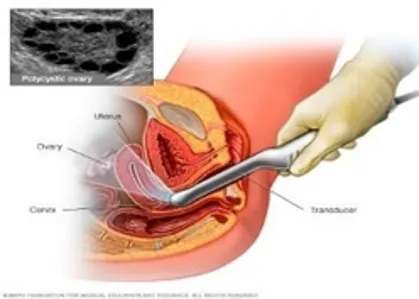
4. Ultrasound test:
This test looks at the ovary's appearance and the uterine lining's thickness.
There is a chance that PCOS is present if numerous tiny cysts are observed in the ovaries.
A transducer is a piece of equipment inserted into the vagina. Sound waves from the transducer are converted into visuals on the screen.[25]
The doctor will advise additional tests to look for issues if the woman has PCOS. tests are:
Total and free testosterone levels
Insulin level
Thyroid function test
Serum prolactin test
Free androgen test.
1.5 Treatment:
The social science literature pays little attention to PCOS. The treatments listed below are used to manage PCOS.
Ayurvedic treatment
Allopathic treatment
Modification in lifestyles (or diets for PCOS)
Ayurveda:
Ayurvedic drugs, ayurvedic treatment, dietary adjustments, and lifestyle modifications are the main focuses of ayurvedic treatment for PCOS. It holds that everything in nature has the ability to heal, and that everyone who becomes ill may be made well by picking the proper natural remedies and applying them correctly. Health originates from a healthy body, mind, and spirit; any imbalance causes suffering.
As ayurvedic medicines are natural, safe, and free of adverse effects, many women now consider using them after being diagnosed with polycystic ovarian syndrome (PCOS).
Ayurvedic treatment of PCOS
Tridosha for PCOS:
Tridosha is a combination of vatta, kapha, and pitta that aids in managing tridosha issues as well as those involving other body elements.
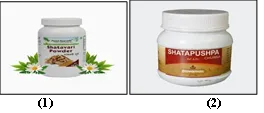
Pain and irregular menstruation are the effects of vata vitiation. In this situation, herbs like Shatavari and Shatapushpa are beneficial.
In the Ayurvedic medical system, shatapushpa, shatavari powder (SSP), with or without Shatavarigitra (SSG), Matravasti (therapeutic enema), is more commonly used to treat polycystic ovarian syndrome menstruation irregularities.
Shatapushpa and shatavari supplements both support the maturation of follicles. Shatapushpa exhibits analgesic activity as well.
Cardiovascular issues, hirsutism, and acne can all be caused by pitta imbalance
Neem is a herb that is used to treat acne, and herbs like Ashoka and Manjistha are used to treat hirsutism.
Depression, weight gain, and cyst formation are symptoms of kapha imbalance or elimination, which can be treated by making bastis with triphala.
Exercise, such as yoga, is used to cure depression. Shatavari, Shatapushpa, Guggle, and other herbs are used to cure kapha, among them. [28-29]
The five cleansing procedures known as Pancha Karma include Vamana, Virchana, Basti, Nasya, and Raktamokshana.
Vamana, which causes emesis. It is advised in the management of weight loss.
In this form of therapy, purgatives called virechana remove excess Pitta from the liver, gall bladder, and small intestine, balancing the body's hormonal levels.
Infections of the uterus and vagina can be successfully treated with basti.
Basti controls how the hypothalamus functions, which normalises menstruation.
Ayurvedic herbs for PCOS:
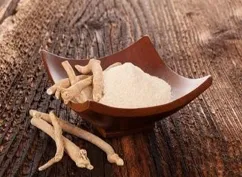
Ashwagandha:
The herb ashwagandha is also known as winter cherry or Indian ginseng.
It can assist in regulating cortisol levels to reduce stress and PCOS symptoms [33]
Fig.15: Ashwagandha[34]
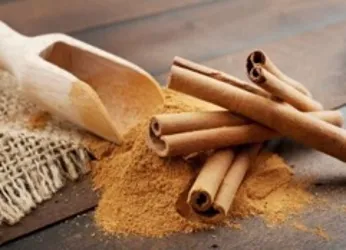
Cinnamon:
The cinnamon tree's bark is used to make cinnamon.
Insulin resistance, one of the symptoms of PCOS, is aided by cinnamon.
Cinnamon regulates the menstrual cycle [33].
Fig. 16: Cinnamon [35]
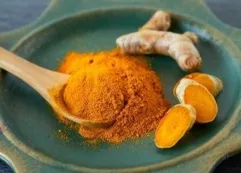
Turmeric:
Curcumin, one of turmeric's active components, gives the spice its yellow colour.
The anti-inflammatory properties of turmeric also help to reduce insulin resistance [33].
Fig. 17: Turmeric (curcumin) [36]
Depending on the patient's condition and the disease, ayurvedic medicines are recommended. In Ayurveda, the medications are tailored to the individual and cannot be used universally.
Asanadi Gana Kashaya
Gandharva Hastadi Kashaya
Gulguluthikthakam Kashayam
Lodhradi Kashaya
Saptasaram Kashaya
Sukumaram Kashaya
Varanadi Kashaya
Abhayarishtam Chiruvilwadi Kashaya
Chitrakagranthikadi Kashaya
Panchakola Choornam
Chandraprabha Gulika
Mahanarayana Thaila
Gugguluthiktaka Ghruta
Varanadi Ghruta
Ashwagandha Lehyam [22]
Ayurvedic Treatments for PCOS/PCOS:
Ayurvedic therapies aid in purging the body of unhealthy doshas. The few treatments used to treat PCOD/PCOS are listed below.
Snehapaana (internal administration of medicated ghee or oil)
Swedana (sudation therapy) [22]
Allopathy:
Since polycystic ovarian syndrome (PCOS) has no known cure, allopathic medicine is used to manage and treat the condition's symptoms. The only thing allopathy can do is alleviate symptoms.
Insulin sensitizing agent:
Insulin regulates ovarian function. When there is an excess, the ovaries are harmed.
In reaction to excessive insulin, muscle cells release large amounts of androgen, which delays follicle formation and also contributes to PCOS symptoms.
Patients with PCOS are more prone to long-term problems such type 2 diabetes mellitus and cardiovascular disease due to insulin resistance.
As a result, PCOS therapy requires the management of insulin resistance along with lifestyle changes. [37-38]
Metformin:
Biguanide drugs like metformin are both safe and efficient.
Metformin stimulates the AMPK enzyme (AMP dependent protein kinase).
It accumulates glycogen in muscle cells and inhibits hepatic gluconeogenesis.
As a result, it aids PCOS patients in overcoming their insulin resistance issue.
The medicine of choice for people who are obese is metformin.
By either directly lowering hyperinsulinemia or by changing the liver's fatty acid metabolism, metformin lowers dyslipidaemia.
Long-term metformin use has also been linked to a vitamin B12 deficit.
Side effects of Metformin:
Nausea
Vomiting
Diarrhoea
Abdominal distension
Starting with a low dose of 500 mg and gradually increasing to the maximum dose of 1500 mg once per week can help prevent mild gastrointestinal side effects.[39]
Inositol:
Inositol is help in insulin signalling.
It is a dietary supplement.
Inositol controls the metabolic and biochemical elements of PCOS.
Recent research suggests that it can also enhance ovulation and menstrual cycles.
Advantages:
It is cheaper.
Low risk of adverse effects.[40]
Glucagon-like peptide-1 receptor analogue:
GIP-1 and glucose dependent unguided polypeptides, such as protinogen, stimulate the release of glucosedependent insulin after meals.
Incretin function was altered in type 2 diabetes mellitus cases.
Patients with PCOS reportedly have reduced incretin levels.
As a result, treatment for type 2 diabetes mellitus has become an option, with improved glycemic control and weight loss in patients with type 2 diabetes mellitus.[37]
Clomiphene citrate:
Clomiphene citrate, also known as clomid citrate, is a selective oestrogen receptor modulator (SERM).
Clomid citrate (CC) is the drug of choice for inducing ovulation in adolescents with polycystic ovarian syndrome.
Clomid citrate acts as an anti-estrogen by inhibiting oestrogen receptors in the hypothalamus and increasing gonadotropin releasing hormone (GnRH) pulse width in the anterial pituitary.
Follicle-stimulating hormone (FSH) and luteinizing hormone (LH), which aid in follicle formation, are also increased.
Between the second and fifth days of the menstrual cycle, clomid citrate is administered for five days. The dosage is increased gradually from 50 mg to 150 mg each day.
Clomid citrate can be used in conjunction with metformin to treat PCOS-related resistance in female patients.
Side effects of clomid citrate:
Ovarian enlargement
Hyperstimulation syndrome
Multiple pregnancies
Hot flushes
Bloating
Fatigue [41]
Letrozole:
An AI named letrozole stops the conversion of testosterone to oestrogen.
Letrozole is most frequently used as a non-steroidal aromatase inhibitor for third-generation ovulation induction. It also aids in reducing ovarian estradiol output.
It looks like letrozole is more effective than clomid citrate.[41]
Gonadotropins:
Treatment with gonadotropins can benefit women with PCOS who are experiencing symptoms of anovulation.
If a patient doesn't respond to first-line medications, second-line medications like AI and SERM should be considered.[38]
Statins:
Cardiovascular risk is caused by dyslipidaemia, which is characterised by high LDL-C, triglycerides, and low HDL-C in PCOS women.
Successful PCOS treatment would involve lowering cardiovascular risk by enhancing the lipid profile.
PCOS can be treated with statins.
Satins contain the cholesterol-lowering medications Fluvastatin, Simvastatin, Rosuvastatin, and Atorvastatin.
Atorvastatin medication aids in reducing the oxidative stress marker malondialdehyde (MDA) in the serum.
Androstenedione and dehydroepiandrosterone sulphate (DHEAS) levels in PCOS women are also decreased by atorvastatin.
After 12 weeks of treatment, atorvastatin increased serum vitamin D levels in PCOS patients as compared to placebo.[42]
Antiandrogens:
The antiandrogens spironolactone, flutamide, and finasteride help PCOS patients with hirsutism and acne issues.
Women with hirsutism were given flutamide (250 mg), finasteride (5 mg), and spironolactone (100 mg) for six months.
Spironolactone (25-100 mg twice a day) is the most used antiandrogen due to its safety, availability, and affordability.[38]
Oral contraceptives (OCs):
Oral contraceptives are a key treatment for PCOS women's menstrual irregularities.
The most popular oral contraceptive used to treat hirsutism and acne, which are signs of PCOS, is a combination of oestrogen and progestogen.
The majority of women receiving OC therapy for six months see improvements in their clinical conditions.
Oral contraceptives combined with antigen are usually used by doctors to lower testosterone levels and alleviate symptoms. [43-44]
Medroxyprogesterone acetate (MPA):
Medroxyprogesterone acetate is used to treat amenorrhea and uterine haemorrhage in PCOS women who are unable to conceive and are not at risk of doing so.
The suppression of ovarian androgen production results from progestogen treatment administered monthly.
MPA also helps PCOS women's lipid profiles and insulin sensitivity.[45]
Medication to weight loss:
Orlistat
Sibutramine
Rimonabant
Orlistat:
Orlistat is a lipase inhibitor that prevents the breakdown of triglycerides in the pancreas and stomach. It also lowers total cholesterol and testosterone. Orlistat is used to reduce weight.
Moreover, it lowers blood pressure.
Orlistat, when used in doses of 120 mg three times per day with meals, has been associated with increased lipodystrophy, diarrhoea, and stomach pain.
It also contributes to a lack of fat-soluble vitamins. [46-47]
Diets for PCOS women:
Recommended
Not recommended
Exercise
Excessive fasting
Lighter fruits (apples, papaya, oranges)
Overeating
Sweetener (honey)
Too much wheat and rice
Beans
Nuts and vegetables such as potato
Pinch of turmeric or ginger to milk before boiling
smoking
Grains (barley, chickpea, millet)
Drinking alcohol
CONCLUSION
PCOS is rising public health problem which is very common. Polycystic ovarian syndrome or PCOS is a condition in which women’s sex hormones are imbalanced. It includes symptoms such as amenorrhea, oligomenorrhea, hirsutism, acne, weight gain, infertility,skin tag, pelvic pain.
Treatment of PCOS with Ayurveda and Allopathy are taken into account to compare best curable medicine system. Ayurvedic system is the natural system in which treatment such as Panchakarma andpowder as well as focus on healthy lifestyle.
As Allopathy is the system of medicine which treating the symptoms of PCOS. For treating symptoms such as insulin resistance Metformin is a drug of choice. Allopathy does not cure PCOS but helps managing and controlling while Ayurveda can be considered as best cure with no side effects
ACKNOWLEDEGEMENT
I would like to thank to my respected guide Dr. Vivek V. Paithankar for his continuous support, motivation, enthusiasm, guidance, keep interest and inspiration. I am extremely grateful to Dr. S.D. Pande, Principal of Vidyabharati College of Pharmacy, Amravati, for providing all required resources for successful completion of review.
REFERENCES
William Slater and Nancy Dunne, the natural diet solution for PCOS and infertility, 2005.
Miller LG, Murray WJ. Herbal Medicinals: a clinician’s guide. Routledge, 1998.p.326
Lindholm A, Anderson L, Eliasson M, Bixo M, Sundstrom-Poromaa 1. Prevalence of Symptoms associated with polycystic ovarian syndrome. In the J Gynaecol Obstet.2008 July; 102(1):39-43
Ehrmann DA. Medical progress: polycystic ovarian syndromeEngl J Mad 2005; 352:1223-1236
https://images.app.goo.gl/Ujd1fwXT89ThCuLPA
Legro RS et. Prevalence and predictors of risk for type 2 diabetes mellitus and impaired glucose tolerance in polycystic ovary syndrome: a prospective, controlled study in 254 affected women. J Clin Endocrinal Metab 1999;84(1):165-69
Carmina E. Diagnosingpolycystic ovary syndrome in women who menstruate regularly. Contemporary ObstetGynecol 2003;53-64
https://images.app.goo.gl/xKARAK1SxEboRox57
Tsilchorozidou T, Overton C, Conway G. S. The pathophysiology of polycystic ovarian syndrome. Clin Endocrinal (Oxf) 2004; 60:1-17.
https://images.app.goo.gl/4eBjP8EtXYW1aTf46
Patil Veena Ajay, Khot Bhagyashree Mahadev, KubadeNishigandha Arun and Gaikwad Jayant Jeevan, review on treatment of PCOD in Ayurveda and Allopathy, 1 Oct. 2019.
Sharma P, Sharma U, Sharma S, an effort to understand PCOS in Ayurveda Context. Infertility 40:17.
Pole S(2006) Ayurvedicmedicine: The principles of traditional practice. In: (1st end), Elsevier Health Science.
Bhatted S, Shukla VD,Anup T, Bhatt NN (2011) A study on VasantikaVamana (therapeuticemesis in spring season) -A preventive measure for diseases of Kapha origin Ayu 32(2):181-186.
Lia LY, Feng IX, Li L, Liu FY, Xie LZ, Luo SJ, Han FI: the complementary and alternative medicine for polycystic ovarian syndrome: a review of clinical application and mechanism. Evid Based complementary Alternat Mad. 20212021-5555315.10.1155/2021/5555515
Palomba S. Falbo A, La Sala GB: Metformin and gonadotropins for ovulation induction in patients with polycystic ovary syndrome: a systematic review with meta-analysis of randomized controlled trails. ReprodBiol Endocrinol. 2014,12:3.10.1186/1477-7827-12-3.
Essential of Medical Pharmacology, K. D. Tripathy,8thedition.
Pasquali R: Contemporary approaches to the management of the polycystic ovarian syndrome Ther Adv Endocrinol Metab. 2018,9:125-34.10.1177/20422018818756790.
Trent M, Gordon CM. Diagnosis and management of polycystic ovarian syndrome in adolescents. Pediatrices. 2020,145:5210-8.10.1542/peds.2019-2056.
Shivani Arke, Kapil Sharma, Swarupa Chakole and Mayur Wanjari, Recent advances in management of polycystic ovarian syndrome: a review article, 2022.
Ndeto UA, Eaton A, Green MR: Polycystic ovary syndrome: a review of treatment optionswith a focus on pharmacological approaches. PT. 2013, 38:336-55.
Panda SR, Jain M, Jain S, Saxena R, Hota S: Effect of orlistat versus metformin in variousaspects of polycystic ovarian syndrome: a systematic review of randomized control trials. JObstetGynaecol India. 2018, 68:336-43, 10.1007/s13324-018-11-40-6
Durmus U, Duran C, Ecirli S: Visceral adiposity index levels in overweight and/or obese, and non-obese patients with polycystic ovary syndrome and its relationship with metabolic andinflammatory parameters. Endocrinal Invest. 2017, 40-487-97. 10.100740618-016-0582
Teede HI, Misso ML., Costello MF, et al: Erratum. Recommendations from the international evidence-based guideline for the assessment and management of polycystic ovary syndrome.Hum Reprod. 2019, 34-388.
De Leo V. Musacchio MC, Cappelli V. Massaro MG, Morgante G. Petraglia F: Genetic. hormonal and 10.1093/humrepdey 363 metabolic aspects of PCOS: an update. ReprodBiol Endocrinol. 2016, 14:38, 10.1186/s12958-016-0175x
Reference
William Slater and Nancy Dunne, the natural diet solution for PCOS and infertility, 2005.
Miller LG, Murray WJ. Herbal Medicinals: a clinician’s guide. Routledge, 1998.p.326
Lindholm A, Anderson L, Eliasson M, Bixo M, Sundstrom-Poromaa 1. Prevalence of Symptoms associated with polycystic ovarian syndrome. In the J Gynaecol Obstet.2008 July; 102(1):39-43
Ehrmann DA. Medical progress: polycystic ovarian syndromeEngl J Mad 2005; 352:1223-1236
https://images.app.goo.gl/Ujd1fwXT89ThCuLPA
Legro RS et. Prevalence and predictors of risk for type 2 diabetes mellitus and impaired glucose tolerance in polycystic ovary syndrome: a prospective, controlled study in 254 affected women. J Clin Endocrinal Metab 1999;84(1):165-69
Carmina E. Diagnosingpolycystic ovary syndrome in women who menstruate regularly. Contemporary ObstetGynecol 2003;53-64
https://images.app.goo.gl/xKARAK1SxEboRox57
Tsilchorozidou T, Overton C, Conway G. S. The pathophysiology of polycystic ovarian syndrome. Clin Endocrinal (Oxf) 2004; 60:1-17.
https://images.app.goo.gl/4eBjP8EtXYW1aTf46
Patil Veena Ajay, Khot Bhagyashree Mahadev, KubadeNishigandha Arun and Gaikwad Jayant Jeevan, review on treatment of PCOD in Ayurveda and Allopathy, 1 Oct. 2019.
Sharma P, Sharma U, Sharma S, an effort to understand PCOS in Ayurveda Context. Infertility 40:17.
Pole S(2006) Ayurvedicmedicine: The principles of traditional practice. In: (1st end), Elsevier Health Science.
Bhatted S, Shukla VD,Anup T, Bhatt NN (2011) A study on VasantikaVamana (therapeuticemesis in spring season) -A preventive measure for diseases of Kapha origin Ayu 32(2):181-186.
Lia LY, Feng IX, Li L, Liu FY, Xie LZ, Luo SJ, Han FI: the complementary and alternative medicine for polycystic ovarian syndrome: a review of clinical application and mechanism. Evid Based complementary Alternat Mad. 20212021-5555315.10.1155/2021/5555515
Palomba S. Falbo A, La Sala GB: Metformin and gonadotropins for ovulation induction in patients with polycystic ovary syndrome: a systematic review with meta-analysis of randomized controlled trails. ReprodBiol Endocrinol. 2014,12:3.10.1186/1477-7827-12-3.
Essential of Medical Pharmacology, K. D. Tripathy,8thedition.
Pasquali R: Contemporary approaches to the management of the polycystic ovarian syndrome Ther Adv Endocrinol Metab. 2018,9:125-34.10.1177/20422018818756790.
Trent M, Gordon CM. Diagnosis and management of polycystic ovarian syndrome in adolescents. Pediatrices. 2020,145:5210-8.10.1542/peds.2019-2056.
Shivani Arke, Kapil Sharma, Swarupa Chakole and Mayur Wanjari, Recent advances in management of polycystic ovarian syndrome: a review article, 2022.
Ndeto UA, Eaton A, Green MR: Polycystic ovary syndrome: a review of treatment optionswith a focus on pharmacological approaches. PT. 2013, 38:336-55.
Panda SR, Jain M, Jain S, Saxena R, Hota S: Effect of orlistat versus metformin in variousaspects of polycystic ovarian syndrome: a systematic review of randomized control trials. JObstetGynaecol India. 2018, 68:336-43, 10.1007/s13324-018-11-40-6
Durmus U, Duran C, Ecirli S: Visceral adiposity index levels in overweight and/or obese, and non-obese patients with polycystic ovary syndrome and its relationship with metabolic andinflammatory parameters. Endocrinal Invest. 2017, 40-487-97. 10.100740618-016-0582
Teede HI, Misso ML., Costello MF, et al: Erratum. Recommendations from the international evidence-based guideline for the assessment and management of polycystic ovary syndrome.Hum Reprod. 2019, 34-388.
De Leo V. Musacchio MC, Cappelli V. Massaro MG, Morgante G. Petraglia F: Genetic. hormonal and 10.1093/humrepdey 363 metabolic aspects of PCOS: an update. ReprodBiol Endocrinol. 2016, 14:38, 10.1186/s12958-016-0175x
Bhavesh Narnaware
Corresponding author
Bachelor of Pharmacy, Oyster Institute of Pharmacy, Chatrapati. Sambhaji Nagar, Maharashtra, India.
Pragati Lad
Co-author
Bachelor of Pharmacy, Oyster Institute of Pharmacy, Chatrapati. Sambhaji Nagar, Maharashtra, India.
Bhavesh Narnaware, Pragati Lad, Review on Comparative Study of Ayurveda and Allopathy in Management of Polycystic Ovarian Syndrome, Int. J. of Pharm. Sci., 2026, Vol 4, Issue 9, 3096-3110. https://doi.org/10.5281/zenodo.22943707



 10.5281/zenodo.22943707