

We use cookies to ensure our website works properly and to personalise your experience. Cookies policy
Rungta Institute of Pharmaceutical Sciences and Research, Bhilai, Chhattisgarh.
Nicotine causes tobacco dependence due to pharmacology properties of the drug. Combustion of tobacco produces lots of toxic agents with the leading risk factor being the interconnection between burned tobacco and mucous membrane stated by Hefny et al. [1]. NRT provides nicotine to the patient instead of cigarettes by using nicotine patches, gum, or lozenges. The purpose of the current review is to consider the absorption of the drug through the mouth and development of rapidly disintegrating tablets for nicotine delivering with the ways of its taste masking [2]. The scope of the review covers the impact of the drug on the brain, oral mucosa, practices, and taste masking. There is a need to address the composition of the tablet and some aspects like bad taste, dose controlling, stability, moisture sensitive, and irritating the mucous membrane. The details of each aspect will be considered further in connection with systemic delivery. The disintegration (or dissolution) of the preparation should be tested and more researches on absorption and practical benefit are needed. Altogether the current literature sources despite being few in number provide useful information about the manufacturing and evaluation of the product. The final formulation will be based on the laboratory results.
Nicotine dependence is a major public health issue and a challenging problem in smoking cessation programs. The mechanism of action of nicotine is based on activation of nicotinic acetylcholine receptors of the central nervous system and results in the appearance of responses which bring pleasure and reward. Nicotine use can lead to dependence while the interruption of nicotine intake may cause withdrawal symptoms such as irritability, restlessness, and cravings. Thus, nicotine replacement therapy (NRT) is used to assist smokers in dealing with nicotine withdrawal, providing a constant supply of nicotine but without harmful substances released as a result of combustion of tobacco [3].
A variety of NRT products, including gums, patches, lozenges, and oral sprays, are available. However, the different modes of administration and drug absorption have an impact on the rate of nicotine absorption. The sublingual administration is considered because of the high vasculature of the sublingual area, allowing certain drugs to penetrate through the oral mucosa. The sublingual administration of nicotine is affected by the pH of the formulation, as pH determines the percentage of un-ionised nicotine. Previous studies have shown that the alteration of pH of the oral preparations has a great effect on nicotine absorption [4, 5].
Nicotine sublingual tablets have been considered as a method for rapid nicotine delivery. Molander and Lunell studied the pharmacokinetics of 2 mg nicotine sublingual tablets and found that the oral pH affects the absorption rate [6]. Recently, the absorption rate of rapid sublingual nicotine tablets was compared to that of traditional nicotine lozenge by Rose et al. It was found that sublingual nicotine tablets have a faster time to peak concentration [7].
2. The Global Tobacco burden and why quitting is tough
Tobacco combustion produces more than 7,000 different chemicals; some have been found to be cardiotoxic, vasoactive, and oncogenic. Nicotine acts as the major substance responsible for addiction to tobacco, while cigarette smoke also contains several other toxic substances. The toxic products of tobacco combustion constitute the biggest public health issue when smoking is discussed.
The majority of smokers have expressed their desire to quit smoking. Nicotine is a highly addictive substance, making this task very difficult [8]. Nicotine replacement therapy (NRT) alleviates withdrawal symptoms and helps quit smoking. NRT products contain nicotine without tobacco, and are unlike the traditional ways of using nicotine.
Apart from transdermal method of administration, there are also other ways to administer drugs. One of them can be an oral mucosal route due to the high level of vascularization allowing fast access to the bloodstream of the absorbed drug.
There are some sensory characteristics that can be observed regarding oral nicotine products including the bitter taste of nicotine and concerns about hygiene associated with this way of administration. Moreover, some forms of dosage should be disintegrated and released at certain times which requires taste masking, strength, stability, safety of the tablet, and proper disintegration. This review focuses on the scientific background and manufacture of a sublingual nicotine tablet with special emphasis on taste control.
3. The mechanism and effects of nicotine in the body
In its alkaloidal form, nicotine found in tobacco leaves is an organic molecule that interacts with acetylcholine receptors. Such receptors are found in the brain and some parts of the nervous system [1] and usually react to acetylcholine, which is the body’s chemical messenger. Cigarette smoke acts on such receptors.
The activity of acetylcholine receptors in the brain by nicotine affects the production of various neurotransmitters, one of which is dopamine. Dopamine participates in reward processing and motivates, thus reinforcing the act of smoking. Therefore, nicotine leads to psychological dependence [1].
Continuous exposure to nicotine causes neuroadaptation. Nicotine withdrawal syndrome is developed when nicotine usage is stopped and may consist of anxiety/anger, irritability, tiredness, and lack of concentration ability. Nicotine withdrawal might also interfere with sleep and mood. Severity and period of such symptoms differ from person to person. Which nicotine withdrawal symptom is the most severe?
According to He and Mu [5], the ionization level of the base form of nicotine depends on the pH level. Both ionized and un-ionized forms have poor membrane permeability; normally, un-ionized form has better membrane permeability than ionized. Ionized form has good solubility in water. The pH of the product affects the rate and time of dissolving and membrane penetration ability. Uncontrolled increase in pH may destabilize the product and cause irritation of the biological membrane.
4. Nicotine replacement therapy: Tools, timing and tradeoffs
A nicotine replacement therapy (NRT) is a form of therapy which involves delivery of nicotine in a controlled way, thus relieving the symptoms of nicotine withdrawal linked to cigarette smoking. Apart from the relief of nicotine withdrawal symptoms, NRT plays an important role in the support of the behavioral side of smoking as well. The process of releasing of nicotine from the patches takes place gradually for several hours, delivering a constant amount of nicotine to the body, and its effects on the feeling of craving come relatively quickly. The release of nicotine takes place due to chewing gum, where the absorption occurs through the oral mucosa. The lozenges allow the release of nicotine through their dissolving in the mouth. Nicotine is delivered by nasal sprays using intranasal administration and by inhalers through the ingestion through mouth and throat.
6. Sublingual and buccal drug delivery
Mucosal tissues in the oral cavity can be found in different areas. For example, the sublingual mucosa is situated under the tongue while the buccal mucosa is inside the cheek lining. Each area provides a possibility for drug delivery; however, Bahraminejad and Almoazen have found the difference in characteristics of these areas according to the use of either buccal or sublingual routes. The mucosa underneath the tongue is relatively thin and highly vascularized, therefore, it allows an easy absorption of drugs in this area. On the contrary, the buccal area is normally highly coated and, perhaps, this property makes it preferable for long-lasting drug formulations.
Thus, the drug can go through or penetrate the mucous membrane of the mouth. The amount of systemic delivery of the medication will depend on the drug size, solubility, level of ionization, concentration, time of contact with the mucous membranes, condition of mucous membrane, saliva amount, as well as the function of the saliva as a moistener and solvent for the drug. One should consider the amount of oral fluid with regard to sublingual tablets in order not to get a bad taste. Moreover, absorption through the oral mucosa should be considered during swallowing.
| Delivery system | Route/site of administration | General characteristics | Relevance to sublingual formula |
|---|---|---|---|
| Nicotine patch | Through the skin | Provides sustained nicotine delivery | nicotine deliveryProvides background on existing NRT |
| Nicotine gum | Oral cavity | Nicotine is released during chewing | Provides information on oral nicotine delivery |
| Nicotine lozenge | Oral cavity | Dissolves gradually in the mouth | Useful comparative oral dosage form |
| Nicotine pouch | Between lip and gum | Releases nicotine through oral mucosal contact | Provides supporting information on oral nicotine release |
| Oral dissolving film | Oral cavity | Thin film dissolves or disintegrates in saliva | Provides information on rapid-release oral formulations |
| Sublingual tablet | Beneath the tongue | Designed to disintegrate and release nicotine for possible mucosal absorption | Main focus of this review |
6. Saliva flow and microenvironmental pH: Key to Oral uptake
For the liberation of the active ingredient of the tablet, the tablet needs to be first hydrated using saliva. The saliva volume in the mouth is quite small in comparison and there are inter-individual differences [5]. Variation in salivary flow can be due to several reasons including food schedule and food type, fluid intake, medication intake, and hydration status.
The ionization of nicotine is influenced by the pH of saliva and other surrounding media. Since it acts as a base, the pH is used to regulate the process of ionization to switch between ionized and unionized state. This change will affect the rate of dissolution of nicotine and the amount available in the mouth.
In the case of oral nicotine-based products, the addition of other substances that can influence pH to increase the presence of nicotine is possible. The pH should be controlled for the reduction of harm to the oral mucosa. Formulation should take into account the balance between release, absorption, chemical stability and oral drug toxicity, as well as other aspects, if required. The final pH value should be obtained via an experimental approach in laboratory conditions and not via speculation [5].
7. Pouches, ODTs, and Oral Films: Comparing Oral Nicotine Formats
7.1. Nicotine pouches
Nicotine pouches are nicotine products where nicotine is combined with microcrystalline cellulose along with other excipients and inserted between lip and gum to deliver nicotine through buccal absorption [9, 10]. Release rate mainly depends on formulation pH, moisture level, and particle size. Even though pouch studies provide good baseline information about the dynamics of permeation through oral mucosa, because of the unique mechanism of release rate, these products cannot be used to predict performance of sublingual tablets.
7.2. ODTs
Orally disintegrating tablets (ODTs) are products with use of superdisintegrants that allow disintegration in saliva without need for additional liquid and therefore, are suitable for people who have difficulty in swallowing [11, 12]. After disintegration of ODT, an active ingredient is released for dissolution and possible absorption through mucosa or gastrointestinal tract. Important characteristics of ODTs include fast dissolution time and adequate mechanical stability to handle the product.
7.3. Oral films
Fast-dissolving films are thin films based on polymeric matrix with incorporation of film-formers, plasticizers and flavors that dissolve very fast in mouth [13]. Even though film formulation studies give useful information about polymer-nicotine interaction and masking the taste, the physical properties of films are totally different from the physical properties of compressed tablets. Therefore, while pouches and films can provide additional information, the specific formulation and dissolution studies are needed for sublingual tablets.
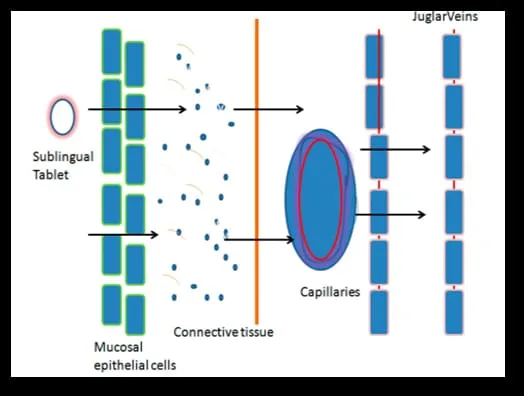
Figure 1: Sublingual route of drug administration
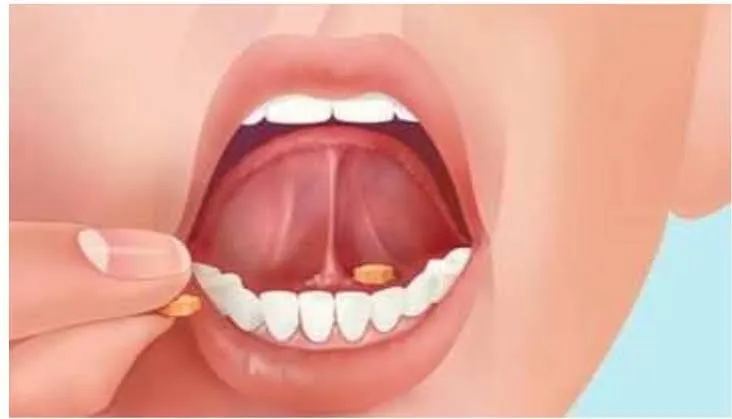
Figure 2: Mechanism of sublingual drug absorption
8.Ingredients and taste masking
The development of sublingual tablets is largely dependent on the selection of appropriate excipient combination that would contribute to the achievement of functionality and manufacturability of tablets. Among the functional excipients, there are diluents and fillers, e.g., mannitol, which provide necessary tablet mass, as well as cooling mouth feeling after administration of sublingual tablets [11, 12].
Besides major fillers, binders are used to create cohesive particles during tabletting, and lubricants are needed to reduce the friction with equipment dies. Superdisintegrants, crospovidone and sodium starch glycolate, are especially important components in sublingual tablets since they ensure rapid destruction of the matrix upon the contact with saliva [11, 12].
For masking the strong bitter taste of active substance, effective taste-masking techniques should be used. Such as cyclodextrin inclusion or polymers entrapment, which help to minimize the contact of free drug with gustatory receptors of the mouth without affecting the rapid release properties of drug [11, 12].
Lastly, it is crucial to have validated taste test procedure that would be ethically performed and does not involve ingestion of the drug systemically.
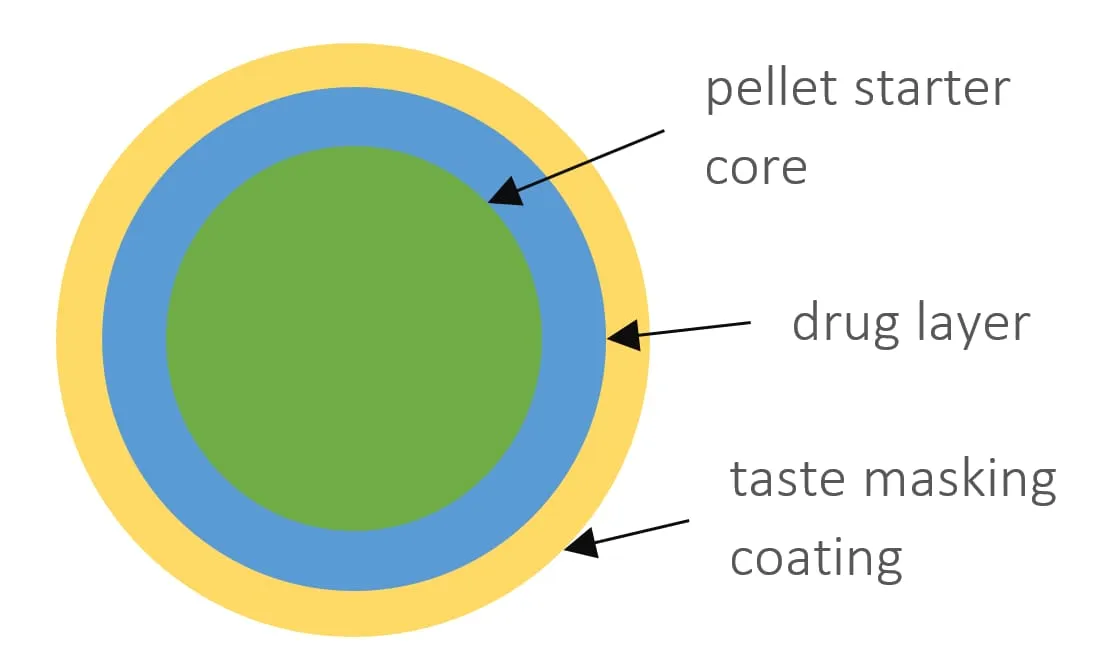
Figure 3: Taste masking techniques
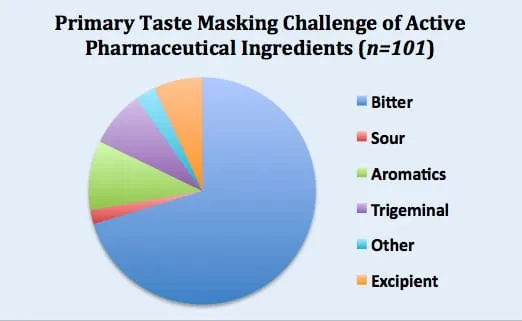
Figure 4: Challenges faced during taste masking of API
9. Rapid disintegration and drug release in saliva
The tablets get disintegrated in the saliva quite rapidly, and it is very important that other constituents of the formulation should get disintegrated rapidly and evenly. Water insolubility of the other components of the formulation is equally very important. Superdisintegrants can be used for the purpose. All these techniques work on the principle of disruption of the structure of the tablet so that the drug gets released rapidly and evenly [11].
Disintegration time is the time required for the disintegration of the tablet while dissolution time is the time required for the release of the drug in the solution. If the tablet gets disintegrated rapidly but does not dissolve readily, then it will not be of any value.
10. Manufacturing Pathways
The primary means of tablet manufacture is direct compression. By simply blending and compressing the powder, the blend is converted into tablets through the process that does not involve granulation. This process is rather simple and fast. Its effectiveness depends on the characteristics of the blend and whether the blend possesses good flow characteristics [12]. The weight of tablets and the quantity of active substance present in them can differ depending on the homogeneity of the blend.
Wet granulation produces a blend consisting of both dry and wet clumps and then compression of tablets occurs. In dry granulation, powder is compressed to form a clump and then broken apart. The choice of the technique depends on the nature and stability of the drug and its excipients.
The chemical stability of nicotine should be taken into account while selecting the process for the drug production. This process should exclude any factor that might cause degradation of nicotine. Furthermore, the process should provide identical amounts of nicotine in each tablet produced. The final process is chosen based on the study of compatibility of various excipients and powders.
| Excipient category | Function in formulation |
|---|---|
| Diluents/fillers | Provide bulk and improve tablet properties |
| Binders | Improve cohesion of powder particles |
| Superdisintegrants | Promote rapid tablet disintegration |
| Sweeteners | Improve palatability |
| Improve taste acceptability | Improve taste acceptability |
| Lubricants | Reduce friction during tablet compression and ejection |
| Taste-masking agents | Reduce the perception of bitterness |
11. Quality studies: Physical, dissolution, stability testing
Quality assessment should be done to ensure that the sublingual nicotine tablets have proper physical properties and drug release characteristics. Before compression, there are pre-formulation testing processes such as determination of the angle of repose and Hausner ratio to test flowability and compressibility for ease of processing.
Post-compression testing of the produced tablets includes standardized tests such as physical appearance, weight variation, thickness, hardness, friability, and uniformity of drug content. These parameters should conform strictly to pharmacopoeia standards to provide the right structures and dosage.
The performance evaluation of the drugs involves rapid wetting and disintegration when the tablets come into contact with simulated saliva in three minutes. The in vitro dissolution test measures the rate of nicotine dissolution but the test usually uses large volume amounts that exceed that of sublingual fluids.
Stability studies are done to ensure that there are no problems with drug-excipient interaction, surface pH, and taste masking. Nicotine degradation products and amount retained are monitored through validated analysis and moisture proof packing used to prevent volatility losses.
12. Reading the clinical data: Pharmacokinetic vs cessation outcomes
As opposed to the pharmacokinetics studies, there is need to measure the level of nicotine in the blood after application of the product. Plasma levels, Tmax time and the area under the curve (AUC) are the measurements of interest. Measurement of Cmax is carried out through Tmax. These parameters have been useful in evaluating the extent and rate of absorption of nicotine.
Studies have been done to look at the influence of nicotine strength, product composition and time of usage in relation to nicotine exposure. Data on nicotine pouch products have been provided by Azzopardi et al. [10] and McEwan et al. [8]. These data have helped to determine the mode of delivery of nicotine, though it does not give the full pharmacokinetics of the novel sublingual tablet.
Lab dissolution studies will not tell anything regarding if the goal of craving reduction and cessation of smoking is achieved or not. It is only proper designs that will lead to achieving this. The recommendation here is for students' formulations to be focused on the quality of formulation and evaluation of taste masking, disintegration, drug release in vitro and preliminary stability.
13. Challenges and future research
There are some problems connected with formulation of nicotine tablet. At first, the formulation will be refused because of the bitter taste of the substance. Using masking technology, the drug should be able to be released during the process. The tablet should not be too soft and breakable when being touched according to the third requirement.
The moisture can get into the tablet through substances attracting it. Humidity influences on the hardness of the tablets. It impacts disintegration and stability of the tablets [11, 12]. There is the necessity to use moisture-proof blister packs. There should be an ensured stability of the nicotine during the process of its formulation and storage.
Another problem is maintenance of the stable pH value. Why? Because the dissociation of nitrates into nitrate ions makes the level of the last changing with the changes in pH value and causes instability. Though the substance is absorbed in the mucosal tissue, low and high pH values can irritate mouth or make it chemically unstable [5]. Local tests should be performed to test the acceptability of the formulation.
Future research could compare different types of superdisintegrants, methods for masking taste, and manufacturing processes. Scientists might study how the ingredients in a tablet affect how it breaks apart, dissolves, and stays stable. Pharmacokinetic studies and lab tests could show how tablets help the body absorb drugs and keep them stable. More research is needed to confirm if these tablets help people quit smoking or effectively reduce cravings.
Oral mucosal delivery means nicotine is absorbed through the mouth, mainly via saliva. The tissue under the tongue has many blood vessels, which helps nicotine get absorbed quickly through the lining of the mouth. For a sublingual tablet to work well, it needs to dissolve easily and fast.
Certain ingredients help release the flavor of nicotine tablets quickly. Other important factors include how strong the tablets are, how fast they break down, how stable the product is, the product's pH level, and whether the nicotine is ionized.
While current studies on quickly dissolving nicotine tablets and nicotine pouches offer some information, they don't replace the need to directly test the new nicotine tablet. Finding the best product will require more lab work and formulation studies. We can only talk about the clinical effects of a product if human studies have been properly carried out.
CONCLUSION
Nicotine delivered sublingually is an attractive method for delivery, in that it uses the thin and very vascular sublingual mucosa to achieve rapid systemic delivery while bypassing first pass effect [2, 6, 7]. Formulation of nicotine sublingual tablets which are able to achieve disintegration of the drug into saliva and bitter taste masking, while preserving mechanical stability, water barrier properties, and proper micro-environment pH to facilitate the proportion of non-ionized and membrane permeable nicotine is crucial [5, 11, 12]. Although important information on pharmacokinetics can be gathered through oral nicotine pouches and films, formulation development, dissolution studies using biorelevant medium, stability testing and clinical pharmacokinetics studies on human subjects cannot be neglected [8, 10, 13].
REFERENCES

Vibha Pal, S. Tejashwar Rao, Dr. Gyanesh Kumar Sahu, Sublingual Nicotine Delivery: A Review of Formulation Development and Drug Release, Int. J. of Pharm. Sci., 2026, Vol 4, Issue 11, 5747-5755. https://doi.org/10.5281/zenodo.24583138
 10.5281/zenodo.24583138