
Department of Materia Medica, Government Homoeopathic Medical College, Trivandrum, Kerala
Background & Objectives: Post-herpetic neuralgia (PHN) is a chronic neuropathic pain following herpes zoster, often persisting for months and significantly affecting quality of life. Conventional treatment may provide incomplete relief. This case report highlights the role of individualized homoeopathic treatment in PHN. Case Summary: A 46-year-old female presented with burning, itching, and neuropathic pain over the left thoracic region one month after herpes zoster. Symptoms were aggravated by undressing and temporarily relieved by scratching, with residual hyperpigmentation. Initial treatment with Sulphur (0/3 and 0/6) offered only mild improvement. Detailed case-taking revealed emotional stress, including disappointed love, suppressed grief, and silent suffering, alongside characteristic food cravings and thermally hot constitution. Intervention: Based on the totality of mental, emotional, and physical symptoms, Natrum muriaticum 1M, single dose, was prescribed, followed by Rubrum pills. Results: Within two weeks, the patient reported complete relief from itching and burning, resolution of pain, and improvement in hyperpigmentation. Objective assessment using the Visual Analogue Scale (VAS) demonstrated a reduction in pain from 8/10 to 0/10. Photographic evidence confirmed complete healing of post-herpetic lesions. Conclusion: Individualized constitutional homoeopathic treatment may be effective in managing post-herpetic neuralgia, particularly when conventional therapy is inadequate. Remedy selection based on the totality of symptoms resulted in complete symptomatic relief, emphasizing the importance of individualized prescribing in chronic neuropathic conditions.
Postherpetic neuralgia (PHN) is the most common long-term complication of varicella-zoster virus (VZV) reactivation, also known as human herpesvirus-3 (HHV-3).[1,2] Reactivation of dormant VZV, which causes herpes zoster (shingles), occurs years after the primary varicella infection (chickenpox). Prior to widespread vaccination in the late 1990s and early 2000s, over 90% of American adults were seropositive for VZV.[3] While vaccination is expected to reduce incidence in future populations, PHN remains clinically significant, particularly among the elderly and immunocompromised.
PHN is characterized by persistent neuropathic pain, often lancinating or burning, in a unilateral dermatomal distribution, lasting three or more months after resolution of herpes zoster rash.[4] Risk factors include advanced age, immunosuppression, severe acute zoster pain, prodromal symptoms, allodynia, ophthalmic involvement, diabetes, and positive family history of herpes zoster.[2,3,5,6] Studies indicate that approximately 13% of patients aged ≥50 years develop PHN, with incidence increasing with age due to declining cell-mediated immunity.[3,5]
Pathophysiologically, PHN arises from neuronal injury, including axonal loss, myelin deficiency, and dorsal horn atrophy, compounded by peripheral and central sensitization of nociceptors.[7–9]Clinically, patients present with neuropathic pain, dysesthesias, pruritus, allodynia, and residual hyperpigmentation or scarring in the affected dermatome.[9,10] Diagnosis is largely clinical, though serology, PCR, and imaging can aid atypical presentations, such as zoster sine herpete.[11,12]
Management of PHN is challenging. Conventional approaches emphasize prevention, early antiviral therapy, and multimodal symptom relief, including tricyclic antidepressants, gabapentinoids, topical lidocaine, and in refractory cases, invasive interventions such as nerve blocks, botulinum toxin injections, and neuromodulation. [13–17]Despite these measures, PHN often persists, resulting in chronic pain, sleep disturbances, fatigue, depression, and impaired quality of life.
In this context, homoeopathy presents a potential complementary or alternative approach. Individualized homoeopathic treatment, guided by the totality of mental, emotional, and physical characteristics, may alleviate neuropathic pain and address underlying constitutional susceptibilities. Emerging case reports indicate that such interventions can reduce pain intensity, improve functional capacity, and enhance overall well-being in Post-herpetic Neuralgia patients.
Given the persistent and refractory nature of Post-herpetic Neuralgia, documenting cases treated with individualized constitutional homoeopathy contributes to the growing evidence of its potential efficacy and informs future clinical practice.
CASE SUMMARY
A 46-year-old female patient presented with complaints of itching, burning sensation, and pain over the left thoracic region following an episode of herpes zoster one month prior to consultation. The affected area showed residual eruptions with blackish discoloration. The itching and burning were aggravated on undressing and exposure of the part, while temporary relief was obtained by scratching, which was followed by increased pain. The complaints caused significant discomfort and distress.
The patient had not taken any previous conventional or alternative treatment for herpes zoster.
Based on the initial presentation, Sulphur 0/3 was prescribed, four doses administered weekly, one dose per week. The patient reported mild improvement in itching; however, the burning sensation and pain persisted.
At the second follow-up, Sulphur 0/6, four doses, was prescribed considering partial response and symptom continuity. Despite this, there was no significant improvement, and the complaints persisted.
On further detailed case taking, significant emotional and psychological factors were elicited. The patient reported that during her marriage arrangements, her intended groom had eloped, following which she was married to her relative’s son under family pressure. After marriage, she realized that her husband was emotionally detached and not interested in maintaining a marital relationship. There was minimal sexual relationship between them.
Subsequently, due to family pressure, the couple underwent infertility evaluation, which revealed a fertility-related issue in her husband. Despite her family insisting that she separate from him, the patient refused, expressing loyalty and gratitude, as her husband had supported her during critical phases of her life. She stated that her husband never ill-treated her and that she continued to stay in the relationship, although she deeply longed for his love, care, and emotional understanding, which remained unfulfilled.
The patient exhibited silent suffering, emotional suppression, and strong attachment, despite persistent disappointment.
CASE ANALYSIS AND EVALUATION
A detailed assessment of the patient’s mental, emotional, and physical characteristics was undertaken to construct the totality of symptoms. Mentally and emotionally, the case was predominantly characterised by disappointed love, emotional deprivation, suppressed grief, and silent suffering. The patient demonstrated a deep sense of loyalty and attachment despite lack of emotional fulfilment, choosing to endure her circumstances rather than express emotional pain openly. She continued to remain in the relationship with resignation, reflecting introversion, emotional reserve, and an inability to share inner grief, which are characteristic features described in the materia medica of Natrum muriaticum.
Physically, the case presented with persistent post-herpetic neuropathic pain associated with burning and itching, with a marked aggravation on undressing and exposure of the affected part. Temporary relief from scratching followed by increased pain, along with residual pigmentation over the affected area, further defined the local pathology. Constitutionally, the patient was thermally hot and exhibited distinctive food desires for sweets, sour and salty foods, with a craving for fried fish. These physical generals and cravings further supported the selection of Natrum muriaticum, which is well known for its characteristic affinity for salty and sour foods and its association with chronic conditions arising from prolonged emotional stress.
The persistence of symptoms despite initial symptomatic prescriptions indicated the need for a deeper constitutional approach. The long-standing emotional conflict, silent grief, and unresolved disappointment were considered central to the evolution and maintenance of the physical complaint. In Natrum muriaticum, such prolonged emotional suppression and grief are known to manifest as chronic, lingering conditions, particularly involving the skin and nervous system.
Based on the totality of mental disposition, emotional background, physical generals, modalities, and characteristic cravings, Natrum muriaticum was selected as the constitutional remedy, addressing both the underlying emotional state and its somatic expression. The prescription aimed not merely at symptomatic relief but at restoring emotional balance, which subsequently facilitated resolution of the post-herpetic symptoms.
HOMOEOPATHIC MANAGEMENT
NATRUM MURIATICUM 1M / 1 DOSE
Followed by Rubrum pills
BASIS OF SELECTION
FOLLOW UP
After administration of Natrum muriaticum 1M, single dose, the patient was maintained on Rubrum pills. At the two-week follow-up, the patient reported complete relief from itching and burning sensation. The eruptions had healed completely, and the pain was significantly reduced. The blackish discoloration showed improvement. The patient also reported a general sense of relief and well-being.
FOLLOW UP TABLE
Table I: Follow-Up Table
|
Date |
Clinical Findings |
VAS Score |
Prescription |
|
09.06.2025 |
Itching, burning, pain over left thorax; residual eruptions and pigmentation |
8/10 |
Sulphur 0/3 – 4 doses weekly |
|
14.07.2025 |
Mild improvement in itching; burning and pain persist |
7/10 |
Sulphur 0/6 – 4 doses weekly |
|
18.08.2025 |
Complaints persist; detailed case taken |
7/10 |
Natrum muriaticum 1M – 1 dose |
|
01.09.2025 |
Itching and burning completely relieved; eruptions healed |
0/10 |
Rubrum pills continued |
MONARCH
Table II: Modified Naranjo Criteria For Homoeopathy [Monarch]
|
Sr. No |
DOMAINS |
YES |
NO |
NOT SURE |
|
1.
2.
3. 4.
5.
6A.
6B.
7.
8.
9.
10. |
Was there an improvement in the main symptom or condition for which the homoeopathic medicine was prescribed? Did the clinical improvement occur within a plausible timeframe relative to the medicine intake? Was there a homeopathic aggravation of symptoms? Did the effect encompass more than the main symptom or condition (i.e., where other symptoms, not related to the main presenting complaint, improved or changed? Did overall well-being improve? (Suggest using a validated scale or mention about changes in physical, emotional and behavioural elements) Direction of cure: Did some symptoms improve in the opposite order of the development of symptoms of the disease? Direction of cure: Did at least one of the following aspects apply to the order of improvement in symptoms: -from organs of more importance to those of less importance? -from deeper to more superfcial aspects of the individual? -from the top downwards? Did “old symptoms” (defned as non-seasonal and non-cyclical symptoms that were previously thought to have resolved) reappear temporarily during the course of improvement? Are there alternative causes (i.e., other than the medicine) that- with a high probability- could have produced the improvement? (Consider know course of disease, other forms of treatment and other clinically relevant interventions) Was the health improvement confirmed by objective evidence? (e.g., investigations, clinical examination, etc.) Did repeat dosing, if conducted, create similar clinical improvement? Total: +10 |
+2
+1
-
+1
+2
-
+1
-
-
+2
+1 |
-
-
0
-
-
-
-
0
0
-
- |
-
-
-
-
-
0
0
-
-
0
- |
PHOTOGRAPHIC EVIDENCE
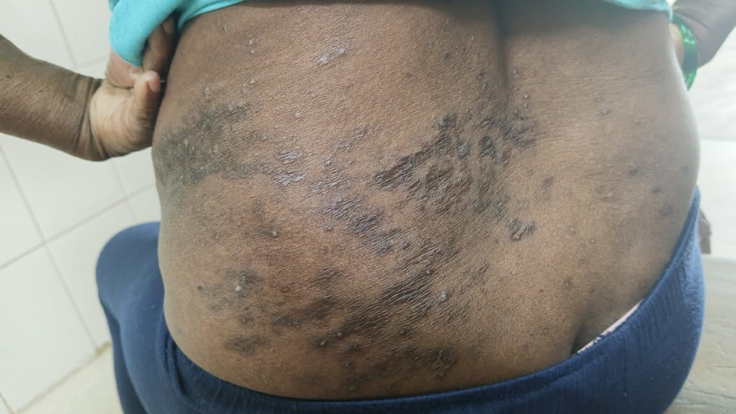
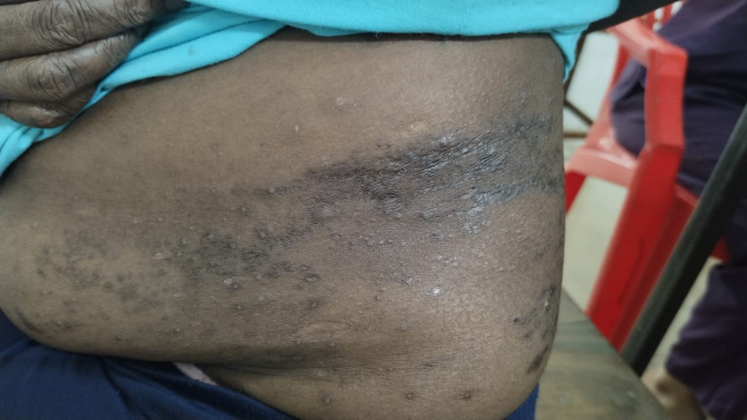
FIG 1: Before treatment – healed herpes zoster lesions with blackish discoloration over left thorax
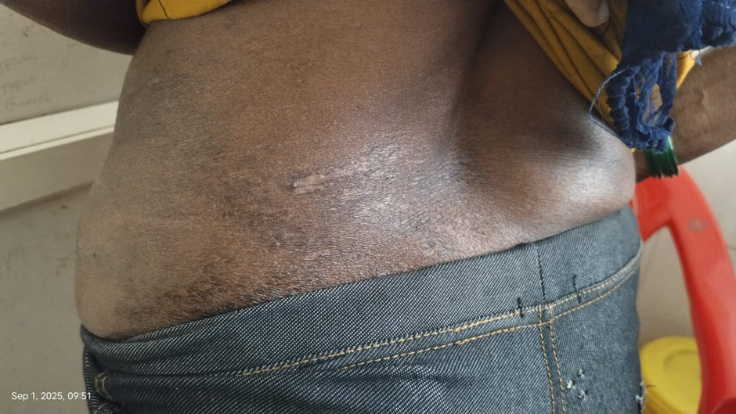
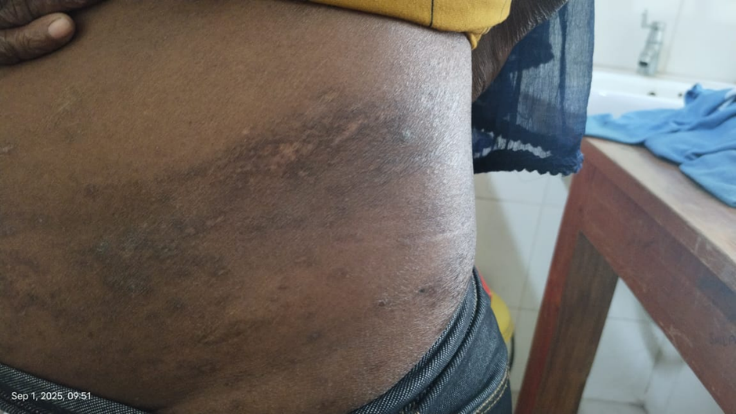
FIG 2: After treatment – complete resolution of eruptions with marked reduction in pigmentation
DISCUSSION
A comprehensive assessment of the patient’s mental, emotional, and physical characteristics was undertaken to construct the totality of symptoms. Mentally and emotionally, the case was predominantly characterised by disappointed love, emotional deprivation, suppressed grief, and silent suffering. The patient exhibited a profound sense of loyalty and emotional attachment despite lack of fulfilment, choosing endurance over expression of emotional pain. Her continued resignation, emotional reserve, and difficulty in sharing inner grief closely correspond to the classical mental picture described in the materia medica of Natrum muriaticum.
Physically, the case presented with persistent post-herpetic neuropathic pain accompanied by burning and itching, with a marked aggravation on undressing and exposure of the affected part. Temporary relief from scratching followed by increased pain, along with residual hyperpigmentation, further characterised the local pathology. Constitutionally, the patient was thermally hot and exhibited distinctive food desires for sweets, sour and salty foods, with a craving for fried fish. These physical generals and characteristic cravings are well documented features of Natrum muriaticum and further supported its selection, particularly in conditions arising from prolonged emotional stress.
The persistence of symptoms despite initial symptomatic prescriptions indicated the need for a deeper constitutional approach. The patient’s long-standing emotional conflict, silent grief, and unresolved disappointment were considered central to both the development and maintenance of the physical complaint. In the materia medica of Natrum muriaticum, such prolonged emotional suppression is known to manifest as chronic, lingering conditions, often involving the skin and nervous system.
Based on the totality of mental disposition, emotional background, physical generals, modalities, and characteristic cravings, Natrum muriaticum was selected as the constitutional remedy. The therapeutic aim extended beyond symptomatic relief to restoration of emotional balance, which subsequently facilitated resolution of the post-herpetic symptoms.
Objective assessment using the Visual Analogue Scale (VAS) demonstrated a reduction in neuropathic pain from 8/10 at baseline to 0/10 following constitutional homoeopathic treatment, supporting the clinical efficacy of individualized remedy selection.
Supportive evidence for the role of homoeopathy in post-herpetic neuralgia has been reported in the literature. A case report published in the Indian Journal of Research in Homoeopathy documented successful management of post-herpetic neuralgia in an elderly patient using individualized homoeopathic treatment, resulting in significant reduction in pain intensity and improvement in daily functioning following inadequate response to conventional therapy. The outcome of the present case is consistent with these findings, suggesting that individualized homoeopathic intervention may offer therapeutic benefit in the management of post-herpetic neuralgia.
This study is limited by its single-case design, short-term follow-up, and reliance on subjective outcome measures, which restricts the generalizability of the findings. While the observed improvement in post-herpetic neuralgia correlates with individualized homoeopathic treatment, spontaneous resolution or other factors cannot be entirely excluded. Nevertheless, emerging evidence suggests that homoeopathy may be effective in various neuropathic pain conditions, including diabetic neuropathy, trigeminal neuralgia, chemotherapy-induced neuropathy, and sciatica, particularly when prescriptions are guided by the totality of mental, emotional, and physical symptoms. Further controlled studies are warranted to validate these observations and establish standardized protocols.
CONCLUSION
This case illustrates that individualized constitutional homoeopathic treatment may be effective in the management of post-herpetic neuralgia. Careful assessment of the patient’s emotional, mental, and physical totality guided the prescription of Natrum muriaticum, leading to complete resolution of itching and burning and significant relief of neuropathic pain. The clinical improvement, supported by VAS scoring and photographic evidence, highlights the value of totality-based prescribing in chronic neuropathic conditions and emphasizes the potential of individualized homoeopathy as a complementary therapeutic approach.
DECLARATION OF PATIENT CONSENT
We have obtained written consent from the patient. She has also agreed to the publication of her clinical information in the journal, with the assurance that her name and initials will not be disclosed.
FINANCIAL SUPPORT AND SPONSORSHIP: Nil.
CONFLICTS OF INTEREST: None declared.
REFERENCES

Dawood Nisha S, A Case Report on the Homoeopathic Management of Post-Herpetic Neuralgia, Int. J. of Pharm. Sci., 2026, Vol 4, Issue 1, 1939-1946. https://doi.org/10.5281/zenodo.18304000
 10.5281/zenodo.18304000
