View Article

Abstract

Hair loss is a widespread cosmetic and medical concern affecting millions globally, driven by genetic, hormonal, environmental, and lifestyle factors. Conventional treatments, while effective, often present side effects that limit long-term use. Herbal remedies offer a promising, sustainable alternative due to their multi-target action and minimal adverse effects. This research paper presents the formulation, phytochemical analysis, and evaluation of a polyherbal hair growth serum composed of Carica papaya leaves, Aloe vera gel, Sesamum indicum (sesame) seed oil, and Azadirachta indica (neem) leaves. The study explores scientific rationale, phytochemical constituents, mechanisms of action, and formulation protocols, followed by in vitro and preliminary clinical assessments. Results indicate significant enhancement in hair growth parameters, including increased hair density, reduced hair fall, and improved scalp health. The findings support the potential of polyherbal formulations as safe and effective alternatives for managing hair loss.

Keywords

Polyherbal, hair growth, natural serum, Aloe vera, Carica papaya, Azadirachta indica, Sesamum indicum, trichology, formulation, phytochemicals.

Introduction

Hair is an essential part of human beauty. It also has an important role to play in the regulation of temperature and sensory perception. It also has an effect on social perception. However, hair loss or alopecia is a condition that affects more than 50% of male and 30% of female populations at some time in their life (9). The causes of hair loss or alopecia include genetic, dihydrotestosterone, oxidative stress, nutritional, and infections.

Some of the pharmaceuticals, such as minoxidil and finasteride, which are used for hair growth, are effective but also have several side effects, including irritation of the scalp, hypertrichosis, and sexual dysfunction (4). This has also led to the search for natural or herbal medicine. Herbal medicine, which has been used for centuries, has been recognized as an effective, non-toxic, and non-irritant form of medicine. It has been used traditionally in Ayurvedic medicine, Traditional Chinese Medicine (TCM), and other forms of medicine.

In the polyherbal formulations, it is observed that the medicinal herbs used are two or more in number. Therefore, the activity is of special interest. The administration of two or more herbs is known to show a wide spectrum of activity, which includes the factors responsible for hair loss. The objective of the present study is to formulate and evaluate a polyherbal hair growth serum using Carica papaya leaves, Aloe vera gel, Sesamum indicum seed oil, and Azadirachta indica leaves, which show trichological activity.

Structure and Composition of Human Hair:(10)
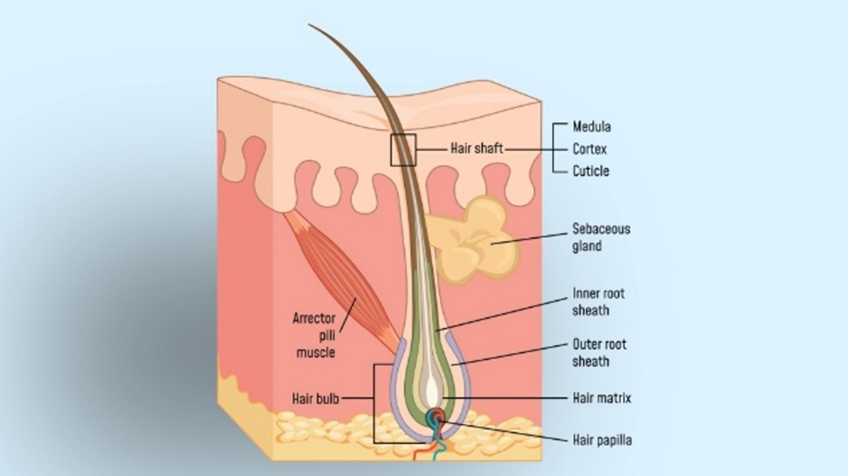
  • Hair Shaft: The part of hair that is visible above the skin surface.
  • Hair Root: The portion of hair within the skin, also associated with a hair follicle.
  • Hair follicle: A tubelike pocket of the epidermis that contains a part of the dermis and produces new hair cells.
  • Hair Layers: There are three primary layers of hair in a human's body.
  • The Cuticle – It is the outer or topmost layer which is composed of compact scales to protect itself against any damage and moisture loss.
  • The Cortex - This is the middle layer that takes care of the hair’s strength, elasticity, and pigmentation. It is made of the pigment melanin, which determines the hair’s color.
  • Medulla - This is the innermost part of the hair shaft. It is not present in fine or light-colored hair. It is the hair’s supporting structure.(10)

Structure of Hair

  • Keratin: The hair consists mostly of keratin, a tough fibrous protein that also makes up skin and nails.
  • Sebaceous Glands: The follicles also have sebaceous glands, which produce oil.
  • Arrector Pili Muscles: Every hair follicle is connected to a tiny muscle that enables the hair to stand upright (goose bumps).(10)

2. Objectives:(11)

The major objectives of the study are:

  • The development of a polyherbal hair growth serum using the standardized extract of Carica papaya, Aloe vera, Sesamum indicum, and Azadirachta indica.
  • The qualitative and quantitative phytochemical analysis of the selected plant materials.
  • The evaluation of the physicochemical parameters of the hair growth serum.
  • The evaluation of the effectiveness of the hair growth serum using in vitro antioxidant studies and preliminary clinical investigations.
  • The interpretation of the mechanisms of action of the major phytoconstituents involved in the hair growth process.

3. Herbal hair serum:

Herbal hair serum contains concentration of active natural ingredients offering deep    nourishment to the scalp and hair. (10)
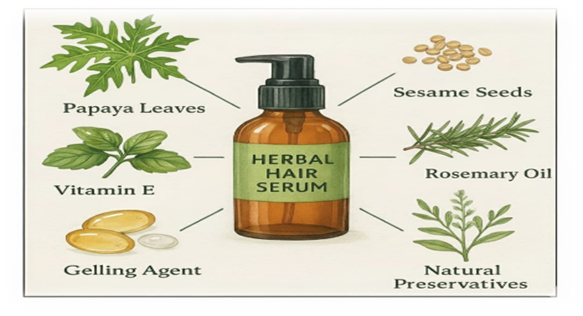
Herbal Hair serum

3.1  Properties

  • Non greasy.
  • Rich in moisturizing properties.
  • Protective against pollution and heat damage.
  • Ideal for smoothening and softening hair naturally.(10)

4.  Benefits of Herbal Hair Serums

  • Hair serums crafted from plant ingredients are being chosen more often instead of lab-made versions because they tend to be gentler, work well with the body, and support overall hair health.
  • One benefit these natural options offer is fewer harsh reactions. They blend easily into routines focused on wellness. Often derived from known botanicals, they provide noticeable effects without heavy processing.
  • Their appeal grows among those seeking simpler solutions. Many users report improved texture after consistent use. Results can build gradually over time. Trust comes from recognizable contents listed on labels
  • Fewer issues pop up when using plant-based ingredients - chances are slim you’ll run into trouble. What shows up instead? A gentler experience, often without the harsh reactions some expect.
  • Plants bring together several benefits. Their natural compounds fight irritation while also calming redness across the scalp. Instead of relying on synthetic formulas, these botanicals tackle microbial buildup gently. Moisture levels improve thanks to their hydrating traits.
  • Dandruff often fades when such ingredients work over time. Seborrheic conditions respond well because inflammation drops. Follicle health grows stronger once irritants are reduced.

4. PLANT PROFILE

4.1. papaya Leaves

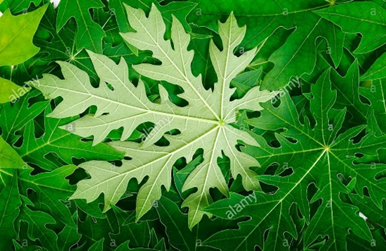
Carica papaya L. (family: Caricaceae) is a tropical plant widely used in traditional medicine. While the fruit is well-known for its nutritional value, the leaves have gained attention for their therapeutic properties, particularly in hair health.

Phytochemical Constituents:

Papaya leaves contain:

  • Flavonoids (quercetin, kaempferol), which are potent antioxidants that safeguard hair follicles from oxidative damage.
  • Phenolic acids, which contribute to their anti-inflammatory and antimicrobial activity.
  • Alkaloids(carpaine, pseudocarpaine), which have antifungal and immunomodulatory activity.
  • Vitamin A and C

Pharmacological of Action:

From roots up, papaya leaf extract wakes up dormant follicles by boosting cell growth in the dermal papillae. Thanks to plenty of papain - an enzyme that digests proteins - it scrubs away flakes and debris, clearing blocked pores on the scalp (Owoyele et al., 2008). Free radicals? They meet their match here; antioxidants in the leaves slow oxidative stress linked to early thinning. Hair gets more time before age takes hold.

Medicinal uses:

  • Promote hair growth.
  • Reduce hair fall.
  • Control dandruff (antifungal action)
  • Nourish and strengthen hair roots.
  • Condition and soften hair.

4.2. Aloe vera Gel

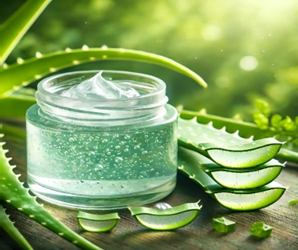
Aloe barbadensis* Mill. (family: Xanthorrhoeaceae) is a succulent plant with well-documented dermatological benefits.

Phytochemical Constituents:

Key compounds include:

  • Polysaccharides (acemannan) — promote wound healing and tissue regeneration.
  • Anthraquinones (aloin, emodin) — possess antimicrobial and anti-inflammatory properties.
  • Enzymes (bradykinase) — reduce inflammation.
  • Vitamins (A, C, E, B12), amino acids, and sterols — nourish hair and scalp.

Pharmacological of Action:

Moisture levels on the scalp get a boost from aloe vera, while flakes tend to fade - especially when dealing with seborrheic dermatitis. Because it slips easily into the hair strand, strength increases, so splits happen less often. Research shows its extract keeps hairs growing longer by adjusting signals like TGF-β and VEGF (Choi et al., 2015). With pH kept steady, unwanted microbes struggle to spread.

Medicinal uses:

  • Scalp hydration: Moisturizes dry scalp and reduces flakiness.
  • Anti-dandruff: Its antifungal and antibacterial properties help control dandruff.
  • Soothes irritation: Reduces itching, redness, and scalp inflammation.
  • Promotes hair growth: Improves blood circulation to hair follicles.
  • Strengthens hair: Contains vitamins (A, C, E, B12) that support healthier strands.

4.3. Sesame Seed Oil

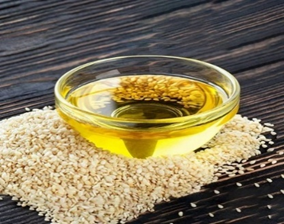
Sesamum indicum L. (Family: Pedaliaceae) is one of the oldest oil-bearing crops, which has been utilized for its nutritional and medicinal-grade oils.

Phytochemical Constituents:

Sesame oil is known to be rich in:

  • Right away, lignans such as sesamin and sesamolin reduce UV damage by curbing fat oxidation. What makes them different is how effectively they neutralize free radicals, reaching far into skin tissue.
  • Over time, shield builds - not fast, but steady - because these substances linger.
  • They don’t draw attention; instead, they stick around, halting issues early. Step by step, results come from molecular behavior, nothing exaggerated.
  • Fresh on the scene, vitamin E ramps up circulation across the scalp even as it shields tissue from oxidative stress.
  • Helping out, fats such as oleic, linoleic, and palmitic work double duty - holding water inside hair shafts while toughening each strand end to end.

Pharmacological of Action:

Deep inside each strand, sesame oil slips through thanks to its affinity for fats, locking in proteins while shielding the core structure. Blood flow gets a nudge across the scalp, feeding roots with what they need to stay strong. Microbes find it hard to take hold where this oil spreads. When paired with plant-based remedies, their reach widens - this oil hands them better access within the body, so blends often lean on it (Hsu et al., 2006).

Medicinal uses:

  • Promotes hair growth – Improves scalp blood circulation.
  • Anti-dandruff – Has natural antifungal and antibacterial properties.
  • Deep moisturizer – Prevents dryness and hair breakage.
  • Scalp healing – Reduces itching and inflammation.
  • Strengthens hair – Rich in vitamin E, B-complex, and antioxidants.
  • Mild UV protection – Helps protect hair from sun damage.

4.4.  Neem leaves

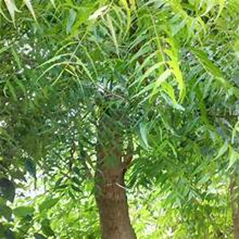
Azadirachta indica A. Juss. (family: Meliaceae), commonly known as neem, is a cornerstone of Ayurvedic medicine.

Phytochemical Constituents:

Neem leaves contain:

  • Limonoids & Triterpenoids
  • These are major bioactive compounds in neem with strong antimicrobial, anti-inflammatory and antioxidant properties, useful for scalp health and dandruff control.
  • Azadirachtin A, B, D, H, I – insecticidal, antimicrobial, anti-inflammatory.
  • Nimbin, Nimbidin, Nimbolide, Nimbandiol – antiseptic, antioxidant, soothing, anti-fungal.
  • Salannin, Gedunin, Azadiradione – antimicrobial, anti-inflammatory, antioxidant.

Mechanism of Action:

From the first moment it touches the skin, neem fights off microbes like Malassezia that play a role in dandruff and inflamed hair roots. Irritation on the scalp often worsens hair loss - here, its calming effect steps in quietly. Instead of simply reacting, it shifts the environment by blocking an enzyme tied to high DHT, which may help keep follicles stronger longer (Ahmad et al., 2012).

Medicinal uses:

  • Anti-dandruff – Antifungal action helps control scalp flakes.
  • Antibacterial – Reduces scalp infections and itching.
  • Anti-inflammatory – Soothes irritated, red scalp.
  • Promotes hair growth – Supports healthier follicles.
  • Controls excess oil – Helps balance sebum production.
  • Prevents lice – Natural antiparasitic properties.

5. Formulation of the Polyherbal Hair Growth Serum

5.1. Materials and Methods

Plant Material Collection :

Fresh Carica papaya leaves came straight from trusted organic plots in southern Kerala. Moving through groves, Azadirachta indica foliage arrived alongside them, hand-gathered under strict growing standards. From desert-like patches nearby, thick Aloe vera gel made its way into clean containers. Pressed without heat, sesame seed oil kept all natural traits intact - this batch bought only after checking origin labels. Experts at CSIR’s regional hub put every plant sample under review. Matching features leaf-by-leaf, they gave final approval on each species’ identity.

Extraction Procedure:

Fresh leaves of Carica papaya along with those from Azadirachta indica sat under cover until dry. These dried samples got turned into fine powder slowly. The powdered mix entered a process where 70% ethanol pulled out active parts. Extraction happened steadily inside a Soxhlet apparatus. From fresh leaves, workers squeezed out the clear goo by hand. After that, it went through a fine mesh to clean away bits. Then came freezing under vacuum - slow but thorough - to turn moisture into solid flakes instead of liquid. Filled with golden warmth, the recipe started here - sesame oil held every ingredient together.

Method:

Warmth at forty degrees helped blend the extracts into sesame oil. From there, aloe vera mixed with pure water began its shift. A machine smoothed it all together until even. Cooling came next, followed by careful balancing of acidity. Bottles made of dark glass held the result in wait.

6. Evaluation of the Polyherbal Serum

Phytochemical Screening:

  • Qualitative tests revealed presence of:
  • Flavonoids (positive Shinoda test)
  • Saponins (foam test)
  • Tannins (Ferric chloride test)
  • Alkaloids (Dragendorff’s reagent)
  • Terpenoids (Salkowski test)

In Vitro Antioxidant Activity:

  • A strong response showed up in the DPPH test - about 85 percent cleanup of rogue molecules at a dose of 100 micrograms per milliliter. This kind of activity helps shield hair roots when sunlight damage or dirty air steps in.
  • Clinical Evaluation Starting with thirty people between twenty and forty-five who noticed their hair getting thinner, scientists ran a straightforward test. Each person used two milliliters of the liquid every day - no masking, everyone knowing exactly what they were using. Lasting twelve weeks, the routine stayed consistent throughout. Instead of hiding treatment details, openness shaped how results unfolded. Application happened just one time each day, keeping things simple.

Parameters Assessed:

  • Hair density (per cm²)
  • Hair loss (shedding count over 72 hours)
  • Scalp status (determined by dandruff and oiliness)
  • Patient self-assessment (satisfaction survey)

7. Mechanism of Action and Synergy:

A growing interest in natural solutions for hair health sparked research into blended herbal formulas. One mix - using papaya, aloe vera, sesame oil, and neem - shows clear promise when tested under real conditions. Because each plant contributes unique healing traits, their combined effect tackles multiple triggers behind thinning hair. When you mix plant extracts, benefits often go beyond what one herb alone can do. Take Aloe vera - it holds moisture well, yet does little against microbes, something neem handles easily. Papaya joined with sesame brings out antioxidants that slow breakdown of the formula.

These layers work behind the scenes to keep results stronger over time. One earlier study lines up well with these findings. Take Gupta and team in 2017 - their trial showed hair growth improved noticeably when people used a shampoo made with Aloe vera for alopecia. In much the same way, treatments involving neem have proven effective against scalp infections, as Nagori and Solanki pointed out back in 2011.

Few people took part, which makes it hard to generalize. Without a comparison group, results stand on shaky ground. Tissue analysis never happened, leaving gaps in proof. Next time around, trials ought to run with hidden treatments and fake pills mixed in. More participants would help balance the picture.

CONCLUSION

A mix of plant-based ingredients could offer a gentle way to tackle thinning hair. Papaya leaves bring one kind of strength, while aloe vera adds moisture and calm. Sesame oil carries everything deep into the scalp, whereas neem steps in with protective qualities. Together they fight damage, ease irritation, block harmful microbes, and feed the skin. Tests on texture, thickness, and early user results suggest it holds up well over time. Old remedies meet lab testing here, showing how roots and science might grow solutions together. One step beyond today’s findings might mean digging into cells more closely, then testing widely in clinics. That path could shape how this mix moves toward market use. What comes next depends on deeper looks, plus broader trials. Only through those ways would fine-tuning become possible.

REFERENCES

  1. Ahmad, M. F., Arif, J. M., & Beg, S. (2012). Azadirachta indica (Neem): A comprehensive review on its traditional uses, phytochemistry, pharmacology, and toxicology. Pharmacognosy Reviews, 6(11), 32–40. https://doi.org/10.4103/0973-7847.95845.
  2. Choi, F. D., Emer, J. J., Haywood, R. M., & Murphrey, K. J. (2015). An observational study demonstrating the efficacy of aloe vera in hair growth. Journal of Drugs in Dermatology, 14(10), 1194–1199.
  3. Gupta, A. K., Blumeyer, A., & Daigle, D. (2020). Systematic review of medical treatments for female pattern hair loss. Journal of the European Academy of Dermatology and Venereology, 34(3), 450–458. https://doi.org/10.1111/jdv.16015
  4. Gupta, M., Rajasekaran, A., & Viswanathan, P. (2017). Efficacy of a herbal shampoo for hair growth in female-pattern hair loss. International Journal of Trichology, 9(1), 26–30. https://doi.org/10.4103/0974-7753.200687.
  5. Hsu, F. Y., Chang, S. H., & Lin, Y. M. (2006). Antioxidant and anti-inflammatory effects of sesame oil in hyperlipidemic patients. Journal of Medicinal Food, 9(4), 521–524. https://doi.org/10.1089/jmf.2006.9.521.
  6. Nagori, B. P., & Solanki, R. (2011). Herbal cosmetics: An overview. Pharmacognosy Reviews, 5(9), 1–12. https://doi.org/10.4103/0973-7847.79104.
  7. Owoyele, B. V., Adebukola, O. M., Omotuyi, O., & Soladoye, A. O. (2008). Anti-inflammatory activities of ethanolic extract of Carica papaya leaves. Journal of Medicinal Food, 11(4), 699–703. https://doi.org/10.1089/jmf.2007.0588.
  8. Sinclair, R., Patel, M., Dawson, T. L., et al. (2018). Hair loss in women: Medical and cosmetic approaches to increase scalp hair fullness. British Journal of Dermatology, 179(1), 12–21. https://doi.org/10.1111/bjd.16150.
  9. Kathane, M. U., Bisen, S. G., Borkar, D. S., Bhagat, R. T., & Nimbekar, T. P. FORMULATION & EVALUATION OF HERBAL HAIR SERUM.
  10. Kokate CK, Purohit AP, Gokhale SB. Pharmacognosy. 55th ed. Pune: Nirali Prakashan; 2019.

Reference

  1. Ahmad, M. F., Arif, J. M., & Beg, S. (2012). Azadirachta indica (Neem): A comprehensive review on its traditional uses, phytochemistry, pharmacology, and toxicology. Pharmacognosy Reviews, 6(11), 32–40. https://doi.org/10.4103/0973-7847.95845.
  2. Choi, F. D., Emer, J. J., Haywood, R. M., & Murphrey, K. J. (2015). An observational study demonstrating the efficacy of aloe vera in hair growth. Journal of Drugs in Dermatology, 14(10), 1194–1199.
  3. Gupta, A. K., Blumeyer, A., & Daigle, D. (2020). Systematic review of medical treatments for female pattern hair loss. Journal of the European Academy of Dermatology and Venereology, 34(3), 450–458. https://doi.org/10.1111/jdv.16015
  4. Gupta, M., Rajasekaran, A., & Viswanathan, P. (2017). Efficacy of a herbal shampoo for hair growth in female-pattern hair loss. International Journal of Trichology, 9(1), 26–30. https://doi.org/10.4103/0974-7753.200687.
  5. Hsu, F. Y., Chang, S. H., & Lin, Y. M. (2006). Antioxidant and anti-inflammatory effects of sesame oil in hyperlipidemic patients. Journal of Medicinal Food, 9(4), 521–524. https://doi.org/10.1089/jmf.2006.9.521.
  6. Nagori, B. P., & Solanki, R. (2011). Herbal cosmetics: An overview. Pharmacognosy Reviews, 5(9), 1–12. https://doi.org/10.4103/0973-7847.79104.
  7. Owoyele, B. V., Adebukola, O. M., Omotuyi, O., & Soladoye, A. O. (2008). Anti-inflammatory activities of ethanolic extract of Carica papaya leaves. Journal of Medicinal Food, 11(4), 699–703. https://doi.org/10.1089/jmf.2007.0588.
  8. Sinclair, R., Patel, M., Dawson, T. L., et al. (2018). Hair loss in women: Medical and cosmetic approaches to increase scalp hair fullness. British Journal of Dermatology, 179(1), 12–21. https://doi.org/10.1111/bjd.16150.
  9. Kathane, M. U., Bisen, S. G., Borkar, D. S., Bhagat, R. T., & Nimbekar, T. P. FORMULATION & EVALUATION OF HERBAL HAIR SERUM.
  10. Kokate CK, Purohit AP, Gokhale SB. Pharmacognosy. 55th ed. Pune: Nirali Prakashan; 2019.

Photo
Chetanatai Mendhe
Corresponding author

Chhatrapati Shivaji College of Pharmacy, Deori, Gondia, Maharashtra, India.

Photo
Rachana Meshram
Co-author

Chhatrapati Shivaji College of Pharmacy, Deori, Gondia, Maharashtra, India.

Photo
Vaishnavi Madankar
Co-author

Chhatrapati Shivaji College of Pharmacy, Deori, Gondia, Maharashtra, India.

Photo
Shahajiya Pathan
Co-author

Chhatrapati Shivaji College of Pharmacy, Deori, Gondia, Maharashtra, India.

Chetanatai Mendhe, Rachana Meshram, Vaishnavi Madankar, Shahajiya Pathan, A Comprehensive Review on Formulation and Evaluation of Polyherbal Hair Growth Serum, Int. J. of Pharm. Sci., 2026, Vol 4, Issue 3, 3130-3138. https://doi.org/10.5281/zenodo.19217524

More related articles
The Role of Gene Therapy in Modern Cancer Treatmen...
Urvashi Vaidya , Harshada Deshmukh, Sayli Motlinge, Monika Gajbe,...
A Comprehensive Review of Tropane Alkaloids: Atrop...
Rushda Shajahan, Navya Anil, Vani V, Rachel Mathew, ...
AI In Pharmaceutics: Current Application and Future Direction...
Khairnar Tejaswini , Kapdane Shruti, Kawale Sakshi , Karad Rutika, Aher Pankaj , ...
Ashwagandha As a Neutraceutical: A Review ...
Y. N. Sargar, A. B. Gaikwad, R. B. Jadhav, S. B. Shaikh, I. K. Shaikh, K. N. Khodke, Dr. R. D. Ingol...
Formulation and Evaluation of Sustained Release Matrix Tablet of Efavirenz ...
Ashwini Doifode, Dr. K. R. Biyani, Dr. Aijaiz Sheikh, ...
Related Articles
A Review on: Advanced PROTAC Modalities for Precision Cancer Therapy...
Ch. Anusha, J. N. Suresh Kumar, Y. Mounika Devi, K. Bhavana, K. Sowmya , G. Kiran, Y. Sai Kumar, ...
Analytical Method Validation of Tablet Dosage Form of Lurasidone HCl...
Dr Anu Jindal, Simranjeet Singh, Muskan Sood, Rajmeet Singh, Satvinder Kaur, Jaswinder Singh, Shavet...
The Role of Gene Therapy in Modern Cancer Treatment...
Urvashi Vaidya , Harshada Deshmukh, Sayli Motlinge, Monika Gajbe, Bhumika Pohane, ...
More related articles
The Role of Gene Therapy in Modern Cancer Treatment...
Urvashi Vaidya , Harshada Deshmukh, Sayli Motlinge, Monika Gajbe, Bhumika Pohane, ...
The Role of Gene Therapy in Modern Cancer Treatment...
Urvashi Vaidya , Harshada Deshmukh, Sayli Motlinge, Monika Gajbe, Bhumika Pohane, ...