

We use cookies to ensure our website works properly and to personalise your experience. Cookies policy
Genba Sopanrao Moze College of Pharmacy.
Drug administration and delivery options have advanced greatly in the last 30 years and have become a significant area of drug development. Conventional drug delivery systems have some caveats. Monitoring drug plasma concentration is, for example, necessary when using a medication, especially in the case of drugs with a short half-life. Frequent application of the drug can pose compliance issues to patients and change drug plasma concentration. While new drugs can overcome some of these issues, specifically controlled delivery that can sustain drug plasma levels over a longer period of time by sustained release can be very valuable. Drug delivery is also a means to improve drug bioavailability, therefore, enhancing treatment and patient compliance. There are several types of delivery systems: liposomes, ethosomes, phytosomes, micro emulsions, and microspheres. Microspheres have unique benefits because they allow sustained release from polymer matrices that are biodegradable and have no side effects. This is an important consideration because microspheres are widely used in many medical disciplines, including oncology, radiology, gynecology, cardiology, pulmonology, diabetes and medicine. This review summarizes various types of microspheres and recent innovations in their formulation. Further, microspheres can be studied and functionalized, using multiple methods.
Microspheres are defined as spherical systems consisting of therapeutic agents dispersed either in a molecular (non-granular) system or in large particles within a polymer matrix. They can also be described as structures containing at least one continuous phase of one or more miscible polymers in which evenly dispersed drug particles are present. They typically exist with sizes ranging from 1 to 1000 micro-meters and can be in microcrystalline form, or present some form of drug-dispersion systems in certain solvents or solutions. Examples of drugs within microspheres can be compounded surgical materials or ballistics.
Microspheres and microcapsules are often used interchangeably, yet they represent different structures. When discussing microspheres (micrometrics), they have drug molecules that are evenly dispersed. Microcapsules represent a clear core in a clearly defined polymer shell. Sometimes both are referred to as micro-particles.
Microspheres can be made from any natural or synthetic polymer such as biodegradable polymers, ceramics, glass, or synthetic plastics. Polyethylene and polystyrene are commonly used polymeric microspheres, with polystyrene being of particular interest to biomedical researchers because they have strong binding and anti-ligand capacity for proteins and thus are appropriate for applications like cell sorting, antibody precipitation, and assorted immunoassays.
The primary advantage of microspheres is their ability to control the release of drugs, increasing bioavailability and minimizing side effects. Because of their small size, they can be widely distributed throughout the gastrointestinal tract to improve drug absorption and decrease localized mucosal irritation. Microencapsulation techniques allow delivery properties to be specifically tailored for sustained, delayed, or target delivery, and are therefore extremely valuable in mitigating the limitations of conventional drug regimens.
Microspheres Advantages:
Limitations of Microspheres:
Materials Utilized for Preparation of Microspheres:
Polymers are the main materials utilized in microsphere formulation. The polymers are generally classified into two categories:
Natural polymers are obtained from biological sources such as carbohydrates, chemically modified carbohydrates, and proteins. These materials are biocompatible, biodegradable, and frequently selected for drug delivery purposes due to their lower toxicity and ease of degradation.
These are altered to enhance their stability, solubility, and ability to carry drugs. Examples include:
Proteins occurring naturally in microsphere formulations are:
Synthetic polymers provide more control of physicochemical properties like degradation rate, mechanical strength, and release kinetics. These are further categorized as:
These naturally break down in the body to give non-toxic by-products. Some common examples are:
These are employed in a situation where the drug release over an extended period or structural integrity is necessary. Some examples include:
Each of these polymer types possesses unique benefits based on the desired application, release profile, and delivery site. Choice of material is important to making the microsphere-based drug delivery system safe, effective, and functional.
Ideal Microsphere Properties:
In order to be used as successful drug delivery systems, microspheres need to have several ideal properties that would guarantee their therapeutic efficacy, as well as their stability and safety for the patients.
These include:
Types of Microspheres:
Microspheres are drug delivery systems with varied functionalities, compositions, or administration routes. The following are the broad types frequently researched and utilized in pharmaceutical and biomedical applications:
Bio adhesive microspheres are made to stick to mucosal surfaces like the buccal, ocular, nasal, rectal, and vaginal membranes with the help of water-soluble polymers. The sticking of bio adhesive microspheres at the place of absorption increases the time of stay at the site of absorption, hence enhancing drug bioavailability and therapeutic action by intimate and continuous contact with the absorption surface.
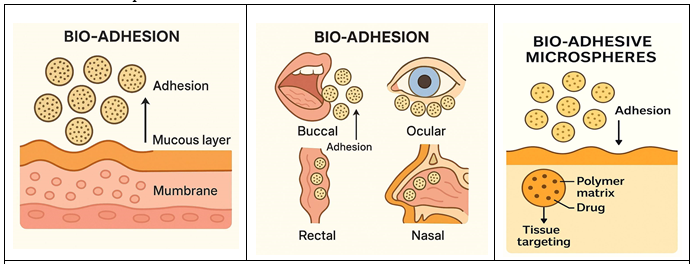
Fig.1 - Bio adhesive Microspheres
Magnetic Microspheres:
Magnetic microspheres are injected into the body for targeted drug delivery along with external magnetic fields. The systems use magneto tactic materials (e.g., chitosan, dextran) to move the microspheres to the desired location and thus expose less drug to the body.
Therapeutic Application: Delivery of chemotherapeutic drugs, especially for liver tumors.
Diagnostic Application: Used in imaging (e.g., detection of liver metastases) with super paramagnetic iron oxide nanoparticles.
These microspheres are specially made for visualizing and diagnostic purposes. Besides being combined with or carrying drugs, contrast agents may also be injected into magnetic microspheres for local imaging of a given area due to the deposit of the target tissue under the influence of an external magnetic field.
Floating or gastro-retentive microspheres have a lower density than the gastric fluids so they float and stay in the stomach for longer periods. This extends gastric residence time, improves drug absorption in the upper gastrointestinal tract, and ensures controlled drug release, lowering dosing frequency and plasma drug fluctuation.
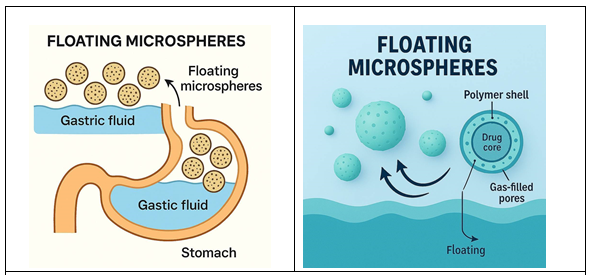
Fig.2 - Floating Microspheres
Radioactive Microspheres:
Radioactive microspheres are administered mainly for radio embolization therapy to treat cancer, especially liver cancers. They are usually 10–30 µm in size (larger than capillaries) and are injected intra-arterially, where they selectively become lodged within the tumour vasculature. The microspheres give off localized radiation (α, β, or γ rays), which delivers high doses to tumour tissue without damaging healthy tissue.
Mucoadhesive microspheres are designed to stick to mucosal surfaces for the improvement of both localized and systemic drug release. Advantages are extended contact with the mucosa, greater drug absorption, improved bioavailability, and site-specific delivery. They can be administered through any of the mucosal routes such as ocular, nasal, gastrointestinal, and urinary tracts.
Polymeric microspheres are categorized depending on the polymer used:
Prepared from materials like PLGA, polylactic acid, and polyglycolic acid, these microspheres disintegrate into non-toxic products and are suited for controlled and sustained release.
2. Synthetic Non-Biodegradable Polymeric Microspheres:
Made of polymers including Polymethylmethacrylate (PMMA), these microspheres exhibit drug release over a long period and structural integrity where biodegradability is not needed.
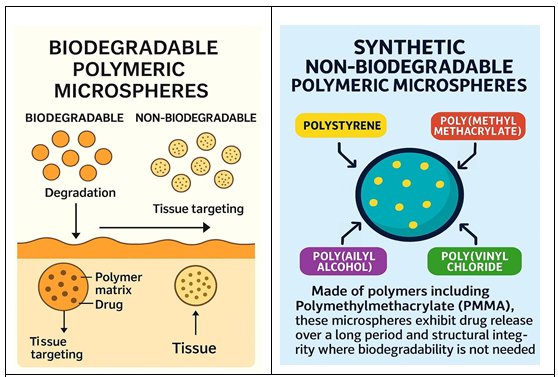
Fig.3 - Biodegradable and Non-Biodegradable Polymeric Microspheres
Preparation Methods of Microspheres:
There are numerous ways to make microspheres depending on the size, shape, drug release profile, and polymer type. The main classes of methods for preparing microspheres are physical, chemical, and physicochemical ones.
This method is largely used for the fabrication of microspheres from natural polymers such as proteins and carbohydrates. The polymer is dissolved in water and then, to disperse it, a non-aqueous medium (for instance, oil) is added. An emulsion of water-in-oil (w/o) is thus obtained. The crosslinking of the dispersed globules can be carried out by heat or by using chemical agents (e.g., glutaraldehyde, formaldehyde). Nevertheless, chemical cross-linking can make the drug contaminated with toxic reagents and affect drug stability and bioactivity.
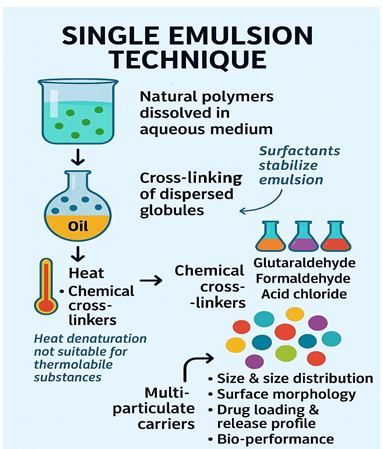
Fig.4 - Single Emulsion Technique
Double Emulsion Technique (W/O/W):
The Double Emulsion (W/O/W) method is designed for the encapsulation of water-soluble drugs, proteins, peptides, and vaccines and is essentially the manufacture of a water-in-oil-in-water (W/O/W) emulsion. The drug in the internal aqueous phase is first combined with a polymer-dissolved organic phase and then, an external aqueous phase is added and mixed again. The method enables not only a high encapsulation efficiency but also the safety of the biomolecules that are fragile.
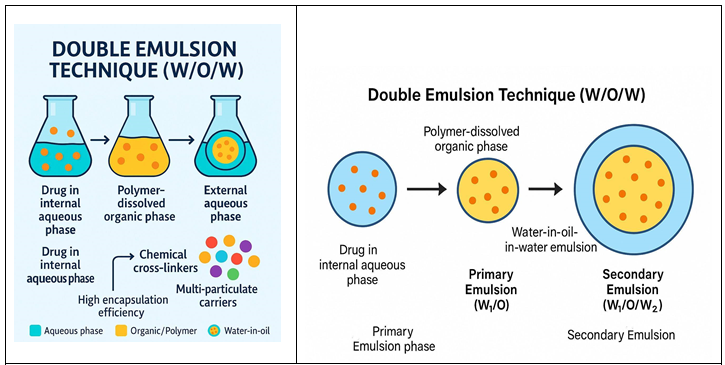
Fig.5 - Double Emulsion Technique (W/O/W)
Polymerization Techniques:
One of the methods to produce microspheres is through polymerization where the monomers are subjected to chemical reactions that lead to the formation of polymer chains, which, in turn, encapsulate the drug.
The method exploits the separation of a polymer-rich phase (Coacervation) from a solution by adding a non-solvent or an incompatible polymer. The coacervation phase holds the drug and is attached to the microspheres to be fixed. Hydrophilic, hydrophobic, and lipophilic drugs can be encapsulated by this method, generally resulting in a high drug load.
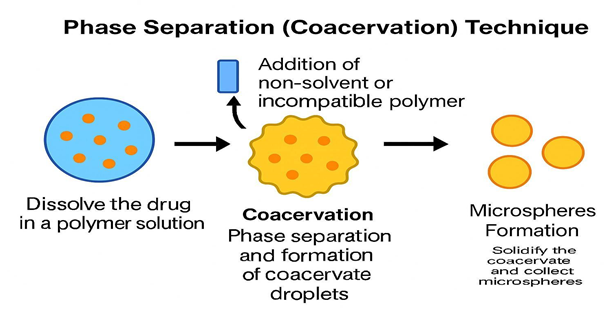
Fig.6 - Phase Separation (Coacervation) Technique / Coacervation method
One of the most frequent methods in which a drug solution with a polymer is sprayed into a hot chamber for drying, whereby the solvent is rapidly evaporated, and dry microspheres are formed. Besides this, it allows the production of a large quantity, the control of the particle size (generally 1–100 µm) and the use of materials that are sensitive to heat because of a short time of exposure.
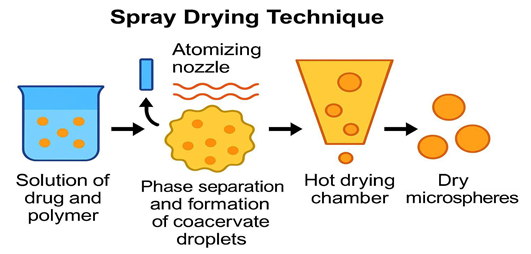
Fig.7 - Spray Drying Technique
6. Spray Congealing Technique:
Essentially the same process as spray drying, however the microcapsules are solidified by the cooling of the molten blend or by the spraying into a non-solvent. Hence the method is suitable for drugs in the lipophilic phase and for substances like waxes, fatty acids, and polymers with a melting point of about 25°C (77°F).
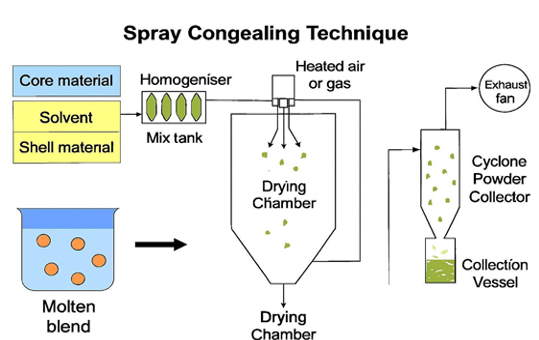
Fig.8 - Spray Congealing Technique
Emulsion Cross-Linking Technique:
The water-based polymer solutions (for instance, gelatine) are mixed with oil to make a w/o emulsion. After that, the cross-linking is activated by the use of a chemical such as glutaraldehyde. Generally, this technique is utilized in the manufacturing of gelatine-based microspheres and is suitable for hydrophilic drugs.
The drug is either dissolved or dispersed in a polymer solution and then, emulsified in a non-mixed continuous phase (generally oil). As the solvent is evaporated, microspheres are formed. This process is widely used for PLGA-based formulations and allows the production of monodisperse particles with tailored release profiles.
This is a gentle, water-soluble method that is perfect for the encapsulation of biomolecules that are sensitive to the process. Alginate or chitosan type polymers are ionically cross linked by using divalent or trivalent cations (e.g., Ca²?, Al³?). The microspheres solidify when they come into contact with the ionic solution and are further stabilized. Besides being pH-sensitive, it also enables targeted delivery, mainly adapted to the intestinal environment.
Fig.9 - Ionic Gelation Technique
Evaluation of Microspheres:
Characterization and evaluation of the microspheres are of vital importance to ensure their efficiency, stability, and suitability for drug delivery. Generally, the following parameters are being evaluated:
Procedure: Optical microscopy with a calibrated micrometre is the most widely used method to measure particle size.
Importance: The size of the particles affects the drug release, absorption, and distribution in the body.
Procedure: A multi-volume pycnometer is the tool used for the determination of the true density. The method is based on helium gas expansion.
Importance: Necessary for the understanding of microsphere flow behavior and packing.
Method: The measurement of micro-electrophoresis at different pH (3–10) was carried out to find the isoelectric point.
Importance: Helps in predicting the microsphere status in different physiological environments.
Method: Flow properties were determined by Carr's Compressibility Index, Hausner's Ratio, and Angle of Repose through tapped and bulk density measurements.
Significance: Describes powder flow ability, a necessity for capsule filling and handling.
Method: The measurement was done by using a droplet placed in contact with microspheres and then observing it under an inverted microscope at 200°C.
Significance: The angle of contact identifies the material's nature, whether it is hydrophilic or hydrophobic, which in turn influences the wettability and the drug release.
Method: Percentage Yield = (Total weight of microspheres recovered x 100) / Total weight of polymer + drug
Significance: The Primary Indicator of the Efficiency of the Preparation Process.
Method: Swelling Index=(((Mass of swollen microspheres – Mass of dried microspheres) / Mass of dry microspheres) x 100
Significance: The change in volume as a result of water uptake is the swelling index and it indicates the drug release behaviour that is still to come.
Method: 1 mL of filtrate is diluted with 0.1N NaOH and analysed with UV-Vis spectrophotometry.
Significance: This is the measurement of the actual drug concentration in the unit weight of microspheres.
Method: The crushed microspheres were sonicated and then filtered. Drug content was determined using UV-Vis spectrophotometry.
Significance: The extent to which the drug has been successfully encapsulated is indicated by the entrapment efficiency and thus, it is the factor that determines the therapeutic efficacy.
Method: Microspheres coated with a conductive metal (e.g., platinum) are exposed to an electron beam for imaging.
Significance: Provides surface feature visualization and structural integrity confirmation.
Method: ATR-FTIR checks for retention of functional groups and any changes due to drug-polymer interaction.
Significance: Identifies chemical compatibility and any structural changes in the formulation.
Method: Various thermal properties are identified by methods like DSC (Differential Scanning Calorimetric) and TGA (Thermo gravimetric Analysis).
Significance: Confirms thermal stability, drug-polymer interactions and pattern of degradation.
Method: Performed on a USP/BP dissolution apparatus (paddle or basket method) with media volumes of 100–500 mL, at 50–100 rpm.
Significance: Provides release profiles to predict in vivo performance and dosage frequency.
Applications of Microspheres:
Microspheres are biocompatible carriers that have merged in different directions to deliver a drug successfully. Their ability to release drugs in a controlled manner and target specific tissues is the reason for their widespread use in medicine, biotechnology, and diagnostic fields, parts of which are given below:
Bio adhesion, permeability increase, and favorable physicochemical properties are the name of the features with which polymeric microspheres can be successful in a long-lasting ocular drug delivery system.
For their pH-sensitive polymer microspheres are made that are primarily used in oral formulations to grant controlled release along with a better compliance of the patients, which is a feature of their film-forming ability that makes them the first choice over traditional tablets.
Bio adhesive polymers (e.g., starch, dextran, albumin, chitosan, gelatine) microspheres are prepared in such a manner that they can be wetted and can also be well sticking to the nasal mucosa, thus, they allow for being the drug repositories of increased residence time and bioavailability for systemic or CNS administration.
Microspheres backed by Mucoadhesive and transport-promoting attributes can really be oral carriers for gene therapy, using materials such as chitosan, gelatine, viral vectors, cationic liposomes, and polycation complexes.
Microspheres (PLGA, chitosan, PCL) are the carriers for chemotherapeutic agents like paclitaxel to be targeted locally at the tumor site, thus the drug is delivered in a targeted and time-release manner with minimal systemic toxicity.
Floating microspheres prepared from Eudragit, ethyl cellulose, Carbopol, BSA, or gelatine not only provide prolonged gastric residence but also enable site-specific, controlled drug release in the GI tract.
Microspheres help transdermal systems to be more effective which are film-forming polymers like chitosan and alginate. Drug diffusion rate is controlled by cross-linking and membrane thickness.
Microspheres are the carriers for drugs in the colon, for example, insulin is delivered with the help of polymers such as chitosan and thus, these drugs are useful for diseases like IBD or colorectal cancer.
Thiolated chitosan is the main material for making microspheres intended for local treatment of genitourinary tract mycotic infections. Besides chitosan, the most common materials in the synthesis of microspheres are gelatin and polylactic-co-glycolic acid (PLGA).
Micro particulate drug delivery systems fabricated by an extrusion–spheronization technique are a means of drug targeting to the specific sites of the body. Such systems can be made from materials, e.g., chitosan and microcrystalline cellulose.
Magnetic microspheres for:
CONCLUSION:
The review showcases the effectiveness and utility of microspheres as advanced systems for drug delivery. Microspheres can be manufactured via multiple preparation methods for broad pharmaceutical applications that provide controlled, targeted, and sustained delivery of therapeutic medications. Microspheres have applications that meet the needs for diverse routes of administration, including oral and topical drug delivery; targeted therapy; and biotechnological applications in gene therapy.
Emerging technology for both defined therapies and industry utilization based on microspheres present concrete clinical and commercial benefits that will enhance safety, lower toxicity, and optimize drug administration and effective therapy. As more companies implement these technologies, it is clear that microsphere-based systems have specific advantages over traditional delivery systems.
Additionally, their uses do not involve only drug delivery; microspheres can also be utilized in cancer treatment therapies, bimolecular diagnostics, and imaging of tumours which reinforce the role of microspheres in the future of healthcare. Aspects of microspheres such as targeting specificity, subject compliance, and multiple functional applications are making microspheres a primary platform in the advancement of medication delivery and biomedical science.
REFERENCE


Raskar Tanvi*, Pawar Pratiksha, Priya Daingade, Tushar T. Shelke, A Review of Microspheres: Types, Formulation Techniques, Characterization and Application, Int. J. of Pharm. Sci., 2025, Vol 3, Issue 10, 350-366 https://doi.org/10.5281/zenodo.17264164
 10.5281/zenodo.17264164