

We use cookies to ensure our website works properly and to personalise your experience. Cookies policy
Valmik Naik College of Pharmacy, Telwadi, Kannad - 431103
In the global market herbal cosmetics have a growing demand. Many cosmetics are being manufactured by the pharmaceutical companies. Herbal cosmetics are the natural cosmetics which have been used since ancient times. Since the herbal cosmetics have lesser side effects than the synthetic ones so they are more prevalent. More than 80% of the world population in dependent upon the herbs. These herbs not only treat the diseases but also are used in the form of cosmetics. Skincare cosmetics is one of the major classifications of the herbal cosmetics. This review article contains the information about the herbs which are used in a face pack. People are using herbs for homemade natural face packs since the ancient era. These natural face packs give smooth and radiant skin and also treats acne, pimples, scars, marks and pigments. They have a non-toxic nature and they reduce the allergic reactions. The aim of this article is to provide information about the herbs which are used in a face pack. These herbs can be used in a combination or can be used a single constituent.
Cosmetics are defined as the products used for the purposes of cleansing, beautifying, promoting attractiveness or alternating the appearance. Different herbs are used for cleaning and beautifying our face. Since ancient times herbs are used for different purposes [1]. The word cosmetic was derived from the Greek word “kosmtikos” meaning having the power and skill in decorating [2]. Health, habits, routine job, climatic conditions and maintenance are the factors on which skin of individual depends. Due to excessive exposure to heat the skin dehydrates during summer and cause wrinkle, freckles, blemishes, pigmentation and sunburns. Cracks, cuts, maceration and infections are caused to skin due to extreme winter which damage our skin [3]. The cosmetic according to the Drugs and Cosmetics Act 1940 is defined as the article intended to be rubbed, poured, sprinkled or sprayed on, introduced into or otherwise applied to the human body or any part thereof for cleansing, beautifying, promoting attractiveness or altering the appearance. The preparations containing phytochemicals from a variety of botanical sources, which influences the functions of skin and provide nutrients necessary for the healthy hair or skin are herbal cosmetics. These cosmetics have lesser side effects than the other cosmetics. The natural herbs and their products are used for their aromatic value in cosmetic preparation. These natural herbs make our skin healthy [3].A face pack is typically a paste or cream-like product applied to the face to treat specific skin concerns. The formulation process involves selecting and combining various ingredients basedon their properties and intended benefits. These ingredients can include natural elements suchas clay, herbs, and essential oils, as well as synthetic compounds that offer additional effects, such as antiaging or anti-acne benefits.
The primary objectives of face pack development are to provide a solution for different skin types—whether oily, dry, sensitive, or combination skin—and address concerns like acne, pigmentation, dullness, or aging. Key ingredients are chosen for their ability to absorb excess oil, moisturize, exfoliate, or soothe the skin.
Natural ingredients like aloe vera, honey, and tea tree oil are commonly used, as they are know for their skin-friendly properties.
Herbal Face Pack :
The herbal paste which is applied on face to treat acne, pimple, scars, marks and pigments is known as “mukhalepa” in ayurveda. The process of smearing this herbal mix on face is known as “mukhalepana”. This beauty therapy is popular as facial. “Face pack” is the smooth powder which is used for facial application. A good herbal face pack must supply necessary nutrients to skin. It should penetrate the subcutaneous tissues in order to deliver the required nutrients. Different types of skin need different types of herbal face packs. These preparations are applied on the face in the form of liquid or pastes. The face pack is then allowed to dry and set to form film giving tightening, strengthening and cleansing effect to the skin. The face pack is usually left on the skin for five to ten minutes to allow all the water to evaporate. The resulting film thus contracts and hardens and can easily be removed. The colloidal and adsorption clays used in these preparations remove the dirt and grease from the skin of the face while the warmth and tightening effect produced by application of face pack produces the stimulating sensation of a rejuvenated face. Skin debris and deposited dirt gets removed when we remove or peel off the applied face pack [4].The Natural face packs do contain some vital vitamins that are required for the health and glow of our skin. These substances also prove to be beneficial for our skin in many ways.
Introduction of Skin :
The skin is the largest organ of the human body, serving as a vital barrier and interface
between the internal body and the external environment. It plays critical roles in protection,
sensation, thermoregulation, and maintaining overall homeostasis. Understanding its anatomy and physiology is essential for fields like dermatology, cosmetology, and medicine.
Types of Skin
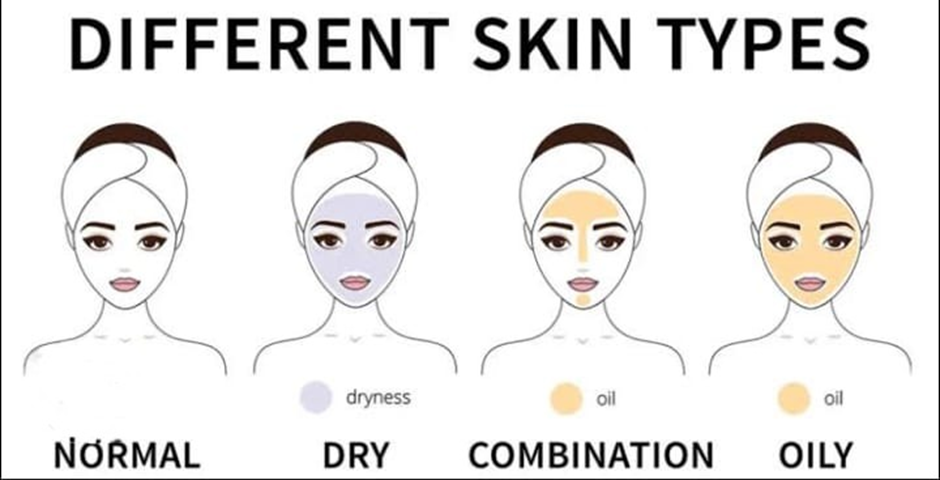
Fig 1. Type of Skin
Normal skin is neither too dry nor oily. Normal skin is smooth, has little pores and is balanced physically and functionally.
The lack containing water in the epidermis causes the condition known as dry skin. Dry skin can occur in people for a number of reasons. Sunlight, chilly temperatures, and dry conditions all cause skin to become parched. Additionally, atopic dermatitis, diabetes, and hypothyroidism can all be triggered by dry skin.
Sebum-Producing Skin During puberty, young people usually have oily skin. Environmental factors like UV radiation, chemicals and cosmetics, as well as genetic, hormonal, nutritional and stressor factors, can all contribute to oily skin. Typically, people with oily skin get acne and dandruff.
It might be called oily and dry skin or normal and oily skin. The T-zones on the forehead, nose and chin look greasy, but the rest of the skin is either normal or dry.
Anatomy of the skin
The skin has three primary layers:
1. Epidermis structure
Key cells
2. Dermis
Key components
3. Hypodermis (Subcutaneous layer)
Physiology of the skin
The skin performs multiple vital functions:
Common skin problems :
1. Acne
2. Eczema (Atopic dermatitis)
3. Hyperpigmentation
Benefits of using Herbal Face Pack :
MATERIALS AND METHODS :
1. Multani Mitti.
Also known as Fuller’s Earth, already popular in South Asia as a home remedy substance. For ages, it has been used as a cleanser for skin and hair in this region of the world. Any clay material that has the potential to decolorize oil or liquids without the use of chemicals is known as Multani mitti.[2] Multani mitti is a clay named after the town of Multan in prepartitioned India, which is currently in Pakistan. Multani mitti is clay made up of primarily Aluminium Silicate with trace amounts of other impurities. The composition varies according to the region from where it is mined.
This clay consisting of SiO2- 47%, Al2O3 – 23.3%, Fe2O3 – 6.95%, CaO – 2.9%, MgO traces. Multani mitti is non-plastic clay that contains
enough water. It was obtained from laboratories of R. G. Sapkal College of Pharmacy, it was powdered and passed through mesh #40 to obtain particles of homogenous size.(7)
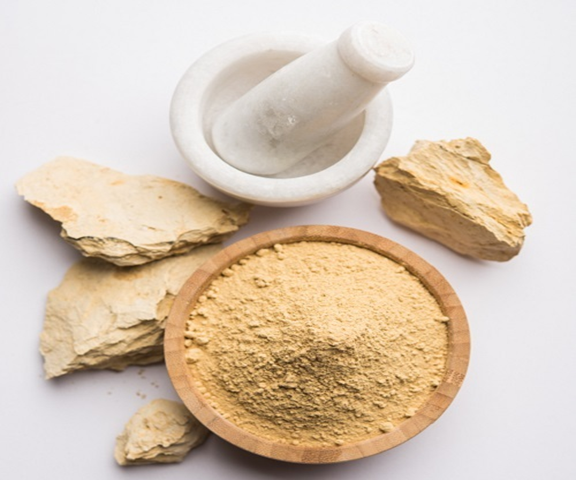
Fig 2. Multani Mitti
2. Sandalwood.
It is a plant species in the Santalaceae family of the genus Santalum that is both commercially and culturally valuable. The oil contained in the sandalwood timber, primarily in the heartwood, is the fundamental reason for its commercial and cultural importance. If your skin is oily, you can use it to remove dark spots. Anti-tanning and anti-ageing properties found in Sandalwood. It also benefits the skin in a variety of ways including toning, emollient, antibacterial, relaxing and healing characteristics.[9] It was also obtained from the laboratories of R.G.Sapkal College of Pharmacy Nashik, powdered and passed through mesh #40.(8)
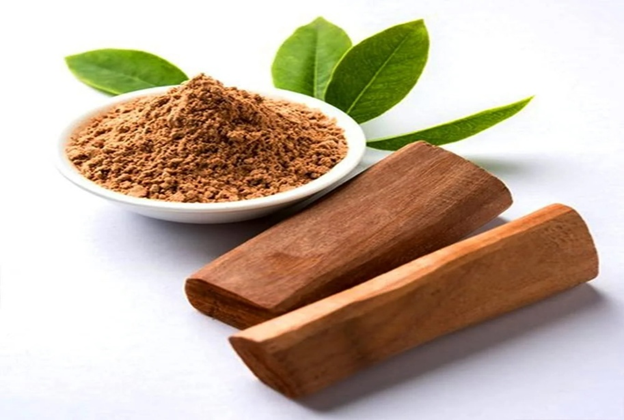
Fig 3.Sandalwood.
3.Aloe.
Aloe Vera gel was used, that was obtained by peeling the Aloe plant and using the gel obtained. The main characteristic of the A. Vera plant is its highwater content, which ranges from 99 to 99.5%.] Antibacterial properties have been described for A. Vera. anthraquinone, a structural counterpart of tetracycline is an active component in A. Vera. By blocking the ribosomal A site, anthraquinones operate like tetracycline, inhibiting bacterial protein production (where the amino acylated tRNA enters)(9)
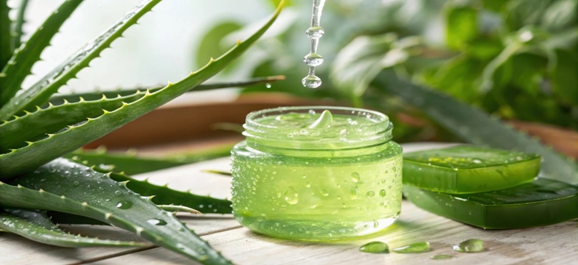
Fig 4.Aloe.
4. Manjistha.
Synonyms of Manjistha are Jingi, Yojanavalli, Samanga, Raktanga, Indian Madder etc. Rubiacordifolia linn is a flowering plant species. It is commonly known as manjishtha. It has blood purifier activity, astringent, antiacne, anti-inflammatory, anti-microbial, antiseptic, nephroprotective, anti-rheumatic and hepatoprotective qualities are only a few of the pharmacological effects of this plant.[6] Manjishtha has also three species like – Rubia cordifolia (Indian madder), Rubia akane (Asian madder) and Rubia tinctorum (European or African madder). [6]
Anti-acne property: When compared to normal clindamycin gel, the anti-acne activity of anthraquinone rich fraction of R. cordifolia in a gel formulation against propioni bacterium acnes, (10)
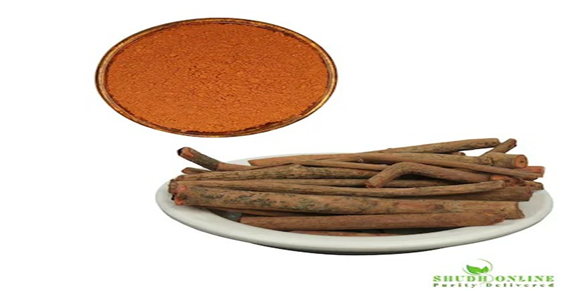
Fig. 5. Manjistha.
5. Haridra.
Haridra’s major active element, curcumin, is as potent antioxidant as vitamin C, E and Beta-Carotene, making it a popular choice amongst consumers. It is used for the prevention of cancer, liver protection and ageing too soon. Haridra has been demonstrated to be non-toxic to humans in a number of investigations(11)
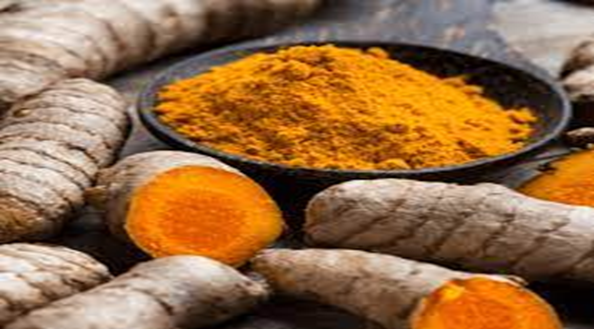
Fig 6. Haridra.
Formulation of product
Table no.i. Master Formula.
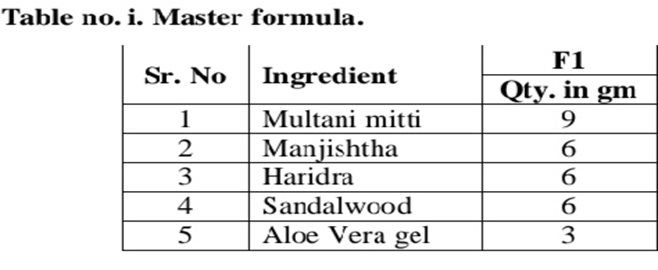
Methodology of preparation
Procedure to apply a Herbal Face Pack
Ideal properties of a Herbal Face Pack
Evaluation Parameters for Herbal Face Pack :
Organoleptic Properties
The colour, odour, taste and texture of the powder are tested manually. (16)
General powder Characteristics
Microscopy method is used to test the particle size of the powder. Angle of Repose by Funnel method, Bulk Density and Tapped Density by Tapping Method are the tests which are performed to evaluate the flow property of the powder(17)
Physicochemical Evaluation
Total ash and Acid insoluble ash is performed using incinerator, pH is found by using pH meter. Irritancy, stability and washability tests are also performed for the evaluation of a herbal face pack.(18)
CONCLUSION :
Face is a parameter that identifies a person and all people try to keep it neat and clean. The herbal formulations are safer to use and have lesser side effects hence these herbs are very useful in cleansing our face.
The herbs discussed in the review article have lots of medicinal benefits. These herbs are used in a face pack as a single constituent as well as a poly herbal face pack. These herbs are very beneficial as well as economical. Face pack is a very important cosmetic product and can be easily prepared at home with the help of these herbs. In the present scenario herbs play an important role in all the aspects hence are used widely.
REFERENCES




Neha Rathod, Rahul Rathod, Sabafarin Hasin Shaikh, Mohammad Sufiyan, Samadhan Chavan, Sushmita Chavan, A Review on Herbal Face Pack, Int. J. of Pharm. Sci., 2025, Vol 3, Issue 12, 3087-3095. https://doi.org/10.5281/zenodo.18000519
 10.5281/zenodo.18000519