
Department of Pharmacy, Institute of Technology and Management, GIDA, Gorakhpur, Uttar Pradesh, India, 273209.
Nyctanthes arbor-tristis Linn. (Oleaceae) is frequently used in Indian traditional medicine. It goes by the names Night Jasmine, Parijat, and Harsingar as well. The shrub can be found in tropical and subtropical areas of the world. A small sacred ornamental tree known as Nyctanthes arbor-tristis Linn is well-known across the country for its wonderful aroma and white orange blooms. This plant can be used profitably because each part has a distinct medical benefit and value. It is used in the medical practises of Ayurveda, Siddha, and Unani. According to Ayurveda and modern science, Nyctanthes arbor-tristis Linn has anti-oxidant, antimicrobial, hepatoprotective, anti-allergy, anti-leishmanial, anti-diabetic, immune-stimulant, antiviral, sedative, anti-inflammatory, anti-pyretic, and antinociceptive properties.
Since prehistoric times, medicinal plants have been employed as distinct sources of medicine all across the world. Interest in medicinal and aromatic plants has increased recently due to their safe and efficient active principles. 'Night Jasmine' or 'Harsinghar' (Hindi) are common names for the Oleaceae plant Nyctanthes arbor-tristis Linn. [1,2] The Greek words "Nykhta" (night) and "anthos" (flower) are the source of the name Nyctanthes. [3,4] The shrub can grow up to ten meters tall. The plant has simple leaves with a complete border that is 6-12 cm long and 2-6.5 cm wide, and it has a lifespan of 5–20 years. The sweet-smelling flowers are arranged in clusters of two to seven and feature a five to eight lobed corolla with an orange-red core. The white-powder petals are covered in dewdrops. The fruit is a flat, brown, heart-to-spherical capsule that is divided into two pieces, each of which has a single seed and measures about 2 cm in diameter. [5]

Botanical Description:-
Kingdom: Plantae
Class: Eudicots
Division: Angiosperm
Order: Lamiales
Family: Oleaceae
Genus: Nyctanthes
Species: arbor-triti
Name of the plant in different languages as below: [6]
English : Night jasmine
Hindi : Harsingar
Bangali : Sephalika
Sanskrit : Parijatha
Kannada : Parijatha
Malayalam : Parijatakam
Marathi : Parijathak
Gujarathi : Javaparvati
Oriya : Gangasiuli
Phytochemical Constituents
|
Plant part |
Chemical Constituents |
References |
|
Leaves |
D-mannitol, beta-amyrin, beta-sitosterol, hentriacontane, benzoic acid, astragalin, nicotiflorin, oleanolic acid, nyctanthic acid, friedelin and lupeol, Arborside-A, Arborside-B, C and D, Tannic acid, Glucose and fructose. |
[6,10,11,12,13,14] |
|
Seeds |
Arbortristoside A&B, Glycerides of linoleic oleic, lignoceric, stearic, palmitic and myristic acids, nyctanthic acid, 3-4 secotriterpene acid. |
[4,7,8,9]
|
|
Flowers |
Essential oil, Carotenoids, glycosides viz β-monogentiobioside ester of α-crocetin (or crocin-3), β-monogentiobioside-β-D monoglucoside ester of α-crocetin, β-digentiobioside ester of αcrocetin flavonoids including quercetin, kaempferol, apigenin. Cardiac glucoside, nymphalin. |
[15, 16, 4] |
|
Stem |
Glycoside-naringenin-4’-0-β-glucapyranosyl-αxylopyranoside and β-sitosterol. |
[5, 6,17,] |
|
Bark |
Glycosides and alkaloids |
[3,4,5] |
|
Stem |
Glycoside-naringenin-4’-0-β-glucapyranosyl-αxylopyranoside and β-sitosterol |
[5,16,19] |
|
Roots |
alkaloids, tannins, glycosides, beta-sitosterol and oleanolic acid |
[4,20,21] |
|
Flower oil |
α-pinene, p-cymene, 1- hexanol methyl heptanone, phenyl acetaldehyde, 1-deconol and anisaldehyde. |
[16,22] |
Leaves

Structure-1 D- manni
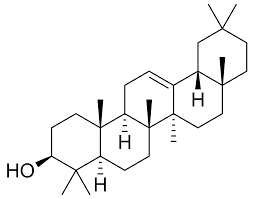
Stru. -2-beta- amyrin
Flower
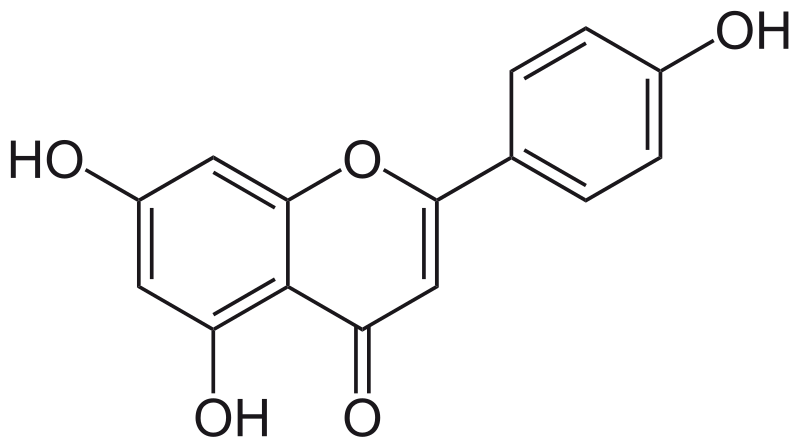
Stru.3- Apigenin
Bark

Stru.4-Glycoside
Pharmacological Activity

Antioxidant
Nyctanthes arbor-tristis has been utilised in traditional medicine from prehistoric times. Flavonoids, tannins, saponins, glycosides, alkaloids, steroids, and phenolic substances were found in the ethanolic extract of Nyctanthes arbor-tristis Linnleaves .'s and stems. Phenolic substances have long been known as antioxidants and free radical suppressors. [15, 23-26]. Free radicals are formed as a result of the body's regular metabolic activity in a live organism. Antioxidants fight pathological disorders like ischemia, anaemia, asthma, rheumatoid arthritis, inflammation, neurodegeneration, Parkinson's disease, mongolism, the ageing process, and maybe dementias by acting as free radical scavengers. [5,25]. The antioxidant activity of Nyctanthes arbor-tristis Linn. was assessed using the DPPH test, free radical scavenging activity, reducing power assay, and total antioxidant capacity in a previous work. As an auspicious plant derived from natural plant sources, Nyctanthes arbor-tristis Linn has a high level of antioxidant activity. [25, 27, 28]
Antimicrobial Activities
People nowadays rely on allopathic treatments more often, however microorganisms are developing resistant to these drugs. As a result, natural ingredients are increasingly being used as antibacterial agents. The oil extracted from the leaves, seeds, and bark has a broad spectrum of antibacterial activity against both gramme negative and gramme positive bacteria. The antibacterial activity of oil containing eugenol and its derivatives was tested using the disc plate technique against Klebsiella pneumoniae and Pseudomonas aeruginosa and the agar well diffusion method against Fusarium oxysporum. The essential oil has the greatest antibacterial activity against K. pneumoniae and P. aeruginosa, with inhibition zones of 23.8 and 26.3 mm at 1000 g/ml, respectively. At 2500 g/ml, 5-allyl-2-hydroxy-3-methoxybenzenesulfonic acid (3) was the most efficient against F. oxysporum, with a maximal inhibition zone diameter of 29.5 mm. Harsingar essential oil, eugenol, and its derivatives may be useful antibacterial agents, assisting in the creation of natural antimicrobials to replace synthetic counterparts. [3 ,28]
Hepatoprotective Activity
Hepatic problems have become important roadblocks for medicine in the twenty-first century. Hepatic tissue has a high capacity for regeneration, and damage is generally significant before it becomes apparent. Hepatic disorders present itself when hepatocyte regeneration does not keep up with damage, resulting in hepatocellular failure. In a previous study, alcoholic and aqueous extracts of Nyctanthes arbor-tristis leaves were found to protect the liver from the toxic effects of carbontetrachloride by lowering serum glutamate pyruvate transaminase, glutamate oxaloacetate transaminase, alkaline phosphatase, and serum bilirubin levels. At a dosage of 200 mg/kg body weight, both the alcoholic and aqueous extracts demonstrated considerable hepatoprotective effect by lowering high levels of biochemical markers. The findings were backed up by histological analyses of liver samples, which revealed that the extracts regenerated hepatocytes. A methanolic extract of Nyctanthes arbor-tristis leaves revealed remarkable hepatoregenerative capacity in acetaminophen-induced liver damage, according to another study. It worked by protecting against membrane fragility and prevented glutathione levels from dropping. [11-13, 29,30]
Anti-allergy activity
The use of a water soluble component of the alcoholic extract of Nyctanthes arbor-tristis leaves as a pretreatment for guinea pigs exposed to histamine aerosol provided significant protection against the onset of hypoxia. 32 Nyctanthes arbor-tristis contains anti-allergic compounds arbortristoside A and arbortristoside C. [15]
CONCLUSION
The current study focused on the Nyctanthes arbor-tristis plant. It's a fragrant and beautiful plant with a variety of medicinal properties. Pharmacological effects may be found in every section of the plant. Nyctanthes arbor-tristis is widely available, and its collection and cultivation do not necessitate any specific circumstances. The plant Nyctanthes arbor-tristis has long been in high demand due to its efficacy in treating a variety of chronic and acute disorders. This study aims to highlight Nyctanthes arbor-tristis and its components' therapeutic potential in the prevention and treatment of illness. We may infer from this study that the reviewed studies are intended to pique the interest of researchers looking for novel medications derived from Nyctanthes arbor-tristis and its chemical components. The extracted chemicals will likely be examined in the future for further clinical studies and possible use as a supplement to present treatments.
REFERENCES

Nalini Paswan*, A Review on Nyctanthes Arbor-Tristis Linn: Medicinal Plant, Int. J. of Pharm. Sci., 2025, Vol 3, Issue 12, 1954-1960 https://doi.org/10.5281/zenodo.17895280
 10.5281/zenodo.17895280
