

We use cookies to ensure our website works properly and to personalise your experience. Cookies policy
Dr Vitthalrao Vikhe Patil Foundation’s College of Pharmacy, Vadgaon Gupta (Vilad ghat), Ahilyanagar
The Myrtaceae family includes the guava (Psidium guajava L.), a tropical plant that is widely grown and prized for both its important medicinal qualities and its nutritional value as a fruit crop. Guava leaves, among other parts of the fruit, have drawn a lot of attention because of their rich phytochemical composition, which includes flavonoids, tannins, saponins, polyphenols, vitamins, and vital minerals. These bioactive ingredients support a variety of therapeutic actions, especially those that are antioxidant and antidiabetic. Compounds like gallic acid, Guaijaverin, and quercetin are essential for scavenging free radicals, which lowers oxidative stress and shields cells from harm. Guava leaf extracts are also helpful in the management of type 2 diabetes because they increase insulin sensitivity and improve glucose metabolism by blocking enzymes that break down carbohydrates. To obtain these valuable constituents, a variety of extraction techniques have been studied, including Soxhlet, maceration, ultrasound, and microwave-assisted methods. All things considered, guava leaves are a promising natural resource for creating safe, reasonably priced, and efficient therapeutic agents for the treatment of diabetes and illnesses linked to oxidative stress.
Psidium guajava (P. guajava), commonly referred to as guava, is a tropical fruit extensively cultivated across various regions of the globe, encompassing countries like Egypt, India, Indonesia, Syria, Pakistan, Bangladesh, and South America. It belongs to the Myrtaceae family and takes the form of an evergreen shrub or a compact tree. Not only utilised as a dietary staple, guava also holds significance in folk medicine, with distinct components of the plant boasting a spectrum of therapeutic attributes. Renowned for its dual role as sustenance and remedy, guava, originating in the tropics, boasts an extensive historical legacy. Multiple segments of the plant, including leaves and fruits, offer an array of medicinal benefits, spanning from antimicrobial efficacy to potential anti-cancer attributes. Among the noteworthy medicinal characteristics of guava is its efficacy in treating gastrointestinal infections, notably recognised as a traditional solution for conditions such as diarrhoea. Additionally, the extract derived from guava leaves has demonstrated antinociceptive properties, effectively mitigating pain. Furthermore, guava leaves find application in diabetes management, and the plant is credited with wound-healing capabilities, regulation of blood glucose levels, and enhancement of cardiovascular well-being.
Guava contains a wide range of various compounds that exert antioxidative activity and phytochemicals, including polysaccharides, essential oils, minerals, vitamins, enzymes, triterpenoid acid alkaloids, steroids, glycosides, tannins, flavonoids and saponins. These indeed play a major role in conferring many health benefits to the plant, including its anti-oxidant, anti-inflammatory, and possibly anti-cancer properties. Being highly recognised as a rich source of nutrients and phytochemical antioxidants, guava contains compounds such as ascorbic acid, carotenoids, antioxidant-rich dietary fibre, and polyphenolics. The leaves of the guava plant are particularly rich in bioactive compounds, especially polyphenolic, among them quercetin and various flavonoids, besides ferulic acid, caffeic acid, and gallic acids. These compounds, individually, show strong antioxidant action and stimulant activities.
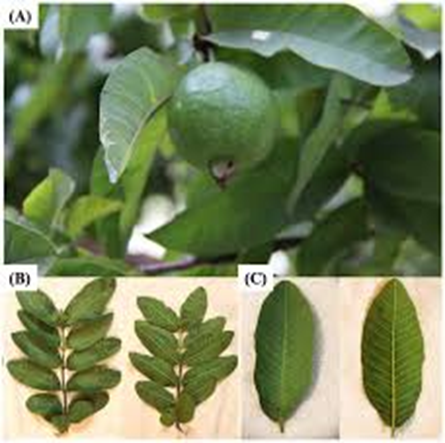
Figure 1. Guava leaves
2. MORPHOLOGY:
3. TAXONOMICAL CLASSIFICATION:
4. CHEMICAL CONSTITUTIONS:
Table 1. Chemical constituents:
|
Chemical Class |
Specific Compounds (Examples) |
Key Bioactivity |
|
Flavonoids |
Quercetin, Guaijaverin, Avicularin, Rutin, Kaempferol, Apigenin, Myricetin, Catechin, Epicatechin |
Strong antioxidant, anti-inflammatory, antimicrobial, antidiabetic. |
|
Phenolic acids |
Gallic acid, Chlorogenic acid, Caffeic acid, Ferulic acid, Ellagic acid |
Antioxidant, antimicrobial, anti-inflammatory. |
|
Tannins |
Tannins (general class), Prodelphinidin dimer isomer |
Antioxidant, anti-diarrheal. |
|
Terpenoids |
β-Caryophyllene, Limonene, Caryophyllene oxide, α-Pinene, Nerolidol |
Essential oil components, antimicrobial, antioxidant, anti-inflammatory. |
|
Triterpenoids |
Oleanolic acid, Ursolic acid, β-Sitosterol, Uvaol |
Anti-inflammatory, anti-cancer potential. |
|
Other components |
Saponins, Alkaloids, Glycosides, Essential oils, Vitamins (e.g., vitamin C), Minerals |
Diverse pharmacological Activities. |
4.1 Proximate Composition:
Guava leaves are packed with a rich source of micro and macronutrients; they also contain bioactive compounds. They contain 82.47% moisture, 3.64% ash, 0.62% fat, 18.53% protein, 12.74% carbohydrates, 103 mg ascorbic acid, and 1717 mg gallic acid equivalents (GAE)/g total phenolic compounds.
4.1.1 Polysaccharides:
Polysaccharides are macromolecules that are ubiquitously present in nature. They are made of long polymeric chains, which are composed of monosaccharide units. These polysaccharides demonstrate various physicochemical, biological, and pharmacological properties, such as antioxidant, anti-inflammatory, antidiabetic, Immunomodulatory, and antitumor activities. Guava leaf polysaccharides (GLPs) can be isolated using ultrasound-assisted extraction (UAE) (time: 20 min, power: 404 W, temperature: 62 °C). These GLPs contain about 9.13% uronic acid and 64.42% total sugars, out of which 2.24% are reducing sugars. GLPs are soluble in water but insoluble in organic solvents like ethanol, diethyl ether, ethyl acetate, acetone, and chloroform. Extracted GLP with a concentration of 100 µg/mL, exhibits good antioxidant capacity with 56.38% and 51.73% 2,2-diphenyl-1-picrylhydrazyl (DPPH) radical- and 2,2-azino-bis (3-ethylbenzothiazoline-6-sulfonic acid (ABTS) radical cation-scavenging capacity, respectively. Similar results were also reported by Kong et al. They obtained up to 0.51% GLP using UAE that exhibited good DPPH- and "OH-scavenging activity (72-86% and 42.94-58.33%). GLPs can be categorised into two groups: unsulfated and sulphated GLPs. Sulphated GLP contains about 18.58% sulphate content. Sulphated GLP exhibited good antioxidant activity in terms of DPPH, hydroxyl, and alkyl radical-scavenging activity (0.10, 0.02, and 0.17 ICso, mg/ml, respectively). Studies showed that guava leaf extracts (GLE) effectively reduced the oxidative stress and toxicity caused by hydrogen peroxide in mammalian cell lines (Vero cells). GLPs are also found to be beneficial in treating diabetes mellitus symptoms. Acarbose (an antidiabetic drug) is commonly used for the treatment of type 2 diabetes. It acts as an inhibitor of glycoside hydrolases like β-glucosidase and α-amylase and thus prevents rapid glucose release from complex carbohydrates. This activity causes some of the incompletely digested complex carbohydrates to remain in the intestine and be transported to the colon. The intestinal microflora digests these complex carbohydrate fractions, causing gastrointestinal problems like diarrhoea and flatulence. A study reported that GLP inhibited β-glucosidase more efficiently than acarbose without significantly blocking the α-amylase activity. Moreover, it also caused a substantial drop in fasting blood sugar, total cholesterol, total triglycerides, glycated serum protein, creatinine, and malonaldehyde in diabetic mice without causing any major side effects. Therefore, GLP can be used as a replacement for acarbose for managing diabetes mellitus and also as an antioxidant additive in foods.
4.1.2 Proteins:
Guava leaves contain 9.73% protein on a dry weight basis. Proteins are large biomolecules composed of amino acids and act as building blocks of cells. Proteins play a major role in growth and maintenance, enzyme regulation, and cell signalling, and also as biocatalysts. Recently, plant-based nutrients have gained potential because of the high demand for nutritionally rich food, particularly protein. A great effort is now being made to find highly sustainable, nutritionally rich food sources (25). Thomas et al. reported 16.8 mg protein/100g and 8 mg amino acids/100g in guava leaves as estimated according to Lowry's and ninhydrin methods, respectively. Jassal et al. reported that guava leaves can be utilised as a novel and sustainable dietary source, as they are a rich source of proteins, carbohydrates, and dietary fibres.
4.1.3 Minerals and Vitamins:
Guava leaves are a rich source of minerals, such as calcium, potassium, sulphur, sodium, iron, boron, magnesium, manganese, and vitamins C and B. The higher concentrations of Mg, Na, S, Mn, and B in GLs make them a highly suitable choice for human nutrition and also as an animal feed to prevent micronutrient deficiency. Thomas et al. reported the concentration of minerals such as Ca, P, K, Fe, and Mg as 1660, 360, 1602, 13.50, and 440 mg per 100g of guava leaf dry weight (DW), respectively. The concentration of vitamins C and B was 103.0 and 14.80 mg per 100g DW, respectively. Consumption of Ca- and P-rich GLs reduces the risk of deficiency-related diseases like hypocalcaemia, hypophosphatemia, and osteoporosis. The study also reported that the concentration of Ca, P, Mg, Fe, and vitamin B in GLs was higher than that in guava fruit. The higher vitamin C content in GLs may help in improving the immune system and maintaining the health of blood vessels, whereas vitamin B plays an important role in improving blood circulation, nerve relaxation, and cognitive function stimulation.
4.2 Phenolic Compounds:
Phenolic compounds serve as key bioactive compounds that provide antioxidant and hypoglycaemic properties to guava leaves. Generally, these phenolic compounds play a major role in managing various metabolic and physiological activities in the human body. About seventy-two different phenolic compounds have been determined in guava leaves using high-performance liquid chromatography-diode array detector-quadrupole time-of-flight tandem mass spectrometry. Generally, five quercetin glycosides are present in guava leaves. The presence of two new benzophenone galloyl glycosides (guavinosides A and B) and one quercetin galloyl glycoside (guavinoside C) was also reported. Seventeen types of triterpenoids, thirty types of flavonoids, and nineteen types of sesquiterpenoids in guava leaves have also been reported. Moreover, diphenylmethane [ sesquiterpenoid-diphenylmethane meroterpenoids (psiguadials A and B) and psiguanins A-D (1-4) were also found in guava leaves. Epidemiological studies have established the roles of polyphenolic compounds against chronic diseases, such as diabetes, cancer, and neurodegenerative and cardiovascular diseases.
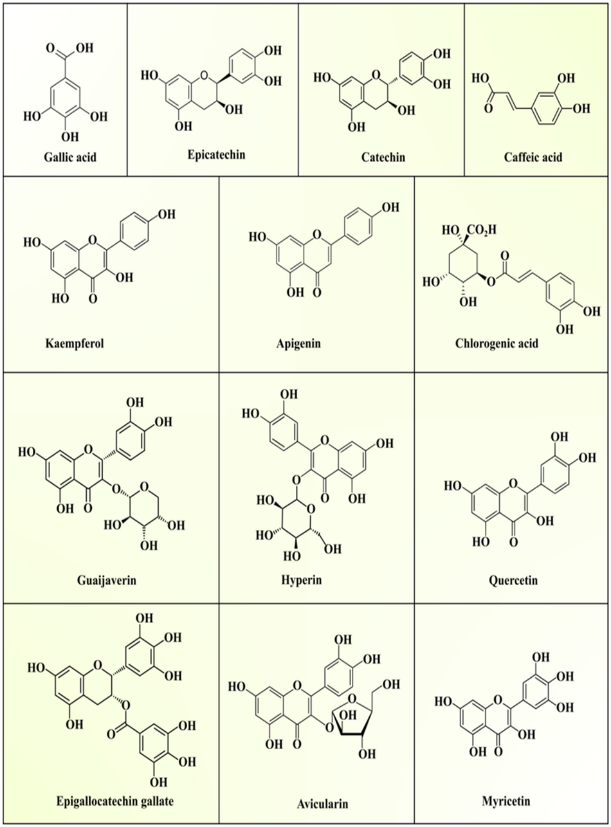
Figure 2. Phenolic compounds present in guava leaves
5. BIOLOGICAL ACTIVITY OF GUAVA LEAF EXTRACT:
5.1 Antidiabetic Activity:
Diabetes is a major chronic disease, and about 10% of the world's population suffers from a blood glucose metabolic disorder, mainly characterised by a hyperglycaemic condition. This situation is either characterised by Insufficient secretion of insulin from B-cells of pancreatic islets (type 1 diabetes) or the inability of cells to react in response to the secreted insulin (type 2 diabetes). The International Diabetes Federation (IDF) stated that 451 million people were affected by diabetes mellitus, resulting in 5 million deaths, in 2017, and the global prevalence of diabetes is projected to hit 693 million cases by 2045. The prolonged condition of hyperglycaemia leads to increased production of ROS and dyslipidaemia, causing severe cellular damage and complications.
Guava leaves have been widely used as an ethnomedicine for diabetes management. Flavonoids and polysaccharides of guava leaves have been reported for their antidiabetic potential in several studies. Guaijaverin and avicularin flavonoids of guava leaf extract were associated with significant improvement in the function of β-cells of pancreatic islets and hepatocyte morphology in diabetic mice. Guaijaverin suppressed the activity of the blood glucose homeostasis enzyme dipeptidyl-peptidase IV, while avicularia inhibited intracellular lipid aggregation by impeding glucose uptake through GLUT-4 in vitro and revealed no distinct toxicity for 3T3-L1 adipose cells. Luo et al. extracted guava leaf polysaccharides (GLPs) and further tested the antidiabetic effects on streptozotocin-induced diabetic mice in combination with a high-fat diet. The authors revealed that GLP was associated with a significant reduction in total cholesterol, triglycerides, glycated serum protein, creatinine, fasting blood glucose, and malonaldehyde content, and increased total superoxide dismutase and total antioxidant capacity enzyme activity in vivo. Suboptimal glycaemic regulation may lead to elevated postprandial glucose concentrations. Nair et al. suggested that the inhibitors of α-amylase and α-glucosidase enzymes can decline postprandial glucose absorption, and are therefore possible targets for diabetes management. The polysaccharides were isolated from guava leaves by ultrasound-assisted extraction, and the antiglycation activity of the extracted polysaccharides was studied. The authors found that GLP showed strong inhibition of α-glucosidase, with a 99.54% inhibition rate at a 100 µg/mL concentration, and less inhibition of amylase, with a 14.06% inhibition rate at a 1mg/mL dose concentration. The findings suggest that bioactive compounds from GLs can be effective in reducing the risk of diabetes.
5.2 Antioxidant Activity:
Oxygen is an important element for aerobes since it acts as a terminal electron acceptor during the respiration process, which is the key source of energy production. However, free radicals are produced during metabolic processes. They are responsible for numerous ailments in the human body, namely, inflammatory diseases, ischemic diseases, neurological disorders, hemochromatosis, emphysema, acquired immunodeficiency syndrome, and many others. The presence of phenolic compounds, such as gallic acid, pyrocatechol, taxifolin, ellagic acid, ferulic acid, and several others, is responsible for the antioxidant roles of guava leaves. High-performance liquid chromatography analysis of guava leaf extracts revealed the presence of seven major flavonoids: quercetin, hesperetin, kaempferol, quercitrin, rutin, catchin, and apigenin, while other bioactive compounds, such as kaempferitrin, isoquinoline alkaloids, were also identified. These compounds are the major compounds responsible for the antioxidant properties of guava leaves.
The significance of antioxidant compounds from guava leaves in minimising the harmful effects of free radicals has been shown by numerous studies. Essential oils extracted from guava leaves were found to function as moderate antioxidants with an ICso value of -460.37 1.33 µg/ml, as demonstrated by a DPPH assay. The reduction of linoleic acid oxidation and the scavenging effect on peroxyl radicals were revealed by other such analyses on guava leaf extract. The study also showed that there was a linear association between the antioxidant's potency, the ability to scavenge free radicals, and the phenolic content of guava leaves extract. The protective effect of guava leaves' polysaccharides was studied in zebrafish. The authors revealed that guava leaves' polysaccharides exerted a protective effect against oxidative stress induced by hydrogen peroxide by inhibiting the formation of reactive oxygen species (ROS), reducing lipid peroxidation and cell death. In another study, it was revealed that guava leaf extracts at 4000 ppm or higher can prevent the oxidation of fresh pork sausages, suggesting its application as a functional food ingredient. To release insoluble bound polyphenol components, Guava leaves were co-fermented with yeast and bacterial strains, and it was observed that fermentation enhanced the antioxidant ability of soluble guava leaf polyphenols. In an advanced study, silver nanoparticles were synthesised by utilising crude polysaccharides of guava leaves, and showed high DPPH radical- and ABTS radical cation-scavenging activity. It is evident from the findings that guava leaf extracts can be a useful antioxidant material in the food preservation and cosmetic industries.
6. MATERIALS AND METHODS:
6.1 Materials and Chemicals:
Fresh guava leaves are collected. The leaves were dried for 12 hours at 40°C. The dried leaves were crushed into powder, which was then stored in an air-tight container until the research was completed. This process employed analytical-grade chemicals and reagents.
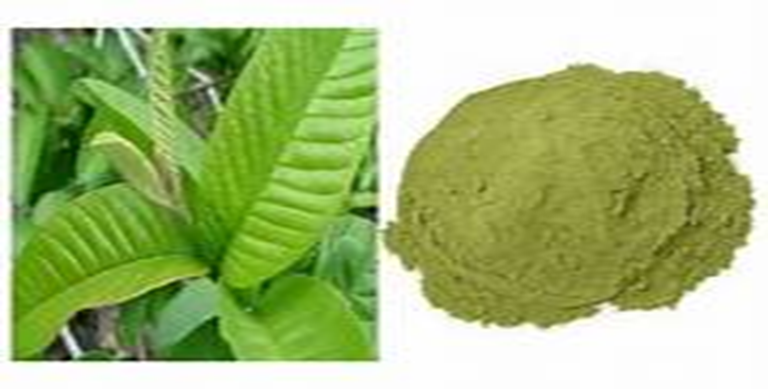
Figure 3. Guava Leaf Powder
6.2 Extraction methods of guava leaves:
6.2.1 Boiling method:
In this method, 10g of the powdered sample was boiled in a boiling water bath with 100 ml of water for 20 min.
6.2.2 Soxhlet extraction:
In a Soxhlet extractor at 60°C for 4 h, the same amount of solute and solvent combination (10 g solute in 100 ml water) was continuously extracted.
6.2.3 Maceration:
Ten grams of triturated leaf powder and 100 ml of solvent (water) were taken. The mixture was kept in the dark at room temperature for 24 h, with sporadic shaking with a glass agitator.
6.2.4 Stirring-assisted extraction:
Ten grams of powder mixed with 100 ml of solvent (water) was subjected to continuous shaking at room temperature in a shaking incubator for 24 h at 120 rpm.
6.2.5 Homogeniser-assisted extraction (HAE):
The method employed was adopted from Eyiz et al. (2020) with slight modifications. The solute solvent mixture (10 g of powder in 100 ml of water) was subjected to homogenization in an ultraturrax.
6.2.6 Microwave-assisted extraction (MAE):
About 10 g of the sample was added to 100 ml of solvent (water) and soaked for 20 min. The resulting mixture was microwave irradiated at 110oC for 1 min at 3 different intervals.
6.2.7 Ultrasound and microwave-assisted extraction (UMAE):
The same procedure was followed as in ultrasound-assisted extraction, except additional treatment was given by exposing the ultrasonicated mixture to microwave irradiation for 10 seconds.
6.2.8 Ultrasound-assisted extraction (UAE):
The extraction was done using a probe ultrasonicator. Ten grams of leaf powder was added to 100 mL of water as a solvent in a glass beaker. The probe was immersed in the resulting mixture for 30 min at 70% sonication amplitude
6.2.9 Heat and stirring-assisted extraction:
Ten grams of leaf powder were added to 100 ml of water and stirred for 30 min at 250 rpm and 60°C on a magnetic stirrer.
All of the extracts from each technique were centrifuged for 15 min at 6,000 rpm and filtered through Whatman paper no. 1. The resulting extract was stored at 4°C until further use.
CONCLUSION:
Guava leaves show promise in managing diabetes, with studies highlighting their ability to lower blood glucose, improve insulin sensitivity, and offer antioxidant benefits. However, most research has been conducted in animal models, and further human clinical trials are needed to confirm their safety and effectiveness. It's essential to consult a healthcare professional before using guava leaf extracts, as they can provide guidance on dosage and potential interactions with other medications.
REFERENCE




A. R. Thanage, Kasabe Pratiksha, Kasal Vaishnavi, Katore Anushka, Khandagale Ishwari, Antidiabetic and Antioxidant Activity of Guava Leaf Extract, Int. J. of Pharm. Sci., 2025, Vol 3, Issue 11, 3358-3368. https://doi.org/10.5281/zenodo.17672694
 10.5281/zenodo.17672694