

We use cookies to ensure our website works properly and to personalise your experience. Cookies policy
1,3 Rapture Biotech Pvt. Ltd., Jaipur, Rajasthan
2 Senior Professor and HOD, Department of Biotechnology, Sant Gadge Baba Amravati University, Amravati
Urolithiasis, commonly called kidney stone disease, is a widespread and painful metabolic illness that affects roughly 12% of the world's population. Several Indian plants, notably Musa paradisiaca (banana), have been recorded in traditional medicine to have antilithiatic effects. Because of its diuretic, detoxifying, and stone-removing capabilities, the banana pseudostem, a fleshy, water-rich aerial stem, has long been used to treat urinary ailments. The pseudostem contains bioactive phytochemicals, mainly flavonoids, which have been shown to prevent calcium oxalate crystallization via antioxidants.In this work, the antilithiatic potential of aqueous banana stem water was tested in vitro utilizing agar gel overlay and slide gel assays. The results showed that calcium oxalate crystallization was significantly inhibited, validating its traditional use as a natural and cost-effective kidney stone prevention medication. These findings show the therapeutic potential of banana pseudo-stem water in treating urolithiasis and lay the groundwork for future pharmacological research
Kidney stone formation is one of the most common metabolic disorders of the world population. Almost 12% of the population is suffering with this disorder 1. Urolithiasis, or nephrolithiasis, is the oldest and most most widespread painful urological disorder. Many Indian plants have been quoted as useful as antilithiatic agents 2. It is the second largest fruit produced in the world and India is the country which has the largest production of banana in the world. Globally, bananas and plantains are cultivated in 5.14 million hectares with a total production of 105.32 million tons 3. The banana plant or Musa paradisiaca start to develop from a layer called corm (swollen stem base that is modified into a mass of storage tissue) and the trunk part is referred to as a false stem or pseudo-stem. The tubular structured pseudo-stem is very fleshy with water as its major composition, has a soft central core, and is tightly packed with sheaths. The stem grows normally 5 to 7.6 meters tall and supports the whole plant 4. Flavonoids are compounds found in plants as a mixture and are very rare to encounter flavonoids in a single form. Usually in the form of sugar i.e. as glycosides and aglycone flavonoids. Flavonoids contain conjugated aromatic systems 5. The calcium oxalate inhibitory potential was also studied with few novel techniques; Agar gel overlay for qualitative and quantitative characterization of antilithiatic activity and slide gel method for antilithiatic potential using aqueous extract of Banana Stem Water was also performed 6. Banana cultivation generates a huge amount of biomass post-harvesting the fruits, and these wastes include pseudo-stems. Different parts of Musa pseudo-stems have been used traditionally for treating inflammation, high blood pressure, diabetics, diarrhea, peptic ulcer, rheumatism, high blood pressure, burns, and wounds, as well as pseudo-stem in treating nephritis, uremia, and urolithiasis 7. Phytochemicals (Greek: phyton = plant) are chemical compounds naturally present in plants attributing to positive or negative health effects Identification of phytoconstituents in the plant material helps to predict the potential pharmacological activity of that plant 8. Herbal medicines have played an important role in health care around the world since thousands of years. Herbal medicine is used by 75–80% of the world’s population, mainly in developing countries for primary health care. Moreover, the herbal medicines are believed to have no side- effects, are cheap, and locally available 9.
MATERIALS & METHODS
Collection Of Banana Stem Water Sample
A healthy Banana plant was selected for study from the FLORA GOLD nursery, Tapovan Amravati . The plant was cut near the base, and a square-shaped hole measuring approximately 10 cm × 10 cm was made in the central part of the stem using a sterile knife. The cut surface was thoroughly cleaned to avoid any external contamination. The opening was then covered with aluminum foil and left undisturbed for 24 hours under ambient condition. After 24 hours, water was found to have accumulated in the hollow portion of the stem. This stem water was carefully collected in a pre-sterilized glass bottle then the collected sample was stored in a refrigerator for further analysis 6.
Phytochemical Analysis of Banana Stem Water
Test for Alkaloids
Dragendroff’s test: Plant extract was treated with potassium bismuth iodine solution. Formation of orange-red color detected the presence of alkaloids.
Hager’s test: Filtrate was treated with solution of picric acid. Formation of yellow color detected the presence of alkaloids.
Mayer’s test: Filtrate was treated with Mayer’s reagent. Formation of creamy & white yellow precipitate detected the presence of alkaloids.
Test for Phenolic compounds
Potassium dichromate test: Plant extract was treated with few drops of potassium dichromate solution. Formation of dark colour indicated presence of phenols.
Lead acetate test: Plant extract was dissolved in distilled water and added 3 ml of 10% of lead acetate solution. Formation of white precipitates indicated presence of phenols.
Gelatin test: Plant extract was dissolved in distilled water and added 1% gelatin solution +10 % NaCl solution. Formation of white precipitate was observed.
Ferric chloride test: Plant extract was treated with few drops 5% ferric chloride solution, which forms dark green color.
Iodine test: Plant extract was treated with few drops of diluted iodine solution, which forms red color
Test For Saponins: 1-2 ml extract was suspended in 8-10 ml of distilled water and shaken severely for 10 sec and observed for persistence of foam at a height of 1-10 cm for 10 min.
Test for Tannins: 1 ml of extract was taken and few drops of Fecl3 were added then checked for orange and yellow ring.
Test for Flavonoids: Few drops of lead acetate solution added in 1 ml of extract and was checked yellow precipitate.
Test for Terpenoids: 1 ml of extract was added 2 ml of chloroform. 1 ml of conc. Sulfuric acid was added slowly and reddish-brown color observed in the chloroform layers.
Screening For Anti-Urolithiatic Activity Using Slide Gel Method
Slide gel method for screening antilithiatic metabolites was performed as per 1. One percent (1%) of bactoagar was heated to liquefy and then smeared on the clean glass slides. Each slide was divided into two equal areas whereby eight equal wells (spacing between wells was 0.5 cm x 1.25 cm) were made in the gel after solidification. The slides prepared were divided into negative control (D/W only) and positive controls (tri-sodium citrate conc. 10, 25, 40, 55, 70, 85, and 100 mg/m) and experimental half. Plant extract was prepared in water of 100mg/ml stock solution and different dilutions were made (same as the positive control) for the evaluation of antilithiatic activity.
For the formation of Calcium oxalate crystals, 20 ul of 0.2 M Calcium chloride and 20 ul of 0.2M ammonium oxalate were introduced into the opposite wells, and the plant extract to be studied was put in the two longitudinal wells. This procedure was followed for all the concentrations of extract. All the experimental slides were kept in the moist chamber for two hours. Statistically significant differences within the area of the crystals between blank, control, and extract were studied. The effects of the extract and positive control on the in vitro growth of calcium oxalate crystals were also compared with the blank by using the inhibition index (I). Absence of inhibition is indicated by (I) equals 0; whereas complete inhibition is shown by (I) equal to 1.
Inhibitory indexes were calculated by:
I = 1-(As/Ac) x100
Where, As = area of calcium oxalate crystals in the presence of sample tested
Ac = area of Calcium oxalate crystal formed for the corresponding blank.
After the incubation period, the activity was seen visually and Inhibitory index was recorded.
FTIR Analysis of Banana Stem Water
The FTIR (Fourier Transform Infrared) analysis of Banana stem water was carried out to identify the functional groups present in the extract (Instrument- Bruker Optics Alpha Diamond ATR GmBH Germany, Department of Biotechnology SGBAU, Amravati).
Sample Preparation
Fresh Banana stem water was collected and filtered using Whatman No. 1 filter paper to remove solid impurities. The filtrate was then evaporated at 40–50°C using a hot air oven to concentrate the extract. A small volume of the semi-liquid or concentrated Banana stem extract was used for FTIR analysis 11.
FTIR Analysis
A few drops of the concentrated Banana stem extract were placed directly onto the crystal surface of the FTIR spectro-photometer equipped with an Attenuated Total Reflectance (ATR) accessory. The spectrum was recorded in the mid-infrared region, ranging from 4000 cm?¹ to 400 cm?¹.
RESULTS AND DISCUSSION
Phytochemical Analysis of Banana Stem Water
Table 1: The table details a series of phytochemical tests conducted to identify the presence of various compounds in a sample. Observations such as color changes, precipitation, or foam appearance were recorded for each test.
|
Sr. No. |
Test name |
Observation |
Result |
|
A. |
Alkaloid test |
Yellow / creamy precipitate |
positive |
|
B. |
Dragendroff’s test |
A reddish brown precipitate |
positive |
|
C. |
Mayer’s test |
Yellow precipitate |
positive |
|
D. |
Hager’s test |
White precipitate |
Positive |
|
E. |
Potassium dichromate test |
Dark color |
Positive |
|
F. |
Lead acetate test |
White precipitate |
positive |
|
G. |
Gelatin test |
White precipitate |
positive |
|
H. |
Ferric chloride test |
No green / blue color |
Negative |
|
I. |
Iodine test |
Red color |
Positive |
|
J. |
Saponin test |
Faom appear |
Positive |
|
K. |
Tanin test |
Orange yellow color ring |
Positive |
|
L. |
Flavanoid test |
Yellow precipitate |
Positive |
|
M. |
Terpenoid test |
No reddish-brown color ring |
Negative |
The table details a series of phytochemical tests conducted to identify the presence of various compounds in a sample. Observations such as color changes, precipitation, or foam appearance were recorded for each test.
Screening For Anti-Urolithiatic Activity Using Slide Gel Method
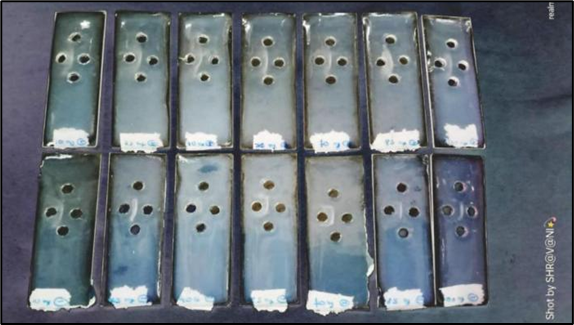
Figure 1: Calcium oxalate inhibitory index of Banana stem water with positive control by slide gel assay.
Table 2: Percent inhibitory values for selected plant extract and Tri- sodium citrate Calculated by Agar gel overlay method.
|
Concentration (mg/ml) |
Tri- sodium citrate |
Banana stem water |
|
10 mg/ml |
7.33 % |
11.11 % |
|
25 mg/ml |
14.29 % |
22.22 % |
|
40 mg/ml |
35.71 % |
50.55 % |
|
55 mg/ml |
57.14 % |
66.67 % |
|
70 mg/ml |
76.7 % |
79.75 % |
|
85 mg/ml |
82.75 % |
92.7 % |
|
100 mg/ml |
89.71 % |
97.57% |
Table 3: Calculation of IC50 using graph
|
Sample |
IC50 |
Equation |
R2 (GOODNESS OF FIT ) |
|
Tri-sodium citrate |
53.08 mg/ml |
Y=0.9566X -0.071 |
0.965 |
|
Banana stem water |
45.14 mg/ml |
Y=1.1075X -5.374 |
0.966 |
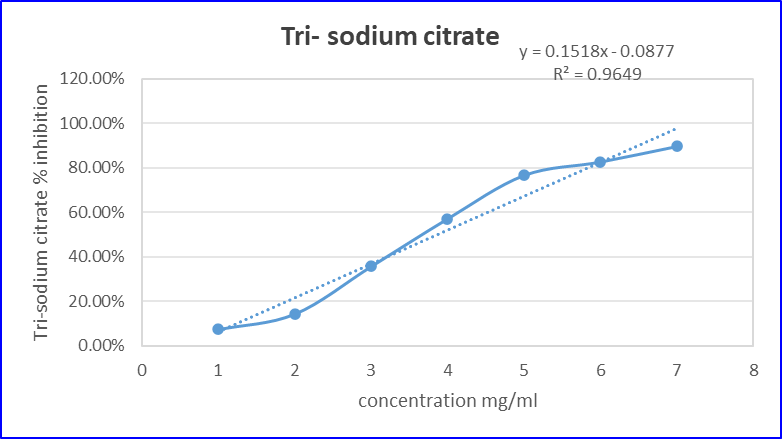
Figure 2: Effect of increasing concentration of positive control (Tri-sodium citrate) on Calcium oxalate Inhibitory index in slide gel method.
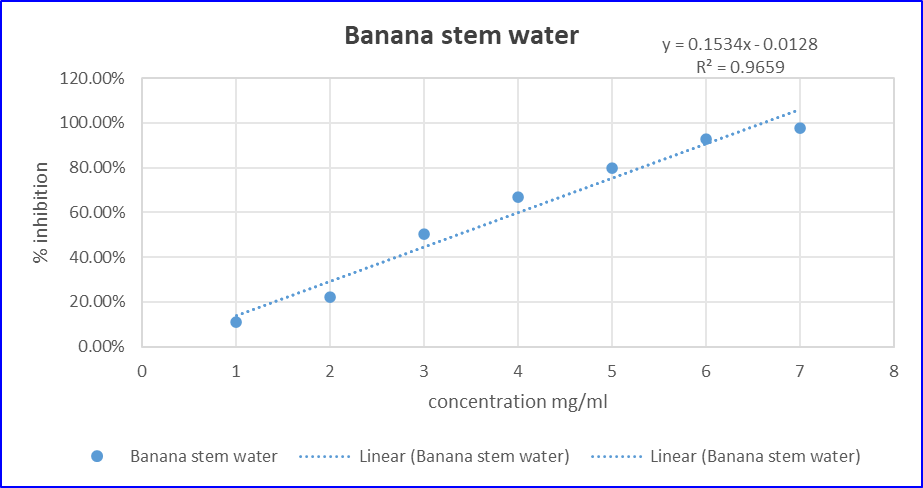
Figure 3: Effect of increasing concentration of selected plant extract on Calcium oxalate Inhibitory index in slide gel method.
The slide gel assay conducted using various concentrations of Banana stem water extract demonstrated a significant inhibitory effect on Calcium oxalate crystal formation. At 100 mg/mL, Banana stem water showed a maximum inhibition of 97.57%, which was higher than the inhibition observed with the positive control, Tri-sodium citrate (89.71%). The IC?? value of Banana stem water was calculated as 26.84 mg/mL, indicating its strong antiurolithiatic potential. These findings confirm the efficacy of Banana stem water in inhibiting crystal growth and aggregation, in accordance with the method described by Anita S. Patil et al. (2014).
FTIR analysis of Banana stem water
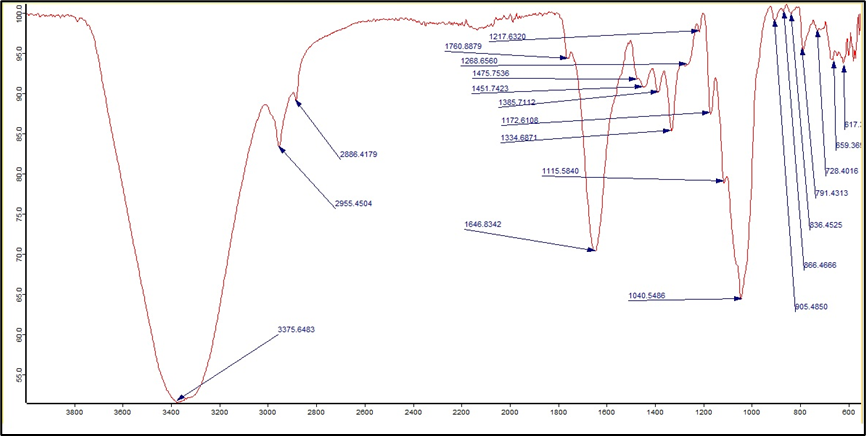
Fig 4: FTIR Spectra of Banana stem water
These spectral characteristics are in agreement with previously reported FTIR profiles of Banana pseudostem 11. who confirmed the presence of bioactive components such as flavonoids, phenolic acids, and polysaccharides in Banana stem extracts. The identification of these functional groups correlates well with the extract's potential to inhibit Calcium oxalate crystallization due to antioxidant, diuretic, and antiinflammatory properties.
CONCLUSION
The present study was carried out to evaluate and validate the preventive role of Banana stem water in the treatment of urolithiasis. The results from different experiments confirmed that Banana stem water contains various bioactive compounds that contribute to its anti-urolithiatic activity. Phytochemical analysis showed the presence of flavonoids, phenols, tannins, and saponins, which are known for their antioxidant and stone-inhibiting properties.Banana stem water showed significant antilithiatic potential in the slide gel method by reducing the formation and aggregation of calcium oxalate crystals. Its inhibitory effect was concentration-dependent and comparable to the standard drug tri-sodium citrate. Thus, banana stem water may be a promising natural preventive agent for urolithiasis. FTIR analysis further confirmed the presence of functional groups like hydroxyl (phenolic compound), carboxyl, and amine groups, which may help in binding calcium ions and preventing stone formation.
REFERENCES


Shravani Bagwe, Anita Patil, Hemangi Gehlot, Banana (Musa Paradisiaca) Psuedo-Stem Water: Phytochemical Profiling, Inhibitory Effect on Calcium Oxalate Crystallization and FTIR for Urolithiasis Prevention, Int. J. of Pharm. Sci., 2026, Vol 4, Issue 3, 3762-3769, https://doi.org/10.5281/zenodo.19281408
 10.5281/zenodo.19281408