Bengal School of Technology, Chuchura.
Ibuprofen is chosen as the drug in the emulgel. Emulgel accommodates oil soluble drugs and enhances penetration of the drug. Ibuprofen (iso-butyl-phenyl-propionic acid) is a nonsteroidal anti-inflammatory drug (NSAID) that is used for treating pain, fever, and inflammation. Peceol oil is chosen in emulgel . Peceol oil is an oily vehicle used as a solubilizer for lipophilic APIs in oral and topical formulations. Ibuprofen emulgel is formulated by using Peceol Oil, Oleic Acid , Tween 20, Span 20, Liquid Paraffin, Carbopol940. Viscosity and Spreading Coefficient, pH, dilution test, centrifuge test, skin irritation, and analgesic activity are evaluated. The concentration of Peceol Oil and Oleic Acid is varied and the effect is seen in the parameters like viscosity and spreading coefficient using Design-Expert 13. Optimized Formulation shows good spreading coefficient and Viscosity. Analgesic activity showed similar results like marketed formulation.
Gels are semi-solid dosage forms containing aqueous or hydroalcoholic liquid in a colloidal solid matrix, facilitating drug dissolution and migration from a liquid vehicle. [1,2,3] Gels offer patient acceptability and ease of use, but their main disadvantage is their inability to distribute hydrophobic medications. Emulgels overcome this by incorporating the unique characteristics of gels, allowing even hydrophobic therapeutic moiety to benefit from their benefits. [4]
Emulgels for dermatological use are thixotropic, greaseless, easy to spread, remove, nonstaining, nonstaining, bio-friendly, transparent, and have a long shelf life. Emulgels are seen better choice for the class II of drug as per the BCS classification systems that show poor solubility and high permeability. [5 Emulgels are thixotropic, greaseless, and easily spreadable products with a non-staining, bio-friendly, and cosmetically acceptable appearance. They have a long shelf life and good skin penetration. There are two types of topical delivery products: external and internal, applied by spreading or spraying, orally, vaginally, or rectally. Topical preparations can be solid, liquid, semi-solid, or miscellaneous. [6] Factors like skin thickness, pH, hydration, inflammation, partition coefficient, and molecular weight can affect the topical route. The main advantage of topical delivery is avoiding first-pass metabolism and gastrointestinal incompatibility [7]
Novel polymers with complex functions as emulsifiers and thickeners are widely used due to their gelling capacity, allowing for stable emulsion formulation by decreasing surface and interfacial tension and increasing aqueous phase viscosity. Oil/water and water/oil emulsions are used for drug delivery to the skin [8]. Emulgels are a combination of emulsions and gels, designed for drug delivery of hydrophobic drugs. They are oil-in-water or water-in-oil types, gelled with a gelling agent. Emulgels are polymeric matrices with three-dimensional structures, acting as a controlled system for drug particles to diffuse out and slowly pass into the skin.[9]
Emulgels are a dual control release system for hydrophobic drugs, combining emulsion and gels. They offer numerous advantages over other external topical administration methods, such as better stability, better loading capacity, and simpler preparation compared to liposomal and other vesicular drug systems. Emulgels also provide a defense against skin irritation due to their controlled formulation, which helps prevent skin penetration due to the high concentration of active pharmaceutical moiety. This makes them a more effective and convenient option for drug administration.[10]
MATERIALS AND METHODS
Materials
Ibuprofen was obtained from Yarrow Pharma , Carbopol 940 was obtained from Loba chemical . Peceol oil was a gift sample obtained from Gattefose . Other chemicals used were of analytical grade and were used without any further chemical modification.
Methods
Preparation of Emulgel
Different formulations of emulgel were prepared using varying amounts of oil and penetration enhancers. The Central Composite Design was used for emulgel formulation, with the gel phase prepared by dispersing Carbopol 940 in purified water. The oil phase was prepared by dissolving span 20 in light liquid paraffin, while the aqueous phase was prepared by dissolving tween 20 in purified water. Methyl and propyl parabens were dissolved in oleic acid, while Ibuprofen was dissolved in peceol oil. Both phases were heated to 60-70°C, then added to the aqueous phase with continuous stirring until cooled [11].The resulting emulsion was mixed with the gel in a 1:1 ratio. The formulation was prepared according to table no-1.
Table No1: Table of Formulation
|
Ingredient |
F1 |
F2 |
F3 |
F4 |
F5 |
F6 |
F7 |
F8 |
F9 |
F10 |
F11 |
F12 |
F13 |
|
Ibuprofen (%) |
2 |
2 |
2 |
2 |
2 |
2 |
2 |
2 |
2 |
2 |
2 |
2 |
2 |
|
Carbapol 940 |
0.5 |
0.5 |
0.5 |
0.5 |
0.5 |
0.5 |
0.5 |
0.5 |
0.5 |
0.5 |
0.5 |
0.5 |
0.5 |
|
Liquid paraffin (gm) |
1.25 |
1.25 |
1.25 |
1.25 |
1.25 |
1.25 |
1.25 |
1.25 |
1.25 |
1.25 |
1.25 |
1.25 |
1.25 |
|
Tween 20(gm) |
0.25 |
0.25 |
0.25 |
0.25 |
0.25 |
0.25 |
0.25 |
0.25 |
0.25 |
0.25 |
0.25 |
0.25 |
0.25 |
|
Span 20(gm) |
0.5 |
0.5 |
0.5 |
0.5 |
0.5 |
0.5 |
0.5 |
0.5 |
0.5 |
0.5 |
0.5 |
0.5 |
0.5 |
|
Oleic acid (%) |
5.62 |
5.0 |
6.25 |
6.25 |
5.62 |
5.62 |
5.62 |
5.0 |
6.5 |
5.62 |
5.62 |
5.62 |
5.62 |
|
Methyl paraben |
0.03 |
0.03 |
0.03 |
0.03 |
0.03 |
0.03 |
0.03 |
0.03 |
0.03 |
0.03 |
0.03 |
0.03 |
0.03 |
|
Ethyl paraben |
0.01 |
0.01 |
0.01 |
0.01 |
0.01 |
0.01 |
0.01 |
0.01 |
0.01 |
0.01 |
0.01 |
0.01 |
0.01 |
|
Peceol oil (%) |
0.75 |
1 |
0.5 |
1 |
1.1 |
0.39 |
0.75 |
0.5 |
0.75 |
0.75 |
0.75 |
0.75 |
0.75 |
|
Water |
q. s |
q. s |
q. s |
q. s |
q. s |
q. s |
q. s |
q. s |
q. s |
q. s |
q. s |
q. s |
q. s |
Screening of Formulation Variables
Various formulation variables were assessed for their influence on the effect of emulgel as analgesic. Formulation variables included the amount of permeation enhancer and oil . The screening of permeation enhancer and oil was done on the basis of evaluation tests like physical appearance and emulgel like consistency. The lowest concentration of oleic acid was screened at 5% and the highest concentration was 6.5% whereas, the Peceol oil the value are 0.39% and 1.1% respectively as shown in table no.1
Application of design of experiment
The design software used in this experiment was Design expert software® version 13 and the design used is Central Composite design . The independent variables were concentration of oleic acid(X1) and Peceol oil (X2) on dependent variables like spreading coefficient(Y1) and viscosity (Y2).
Evaluation Parameters of Emulgel
Evaluation of Emulgel by Physical Appearance
The emulgel was prepared according to the formulation generated by the software , the formulations were inspected visually for their color, appearance and homogeneity [12].
pH Measurement of formulation
A digital pH meter was used to measure the pH of prepared emulgels. Calibration was done before using a standard buffer solution. A uniform dispersion of 2% of the formulation was prepared in 100 ml of distilled water, then a glass electrode was dipped in the dispersion for 2 hours[13].
Rheological Study
The viscosity of formulated batches was measured using a manual viscometer with a spindle 63 and RPM 12 on a beaker covered with a thermostatic jacket, allowing the spindle to move freely into the emulgel[14].
Spreading Coefficient
The spreading coefficient of emulgels was determined using an apparatus by Mutimer, consisting of a wooden block attached to a pulley. The coefficient was measured based on the 'Slip' and 'Drag' characteristics of the emulgels. A ground glass slide was fixed on the wooden block, and an excess of emulgel was placed on it. The emulgel was then sandwiched between two glass slides, one with a hook and the other with a weight. The top slide covered a distance of 5 cm, and a shorter interval indicated better spreading coefficient.[15]
Dilution Test
A 1% aqueous dilution of Emulgel and the marketed cream was prepared by adding Continuous phase and visually checked for phase separation and clarity [16]
Centrifuge Test
A sample of 6 g of Emulgel was centrifuged at 4000 RPM for 10 minutes, and any phase separation was observed [17]
In Vitro Release Studies
In vitro drug release studies were conducted using a Franz diffusion cell, with a formulation applied to a dialysis membrane between the donor and receptor compartments. Phosphate buffer pH 7.4 was used as the dissolution media, and the cell was maintained at 37 C. The solution was stirred continuously using a magnetic bead. A blank set was run as a control, and samples were withdrawn and replaced with fresh media. Samples were analyzed spectrophotometrically at 221 nm, and the cumulative % drug release was calculated[18]
Skin Irritation Test
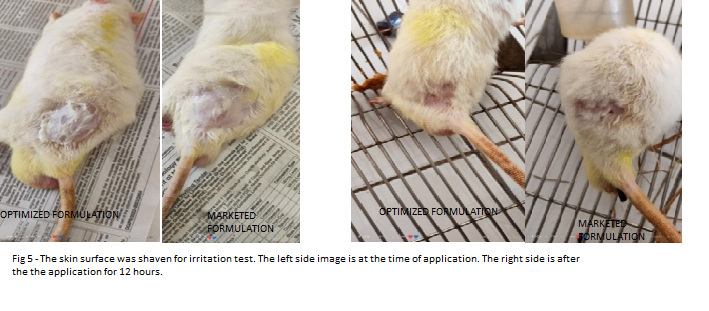
The study involves applying emulgel to shaved rat skin for 12 hours, checking for adverse effects like color and morphology changes. Twelve Wister Albino rats are used, and if no irritation occurs, the test passes.[19]
Analgesic Activity
The study used the hot plate method to measure analgesic activity in rats. Three groups were formed: Control Group, Standard Group, and Test Group. The control group received no topical treatment, the standard group received marketed gel, and the test group received an optimized formulation. [20]The CCSEA protocol no. 1726/CCSEA/IAEC/2023-010.
RESULT
Physical Appearance:
The all formulations were white viscous creamy preparation with a smooth, white , homogeneous texture and glossy appearance with no grittiness and phase separation. The formulation with 1% Peceol oil was having excellent consistency and no phase separation was observed after 10 days. Results have been in Table 2.
pH OF EMULGEL:
The pH of the gel formulations was found as 5.9 to 6.1 and a comparison study was done with a standard gel as shown in Table no.2 The pH is 4.7 and acceptable pH within the range .
Optimization:
Optimization done through Central Composite Design using two dependent variable ( Spreadibility and Viscosity) and Independent variables (Peceol oil and Oleic acid) .The software used is Design of Experiment 13 (stat-ease).After the dependent variables are evaluated , the statistical analysis of two dependent variable are carried out and the best fitting model are selected.The actual equation for viscosity is 150.14+72.40*oil-57.43*oleic acid-4.8*oleic acid &oil-29*oil+5.60oleic acid2. The actual equation for spreadibility is – 15249-29193*oil+10898*oleic acid +3398.2560*oil*oleic acid +7081.77*oil2 -1241.35*oleic acid2.The model for both is quadratic
Viscosity
The viscosity ranges from 1775.5 cp to 4280.9 cp .Sha et al , viscosity formulated emulgel using different concentration of xanthan gum and found out that increase of concentration of polymer increased the viscosity[15].
In this experiment ,increasing the concentration of oil increase the viscosity. The dependence of concentration of oleic acid was not as prominent as that of the concentration of oil. More viscous formulation causes problem in spreadability.[16-20]
Spreadability
Spreadability is carried out for all the formulations. In this experiment, increase in the concentration of oil increased the spreadibility. The dependence and effectiveness of concentration of oleic acid was not as prominent the concentration of oil. The obtained results are tabulated in table no-2
Table No. 2: Effect of variables on Colour, Homogeneity, Consistency, Phase Separation and pH
|
FORMULATION CODE |
COLOR |
HOMOGENEITY |
PHASE OF SEPARATION |
pH |
VISCOSITY (cp) |
SPREADABILITY (cm/5min) |
|
F1 |
White |
Fair |
None |
5.8 ± 1 |
3203± 7 |
22± 1.78 |
|
F2 |
White |
Excellent |
None |
5.2 ± 0.5 |
3203± 5 |
22± 1.68 |
|
F3 |
White |
Excellent |
None |
5.9 ± 0.7 |
3089.29± 6 |
22.37± 1.20 |
|
F4 |
White |
Excellent |
None |
5.4 ± 0.7 |
3170.01± 7 |
23.88± 1.11 |
|
F5 |
White |
Excellent |
None |
5.5 ±1 |
3503.92± 9 |
16.05± 1.23 |
|
F6 |
White |
Excellent |
None |
5.2 ± 0.9 |
2280.92± 10 |
23.33± 1.58 |
|
F7 |
White |
Excellent |
None |
5.1 ± 0.6 |
3095.68± 8 |
17.7± 1.62 |
|
F8 |
White |
Excellent |
None |
4.9 ± 0.8 |
3203± 7 |
22± 1.98 |
|
F9 |
White |
Fair |
None |
5.4 ± 0.4 |
3203± 5 |
22± 1.78 |
|
F10 |
White |
Excellent |
None |
5.2± 0.9 |
3203± 6 |
22± 2.01 |
|
F11 |
White |
Excellent |
None |
5.4±1 |
3179.29± 6 |
19.921± 1.78 |
|
F12 |
White |
Excellent |
None |
5.1±0.8 |
3225.54± 7 |
20.11± 1.99 |
|
F13 |
White |
Excellent |
None |
5.0±0.9 |
3069.1± 9 |
22.64± 1.03 |
DILUTION TEST
All prepared formulations and marketed cream were diluted with water and result indicated no phase separation upon dilution.
CENTRIFUGE TEST
All prepared formulations and marketed cream showed no phase separation that indicates the stability of product on high shear rate.
Release
The drug release from the formulation was highest in the F8 . The release% was in range from 52.21 to 66.25%. The lowest release % was seen in F2 in which the permeation enhancer was lowest in concentration.
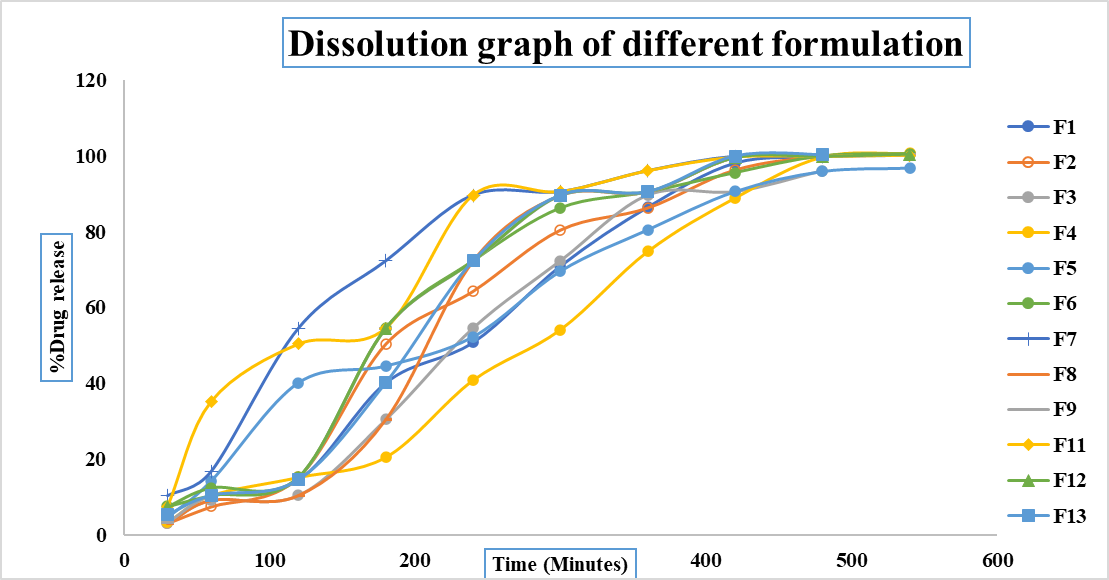
Fig 1: Release study
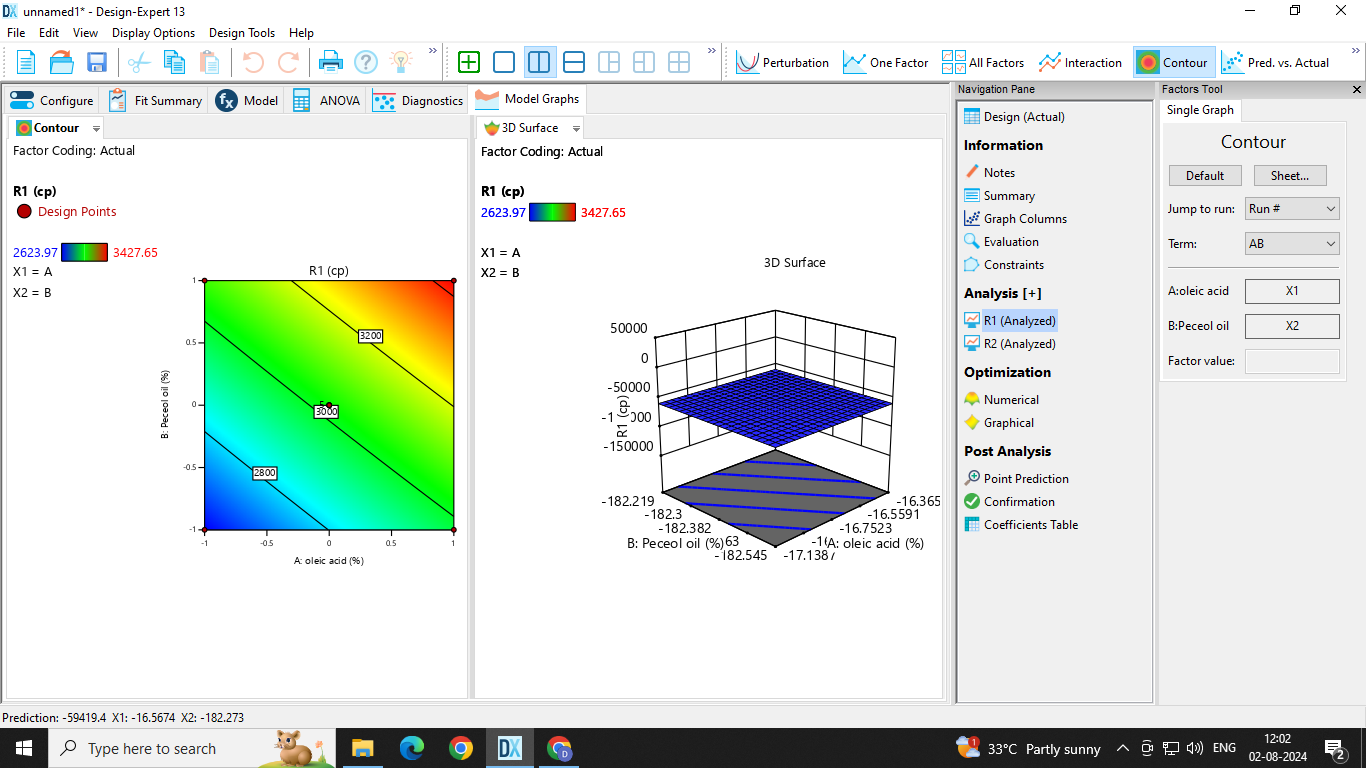
Fig2 - Contour graph and 3D graph for spreadibility
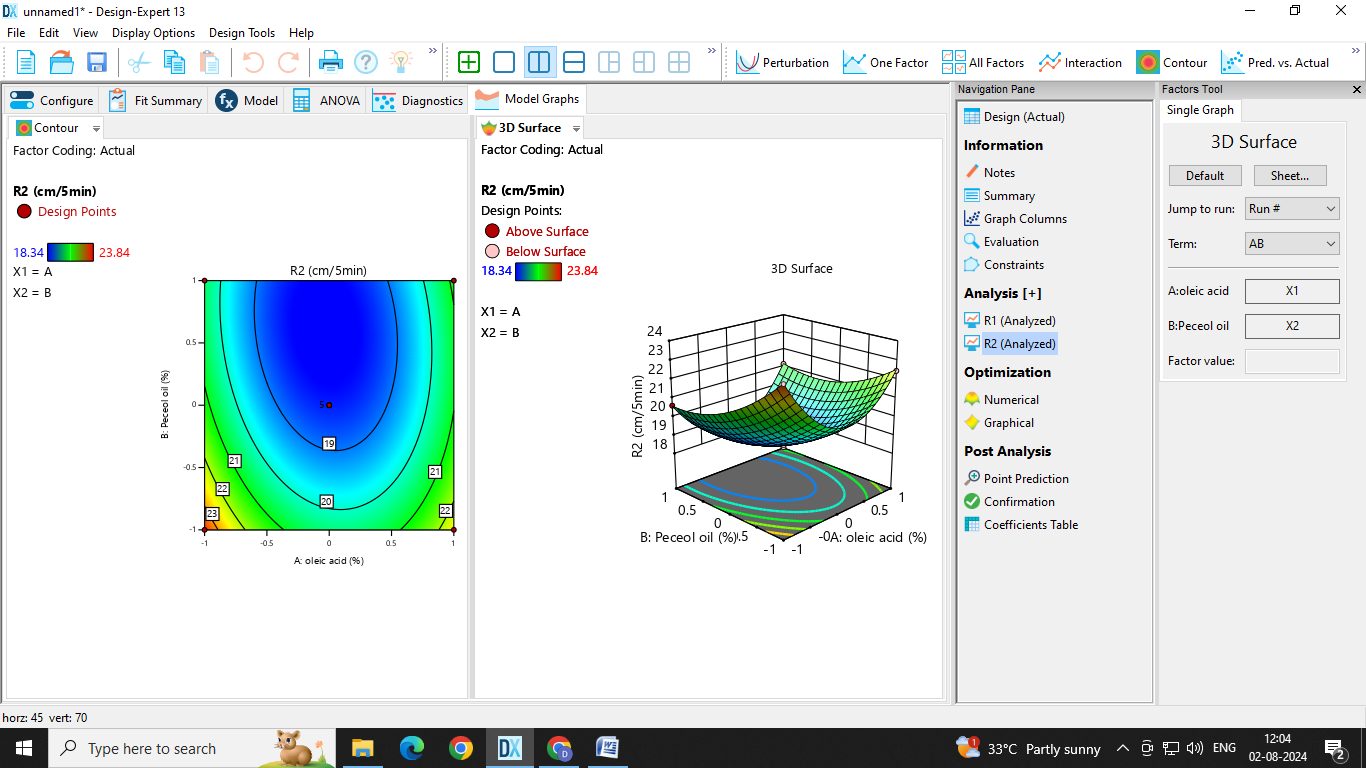
Fig 3-Contour graph and 3D graph for viscosity
POST-OPTIMIZATION
The selected formulation and the obtained evaluation data is given below:
Table No3: Table of Optimization formula
|
Number |
OIL |
Oleic acid |
viscosity |
spreadability |
Desirability |
|
1 |
1 |
5.54920883 |
3886.35322 |
25.13881672 |
0.918243 |
Using Oil 1% and Oleic acid 5.54% as post-optimized formulation which have good spreadibility viscosity and good Desirability.
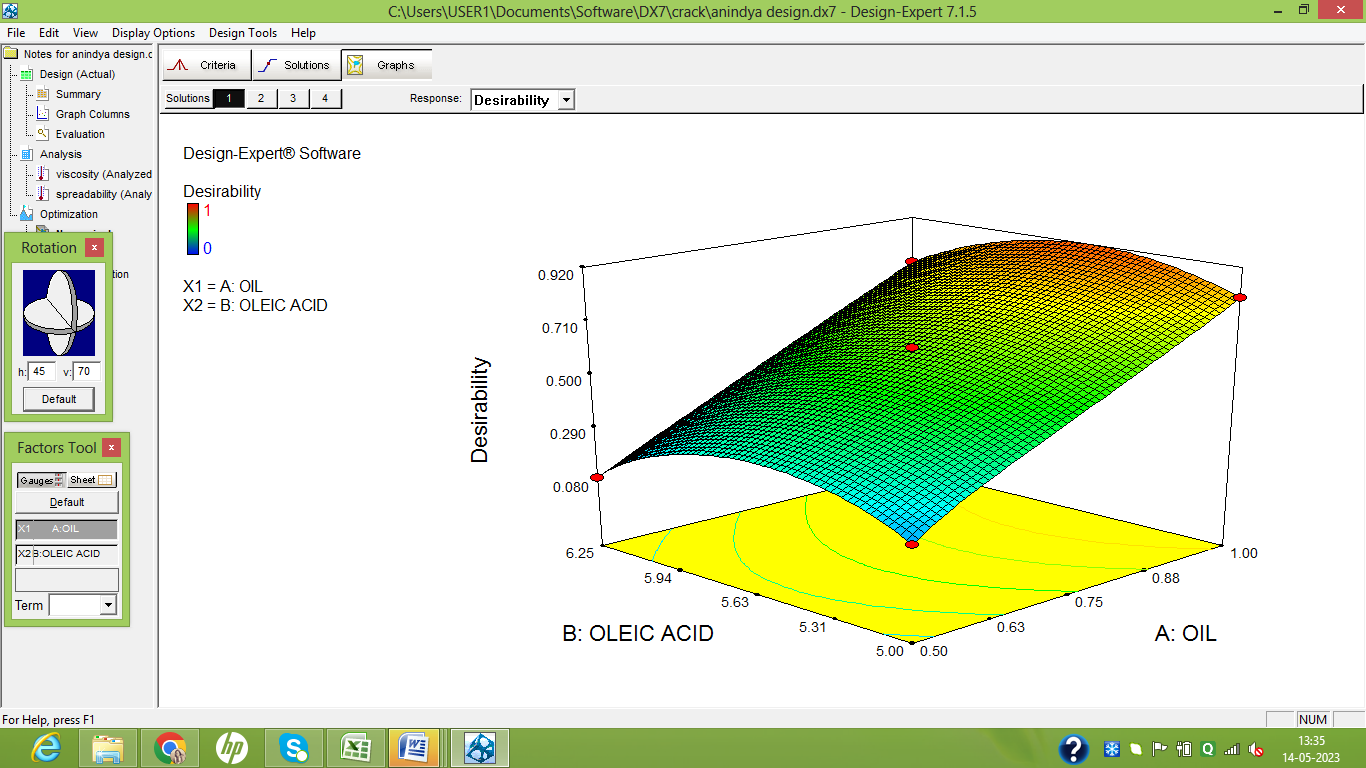
Fig 4: 3D graph for optimized formulation
IRRITATION TEST OF OPTIMIZATION FORMULATION
The prepared formulation was tested for skin irritation.After performing the experiment, no allergic symptoms like inflammation, redness, irritation appeared on rats skin in 12hr.
Table No4: Skin irritation test of Optimization Formulation
|
EFFECT |
|
|
CONTROL GROUP |
No redness seen or rash observed after 12 hours |
|
MARKETED GEL |
No redness seen or rash observed after 12 hours |
|
OPTIMIZED FORMULATION |
No redness seen or rash observed after 12 hours |
In Vivo Analgesic Activity
The analgesic activity was carried out using hot plate method groups were made and latency period in which rat responded to hot plate was calculated .
•Group 1 (Control Group): No topical treatment was given and latency period was calculated.
•Group 2 (Standard Group): The rats were treated with marketed gel and its latency period was calculated.
•Group 3 (Test Group): The rats were treated with optimized formulation.
The optimized formulation showed a hike in lapse time. They were compared with diclofenac sodium gel (marketed preparation). The lapse times of the control group , optimized formulation and marketed formulation were found to be 1s, 4s and 4.1s .
DISCUSSION
The transdermal route is an alternative route of drug delivery for systemic effect and emulgel formulation is considered ideal for transdermal delivery. Emulgel formulations were white viscous creamy preparation with a smooth homogeneous texture and glossy appearance add on as an advantage for patient acceptance [21-28] The formulation table no. illustrates that the color of all the formulations from F1 to F13 are white in appearance and excellent in homogeneity.The pH of the emulgel formulation is in the range of 4.9 ± 0.8 to 5.9 ± 0.7 as that of skin pH thereby avoids the risk of skin irritation upon application to skin. The pH is an important parameter for maintaining the internal environment when changes in the external environment occur. On the basis of function of the organ, the pH ranges from 1 to 8. Acidic environment prevails on the surface of the skin except in the physiological gaps like groin, anus and toe interdigits. The skin maintains the acidic pH and co-dependence on the components of epidermis are likely to manipulate the buffering capacity of the skin. For example, fatty acid and sebum are likely to protect the epidermis against the influence of alkali, which in turn reduces the exposure of alkalies and acids to the skin surface.[29-32]. The prepared emulgel falls within the acidic pH of the skin which is 4.9 ± 0.8 to 5.9 ± 0.7.Acidification of the stratum corneum (SC) is crucial for skin defense against infections by inhibiting pathogenic microorganisms while promoting normal skin flora. Recent studies reveal that an acidic SC also regulates essential functions, particularly in forming a permeability barrier essential for protecting the body's moist interior from the dry environment. This barrier relies on extracellular lipid membranes, where enzymes like β-glucocerebrosidase and acid sphingomyelinase convert glucosylceramides and sphingomyelin into ceramides, which require an acidic environment for optimal activity. An increase in SC pH disrupts this process, leading to impaired barrier function. Additionally, higher pH levels activate serine proteases that degrade corneodesmosomes, compromising SC integrity and cohesion. Therefore, maintaining an acidic SC is vital for its metabolic regulation and overall function, with pH alterations posing potential adverse effects [33-37]The concentration of Peceol Oil and Oleic Acid are varied and the effect is seen in the parameters like viscosity and spreading coefficient using Design-Expert 13. The viscosity of the emulgel ranges from 2280.92± 10 cp to 3503.92 ± 9 cp . The result can be explained by the fact that the increase in Peceol oil increases the viscosity of the formulation as evident in the formulation code F5 (Peceol oil 1.1 % and Oleic acid 5.62 %) with highest viscosity and in Formulation code F6 (Peceol oil 0.39% and Oleic acid 5.62 % ) with lowest viscosity.The gelling agent is thought to be having a profound effect on the penetration of drug through the skin. The diffusion of drug through high viscosity system into the skin layer is hindered by the total penetration depth , thus high viscosity will eventually effect the drug distribution within the skin[38] The concentration of the gelling agent (Carbopol 940) is constant in all the formulation , the amount of peceol oil is having the effect on the viscosity of the formulation. The formulation F5 where the concentration of Peceol 1.1% is having highest viscosity ( 3503.92 ± 9 cp ) whereas F6 with a concentration of Peceol oil 0.39% is having the lowest viscosity (2280.92± 10 cp) The application of drug on the skin surface requires appropriate spreadability of the dosage form inorder to deliver the required amount of drug to the place of use.Extrudability of the semi solid dosage form from the primary package is considered as a criteria for patient preference. Low spreadability values of formulation indicate the application of additional shear stress . The additional shear stress may increase the blood flow to the area of therapeutic action which is helpful in application of analgesic ointment whereas this additional stress at the place of wound may exaggerate the degree of wound[39]The spreading coefficient of emulgel ranges from 16.05± to 23.33± cm/5 min. The spreadability of emulgel formulations are found to be highest in formulation code F6 (Peceol oil 0.39 % and Oleic acid 5.62%) and lowest in the formulation code F5 (Peceol oil 1.1% and Oleic acid 5.62% )The prepared formulation indicate that high viscosity leads to low spreadability of the formulation and vice a versa.The Optimized Formulation shows good spreading coefficient and Viscosity. Analgesic activity showed similar results like marketed formulation [40].The in-vivo activity of the optimized formulation showed no irritation and analgesic activity.The optimized formulation showed a hike in lapse time. They were compared with diclofenac sodium gel (marketed preparation). The lapse times of the control group , optimized formulation and marketed formulation were found to be 1s, 4s and 4.1s. The emulgel is an effective delivery system to deliver oil soluble drug in the oil portion[14] and the viscosity obtained aids in penetration and spreadability of the drug loaded formulation. The stability of the formulation was also evaluated by inducing phase separation by dilution.
CONCLUSION
Emulgels are oil-in-water or water-in-oil emulsions carrying drugs, offering controlled release and increased stability. They are thixotropic, greaseless, and bio-friendly. Ibuprofen, a NSAID, is used in an emulgel with Peceol oil as a solubilizer. The emulgel's viscosity, spreading coefficient, pH, and analgesic activity are evaluated using Design-Expert 13. The optimized formulation has good desirability proving that the results are reproducible. The formulation did not have skin irritation and had similar analgesic activity like the marketed formulation. No phase separation was observed on centrifugation. Dilution also did not cause phase separation. The formulation can be tested for stability.The optimized formulation shows good spreading coefficient and viscosity, with similar results to the marketed formulation.The formulation must be stable over a period of time. The stability study of the formulation must be conducted.
REFERENCES



Dishari Dutta, Annindya Pal, Paramita Dey, Design And Development of Emulgel Containing Ibuprofen Using Central Composite Design, Int. J. of Pharm. Sci., 2026, Vol 4, Issue 2, 1445-1457. https://doi.org/10.5281/zenodo.18583722
 10.5281/zenodo.18583722