
Department of Pharmacology, SHEAT College of Pharmacy, Varanasi, Uttar Pradesh.
Asparagus racemosus Linn is a member of the Liliaceae family. This species contains various chemical constituents that contribute to its therapeutic properties. The present research focuses on evaluating the analgesic and anti-inflammatory effects of a hydroalcoholic extract derived from the leaves of Asparagus racemosus. To achieve this, the hydroalcoholic extract of the chosen plant was utilized to assess both analgesic and anti-inflammatory activities. In the present study, diclofenac sodium (10mg/kg, p.o.) was utilized as a reference medication. The hydroalcoholic leaf extract (200 and 400mg/kg, p.o.) of Asparagus racemosus was evaluated for its analgesic and anti-inflammatory effects on Wistar albino rats. The findings of this research indicated that HEAR (200 and 400mg/kg, p.o.) exhibited significant (P<0.05) analgesic and anti-inflammatory properties in a dose-dependent fashion. Moreover, HEAR (200 and 400mg/kg, p.o.) demonstrated efficacy comparable to that of the standard drug, diclofenac sodium (10mg/kg, p.o.). All experimental procedures were conducted under stringent supervision and with appropriate care of the animals, having received approval from the Institutional Animal Ethics Committee (IAEC). It was concluded that the HEAR was effective in a dose dependent manner and possessed potent analgesic and anti-inflammatory activities.
There are several kinds of sicknesses, infirmity, and issues within our body, along with them; pain and inflammation are the most noticeably awful sort of inconvenience conditions1. Pain is the most ordinarily distressed tactile and enthusiastic experience which is related to intense potential tissue harm during any stimuli2. Pain is the most widely recognized explanation for individuals' search the clinical consideration3. Pain is brought about by the bothering of the pain receptors, called nociceptors. Analgesics are the medications that are utilized to reduce diverse types of pain. The pain-relieving agent works through pain receptors (Mu, Kappa, and Delta)4.
Inflammation might be characterized as the typical, defensive reaction to tissue injury in the body that is brought about by physical injury and any hurtful synthetic compounds or microbiological agents which harmed the cell and tissues5. For the most part, the process of inflammation is related to the enactment and contribution of emission of cytokines, for example, TNF-α, IL-6 and IL1 β, by activated cells which play a major role in host defense mechanisms6. The clinical treatment of inflammatory infections relies upon drugs that have a place either with the non-steroidal or steroidal synthetic therapeutics yet once in a while these medications have genuine symptoms when utilized on long occasions7.
Hence the main difference existing between inflammation and infection is that inflammation constitutes a reaction site defined as a mechanism of defense set up by the body in response to different agents of causation (be they infectious or non-infectious); whereas infection is characterized as the entry of harmful microorganisms into the body and the consequent ill effects brought about by their toxins. Inflammation consists mainly of two phases that overlap slightly: a phase dominated by the expression of inflammatory signs and symptoms and a healing phase. Both inflammation and healing generally protect the body against different harm caused by infections; however, in some cases, they can cause the body great detriment-anaphylaxis from bites by insects or reptiles, drug reactions, toxicities, atherosclerosis, chronic rheumatoid arthritis, and the formation of fibro bands and adhesions resulting in intestinal obstruction8, 9.
Signs of inflammation
The Roman writer Celsus in named the famous four cardinal signs of inflammation as:
functio laesa (loss of function) was later added by Virchow. The word inflammation means burning. This nomenclature had its origin in old times but now we know that burning is only one of the signs of inflammation10.
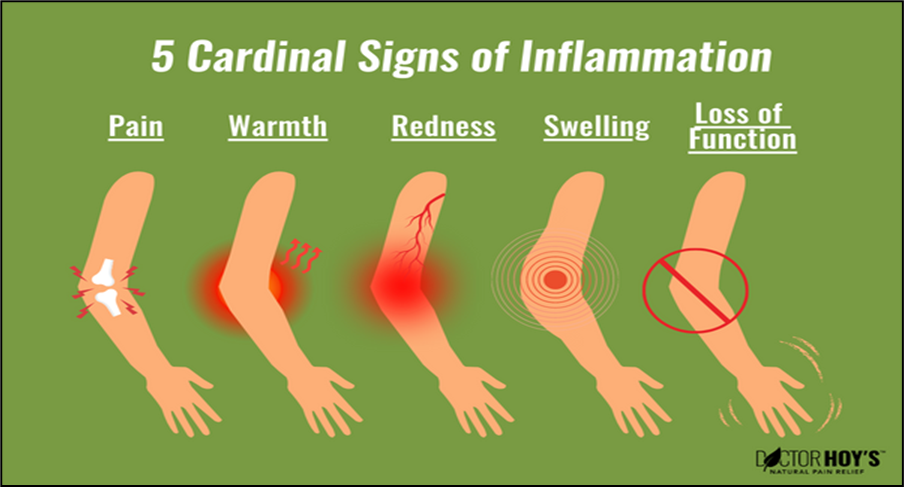
Figure 1: Cardinal Sign of Inflammation
Asparagus racemosus is recognized for its extensive medicinal uses, as outlined in both the Indian and British Pharmacopoeias, along with traditional medicinal practices. Commonly referred to as Shatavari, which translates to "she who has a hundred husbands," this designation reflects the herb's beneficial effects on female reproductive health. It is incorporated into approximately 67 distinct Ayurvedic formulations, including anuthalia, brahmarasyana, dhanwanthari shtakashaya, narayanathaila, rasnadikashaya, sahacharadithaila, saraswatharishra, shatavaripanaka, shatavarighritha, shatamulyadilehya, vasishtharasayana, and vidaryadighritha.
This species is categorized within the genus Asparagus, which has undergone a recent reclassification from the subfamily Asparagaceae of the family Liliaceae to the newly recognized family, Asparagaceae11. Theophrastus introduced the term "Asparagus." This genus comprises nearly 300 species; among them, 22 are located in India and are commonly utilized in traditional medicine. The plant is employed in Ayurveda and Siddha medicine to address ailments such as madhura rasam, madhura vipakam, seeta-veeryam, polyuria, chronic fevers, soma rogam, white discharge, fever originating from internal organs, and tonics.12
MATERIAL AND METHODS:
Selection, identification and authentication of plant material
The leaves of Aspargus racemosus was collected from East region of Uttar Pradesh. The initial identification was based on its organoleptic and morphological characteristics, and the verification was conducted by botanist of Botanical Survey of India, Pune13.
Extraction of plant material
The collected fresh leaves of A. racemosus were dried in shade to avoid degradation of phytoconstituents. After drying, plant materials were coarsely powdered with grinding mill and kept in well-closed container for use in the study14.
Based upon the exhaustive literature survey, we decide to use the hydroalcoholic solvent for extraction of phytoconstituent from plant material for further study. Hydroalcoholic solvent includes ethanol (30%) plus water (70%) respectively. The dried powder of leaves was successively extracted with hydroalcoholic mixture of pure ethanol and water (70:30) in soxhlet apparatus. The extract was concentrated and traces of the solvent were completely removed under reduced pressure and stored in vaccum dessicators for further use15.
Drugs and chemicals
The necessary chemicals utilized during this research work have been carrageenan, (S.D and Voltaren (diclofenac sodium) was used as standard drugs.
Equipment
Plethysmometer, Eddy’s hot-plate, Organ bath, Thermometer, Digital Balance, Desiccator, Hot Air oven.
Experimental animals
From the Animal House, Saraswati Higher Education and Technical College of Pharmacy, Gahni, Ayar, Varansi, albino rats of either sex weighing 150–200g were acquired. The animals were kept in ideal conditions, with a 12-hour light/dark cycle and room temperatures of 25 ± 1°C. They were fed a regular mouse pellet diet and given access to unlimited water, with the relative humidity being kept at 44-56%. Rats are denied food one hour before the experiment16.
Phytochemical Screening
Extracts was subjected to phytochemical analysis to identify the different phytoconstituent found in the plant were put through a standard qualitative chemical examination to determine the type of phytochemical components they contained. The existence and nonexistence of various phytochemical constituents, like Alkaloids, Carbohydrates, Glycosides, Saponins, Amino acids and Proteins, Flavones and Flavonones, Tannins and Phenolics, Steroids, Fixed oils were determined using standard established techniques.17
TLC analysis:
Using thin layer chromatography (TLC), analyses were conducted on the hydroalcoholic extract, specifically referring to the flavonoid standard quercetin for determining the presence of quercetin-like flavonoids in the samples. A thin-layer silica gel 60G F254 DC Kieselgel plate was used with a dimension of 5×7 cm as the stationary phase. Spots were directly applied using a capillary tube and a solvent system comprising toluene, ethyl acetate, and formic acid in a ratio of 5:4:0.2 was used106. Under ultraviolet light, the spots were examined, and Rf values for the extract were determined using this formula: Rf Value=Distance traveled by the sample/Distance traveled by the solvent18.
Toxicity Study
This test was performed using the method described by the Organization for Economic Co-operation and Development (OECD) Guideline 423. Adult Swiss albino mice (25-30 g) were divided into four groups of six mice each. Each group of mice received a different dose of the A. racemosus leaf extract administered intraperitoneally. The doses were 250, 500, 750 and 1000 mg/kg, respectively. Intraperitoneal doses were prepared such that the final volume administered did not exceed 10 mg/kg for each animal. The animals were observed for 24 h for mortality or any untoward effects like Parameters such as mortality, respiration, sedation, body posture, diarrhea, drowsiness, skin color, fur condition, and loss of consciousness (coma) were monitored19.
EXPERIMENTAL DESIGN:
Assessment of anti-inflammatory activity
Carrageenan-induced paw edema in rats
Animals used in the experiment were divided into four distinct groups consisting of six rats each. Group I was treated orally with Normal saline at 10 ml/kg; Group II received 10 mg/kg diclofenac sodium orally; Group III received orally 200 mg/kg HEAR, and Group IV was administered orally with an increased 400 mg/kg dose of HEAR. Sixty minutes after test and control doses, all animals were injected 0.1 ml carrageenan (1% w/v) in normal saline, specifically in the sub-plantar region of the right hind paw. The swelling in the right hind paw was assessed at 1, 2, and 3 hours after carrageenan injection, and the degree of swelling was recorded. Results were expressed as percentage of swelling calculated as compared to the initial volume of the hind paw for every individual animal20,21.
Assessment of analgesic activity
Eddy’s hot-plate test
Hot-plate assay was used to evaluate thermal pain reflexes elicited by footpad exposure to heat. Six entirely separate groups of six individuals each were made. Selected animals were placed on the hot-plate maintained uniformly at 55°C, and response times (in seconds) were recorded. Instances of paw withdrawal response were recorded for each animal with the experiment repeated at intervals of 30, 60, 90, and 120 minutes. The animals were allowed to escape within 15 seconds only to prevent possible injury to the paws22,23.
Tail-flick method
The sensory evaluation was conducted by briefly placing a 5 cm portion of the tail into a warm water bath at 55°C prior to the assessment of analgesic action. Animals normally responded within a few seconds by withdrawing their tails from the heated water. The response time was measured with a stopwatch. The time measured was after drug administration. Maximum tail immersion was for 15 seconds24.
Statistical analysis
Every one of the values have been expressed as Mean ±S.E.M the result consequence had been analyzed statistically via one way ANOVA followed via Dunnett’s multiple tests.
RESULTS
Phytochemical screening
The extract of Asparagus racemosus was subjected for the different phytochemical analyses were conducted, including tests for alkaloids, glycosides, saponins, steroids, triterpenoids, carbohydrates, and amino acids. The findings are summarized in Table 5.1. The results demonstrated that extracts of Asparagus racemosus L exhibited the presence of alkaloids, flavonoids, tannins, glycosides, terpenoids and saponins.
Table 1: Preliminary phytochemical analysis of extract
|
Sr. No. |
Test |
Result |
|
1. |
Alkaloid |
+ |
|
2. |
Flavonoid |
+ |
|
3. |
Tannins |
- |
|
4. |
Glycoside |
- |
|
5. |
Terpenoids |
+ |
|
6. |
Saponins |
+ |
+: Present -- : Absent
TLC analysis:
The thin layer chromatography (TLC) analysis results of hydroalcoholic extracts of A. racemosus are summarized in Table 3. Fluorescent spots were displayed on the plates when viewed under UV light. Their Rf values were noted at 0.2, 0.37, 0.64, 0.75, and 0.98. From the TLC results, it was concluded that there are flavonoids in the extracts.
Table 2: TLC analysis of A. racemosus leaves extract
|
Extract |
No. of spots |
Distance travelled by Solvent (cm) |
Distance travelled by Solvent (cm) |
Rf Values |
|
Quercetin (standard) |
1 |
6 |
2.1 |
0.365 |
|
Hydroalcoholic Extracts |
2a |
6 |
1.1 |
0.2 |
|
2b |
6 |
2.2 |
0.37 |
|
|
2c |
6 |
3.8 |
0.64 |
|
|
2d |
6 |
4.5 |
0.75 |
|
|
2e |
6 |
5.8 |
0.98 |
Acute Toxicity Test:
Twenty-four hours post-dose, none of the mice which received doses of 750 and 1000 mg/kg survived. As for the 500 mg/kg dose, two out of the six mice died. On the other hand, all the mice that received a dose of 250 mg/kg survived. A. racemosus leaf hydroalcoholic extract was found to have an LD50 (a dose resulting in 50% mortality of mice) of approximately 500 mg/kg.
Table 3: LD50 Determination of Asparagus racemosus extract.
|
Group |
Species |
Dose mg/kg |
No. of Animals |
Mortality |
LD50 mg/kg |
|
Group-I |
Swiss albino mice |
250 |
6 |
0/6 |
≤ 500 mg/kg |
|
Group-II |
500 |
6 |
2/6 |
||
|
Group-III |
750 |
6 |
6 |
||
|
Group-IV |
1000 |
6 |
6 |
Effect of HEAR on carrageenan-induced paw edema
The anti-inflammatory activities of HEAR and diclofenac sodium were represented under table 5.4 and 5.5 using the carrageenan-induced model for hind-paw edema. An oral dose of 10 mg/kg diclofenac sodium exhibited more marked effects on the carrageenan-induced inflammation after 2 h and 3 h of administration. In this case, the above dosage was found to reduce inflammation by 80.28% after 2 h and this increased to 85.43% after 3 h. However, HEAR at a dose of 200 mg/kg orally inhibited inflammation significantly by 66.66%, rising to 76.14% in the 3rd hour. So, the other dose that HEAR was tested with was 400 mg/kg orally, which reported inhibition above the control group-inflamed group at 67.24% at 2 hours and further increased to 74.91% at 3 hours as shown in Table 4 & 5.
Table 4: Effect of HEAR on Carrageenan-induced paw edema test
|
S. No. Paw |
Treatment Group
|
Dose (mg/kg,p.o.)
|
volume in (ml) at hr. |
|||
|
Initial volume |
1 hr |
2 hrs |
3hrs |
|||
|
1. |
Control |
10 ml/kg |
2.74±1.16 |
1.92±042 |
3.47±0.37 |
5.80±0.84 |
|
2. |
Diclofenac sodium |
10 ml/kg |
0.38±0.04 |
0.57±0.06*** |
0.70±0.05*** |
0.84±0.04*** |
|
3. |
HEAR Low Dose |
200 mg/kg p.o. |
0.50±0.06 |
1.15±0.04 |
1.15±0.04*** |
1.36±0.04*** |
|
4. |
HEAR High Dose |
400 mg/kg p.o. |
0.35±0.02 |
0.55±0.02* |
1.13±0.03*** |
1.43±0.02*** |
Table 5: % inhibition for the effect of HEAR on carrageenan-induced paw edema test
|
S. No. Paw |
Treatment Group |
Dose (mg/kg,p.o.) |
% inhibition |
||
|
1 hr |
2 hrs |
3 hrs |
|||
|
1. |
Control |
10ml/kg |
- |
- |
- |
|
2. |
Diclofenac sodium |
10ml/kg |
71.05 |
80.28 |
85.43 |
|
3. |
HEAR Low Dose |
200mg/kg p.o. |
39.74 |
66.66 |
76.14 |
|
4. |
HEARHigh Dose |
400mg/kg p.o. |
71.05 |
67.24 |
74.91 |
All the values have been expressed as Mean ±S.E.M, test employed one-way ANOVA by Dennett’s test (n=6); significantly different from the control at *(P<0.05), **( P<0.01), ***( P<0.001) and ns (non-significant) when compared to the control group.
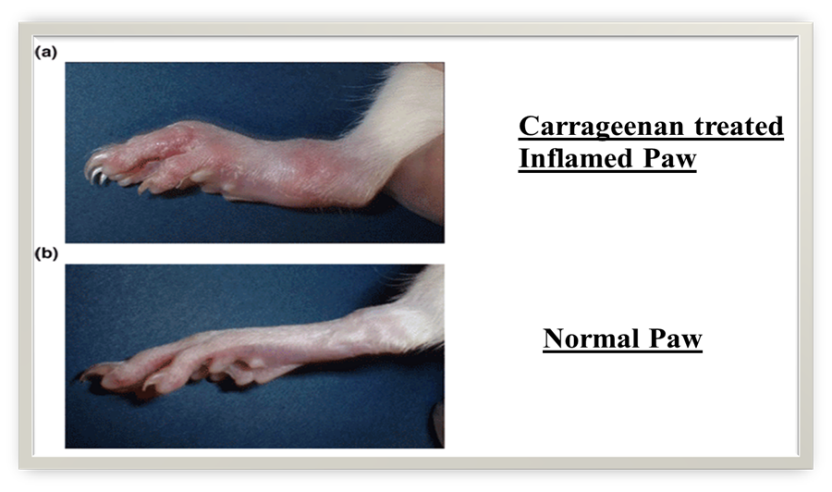
Figure 2: Rat paw edema in Normal & Carragenan treated rats
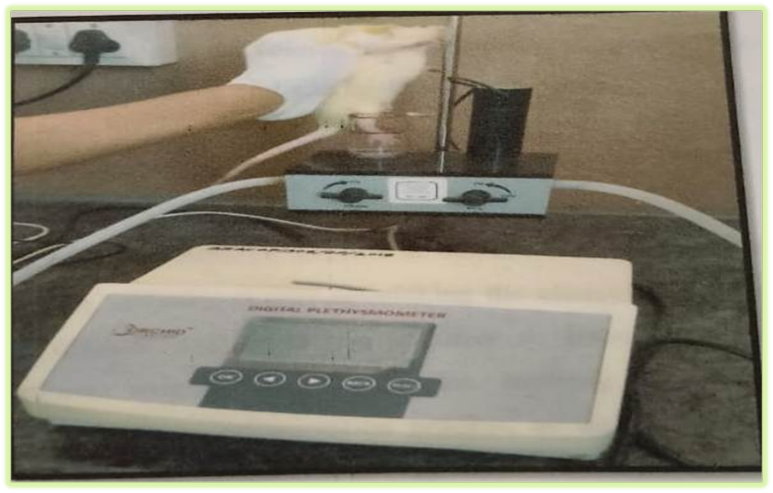
Figure 3: Measurement of Paw volume with the use of Plethysmometer
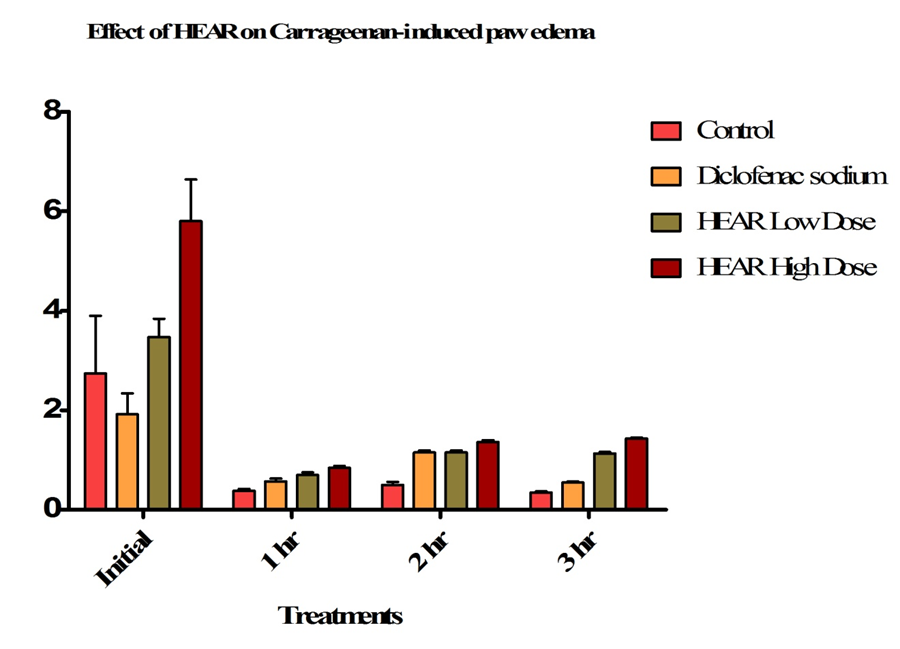
Figure 4: Effect of HEAR on Carragenan induced rat paw edema
Effect of HEAR on hot-plate test
No results are obtained at any of the time points assessed using HEAR (200 mg/kg, p.o). On the contrary, diclofenac sodium (10 mg/kg, p.o.) significantly improved response times in rats across all time intervals assessed, specifically at 30, 60, 90, and 120 minutes post-administration. Significant improvements were measured at 30 and 120, but not at 60 or 90 minutes, following HEAR (400 mg/kg, p.o.). Compared with the control group, HEAR had significant effects, as seen in Table 6.
Table 6: Effects of HEAR on the hot-plate test
|
Treatment Group |
Dose |
Initial basal Reaction Time (Sec). |
Reaction Time (sec). |
|||
|
30min |
60min |
90min |
120min |
|||
|
Control |
10 ml/kg |
3.66±0.33ns |
11.66±0.83*** |
11.83±0.83*** |
12.66±0.42*** |
12.33±0.71*** |
|
Diclofenac sodium |
10 ml/kg |
3.34±0.33 |
4.33±0.21 |
5.16±0.30 |
5.50±0.42 |
5.50±0.56 |
|
HEAR Low Dose |
200 mg/kg p.o. |
4.33±0.21ns |
4.66±0.84ns |
5.00±0.63ns |
5.16±0.70ns |
5.16±0.65ns |
|
HEAR High Dose |
400 mg/kg p.o. |
4.66±0.33ns |
7.16±0.87* |
7.50±0.76ns |
7.66±1.40ns |
8.50±0.99* |
All the values have been expressed as Mean ±S.E.M, test employed one-way ANOVA by Dennett’s test (n=6); significantly different from the control at *(P<0.05), **( P<0.01), ***( P<0.001) and ns (non-significant) when compared to the control group.
Effects of HEAR on tail-flick test
As you can see in table 5.7, diclofenac sodium standard drug (10 mg/kg, p.o.) had a highly significant effect increasing the nociceptive reaction time at 30, 60, 90, and 120 minutes after administration. On the other hand, HEAR (200 mg/kg, p.o.) did not have a significant effect at all these time intervals. HEAR (400 mg/kg, p.o.) has shown highly significant effect after 60 minutes and significant effects at 30 minutes and 120 minutes when compared to control, detailed in table 7.
Table 7: Effects of HEAR on the Tail-flick test
|
Treatment Group |
Dose |
Response time in (sec) after drug administration. |
||||
|
0min |
30min |
60min |
90min |
120min |
||
|
Control |
10 ml/kg |
3.60±0.22 |
4.15±0.18 |
4.26±0.35 |
4.27±0.31 |
3.98±0.17 |
|
Diclofenac sodium |
10 ml/kg |
4.22±0.17 |
6.29±0.18*** |
7.84±0.49*** |
9.07±0.46*** |
8.10±0.38*** |
|
HEAR Low Dose |
200 mg/kg p.o. |
4.59±0.26 |
6.07±0.24ns |
5.29±0.65ns |
6.26±0.24 |
5.92±0.35 |
|
HEARHigh Dose |
400 mg/kg p.o. |
3.86±0.72 |
6.80±0.49* |
6.99±0.53*** |
7.44±0.33 |
6.54±0.50* |
All the values have been expressed as Mean ±S.E.M, test employed one-way ANOVA by Dennett’s test (n=6); significantly different from the control at *(P<0.05), **( P<0.01), ***( P<0.001) and ns (non-significant) when compared to the control group.
DISCUSSION
The anti-nociceptive effect of hydroalcoholic extract of Asparagus racemosus had been evaluated utilizing the two models (hot-plate test and tail-flick test).
The hot-plate test evidenced that the plant extracts (HEAR) and diclofenac sodium caused an increase in withdrawal latency period when compared with controls. The effect was observed in a dose-dependent manner. The extract at a dose of 200 mg/kg (p.o.) failed to demonstrate any major effect at time intervals of 0, 30, 60, 90, and 120 minutes. On the other hand, HEAR 400 mg/kg (p.o.) showed the moderate significance of effect at 120 minutes after administration. Hence, the result indicates that the ethanolic extract of this plant may probably possess both peripheral and central analgesic activities. It would be worthwhile noting that narcotic analgesics relieve pain by both central and peripheral pathways; however, non-steroidal anti-inflammatory drugs will act foremost on pain at peripheral level. Moreover, as further support to the hydroalcoholic extract of Asparagus racemosus (HEAR), the analgesic effect was further analyzed employing the tail immersion test. Thermal stimuli induce analgesia that is centrally mediated at the supraspinal level, therefore placing it in the category of supraspinal mediation and specificity for centrally acting analgesics. As an additional assessment of the hydroalcoholic extract of Asparagus racemosus (HEAR), the analgesic effectiveness was evaluated through the tail immersion method. This technique involves thermal stimuli that provoke centrally mediated analgesia at the supraspinal level. It can be classified as supraspinal mediation and specificity for centrally acting analgesics.
The effect of the HEAR was highly significant in increasing the reaction time to thermal stimuli in the tail immersion test, thereby proving analgesic effects. At a dose of 200 mg/kg, HEAR exerted moderately significant effects at 30, 90, and 120 minutes, but none were observed at the 60-minute interval. Whereas, at a dose of 400 mg/kg, highly significant effects of HEAR were observed at 30, 60, 90, and 120 minutes. Diclofenac, used as a standard, also showed highly significant effects. This method uses an increase in reaction time as a reliable measure of central anti-nociceptive or analgesic actions because this test measures the spinal reflex mediated by central analgesic agents.
Hind paw edema induced by carrageenan is one of the classical methods to test the anti-inflammatory activities of drugs and is called a biphasic model in which in the first phase, histamine, serotonin, and kinins get released within the first hour, whereas the second phase is dominated by the release of prostaglandins. Diclofenac sodium (10 mg/kg, orally), the standard drug, was found to exert highly significant inhibitory effects on carrageenan-induced inflammation at both 2nd and 3rd hours after administration, showing an inhibition percentage of 80.28% after 2 hours and 85.43% after 3 hours. The HEAR extract at a dose of 200 mg/kg (orally) significantly inhibited carrageenan-induced inflammation by 66.66% after 2 hours, which increased to 76.14% after 3 hours. Likewise, the HEAR extract with a dose of 400 mg/kg (orally) produced inhibition percentages of 67.24% and 74.91% after 2 and 3 hours, respectively. The HEAR extract has been shown to decrease inflammation where dependent on dose.
CONCLUSION
The study investigates the impact of hydro-ethanolic leaf extract (200 and 400mg/kg, p.o.) from Asparagus racemosus on Wistar albino rats, focusing on its analgesic and anti-inflammatory properties. The findings indicate that HEAR (200 and 400mg/kg, p.o.) exhibited significant (P<0.05) analgesic and anti-inflammatory effects in a dose-dependent manner. Additionally, HEAR (200 and 400mg/kg, p.o.) demonstrated efficacy comparable to the standard drug Diclofenac sodium (10mg/kg, p.o.). All experimental procedures were conducted under stringent supervision, ensuring proper handling of the animals, with approval from the Institutional Animal Ethics Committee (IAEC). This research is anticipated to contribute to the development of a novel herbal formulation aimed at diagnosing and treating related health issues.
REFERENCES


Pooja Singh, Diksha Singh, Evaluation of Analgesic & Anti-Inflammatory Effect of Hydroalcoholic Extract Obtained from Leaves of Asparagus racemosus on Experimental Model, Int. J. of Pharm. Sci., 2025, Vol 3, Issue 7, 2760-2771. https://doi.org/10.5281/zenodo.16157315
 10.5281/zenodo.16157315
