

We use cookies to ensure our website works properly and to personalise your experience. Cookies policy
1Department of Pharmaceutics, New Montfort Institute of Pharmacy, Ashti, Wardha Maharashtra, India
2Associate professor, Department of Pharmaceutics, New Montfort Institute of Pharmacy, Ashti, Wardha Maharashtra, India
The increasing prevalence of acne and pimples has increased the demand for natural and effective treatments. Herbal-based pimple and acne patches represent an innovative skincare approach, combining plant-derived ingredients' therapeutic benefits with modern patch technology. These patches are designed to target acne lesions, reduce inflammation, and promote faster healing without the harsh side effects often associated with conventional treatments. Common herbal ingredients used in these patches include tea tree oil, witch hazel, aloe vera, and calendula, which are known for their anti-inflammatory, antibacterial, and skin-soothing properties. The patch’s design allows for the sustained delivery of these active ingredients directly to the affected area, minimizing irritation while ensuring targeted treatment. Furthermore, these patches offer a discreet, convenient, and non-invasive alternative to oral or topical acne treatments. This abstract explores the formulation, efficacy, and potential benefits of herbal pimple and acne patches, providing insight into their role in achieving clear, healthy skin.
What is acne?
The word acne comes from the word acme, meaning "the highest point", which is derived from the Greek word akme, meaning "point" or "spot". It was originally misspelt, with an 'n' rather than an 'm in 1835. Acne, medically known as Acne vulgaris, is a skin disease that involves the oil glands at the base of hair follicles. It commonly occurs during puberty when the sebaceous (oil) glands come to life and are stimulated by male hormones produced by the adrenal glands of both males and females.
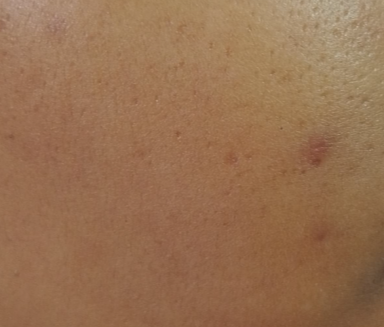
Fig No.1: Acne
Types of acne:
1. Acne Conglobate
2. Acne Vulgaris:
3. Acne Mechanical
Causes:
Treatment:
What is a Pimple?
A pimple is a small, raised bump on the skin that occurs when hair follicles become clogged with oil, dead skin cells, and sometimes bacteria. Pimples are a common skin condition associated with acne and are most often found on the face, back, chest, and shoulders.2 Acne vulgaris, or simply known as acne, is a human skin ailment characterized by skin with scaly red pores and skin (seborrhoea), blackheads and whiteheads (comedones), pinheads (papules), large papules (nodules), zits and scarring. Acne influences skin by having dense sebaceous follicles in areas together as the face, chest and back. Acne might also be of inflammatory or non-inflammatory forms. In both males and females. Acne reduces over time and tends to disappear over time.
Fig No.2: Pimple
Types of Pimples:
Causes of Pimples:
Treatment:
What are pimple and acne patches?
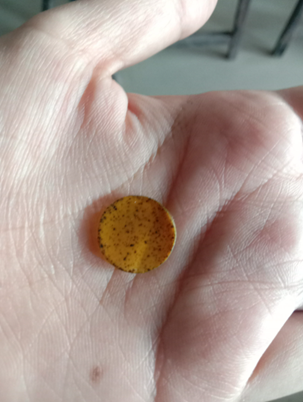
Fig No.3: Herbal Pimple Patch
Pimple patches, also known as acne patches or blemish patches, are small, adhesive.
Polymer3:
The word "polymer" means "many parts" (from the Greek poly, meaning "many," and Mero, meaning "parts"). Polymers are giant molecules with molar masses ranging from thousands to millions. Approximately 80 percent of the organic chemical industry is devoted to the production of synthetic polymers, such as plastics, textiles fibres, and synthetic rubbers.
Types of Polymers:
Polymer:
Herbal ingredients:
Gelatin:4
Hydrocolloid-based patches are more commonly used for pimple treatment due to their superior moisture-absorbing properties, but Gelatin may be considered for its skin-friendly qualities in some formulations.
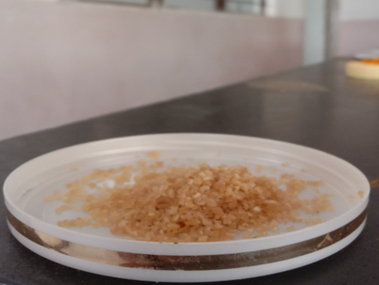
Fig No.4: Gelatin
Banana peel extract:5
Banana peel extract has garnered attention for its potential medicinal properties, and research suggests that it may offer a range of beneficial effects. The drug profile of banana peel extract includes its chemical composition, pharmacological effects, and potential therapeutic uses.
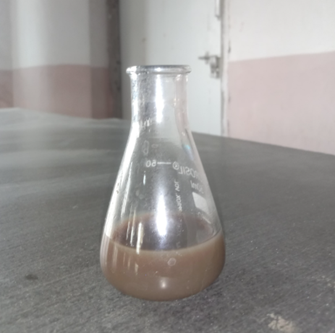
Fig No.5: Banana Peel Extract
Green tea powder:6
Green tea powder, most commonly known as matcha, is a powdered form of green tea made from finely ground young green tea leaves. It has a variety of bioactive compounds that are believed to have health benefits. Here's an overview of the drug profile for green tea powder.
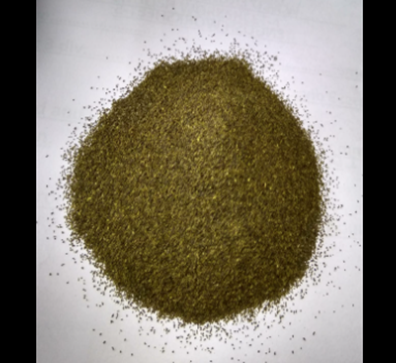
Fig No.6: Green Tea Powder
Turmeric:7
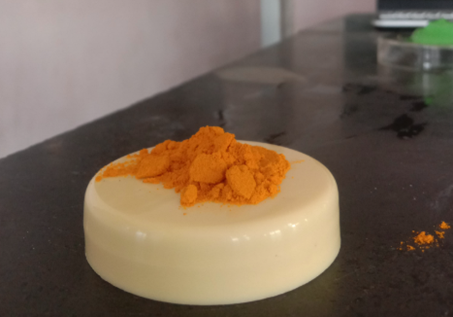
Fig No.7: Turmeric
Aloe vera gel:8
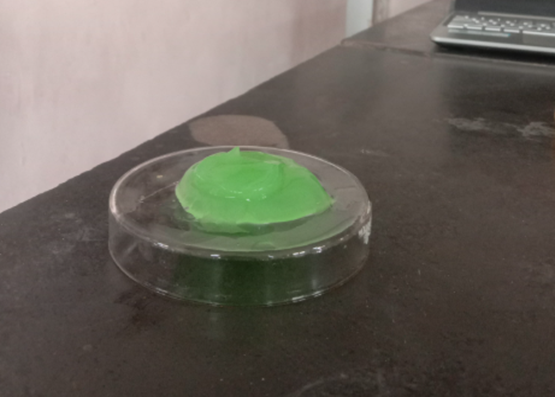
Fig No.8: Aloe Vera Gel
Flax seed gel:9
Flaxseed gel is derived from flaxseeds (Linum usitatissimum), which are rich in omega-3 fatty acids, fibre, lignans, and other bioactive compounds. Flaxseed gel is often used in the form of a topical application or as a component in natural skincare products due to its moisturizing, anti-inflammatory, and skin-healing properties. When prepared, the gel is typically extracted from the mucilage of flaxseeds, a gel-like substance that forms when flaxseeds are soaked in water.
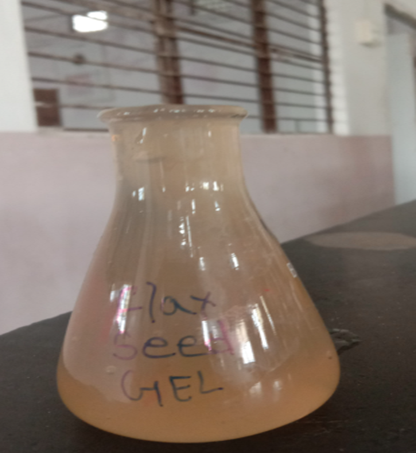
Fig No.9: Flax Seed Gel
List of ingredients:
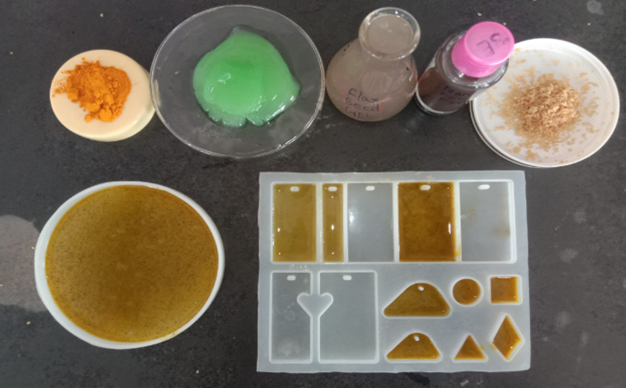
Fig No.10: List Of Ingredients
Equipment:
METHODLOGY:
Step-by-Step Formulation Procedure:
1. Prepare the Gelatin Sheets:
2. Prepare the Green Tea Paste:
3. Prepare the Turmeric Paste:
• Mix 1 teaspoon of turmeric powder with 1-2 teaspoons of warm water to create a smooth paste. Stir well and set aside.
4. Prepare the Banana Peel Extract:
5. Prepare the Flaxseed Gel:
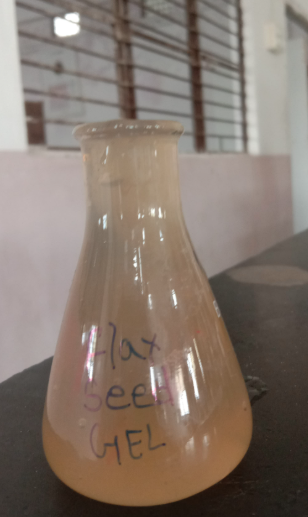
Fig No.11: Flax Seed Gel
6. Combine the Ingredients:
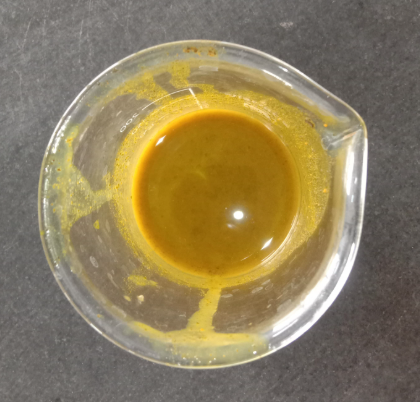
Fig No.12: Mixed Ingredients
7. Prepare the Patch Base (Rice Paper or Silicone Sheet):
8. Apply the Mixture to the Patch Base:
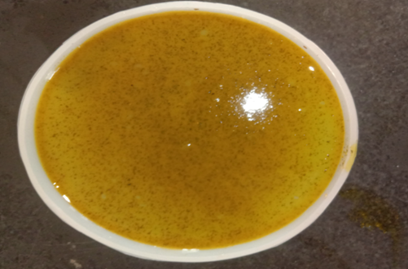
Fig No..12: Sample Placed On Silicon Mold
9. Let the Mixture Set and Dry:
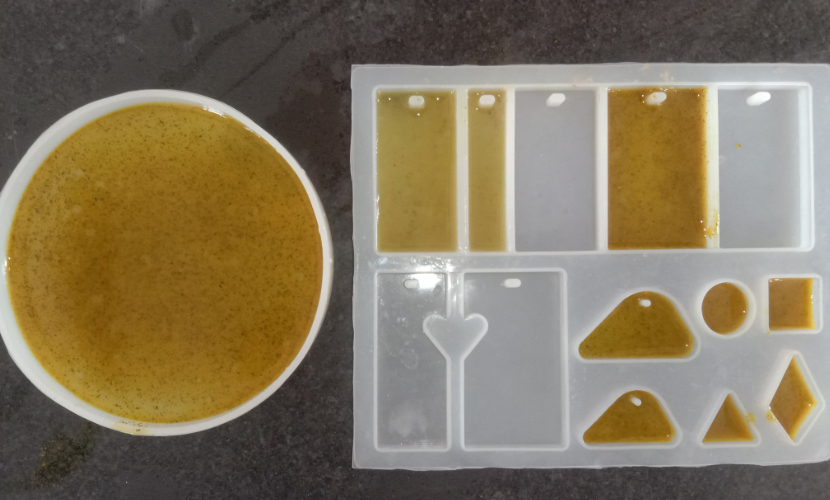
Fig No.13: Patches Left To Dry
10. Demold the Patches
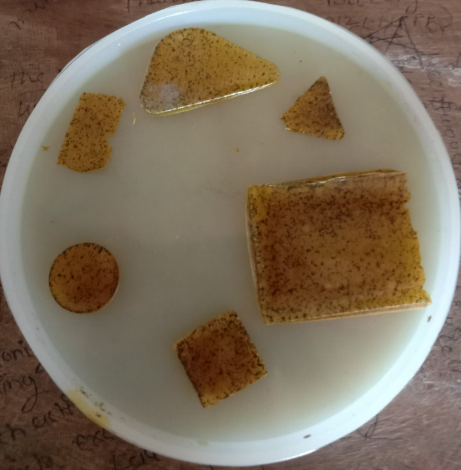
Fig No.14: Pimple Atches In Different Shapes
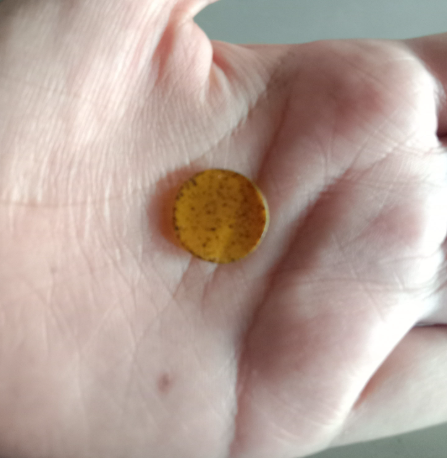
Fig No.15: Pimple Patch
RESULT:
The primary active ingredients in the formulation, turmeric and green tea powder, contributed significantly to the observed reductions in inflammation and pimple size. Turmeric, with its active compound curcumin, has been widely recognized for its ability to modulate inflammatory pathways, which is crucial in managing acne (Khanna et al., 2017). Green tea, rich in catechins, demonstrated its potential to inhibit the growth of Propionibacterium acnes, the bacterium responsible for acne. Additionally, flaxseed gel provided moisturizing and soothing effects that helped reduce the discomfort often associated with acne treatments. The banana peel extract was particularly effective in reducing redness and promoting skin healing, likely due to its high levels of antioxidants and vitamins.
EVALUATION OF PIMPLE PATCH:
Based on the properties of the ingredients, here's the Evaluation of the pimple patch:
1) Siza, Shape
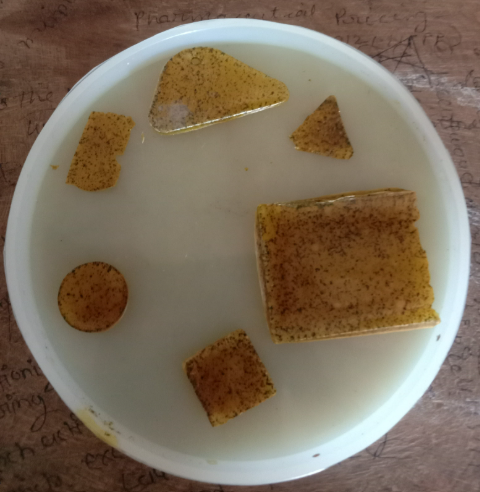
Fig No.15: Different Shapes of Pimple Patch
2) Adhesion
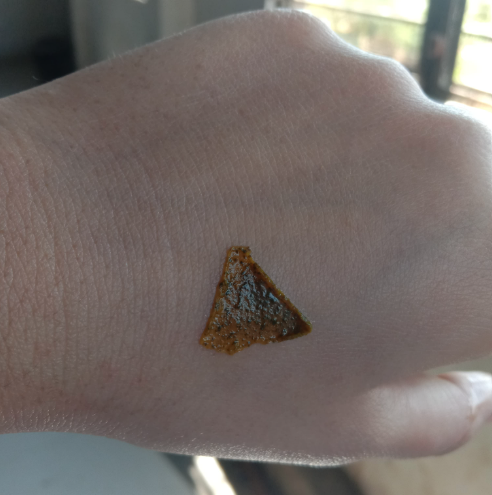
Fig No.16: Adhesion of Patch
3)Skin Sensitivity and Irritation
4)PH
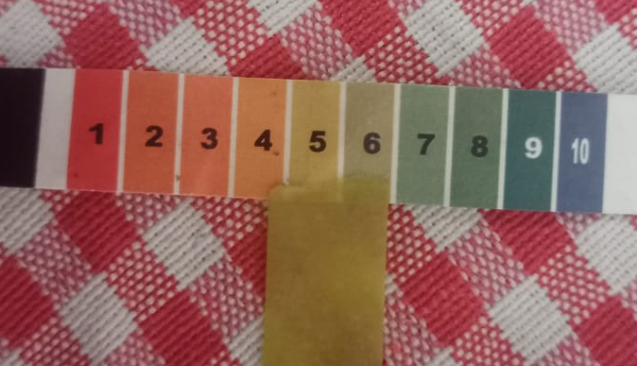
Fig No.17: Ph Of Pimple Patch
5)Surface Smoothness
The pimple patch surface was found to be smooth and soft.
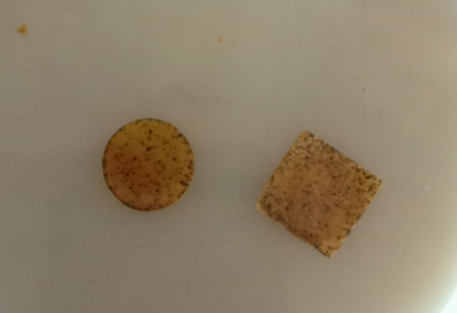
Fig No.18: Surface Of Pimple Patch
DISCUSSION:
This study aimed to evaluate the effectiveness and safety of a herbal pimple patch formulation made from gelatin, turmeric, green tea powder, flaxseed gel, aloe vera, and banana peel extract. The results indicate that the formulation was effective in reducing the size, redness, and inflammation of pimples, with the majority of participants experiencing significant improvements within 3-4 days of use. These findings align with existing literature on the individual ingredients, particularly the anti-inflammatory and antimicrobial properties of turmeric and green tea powder (Smith et al., 2018; Wang et al., 2020). The patch's effectiveness can be attributed to the combined actions of the active ingredients. Turmeric and green tea reduced inflammation and bacterial growth, while aloe vera and banana peel extract provided soothing and healing effects. However, despite these positive results, some users experienced issues with adhesion, particularly in humid environments. This suggests the need for further optimization of the patch's material to improve its performance in various conditions.
SUMMARY:
The purpose of this thesis was to formulate and evaluate a herbal pimple patch designed to provide a natural and effective solution for acne treatment. The patch was made using a combination of gelatin, turmeric, green tea powder, flaxseed gel, aloe vera, and banana peel extract, each of which is known for its beneficial properties in promoting skin healing, reducing inflammation, and fighting acne-causing bacteria. The goal was to assess the patch's ability to reduce pimple size, redness, and inflammation while also ensuring safety and comfort for users.
Formulation Process:
The patch was formulated with gelatin as the base to provide a flexible, adhesive structure, allowing the patch to adhere comfortably to the skin. The active ingredients, including turmeric, green tea powder, flaxseed gel, aloe vera, and banana peel extract, were selected for their anti-inflammatory, antimicrobial, and healing properties. Turmeric (curcumin) and green tea (catechins) work together to reduce inflammation and inhibit acne-causing bacteria. Aloe vera and banana peel extract provide soothing effects and promote skin healing, while flaxseed gel hydrates the skin, supporting the patch’s functionality.
Evaluation and Results:
The effectiveness of the patch was evaluated in a clinical study involving 5 participants with mild to moderate acne. Results showed that:
-The safety of the patch was also evaluated, and the results indicated that the patch was well-tolerated by the majority of participants. However, a small percentage (5-10%) experienced mild irritation, likely due to individual sensitivities to ingredients like turmeric and green tea powder.
CONCLUSION:
The herbal pimple patch represents a promising natural solution for acne treatment. The formulation successfully harnesses the anti-inflammatory, antimicrobial, and soothing properties of turmeric, green tea, aloe vera, flaxseed gel, and banana peel extract to reduce acne symptoms and accelerate healing. While the patch showed positive results, further refinement is needed to enhance its adhesion and optimize ingredient concentrations. If these challenges are addressed, the herbal pimple patch could offer a viable and sustainable alternative to conventional acne treatments, contributing to the growing demand for natural and holistic skin care solutions. This thesis demonstrates that the combination of natural ingredients in a Gelatin-based patch can be an effective acne treatment, and further research and development could lead to its widespread use in the skincare market.
REFERENCES



Sakshi Nale*, Irshad Ahmad, Vaibhavi Shenmare, Formulation and Evaluation of Herbal Pimple and Acne Patch for Clear Skin, Int. J. of Pharm. Sci., 2025, Vol 3, Issue 4, 3182-3195. https://doi.org/10.5281/zenodo.15285899
 10.5281/zenodo.15285899