

We use cookies to ensure our website works properly and to personalise your experience. Cookies policy
Priyadarshini J. L. College of Pharmacy, MIDC, Hingna road, Nagpur, Maharashtra, India
The Fixed-Dose Combination (FDC) of Bempedoic Acid (BA) and Ezetimibe (EZE) provides a crucial oral, non-statin strategy for high-risk patients struggling to achieve aggressive LDL-C targets, particularly those with limitations due to Statin-Associated Muscle Symptoms (SAMS). This approach is designed to circumvent muscle-related toxicity, addressing a major cause of poor treatment adherence in Atherosclerotic Cardiovascular Disease (ASCVD) prevention. The therapeutic rationale is a synergistic dual-mechanism targeting the two sources of cholesterol input: synthesis and absorption. BA is a liver-selective prodrug that inhibits ATP-Citrate Lyase (ACL), restricting endogenous cholesterol synthesis and upregulating LDL receptors. EZE complements this by blocking intestinal absorption via the NPC1L1 transporter. This coordinated blockade suppresses the liver's natural compensatory response, achieving a robust 35–40% LDL-C reduction. Clinical validation from the landmark CLEAR Outcomes trial demonstrated significant cardiovascular benefit in statin-intolerant patients, showing a 13% reduction in the primary Major Adverse Cardiovascular Events (MACE) endpoint, and a 23% reduction in Myocardial Infarction (MI). The FDC successfully delivers substantial CVD risk reduction with muscle-related adverse events comparable to placebo, establishing it as a key cornerstone in non-statin lipid management.
1.1. The Critical Need for Non-Statin LDL-C Lowering
The management of hypercholesterolemia and the subsequent reduction of cardiovascular risk represent the most critical and extensively studied areas in preventive medicine. Atherosclerotic Cardiovascular Disease (ASCVD) is unequivocally established as the leading cause of global illness, mortality, and disability, contributing to a substantial socioeconomic burden worldwide [1, 2]. Decades of clinical trials have confirmed the fundamental principle: for every unit reduction in Low-Density Lipoprotein Cholesterol (LDL-C), there is a proportional reduction in cardiovascular event rates. This has driven clinical guidelines (such as those published by the ESC/EAS) to advocate for increasingly stringent LDL-C targets, articularly for very high-risk patients with established ASCVD or conditions like Heterozygous Familial Hypercholesterolemia (HeFH), often recommending goals below [3].
However, the effective implementation of these aggressive targets is currently limited by two distinct, yet interconnected, clinical challenges:
These limitations underscore a profound unmet need for alternative, highly effective, and well-tolerated oral therapeutic strategies that can be used either as an adjunct to statins or as stand-alone agents in statin-intolerant individuals. The ideal intervention must offer robust efficacy while maintaining a favourable safety profile distinct from the potential muscle-related liabilities of statins.
1.2. Therapeutic Rationale:
The Fixed-Dose Combination of Bempedoic Acid and Ezetimibe
The development of the Fixed-Dose Combination (FDC) of Bempedoic Acid (BA) () and Ezetimibe (EZE) (known commercially as Nexlizet or Nustendi) represents a strategic pharmacological advancement designed to overcome the aforementioned barriers [5]. This FDC provides a powerful oral alternative by targeting cholesterol management through a coordinated attack on two separate, non-overlapping input pathways into the body's cholesterol homeostasis: the endogenous pathway (synthesis in the liver) and the exogenous pathway (absorption in the intestine).
Bempedoic Acid (BA): Addressing Statin Intolerance via Liver Selectivity
Bempedoic Acid is a first-in-class, substituted dicarboxylic acid that acts as an inhibitor of ATP-Citrate Lyase (ACL), an enzyme positioned upstream of HMG-CoA reductase in the mevalonate pathway. Its most critical feature is its design as an inactive prodrug that is activated by Very Long-Chain Acyl-CoA Synthetase 1 (ACSVL1). This enzyme is highly expressed in hepatocytes but is virtually absent in skeletal muscle [7, 8]. This targeted, liver-specific activation ensures that the drug's active metabolite, Bempedoyl-CoA, achieves its desired effect of reducing cholesterol synthesis in the liver while avoiding muscle accumulation, thereby mitigating the risk of SAMS and offering a genuinely muscle-safe alternative for lipid lowering.
Ezetimibe (EZE): Blocking Absorption and Preventing Compensation
Ezetimibe provides the essential complementary mechanism. As an azetidinone derivative, it selectively blocks the intestinal sterol transporter Niemann-Pick C1-Like 1 (NPC1L1), thereby preventing the absorption of cholesterol derived from both dietary intake and biliary excretion. The true pharmacological value of the combination emerges when the effects are superimposed: inhibition of cholesterol synthesis by BA naturally triggers a compensatory homeostatic response in the liver, stimulating increased cholesterol absorption via the NPC1L1 pathway. Ezetimibe's simultaneous inhibition blocks this compensatory absorption, leading to a maximum, coordinated upregulation of hepatic LDL receptors. This synergy results in an additive-to-synergistic reduction in LDL-C that far surpasses the efficacy of either agent used alone [5].
This review will thoroughly dissect the molecular underpinnings of this synergistic effect, examine the robust clinical evidence from the CLEAR trials that confirmed both efficacy and, crucially, cardiovascular outcome benefit, and evaluate the overall safety and pharmacokinetic profile, positioning the BA/EZE FDC as a vital tool in achieving aggressive LDL-C targets in the modern era of cardiovascular risk management.
2. INDIVIDUAL DRUG PROFILE: EZETIMIBE (EZE)
2.1. Ezetimibe: Chemical Structure and Structural Activity Relationship (SAR)
Ezetimibe (EZE) represents a successful class of lipid-modulating agents that operate independently of the reductase enzyme pathway targeted by statins. Chemically, Ezetimibe is categorized as a highly substituted azetidinone derivative and is formally known as 1-(4- fluorophenyl)-3(R)-[3(S)-(4-(fluorophenyl))-3-{hydroxypropyl}]-4(S)-(4-{hydroxyphenyl})- 2-{azetidinone}.
The molecule's therapeutic functionality is intrinsically linked to its unique chemical architecture, a concept explored in its Structural Activity Relationship (SAR):
Azetidinone Ring: The central four-membered (N)containing azetidinone ring is the molecular cornerstone for its mechanism of action. This ring structure allows EZE to adopt the necessary conformation to bind effectively to its target receptor, facilitating both hydrogen bonding and hydrophobic interactions that are critical for its selective inhibition.
Aromatic Groups: The two major substituted aromatic (phenyl) groups, one of which contains a 4-{fluorophenyl} moiety and the other a 4-{hydroxyphenyl}group, significantly enhance the molecule's overall lipophilicity. This characteristic is essential for enabling the drug to penetrate the lipid-rich environment of the intestinal brush border and localize its activity to the intended site of action.
Stereochemistry: The specific stereochemistry at the 3 and 4 -positions of the azetidinone ring is vital for maintaining the selective inhibitory activity against the intestinal cholesterol transporter. Ezetimibe is officially classified as an Azetidinone Cholesterol Absorption Inhibitor. It is known to possess an extended duration of action, with an effective half-life of approximately 22 hours for its primary active form [15]. It is important to note that Ezetimibe itself acts as a prodrug. The parent drug is rapidly converted in vivo to its active metabolite, Ezetimibe-glucuronide, primarily through glucuronidation catalyzed by the UDP glucuronosyltransferase 1 family, polypeptide A1 (UGT1A1/3) enzymes [11, 12]. The glucuronide conjugate is responsible for the drug’s potent pharmacological activity and its long half-life, which is sustained by a robust enterohepatic recirculation process [15].
Chemical Structure of Ezetimibe

Chemical Classification:
Azetidinone Cholesterol Absorption Inhibitor
2.2. Mechanism of Action: Intestinal Absorption Blockade
The therapeutic effect of Ezetimibe is achieved through a singular and precise mechanism: the selective inhibition of cholesterol absorption within the small intestine. The target of this inhibition is the intestinal sterol transporter, Niemann-Pick C1-Like 1 (NPC1L1) [10]. NPC1L1 is a transmembrane protein located on the brush border of enterocytes (intestinal absorptive cells), and it plays a critical and necessary role in facilitating the uptake of cholesterol from the intestinal lumen [13].
Action: Ezetimibe, or specifically its active glucuronide metabolite, directly binds to the NPC1L1 protein. By binding to this transporter, EZE effectively blocks or impedes the translocation of cholesterol across the intestinal membrane [10]. This mechanism stops the uptake of cholesterol derived from both dietary sources and cholesterol recycled via biliary secretion.
Physiological Effect: The resulting decrease in the influx of cholesterol from the intestine leads to a state of cholesterol depletion within the hepatocyte (liver cell). This deficit triggers a physiological homeostatic response in the liver designed to restore intracellular cholesterol levels:
1. Increased LDL Receptor Expression: The primary response is the upregulation of Low Density Lipoprotein (LDL) receptors on the hepatocyte surface [14]. These receptors are critical for binding circulating LDL particles.
2. Enhanced LDL-C Clearance: The increased number of functional LDL receptors leads to enhanced clearance of LDL-C from the plasma circulation. When used as monotherapy, this physiological mechanism results in a modest but clinically beneficial LDL-C reduction in the range of [14]. Ezetimibe is therefore a valuable agent, particularly as an additive therapy to statins or as a first-line therapy for those requiring a moderate reduction without the systemic effects of statins. Its distinct mechanism is crucial in establishing the synergistic potential when combined with agents that inhibit endogenous cholesterol synthesis, such as Bempedoic Acid.
3. INDIVIDUAL DRUG PROFILE: BEMPEDOIC ACID
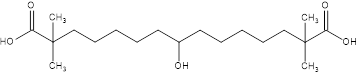
3.1. Bempedoic Acid: Chemical Structure and Prodrug Rationale
Bempedoic Acid is a unique{first-in-class) ATP-Citrate Lyase inhibitor [6].
|
Chemical Classification |
Substituted Dicarboxylic acid prodrug |
|
Structure
|
8-hydroxy-2,2,14,14-tetramethylpentadecanedioic acid |
|
Prodrug Conversion |
The inactive (BA)parent drug is converted to the active (Bempedoyl-CoA) metabolite [7]. |
|
Liver Selectivity SAR |
The conversion enzyme, Very Long-Chain Acyl-CoA Synthetase 1 (ACSVL1), is expressed almost exclusively in the liver and is virtually absent in skeletal muscle [8, 16]. This chemical targeting avoids (SAMS). |
|
Pharmacology |
BA is absorbed rapidly and achieves a half-life of 21hours |
3.2. Bempedoic Acid: Chemical Structure and Prodrug Rationale
Bempedoic Acid (BA) stands as a unique, first-in-class therapeutic agent. Its pharmacological significance stems directly from its novel chemical structure and a strategically engineered prodrug mechanism that ensures tissue specificity. Chemically, BA is classified as a Substituted Dicarboxylic Acid Prodrug. Its formal structure is 8-hydroxy-2, 2, 14, 14- tetramethyl-pentadecane-dioic acid. The molecule's design is specifically optimized to target the cholesterol synthesis pathway at a step distinct from statins, functioning as an ATP-Citrate Lyase (ACL) inhibitor.
The most critical feature of Bempedoic Acid is its status as an inactive parent drug (prodrug). The therapeutic activity is only initiated upon conversion to its active metabolite, Bempedoyl-CoA. This conversion is catalysed by a specific enzyme, which-underpins the drug's safety profile and therapeutic success. Pharmacologically, BA is rapidly absorbed and achieves a half-life of 21 hours.
Liver Selectivity and Avoidance of Statin-Associated Muscle Symptoms (SAMS)
The cornerstone of Bempedoic Acid's success and a major focus of its Structural Activity Relationship (SAR) is its deliberate mechanism to avoid Statin-Associated Muscle Symptoms (SAMS). This is achieved by restricting the activation of the drug almost exclusively to the liver tissue.
The enzyme responsible for the necessary prodrug conversion is Very Long-Chain Acyl-CoA Synthetase 1 (ACSVL1). The critical insight driving the drug's development is the highly selective expression pattern of ACSVL1: it is expressed almost exclusively in the liver and is virtually absent in skeletal muscle.
This chemical targeting mechanism ensures that the active metabolite, Bempedoyl-CoA, is generated at high concentrations within the liver—the intended site of action for cholesterol synthesis inhibition—but is minimized in muscle tissue. Consequently, BA achieves its LDLC lowering effect without the risk of muscle- related adverse effects common to statins, offering a vital alternative for the substantial number of patients suffering from SAMS. This design principle fundamentally differentiates BA from statins and solidifies its role as an essential oral agent for intensifying lipid reduction.
Chemical Structure of Bempedoic Acid
Mechanism of action and Therapeutic Efficacy
The therapeutic efficacy of Bempedoic Acid (BA) stems from its ability to intervene high up in the cholesterol biosynthesis pathway within the liver, providing an effective non-statin strategy for reducing plasma LDL-C [22]. This action is initiated by the drug's active metabolite, Bempedoyl-CoA, which is selectively generated within the hepatocyte [7]. The active Bempedoyl-CoA metabolite functions by competitively inhibiting ATP-Citrate Lyase (ACL). ACL is an enzyme critically positioned upstream of HMG-CoA reductase—the historical target of statin drugs in the mevalonate pathway. By inhibiting ACL, BA intervenes early in the synthesis chain [9].
The Role of ACL and Inhibition Action
The enzyme ACL serves a pivotal role in the biochemical process of lipogenesis and cholesterol production. Its primary function is the cytosolic conversion of citrate to oxaloacetate and acetyl-CoA [22].
Action: ACL is critical for generating acetyl-CoA, which serves as the fundamental building block for cholesterol synthesis. By competitively inhibiting ACL, the Bempedoyl-CoA metabolite effectively restricts the substrate pool of acetyl-CoA available for the downstream cascade of cholesterol synthesis [22].
Pathway Impact: This inhibition restricts the necessary substrate for the entire mevalonate pathway, thereby reducing the rate of de novo cholesterol synthesis within the hepatocyte [22].
The inhibition of cholesterol synthesis occurs specifically in the liver because the enzyme required for Bempedoic Acid's activation, ACSVL1, is virtually absent in skeletal muscle, ensuring the action is confined to the hepatic tissue [8, 16]. This is the molecular rationale that allows BA to achieve cholesterol reduction without the associated risk of Statin-Associated Muscle Symptoms (SAMS) [8, 16].
Physiological Consequences: LDL Receptor Upregulation
The restriction of hepatic cholesterol synthesis by BA triggers a robust and beneficial compensatory mechanism within the liver.
Physiological Effect: This reduction in hepatic cholesterol content initiates the homeostatic response of the hepatocyte. In an effort to replenish its cholesterol stores from the bloodstream, the liver responds by increasing the expression and density of Low-Density Lipoprotein (LDL) receptors on the hepatocyte surface [18].
Enhanced Clearance: The substantial upregulation of LDL receptors leads to enhanced clearance of LDL-C from the plasma. These receptors efficiently bind circulating LDL particles and facilitate their uptake and catabolism by the liver, thereby lowering systemic LDL-C levels [18]. The clinical result of this targeted intervention is a significant reduction in circulating atherogenic lipoproteins. As monotherapy, Bempedoic Acid (BA) provides a beneficial LDL-C reduction in the range of 18-28%. This efficacy, combined with its distinct mechanism and safety profile, establishes Bempedoic Acid as an important therapeutic option for patients requiring potent LDL-C lowering, particularly those with statin intolerance [21]. When combined with Ezetimibe, which blocks cholesterol absorption, this mechanism becomes part of a powerful synergistic strategy [5].
4. SYNERGY AND FIXED-DOSE COMBINATION RATIONALE
4.1. Complementary and Synergistic Mechanisms
The true pharmacological value and superior efficacy of the Bempedoic Acid (BA) / Ezetimibe (EZE) Fixed-Dose Combination (FDC) lie in its strategically coordinated ability to simultaneously block the two main pathways of cholesterol input into the plasma: endogenous hepatic synthesis and exogenous intestinal absorption. This dual mechanism is paramount because it effectively prevents a key compensatory feedback loop that would otherwise limit the therapeutic benefit of either drug if used as monotherapy [5].
The Compensatory Mechanism Challenge
The body’s cholesterol homeostasis system is highly regulated and designed to maintain a steady intracellular cholesterol concentration in the liver. When cholesterol synthesis is inhibited by a drug like BA (which decreases synthesis), the liver's natural response is to compensate for this deficit [5]. This compensation occurs primarily by:
1. Increasing LDL Receptor Expression: This enhances the clearance of circulating LDL-C.
2. Increasing Absorption: Crucially, the liver attempts to increase the uptake of cholesterol from the intestine by upregulating the activity of the intestinal sterol transporter, Niemann-Pick C1-Like 1 (NPC1L1). If BA were used alone, this NPC1L1-mediated increase in cholesterol absorption would partially counteract the benefit gained from blocking synthesis, thereby diminishing the overall LDL-C lowering effect [5].
The Synergistic Solution
The FDC is designed to prevent this biological compensation through the additive action of Ezetimibe:
BA’s Action (Down-Arrow Synthesis): Bempedoic Acid blocks the ACL enzyme, leading to a reduction in cholesterol synthesis.
EZE’s Action (Down-Arrow Absorption): Ezetimibe, by binding to NPC1L1, completely suppresses this compensatory increase in NPC1L1-mediated absorption that is triggered by BA. This crucial dual blockade ensures that the signal to raise intracellular cholesterol, resulting from the block on synthesis, cannot be satisfied by increasing absorption from the gut [5].
Maximal Therapeutic Outcome
The outcome of this synergistic intervention is profound: the dual blockade leads to a maximal, coordinated upregulation of hepatic LDL receptors. Since the liver cannot compensate for the synthesis block through absorption, it maximizes the receptor-mediated clearance of circulating LDL-C [5].
This results in an additive-to-synergistic reduction in LDL-C that is significantly greater than either drug alone [15, 23]. In clinical trials, the combination has achieved robust LDL-C reduction in the range of 35-40%, positioning the FDC as an essential, high-efficacy tool for achieving aggressive LDL-C goals [5].
4.2. Analytical and Formulation Challenges
The development of the Bempedoic Acid (BA) and Ezetimibe (EZE) Fixed-Dose Combination (FDC) was complicated by significant challenges related to the chemical incompatibility and disparate physicochemical properties of the two active pharmaceutical ingredients (APIs). Overcoming these obstacles was essential to ensure a stable, therapeutically effective, and commercially viable single tablet.
Formulation Complexity and Stability
The fundamental challenge in formulating the FDC stemmed from the stark differences in the solubility profiles of the two drugs.
Combining components with such contrasting solubility and chemical characteristics into a single, uniform matrix required careful formulation design. The formulation efforts had to achieve several critical goals:
Analytical and Quality Control Requirements
Given the formulation's complexity and the necessity for stability monitoring, highly demanding analytical techniques were required for Quality Control (QC). Pharmaceutical regulations demand that methods be not only sensitive and accurate but also stability-indicating, meaning they must be able to resolve and quantify the APIs in the presence of any potential degradation products or impurities.
Simultaneous Quantification: The QC process required the development of highly sensitive and reliable analytical techniques that could simultaneously quantify both BA and EZE in the finished dosage form.
Techniques Employed: Techniques like Reversed-Phase High-Performance Liquid Chromatography (RP-HPLC) and the more efficient Ultra-Performance Liquid Chromatography (RP-UPLC) were necessary to achieve the requisite separation efficiency, sensitivity, and speed.
Stress Testing: The methods needed to monitor degradation under various stress conditions including exposure to acid, base, heat, and light. This mandated the validation of the methods according to stringent international guidelines (such as ICH Q2(R1)) to ensure that the techniques could accurately monitor the degradation kinetics and impurity profiles of both drugs, thereby confirming the method's robustness and suitability for routine commercial analysis. The successful resolution of these formulation and analytical challenges was pivotal in transitioning the synergistic concept of dual ACL and NPC1L1 inhibition from clinical trials into a stable, single-tablet product for patient use.
5. CLINICAL RESULTS AND THERAPEUTIC IMPACT
5.1. Efficacy in Phase 3 Trials (The clear& Program)
The (FDC) was consistently superior to monotherapies across the Phase program [15, 16]:
|
Trial /Group |
Study Population |
LDL-C Reduction (Placebo-Corrected) |
Secondary Effects |
|
Study 1002- (FDC-053) [15] |
{ASCVD/ HeFH} on statins |
Reduced (LDL-C) 38% |
{hs-CRP} reduced by 35% |
|
Trial /Group |
Study Population |
LDL-C Reduction (Placebo-Corrected) |
Secondary Effects |
|
CLEAR Tranquillity [16] |
Statin-Intolerant on (EZE) |
(BA) added to (EZE) reduced (LDLC) by 28.5% |
Validated efficacy In{SAMS}patients |
5.2. Cardiovascular Outcome Data (CLEAR Outcomes)
The ultimate validation of any lipid-lowering therapy is its demonstrated ability to reduce hard cardiovascular endpoints, which was the focus of the large-scale, definitive CLEAR Outcomes trial [17, 18]. This landmark study was critical because it provided the long-term evidence necessary to establish Bempedoic Acid's (BA) role in clinical practice, moving its acceptance beyond merely reducing surrogate markers like LDL-C [17, 18]. The trial was designed to evaluate the clinical efficacy of BA in a highly relevant patient population: approximately 14,000 high-risk individuals who had documented evidence of statin intolerance [17, 18]. This enrolment strategy directly addressed the major clinical challenge of SAMS by proving that an effective, non-statin mechanism could provide significant protective benefit to those previously unable to tolerate standard care [17, 18].
Primary Endpoint Reduction
The primary objective of the trial was to determine the impact of Bempedoic Acid on the incidence of Major Adverse Cardiovascular Events (MACE) [17, 18]. The specific endpoint used was the 4-component MACE, defined as the composite of cardiovascular (CV) death, non-fatal myocardial infarction (MI), non-fatal stroke, or coronary revascularization [17].
The results demonstrated a significant positive effect:
Key Event Reduction and Total Burden
Beyond the composite primary endpoint, the analysis of individual and total events provided strong confirmation of the drug's therapeutic value [17, 18]. The treatment led to significant reductions in several critical events that drive cardiovascular morbidity and mortality:
Therapeutic Conclusion
The findings from the CLEAR Outcomes trial provided a definitive conclusion: the hypothesis that LDL-C lowering via non-statin mechanisms specifically the dual inhibition of ACL (by BA) and NPC1L1 (by Ezetimibe in the combined therapy setting) provides proportional Cardiovascular disease (CVD) risk reduction was validated [13].
The successful demonstration of hard clinical outcomes (MACE reduction) solidifies the FDC's role as an essential, high-impact therapeutic agent [17]. It confirms that patients with statin intolerance can achieve significant, proven protection against future cardiovascular events using this non-statin strategy [17, 18]. The results firmly establish the BA/EZE FDC as a key component of oral non-statin lipid management for high-risk patients.
6. DRUG PROFILE AND ADDITIONAL INFORMATION
6.1. Safety and Tolerability Profile
|
Parameter |
Findings in CLEAR Trial |
Therapeutic Relevance |
|
Muscle Symptoms |
Rates of muscle-related (AEs) comparable to placebo [16]. |
Confirms successful chemical strategy of liver-selective activation (lack of (ACSVL1) in muscle) [8]. |
|
Hyperuricemia/ Gout |
Increased incidence of hyperuricemia and gout [17]. |
Due to (BA) inhibition of renal (Organic Anion Transporter) (OAT2), affecting uric acid excretion [18, 25]. |
|
Tendon Rupture |
Low, but statistically significant risk reported [17]. |
Requires cautionary labelling, especially with concomitant use of fluoroquinolones [26]. |
|
Glycaemic Control |
No adverse effect on (HbA1c) or risk of new-onset diabetes [21]. |
Favourable profile compared to potential modest diabetogenic effect seen with some statins [27]. |
6.2. Pharmacokinetic Considerations
The introduction of Bempedoic Acid (BA) into the therapeutic landscape necessitates a careful consideration of its pharmacokinetic (PK) profile, particularly concerning potential drug-drug interactions (DDIs) when co-administered with statins. This clinical vigilance is required because BA exerts an inhibitory effect on specific hepatic and renal drug transporters [18, 28]. BA has been shown to inhibit the organic anion-transporting polypeptide transporters, specifically OATP1B1 and OATP1B3 [28]. These transporters are critical for the hepatic uptake of several common statin drugs [28]. Furthermore, BA also inhibits the Organic Anion Transporter 2 (OAT2), which is predominantly involved in renal elimination [25].
This inhibitory activity has important clinical consequences:
Consequently, the potential for clinically significant DDIs necessitates careful dose limits for co-administered statins (e.g., Simvastatin and Pravastatin) to ensure patient safety and prevent muscle toxicity, confirming that understanding these transporter-mediated interactions is a key part of the FDC's risk management profile [18, 28].
6.3. Regulatory Status and Indication
The strong clinical and cardiovascular outcome data supporting the efficacy of the Bempedoic Acid and Ezetimibe combination has led to global regulatory approvals, establishing the FDC as a key component of non-statin lipid management. The BA/EZE FDC is approved globally under various trade names, such as Nexlizet in the United States and Nustendi in Europe. The core indications for the FDC are centered on highrisk adult patients who require intensified LDL-C lowering:
Established ASCVD: Adults with established Atherosclerotic Cardiovascular Disease (ASCVD).
HeFH: Adults with Heterozygous Familial Hypercholesterolemia (HeFH). The FDC is indicated for use in these patients to achieve additional LDL-C lowering. It is typically prescribed either as an adjunct to maximally tolerated statin therapy (for patients needing more LDL-C reduction despite high-intensity statins) or for direct use in statinintolerant patients (who cannot take statins due to adverse effects like SAMS). This regulatory status solidifies the FDC's role in fulfilling the critical clinical need for effective, oral, non-statin lipid-lowering therapy [12, 29].
CONCLUSION AND FUTURE PERSPECTIVES
The combined evidence from extensive clinical trials firmly establishes the Bempedoic Acid (BA) and Ezetimibe (EZE) Fixed-Dose Combination (FDC) as an effective, critical solution for achieving aggressive LDL-C reduction in high-risk patient populations [5]. This therapeutic success is rooted in two strategic pharmacological advantages:
The successful chemical engineering of BA as a liver-selective prodrug allows it to inhibit cholesterol synthesis via ATP-Citrate Lyase (ACL) [8, 9]. By ensuring that the active metabolite is primarily generated within the hepatocyte, the drug effectively avoids the muscle toxicity associated with statins, thus providing a crucial option for patients with StatinAssociated Muscle Symptoms (SAMS) [8, 16]. Second, the combination's efficacy is amplified by its synergy with Ezetimibe’s absorption blockade. EZE prevents the compensatory increase in intestinal cholesterol absorption that would otherwise be triggered by BA's synthesis inhibition [5]. This dual, coordinated mechanism leads to maximal upregulation of hepatic LDL receptors, resulting in an additiveto-synergistic LDL-C reduction significantly greater than either drug alone [15, 23].
This potent pharmacological basis has been validated by strong clinical data from the CLEAR program, demonstrating significant reductions in both surrogate markers (LDL-C) and, most
importantly, actual Major Adverse Cardiovascular Events (MACE) events [17]. The demonstration of MACE reduction in high-risk, statin-intolerant patients confirms the proportional cardiovascular protective benefit of LDL-C lowering via the ACL and NPC1L1 pathways [13, 17]. Consequently, the BA/EZE FDC is firmly established as a key, foundational option in oral non-statin lipid management [5].
Looking ahead, future research efforts will be critical for further optimizing patient outcomes and defining the FDC's role in complex therapeutic regimens. Key areas of investigation include:
Combination Therapy: Future research will investigate its role in combination therapy with highly potent lipid-lowering agents such as PCSK9 inhibitors.
Real-World Settings: Further study into its use in real-world settings will be essential to ensure optimal patient outcomes and confirm the applicability of the trial data across diverse patient populations [30, 31].
Safety Profile Refinement: Continued surveillance regarding less common adverse events, such as hyperuricemia and tendon issues, will help refine clinical guidelines for specific patient subgroups. The BA/EZE FDC represents a major milestone in lipid management, offering an effective, mechanism-based strategy for patient who were previously difficult to tre
REFERENCES


Mahima Bijewar, Dinesh Kawade, Chetna Kapgate, Achal Gadhwale, Aditi Tayde, Neha Sharnagate, Comprehensive Review: Bempedoic Acid and Ezetimibe Fixed-Dose Combination in Hyperlipidemia, Int. J. of Pharm. Sci., 2025, Vol 3, Issue 12, 3124-3137. https://doi.org/10.5281/zenodo.18000832
 10.5281/zenodo.18000832