

We use cookies to ensure our website works properly and to personalise your experience. Cookies policy
Dr. Vitthalrao Vikhe Patil Foundation's, College of Pharmacy, Vilad Ghat, Ahilyanagar -414111.
Novel Drug Delivery Systems (NDDS) represent a major advancement in modern therapeutics, addressing the limitations of conventional dosage forms such as poor solubility, rapid metabolism, systemic side effects, and lack of site-specific action. By enabling controlled release, improved bioavailability, targeted delivery, and enhanced patient compliance, NDDS significantly improve therapeutic outcomes. Liposomes: Biocompatible phospholipid vesicles capable of encapsulating both hydrophilic and lipophilic drugs. They improve stability, reduce toxicity, and enable targeted delivery in cancer, antifungal, and vaccine applications (e.g., Doxil®, Ambisome®). Nanoparticles: Nanoscale carriers (polymeric, lipidic, metallic) that enhance solubility, prolong circulation, and exploit the enhanced permeability and retention (EPR) effect for tumor targeting. Widely applied in oncology and gene therapy (e.g., Abraxane®). Transdermal Patches: Non-invasive delivery systems that transport drugs through the skin into systemic circulation, bypassing first-pass metabolism. They provide sustained release and improve compliance in therapies like nicotine replacement, pain management, and hormone therapy (e.g., Nicoderm®, Fentanyl patches).
1. Conventional vs. Novel Drug Delivery
Drug delivery plays a pivotal role in determining the therapeutic success of any pharmacological agent. The majority of conventional drug delivery systems (such as oral tablets, capsules, and injectables) are designed primarily to release drugs in a passive and immediate manner, without consideration for site-specific targeting or controlled release. While oral administration remains the most preferred route due to its convenience and cost-effectiveness, it suffers from multiple drawbacks such as poor bioavailability, enzymatic degradation in the gastrointestinal tract, variable absorption, and extensive first pass metabolism. Similarly, parenteral injections, though effective in bypassing metabolism, are invasive, painful, and often associated with poor patient compliance.
These limitations highlight that conventional drug delivery often results in fluctuating plasma drug concentrations, with peaks that may cause toxicity and troughs that reduce therapeutic efficacy. As a result, frequent dosing is required, which further increases the risk of non-compliance.
In contrast, novel drug delivery systems (NDDS) are designed to optimize the release of active pharmaceutical ingredients in a manner that is controlled, sustained, and site-specific. NDDS rely on advanced technologies such as vesicular systems (liposomes, niosomes), particulate systems (nanoparticles, microspheres), and transdermal patches to overcome the inherent disadvantages of conventional delivery methods. These systems offer the ability to maintain constant plasma drug levels, reduce dosing frequency, minimize side effects, and, in some cases, enable drugs to reach previously inaccessible target sites.
2. Need for Novel Drug Delivery Systems (NDDS)
The development of NDDS is driven by the increasing complexity of diseases, patient-centric therapeutic requirements, and advancements in material and nanotechnology. The need for NDDS can be given as follows:
Improved Bioavailability: Many drugs, particularly poorly water-soluble compounds, exhibit inadequate oral absorption. NDDS improve solubility and dissolution profiles.
Targeted Delivery: Diseases like cancer and infections often require drugs to be delivered selectively to diseased tissues, sparing healthy cells. NDDS, such as liposomes and nanoparticles, enable such site-specific action.
Reduced Toxicity: By controlling drug release and preventing systemic exposure, NDDS minimize adverse effects. For instance, liposomal doxorubicin (Doxil®) reduces cardiotoxicity compared to conventional doxorubicin.
Enhanced Patient Compliance: Sustained or controlled release formulations reduce the frequency of dosing and improve adherence. Transdermal patches are prime examples, offering once-daily or weekly dosing.
Bypassing Biological Barriers: NDDS enable drugs to overcome barriers such as the gastrointestinal tract, blood–brain barrier, and skin, which restrict the delivery of many conventional drugs.
Personalized Medicine: Emerging NDDS technologies pave the way for patient-specific therapies, where dosage and release patterns can be tailored to individual needs.Thus, NDDS not only enhance therapeutic performance but also expand the range of drugs that can be clinically utilized.
3. Scope of Review
This review primarily focuses on three well-established and clinically relevant novel drug delivery systems: liposomes, nanoparticles, and transdermal patches. Each system is examined in terms of its design principles, preparation techniques, mechanisms of drug delivery, advantages, limitations, and therapeutic applications. The review also discusses case studies of marketed products such as Doxil® (liposomal doxorubicin), Abraxane® (nanoparticle albumin-bound paclitaxel), and Nicoderm® (nicotine transdermal patch), which serve as successful examples of the clinical translation of NDDS. Furthermore, the review highlights the comparative advantages of these systems over conventional drug delivery, explores regulatory and commercialization challenges, and provides a forward-looking perspective on the role of intelligent, stimuli-responsive, and personalized NDDS in future healthcare.
By providing an in-depth analysis of these systems, this review aims to contribute to a better understanding of the current landscape of novel drug delivery technologies and their potential to revolutionize therapeutic outcomes.
Liposomes:
Liposomes are microscopic spherical vesicles composed of one or more phospholipid bilayers enclosing an aqueous core. They were first described by Bangham in the 1960s and have since become one of the most widely studied and utilized nanocarrier systems in drug delivery. Due to their biocompatibility, ability to encapsulate both hydrophilic and hydrophobic drugs, and potential for surface modification, liposomes play a central role in novel drug delivery systems (NDDS).
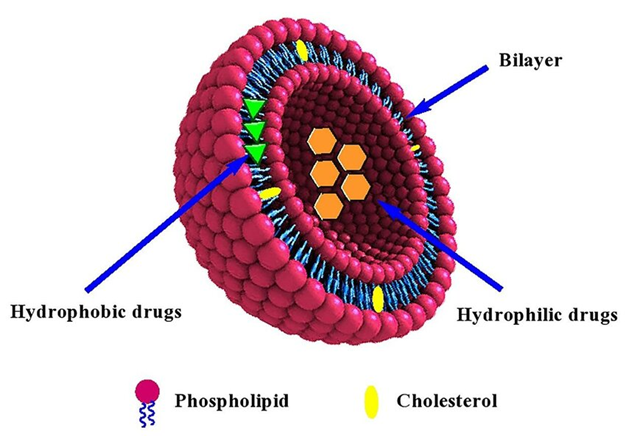
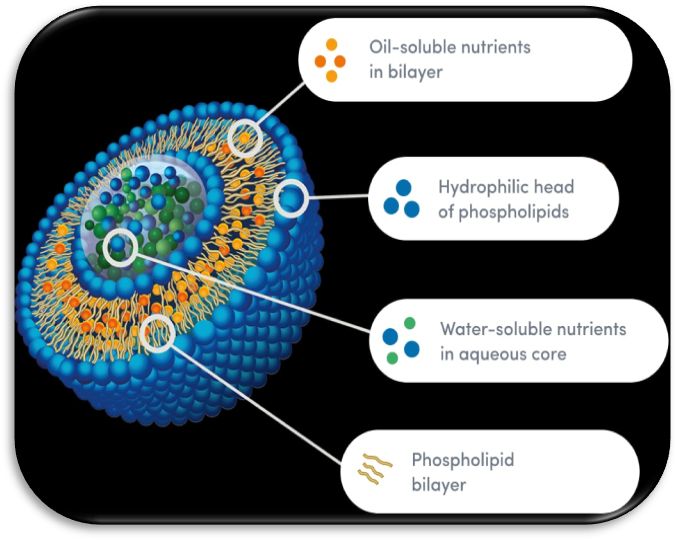
Liposomes are vesicular structures in which amphiphilic phospholipid molecules arrange themselves into bilayers in an aqueous medium.
Phospholipids: The major component; consist of hydrophilic “head” and hydrophobic “tails.” Common examples include phosphatidylcholine, phosphatidylserine, and phosphatidylethanolamine.
Cholesterol: Incorporated into the bilayer to enhance stability, rigidity, and reduce permeability.
Aqueous Core: Suitable for encapsulating hydrophilic drugs (e.g., antibiotics, peptides).
Bilayer Membrane: Capable of incorporating lipophilic drugs (e.g., anticancer drugs, antifungal agents).
Surface Modifiers: PEG (polyethylene glycol) or ligands can be attached to improve circulation time and targeting.
Thus, liposomes provide a versatile drug carrier with dual drug-loading capability.
Methods of Preparation
Several techniques are used depending on the desired liposome size, lamellarity, and application:
Lipids dissolved in organic solvents are deposited as a thin film in a round-bottom flask. Solvent is evaporated under reduced pressure, leaving a dry lipid film. Hydration with aqueous buffer forms multilamellar vesicles (MLVs). Sonication or extrusion can reduce size to small uniflagellar vesicles (SUVs).
Lipids dissolved in organic solvents are mixed with aqueous drug solution. An emulsion is formed by sonication. Removal of organic solvent under reduced pressure leads to the formation of large unilamellar vesicles (LUVs). Useful for high encapsulation of hydrophilic drugs.
3.3 Solvent Injection Method
Organic solution of lipids is injected into an aqueous medium through a fine needle. Rapid diffusion of solvent produces liposomes spontaneously.
Lipids are solubilized with detergents Gradual removal of detergent (dialysis, gel filtration) leads to vesicle formation.
Each method has its own merits depending on scale, stability, and application.
Liposomes can be classified based on structure, charge, or surface modifications:
Unmodified vesicles composed of natural phospholipids and cholesterol. Rapidly cleared by reticuloendothelial system (RES).
Surface modified with polyethylene glycol (PEG). Reduces recognition by macrophages, prolongs circulation time.
Example: Doxil® (doxorubicin-loaded PEGylated liposome).
4.3 Cationic Liposomes
Positively charged vesicles, useful for gene delivery (complexation with negatively charged DNA/RNA).
Example: Lipofectin®.
Negatively charged, less common but sometimes used in vaccine adjuvants.
4.5 Immunoliposomes
Antibody-conjugated liposomes for targeted delivery to specific cells/tissues.
Engineered to release drug in response to pH, temperature, enzymes, or ultrasound.
Liposomes deliver drugs via multiple pathways:
This versatility makes liposomes especially useful in targeted and controlled release therapy.
Applications of Liposomes
Liposomes have been successfully applied in various therapeutic areas:
5.1 Cancer Therapy
Encapsulation of anticancer drugs (e.g., doxorubicin, paclitaxel, cisplatin).Reduces toxicity (esp. cardiotoxicity of anthracyclines) and enhances tumor accumulation via Enhanced Permeability and Retention (EPR) effect.
5.2 Antifungal Therapy: Amphotericin B liposomal formulation (AmBisome®) reduces nephrotoxicity compared to conventional drug.
5.3 Vaccine Delivery
Used as adjuvants to enhance immune response.
Example: mRNA COVID-19 vaccines utilize lipid nanoparticles (liposome-like systems).
5.4 Gene Delivery
Cationic liposomes deliver plasmid DNA, siRNA, and mRNA for gene therapy.
5.5 Antimicrobial and Anti-inflammatory Applications
Liposomal antibiotics (e.g., liposomal ciprofloxacin) improve drug retention at infection sites.Corticosteroid-loaded liposomes reduce systemic side effects in chronic inflammatory diseases.
Background
Doxorubicin is an anthracycline antibiotic widely used in cancer therapy, but its clinical use is severely limited by dose-dependent cardiotoxicity. Liposomal encapsulation was developed to reduce toxicity while maintaining efficacy. Doxil® (also marketed as Caelyx® in Europe) was the first FDA-approved nanomedicine in 1995.
Formulation
Type: PEGylated liposome (stealth liposome)
Structure:
Mechanism
Exploits Enhanced Permeability and Retention (EPR) effect → preferential accumulation in tumor tissue due to leaky vasculature.
Controlled release of doxorubicin within tumor microenvironment.
Clinical Applications
Background
Amphotericin B is a potent antifungal agent but associated with severe nephrotoxicity and infusion-related side effects in its conventional form. Liposomal encapsulation provided a safer alternative. AmBisome® was FDA-approved in 1997.
Formulation
Type: Multilamellar liposome with cholesterol and phospholipids.
Structure: Amphotericin B intercalates into the lipid bilayer.
Stable formulation that prevents premature drug release in circulation.
Mechanism
Liposomes deliver Amphotericin B preferentially to fungal cells due to higher affinity for ergosterol (fungal cell membrane sterol) over cholesterol (human cell membrane). Minimizes binding to kidney cells, reducing nephrotoxicity.
Clinical Applications
Nanoparticles in Drug Delivery
Introduction:
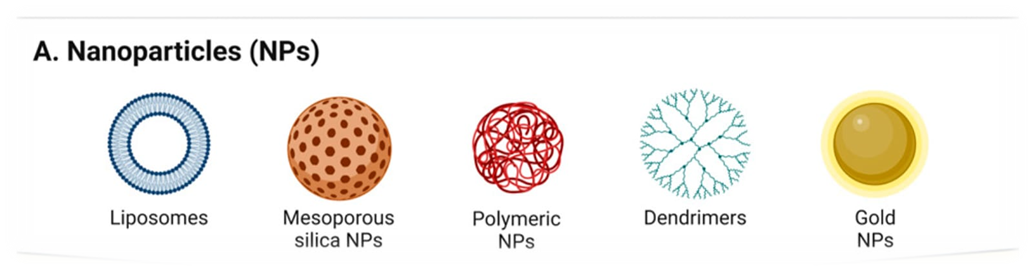
Nanoparticles (NPs) are colloidal carriers with dimensions typically ranging from 1–100 nm, though in drug delivery applications, sizes may extend up to 1000 nm. They are engineered from diverse materials such as polymers, lipids, proteins, and metals, and have emerged as versatile platforms for novel drug delivery systems (NDDS).
Their small size enables:
Over the past two decades, nanoparticles have advanced from experimental research to FDA-approved products, highlighting their clinical significance.
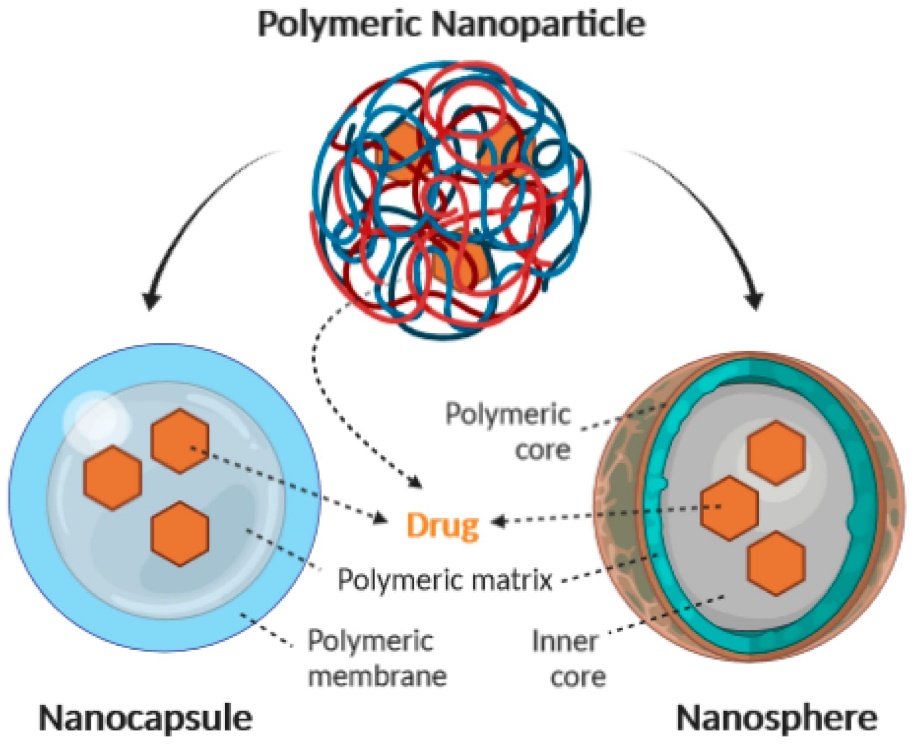
Composed of natural (e.g., chitosan, alginate) or synthetic polymers (e.g., PLGA, PEG, PCL)
Two major types: nanospheres (drug dispersed in matrix) and nanocapsules (drug confined in a core surrounded by polymer shell).
Applications: sustained release, targeted cancer therapy, vaccine delivery.
Comprised of solid lipids stabilized by surfactants.
Solid at body temperature → better stability than liposomes.
Encapsulate both hydrophilic and lipophilic drugs.
Used in dermatology (topical formulations), oral delivery, and brain targeting.
2.3 Dendrimers
Highly branched, tree-like macromolecules with controlled size (~1–10 nm).
Interior cavities can encapsulate drugs, while terminal groups allow surface modification.
Biodegradable and suitable for nucleic acid delivery and imaging.
Polymer dissolved in organic solvent is added to aqueous phase containing surfactant.
Rapid diffusion of solvent leads to nanoparticle formation.
Simple and reproducible; suitable for hydrophobic drugs.
Drug and polymer dissolved in organic solvent emulsified in aqueous phase.
Solvent evaporates → nanoparticles form.
Variants: single or double emulsion depending on hydrophilic/hydrophobic drug.
3.3 Other Techniques
Mechanism of Drug Delivery
Nanoparticles improve drug delivery via multiple mechanisms:
Tumor vasculature is leaky with poor lymphatic drainage.
Nanoparticles accumulate selectively in tumor tissue.
Surface ligands (antibodies, peptides, aptamers) direct nanoparticles to specific receptors on target cells (e.g., folate, transferrin).
NPs internalized by endocytosis (clathrin-mediated, caveolae-mediated, or macropinocytosis).
Drugs released intracellularly in response to pH or enzymatic degradation.
5. Applications of Nanoparticles
NPs enhance drug accumulation in tumors via EPR effect.
Examples: Abraxane® (albumin-bound paclitaxel), polymeric micelles with doxorubicin.
Polymeric and dendrimer NPs used for delivery of DNA, siRNA, and mRNA.
Protect nucleic acids from degradation and improve cellular uptake.
5.3 Targeted Delivery
Ligand-modified NPs (e.g., folate-targeted PLGA NPs) enhance site-specific delivery.
Iron oxide NPs used in magnetically guided drug delivery.
Metallic NPs (silver, gold) show antimicrobial and antiviral properties.
Nano-vaccines under investigation for HIV, malaria, and COVID-19.
Problem: Paclitaxel is poorly soluble and requires toxic solvents (Cremophor EL) for formulation.
Solution: Abraxane uses albumin-bound nanoparticles (~130 nm) to solubilize paclitaxel.
Advantages:
Problem: Interferon therapies suffer from rapid degradation and poor bioavailability.
Solution: Nanoferon encapsulates interferon in nanoparticles to protect against enzymatic breakdown.
Transdermal Drug Delivery Systems (TDDS)
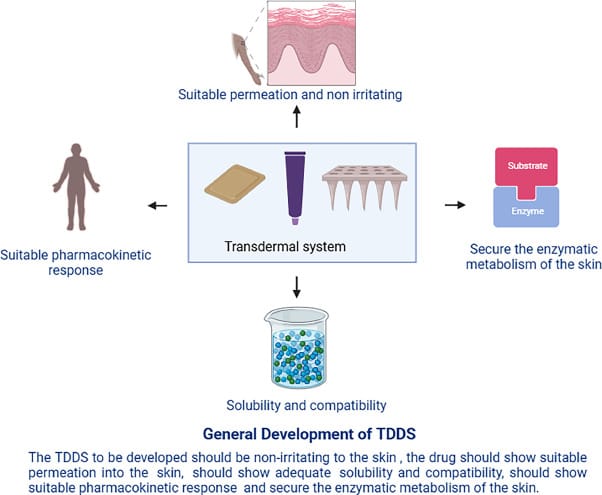
Transdermal drug delivery systems (TDDS) are designed to deliver drugs through the skin into the systemic circulation at a controlled rate. Since the approval of the first transdermal patch in 1979 (scopolamine for motion sickness), this route has become a promising alternative to oral and injectable drug delivery.
Key advantages include:
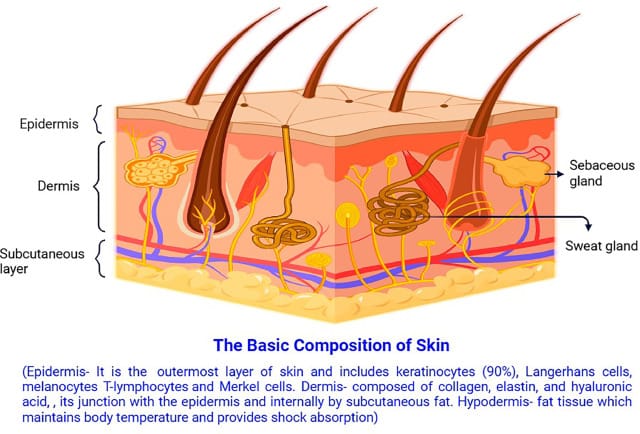
The skin is the largest organ (~1.5–2 m² surface area) and serves as both a protective barrier and a potential drug absorption route.
Layers of the Skin:
Outermost layer; “brick-and-mortar” structure (corneocytes embedded in lipid matrix).
Major barrier to drug penetration.
Viable keratinocytes beneath SC; metabolically active but avascular
Connective tissue with blood vessels, lymphatics, and nerves.
Once drug reaches dermis → enters systemic circulation.
Drugs can cross skin via three primary pathways:
Directly through corneocytes (lipophilic molecules).
Diffusion between lipid layers of stratum corneum (main route for most drugs).
Via sweat glands and hair follicles (minor pathway but important for ions, large molecules).
Types of Transdermal Patches:
Drug stored in a liquid/semi-solid reservoir.
Controlled release via polymer membrane.
Example: Scopolamine patch.
Drug dispersed in polymer matrix.
Simpler design, flexible, safer (no risk of dose-dumping).
Example: Nicoderm® (nicotine patch).
Drug incorporated directly into adhesive layer
Thinner, better skin contact.
Use of low electrical current to enhance permeation of charged drugs.
Example: Ionsys® (fentanyl iontophoretic patch).
Arrays of tiny needles create microchannels for large molecules (proteins, vaccines).
Wearable patches with sensors for controlled release (future TDDS).
Fentanyl, Buprenorphine patches.
Nicotine patches (Nicoderm®) help smoking cessation.
Estradiol patches for menopause, testosterone patches for hypogonadism.
Nitroglycerin patches for angina.
Rivastigmine patch for Alzheimer’s disease.
Indication: Smoking cessation.
Design: Matrix patch with nicotine uniformly dispersed.
Mechanism: Provides steady nicotine levels, reducing cravings and withdrawal symptoms.
Advantages: Improves quit rates; convenient once-daily application.
Limitations: Local skin irritation; not suitable for heavy smokers without combination therapy.
Indication: Chronic cancer and non-cancer pain.
Design: Reservoir or matrix patch with fentanyl.
Mechanism: Sustained release over 72 hours, bypassing gastrointestinal tract.
Advantages: Effective for severe pain, avoids frequent injections.
Limitations: Risk of abuse, respiratory depression if misused; contraindicated in opioid-naïve patients.
Future Outlook of Novel Drug Delivery Systems (NDDS)
The future of drug delivery is moving towards precision, personalization, and smart therapeutics. While current NDDS like liposomes, nanoparticles, and transdermal patches have already improved treatment efficacy and safety, emerging research is pushing the boundaries even further.
NDDS of the future will increasingly rely on environment-sensitive carriers that release drugs only at the desired site.
Examples: pH-responsive liposomes/nanoparticles that release drugs in the acidic tumor microenvironment.
Thermo-responsive hydrogels that release drugs upon mild heating.
Magnetically or ultrasound-triggered nanoparticles for remote-controlled precision therapy.
Integration of genomics, proteomics, and AI-driven data will allow NDDS to be tailored for individual patients.
Patient-specific nanoparticles can be designed for targeted delivery in oncology and rare diseases.
3D printing of personalized drug delivery devices (e.g., custom transdermal patches or implantable systems) is gaining momentum.
Smart patches capable of monitoring biomarkers (e.g., glucose, lactate) and releasing drugs accordingly are under development.
Closed-loop drug delivery systems will merge biosensors with DDS for real-time dosing adjustments (e.g., insulin delivery patches guided by glucose sensors).
Such innovations will reduce dosing errors and enhance therapeutic precision.
NDDS will play a central role in gene therapy, siRNA, mRNA, and CRISPR delivery.The success of mRNA COVID-19 vaccines using lipid nanoparticles highlights the potential for treating infectious diseases, cancers, and genetic disorders.Future nanocarriers will aim to improve stability, endosomal escape, and tissue-specific targeting for nucleic acid-based drugs.
Future systems will not be limited to a single material or mechanism.
Hybrid carriers combining lipids, polymers, and metals will enable multi-drug loading, imaging, and therapy (theranostics).
Example: nanoparticles embedded in transdermal patches for combined systemic and local delivery.
The future will also depend on scalable, cost-effective manufacturing, particularly for low- and middle-income countries.
Regulatory agencies are moving toward specific guidelines for nanomedicines and advanced DDS, ensuring safety while accelerating approvals.
REFERENCES

Satvik Bidwe*, Munde Ajay Ankush, Mohite Akshay, Mirza Ziya Atik, Mane Atish, Review on Novel Drug Delivery System (NDDS), Int. J. of Pharm. Sci., 2025, Vol 3, Issue 12, 492-505 https://doi.org/10.5281/zenodo.17798984
 10.5281/zenodo.17798984