
Department of Pharmacy, KBHSS Trust’s Institute of Pharmacy, Malegaon, Nashik, Maharashtra 423105
Soap is one of the most widely used personal hygiene products across the world and plays a crucial role in maintaining skin cleanliness and preventing infectious diseases. Due to its frequent and long-term use, evaluation of its safety is of paramount importance. Safety pharmacology involves the systematic study of potential adverse effects of substances on biological systems. In the context of soap, safety pharmacology primarily focuses on dermal safety, systemic absorption, ocular safety, toxicity profile, microbial safety, and environmental impact. Modern soap formulations contain various additives such as surfactants, fragrances, preservatives, and antimicrobial agents, which require thorough toxicological assessment. This article provides a comprehensive review of the safety pharmacology of soap, highlighting regulatory guidelines, experimental studies, and clinical evidence supporting its safe use. The findings suggest that soaps are generally safe when formulated according to regulatory standards and used as intended.
Soap is an indispensable personal hygiene product that has been used for centuries for cleansing the skin and preventing the spread of infectious diseases. Chemically, soaps are sodium or potassium salts of fatty acids produced by the saponification of fats and oils. The cleansing action of soap is attributed to its surfactant properties, which enable the removal of dirt, sebum, and microorganisms from the skin surface1. In recent decades, increased awareness regarding hygiene, infection control, and skin health has significantly increased the frequency of soap usage across all age groups. During global public health emergencies, such as viral outbreaks, handwashing with soap has been strongly recommended as a primary preventive measure2. As a result, human exposure to soap products has become frequent, repetitive, and long-term. Safety pharmacology is a discipline that evaluates the potential adverse effects of substances on vital physiological systems. Although soaps are not classified as therapeutic drugs, their repeated dermal exposure necessitates a comprehensive safety pharmacological evaluation. Unlike pharmaceuticals, soaps are used without medical supervision and often multiple times daily, increasing the importance of ensuring their safety3. Modern soap formulations contain not only fatty acid salts but also surfactants, moisturizers, fragrances, preservatives, antioxidants, and antimicrobial agents. Each of these components may interact with the skin barrier and underlying tissues. Therefore, safety pharmacology of soap focuses on dermal tolerance, systemic absorption, ocular safety, toxicity profile, and long-term effects4,5.

Fig. No. 1
2. CLASSIFICATION
Soaps can be classified based on formulation, application, and functional properties.
Based on physical form: Soaps are classified into solid bar soaps, liquid soaps, foam soaps, and synthetic detergent (syndet) bars. Syndets differ from traditional soaps in that they are formulated using synthetic surfactants and generally exhibit better skin compatibility6.
Based on application: Soaps are categorized as toilet soaps, medicated soaps, baby soaps, and industrial soaps. Toilet soaps are designed for routine cleansing, while medicated soaps contain active pharmaceutical ingredients such as antibacterial or antifungal agents. Baby soaps are specifically formulated to minimize irritation and maintain skin moisture due to the delicate nature of infant skin7.
Soaps may also be classified based on ingredient source into natural soaps and synthetic soaps. Natural soaps are derived from plant or animal fats, whereas synthetic soaps contain laboratory-produced surfactants. Each category presents distinct safety considerations depending on ingredient composition and exposure patterns8.
3. SAFETY PHARMACOLOGY OF SOAP
3.1 Dermal Safety
Dermal safety is the most critical component of soap safety pharmacology, as the skin is the primary site of exposure. The skin acts as a protective barrier; however, repeated exposure to cleansing agents can disrupt the stratum corneum, leading to dryness, irritation, and compromised barrier function9. Traditional alkaline soaps can remove natural lipids from the skin, resulting in increased transepidermal water loss. This may cause dryness, erythema, and irritation, particularly in individuals with sensitive skin or dermatological conditions such as eczema10.
To enhance dermal safety, modern soaps incorporate mild surfactants, emollients, and humectants such as glycerin. These ingredients help maintain skin hydration and reduce irritation. Dermal safety is evaluated through standardized tests including primary skin irritation tests, patch testing, and repeated insult patch tests in human volunteers11,12. Clinical studies have demonstrated that well-formulated soaps do not produce significant adverse dermal effects when used under normal conditions. However, misuse or excessive washing with harsh soaps may contribute to skin barrier damage13.
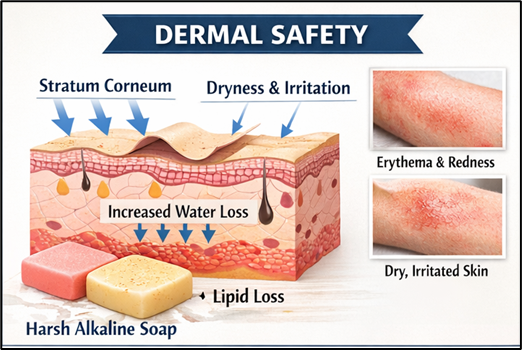
Fig.No. 2
3.2 Systemic Absorption
Systemic absorption refers to the penetration of soap ingredients through the skin into systemic circulation. In safety pharmacology, assessing systemic exposure is essential to determine the risk of systemic toxicity. Most soap components are characterized by high molecular weight and low skin permeability 14. Furthermore, soaps are rinse-off products, resulting in limited contact time with the skin. The intact human epidermis acts as an effective barrier, preventing significant penetration of surfactants and fatty acid salts15. Experimental and in vivo studies have shown that systemic absorption of soap ingredients through intact skin is negligible. Even in compromised skin conditions, systemic exposure remains extremely low and below toxicological concern thresholds16. Therefore, the likelihood of systemic pharmacological or toxicological effects resulting from normal soap use is considered minimal17.

Fig. No. 3
3.3 Ocular Safety
Ocular safety is evaluated due to the possibility of accidental eye exposure during bathing or handwashing. Contact of soap with the eyes may cause transient irritation, stinging, tearing, and redness18. Mild formulations, particularly baby soaps and facial cleansers, are designed to minimize ocular irritation by using non-ionic or amphoteric surfactants. Ocular safety assessment includes in vitro methods and controlled exposure studies to evaluate irritation potential19. Clinical evidence indicates that adverse ocular effects from soap exposure are generally mild and reversible upon rinsing with water. Serious or permanent ocular damage is rare and typically associated with misuse or exposure to highly alkaline products20.
3.4 Toxicity Profile
The toxicity profile of soap is evaluated to determine the potential harmful effects arising from acute, subacute, and chronic exposure. In safety pharmacology, toxicity assessment focuses on identifying adverse effects on biological systems at realistic exposure levels. Common soap constituents, including sodium and potassium salts of fatty acids, have been extensively studied and are recognized for their low toxicity21. Acute toxicity studies indicate that soaps exhibit minimal toxicity when used topically. Oral toxicity is generally low, and accidental ingestion of small quantities rarely results in severe effects, apart from mild gastrointestinal discomfort22. Chronic toxicity studies further demonstrate that soap ingredients do not accumulate in tissues due to their limited systemic absorption and rapid elimination23.
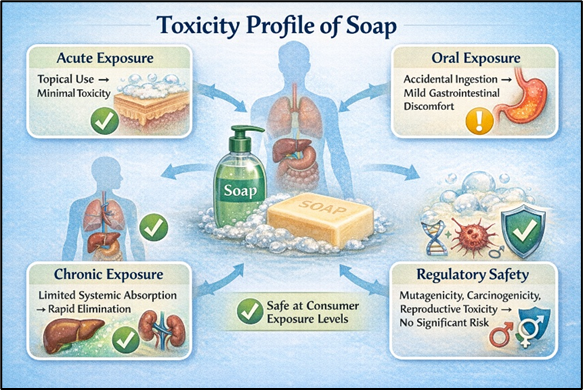
Fig. No. 4
In addition, mutagenicity, carcinogenicity, and reproductive toxicity studies conducted on approved soap ingredients have shown no significant risk at consumer exposure levels. Regulatory toxicological evaluations consistently confirm that soaps are safe when used according to recommended conditions24.
3.5 Microbial Safety
Microbial safety is a key consideration in the safety pharmacology of soap, particularly due to its role in infection prevention. Regular soaps remove microorganisms primarily through mechanical action rather than direct antimicrobial activity25. Antimicrobial soaps contain active ingredients such as chlorhexidine, triclocarban, or herbal antimicrobial agents. While these soaps may offer enhanced microbial reduction, safety pharmacology assessment ensures that their active components do not disrupt the normal skin microbiota or promote antimicrobial resistance26.
Studies have shown that excessive use of antimicrobial soaps may alter the natural balance of skin flora, potentially leading to irritation or colonization by resistant organisms. Consequently, regulatory authorities recommend careful evaluation and restricted use of antimicrobial agents in soap formulations27.
3.6 pH Compatibility
The pH of soap plays a crucial role in maintaining skin health. Human skin possesses a natural acidic pH, commonly referred to as the “acid mantle,” which protects against microbial invasion and maintains barrier function28. Traditional soaps are alkaline, with pH values ranging from 9 to 10. Repeated exposure to alkaline products may disrupt the acid mantle, leading to dryness, irritation, and increased susceptibility to infections29. Modern soap formulations aim to achieve pH values closer to that of the skin, typically between 5.5 and 7. This pH adjustment significantly improves skin compatibility and reduces adverse dermatological effects, particularly in sensitive populations such as infants and elderly individuals 30.
3.7 Long-Term Use Safety
Long-term use safety assessment evaluates the effects of repeated and prolonged exposure to soap products. Given the daily and lifelong use of soap, understanding its long-term impact is essential in safety pharmacology31. Clinical and epidemiological studies indicate that regular use of mild soaps does not result in cumulative toxicity or permanent skin damage. However, frequent use of harsh or highly alkaline soaps may exacerbate chronic skin conditions such as atopic dermatitis or contact eczema. Long-term safety is enhanced by the use of moisturizers, reduced fragrance content, and mild surfactants in soap formulations. Consumer education regarding appropriate soap selection and usage also contributes to minimizing adverse effects32.
3.8 Safety of Additives
Soap formulations commonly include additives such as fragrances, preservatives, colorants, antioxidants, and antimicrobial agents. While these additives improve product stability, aesthetics, and functionality, they may also influence safety. Fragrances are among the most frequent causes of allergic contact dermatitis. Safety pharmacology assessment includes allergen screening and concentration limits to minimize sensitization risks33. Preservatives such as parabens, phenoxyethanol, and organic acids are evaluated for toxicity, endocrine effects, and allergenicity. Regulatory agencies strictly control permissible concentrations to ensure consumer safety. Each additive is assessed individually and in combination to ensure that the final formulation does not produce adverse pharmacological or toxicological effects34.
3.9 Environmental and User Safety
Environmental safety is an indirect but important aspect of user safety. Soap ingredients released into wastewater systems may affect aquatic ecosystems and water quality35.
Biodegradability studies ensure that soap components break down into non-toxic byproducts. Environmentally persistent substances may accumulate and indirectly affect human health through contaminated water or food chains. The adoption of eco-friendly surfactants, biodegradable ingredients, and sustainable manufacturing practices enhances both environmental protection and long-term consumer safety36.
CONCLUSION
The safety pharmacology of soap demonstrates that soap is a safe and effective cleansing agent when formulated and used according to established regulatory standards. Comprehensive evaluation of dermal safety, systemic absorption, ocular safety, toxicity profile, microbial safety, and additive safety confirms its suitability for routine and long-term use. Advancements in formulation science, continuous toxicological assessment, and strict regulatory oversight ensure that modern soaps provide effective hygiene without compromising human health. Ongoing research remains essential to address emerging concerns and improve safety further.
REFERENCES






Rahul Chavhan, Shubham Lengare, Abhishek Balame, Sushrit Khalane, Tushar Shivade, Rutika Kharnare, Safety Pharmacology of Soap: A Comprehensive Review of Dermal, Systemic, Ocular, and Environmental Considerations, Int. J. of Pharm. Sci., 2026, Vol 4, Issue 2, 774-780. https://doi.org/10.5281/zenodo.18493421
 10.5281/zenodo.18493421
