View Article

Abstract

Calotropis gigantea (commonly known as Madar or Crown Flower) is an important medicinal plant widely used in traditional Ayurvedic and folk medicine. It contains several bioactive compounds such as flavonoids, alkaloids, terpenoids, and glycosides, which are responsible for its diverse pharmacological activities. This review aims to comparatively study the various pharmacological properties of Calotropis gigantea, including its anti-inflammatory, analgesic, antimicrobial, antioxidant, antidiabetic, wound-healing, and anticancer effects. The paper also discusses its phytochemical composition, mechanism of action, and therapeutic potential compared with other medicinal plants. The findings reveal that Calotropis gigantea exhibits strong pharmacological efficacy and can serve as a valuable natural source for developing new herbal formulations and modern drugs. Further studies are required to validate its safety, dosage, and clinical effectiveness.

Keywords

Calotropis gigantea, Madar, pharmacological properties, antioxidant, anti-inflammatory, antimicrobial, herbal medicine

Introduction

Plants have likely been utilized medicinally for as long as humanity. Every traditional practice incorporates the use of plants' therapeutic qualities. Since prehistoric times, people on every continent have utilized hundreds of native plants to treat a variety of illnesses. Evidence points to the existence of Neanderthals 60,000 years ago. Worldwide, ethnomedicine continues to make extensive use of these herbs.

It is frequently said that traditional and folklore healers acquired their knowledge from animal observation. Sick animals have been seen to favor bitter herbs that they would often avoid. They tend to forage plants rich in secondary metabolites such as tannins and alkaloids which are commonly connected with medicinal characteristics like antiviral, antibacterial and antifungal capabilities. To put it another way, animals use self-medication in the wild.

Due to the lack of antibiotics and analgesics, herbal medicine was the mainstay of the healthcare system in the early 20th century. Herbal medicine, which relied on the quick therapeutic effects of synthetic medications, rapidly lost favor with the emergence of the allopathic medical system. The limitations of the allopathic medical system have been observed for nearly a century. Herbal medicine has gained popularity recently, as evidenced by the fact that some herbal medicines have reached levels comparable to those of synthetic medications. Both industrialized and developing nations make extensive use of herbal remedies. Other European nations have also seen an increase in the usage of plant-based health products. According to export-import bank data, the global commerce in plant-derived and plant-originated goods is estimated to be worth US $60 billion (growing at a rate of 7% annually), of which India owns US $1 billion. By the end of 2015, this amount is projected to reach US $3 trillion.

India is a tropical nation endowed with abundant natural resources and traditional wisdom that can be used wisely. However, these treatments must be evaluated scientifically to determine their active principles and comprehend their mechanism of action in order for modern medicine to embrace them. [4] A new avenue for the study and investigation of medicinal plants has been made possible by the recent recognition of the therapeutic potential of a number of traditionally utilized plants.

The variety of secondary metabolites found in plants is bewildering. Since ancient times, they have served as the foundation for the treatment of illnesses in indigenous societies. This study focuses on verifying the therapeutic and chemical characteristics of a particular plant that is widely used to cure a number of illnesses, including bronchitis, asthma, leprosy, eczema, toothaches, and sporadic fevers.elephantiasis, diarrhea, rheumatoid arthritis, joint swellings, etc. The current study aimed to identify the biologically active components and investigate the antidiabetic potential of Calotropis gigantea flowers.

In July and August, flowers of Calotropis gigantea were gathered from Neemuch, Madhya Pradesh, India, and verified by a botanist. Petroleum ether, chloroform, and 90% ethanol were used to extract the flowers after they had been dried in the shade. The extracts were then concentrated and dried. Several phytochemical tests were used to assess the extracts' phytoconstituents. The qualitative characteristics established by the phytochemical studies can be a valuable source of data for additional research.

We subsequently assessed the chloroform extract of Calotropis gigantea for in-vivo antidiabetic activity in light of the findings of in-vitro antidiabetic and antioxidant studies. Prior to conducting the in-vivo antidiabetic investigations, the extract was assessed for acute toxicity, which demonstrated the non-toxic character of Calotropis gigantea chloroform extract because no adverse responses or lethality were observed at any of the chosen doses.

DRUG PROFILE

Drug:

Botanical identity and biological source [6]

Calotropis gigantea (L.) Dryand is the scientific name.

Asclepias gigantea L. is a synonym.

Family: Apocynaceae (formerly Asclepiadaceae/ Asclepiadoideae).

Morphology and Habit: A perennial, upright shrub with several branches that is usually between one and five meters tall.
Every part of it has a milky latex.
Opposite, sessile or subsessile, thick, elliptic-oblong to obovate, with a bluish-green top and a tomentose (hairy) underside.

Flowers: White to purple-lilac, with five sepals and five petals in umbellate cymes; a characteristic "crown" in the center of the flower.

Fruit / Seed: Boat-shaped follicles approx. 8–10 cm; when dry, they dehisce to release many seeds with silky hairs.
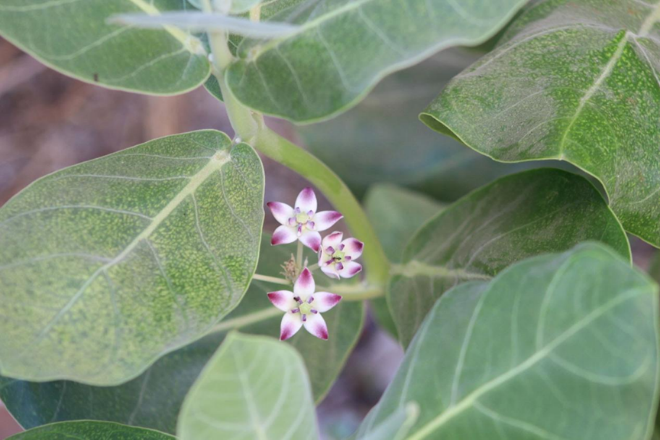
Figure: Asclepias gigantea L.

Sensory or organoleptic characters [7]

These are the sensory and macroscopic characteristics that are helpful in pharmacognosy:

Stem/Latex: When cut, a white, milky latex is released. Thick, slightly leathery leaves with a cottony feel due to their hairy underside (tomentose).

Flowers: White to lilac/purple, with a waxy (or "cerous") feel.

Root bark: Mucilaginous and bitter, according to pharmacognostic descriptions.

Microscopic (anatomical/microscopical) characteristics [8]

Crucial microanatomical characteristics (for pharmacognostic identification):

Anatomy of leaves (transverse section): [13]

A thick cuticle covers the single-layered upper and lower epidermis.

Mesophyll underwent differentiation into spongy parenchyma with wide intercellular gaps and palisade (three rows of elongated parenchyma cells).

Vascular bundles in ground tissue are bicollateral and open, meaning that both xylem and phloem are present on both sides.

Stomata: paracytic type, meaning that subsidiary cells run parallel to guard cells on each side of each stoma.

Powder microscopy:[9]

In contrast to unicellular trichomes in C. procera, multicellular trichomes (hairs) are visible in C. gigantea leaf powder. [12]

Parts of arteries, sclerenchyma cells, and epidermal cells are also present.

Anatomy of flowers: Five gamopetalous petals, five gamosepalous sepals, and an ovary with ovules are seen in cross-section. [10]

Chemical Components: Different portions of C. gigantea have been reported to contain a wide range of phytochemicals. Important classes and a few example compounds: [11]

Plant Part

Major Chemical Constituents

Leaves / Aerial parts

Flavonoid glycosides (e.g., isorhamnetin-3-O-rutinoside, isorhamnetin-3-O-glucopyranoside)  cardenolides (19-nor and 18,20-epoxy, e.g., 15β-hydroxycardenolide, hydroxycalactinic acid methyl ester)  terpenoids, steroids  other: alkaloids, phenolic compounds, saponins, quinones per extract studies.

Latex

Cardenolide / cardiac glycosides: e.g., calotropin, calotoxin, calactin, uscharin, voruscharin.  
Resins, caoutchouc (rubber), proteolytic enzymes (calotropains FI & FII)

Roots / Root bark

β-amyrin, α- and β-calotropeol, giganteol, isogiganteol.
Other terpenes; aromatic derivatives (e.g., calotropis-sesquiterpenol, calotropbenzofuranone)

Flowers

Triterpenoids: e.g., di-(2-ethylhexyl) phthalate, anhydrosophoradiol-3-acetate

flavonoids; sterols; glycosides; polysaccharides (e.g., with D-arabinose, glucose, glucosamine, L-rhamnose)

Seeds / Seed oil

Fatty acids: palmitic, oleic, linoleic, linolenic acid; unsaponifiable fraction contains stigmasterol, phytosterols, lauryl alcohol, etc.

Essential oil (leaf)

From GC-MS: ~42 components; major ones include phytol (~17.9%), phenylacetaldehyde, benzyl alcohol, 4-methyl-1-heptanol, 4-vinyl guaiacol, phenethyl alcohol.

PHARMACOLOGICAL ACTIVITY

Pharmacological Activity of Calotropis Procera and Calotropis gigantea

Since ancient times, the medicinal qualities of Calotropis procera and gigantea have been used to cure a wide range of illnesses. Here, some of the most important pharmacological activities are covered in great depth.

  1. Analgesic Activity

The dry latex (DL) of Calotropis procera has been shown to have analgesic qualities [15]. A dose of 415 mg/kg of DL was more effective in suppressing writhing brought on by acetic acid than an oral dosage of aspirin (100). The alcoholic extract of Calotropis gigantea flowers has analgesic properties. An oral intake of this extract generated a notable result. The activity was conducted using the hot plate technique and the writhing test caused by acetic acid.

The effects of an alcoholic peeling extract of Calotropis gigantea roots (at oral dosages of 250 and 500 mg/kg body weight) on the central nervous system (CNS) of albino rats were investigated. Both the writhings caused by acetic acid and Eddy's hot plate approach demonstrated significant analgesic advantages.[16]

  1. Wound Healing Activity

There have been reports of the wound-healing properties of aqueous latex extract [17,18], ethanolic bark extracts [19], and aqueous leaf extracts [20] of Calotropis procera. For seven days, the guinea pig's wound was treated twice a day using a sterile latex preparation. The animal's treated area had higher levels of protein, DNA, and collagen fibers.It was investigated whether Calotropis gigantea root bark extract might heal wounds in Wistar albino rats. The extract was used topically to rats as an ointment to mimic the healing of excision wounds;

For models of incision wound healing, oral dosages of 100, 200, and 400 mg/kg of the extract were utilized. The results indicate that extract therapy accelerated the healing of rats' wounds [14]. Assessed the wound-healing properties of employing both excision and incision wound models, Calotropis gigantea crude latex was administered to albino rats. Treated animals showed an 83.42% decrease in wound zone compared to controls, who had a wound area of 76.22%. This suggests that Calotropis gigantea latex, at a dosage of 200 mg/kg/day showed significant wound-healing efficacy. It has been shown that extract-treated wounds epithelize more quickly than controls [21].

  1. Antifertility activity

Ethanolic preparations of the roots and leaves of Calotropis procera have been shown to exhibit antifertility properties [22, 23]. The ethanolic extract of Calotropis procera roots has been used to investigate the hormonal and antifertility effects of those roots in albino rats. Significant antiimplantation (100% inhibition) and uterotropic effect were seen at a dose of 250 mg/kg. Certain phytochemicals, such as tannins, psoralen, gigantein, stigmasterol, and sapononis, have also been connected to Calotropis gigantea's antifertility characteristics [24].

  1. Anti-diarrhoeal activity

Diarrhea, which results in an excessive loss of fluid in the stools, is caused by an imbalance between the secretory and absorptive processes of the digestive tract combined with hurry. The bark [25], latex [26], leaves, stems, roots, flowers, and buds [27] of Calotropis procera have all been shown to have anti-diarrheal qualities. Calotropis procera's DL has been evaluated for its anti-diarrheal qualities. A single 500 mg/kg dose of DL significantly decreased the frequency of defecation, much like atropine and phenyl butazone. Eighty percent of rats fed castor oil suffered diarrhea due to the electrolyte content in intestinal fluid, which also induced intestinal fluid accumulation and protection.

 Compared to animals that did not get castor oil treatment, intestinal transit decreased (by 27–37%) in DL animals. Using a model of castor oil-induced diarrhea in rats, the anti-diarrheal effects of the hydroalcoholic (50:50) extract of the aerial component of Calotropis gigantea were examined. At intraperitoneal dosages of 200 and 400 mg/kg body weight, the extract showed significant reductions in both the frequency of droppings and the production of feces. The extract was also shown to significantly reduce intestinal content volume and weight [28].

  1. Antiulcer Activity

The hydroalcoholic and chloroform extract of the stem bark, the ethanolic extract of the leaves, and the root chloroform extract are among the Calotropis procera components that show antiulcer efficacy [29, 30]. Calotropis procera stem bark extract was dissolved in hydroalcohol and chloroform because it can prevent ulcers and reduce inflammation. In order to investigate anti-ulcer efficacy, albino rats using ulcers were used, and the carragennan-generated paw oedema model was used for anti-inflammatory effectiveness. The extract shown significant activity when compared to traditional drugs. Using pylorus ligation and indomethacin-induced ulcer models, the effects of a 100% alcohol extract of Calotropis gigantea flower were investigated in experimental Wistar albino rats. When the alcoholic extract of Calotropis gigantea was given at dose rates of 500 mg/kg and 1000 mg/kg, the ulcer index and ulcer intensity score in both models shown a significant (P<0.01) suppression when compared to the control. At a dosage rate of 500 mg/kg, the extract showed the biggest reduction in ulcer index in animals with pylorus ligated ulcers [31].

  1. Antifungal and anti-bacterial activity

The aqueous [32], methanol, acetone, and ethanol extracts of the leaves [33, 34], root bark [34, 35], and latex of Calotropis procra [35] have all been reported to exhibit antifungal activity. The antimicrobial effects of ethanol, aqueous, and chloroform extracts of Calotropis procera's leaves and latex were examined on five bacteria (S. pyogenes, E. coli, S. aureus, S. albus, and S. pneumoniae), three fungi (Aspergillus niger and flavus, and Microsporum boulardii), and one yeast (C. albicans) using agar well diffusion and paper disc methods [36]. The results demonstrated that ethanol was the most efficient extractive solvent for the antibacterial properties of the latex and leaves of Calotropis procera, with water and chloroform ranking second and third, respectively.

Calotropis gigantea has been found to have antifungal activity against dangerous plant fungi including Fusarium mangiferae, which poses a serious risk to mango production [37]. Pseudomonas aeruginosa, E. coli, Klebsella pneumonia, Bacillus cereus, and S. aureus have all been found to be effectively combatted by the aqueous extract of Calotropis gigantea leaves [38]. It has been demonstrated that the aqueous extract of Calotropis gigantea's latex significantly inhibits C. krusei, S. aureus, B. cereus, and E. coli [39]. Calotropis gigantea has been found to have antifungal properties against plant pathogenic fungi including Fusarium mangiferae, which pose a serious threat to mango farming [37].

  1. Antipyretic Activity

Calotropis procera's ethanolic floral extract [16] and dry latex aqueous extract have been shown to have antipyretic properties. There have been reports of antipyretic effects from a 50:50 ethanol and water extract of gigantea roots. Anti-pyretic activity was assessed in a rabbit and an Albino Swiss rat that had been given the TAB (typhoid) vaccination or yeast. At dosages of 200 and 400 mg/kg body weight, it was discovered that the extract significantly reduced fever and restored body temperature [42].

  1. Anti-Inflammatory Activity

Dry latex [43], hydro-alcoholic and chloroform extracts of stem bark [30], ethyl acetate, C6H14, CH2Cl2, n-butanol, and water-based extracts of latex [44], leaves [45], flowers [41], and the ethanolic and ethanolic extracts of Calotropis procera's root bark [46] have all been reported to have anti-inflammatory qualities. The anti-inflammatory qualities of DL's aqueous and methanolic extracts were superior to those of phenylbutazone (PBZ) when it came to carrageenan, but they were comparable to those of chlorpheniramine and PBZ when it came to histamine and prostaglandin E2, respectively.

The ethanolic extract of Calotropis gigantea leaves had a more potent anti-inflammatory activity than other solvent extracts. In Wistar albino rats with carrageenan-induced paw edoema, the anti-inflammatory qualities of Calotropis gigantea ethanol extract were found to be effective. Oral administration of 400 mg/kg of Calotropis gigantea was found to significantly reduce inflammation; this potency was found to be greater than that of 100 mg/kg of Ibuprofen [47].

  1. Anti-cancer activity

There have been reports of anticancer activity in aqueous extracts of dry latex [48], hexane, dichloromethane, ethyl acetate, acetone, and methanol extract of the stem [49,50] of Calotropis procera. The DL of Calotropis procera was found to offer complete protection against the formation of hepatocarcinogenesis when tested in a transgenic hepatocellular cancer model in mice. While Huh-7 and COS-1 cells had severe cell death and a marked drop in serum vascular endothelial growth factor levels, AML12 cells were found to be alive.

Calotropis gigantea's cardiac glycosides have the ability to stop the growth of cancer and tumor cells. In vitro, p53 and Bcl-2 gene expression in breast cancer CF-7 can be influenced by cardiac glycosides as calactin, calotropin, asceplin, and cymarin. Bcl-2 modulation, which disrupts antiapoptotic activity, is more likely to have caused tumor suppression actions on the mediated test sample than p53, which promotes apoptosis [51].

  1. Immunomodulatory activity

By altering a number of immunological markers, the ethanolic extract of Calotropis procera root bark can be utilized in alternative medicine to treat immunodeficiency illnesses [52]. Immunomodulatory efficacy was evaluated in mice at three dose levels using immunological tests, including peritoneal macrophage count, humoral mediated antibody titer, delayed-type hypersensitivity, vascular permeability, and haematological profile. The water-soluble latex and entire aqueous extract of Calotropis gigantea are undeniably immunomodulatory [53].

  1. Antioxidant Activity

Antioxidant activity has been reported in methanolic and aqueous leaf extracts [54], methanolic and aqueous root extracts [55], methanolic flower and fruit extracts [54–56], and Calotropis procera bark extracts in ethanol [19]. The hydroalcoholic leaf extract of Calotropis gigantea has shown antioxidant activity through reducing power, nitric oxide scavenging, and DPPH radical scavenging. The extract showed a maximum scavenging activity of 85% for DPPH radicals at 400 µg/mL concentration, 54% for nitric oxides at 100 µg/mL concentration, and an increase in reduction power with increasing extract concentration.

Additionally, when the leaf and flower extracts of Calotropis gigantea were tested for antioxidant potency, it was discovered that the methanolic extract had a noteworthy 64% free radical scavenging activity, whereas the acetone and chloroform extracts had only 30% and 37%, respectively [57].

  1. Larvicidal Activity

Calotropis procera showed high larvicidal effect when tested against Anopheles labranchiae mosquito larvae, with an LC50 (24 hours) ranging from 28 to 325 ppm. The detrimental effects of crude extracts of Calotropis procera (from both leaves and flowers) on the termite species Heterotermes indicola and Coptoter mesheimi have been studied [58]. The ethanolic extract of Calotropis gigantea has been shown in earlier studies to have larvicidal effects on Ae. aegypti larvae, with an LD50 value of 351.43 ppm.

Calotropis gigantea and Calotropis procera had the same effect on Ae. aegypti larvae, according to the LC50 value of all sections for the larvicidal action [59]. Calcotoxin and calcotropin are the main compounds that may be responsible for the larvicidal characteristics of the Calotropis species.

  1. Comarative Study

Numerous plant parts are used as medicines to treat common ailments, such as the leaves, stem, flowers, and root bark of Calotropis gigantea and Calotropis procera. Their comparative analyses, however, have received less attention. R. A. Sharma et al. published a comparative study of the phytochemistry and pharmacology of Calotropis gigantea and Calotropis procera [60]. These plants' phytochemical composition contained a variety of active compounds. Every element of Calotropi

The Ayurvedic medical system recommends using the root, stem, leaf, and flower of gigantea and Calotropis procera to cure a variety of illnesses. Phytochemical examination of plant parts has been the subject of certain comparative (qualitative or quantitative) research [61]. Pratibha and associates conducted a phytochemical analysis of root extracts using four distinct solvents: ethanol, water, ethyl acetate, and chloroform [61]. According to their findings, both species' root extracts contained flavonoids, alkaloids, and phenolic compounds. However, the Calotropis gigantea root extract in ethanol had significantly higher levels of phenolic and flavonoid components.

Srivastava and colleagues examined the physicochemical and phytochemical properties of both Calotropis species [62]. The results of the physicochemical studies showed that Calotropis procera has more extractive properties than Calotropis gigantea. The phytochemical composition and, specifically, the quantity of β-sitosterol were examined using HPTLC. Both species were found to contain β-sitosterol; however, the roots of Calotropis gigantea (2.79%) and Calotropis procera (1.07%) differed slightly. The antioxidant potential of extracts from the leaves, roots, and latex of Calotropis gigantea and Calotropis procera was compared by the H. V. Patel group.

The methanolic leaf extract of Calotropis procera was shown to have higher larvicidal and antioxidant qualities than Calotropis gigantea after the larvicidal and antioxidant qualities were assessed using radical (DPPH) scavenging against Ae. Aegypti larvae.

  1. Antidiabetic activity:

According to several research, Calotropis gigantea exhibits antidiabetic efficacy by lowering increased blood glucose levels (Rathod et al. 2011). Calotropis gigantea plant extracts have a hypoglycemic impact. When diabetes mellitus is present, Calotropis gigantea prevents weight loss. In the pancreatic islet, Calotropis gigantea increases the number of granulated cells and normal beta cells. According to reports, the plant extract effectively lowers increased serum glucose levels in experimental animals (Jatin et al. 2014, Manivannan and Shopna. 2017). [63]

  1. CNS Activity:

Calotropis gigantea extract aided in the early stages of neuronal growth. Collateral branching is improved, and axonal and dendritic lengths, numbers, and branching orders are increased in Calotropis gigantea. Because it contains the flavonoids chrysin and apigenin, Calotropis gigantea exhibits neuropharmacological activity such as antidepressant, sedative and hypnotic, antianxiety, anticonvulsant, analgesic, and neuritogenesis (Argal and Pathak. 2006, Kaur et al. 2014, Khan et al. 2014, Lima et al. 2012, Ghule et al. 2014). [63]

  1. Anti-malarial:

Malaria is a deadly parasite illness that causes death. Calotropis gigantea shown antimalarial activity against Plasmodium berghei and Plasmodium falciparum. When it comes to chloroquine-sensitive Plasmodium falciparum, Calotropis gigantea exhibits outstanding antiplasmodial action (Satish et al. 2017, Kaushik et al. 2015, Kovendan et al. 2012). [63]

REFERENCES

  1. Mandal V, Mohan Y, Hemalatha S. Microwave assisted extraction-an innovative and promising tool for medicinal plant research. Pharmacognosy Review 2007; 1(1): 7-18.
  2. Cowan M M. Plant products as antimicrobial agents. Clinical Microbiology Reviews 1999; 12(4): 564-582.
  3. Pandey M M, Rastogi S, Rawat A K S. Indian herbal drug for general health care: an overview. The Internet Journal of Alternative Medicine. 2008; 6(1): 10.5580/1c51.
  4. Malan R, Walia A, Saini V, Gupta S. Comparison of different extracts leaf of Brassica juncea Linn. on wound healing activity. European Journal of Experimental Biology 2011; 1(2): 33-40.
  5. Mohan V, Sandeep S, Deepa R, Shah B, Varghese C. Epidemiology of type 2 diabetes: Indian scenario. Indian Journal of Medical Research 2007; 125: 217- 230.
  6. Sharma M, Delta A, Kaushik P. Phytochemistry and Pharmacology of Calotropis gigantea — An update. Indian J Biochem & Biophysics. NISCPR
  7. Najar et al. Leaf anatomy and powder microscopy of Calotropis gigantea. Indian Journal of Science & Technology. sciresol.s3.us-east-2.amazonaws.com
  8. Maida Minahil Mushtaq et al. Pharmacognostic features, preliminary phytochemical screening… of Calotropis gigantea. Asian J of Hospital Pharmacy. ajhponline.com
  9. Minakshi Singh, Menka Surana, Kalim Javed. Composition and activity of C. gigantea leaf essential oil. real-j.mtak.hu
  10. Current Trends in Pharmacognosy & Pharmacochemistry: “Hidden powers of Calotropis gigantea…” ctppc.org
  11. International Journal of Research in Agronomy – biological and phytochemical characteristics. Agronomy Journals
  12. Hilaris Publisher (Journal of Pharmacognosy & Natural Products) – standardization and bioactive constituents. Hilaris Publishing SRL
  13. Beni-Suef University Journal of Basic & Applied Sciences – detailed phytochemistry. SpringerOpen
  14. Deshmukh PT, Fernandes J, Atul A, Toppo E. Wound healing activity of Calotropis gigantea root bark in rats. J Ethnopharmacol. 2009;125(1):178-81
  15. Parihar G, Balekar N. Calotropis procera: A phytochemical and pharmacological review. Trop J Pharm Res. 2016;40(3):115-31.
  16. Argal A, Pathak AK. CNS activity of Calotropis gigantea roots. J Ethnopharmacol. 2006;106:142–5.
  17. Rasik AM, Raghubir R, Gupta A, Shukla A, Dubey MP, Srivastava S, et al. Healing potential of Calotropis procera on dermal wounds in guinea pigs. J Ethnopharmacol. 1999;68:261–6.
  18. Aderounmu AO, Omonisi AE, Akingbasote JA, Makanjuola M, Bejide RA, Oradiya LO, et al. Wound-healing and potential anti-keloidal properties of the latex of Calotropis procera (Aiton) Asclepiadaceae in rabbits. Afr J Tradit Complement Altern Med. 2013;10(3):574–9.
  19. Tsala DA, Nga N, Thiery MBN, Bienvenueand MT, Theophile D. Evaluation of the antioxidant activity and the healing action of the ethanol extract of Calotropis procera bark against surgical wounds. J Intercult Ethnopharmacol. 2015;4(1):64–9.
  20. Patil RA, Makwana AB. Anti-hyperbilirubinemic and wound healing activity of aqueous extract of Calotropis procera leaves in Wistar rats. Indian J Pharmacol. 2015;47(4):398–402.The Journal of Phytopharmacology 68
  21. Nalwaya N, Pokharna G, Deb L, Jain NK. Wound healing activity of latex of Calotropis gigantea. Int J Pharmacol Pharm Sci. 2009;1(1):176–81.
  22. Kamath JV, Rana AC. Preliminary study on antifertility activity of Calotropis procera roots in female rats. Fitoterapia. 2002;73(2):111–5.
  23. Toson EA, Habib SA, Saad EA, Harraz NH. Toxic and antifertility effects of Alocasia macrorrhiza and Calotropis procera ethanolic extracts on male mice. Int J Biochem Photon. 2014;195:328–38.
  24. Talukdar S, Sarker S, Hossain MA, Khan MAH, Hannan MA, Islam MT. Evaluation of fertility-disrupting potentials of Abrus precatorius seed extracts in male rats for arresting spermatogenesis and suppressed fertility in vivo. Pak Vet J. 2014;34(1):18–23.
  25. Jain PK, Verma R, Kumar N, Kumar A. Clinical trial of Arka Mula Tvaka bark of Calotropis procera Ait. (R. Br.) on Atisar and Pravahika—A preliminary study. J Res Ayur Sidha. 1985;6:88–91.
  26. Kumar S, Dewan S, Sangraula H, Kumar VL. Antidiarrhoeal activity of the latex of Calotropis procera. J Ethnopharmacol. 2001;76(1):115-118.
  27. Sharma P, Sharma J. In-vitro schizonticidal screening of Calotropis procera. Fitoterapia. 2000;71:77-79.
  28. Chitme HR, Chandra R, Kaushik S. Studies on antidiarrhoeal activity of Calotropis gigantea R. Br. in experimental animals. J Pharm Pharm Sci. 2004;7(1):70-75.
  29. Basu A, Sen T, Pal S, Mascolo N, Capasso F, Nag Chaudhuri A. Studies on the antiulcer activity of the chloroform fraction of Calotropis procera root extract. Phytother Res. 1997;11(2):163-165.
  30. Tour NS, Talele GS. Gastric antiulcer and antiinflammatory activities of Calotropis procera stem bark. Rev Bras Farmacogn. 2011;21(6):1118-1126.
  31. Jadhav KM, Shukla GG. Evaluation of anti-ulcerogenic properties of the flower extract of Calotropis gigantea. Indian J Vet Res. 2014;23(2):8-53.
  32. Olaitan OJ, Wasagu SUR, Adepoju-Bello AA, Nwaeze KU, Olufunsho A. Preliminary anti-fungal activity of the aqueous bark extract of Calotropis procera (Asclepiadaceae). Niger Q J Hosp Med. 2013;23(4):338- 341.
  33. Srivastav D, Singh P. In vitro fungitoxic evaluation and GCMS analysis of Calotropis procera. World J Pharm Res. 2015;4(3):1123-1135.
  34. Mako G, Memon A, Mughal U, Pirzado A, Bhatti S. Antibacterial effects of leaves and root extract of Calotropis procera Linn. Pak J Agric Agric Eng Vet Sci. 2012;28:141- 149.
  35. Larhsini M, Bonsaid M, Lazrek H, Jana M, Amarouch H. Evaluation of antifungal and molluscicidal properties of extracts of Calotropis procera. Fitoterapia. 1997;68(4):371- 373.
  36. Khairnar AK, Bhamare SR, Bhamare HP. Calotropis procera: An ethnopharmacological update. Adv Res Pharm  Biol. 2012;2:142-156.
  37. Usha K, Singh B, Praseetha P, Deepa N, Agarwal DK, Agarwal R, Nagaraja Antifungal activity of Datura stramonium, Calotropis gigantea and Azadirachta indica against Fusarium mangiferae and floral malformation in mango. Eur J Plant Pathol. 2000;124(4):637-645.
  38. Kumar G, Karthik L, Rao KB. Antibacterial activity of aqueous extract of Calotropis gigantea leaves–an in vitro study. Int J Pharm Sci Rev Res. 2010;4(2):141-144.
  39. Kumar G, Karthik L, Rao KB. Antimicrobial activity of latex of Calotropis gigantea against pathogenic microorganisms—an in vitro study. Pharmacologyonline. 2010;3(3):155-163.
  40. Dewan S, Kumar S, Kumar VL. Antipyretic effect of latex of Calotropis procera. Indian J Pharmacol. 2000;32:252- 253.
  41. Mascolo N, Sharma R, Jain SC, Capasso F. Ethnopharmacology of Calotropis procera flowers. J Ethnopharmacol. 1988;22(2):211-221.
  42. Chitme HR, Chandra R, Kaushik S. Evaluation of antipyretic activity of Calotropis gigantea (Asclepiadaceae) in experimental animals. Phytother Res. 2005;19(5):454- 456.
  43. Sangraula H, Dewan S, Kumar VL. Evaluation of antiinflammatory activity of latex of Calotropis procera in different models of inflammation. Inflammopharmacology. 2002;9(3):257-264.
  44. Juca TL, Ramos MV, Batista Moreno FBM, de Matos MPV, Marinho-Filho JDB, Moreira RA, de Oliveira Monteiro-Moreiro AC. Insights on the phytochemical profile (cyclopeptides) and biological activities of Calotropis procera latex organic fractions. Sci World J. 2013;2013:615454.
  45. Jangde CR, Raut CG, Bisan VV. Anti-inflammatory activity of Calotropis procera Linn. Livestock Advisor. 1994;19(3):29-31.
  46. Parihar G, Sharma A, Ghule S, Sharma P, Deshmukh P, Srivastava D. Anti-inflammatory effect of Calotropis procera root bark extract. Asian J Pharm Life Sci. 2011;1:29-44.
  47. Das S, Das S, Das MK, Basu SP. Evaluation of antiinflammatory effect of Calotropis gigantea and Tridax procumbens on Wistar albino rats. J Pharm Sci Res. 2009;1(4):123.
  48. Choedon T, Mathan G, Arya S, Kumar VL, Kumar V. Anticancer and cytotoxic properties of the latex of Calotropis procera in a transgenic mouse model of hepatocellular carcinoma. World J Gastroenterol. 2006;12:2517-2522.
  49. Magalhães HI, Ferreira PM, Moura ES, Torres MR, Alves AP, Pessoa OD, Costa-Lotufo LV, Moraes MO. In vitro and in vivo antiproliferative activity of Calotropis procera stem extracts. An Acad Bras Cienc. 2010;82:407-416.
  50. Juncker T, Schumacher M, Dicato M, Diederich M. UNBS1450 from Calotropis procera as a regulator of signaling pathways involved in proliferation and cell death. Biochem Pharmacol. 2009;78:1-10.
  51. Bhat KS, Sharma A, Venkatramana DK. Antiproliferative effect of Calotropis gigantea (L.) R. Br. on breast cancer cell MCF-7. Int J Pharm Sci Res. 2014;5(9):3918-3923.
  52. Parihar G, Balekar N. Immunomodulating potential of Calotropis procera (Ait.) root bark ethanolic extract on experimental animals. J Adv Pharm Educ Res. 2014;4(3):289-297.
  53. Pardesi GS, Gadgoli C, Vaidya MD, Hasni HY, More BH. Immunomodulatory activity of Calotropis gigantea by cyclophosphamide induced myelosuppression. Pharmacologyonline. 2008;2:164-167.
  54. Yesmin MN, Uddin SN, Mubassara S, Akond MA. Antioxidant and antibacterial activities of Calotropis procera Linn. Am Eurasian J Agric Environ Sci. 2008;4:550-553.
  55. Kumar S, Gupta A, Pandey AK. Calotropis procera root extract has the capability to combat free radical-mediated damage. Int Sch Res Notices. 2013;2013:691372.
  56. Loonker S, Qadri WA, Singh J. Antioxidant activity (in vitro) of Calotropis procera extract from arid regions of Rajasthan. Int J Curr Res Acad Rev. 2015;7(19):55.
  57. Sharma M, Delta AK, Kaushik P. Phytochemistry and pharmacology of Calotropis gigantea—An update. Indian J Biochem Biophys. 2022;59(June):611-8.
  58. Quazi S, Mathur K, Arora S, Wing P. Calotropis procera: An overview of its phytochemistry and pharmacology. Indian J Drugs. 2013;1(2):63-9.
  59. Alafnan A, Sridharagatta S, Saleem H, Khurshid U, Alamri A, Ansari SY, et al. Evaluation of the phytochemical, antioxidant, enzyme inhibition, and wound healing potential The Journal of Phytopharmacology 69 of Calotropis gigantea (L.) Dryand: A source of a bioactive  medicinal product. Front Pharmacol. 2021;12:701369.
  60. Chandrawat P, Sharma RA. The genus Calotropis: An overview on bioactive principles and their bioefficacy. Res J  Recent Sci. 2016;2277:2502.
  61. Mishra P, Yadav KS, Gautam G. Comparative qualitative and quantitative phytochemical analysis of Calotropis gigantea and Calotropis procera roots. J Drug Deliv Ther. 2018;8(4):179-84.
  62. Srivastava S, Singh AP, Rawat AKS. Comparative botanical and phytochemical evaluation of Calotropis procera Linn. and Calotropis gigantea Linn. root. J Appl Pharm Sci. 2015;5(07):41-7.
  63. Harish Kumar, Sunil Sharma and Neeru Vasudeva.Pharmacological Profile of Calotropis Gigantea in various diseases: A Profound look.© 2021 IJCRT | Volume 9, Issue 2 February 2021 | ISSN: 2320-2882

Reference

  1. Mandal V, Mohan Y, Hemalatha S. Microwave assisted extraction-an innovative and promising tool for medicinal plant research. Pharmacognosy Review 2007; 1(1): 7-18.
  2. Cowan M M. Plant products as antimicrobial agents. Clinical Microbiology Reviews 1999; 12(4): 564-582.
  3. Pandey M M, Rastogi S, Rawat A K S. Indian herbal drug for general health care: an overview. The Internet Journal of Alternative Medicine. 2008; 6(1): 10.5580/1c51.
  4. Malan R, Walia A, Saini V, Gupta S. Comparison of different extracts leaf of Brassica juncea Linn. on wound healing activity. European Journal of Experimental Biology 2011; 1(2): 33-40.
  5. Mohan V, Sandeep S, Deepa R, Shah B, Varghese C. Epidemiology of type 2 diabetes: Indian scenario. Indian Journal of Medical Research 2007; 125: 217- 230.
  6. Sharma M, Delta A, Kaushik P. Phytochemistry and Pharmacology of Calotropis gigantea — An update. Indian J Biochem & Biophysics. NISCPR
  7. Najar et al. Leaf anatomy and powder microscopy of Calotropis gigantea. Indian Journal of Science & Technology. sciresol.s3.us-east-2.amazonaws.com
  8. Maida Minahil Mushtaq et al. Pharmacognostic features, preliminary phytochemical screening… of Calotropis gigantea. Asian J of Hospital Pharmacy. ajhponline.com
  9. Minakshi Singh, Menka Surana, Kalim Javed. Composition and activity of C. gigantea leaf essential oil. real-j.mtak.hu
  10. Current Trends in Pharmacognosy & Pharmacochemistry: “Hidden powers of Calotropis gigantea…” ctppc.org
  11. International Journal of Research in Agronomy – biological and phytochemical characteristics. Agronomy Journals
  12. Hilaris Publisher (Journal of Pharmacognosy & Natural Products) – standardization and bioactive constituents. Hilaris Publishing SRL
  13. Beni-Suef University Journal of Basic & Applied Sciences – detailed phytochemistry. SpringerOpen
  14. Deshmukh PT, Fernandes J, Atul A, Toppo E. Wound healing activity of Calotropis gigantea root bark in rats. J Ethnopharmacol. 2009;125(1):178-81
  15. Parihar G, Balekar N. Calotropis procera: A phytochemical and pharmacological review. Trop J Pharm Res. 2016;40(3):115-31.
  16. Argal A, Pathak AK. CNS activity of Calotropis gigantea roots. J Ethnopharmacol. 2006;106:142–5.
  17. Rasik AM, Raghubir R, Gupta A, Shukla A, Dubey MP, Srivastava S, et al. Healing potential of Calotropis procera on dermal wounds in guinea pigs. J Ethnopharmacol. 1999;68:261–6.
  18. Aderounmu AO, Omonisi AE, Akingbasote JA, Makanjuola M, Bejide RA, Oradiya LO, et al. Wound-healing and potential anti-keloidal properties of the latex of Calotropis procera (Aiton) Asclepiadaceae in rabbits. Afr J Tradit Complement Altern Med. 2013;10(3):574–9.
  19. Tsala DA, Nga N, Thiery MBN, Bienvenueand MT, Theophile D. Evaluation of the antioxidant activity and the healing action of the ethanol extract of Calotropis procera bark against surgical wounds. J Intercult Ethnopharmacol. 2015;4(1):64–9.
  20. Patil RA, Makwana AB. Anti-hyperbilirubinemic and wound healing activity of aqueous extract of Calotropis procera leaves in Wistar rats. Indian J Pharmacol. 2015;47(4):398–402.The Journal of Phytopharmacology 68
  21. Nalwaya N, Pokharna G, Deb L, Jain NK. Wound healing activity of latex of Calotropis gigantea. Int J Pharmacol Pharm Sci. 2009;1(1):176–81.
  22. Kamath JV, Rana AC. Preliminary study on antifertility activity of Calotropis procera roots in female rats. Fitoterapia. 2002;73(2):111–5.
  23. Toson EA, Habib SA, Saad EA, Harraz NH. Toxic and antifertility effects of Alocasia macrorrhiza and Calotropis procera ethanolic extracts on male mice. Int J Biochem Photon. 2014;195:328–38.
  24. Talukdar S, Sarker S, Hossain MA, Khan MAH, Hannan MA, Islam MT. Evaluation of fertility-disrupting potentials of Abrus precatorius seed extracts in male rats for arresting spermatogenesis and suppressed fertility in vivo. Pak Vet J. 2014;34(1):18–23.
  25. Jain PK, Verma R, Kumar N, Kumar A. Clinical trial of Arka Mula Tvaka bark of Calotropis procera Ait. (R. Br.) on Atisar and Pravahika—A preliminary study. J Res Ayur Sidha. 1985;6:88–91.
  26. Kumar S, Dewan S, Sangraula H, Kumar VL. Antidiarrhoeal activity of the latex of Calotropis procera. J Ethnopharmacol. 2001;76(1):115-118.
  27. Sharma P, Sharma J. In-vitro schizonticidal screening of Calotropis procera. Fitoterapia. 2000;71:77-79.
  28. Chitme HR, Chandra R, Kaushik S. Studies on antidiarrhoeal activity of Calotropis gigantea R. Br. in experimental animals. J Pharm Pharm Sci. 2004;7(1):70-75.
  29. Basu A, Sen T, Pal S, Mascolo N, Capasso F, Nag Chaudhuri A. Studies on the antiulcer activity of the chloroform fraction of Calotropis procera root extract. Phytother Res. 1997;11(2):163-165.
  30. Tour NS, Talele GS. Gastric antiulcer and antiinflammatory activities of Calotropis procera stem bark. Rev Bras Farmacogn. 2011;21(6):1118-1126.
  31. Jadhav KM, Shukla GG. Evaluation of anti-ulcerogenic properties of the flower extract of Calotropis gigantea. Indian J Vet Res. 2014;23(2):8-53.
  32. Olaitan OJ, Wasagu SUR, Adepoju-Bello AA, Nwaeze KU, Olufunsho A. Preliminary anti-fungal activity of the aqueous bark extract of Calotropis procera (Asclepiadaceae). Niger Q J Hosp Med. 2013;23(4):338- 341.
  33. Srivastav D, Singh P. In vitro fungitoxic evaluation and GCMS analysis of Calotropis procera. World J Pharm Res. 2015;4(3):1123-1135.
  34. Mako G, Memon A, Mughal U, Pirzado A, Bhatti S. Antibacterial effects of leaves and root extract of Calotropis procera Linn. Pak J Agric Agric Eng Vet Sci. 2012;28:141- 149.
  35. Larhsini M, Bonsaid M, Lazrek H, Jana M, Amarouch H. Evaluation of antifungal and molluscicidal properties of extracts of Calotropis procera. Fitoterapia. 1997;68(4):371- 373.
  36. Khairnar AK, Bhamare SR, Bhamare HP. Calotropis procera: An ethnopharmacological update. Adv Res Pharm  Biol. 2012;2:142-156.
  37. Usha K, Singh B, Praseetha P, Deepa N, Agarwal DK, Agarwal R, Nagaraja Antifungal activity of Datura stramonium, Calotropis gigantea and Azadirachta indica against Fusarium mangiferae and floral malformation in mango. Eur J Plant Pathol. 2000;124(4):637-645.
  38. Kumar G, Karthik L, Rao KB. Antibacterial activity of aqueous extract of Calotropis gigantea leaves–an in vitro study. Int J Pharm Sci Rev Res. 2010;4(2):141-144.
  39. Kumar G, Karthik L, Rao KB. Antimicrobial activity of latex of Calotropis gigantea against pathogenic microorganisms—an in vitro study. Pharmacologyonline. 2010;3(3):155-163.
  40. Dewan S, Kumar S, Kumar VL. Antipyretic effect of latex of Calotropis procera. Indian J Pharmacol. 2000;32:252- 253.
  41. Mascolo N, Sharma R, Jain SC, Capasso F. Ethnopharmacology of Calotropis procera flowers. J Ethnopharmacol. 1988;22(2):211-221.
  42. Chitme HR, Chandra R, Kaushik S. Evaluation of antipyretic activity of Calotropis gigantea (Asclepiadaceae) in experimental animals. Phytother Res. 2005;19(5):454- 456.
  43. Sangraula H, Dewan S, Kumar VL. Evaluation of antiinflammatory activity of latex of Calotropis procera in different models of inflammation. Inflammopharmacology. 2002;9(3):257-264.
  44. Juca TL, Ramos MV, Batista Moreno FBM, de Matos MPV, Marinho-Filho JDB, Moreira RA, de Oliveira Monteiro-Moreiro AC. Insights on the phytochemical profile (cyclopeptides) and biological activities of Calotropis procera latex organic fractions. Sci World J. 2013;2013:615454.
  45. Jangde CR, Raut CG, Bisan VV. Anti-inflammatory activity of Calotropis procera Linn. Livestock Advisor. 1994;19(3):29-31.
  46. Parihar G, Sharma A, Ghule S, Sharma P, Deshmukh P, Srivastava D. Anti-inflammatory effect of Calotropis procera root bark extract. Asian J Pharm Life Sci. 2011;1:29-44.
  47. Das S, Das S, Das MK, Basu SP. Evaluation of antiinflammatory effect of Calotropis gigantea and Tridax procumbens on Wistar albino rats. J Pharm Sci Res. 2009;1(4):123.
  48. Choedon T, Mathan G, Arya S, Kumar VL, Kumar V. Anticancer and cytotoxic properties of the latex of Calotropis procera in a transgenic mouse model of hepatocellular carcinoma. World J Gastroenterol. 2006;12:2517-2522.
  49. Magalhães HI, Ferreira PM, Moura ES, Torres MR, Alves AP, Pessoa OD, Costa-Lotufo LV, Moraes MO. In vitro and in vivo antiproliferative activity of Calotropis procera stem extracts. An Acad Bras Cienc. 2010;82:407-416.
  50. Juncker T, Schumacher M, Dicato M, Diederich M. UNBS1450 from Calotropis procera as a regulator of signaling pathways involved in proliferation and cell death. Biochem Pharmacol. 2009;78:1-10.
  51. Bhat KS, Sharma A, Venkatramana DK. Antiproliferative effect of Calotropis gigantea (L.) R. Br. on breast cancer cell MCF-7. Int J Pharm Sci Res. 2014;5(9):3918-3923.
  52. Parihar G, Balekar N. Immunomodulating potential of Calotropis procera (Ait.) root bark ethanolic extract on experimental animals. J Adv Pharm Educ Res. 2014;4(3):289-297.
  53. Pardesi GS, Gadgoli C, Vaidya MD, Hasni HY, More BH. Immunomodulatory activity of Calotropis gigantea by cyclophosphamide induced myelosuppression. Pharmacologyonline. 2008;2:164-167.
  54. Yesmin MN, Uddin SN, Mubassara S, Akond MA. Antioxidant and antibacterial activities of Calotropis procera Linn. Am Eurasian J Agric Environ Sci. 2008;4:550-553.
  55. Kumar S, Gupta A, Pandey AK. Calotropis procera root extract has the capability to combat free radical-mediated damage. Int Sch Res Notices. 2013;2013:691372.
  56. Loonker S, Qadri WA, Singh J. Antioxidant activity (in vitro) of Calotropis procera extract from arid regions of Rajasthan. Int J Curr Res Acad Rev. 2015;7(19):55.
  57. Sharma M, Delta AK, Kaushik P. Phytochemistry and pharmacology of Calotropis gigantea—An update. Indian J Biochem Biophys. 2022;59(June):611-8.
  58. Quazi S, Mathur K, Arora S, Wing P. Calotropis procera: An overview of its phytochemistry and pharmacology. Indian J Drugs. 2013;1(2):63-9.
  59. Alafnan A, Sridharagatta S, Saleem H, Khurshid U, Alamri A, Ansari SY, et al. Evaluation of the phytochemical, antioxidant, enzyme inhibition, and wound healing potential The Journal of Phytopharmacology 69 of Calotropis gigantea (L.) Dryand: A source of a bioactive  medicinal product. Front Pharmacol. 2021;12:701369.
  60. Chandrawat P, Sharma RA. The genus Calotropis: An overview on bioactive principles and their bioefficacy. Res J  Recent Sci. 2016;2277:2502.
  61. Mishra P, Yadav KS, Gautam G. Comparative qualitative and quantitative phytochemical analysis of Calotropis gigantea and Calotropis procera roots. J Drug Deliv Ther. 2018;8(4):179-84.
  62. Srivastava S, Singh AP, Rawat AKS. Comparative botanical and phytochemical evaluation of Calotropis procera Linn. and Calotropis gigantea Linn. root. J Appl Pharm Sci. 2015;5(07):41-7.
  63. Harish Kumar, Sunil Sharma and Neeru Vasudeva.Pharmacological Profile of Calotropis Gigantea in various diseases: A Profound look.© 2021 IJCRT | Volume 9, Issue 2 February 2021 | ISSN: 2320-2882

Photo
Rohit Gulve
Corresponding author

Matoshri Miratai Aher College of Pharmacy,Karjule Harya.

Photo
Vaishnavi Wagh
Co-author

Matoshri Miratai Aher College Of Pharmacy, Karjule Harya

Photo
Dhumal P. K.
Co-author

Matoshri Miratai Aher College Of Pharmacy, Karjule Harya

Photo
Dr. Rahane R. D.
Co-author

Matoshri Miratai Aher College Of Pharmacy, Karjule Harya

Rohit Gulve, Vaishnavi Wagh, Dhumal P. K., Dr. Rahane R. D., To Comparatively Study of Calotropis Gigantea Drug Used as Various Pharmacological Properties, Int. J. of Pharm. Sci., 2025, Vol 3, Issue 12, 1689-1700. https://doi.org/10.5281/zenodo.17869537

More related articles
Evaluation and Comparative Study of Formulated, Br...
Suvarna Kasi, R. Malliswari, Dr. B. Nagamani, K. Bhavana, G. Sai ...
Process Validation in Tablet Manufacturing: A Regu...
Yogesh Chaudhary, Sailendra Chaudhary, Bipindra Pandey, Manima Ma...
Glcyrrhetinic Acid Proniosomal Gel: Invitro Antimi...
Haritha Unnikrishnan, Rinku Jayaprakash, Dineshkumar B., Krishna ...
Structural Diversity, Adaptive Capacity, and Alternative Healing: A Study on Bon...
Dr. Srinivas Babu Kathi, Dr. Kavya Boini, Dr. Puli Pooja, Dr. Banoth Sandhya, Dr. Suguri Sravan Kuma...
Delivery of Mavacamten and Olutasidenib Drugs by ?-Cyclodextrin Through Supramol...
Subhankar Choudhury, Somanika Basu, Sibasish Deb, Debadrita Roy, Delwar Ansary, Prosenjit Choudhury,...
Tradition Healing Wisdom: A Study on Tribal Medicine Practices and Medicinal Pla...
V. Kasi Viswanadham, DR. T. K. V. Kesava Rao, A. Venkateswara Rao, S. Lakshmi Kavya, S. Divya Sruthi...
Related Articles
Comprehensive Study on Formulation and Evaluation of Shaving Cream...
Yash Kodilkar, Hitesh Jagtap , Siddhesh Aher, Omkar Bodke , ...
A Compressive Review on Pharmacological and Toxicological Study of Langenaria Si...
Anushka Kunjir, Komal Khartode, Snehal Khartode, Shubhangi Kharmate, Dr.Amol Lavate, ...
A Review on Study and Overview of Cosmeceutical Products...
Dnyaneshwar Ghuge, Datta Korde , Pawan Hanute , Rushi Throat, ...
Evaluation and Comparative Study of Formulated, Branded & Generic Linagliptin Ta...
Suvarna Kasi, R. Malliswari, Dr. B. Nagamani, K. Bhavana, G. Sai Lakshmi, R. Lalitha, B. Nikhil Sai,...
More related articles
Evaluation and Comparative Study of Formulated, Branded & Generic Linagliptin Ta...
Suvarna Kasi, R. Malliswari, Dr. B. Nagamani, K. Bhavana, G. Sai Lakshmi, R. Lalitha, B. Nikhil Sai,...
Process Validation in Tablet Manufacturing: A Regulatory Compliance Case Study, ...
Yogesh Chaudhary, Sailendra Chaudhary, Bipindra Pandey, Manima Maharjan, Mohit Khandelwal, ...
Glcyrrhetinic Acid Proniosomal Gel: Invitro Antimicrobial Study...
Haritha Unnikrishnan, Rinku Jayaprakash, Dineshkumar B., Krishna Kumar, ...
Evaluation and Comparative Study of Formulated, Branded & Generic Linagliptin Ta...
Suvarna Kasi, R. Malliswari, Dr. B. Nagamani, K. Bhavana, G. Sai Lakshmi, R. Lalitha, B. Nikhil Sai,...
Process Validation in Tablet Manufacturing: A Regulatory Compliance Case Study, ...
Yogesh Chaudhary, Sailendra Chaudhary, Bipindra Pandey, Manima Maharjan, Mohit Khandelwal, ...
Glcyrrhetinic Acid Proniosomal Gel: Invitro Antimicrobial Study...
Haritha Unnikrishnan, Rinku Jayaprakash, Dineshkumar B., Krishna Kumar, ...