

We use cookies to ensure our website works properly and to personalise your experience. Cookies policy
Jay Bharat College Of Pharmacy,Dapka.
Tulsi (Ocimum sanctum Linn.), commonly known as Holy Basil, is a revered medicinal plant in traditional Ayurvedic medicine. Its diverse therapeutic properties have sparked extensive research into its pharmacological potential . The plant boasts an impressive array of bioactive compounds, including eugenol, ursolic acid, rosmarinic acid, and flavonoids, which underpin its medicinal value. Tulsi exhibits a broad spectrum of biological activities, including antioxidant, anti-inflammatory, antimicrobial, antidiabetic, cardioprotective, and immunomodulatory effects. Its adaptogenic properties help the body cope with stress and enhance overall physiological function. The plant shows promise in managing chronic diseases like cardiovascular disorders, diabetes, respiratory conditions, and infections. With a strong safety profile and minimal side effects, Tulsi is a valuable candidate for preventive and therapeutic applications. To fully leverage its benefits, further clinical studies and standardization of formulations are necessary to validate its efficacy and integrate it into modern healthcare systems.
Tulsi, scientifically known as Ocimum sanctum and belonging to the Lamiaceae family, is celebrated globally as the “Queen of Herbs” and “The Incomparable One” due to its extraordinary medicinal and spiritual significance. In the Indian subcontinent, it is a staple in nearly every household, revered not only as a potent healer in Ayurveda for thousands of years but also as a sacred symbol of purity and devotion, often associated with Lord Vishnu. There are two primary varieties—Ram Tulsi (green leaves) and Krishna Tulsi (dark purple/black leaves)—both of which share similar life-giving properties and therapeutic benefits. Every part of the plant, from the roots and stems to the leaves and seeds, serves a functional purpose; for instance, the leaves are often consumed fresh or as a decoction with honey and ginger to treat respiratory issues like bronchitis, asthma, and influenza, while the seeds and wood are crafted into beads for meditation. Chemically, Tulsi is a powerhouse of bioactive compounds such as eugenol, ursolic acid, and flavonoids, which allow it to act as a natural COX-2 inhibitor to reduce inflammation and oxidative stress. Modern research continues to validate these ancient claims, highlighting Tulsi’s role as an adaptogen that enhances physical endurance, protects the heart by lowering cholesterol, and boosts the immune system against seasonal fevers like malaria and dengue. Beyond its health benefits, Tulsi is considered a “Rasayana” in traditional medicine—a herb that promotes longevity and total well-being—making it a vital bridge between ancient spiritual wisdom and contemporary pharmaceutical science across tropical regions from Southeast Asia to Australia.
CLASSIFICATION
.Scientific Classification (Taxonomy) of Tulsi
Kingdom: Plantae (The Plant Kingdom)
Division: Magnoliophyta (Flowering Plants)
Class: Magnoliopsida (Dicotyledons – plants with two seed leaves)
Order: Lamiales (Mint-like flowering plants)
Family: Lamiaceae (The Mint family)
Genus: Ocimum (The Basil group)
Species: Ocimum sanctum L. (Holy Basil/Tulsi)

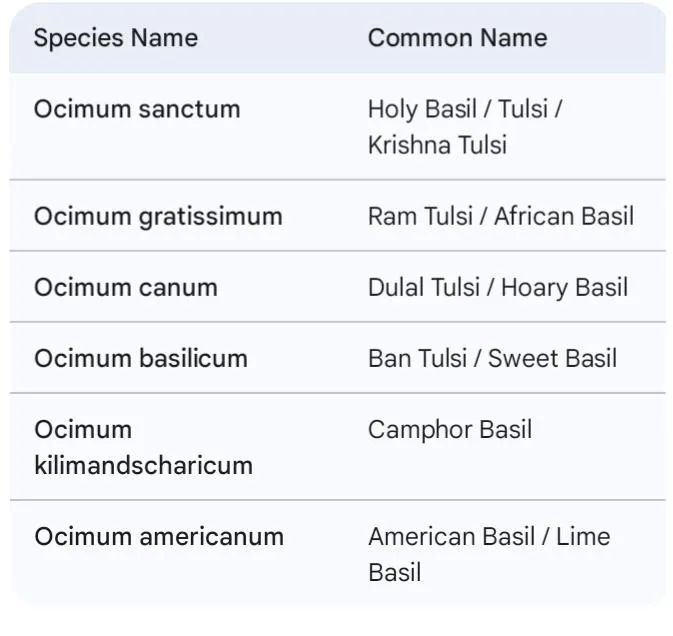
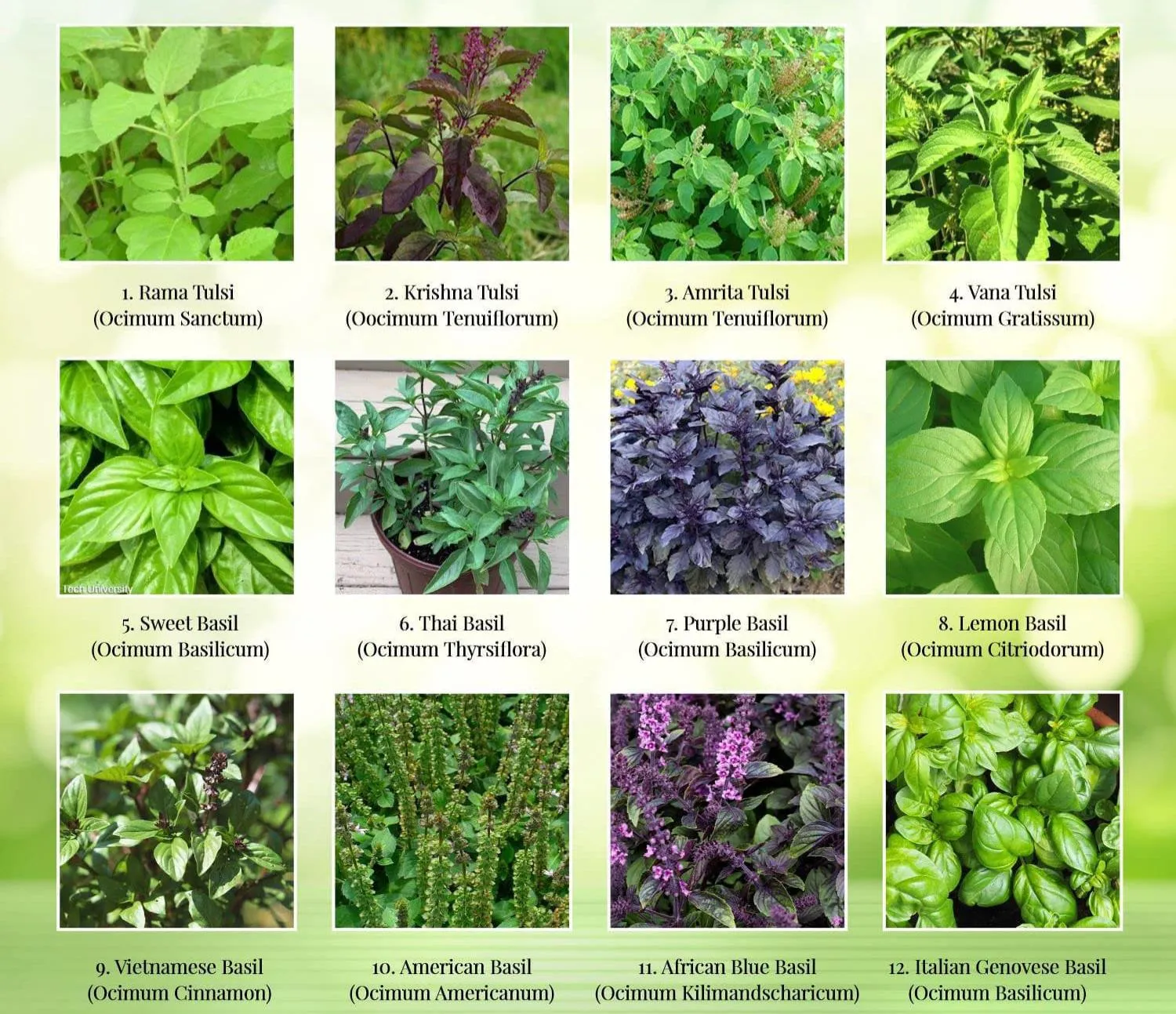
Different Types Of Tulsi
VERNACULAR NAMES
• Hindu – Kalatulasi, Tulasi
• Kannada– Vishnu Tulasi, Kari Tulasi, Sri Tulasi, Tulashigida
• English – Holy Basil
• Malayalam –Tulasi, Trttavu Karuttarttavu, NiellaTirtua,
Shiva Tulasi
• Telugu– Tulasi, Gaggera Chettu
• Tamil – Tulaci, Karuttulaci
• Bengali –Tulasi, Krishna Tulshi
• Gujarati – Tulasi, Talasi
• Punjab –BanTulsi, Tulsi
• Marathi– Tulasa, Tulasi
• Konkani– Tulsi
CHEMICAL CONSTITUENTS
Tulsi (Ocimum sanctum) possesses a highly complex biochemical profile, primarily dominated by active compounds such as eugenol and ursolic acid, which drive much of its therapeutic and essential oil potential. Beyond these, it contains a vast array of over 45 identified constituents, including volatile oils like rosmarinic acid, linalool, and methyl cinnamate, as well as a dense nutritional matrix of minerals like iron and phosphorus. While these phytoconstituents offer diverse pharmacological benefits—ranging from the neurogenesis-stimulating effects of apigenin to the antimicrobial and anti-cancer properties of bisabolol—their potency requires cautious application. Specifically, high concentrations of compounds like ursolic acid have been linked to anti-fertility effects, including reduced sperm count and anti-estrogenic activity. Furthermore, due to its potential to cause uterine contractions, thin the blood, or induce hepatotoxicity in excess, standardized dosing is critical to balancing its antioxidant and immune-boosting advantages against its significant reproductive and systemic risks.
PHARMACOLOGICAL ACTIVITY OF TULSI
1. Antineoplastic and Radioprotective Effects
Recent studies underscore the anticancer potential of O. sanctum extracts. Research involving Sarcoma-180 solid tumors in mice has shown that ethanolic extracts significantly reduce tumor volume while simultaneously increasing survival rates and body weight. Beyond direct tumor suppression, Tulsi serves as a radioprotective agent, shielding cellular DNA from radiation-induced damage.
2. Metabolic Regulation: Antidiabetic and Antilipidemic Activity
Tulsi exhibits potent hypoglycemic properties comparable to standard pharmaceuticals like glibenclamide. Hydroalcoholic and ethanolic extracts have been shown to reduce blood glucose levels in both acute and chronic diabetic models by stimulating insulin secretion from the pancreas. Furthermore, its antilipidemic action helps combat atherosclerosis; aqueous extracts and fresh leaf supplementation have been proven to lower total cholesterol, triglycerides, and LDL levels, promoting cardiovascular health.
3. Antimicrobial and Ocular Health
The essential oils and extracts (aqueous, alcoholic, and chloroform) of Tulsi possess broad-spectrum antibacterial activity against both Gram-positive and Gram-negative pathogens, including E. coli and S. aureus. Interestingly, fresh leaf oil shows superior antibacterial efficacy, while dried leaves are more effective against fungal strains. In traditional Ayurveda, leaf juice combined with Triphala is utilized in ophthalmic preparations to treat glaucoma and conjunctivitis, while oil-honey mixtures are used to support general vision.
4. Reproductive and Vector Control Properties
Tulsi presents unique antifertility applications. Ursolic acid, a primary constituent, exerts anti-estrogenic effects that can inhibit ovum implantation in females and arrest spermatogenesis in males by suppressing Sertoli cell activity. Additionally, the plant serves as a natural insecticide; its seeds produce a mucilaginous polysaccharide that physically traps and drowns mosquito larvae, such as Aedes aegypti, while its eugenol content acts as a potent larvicide.
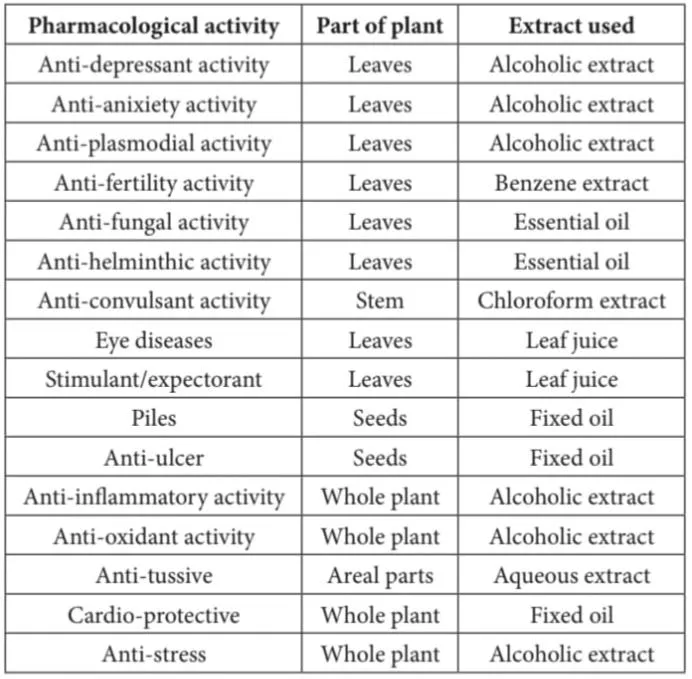
Pharmacological Activity Of Parts Of Tulsi
#THERAPEUTIC USES OF TULSI
I. Ayurvedic Foundations and Adaptogenic Properties
II. Broad-Spectrum Clinical Applications
III. Modern Medical Perspectives and Active Constituents
IV. Practical Domestic Utility
REFERENCES






Melkunde K. A., Thete A. S., Burle D. S., Aglawe P. R., Ghadge S. S., Dr. Shinde S. A., A Review of Medicinal Benifits of the Indian Holy Besil Plant (Tulsi), Int. J. of Pharm. Sci., 2026, Vol 4, Issue 11, 5334-5340. https://doi.org/10.5281/zenodo.24579316
 10.5281/zenodo.24579316