

We use cookies to ensure our website works properly and to personalise your experience. Cookies policy
Department of Pharmacology, Vidya Niketan college of pharmacy Lakhewadi.
Natural substances and plant-based remedies have been used to cure a wide range of ailments since the beginning of human civilization. Type-2 diabetes mellitus (T2DM) is a metabolic disorder associated with inadequate insulin secretion, resulting in prolonged hyperglycemia. Hyperglycemia can lead to oxidative stress and may contribute to the development of diabetic complications. Therefore, inhibition of carbohydrate-digesting enzymes such as ?-amylase and ?-glucosidase along with antioxidant activity may help in controlling blood glucose levels. Clitoria Ternatea commonly known as butterfly pea belongs to the Fabaceae family and is a medicinal plant containing various bioactive constituents. It has been reported to possess several pharmacological properties including antioxidant, anti-inflammatory, hypolipidemic and antidiabetic activities. The antidiabetic action of Clitoria Ternatea flower is the main topic of this review with special attention paid to its antioxidant qualities and inhibitory effects on ?-amylase and ?-glucosidase. The ability of Clitoria Ternatea flower extract to reduce blood glucose levels and demonstrate antioxidant activity has been documented in a number of investigations. The Assay including DPPH (2,2 diphenyl-1-picrylhydrazyl) have been used to assess antioxidant potential . Because of its antioxidant qualities and inhibition of enzymes that break down carbohydrates, Clitoria Ternatea Flower may therefore be a viable.
Records of symptoms resembling diabetes were found in the Ebers Papyrus from about 1550 BC. In India the doctors Sushruta and Charaka called the condition Madhumeha meaning urine that taste like honey. In the second century AD the Greek doctor Aretaeus of Cappadocia first used the word diabetes. Later scientists Thomas Willis and Matthew Dobson added to our knowledge of diabetes by showing that urine was sweet, that sugar was in both blood and urine. A big breakthrough came in 1921 when Frederick Banting and Charles Best discovered insulin a treatment that changed diabetes forever. Since that time new insulin forms and new ways to give insulin have made it easier to manage diabetes .[1,2]
Diabetes mellitus is a non-communicable disease. It happens when the body does not make insulin. Insulin is a hormone that helps control blood sugar. When insulin levels are low blood glucose levels go up [3]. This can lead to long-term health problems. There are two types of diabetes mellitus One is called type 1 diabetes the other is called type 2 diabetes. The Both types involve blood glucose levels. They have different causes and treatments. [4]
Diabetes problems get worse when there is hyperglycemia. This high blood sugar leads to much ROS (reactive oxygen species) being made in the mitochondria. In the stages of type 2 diabetes high glucose levels are linked to increased oxidative stress and a lot of AGEs (advanced glycation end-products). [5] When oxidative stress happens there is an imbalance between radicals and the body’s ability to fight them with antioxidants. This imbalance damages molecules in the body. [6]
This happens because the pancreas cannot make enough of the hormone insulin. This makes the body unable to use insulin. High blood sugar levels which are called hyperglycemia can be a sign of diabetes mellitus caused by not enough insulin being made. Lowering stress by using Antioxidants of Clitoria Ternatea can help manage diabetes and related problems. [7]
Since times, people have looked for natural remedies and I have seen how natural remedies shape lives.[8] Clitoria Ternatea also called Shankhpushpi is a plant that people have used for a time in alternative medicine such as Ayurveda.The Clitoria Ternatea is said to help people remember better. Clitoria Ternatea can also help people feel less worried feel happier and sleep better. Shankhpushpi is also used to help people with pain, fever, swelling and diabetes. The plant has two kinds of flowers white and blue. The Clitoria Ternatea is becoming more popular in health care, farming and industry. Clitoria ternatea is a source of natural antioxidants and natural dyes. [9,10 ,11]
The Acarbose, voglibose and miglitol which are antidiabetic medications, block alpha‑amylase and alpha‑glucosidase.These therapies often cause stomach problems. People experience flatulence, bloating and diarrhea. In addition Acarbose has been linked to cases of hepatitis.[12] Because of these issues we need treatment options, with fewer side effects.[13]
This review looks at how Clitoria Ternatea can help people with illnesses because Clitoria Ternatea has antioxidant power and antidiabetic power. Even though many researchers have studied Clitoria Ternatea and found that Clitoria Ternatea can help heal the plant is still not used much by doctors or by businesses. This paper tries to close that gap. [14]
Plant profile :
Clitoria Ternatea which is also known as CT is a rooted perennial leguminous vine that grows in tropical climates.The Clitoria Ternatea belongs to the Fabaceae family the Papilionaceae sub-family. The Clitoria Ternatea has oval-shaped blunt leaves. The flowers of Clitoria Ternatea are distinct ranging from white to blue. Clitoria Ternatea is usually grown from seeds. After livestock grazing Clitoria Ternatea shows vigorous regrowth and it gives strong yields.[15]
Clitoria Ternatea flowers are rich in antioxidants and bioactive substances such as phenolics, flavonoids, tannins, steroids, terpenoids and many glycosides. Among these glycosides anthocyanins are especially important. Research shows that Clitoria Ternatea flowers can neutralise stress.[14]
Clitoria Ternatea flowers contain flavonoids called anthocyanins. What makes flowers unique Clitoria Ternatea is that they hold amounts of polyacylated anthocyanins, mainly a specific delphinidin 3,3′,5′‑triglucoside called ternatin. Clitoria Ternatea flowers hold anthocyanins a type of flavonoid. These anthocyanins are especially plentiful in a subgroup named ternatins. Ternatins are formed from delphinidin 3,3′,5′-triglucoside.[16]
Studies show that ternatins can help control blood sugar by blocking alpha‑amylase activity. Also the anthocyanins are antioxidants and can lower damage from radicals. This may protect blood vessels in people with diabetes by reducing stress and boosting the body’s defense mechanisms. [17]
Morphological characteristic:
Clitoria Ternatea is a climbing vine with thin stems that grow from half a meter to three meters long. Clitoria Ternatea has compound leaves made up of five to seven slightly fuzzy leaflets that are oval or lance‑shaped and measure three to five centimeters.It shows that the vine produces short‑stemmed flowers. Each flower is four centimeters long and three centimeters wide and the flowers display five petals that come in deep blue light blue, white or mauve. The vine also bears fruit, the fruit is a flat pointed pod that's slightly hairy measuring between five and ten centimeters long and between 0.6 and 1.4 centimeters wide. Inside the pod the vine holds up to ten seeds. The seeds are patterned brownish‑green and each seed is four to eight millimeters long and three point two to four point five millimeters wide .[18].
Geographical Distribution:
The butterfly pea plant can be found in warm regions around the world. [19] The butterfly pea plant probably started in Asia. From there the butterfly pea plant spread naturally to places such as India, China, East and West Indies and Central and South America. [20] Today the butterfly pea plant is common across the tropics in Southeast Asian countries like Indonesia [21] and Bangladesh and also in Madagascar [22]. The butterfly pea plant has grown further now living in Africa, Australia, North America and many islands in the Pacific Ocean .[23]
The butterfly pea vine is also known as pea vine or pigeon wings. Many cultures give the butterfly pea vine names , in Hindi the butterfly pea vine is called Aparajita , in Malayalam the butterfly pea vine is called Shankapuspam , in Tamil the butterfly pea vine is called Kakkanam. Scientifically the butterfly pea vine belongs to the legume family Fabaceae. The butterfly pea vine is in the genus Clitoria. The genus Clitoria takes its name from the butterfly pea vine’s resemblance to female anatomy. The species name ternatea comes from Ternate Island in Indonesia. Because the blossoms of the butterfly pea vine look like conch shells the butterfly pea vine is called Shankpushpi in Sanskrit. In medicine the butterfly pea vine is used as a nerve tonic to treat mental illness [14]. The butterfly pea vine is grown for its flowers but the young shoots and leaves of the butterfly pea vine are also eaten in places like Kerala and the Philippines [24]. Different parts of the butterfly pea vine have been used to treat diabetes, liver problems [14].
Table 1: Synonyms of Clitoria Ternatea [23]
| Serial Number | Synonyms |
|---|---|
| 1. | ClitoreaalbifloraMattei |
| 2. | ClitoriabracteataPoir |
| 3. | ClitoriamearnsiiDeWild |
| 4. | ClitoriatanganicensisMicheli |
| 5. | ClitoriazanzibarensisV |
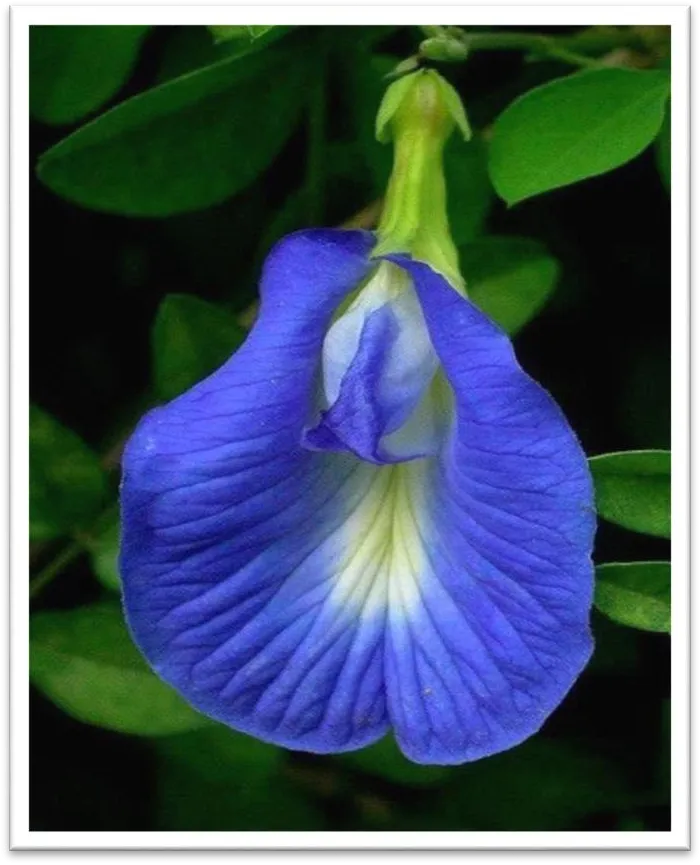
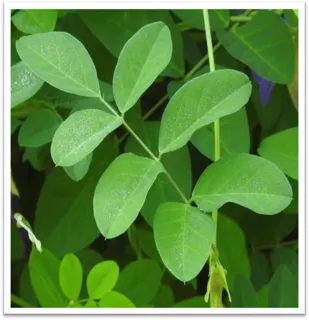
Figure 1: Flower of Clitoria Ternatea Fig2 .Leaves of Clitoria Ternatea
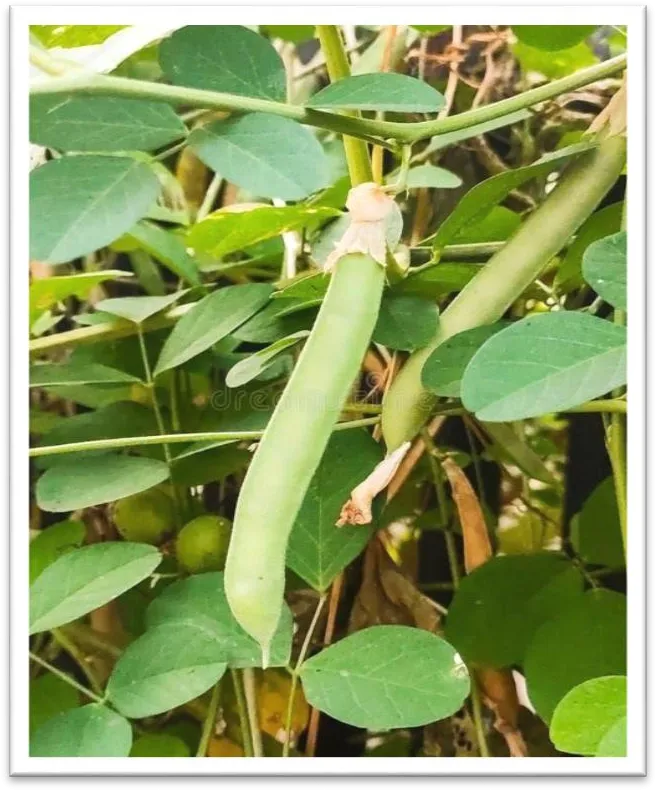
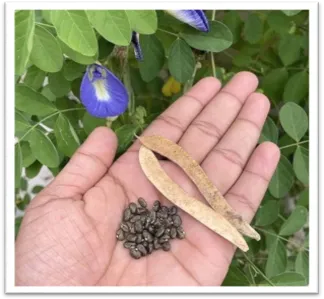
Figure 3: Pods of Clitoria Ternatea Fig4. Seeds of Clitoria Ternatea
Table 2: Uses of Different Parts of Clitoria Ternatea
| PlantPart | ChemicalConstituents | PharmacologicalActivity/Uses | References |
|---|---|---|---|
| Seed | Bitter acid resin, Beta-sitosterol, Delphinidin3,3’, 5’triglucoside Fixed Oli. Glucose, Linoleic, Linoleic Acid 3-5,Oleic, Palmitic, Stearic, Tannic acid, and Water soluble micilage |
Antihistaminic potential, Cathartic, Food dye, Laxative,and Purgative Antifungal and Antibacterial activity |
[25] [26] |
| Brain tonic, For urinary problems, Mosquito larvicidal activity, Promote intelligence,and promote Memory, Used in swollen joints |
[23] | ||
| Abdominal viscera, Arthritis, Colic, Cough, Dropsy, Hepatic disorders, Rhumatic infections, Spleen infections,and Used Forascites |
[27] | ||
| Root | Resins, Starchand tannin’s |
Anthelmintic, Antiinflammatory, Asthma, Cooling, Hectic fever, Laxative, and Severe bronchitis |
[25] |
| Anaphrodisiac, Control menstrual discharge, Gonorhea, Infertility, and Whooping cough |
[28] | ||
| Treat leprosy using“SULAK” ointment | [29] | ||
| Ear diseases,and Rhumatism | [30] | ||
| Eye disorders Indigestion,and Swollen joint, | [31] | ||
| Antidiarrheal | [32] | ||
| Improve mental health,and Memory in children | [33] | ||
| Enlargement of abdominal viscera, Epilepsy, Insanity, Sore throat, Skin diseases, Treatment of ascites |
[23] | ||
| Anticonvulsant, Antidepressant Antidote to animal stings, Antiperiodic Anti-stress, Anxiolytic, Body aches, Bronchitis, Cure abdominal swelling in cattle, Emetic, Goiter, Muscular strength, Nootropic, Remittent fever, Rhumatism, Skin complexion, To cause abortion ,and Urinogenital disorders. |
[27] | ||
|---|---|---|---|
| Stem | Brain tonic, Eye infection, Scorpion sting, Skin diseases, Throat infection, Treatment of snakebite ,and Urinary troubles |
[27] | |
| Leaves | Chlorophyll a, Chlorophyll b, Carotenoidsand Xanthophylls | Analgesic, and CNS depressent | [34] [32] |
| Brain tonic, Promote memory,and Promote intelligence |
[23] | ||
| Antioxidant, Diuretic, Edema, Hypertension, |
[35] | ||
| Antiperiodic, Emetic, Excessive sweating, Hepatic fever, Laxative, To mitigate the toxins, Useful in ear inflammation, And Useful in the inflammation of Mastoid lymph nodes |
[27] | ||
| Flower | Kaempferol, Quercetinsglycosidesand TernatinAnthocyanins |
Antiheamolytic, Anti hypertensive activity, And Antioxidant, |
[36] |
| Corrosion protection | [37] | ||
| Antidiabetic, Anti-inflammatory, |
[38] |
Table 3: Nitritional Analysis of Clitoria Terneata Flowers [41]
| Antimicrobial, and Antiproliferative/anti-cancer Promote hair growth, Treatment of snakebite Safe for normal skin types Defend against skin aging, And promote skin complexion Antidiabetic, Emmenagogue, Induce certain contractions, Intestinal problem, To promote menstruation, Treat chlorosis and Treatment of scorpion sting |
[39] [25] [40] [33] 27 |
|---|
Table 4: Taxonomic Classification [23]
| 1. | Nutrients | Percentage | Concentration(mg/g) |
|---|---|---|---|
| 2. | Protein | 0.3% | - |
| 3. | Fiber | 2.1% | - |
| 4. | Carbohydrate | 2.2% | - |
| 5. | Fat | 2.5% | - |
| 6. | Moisture | 92.4% | - |
| 7. | Calcium | - | 3.09mg/g |
| 8. | Magnesium | - | 2.23mg/g |
| 9. | Potassium | - | 1.25mg/g |
| 10. | Zinc | - | 0.59mg/g |
| 11. | Sodium | - | 0.14mg/g |
| 12. | Iron | - | 0.14mg/g |
Table 5: Common Names [23]
| 1. | Kingdom | Plantea |
|---|---|---|
| 2. | Subkingdom | Virdaeplanta |
| 3. | Infrakingdom | Streptophyta |
| 4. | Division | Tracheophyta |
| 5. | Subdivision | Spermatophytina |
| 6. | Infradivision | Angiospermae |
| 7. | Class | Mangnoliopsida |
| 8. | Superorder | Rosanae |
| 9. | Order | Fabales |
| 10. | Family | Fabaceae |
| 11. | Genus | Clitioria L |
| 12. | Species | Clitoriaternatea |
Table 6: Phytochemical Constituents [42]
| Common names | Synonyms |
|---|---|
| Arabic | MazerionHidi,Baslatel-Zuhoor |
| Bengali | Aparajita |
| Chinese | Diedou |
| English | Bluepea,Bluebellvine,Butterfly-pea, Cordofan-pea, Darwin -pea . |
| French | Honte |
| German | BlaueKlitorie |
| Hindi | Aparajita |
| Portuguese | Clitória-azul, Clitória |
| Punjabi | Koyal |
| Sanskrit | Girikarnika, Vishnukranta |
| Spanish | Conchitaspapito,Aazulejo,Zapaticodela reina , Zapotillo. |
| Tamil | Kakkanam |
| Telugu | Dintena |
Table 7: Bioactive Compounds Identified in clitoria ternatea
| Phytochemical Constitituents | Chemical structure |
|---|---|
| Taraxerone | |
| Taraxerol | |
| Qurecetin | |
| Anthocyanin | |
| Tannin | |
| Beta-sitosterol | |
| Delphinidin | |
| Flavanolglycosides | |
| Kaempferol |
| Compound Type | Identified Compounds | References |
|---|---|---|
| Anthocyanin | Ternatins A1,A2,B1,B2,D1,D2, and others | [43, 44] |
| Flavonols | (15 (poly) acylated delphinidin glucosides), Kaempferol, Qurecetin, and Myricetin glycoside(withvariationsinR1,R2,R3,and R4) |
[43,45,46] |
| Lipophilic Compounds |
Fatty Acids (palmitic Acid, Stearic Acid,Linoleic Acid,etc) |
[47] |
| Others | Phytosterols(Campesterol,Sigmasterol,beta-sitosterol, etc) Tocols(alpha-tocopherol and gamma-tocopherol) MomeInositol,Pentanal,Cyclohexen,etc. 6”-Malonylastragalin, Phenylalanine, Coumaroyl sucrose,etc. Tryptophan,Coumaroyl Glucose |
[41,33] |
THERAPEUTIC POTENTIAL OF Clitoria Ternatea :
Anti-microbial Activity:
The germs Salmonella that makes Extended Spectrum Beta Lactamase (ESBL). Enteritidis, Salmonella typhimurium, Klebsiella pneumoniae, enteropathogenic E. Coli, uropathogenic E. Coli and Pseudomonas aureginosa found in people with tract infection and acute gastroenteritis.
The disk diffusion method is used to check how well the extracts worked, found that water, methanol and chloroform extracts from Clitoria Ternatea flowers worked against E. Coli, enteropathogenic E. Coli, entero toxigenic E. Coli, Salmonella typhimurium, Klebsiella pneumoniae and Pseudomonas aeruginosa. The methanol extract of Clitoria Ternatea is fairly strong when compared pneumoniae and Pseudomonas aeruginosa. The methanol extract of Clitoria Ternatea is fairly strong when compared.
The antimicrobial effects of methanol extracts obtained from the leaves, stems, flowers, seeds and roots of Clitoria Ternatea were assessed. The extracts were tested in vitro against twelve species, two yeast species and three filamentous fungi using both agar diffusion and broth dilution methods. The leaf extracts and root extracts proved to be the effective against all organisms that were tested, with a statistical significance of p less than 0.05.
The antibacterial activity of Clitoria Ternatea was examined using agar disc and well diffusion techniques. The carbon‑based solvent was used for extraction. Extracts prepared with petroleum ether, ethyl acetate and methanol from Clitoria Ternatea leaves were tested against Bacillus cereus, Salmonella typhi, Proteus vulgaris, Klebsiella pneumonia and Staphylococcus aureus. The findings appeared encouraging, showing antimicrobial efficacy against the examined pathogenic microorganisms. [48]
Antioxidant Activity:
Water-based and ethanol-based extracts of Clitoria Ternatea have been shown to have activity.The chemical makeup of the plant Blossoms of Clitoria Ternatea suggest that antioxidant properties might be present; ethnopharmacological evidence indicates that antioxidant usage is common. The Preparations of Clitoria Ternatea (butterfly pea) blossoms are utilized.Petroleum ether, chloroform and methanol extracts from roots of white forms were taken.White-blooming forms of Clitoria Ternatea were examined for their capacity.
The DPPH radical quenching assay ,Reducing capacity assay and hydroxyl radical scavenging assay were employed for assessing antioxidant potential.Petroleum spirit, Chloroform and methanol extracts from roots of white flowered varieties of Clitoria Ternatea markedly suppressed the antioxidant activity . The DPPH radical species at concentrations spanning from 50-600 mu g/ml.Root extracts in petroleum ether, chloroform and methanol.The flowered variety of Clitoria Ternatea exhibited the highest inhibition, respectively.[49,50]
Pain relieving anti-inflammatory effect:
The methanol extract of Clitoria Ternatea roots, given by mouth to rats at doses of 200 to 40milligrams per kilogram, stopped both swelling of the rat paw caused by carrageenan and the increase in blood vessel permeability caused by acid in rats. In addition, the extract also showed inhibition of fever caused by yeast in rats. In the test where rats were given acid to make them writhe, the extract greatly lowered the number of writhing episodes at doses of 200 and 400 milligrams per kilogram given by mouth to mice .
The pain-relieving properties of Clitoria Ternatea flower extract was tested in rats using a carrageenan paw swelling model and in mice using a plate test. The petroleum ether extract taken at temperatures of 60 to 80 degrees Celsius showed pain relief attributes.[51]
Glucose-lowering effect:
The glucose-lowering effects of methanol, aqueous, petroleum ether and chloroform extracts from Clitoria Ternatea leaves were evaluated .In streptozotocin-treated rats both acute and subacute effects were examined.The Clitoria Ternatea extract at 200 and 400 mg/kg markedly lowered blood sugar levels in streptozotocin-induced rats.The 400 mg/kg dose produced hypoglycemia.Likewise, 200mg/kg also reduced glucose levels,Less than the 400 mg/kg dose.
The results of the impact of the methanol extract demonstrated that 200 and 400 mg/kg produced a nearly identical effect, although at the initial stage, 30 minutes after dosing, the 200 mg/kg dose showed a slight decrease in blood sugar level.Subacute activity demonstrated that with extract administration, the 200 mg/kg dose
offers much better control of the observed effects.The blood sugar concentration was lower than with the 400 mg/kg dosage.[52].
The blood sugar lowering effects of methanolic extract from Clitoria Ternatea leaves at doses of 200 and 400 mg per kilogram were examined in alloxan-induced diabetes.Diabetic rodents. The extract from Clitoria Ternatea significantly lowered blood glucose levels in alloxan-induced laboratory rats, with a p-value less than 0.001Twelve hours after administration, according to reference. [53].
Stress-Relieving Qualities of Clitoriaternatea:
The stress-relief effects of the parts of Clitoria Ternatea were studied using several rodent experiments. These models used cold restraint stress (CRS) to cause stomach ulcers, lithium to trigger head‑twitch reactions, clonidine to lower body temperature, sodium nitrite to stop breathing and haloperidol to produce catalepsy.[54].
MATERIAL AND METHODS:
Antidiabetic Activity:
Fresh leaves of Clitoria Ternatea were collected during in Month of September 2011, at the Pratap Nursery, Karamchari Nagar, Bareilly UP India. Identification and authentication of the plant leaves ok were done taxonomically by Dr. Umesh Chand Pandey HOD and Incharge Botany Dept.Bareilly college, Bareilly BCB/BOT /376/24-01-2012.
Leaves of Clitoria Ternatea were shade dried until cracked There was a sound in the breakage, and then the leaves were ground to make into roughly powdered. The powder of the was macerated with each solvent (leaves (500 gram) petroleum ether, chloroform, methanol and distilled water (1500ml) in room temperature for 72 h with occasional stirring.The residues were filtered off and the extracts coarse filtration through several layers of muslin cloth and then through No. 1 filter paper of man. What was left was extracted further by the same method. The filtrate were combined and then evaporated to dryness at a temperature not exceeding 40 °C in a water-bath. The extracts till use were kept at cool place. When you take dose administration crude extract was prepared with distilled water during experiment.
Male albino rats weighing 150-200 gm were weighed on pan balance body weight of rats used in the experiment. All rats were kept under fresh metabolic cages and ad libitum water and commercial pellet diet (GMB, Lipton India Ltd.) The procedure study was approved by the Institutional animal ethics committee (1452/Po/a/11/CPCSEA).
Oral glucose tolerance test (OGTT):
The oral glucose tolerance test was performed overnight fassted 18-hour normal rats. The rats were divided into 10 groups (n = 6) The following drugs and control were administered orally to the animals:
Group A (control group) was given glucose
Methanol extract 200 mg/kg (Group B)
Group C was given 400mg/kg methanol extract
Group D was treated with 200 mg/kg aqueous extract
Group E received aqueous extract 400 mg/kg
Group F were given chloroform extract 200 mg/kg
Group G was given chloroform extract at 400 mg/kg
Group H received Petroleum ether extract 200 mg/kg
Group I was given 400 mg/kg petroleum ether extract
Group J (standard group) was given Glibenclamide 0.5 mg/kg.
Glucose (2 g/kg) was fed to rats of Group A to Group J, 30 minutes prior to the administration of the extracts and standard drug. Blood was withdrawn from the retro-orbital sinus after 0, 30, 60, 120 and 240 minutes of extract and standard drug administration, and the plasma obtained after centrifugation at 3000 rpm was estimated for fasting plasma glucose levels using a glucose oxidase/peroxidase glucose estimation kit.
Non-insulin dependent diabetes mellitus was induced [55,56] in overnight fasted adult Wistar strain albino male rats weighing170 – 220 g by a single intraperitoneal injection of 60 mg/kg Streptozotocin, 15 minutes after i.p. administration of 120 mg/kg of nicotinamide. Streptozotocin (STZ) was dissolved in a citrate buffer (pH 4.5) and nicotinamide was dissolved in normal saline.Hyperglycemia was confirmed by the elevated glucose levels in plasma, determined at 72 hours and then on day 7, after injection. The threshold value of fasting plasma glucose to Diagnose diabetes was >126 mg/dl. Only those rats that were found to have permanent NIDDM were used for the study.
The animals were segregated into eleven groups of six rats Each of the animals was given the extract for 15 days.
Group A (Normal group) received water
Group B (Diabetic control group) received STZ 0.50 mg/kg
Group C received 200 mg/kg methanol extract
Group D received 400 mg/kg methanol extract
Group E received 200 mg/kg aqueous extract
Group F received 400 mg/kg aqueous extract
Group G received 200 mg/kg chloroform extract
Group H received 400 mg/kg chloroform extract
Group I received 200 mg/kg petroleum ether extract
Group J received 400 mg/kg petroleum ether extract
Group K (standard group) received 0.5 mg/kg Glibenclamide.
The fasting glucose levels were determined on days 0, 5th and 15th of extract administration. Blood was withdrawn from the retro-orbital sinus, and the plasma obtained after centrifugation at 3000 rpm was estimated for fasting plasma glucose levels using a glucose oxidase–peroxidase glucose estimation kit.During the experimental period, the rats were weighed daily and the mean change in body weight was calculated. [56,57].
The results are expressed as mean ± SEM of six independent experiments. Statistical significance between the groups was Evaluated by one way ANOVA followed by Dunet’s test. A P < 0.05 value was considered as statistically significant.
RESULTS
Oral glucose tolerance effects:
The effects of petroleum ether, chloroform, methanol and
(200 mg/kg and 400 mg/kg body weight) on the plasma glucose level are shown in Table . After glucose administration in rats a rise in glucose level was observed in the glucose control group, extract-treated groups and the standard group. In rats treated with petroleum ether, chloroform, methanol and aqueous extract of Clitoria Ternatea leaves there was a reduction, in plasma glucose level. In contrast in the glucose control rats the plasma glucose level increased. Similar results were observed in the glibenclamide-treated group.
Table 8: Effect of Various Extract of Clitoria Ternatea Leaves on Oral Glucose Tolerance Test
| Treatment | Doses (mg/kg body weight) | 0 min | 30 min | 60 min | 120 min | 240 min |
|---|---|---|---|---|---|---|
| Group A | 2000 | 75.92±2.21 | 177.50±4.38 | 151.89±3.54 | 126.32±3.61 | 105.67±2.76 |
| Group B | 200 | 81.85±2.52 | 147.01±2.00 | 119.81±2.86* | 86.97±3.03* | 82.34±2.13* |
| Group C | 400 | 71.52±1.37 | 159.50±3.73 | 135.68±2.10* | 110.37±1.64* | 96.49±4.23* |
| Group D | 200 | 77.30±3.07 | 153.40±2.52 | 130.73±2.38* | 101.74±1.60* | 91.54±3.29* |
| Group E | 400 | 72.46±2.32 | 162.52±3.72 | 139.23±2.31* | 109.64±2.57* | 98.26± 3.13* |
| Group F | 200 | 76.42±2.34 | 155.76±3.12 | 132.54±3.76 | 197.35±2.19 | 94.87± 2.31* |
| Group G | 400 | 74.24±4.34 | 170.22±2.78 | 161.39±3.40 | 130.34±5.15 | 117.40± 3.73* |
| Group H | 200 | 72.46±3.34 168 | 168.12±2.32 | 164.65±4.52 | 135.78±3.37 | 112.20± 3.82* |
| Group I | 400 | 7 1.44±3.37 | 165.34±2.49 | 144.53±3.32 | 119.98±3.45 | 101.87±2.56* |
| Group J | 0.5 | 74.47±5.90 | 160.41±2.89 | 142.65±4.52 | 130.78±3.27 | 107.63±4.40* |
Values are presented as mean ± SEM (Number of subjects, n=6); statistically significant at *P<0.05 when compared to the glucose control group.
Group A: The control group was administered 2 gm/kg of glucose; Group B was given 200 mg/kg of a methanol extract, Group C received 400 mg/kg of a methanol extract, Group D was assigned 200 mg/kg of an aqueous extract, Group E was administered 400 mg/kg of an aqueous extract, Group F received 200 mg/kg of a chloroform extract, Group G was given 400 mg/kg of a chloroform extract, Group H received 200 mg/kg of a petroleum ether extract, Group I was administered 400 mg/kg of a petroleum ether extract, and Group J (the standard group) received 0.5 mg/kg of Glibenclamide.
Impact on non-insulin dependent diabetes mellitus:
The induction of diabetes in experimental rats was confirmed by detecting elevated fasting plasma glucose levels. The effects of petroleum ether, chloroform, methanol, and aqueous extract of Clitoriaternatea leaves (at doses of 200 mg/kg and 400 mg/kg body weight) on serum glucose levels in both normal and Streptozotocin-induced rats are presented in table 2.
In rats treated with streptozotocin, referred to as Group B, a notable rise in serum glucose levels was recorded on the 0th, 5th, and 15th days compared to the normal group rats (Group A).
Following the oral administration of petroleum ether, chloroform, methanol, and aqueous extract of Clitoria Ternatea leaves to the diabetic control rats, a significant decrease in blood glucose levels was noted in comparison to the diabetic control group.
The findings indicate that the methanol extracts exhibited the highest level of activity in comparison to the other extracts.
Throughout the study, the body weights of rats were recorded before and after the onset of diabetes, as well as following treatment . The results showed a reduction in body weight in rats after diabetes induction, while an increase in body weight was noted in those treated with extracts.
DISCUSSION
The primary mechanism responsible for hyperglycemia in diabetes mellitus is characterized by an excess production and reduced usage of glucose by tissues. In our research, the variation observed between the initial and final fasting plasma glucose levels across the different groups showed a significant rise in blood glucose levels in the diabetic control group when contrasted with normal animals, by the end of the study.
The primary mechanism responsible for hyperglycemia in diabetes mellitus is characterized by an excess production and reduced usage of glucose by tissues. In our research, the variation observed between the initial and final fasting plasma glucose levels across the different groups showed a significant rise in blood glucose levels in the diabetic control group when contrasted with normal animals, by the end of the study.The primary mechanism responsible for hyperglycemia in diabetes mellitus is characterized by an excess production and reduced usage of glucose by tissues. In our research, the variation observed between the initial and final fasting plasma glucose levels across the different groups showed a significant rise in blood glucose levels in the diabetic control group when contrasted with normal animals, by the end of the study.
When glucose-loaded normal rats, which had been fasted for 18 hours, were given petroleum ether, chloroform, methanol, and an aqueous extract of Clitoria Ternatea leaves, a reduction in plasma glucose levels was noticed after 30 minutes.
Table 9: Effect of Various Extracts of Clitoria Ternatea Leaves on Fasting Plasma Glucose Level in Rats
| Treatment | Dose (mg/kg body weight) | Fasting Plasma 0 day |
Glucose 5 day |
concentration(mg/dl) 15 day |
|---|---|---|---|---|
| Group A | ---- | 75.75 ± 3.93 | 76.76 ± 3.50 | 75.80 ± 4.87 |
| Group B | 120 | 343.37 ± 8.04a | 357.27 ± 7.54 a | 380.56 ± 2.76a |
| Group C | 200 | 332.67 ± 3.51 | 260.0 ± 4.80* | 145.46 ± 4.63* |
| Group D | 400 | 342.32 ± 3.12 | 295.90 ± 7.28* | 209.32 ± 7.36* |
| Group E | 200 | 338.30 ± 6.48 | 267.0 ± 6.31* | 152.27 ± 7.68* |
| Group F | 400 | 342.32 ± 3.12 | 298.12 ± 5.19* | 208.52 ± 4.48* |
| Group G | 200 | 336.36 ± 3.67 | 320.0 ± 3.54 | 290.48 ± 4.65* |
| Group H | 400 | 332.75 ± 3.67 | 331.0 ± 3.34 | 272.90 ± 3.52* |
| Group I | 200 | 334.56 ± 4.90 | 290.0 ± 3.54* | 190.38 ± 3.28* |
| Group J | 400 | 345.53 ± 4.35 | 316.0 ± 4.78 | 210.32 ± 5.76* |
| Group K | 0.5 | 346.35 ± 4.28 | 226.53 ± 7.90* | 112.32 ± 4.62* |
Data are presented as mean ± SEM (Number of subjects, n=6); values are significantly different at aP<0.05 when compared to the normal control group, *P<0.05 when compared to the glucose control group.
Group A: The normal group was given water, Group B (the diabetic control group) received STZ at 0.50 mg/kg; Group C was administered 200 mg/kg of methanol extract, Group D received 400 mg/kg of methanol extract, Group E was given 200 mg/kg of aqueous extract, Group F received 400 mg/kg of aqueous extract, Group G was administered 200 mg/kg of chloroform extract, Group H received 400 mg/kg of chloroform extract, Group I was given 200 mg/kg of petroleum ether extract, Group J received 400 mg/kg of petroleum ether extract, and Group K (the standard group) was treated with 0.5 mg/kg of Glibenclamide.
Table 10: Effect of Various Extracts of Clitoria Ternatea Leaves on Changes in Body Weight in Rat
| Treatment | Doses (mg/kg body weight) | Body Weight in 0 day |
gram 5 day |
15 day |
|---|---|---|---|---|
| Group A | ---- | 161.46± 3.21 | 162.37± 4.21 | 165.44± 4.55 |
| Group B | 120 | 162.53± 3.54 | 158.40± 3.4 | 165.17± 5.4 |
| Group C | 200 | 186.3± 4.78 | 192.2± 5.62 | 203.0± 3.97 |
| Group D | 400 | 176.54± 5.5 | 154.2± 8.18 | 163.50 ± 3.8 |
| Group E | 200 | 173.43 ± 3.94 | 177.35± 4.52 | 175.0±2.50 |
| Group F | 400 | 175.25 ±4.25 | 173.42±6.21 | 174.35±3.4 |
| Group G | 200 | 169.43+±3.16 | 165.45±3.53 | 162.78±4.64 |
| Group H | 400 | 166.32±2.12 | 163.63±6.72 | 168.34±3.42 |
| Group I | 200 | 167.7± 5.13 | 163.65± 4.90 | 160.32± 6.32 |
| Group J | 400 | 169.34± 3.54 | 171.24± 4.89 | 164.42± 4.51 |
| Group K | 0.5 | 168.35±4.83 | 173.92± 3.79 | 178.40± 5.5 |
Group A: Water was given to the normal group; Group B (the diabetic control group) received 0.50 mg/kg of STZ; Group C received 200 mg/kg of methanol extract; Group D received 400 mg/kg of methanol extract; Group E received 200 mg/kg of aqueous extract; Group F received 400 mg/kg of aqueous extract; Group G received 200 mg/kg of chloroform extract; Group I received 200 mg/kg of petroleum ether extract; Group J received 400 mg/kg of chloroform extract; and Group K (the standard group) received 0.5 mg/kg of glibenclamide. In rats with streptozotocin-induced diabetes, it was discovered that extracts considerably reduced blood glucose levels.
Clitoria Ternatea may have produced its hypoglycemic effect in diabetic rats by either releasing insulin from its bound state or enhancing the insulin impact of plasma through increased pancreatic secretion of insulin from the existing beta cells[58,59]. When compared to the other extract, the methanol extract shown more pronounced antidiabetic action
CONCLUSION
According to the results of this investigation, oral administration of petroleum ether, chloroform, methanol, and an aqueous extract of Clitoria Ternatea leaves shown a substantial antidiabetic impact in regulating blood glucose levels. Therefore, it can be said that this plant extract has promise for a successful breakthrough in its future development as a robust oral medicinal agent for treating and controlling diabetes mellitus.
Assay for the inhibition of α-amylase activity:
10 µl of 0.075 mg/mL α-amylase enzyme was introduced to each well of the 96-well microplates, which contained 30µl of specimen.Subsequenty, an incubation treatment was performed for10 minutes at a temperature of 37 degrees Celsius. Subsequently, 40 µl of PBS was included, and incubation was performed again for 15 minutes at a temperature of 37 degrees Celsius. 10 µl of iodine solution with acidity.The solution was subsequently included as an enzymatic reaction stop.
Absorbance readings at a wavelength of 565 nm were Absorbance readings at a wavelength of 565 nm were conducted with a microplate reader (The multiskan GO Microplate Spectrophotometer) [60]. The activity of α- amylase inhibition was quantified using the equation:
Inhibition % = (EA - ES) / C × 100
EA = Absorbance of enzyme activity (excluding sample)
ES = Absorbance of the enzymatic activity of the sample
Impact of CFE on alpha-amylase inhibition activity:
The impact of CFE levels on the suppression of alpha-amylase the activity is depicted in Figure 5. The illustration shows that the activity relies on concentration, exhibiting a CFE of
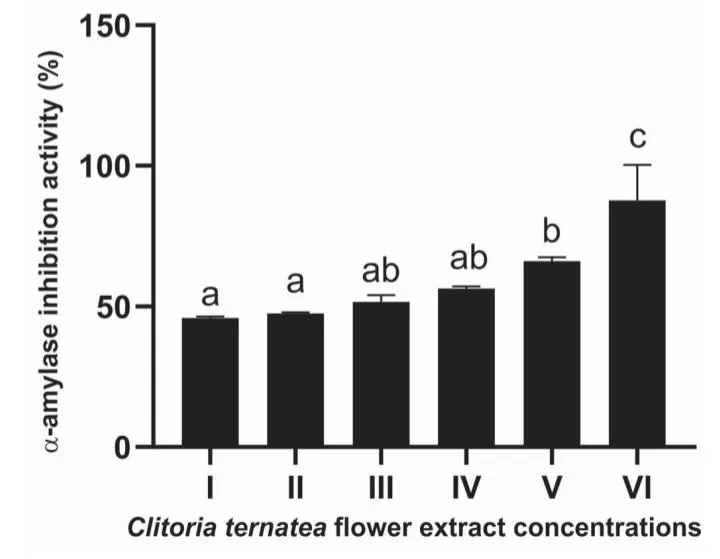
Figure 5: Figure of Various Concentrations of CFE on Alpha – Amylase Inhibitory Activity
750. µg/ml showing the strongest inhibition. The value of IC50 gained from CFE's α-amylase activity is 83.49 µg/ml.
The information contains the average and standard deviation figures. I: CFE23.44 µg/ml (CFE1); II: CFE 46.88 µg/ml (CFE2); III: CFE 93.75 µg/ml µg/ml (CFE3); IV: CFE 187.5 µg/ml (CFE4); V: CFE 375 µg/ml µg/ml (CFE3); IV: CFE 187.5 µg/ml (CFE4); V: CFE 375 µg/ml (CFE5); VI: CFE 750 µg/ml (CFE6). Different letters (a, ab, b, c) show notable distinctions among treatments according to Tukey HSD Examination (P<0.05)
Assay for inhibition of alpha -glucosidase activity:
In the 96-well microplate, 5 µl of samples at different concentrations, 25 µl of 200 mMp-nitrophenyl-a-glucopyranoside,45µlofphosphate-buffered saline (PBS) at pH 7, along with 45 µl of Saccharomyces sp. yeast α-glucosidase as Up to 25 µl were included. The incubation process was subsequently performed for 5 minutes at 37 degrees Celsius. The inclusion of Na2 CO3at a concentration of 200 mM as much as 100 µl was utilized to halt the reaction. Absorbance Measurements were performed utilizing a microplate reader. (the Multiskan GO Microplate Spectrophotometer) at 400nm [60].
The blocking effect of aipha - glucosidase was conducted using the equation:
Inhibition % = (EA - ES) / C × 100
EA = Absorbance of enzyme activity (excluding sample)
ES = Absorbance associated with sample enzymatic function
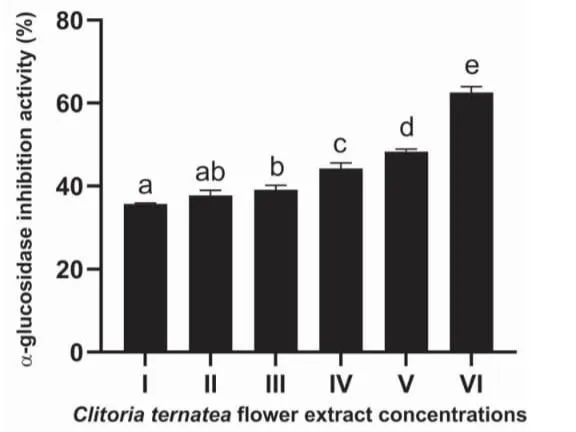
Figure 6: Effect of Various Concentrations of CFE on Alpha -Glucosidase Inhibitory Activity.
The information contains the average and standard deviation figures. I: CFE 2.34 µg/ml (CFE1); II: CFE 4.69 µg/ml (CFE2); III: CFE 9.38 µg/ml ml (CFE3); IV: CFE 18.75 µg/ml (CFE4); V: CFE 37.5 µg/ml (CFE5); VI: CFE 75 µg/ml (CFE6). Unique letters (a, ab, b, c, d,e) highlight substantial disparities among treatments according to Tukey HSD Test (P<0.05)
Effect of CFE on alpha-glucosidase inhibitory activity:
Illustrated in Figure 6, CFE demonstrated strong activity at Blocking α-glucosidase. The suppressive potency against alpha-Glucosidase exhibited a positive relationship with the increasing concentration of CFE. The strongest suppressive action Was derived from CFE at a concentration of 75 µg/ml.The IC50 measurement obtained for the α-glucosidase enzyme
Inhibition amounts to 39.77 µg/ml.Reactive Oxygen Species (ROS) are byproducts of cells.Metabolization. Fluctuations in their totals may influence these.Processes. ROS serves an essential role in multiple signaling. Pathways serve as effective regulators when the amount is adequate.
However, ailments such as neurodegenerative, cardiovascular,Metabolic disorders and inflammation may develop when ROS levels rise to excessive amounts. Moreover, notably high Amounts of ROS have similarly been reported to display a considerableFactor in hypertension and diabetes. Moreover, it appears that Cell death caused by oxidative stress is the main event.In diabetes, leading to both microvascular and Large-vessel complications. Different components of the Oxidative stress conditions affect cellular metabolism and The equilibrium among cells [61].
Anti-oxidant activity
The stalk of Clitoria Ternatea was gathered from the nearby regions of Vidyanagar, Gujarat and verified by Dr. A. S. Reddy, Botany Department sardar Patel University, Vidyanagar.
The gathered stem of the plant was dried in the shade, coarsely ground and powder was thoroughly extracted and consecutively using different solvents in an enhancing polarity, namely petroleum ether (60-80 degrees C), toluene, chloroform, acetone, methanol and water in Soxhlet extractor. Every extract was reduced to a minimal volume and permitted to dry. Following the drying process, the samples were measured and percent extractive values were resolved.
The qualitative chemical analyses of all the extracts were conducted to verify the existence of different phytoconstituents It disclosed the existence of different phytocomponents present like phytosterols, phenolic substances,flavonoids and sugars.[62].
Antioxidant Effectiveness:
In this study, the samples were formulated in various concentrations, such as 200-1000 µg/ml in methanol of AR grade. absorbance of the produced solutions and the empty (using identical chemicals minus the sample) were noted after 15 minutes at room temperature. The vanishing of hue was measured spectrophotometrically at 517 nm utilizing a JASCOV530- Visible spectro-photometric device. Radical Scavenging Ability (RSC) in percentage was determined by adhering to equation:
RSC (%) = 100 × (A blank - A sample) / A blank
Where;
RSC = Capacity for Radical Scavenging
A blank = Absorbance of the blank
A specimen = Absorbance of specimen
Based on the acquired RSC values for acetone and IC50 values were determined for methanol extracts, that indicates the level of the foraging substance that resulted in 50% neutralization.[63].
Nitro blue Tetrazolium Test: The Reagents were solubilized in phosphate buffer, newly made. The mixture of reactants included riboflavin (20µg), EDTA (12mM), methanol (12mM), NBT (0.1mg) and medication (variable concentration), within a total volume of 3ml. The the reaction mixture was exposed to light for 5 minutes. The absorbance was measured in comparison to a empty (filled with buffer solution in place of test) at 590 nm. RSC as a percentage was computed using the identical equation as outlined in Free Radical Scavenging Potential on DPPH free radicals. Based on the acquired RSC values the IC50 were determined, which denotes the density of the foraging substance that resulted in 50% neutralization.[64].
Substances Reactive to Thiobarbituric Acid (TBARS) Assay: All reagents were dissolved in fresh phosphate buffer, ready. The mixture of reactants included deoxyribose (10mM), KH2PO4-KOH solution, pH7.4 (20mM), FeCl3 (10mM), EDTA (1mM), H2O2 (10mM), Ascorbate (1mM) and medication (variable concentration), within a total volume of 3 milliliters. The mixture of reactants was allowed to incubate. for 1 hour at 37°C. Following the incubation of the reaction was halted by the addition of 2 mL of ice-cold 0.25N HCl with 10% trichloroacetic acid at 0.5%. thiobarbituric acid and 0.025% butylated hydroxyanisole.
After heating to 80 for 15 minutes, Samples were subjected to cooling and centrifugation at 1000g for 10 minutes; the absorbance of the The supernatant was assessed at 532 nm. compounds were solubilized in 0.05 N NaOH and the pH was set to 7.4 using 0.1 N HCl. The absorbance was measured relative to a blank. (containing buffer solution in place of sample) at 532 nanometers. The absorbance was utilized for computation of the percentage solubility of 2-deoxy D-ribose breakdown by the sample through utilizing the identical formula mentioned in DPPH approach. Using the derived RSC values, the IC50 was calculated, which signifies the amount of the scavenging agent that resulted in 50% neutralization.[65].
A solution of β-Carotene was created by Dissolving 2 mg of β-Carotene in 10 milliliters.CHCl3. 2 ml of this solution was transferred using a pipette.into a 100 ml round-bottom flask. Following the administration of chloroform, the extracted under vacuum, 40 mg of refined linoleic acid, 400 mg of Tween 40 emulsifier and 100 ml of carbonated distilled water was included to shake forcefully. Sample (4.8 ml) of this Emulsion was introduced into test tubes holding varied concentrations of the extracts immediately after the emulsion was incorporated into each test tube, absorbance at zero time was measured on UV-visible spectrophotometer at 470 nanometers Tubes were subsequently submerged in a water bath set at 50 °C.and the assessment of absorbance was persisted until the hue of β-Carotene vanished. A blank lacking β-Carotene was set up for background adjustment. was set up for background adjustment.From the derived RSC values, the IC50 were computed, which signifies the amount of the scavenging substance.[66].
The extract using methanol was chosen for the extraction of flavonoids, since it exhibited notable antioxidant properties isolation was achieved through Preparative Thin Layer Chromatographic techniques. In this, the essence of interest was removed from the layer following identifying and then analyzing it with the assistance of an appropriate analytical method. The The mobile phase utilized was Ethyl acetate:Methanol: Water (100:13.5:1). Upon discovering and creating the plate in the solution system, it was dehydrated and subsequently examined in UV brightness. Two areas displaying green fluorescence of Rf values of 0.526 and 0.868 were recorded. Both The spots were removed, placed in a Petri dish, and methanol was introduced. This occurred subsequently screened. The filtrate was subjected to evaporation on water bath to acquire two compounds, namely.substance M1 and substance M2.
FINDINGS AND INTERPRETATION:
Antioxidant bioactivity of methanol and acetone extracts of Clitoria Ternatea stem parts were examined employing various in vitro systems such as Free-Radical Quenching Ability (RSC) with DPPH Radicals, Ability to neutralize hydroxyl radicals, capacity to scavenger super oxide radicals (NBT reduction experiment) and β-Carotene–linoleate simulation system
(β- CLAMS)
The finding recorded for varying amounts of acetone and Methanol extracts are presented in Table 11. Sequential acetone and methanol extract exhibited 50% decline, namely IC50 values were Respectively, 758.58 µg and 933.25 µg.Acetone extract exhibited greater significance.antioxidant activity during free radical neutralization scavenging capacity of DPPH radicals.
Table 11: Free Radical Scavenging Activity on DPPH Radicals
| Conc (µg/ml) | Acetone | Conc (µg/ml) | Methanol |
|---|---|---|---|
| 200 | 11.58 | 500 | 33.47 |
| 400 | 24.23 | 600 | 35.69 |
| 600 | 42.24 | 700 | 35.98 |
| 800 | 51.79 | 800 | 39.67 |
| 1000 | 65.12 | 900 | 47.73 |
| IC50 | 758.58 | 1000 | 47.96 |
| 1100 | 50.52 | ||
| IC50 | 933.25 |
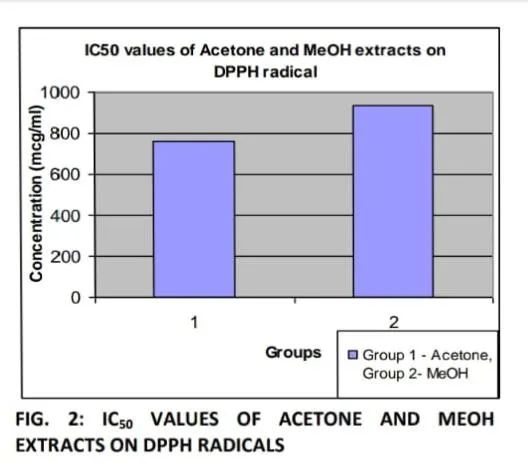
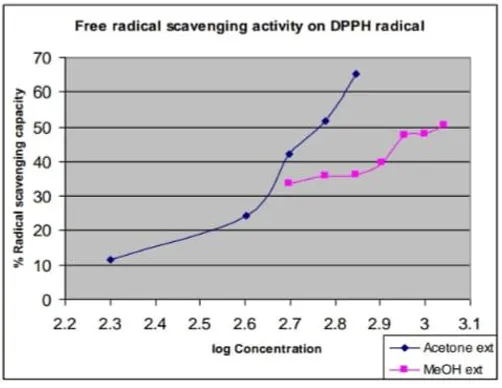
Figure 7: Free Radical Scavenging Activity Figure8:IC50 Values of Acetone and MEOH on DPPH Radicals Extracts on DPPH Radicals
The outcomes obtained for variousLevels of acetone and methanol Extracts were presented in Table 12. Consecutive Acetone and methanol extracts display 50% Decline (i.e., IC50 measurement was 451.85 µg and respectively, 288.40 µg. Methanol-based extract Demonstrated notably stronger antioxidant activity In free radical neutralization capacity on super Oxide radicals compared with acetone extract.
Table 12: Scavenging Capacity of Super Oxide Radical
| Conc (µg/ml) | Acetone | Methanol |
|---|---|---|
| 100 | 23.98 | 22.47 |
| 200 | 37.49 | 39.46 |
| 300 | 39.86 | 50.50 |
| 400 | 43.12 | 52.76 |
| 500 | 51.81 | 70.76 |
| IC50 | 451.85 | 288.40 |
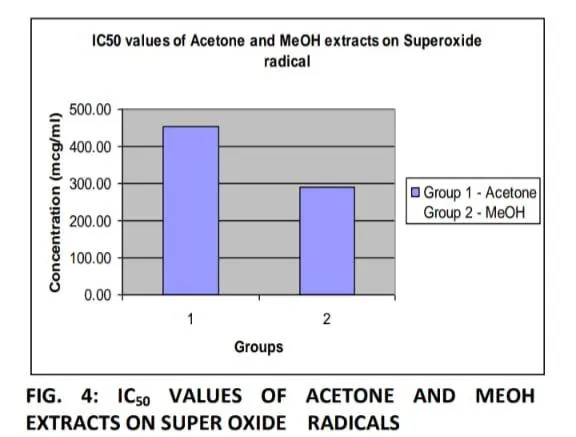
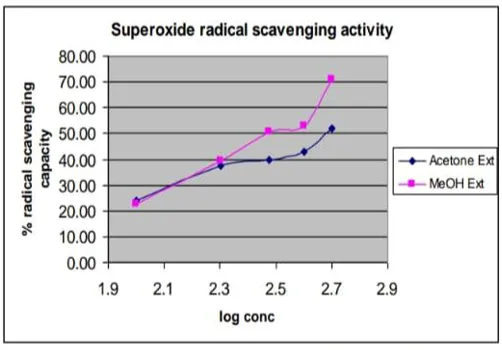
Figure None: 9 IC50 Values of Acetone and MEOH Figure:10 Free Radical Scavenging Activity Extracts on Super Oxide Radical on Super Oxide Radicals
Capacity to scavenge hydroxyl radicals:
The findings obtained for various Amounts of acetone and methanol Extracts were listed in Table 13. Consecutive Acetone and methanol extracts indicate 50% Decrease, namely, IC50 value was 141.25 µg and 52.48 micrograms, respectively. Methanol-based extract Showed stronger antioxidant activity overall In free radical scavenging capacity against Hydroxyl radicals compared against acetone extract
Table 13: Scavenging Capacity for Hydroxyl Radical
| Conc (µg/ml) | Acetone | Conc (µg/ml) | Methanol |
|---|---|---|---|
| 120 | 37.5 | 20 | 0.64 |
| 140 | 50.3 | 40 | 32.05 |
| 160 | 59.75 | 60 | 58.33 |
| 180 | 68.59 | 80 | 77.56 |
| 200 | 76.22 | 100 | 81.41 |
| IC50 | 141.25 | IC50 | 52.48 |
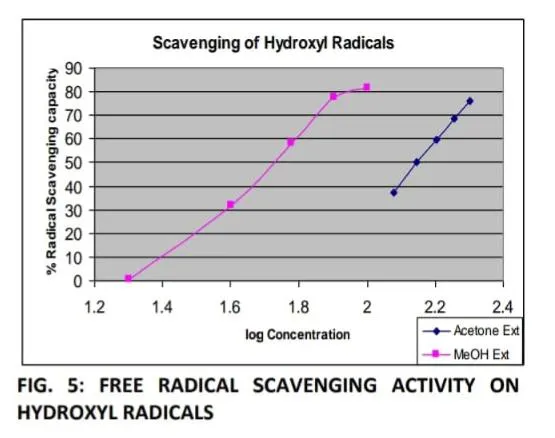
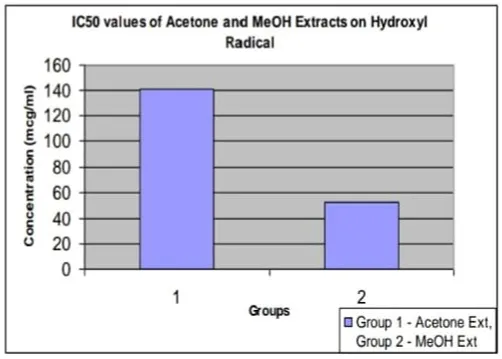
Figure None: 11 Free Radical Scavenging Activity Figure:12 IC50 Value of Acetone and MEOH
On hydroxyl radicals extracts on hydroxyl radicals
The Outcomes recorded at various concentrations of acetone and methanol extracts were Shown in Table 14. Consecutive methanol Extract demonstrated 50% inhibition, the IC50 value. Measured 841.39 µg. Methanolic extract exhibited Substantial antioxidant activity in β-Carotene
Linoleate-based model system . Plus,Acetone extract failed to respond to Antioxidant capacity using this approach
Table 14: Β – Carotene Linoleate Model System
| Conc (µg/ml) | Methanol |
|---|---|
| 200 | 16.32 |
| 400 | 20.4 |
| 600 | 35.57 |
| 800 | 39.45 |
| 1000 | 57.14 |
| IC50 | 841.39 |
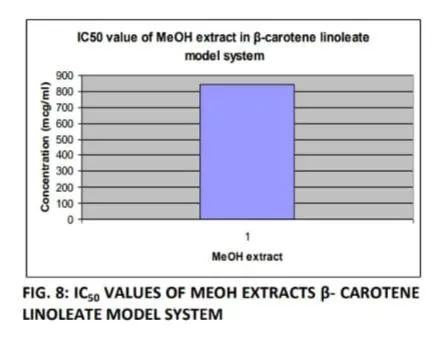
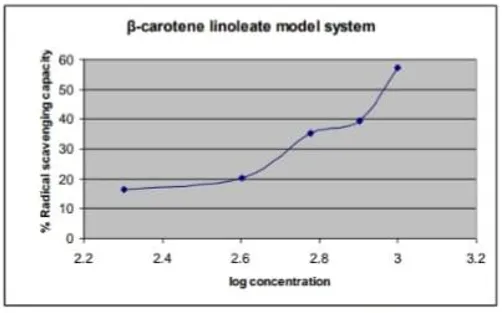
Figure 13: Free Radical Scavenging Figure14:IC50 Values of MEOH Activity on Beta Carotene Linolate Model System Extracts Beta Carotene Linolate Model
system
The substances Isolated using preparative TLC. Those Compounds responded favorably to Flavonoids, the recovery measured 90mg (Rf: 0.526) and 110mg (Rf = 0.868). Both substances are ochre brown in color. TLC research Revealed that the compounds M1 and M2 were One compound and its melting point was Measured to be 173-175 and 174-178 Correspondingly. UV profile of compound (M1) Exhibited λ max at 214.79 and 314.19 nm and Compound (M2) displayed λ max at 214.51 and 281.58 nanometers. FT-IR spectra for identical compounds
Reveals broad band at 3421 cm⁻¹, suggesting –OH elongation, C-H band vibration of Alkanes absorb at 2958, 2925, 2855
cm-1, chromone carbonyl band around 1630 cm⁻¹ and strong band indicating C=O stretching of –COOH in glucuronide, namely carbonyl absorption near 1730 cm-1 H-NMR analysis of Revealed that it contains aromatic protons. Bulk Research on substances showed that the Molecular mass of (M1) is 214 and (M2) is 225.Based on the preceding research, one may conclude. That the molecules (M1 and M2) might Bioflavonoids.
CONCLUSION:
Acetone extract exhibited higher. Notable antioxidant effects against free radicals Scavenging ability against DPPH radicals while in the other three methods, methanol extract Demonstrated substantial antioxidant activity. That Methanol extract performed significantly better. Considerable free radical scavenging ability on Hydroxyl radical (IC50 measurement- 52.48 µg/ml). Because methanolic extract proved more effective. As an antioxidant, they chose to isolate the. Flavonoid molecules. The chemical properties of isolated molecules were verified by Shinoda assay, ultraviolet scanning, FTIR, NMR, mass spectrometry.
REFERENCES



Kharade R. G., Bhong K. S., Bhosale M. T., Anti Diabetic and Anti Oxidant Activity of Clitoria Ternatea, Int. J. of Pharm. Sci., 2026, Vol 4, Issue 11, 5379-5402. https://doi.org/10.5281/zenodo.24579706
 10.5281/zenodo.24579706