

We use cookies to ensure our website works properly and to personalise your experience. Cookies policy
1,2,3,4 Department of Pharmaceutics Sanakar College of Pharmacy, NH-24 Ghaziabad
Artificial intelligence plays a crucial role today by assisting providers in patient care and supporting them in various intelligent healthcare systems. The technique shifts from computational knowledge to machine learning, which can assess complex medical data. AI is ubiquitous in Healthcare, which can be used in treatment, diagnosis, patient risk identification, and predicting the outcome of clinical scenarios. An overview of different intelligent techniques presented in this article is discussed with the receiver of clinical application, and future challenges of the current scenario of AI in Healthcare. Articles and internet searches were carried out using the keywords Artificial Intelligence and computational Healthcare. Further references were obtained from Data available on Google Scholar, PubMed, medical databases, and cross-referencing from key articles based on it. The results are also assessed using a variety of quality standards, including prediction accuracy and rate, based on the examination of several papers on disease diagnosis.
In 1950, the phrase "artificial intelligence" (AI) was initially used. However, their widespread use in medicine was hindered by a number of the early models' limitations. Many of these limitations were removed by profound learning by the middle of the 2000s. AI can be employed in clinical practice for better diagnostic accuracy as well as workflow efficiency using risk assessment models, bringing in a new era of medicine. AI systems now have the ability to self-learn and analyze intricate algorithms.[1]
The 1950s to 1970s
The development of machines skilled in making inferences or choices that could previously be made by humans was the primary focus of early AI. The initial arm of an industrial robot (Animate). In 1961, Animation (Danbury, USA, Connecticut) joined the General Motors manufacturing facility and performed automated die casting. Eliza was first developed by Joseph Weizenbaum in the year of 1964, a few years later. Eliza was able to imitate human conversation (superficial communication) via pattern matching and substitution in the processing of natural language, laying the foundation for future chatter bots.[2]
Shaky, also called "the first electronic person, “was created in 1966. This was the first mobile robot capable of comprehending commands, produced at the Stanford Research Institute. Instead of simply following orders in 1-step, Insecure had the option to handle more perplexing guidelines and do the proper activities. This marked a significant turning point in AI and robotics. In spite of these advancements in engineering, AI adoption in medicine was sluggish. However, this early phase was critical for digitizing data, laying the framework for AIM's future growth as well as application. The National Library of Medicine developed the Medical Literature for Retrieval System, an assessment system, and the internet, which served as important digital resources for the future acceleration of biomedicine. During this period, clinical informatics databases and medical record systems were created for the first time, setting the framework for future AIM improvements.[2,3] [Figure 1]
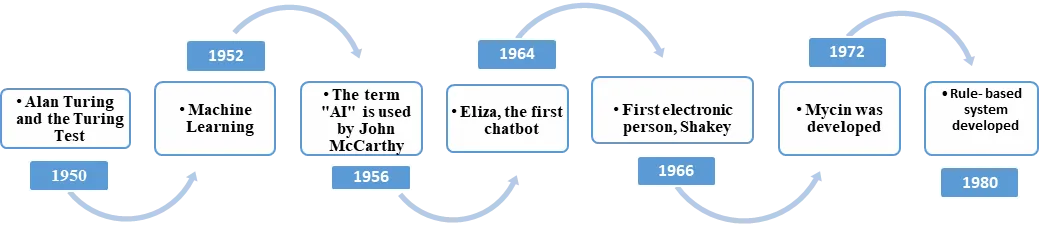
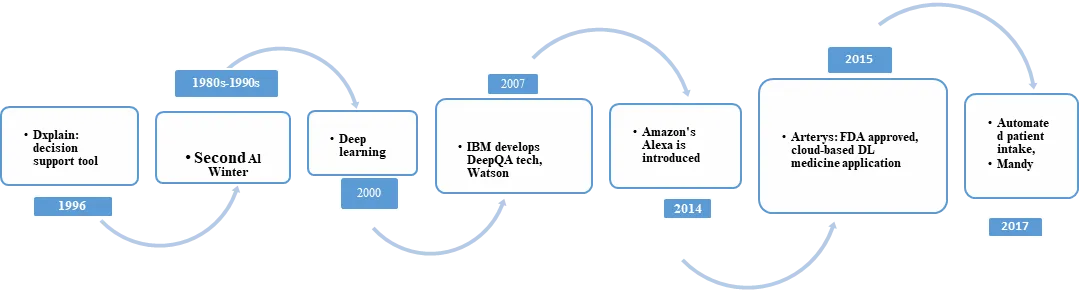
Figure: 1 - Timeline of artificial intelligence research and application in medicine.
The 1970s to 2000s
The majority of this time period is referred to as the "Simulated intelligence winter," meaning a time period of reduced financing and interest and resulting in less critical occurrences.[4] Many people acknowledge two major winters: the first began in the late 1970s due to perceived AI disadvantages, and the second began in the late 1980s and lasted into the early 1990s due to the high expense of establishing and maintaining expert digital information databases.[5] Despite the widespread lack of interest at the time, AI pioneers continued to work. As a result, in 1971, Saul Amarel established Rutgers University's Research Resource on Computers in Biomedicine. The Stanford College Clinical Exploratory Man-made brainpower in Medicine, a period shared PC framework, was made in 1973 and upgraded organizing capacities among clinical and biomedical scientists from a few organizations.[6] These relationships contributed significantly to the inaugural AIM workshop, which was sponsored by the National Institutes of Health and conducted at Rutgers University in 1975. These events commemorate the initial collaborations between AIM pioneers. The development of glaucoma consultation software based on the CASNET model was one of the first prototypes to illustrate the feasibility of applying artificial intelligence in medical practice.[7] The CASNET model is a causal-associational organization that consists of three different projects: model development, consultation, and a database that the collaborators created and maintained. Physicians could benefit from this model’s patient treatment recommendation by applying disease-specific information to individual patients. It was first publicly displayed in 1976 at the Academy of Ophthalmology convention in Las Vegas, Nevada. It was developed at Rutgers University. MYCIN, an artificial intelligence system that uses "backward chaining," was developed in the early 1970s. MYCIN might generate a list of potential bacterial pathogens and then offer antibiotic treatment alternatives that are tailored to a patient's body weight based on patient information entered by physicians and a knowledge base of roughly 600 rules. MYCIN served as the foundation for the future rule-based system, EMYCIN. INTERNIST-1 was later created to assist primary care physicians in diagnosis, using the same foundation as EMYCIN but with a wider medical knowledge base. The College of Massachusetts launched DXplain, an emotionally helpful network, in 1986. This application generates a differential conclusion based on inputted side effects. In addition, it functions as an electronic medical textbook, complete with supplementary references and detailed disease descriptions. When DXplain originally became available, it could provide information on around 500 disorders. Since then, the list has grown to include more than 2400 ailments. In addition to the aforementioned technological improvements, increasing interest in ML in the late 1990s opened the path for the contemporary era of AIM.[8]
From 2000 to 2020: seminal advances in AI
In 2007, IBM created Watson, an open-domain question-answering machine that finished first on the game program Jeopardy with human participants in 2011.[9] Deep QA used natural language processing and various searches to analyze data over unstructured content to generate likely answers, as opposed to traditional systems that used either forward reasoning (following rules from data to conclusions), backward reasoning (following rules from data to conclusions), or hand-crafted if-then rules.[10] This system was simpler to operate, less expensive, and more accessible. Deep QA technology could be used to give evidence-based medical solutions by analyzing data from a patient's electronic medical record and other electronic resources.As a result, it expanded the options for evidence-based clinical navigation. Bakker et al. effectively identified new RNA-binding proteins that changed in amyotrophic lateral sclerosis using IBM Watson in 2017. As a result of this impetus, digitalized medicine became more widely available, as did improved computer hardware and software, and AIM began to grow fast.[11] Natural language processing evolved chat bots, such as Eliza, into meaningful conversation-based interfaces. In 2011, Siri, Apple's virtual assistant, employed this technique, and Alexa, Amazon's virtual assistant, did the same in 2014. Pharmabot was a Chabot built in 2015 to facilitate prescription instruction for pediatric patients and their families, and Mandy was created in 2017 as an automated patient admittance process for an important consideration practice. DL indicated a considerable progression in Point. Unlike ML, which uses a fixed number of features and requires human input, DL may be trained to characterize material on its own.[12] Although DL was first investigated in the 1950s, the problem of "over fitting" hindered its application in medicine. Overfitting happens when machine learning (ML) is overly focused on a single dataset is unable to effectively process additional datasets. This can be caused by a lack of training data and inadequate computational power. These constraints were solved in the 2000s, when larger datasets and vastly improved processing power were available.[13] Convolution neural network (CNN) is a sort of deep learning algorithm used in image processing that replicates the activity of linked neurons in the human brain. A CNN is made up of several layers that look at an input image to discover patterns and apply specific filters. The final result is produced by combining all of the features using fully connected layers. Several CNN algorithms are currently available, including Google Net, Le-NET, VGG, Alex Net, and ResNet.[14]
CURRENT DEPARTMENT OF ARTIFICIAL INTELLIGENCE IN MEDICINE
Types of AI
When asked to define the many types of AI systems, you must categorize them based on how they operate. AI can be classified into the following categories based on its functionality:
Reactive Machine AI
This type of artificial intelligence includes machines that only consider current information. Responsive artificial intelligence robots are unable to create inferences from data in order to assess their future operations. They can carry out a restricted range of pre-defined tasks. The popular IBM Chess software, which defeated world champion Garry Kasparov, is an example of responsive artificial intelligence.[15]
Limited Memory AI
As the name implies, restricted Memory intelligence may make educated and further evolved decisions by focusing on past facts from its memory. Such artificial intelligence has a short or transitory memory that can be used to store previous contacts and hence evaluate future activity. Self-driving cars have limited memory computer-based intelligence that uses knowledge obtained in the recent past to make quick decisions. Self-driving vehicles, for example, employ sensors to discern between pedestrians, steep roadways, and traffic lights in order to make smarter driving decisions. This helps to prevent any future disasters.[16]
Theory of Mind AI
The Psyche Simulated Intelligence Hypothesis describes a more advanced form of man-made consciousness. This classification of machines is expected to play an important role in brain science. This type of artificial intelligence will focus mostly on the ability to understand humans at a deep level in order to better grasp human acceptance and contemplation. The Hypothesis of Psyche-simulated intelligence has not yet been fully developed, although extensive research is underway.[17]
Self-Aware AI
How about we simply beg that we do not enter the realm of computer-based intelligence, in which robots have their own cognizance and become mindful. Given the current state of affairs, this type of artificial intelligence seems a bit ridiculous. Nonetheless, reaching a level of brilliance may be possible in the future.[18] Virtuosos such as Elon Musk and Stephen Peddling have consistently warned us about the rise of computer-based intelligence. Tell me your thoughts on this in the comments section. Simulated intelligence is a massive discipline that encompasses a wide range of topics such as artificial intelligence, profound advancements, and more. In the section below, I've discussed the various branches of artificial intelligence.[19]
AI in disease diagnosis
Specialists have used various simulated intelligence-based processes, such as machine and deep learning models, to identify diseases such as skin, liver, heart, Alzheimer's, and so on, which should be investigated early. As a result, in related work, methodologies for disease analysis, such as the Boltzmann machine, K nearest neighbor (kNN), support vector machine (SVM), decision tree, calculated relapse, fluffy rationale, and counterfeit brain organization, are introduced, along with their accuracy.[20] It used a back-distributed neural network to diagnose skin diseases with the highest level of precision. Alfian et al. (2018) presented a tailored medical care monitoring framework based on Bluetooth-based sensors and continuous data handling. It collects the client's important bodily functions information, such as pulse, weight, and blood glucose, from sensor hubs and sends it to a cell phone, providing an overview of the types of information encountered during the course of chronic illness.[21]
AI IN DRUG DISCOVERY
The vast substance space, which includes over 1060 particles, fosters the development of a massive number of pharmaceutical atoms. However, the lack of cutting-edge technologies limits the medicine development process, making it a time-consuming and expensive endeavour that can be addressed by applying simulated intelligence. Man-made intelligence can identify hit and lead compounds, allowing for faster approval of drug targets and simplifying of medication structure plans.[22] Figure 2 depicts various AI-based drug discovery applications.[Figure 2]
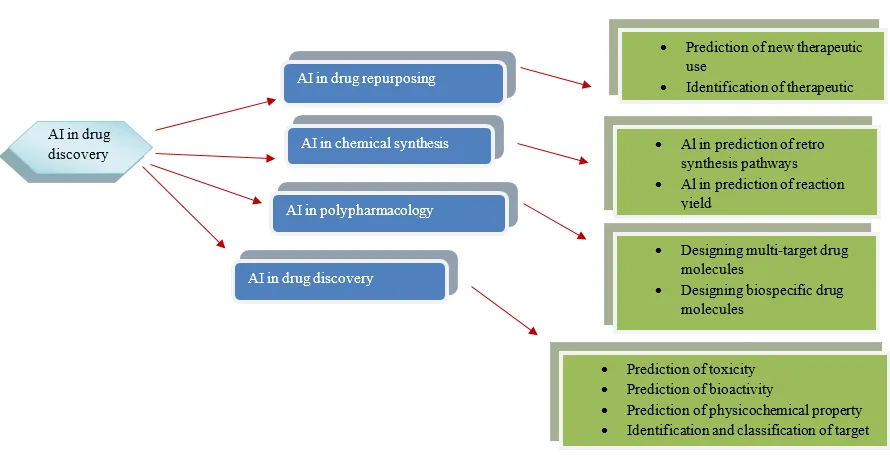
Figure 2: Artificial intelligence in drug discovery with various underlying department
AI IN MANAGEMENT OF HEALTHCARE DATA
As of late, big data analysis has various options for providing high-level thinkingto individuals as well as decision-making needs in the healthcare system. The use of huge information in health services refers to electronic datasets that can be challenging to manage using standard equipment, programming, devices, and methodologies. Dealing with information. Medical care involves a large amount of information, including clinical details, notes, CT and X-ray images, research facility information, pharmacy records, protection documents, and EPR data.[23]
This involves a massive amount of information. Various analysts have recommended additional ways of dealing with this type of information. In any event, there is a lack of understanding about the most reasonable structure in light of the computational systems required for this methodology. As a result, large data researchers now have access to a massive amount of information related to medical treatment. Understanding the benefits and weaknesses of this, massive information examination must be enhanced to save lives and reduce the cost of handling information.[24] [Figure 3]
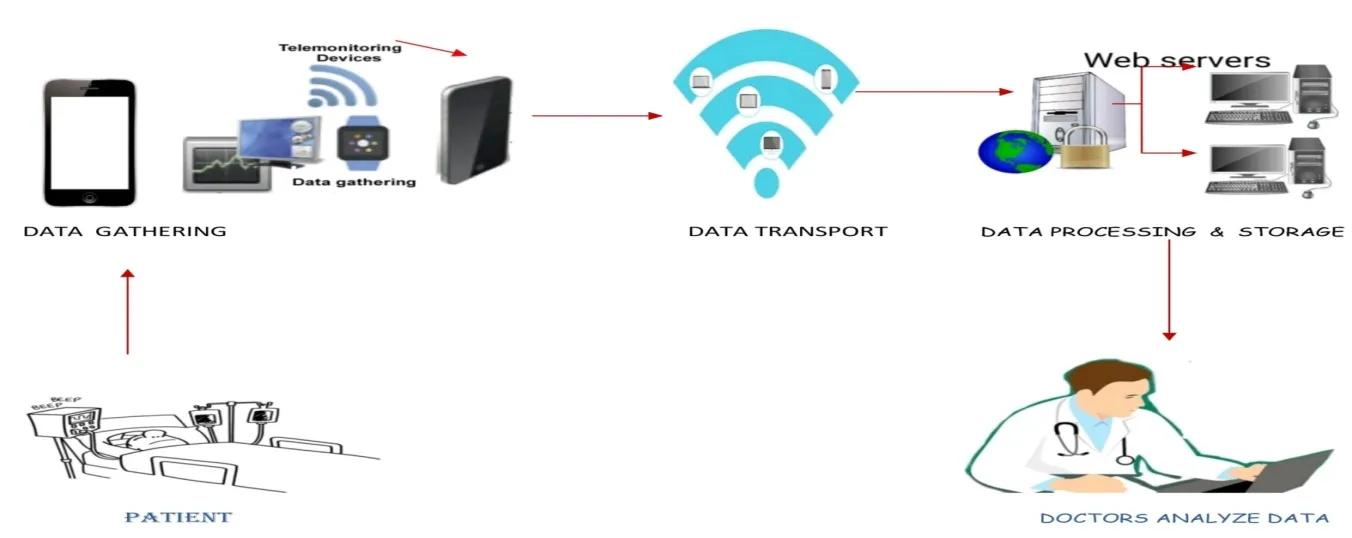
Figure: 3 AI in management and analysis of patient data by doctors
CHALLENGES & FUTURE DIRECTIONS OF ARTIFICIAL INTELLIGENCE IN MEDICINE
Notwithstanding noteworthy conceivable outcomes, the genuine implementation of artificial intelligence-enabled arrangements in clinical practice is still restricted. Other than protection challenges, computer based intelligence innovation additionally presents other specialized and systemic weaknesses. Here are the top difficulties of computer based data in healthcare.[25]
Clinicians require high-quality datasets for the specialized and clinical approval of simulated intelligence models. Nonetheless, because of the discontinuity of the information available clinically across a few electronic health records as well as programming stages, acquiring patient’s data as well as pictures to test computer-based intelligence estimates becomes challenging. Another challenge is that the clinical data from a single organization may not be applicable to different stages because of accessibility concerns. To build how much data is accessible for evaluating artificial intelligence frameworks, the healthcare system should focus on ways for standardizing clinical data.[26]
2. Clinically Irrelevant Performance Metrics
The actions utilized to measure a simulated intelligence model's prosperity are not really adaptable to clinical settings. The man-made intelligence gap refers to the difference between clinical viability and simulated test accuracy. To stay away from this hole, engineers and clinicians ought to team up to examine how computer-based intelligence calculations improve patient care. To do this, they can evaluate computer based intelligence models for precision utilizing choice bend investigation. This strategy empowers them to assess the clinical value of an expectation model by looking at the datasets and assessing the possibilities of a computer-based intelligence model's outcome in reality.[27]
3. Methodological Research Flaws
There is insufficient laid out philosophies, planned examination, or companion checked on investigations of computer based intelligence in medical care. Most of the studies have been reviewed and in view of verifiable patient clinical records. In any case, to understand the genuine worth of man-made intelligence analysis in true settings, doctors should concentrate on ebb and flow patients over the long haul, and that implies forthcoming research. Furthermore, for dependable planned research, specialists ought to screen the strength of their patients by joining actual assessments with telehealth visits and remote checking advancements (sensors and trackers).[28]
FUTURE OF AI IN MEDICINE
Despite the limitations mentioned above, artificial intelligence appears well-positioned to transform the medical services industry. Computer-based intelligence frameworks can help save time for busy specialists by interpreting notes, entering and organizing understanding information into entries (such as EPIC), and diagnosing patients, potentially serving as a method for providing a second assessment to doctors.[29] Falsely wise frameworks can also help patients with follow-up care and access to professionally recommended prescription options. Simulated intelligence can also diagnose patients, expanding clinical benefits beyond the world's largest metropolitan areas. The future of simulated intelligence in medical care is dazzling and hopeful, but much remains to be done.[30] The employment of misleadingly sophisticated systems in clinical advantages for use by the general public is mostly ignored. Actually, the FDA (U.S Food and Drug Association) approved Alive or's Kardiaband (in 2017) and Apple's Sagacious Series 4 (in 2018) to detect atrial fibrillation. The utilization of a sagacious is an underlying push toward interacting with people in order to obtain individual well-being data and engage swift mediations from the patient's clinical aid groups.[31]
There are numerous negative impacts of modern innovation on emotional well-being. Nonetheless, researchers at the University of Southern California (USC), in collaboration with the Safeguard Progressed Exploration Ventures Organization and the United States Armed Forces, discovered that people suffering from post-traumatic stress disorder and other forms of mental distress are more open to discussing their interests with virtual people than genuine people who are paranoid about being judged.[32] This examination provides promising effects for the task of menial assistants, resulting in an assortment of legitimate responses from patients that may be useful for specialists to analyze and treat their patients more correctly and with better data.[33]
Mostly, the worldwide drug organizations have put away their time and cash on involving simulated intelligence for drug development of significant diseases, like cancer or cardiovascular disease.In any event, the development of models for identifying neglected tropical illnesses (jungle fever and tuberculosis) and unusual illnesses is mostly overlooked.[34] The FDA is currently encouraging organizations to develop novel medications for certain infections using voucher programs. Given the impact that simulated intelligence and AI are having on our larger environment, computer-based intelligence should be part of the educational program for a wide range of space specialists. This is especially true in healthcare settings, where making an incorrect decision might be fatal.[35] As distinguished here, there is a great deal of subtlety in how a man-made intelligence framework is constructed. Understanding this cycle and the decisions it involves is significant for proper utilization of this computerized framework. The information used to gain from and the streamlining procedures utilized profoundly affect the pertinence of the simulated intelligence framework to tackle a specific issue. A comprehension and enthusiasm for these plan choices are significant for a clinical career.[36]
Simulated intelligence can possibly assist with fixing a considerable number of medical services' most serious issues; however, we are still far from making this possible. There is a major issue as well as boundary for making this happen. We can also create every one of the promising advancements and AI calculations however, without adequate and very much addressed information; we can't understand the full potential of simulated intelligence in medical services.[37] The medical services industry requires for the clinical records to discuss and agree on the normalization of the data basis. It is necessary to develop an ironclad structure to protect confidentiality and manage patient consent. Without these drastic reforms and cooperation in the medical services business, it would be difficult to achieve artificial intelligence's genuine dedication to improving human well-being.[38]
Assisting Healthcare
To work with a better comprehension of clinical terms and clinical language. This not just has the ability to change how medical services experts cooperate with EHRs, but additionally assists patients with understanding their particular life systems and constitution get more drawn in with the care process, and stick to medicine. With the assistance of simulated intelligence, Amazon's Reverberation and Google's Home may before long become fit for leading distant video talks with doctors and performing visual sweeps. With artificial intelligence, gathering information from wearables and sharing these records could aid in determination.[39,40]
The Future is Almost Here
AI vs. Humans
Artificial intelligence is becoming as reliable as doctors in diagnosing ailments. Scientists at a clinic in Oxford, Britain, have created simulated intelligence for anticipating coronary illness. As per their review, in 80% of the cases, the innovation performed better compared to specialists in anticipating cardiovascular diseases. In the interim, researchers at Harvard Clinical School have fostered an AI-based magnifying lens that can recognize lethal blood diseases with a surprising 95% exactness.
CONCLUSION
Artificial Intelligence (AI) is rapidly transforming practices in medicine, including treatment, diagnosis, and the healthcare system. According to recent evaluations, AI systems have already shown expert-level performance in drug discovery, surgical support, medical imaging, and patient outcome prediction. AI promises faster disease identification, more individualized treatment strategies, and improved healthcare delivery efficiency by utilizing massive databases and sophisticated algorithms. However, there is still an uneven path from successful pilot research to extensive clinical adoption. Data privacy issues, algorithm bias and openness, the requirement for robust clinical validation, and integration into actual processes are some of the main challenges. AI must support human physicians rather than take their place in order to fully realize its potential. This requires proper governance, legal frameworks, and training to uphold safety and foster confidence. When AI is applied fairly, across a range of demographics and environments, rather than only in high-resource areas, the greatest impact will be attained. In conclusion, AI in medicine is a current reality that is being developed rather than a vision of the future. It has the potential to expand access, improve patient care, and also improve affordability in the new era of the healthcare system with responsible growth and implementation—all the while preserving the fundamental human values of medicine.
CONFLICT OF INTEREST
The authors have no conflicts of interest regarding this investigation.
REFERENCES

Somya, Dr. Swati Mittal, Siddhi Gaur, Babita Kumar, Artificial Intelligence Innovations in Medical Science, Int. J. of Pharm. Sci., 2026, Vol 4, Issue 9, 2698-2709. https://doi.org/ 10.5281/zenodo.22902684
 10.5281/zenodo.22902684