

We use cookies to ensure our website works properly and to personalise your experience. Cookies policy
DES Dayanand College of Pharmacy, Latur. Maharashtra, India
Colocasia esculenta (L.) Schott is a widely cultivated tropical tuber crop valued not only as a staple food but also as a medicinal plant with diverse therapeutic potential. Traditionally, different parts of the plant have been employed in the treatment of gastrointestinal disorders, inflammation, skin diseases, diabetes, respiratory ailments, and wound healing. Growing scientific interest has revealed that C. esculenta contains numerous bioactive constituents, including phenolic acids, flavonoids, tannins, saponins, polysaccharides, phytosterols, carotenoids, and other secondary metabolites responsible for its biological activities. This review summarizes current knowledge on the botanical characteristics, geographical distribution, phytochemical profile, ethnopharmacological significance, nutritional value, and pharmacological properties of C. esculenta. Experimental investigations have demonstrated promising antioxidant, anti-inflammatory, antimicrobial, antidiabetic, hepatoprotective, antihyperlipidaemic, gastroprotective, immunomodulatory, anticancer, wound-healing, anti-obesity, and antimalarial activities. Furthermore, the nutritional composition of taro supports its application as a functional food and nutraceutical ingredient. Despite encouraging preclinical evidence, additional studies are required to standardize extraction procedures, identify active constituents, elucidate molecular mechanisms, establish safety profiles, and confirm therapeutic efficacy through well-designed clinical investigations. Overall, C. esculenta represents a promising natural resource for the development of novel phytopharmaceuticals, functional foods, and evidence-based therapeutic products.
Medicinal plants continue to play a significant role in modern healthcare owing to their rich reservoir of bioactive compounds and their long history of use in traditional medicine. In recent decades, increasing concerns regarding adverse effects associated with long-term use of synthetic drugs, together with growing consumer preference for natural health products, have stimulated extensive research into plant-derived therapeutics. Consequently, numerous edible plants that were once valued primarily as food sources are now being investigated as functional foods and nutraceuticals because of their potential to promote health and prevent chronic diseases [1,2].
Colocasia esculenta (L.) Schott, commonly referred to as taro, is an important tropical tuber crop belonging to the family Araceae. The plant is cultivated extensively throughout Asia, Africa, Oceania, and several other tropical and subtropical regions, where it serves as both a staple food and a valuable agricultural commodity. Among its different plant parts, the underground tuber (corm) is the most widely consumed because of its high starch content, desirable cooking properties, and favourable nutritional composition. Traditional medicinal systems have also recognized the tuber for its potential health benefits, employing it in the management of digestive disorders, inflammatory conditions, skin ailments, metabolic disturbances, and general weakness [3-6].
Beyond its nutritional importance, the tuber has attracted growing scientific interest due to the presence of numerous biologically active constituents. Phytochemical investigations have identified diverse classes of compounds, including phenolic acids, flavonoids, tannins, saponins, phytosterols, terpenoids, and polysaccharides, which collectively contribute to the plant's biological properties. Modern analytical techniques such as HPLC, GC–MS, LC–MS/MS, and FTIR have facilitated detailed characterization of these constituents and improved understanding of their pharmacological significance [4-8].
Experimental studies performed over the last decade have demonstrated that C. esculenta tuber possesses a wide range of biological activities, including antioxidant, anti-inflammatory, antimicrobial, antidiabetic, hepatoprotective, antihyperlipidaemic, immunomodulatory, gastroprotective, and wound-healing effects. These pharmacological activities are believed to result from the synergistic interaction of multiple phytochemicals rather than a single bioactive constituent. Such findings support many of the traditional medicinal uses of the plant and indicate its potential for future pharmaceutical development [5,7].
In addition to pharmaceutical interest, the nutritional characteristics of taro tubers have created new opportunities for their use in functional foods and nutraceutical products. The presence of resistant starch, dietary fibre, essential minerals, and easily digestible carbohydrates has led to increasing investigation of taro as a health-promoting food ingredient. Recent research has also explored its application in gluten-free products, infant nutrition, biodegradable starch-based materials, and value-added food formulations, indicating that its importance extends beyond conventional dietary use [6,11,12].
Although several publications have summarized the medicinal properties of Colocasia esculenta, the available information remains dispersed across studies focusing on phytochemistry, nutrition, pharmacology, and food science. Furthermore, recent advances in phytochemical characterization, food technology, and experimental pharmacology have generated substantial new evidence that warrants an updated synthesis. Therefore, a comprehensive review integrating these multidisciplinary findings is essential to provide a clearer understanding of the current scientific status of C. esculenta tuber and to identify priorities for future research [3,5,6,8].
The present review critically summarizes the available evidence on the botanical characteristics, nutritional composition, phytochemical profile, pharmacological activities, safety considerations, and emerging applications of Colocasia esculenta tuber. It also highlights current research gaps and discusses future perspectives for the development of standardized phytopharmaceuticals, nutraceuticals, and evidence-based therapeutic products derived from this economically and medicinally important plant.

Fig 1: Colocasia esculenta leaf
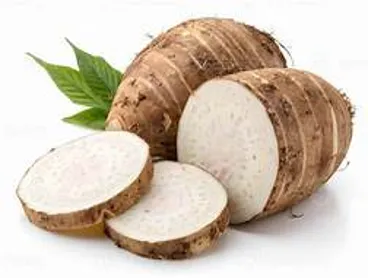
Fig 2: Colocasia esculenta Tuber
2. Botanical Aspects
2.1 Botanical Classification
Colocasia esculenta (L.) Schott is a monocotyledonous, herbaceous perennial belonging to the family Araceae, a family that includes numerous economically important aroid species. The crop is cultivated mainly for its edible underground corm, which is widely consumed as a starchy food and has attracted considerable attention because of its nutritional and medicinal value. The plant is well adapted to humid tropical and subtropical climates and exhibits remarkable adaptability to diverse agroecological conditions, making it an important food crop in many developing countries [3-6,11].
Table 1. Taxonomic classification of Colocasia esculenta [3-6].
|
Taxonomic rank |
Classification |
|
Kingdom |
Plantae |
|
Division |
Magnoliophyta |
|
Class |
Liliopsida |
|
Order |
Alismatales |
|
Family |
Araceae |
|
Genus |
Colocasia |
|
Species |
Colocasia esculenta (L.) Schott |
2.2 Common and Vernacular Names[3,5,13,14]
Because of its widespread cultivation, C. esculenta is known by numerous local names across different geographical regions. The diversity of vernacular names reflects its cultural and agricultural importance.
Table 2. Common and Vernacular Names
|
Language |
Name |
|
English |
Taro, Cocoyam, Eddoe |
|
Hindi |
Arbi |
|
Marathi |
Alu |
|
Sanskrit |
Aluka |
|
Tamil |
Seppankizhangu |
|
Telugu |
Chamadumpa |
|
Kannda |
Kesu |
|
Malayalam |
Chembu |
|
Bengali |
Kochu |
2.3 Geographical Distribution
The exact centre of origin of C. esculenta remains uncertain; however, Southeast Asia is widely considered one of its primary centres of domestication. Today, the crop is cultivated in more than 50 countries across Asia, Africa, Oceania, the Caribbean, and South America. Major producing countries include China, India, Nigeria, Cameroon, Ghana, Indonesia, Japan, the Philippines, Fiji, Papua New Guinea, and several Pacific Island nations. The plant thrives in warm, humid climates with temperatures between 20 and 35°C and grows best in fertile, well-drained loamy soils rich in organic matter. It is commonly cultivated in rain-fed fields, irrigated farmlands, wetlands, and paddy ecosystems because of its high tolerance to moisture. [3-6,11].
2.4 Morphological Characteristics
Colocasia esculenta is a herbaceous perennial that develops from a swollen underground corm, commonly referred to as the tuber. The corm is generally spherical to cylindrical, covered with a fibrous brown outer layer, and contains white to cream-coloured flesh rich in starch granules. Secondary cormels are produced around the main corm and contribute to vegetative propagation.
The leaves are large, heart-shaped (cordate), peltate, and arranged spirally on long succulent petioles arising directly from the corm. Depending on the cultivar, leaf blades may range from 20 to 60 cm in length and exhibit a glossy green surface with prominent veins. Petioles vary in colour from green to purple and contain extensive aerenchyma tissue that facilitates gas exchange in waterlogged conditions.
The inflorescence consists of a spadix enclosed within a spathe, a characteristic feature of the Araceae family. Female flowers occupy the basal portion of the spadix, while male flowers are positioned above them, separated by a sterile zone. Under cultivated conditions flowering is relatively infrequent, and the crop is propagated primarily through corms or cormels. The root system is fibrous and shallow, enabling efficient absorption of water and nutrients while contributing to soil stabilization. [3-6]
2.5 Habitat and Ecology
Colocasia esculenta is well adapted to tropical and subtropical environments characterized by high rainfall, elevated humidity, and moderate to warm temperatures. Although the plant can tolerate temporary flooding, optimum growth occurs under consistently moist but well-drained soil conditions. It requires abundant sunlight for vigorous vegetative growth but also performs satisfactorily under partial shade. The crop exhibits considerable ecological plasticity, allowing cultivation in upland fields, wetlands, riverbanks, and paddy systems. Its extensive root network helps reduce soil erosion and improve soil structure, while the dense canopy contributes to moisture conservation and suppression of weed growth. [5,6,11].
2.6 Ecological Adaptation
The species thrives under temperatures ranging from approximately 20°C to 35°C and requires a consistently moist environment for optimum growth and corm development. Deep, fertile, well-drained loamy soils with high organic matter content favour maximum yield. Besides its agricultural value, C. esculenta contributes to ecosystem stability by reducing soil erosion, improving soil structure through its fibrous root system, and maintaining soil moisture under dense canopy conditions [5,6,11].
2.7 Agricultural and Economic Importance
Taro is recognised as one of the most important tropical root crops because of its dual role as a nutritious food source and a raw material for industrial applications. The corm is rich in digestible starch, dietary fibre, vitamins, and essential minerals, making it valuable for the preparation of infant foods, gluten-free products, and functional food formulations. Increasing interest in natural products has further expanded its potential applications in nutraceutical, pharmaceutical, and food-processing industries, thereby enhancing its economic significance for farmers and the agricultural sector [5,6,12].
3. Phytochemical Composition of Colocasia esculenta [4–10,20].
Different parts of Colocasia esculenta contain diverse phytochemical constituents that contribute to its nutritional and pharmacological properties. The concentration and composition of these compounds vary depending on the plant part, extraction solvent, geographical location, and stage of growth.
Table 3 . Distribution of Major Phytochemical Constituents in Different Parts of Colocasia esculenta [4–10,18–20].
|
Plant part |
Major phytochemical constituents |
Reported biological significance |
|
Corm (Tuber) |
Phenolic acids (gallic, chlorogenic, caffeic, ferulic acids), flavan-3-ols (catechin, epicatechin), flavonoids, tannins, saponins, phytosterols, polysaccharides, resistant starch |
Contributes to antioxidant, anti-inflammatory, antimicrobial, hepatoprotective, and metabolic health-promoting activities |
|
Leaves |
Polyphenols, flavonoids, carotenoids, anthocyanins, ascorbic acid, dietary fibre, calcium oxalate crystals |
Associated with antioxidant activity, glucose regulation, antimicrobial effects, and wound repair |
|
Petiole |
Phenolic compounds, flavonoids, mucilage, glycosides, sterols |
Reported to possess antioxidant and anti-inflammatory properties and may serve as a source of dietary fibre |
|
Cormels |
Starch, resistant starch, phenolic compounds, flavonoids, dietary fibre |
Important nutritional reserve with antioxidant potential and functional food applications |
|
Roots |
Phenolic constituents, flavonoids and carbohydrate polymers |
Involved in plant defence mechanisms and exhibit antioxidant potential |
4. Ethnopharmacology
Colocasia esculenta (L.) Schott has been traditionally used in Asia, Africa, and the Pacific Islands for both nutritional and medicinal purposes. The tuber is commonly used to support digestive health and general well-being, whereas the leaves are traditionally employed for wound healing, inflammation, and skin disorders. Various parts of the plant have also been used in the management of diarrhoea, fever, diabetes, and hypertension. These traditional applications have encouraged scientific studies that support several of its reported pharmacological properties [2–5,13,14].
Table 5. Traditional Ethnomedicinal Uses of Colocasia esculenta
|
Plant part |
Traditional preparation |
Ethnomedicinal use |
|
Leaves/ Petiole |
Fresh juice |
Applied externally to control bleeding, treat earache, inflamed glands, and wounds; also used as a stimulant, expectorant, and astringent. |
|
Corm (Tuber) |
Decoction
|
Used to manage diarrhoea, constipation, piles, internal haemorrhage, and as a mild analgesic, demulcent, laxative, and galactagogue. |
|
Cooked Corm |
Mucilage |
Consumed as a nutritive and nervine tonic to relieve body weakness and fatigue. |
|
Leaves/ Petiole |
Paste or juice |
Applied topically for wound healing, skin disorders, and haemostatic (styptic) purposes. |
|
Whole Plant |
Extracts/ Traditional preparations |
Traditionally used in the management of asthma, arthritis, urinary disorders, and gastrointestinal complaints. |
|
Petiole/ Leaves |
Decoction |
Used in folk medicine to improve respiratory health and reduce excessive sputum production. |
5. Pharmacological Activities
Table 6. Summary of Pharmacological Activities of Colocasia esculenta
|
Pharmacological activity |
Plant part |
Major bioactive constituents |
Key findings |
References |
|
Antioxidant |
Leaves, corm |
Phenolic acids, flavonoids, anthocyanins, carotenoids |
Strong free radical scavenging activity, reduced oxidative stress, and enhanced endogenous antioxidant defense. |
[2,3,7,8,10] |
|
Anti-inflammatory |
Leaves, corm |
Flavonoids, phenolic acids, alkaloids |
Suppressed inflammatory mediators and reduced edema in experimental models. |
[2,4,8] |
|
Antimicrobial |
Leaves, corm |
Flavonoids, tannins, saponins, phenolics |
Inhibited the growth of Gram-positive, Gram-negative bacteria and pathogenic fungi. |
[2,7,8,10] |
|
Hepatoprotective |
Leaves, corm |
Polyphenols, flavonoids, carotenoids |
Restored liver enzyme levels and protected hepatic tissue against toxic injury. |
[2,8,16] |
|
Antidiabetic |
Leaves, corm, petiole |
Polyphenols, flavonoids, dietary fibre |
Lowered blood glucose, inhibited carbohydrate-hydrolyzing enzymes, and improved insulin sensitivity. |
[2,8,9] |
|
Antihyperlipidemic |
Corm |
Polyphenols, saponins, dietary fibre |
Improved serum lipid profile by reducing cholesterol and triglycerides while increasing HDL levels. |
[3,5,8] |
|
Anticancer |
Leaves, corm |
Flavonoids, anthocyanins, phenolics |
Inhibited cancer cell proliferation, induced apoptosis, and suppressed tumor progression. |
[2,8] |
|
Diuretic |
Leaves, corm |
Potassium salts, flavonoids, saponins |
Increased urine output and electrolyte excretion in experimental animals. |
[2,8] |
|
Immunomodulatory |
Leaves, corm |
Flavonoids, phenolics, polysaccharides |
Enhanced immune cell function and modulated cytokine production. |
[2,8] |
|
Anti-obesity & Metabolic regulation |
Corm |
Dietary fibre, saponins, polyphenols |
Reduced body weight gain and improved glucose and lipid metabolism. |
[3,5,8] |
|
Antimalarial |
Leaves, corm |
Flavonoids, tannins, phenolics |
Demonstrated moderate antiplasmodial activity against Plasmodium falciparum. |
[2,8] |
|
Wound healing |
Leaf stalk (petiole), leaves, corm |
Flavonoids, phenolic compounds, saponins, tannins |
Accelerated wound contraction, promoted epithelialization, reduced wound size and healing time, and enhanced tissue regeneration in burn and excision wound models. |
[2,8,15] |
|
Anti-ulcer (Gastroprotective) |
Corm (Tuber) |
Flavonoids, phenolic compounds, tannins, saponins |
Reduced gastric ulcer index, protected the gastric mucosa, decreased gastric acidity, and promoted mucosal healing through antioxidant and cytoprotective mechanisms. |
[2,8] |
CONCLUSION
Colocasia esculenta (L.) Schott is a nutritionally valuable tuber crop with significant therapeutic potential, supported by its rich phytochemical composition and extensive traditional use. Scientific investigations have demonstrated a wide range of pharmacological activities, including antioxidant, anti-inflammatory, antimicrobial, antidiabetic, hepatoprotective, anticancer, wound healing, gastroprotective, immunomodulatory, and antihyperlipidemic effects. These biological activities are largely attributed to the presence of phenolic compounds, flavonoids, tannins, saponins, polysaccharides, and other bioactive constituents. Despite encouraging preclinical findings, clinical evidence remains limited, and further studies are required to identify active compounds, clarify molecular mechanisms, establish safety profiles, and validate therapeutic efficacy in humans. Future research should also focus on standardization of extracts, quality control, pharmacokinetic evaluation, and well-designed clinical trials to facilitate the development of safe and effective herbal formulations derived from C. esculenta. [2,3,5,8].
REFERENCES


Vishwajit Buwa, Ingle P. V., Wadulkar R. D., Satpute K. L., Pandit A. K, Utekar V. S, Mali Y. A, Jadhav P. S., Kamble N. R., Colocasia esculenta (L.) Schott Tuber: Phytochemistry, Ethnomedicinal Uses, Pharmacological Activities, and Therapeutic Prospects, Int. J. of Pharm. Sci., 2026, Vol 4, Issue 7, 4388-4395. https://doi.org/10.5281/zenodo.21484469
 10.5281/zenodo.21484469