

We use cookies to ensure our website works properly and to personalise your experience. Cookies policy
Shiva Trusts Godavari College of, Pharmacy, Manori, Nashik,.
The management of diabetes mellitus often requires long-term insulin therapy to maintain optimal blood glucose levels. However, the need for daily insulin injections can create challenges related to treatment adherence, patient convenience, and quality of life. The development of once-weekly basal insulin formulations represents an innovative approach aimed at simplifying insulin administration while ensuring effective glycemic control. Among these agents, insulin icodec has shown promising results in clinical studies, demonstrating efficacy comparable to traditional daily basal insulin analogues. By providing a prolonged duration of action, once-weekly insulin reduces injection frequency and may enhance patient acceptance and adherence to therapy. Clinical evidence suggests that it can achieve meaningful reductions in HbA1c levels with an acceptable safety profile, including a risk of hypoglycemia comparable to existing basal insulin treatments when appropriately titrated. Furthermore, the reduced treatment burden associated with weekly administration may improve patient satisfaction and overall diabetes management. Despite these advantages, careful patient selection, education, and dose adjustment remain important to optimize therapeutic outcomes. Once-weekly insulin has the potential to transform diabetes care by offering a more convenient and patient-centered treatment option while maintaining effective metabolic control.
For people living with type 1 diabetes (T1D), strict glycaemic regulation necessitates intensive insulin replacement therapy. Such management is generally provided through a regimen of multiple daily injections combining basal and bolus insulin or through continuous insulin pump therapy [1] Once-weekly insulin icodec has emerged as an innovative therapeutic option in diabetes care, aiming to reduce the burden associated with daily insulin administration. The decreased injection frequency may improve patient compliance and overall quality of life, especially among individuals who find routine injections difficult to maintain. Clinical studies within the ONWARDS program have shown that insulin icodec achieves glycaemic outcomes similar to those of widely used daily basal insulin analogues such as insulin glargine and insulin degludec. By aligning with patient-centred treatment strategies, this approach offers greater convenience and may encourage sustained adherence, particularly in older patients with type 2 diabetes and those affected by injection-related distress.[2] The development of insulin icodec, a once-weekly basal insulin analogue, has involved a comprehensive clinical evaluation program conducted over multiple stages. Initial first-in-human studies, carried out between 2018 and 2019, examined its pharmacokinetic characteristics, safety profile, and prolonged duration of action. Following these early investigations, Phase 2 clinical trials were performed during 2019 and 2020 to identify appropriate dosing strategies and assess its effectiveness and safety relative to established basal insulins, including insulin glargine. Subsequently, the large-scale Phase 3 ONWARDS clinical development program was initiated in 2020 and 2021. This international research program consisted of six major trials (ONWARDS 1-6) involving thousands of participants and was designed to evaluate the efficacy, safety, and tolerability of once-weekly insulin icodec in a broad range of adults with diabetes.[3] Clinical trials examining conversion from once-daily basal insulin to once-weekly insulin icodec have generally employed a dosing method in which the weekly icodec dose corresponds to seven times the pre-existing daily basal insulin dose. Due to the extended pharmacokinetic profile of icodec, participants received a one-time loading dose equivalent to an additional 50% of the calculated weekly amount at treatment initiation. This strategy was designed to accelerate the achievement of steady-state insulin levels and reduce the likelihood of transient hyperglycaemia following the switch. Thereafter, the dosage administered from week two onward reverted to the standard calculated weekly dose.
Despite the successful use of this loading-dose protocol in clinical development programs, limited evidence is available regarding transitions to icodec without an initial supplemental dose in individuals with insulin-treated type 2 diabetes. Exploring such an approach may be valuable, as removing the loading dose could simplify treatment protocols and support more individualized insulin titration while preserving the convenience associated with once-weekly administration.[4]
3.TYPES OF ONCE-WEEKLY INSULIN
3.1 INSULIN ICODEC
Insulin icodec is the first once-weekly basal insulin analogue developed for diabetes management. Through structural modifications that enhance reversible albumin binding and prolong systemic exposure, insulin icodec achieves a half-life of approximately seven days, enabling stable basal insulin coverage with a single weekly injection. Clinical studies have demonstrated predictable pharmacokinetic and pharmacodynamic properties, supporting its use in both type 1 and type 2 diabetes mellitus[5].
Key Features
3.2. INSULIN EFSITORA ALFA
Insulin efsitora alfa is a novel investigational once-weekly basal insulin designed using Fc-fusion protein technology to provide prolonged glucose-lowering activity. Clinical development programs have demonstrated promising efficacy and safety outcomes, suggesting that efsitora alfa may become an alternative once-weekly insulin option in the future[6].
Key Features
3.3. GLUCOSE-RESPONSIVE ("SMART") INSULINS
Glucose-responsive insulin formulations represent an emerging research area in diabetes pharmacotherapy. These insulins are designed to automatically modulate insulin release according to blood glucose concentrations, thereby reducing the risk of hypoglycaemia and improving physiological glucose regulation. Although still experimental, they may represent the next generation of once-weekly insulin therapies[7].
Key Features
3.4. TECHNOLOGY-INTEGRATED WEEKLY INSULIN SYSTEMS
Future diabetes treatment approaches may combine once-weekly insulin formulations with continuous glucose monitoring systems, artificial intelligence-driven dose adjustment, telemedicine platforms, and smart insulin delivery devices. Such integration could improve treatment precision and support personalized diabetes care[8].
Key Features
4. MECHANISM OF ACTION OF THE ICODEC INSULIN
Mechanism of Action of Once-Weekly Insulin Icodec
4.1 FORMATION OF AN ALBUMIN-BOUND DEPOT
Insulin icodec is modified with a C20 fatty diacid side chain that enables reversible binding to serum albumin. This creates a circulating depot from which free insulin is released slowly, allowing prolonged glucose-lowering activity following a single weekly injection.[9]
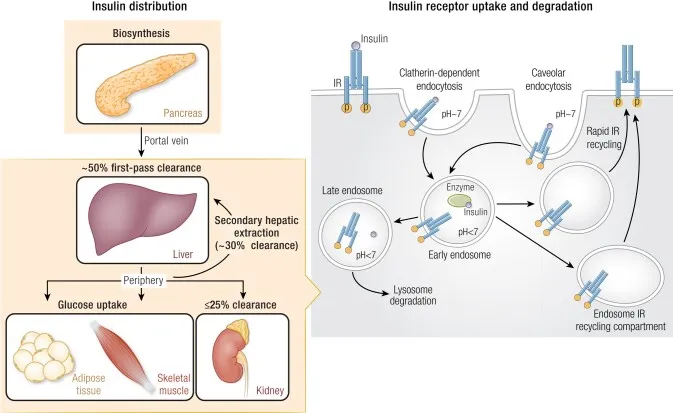
Figure None: 01
4.2. REDUCTION IN INSULIN CLEARANCE
Three amino acid substitutions (A14E, B16H, and B25H) increase molecular stability and decrease receptor-mediated clearance, extending the circulation time of the molecule and contributing to its ultra-long duration of action.[10]
4.3. BINDING AND ACTIVATION OF INSULIN RECEPTORS
Following gradual release from albumin, free insulin icodec binds to insulin receptors in target tissues. This interaction activates intracellular signaling pathways similar to those triggered by endogenous insulin, thereby facilitating glucose homeostasis.[11]
4.4 ENHANCEMENT OF PERIPHERAL GLUCOSE UPTAKE AND SUPPRESSION OF HEPATIC GLUCOSE PRODUCTION
Activated insulin receptors promote glucose uptake into skeletal muscle and adipose tissue while inhibiting hepatic glucose output. These effects reduce circulating blood glucose concentrations and maintain glycaemic stability throughout the dosing interval.[12]
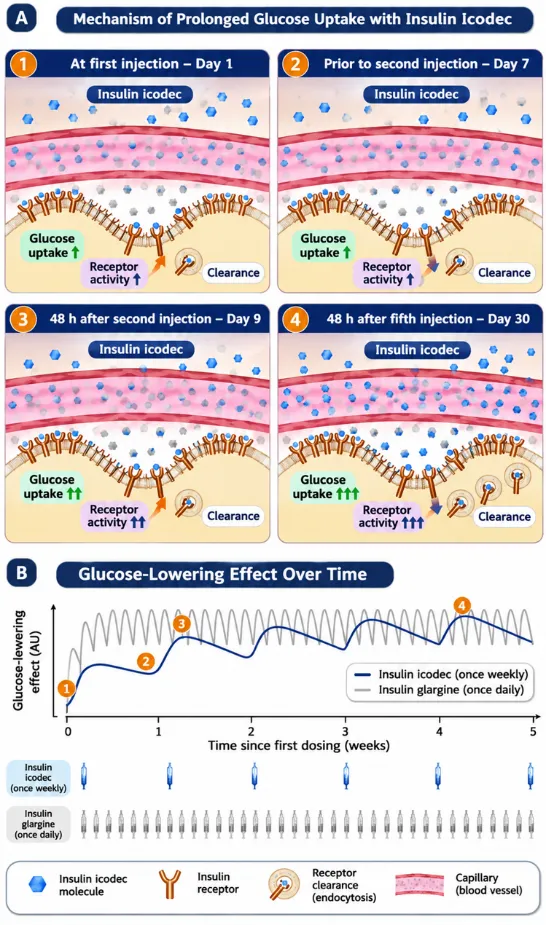
Figure None: 02
4.5. SUSTAINED BASAL INSULIN ACTIVITY THROUGHOUT ONE WEEK
The combined effects of albumin binding and reduced clearance provide a half-life of approximately 196 hours (about 8 days). This prolonged action ensures relatively stable basal insulin coverage across the entire weekly dosing period.[13]
5.PHARMACOKINETIC PROPERTY OF IODEC INSULIN
The pharmacodynamic profile of icodec throughout a one-week dosing cycle at steady state was estimated for each participant using an integrated pharmacokinetic-pharmacodynamic (PK/PD) model. Individual model parameters were derived from all measured serum icodec concentrations collected during treatment, together with glucose infusion rate data obtained from two glucose clamp assessments performed during icodec therapy. Additional details regarding the PK/PD modelling methodology are available in Appendix S1.
A total of 95 individuals underwent screening, of whom 66 were randomized and received study treatment. Sixty-five participants completed the trial, while one participant withdrew consent during the initial treatment period involving insulin glargine U100. Baseline demographic and clinical characteristics are summarized in Table 1. Total exposure during the study corresponded to 10.0 participant-years for icodec and 2.5 participant-years for glargine U100.
At steady state, the mean weekly dose of icodec was 1.91 ± 0.44 U/kg/week, with values ranging from 1.09 to 3.33 U/kg/week. In comparison, the mean daily dose of glargine U100 was 0.27 ± 0.06 U/kg/day, equivalent to an average weekly dose of 1.91 ± 0.45 U/kg/week. During the steady-state assessment period, participants receiving icodec required a mean bolus insulin dose of 0.25 ± 0.13 U/kg/day, whereas those receiving glargine U100 required 0.29 ± 0.10 U/kg/day.
Because icodec requires time to achieve steady-state concentrations, supplementary glargine U100 was administered during the first two weeks of icodec treatment. The proportion of additional glargine use was approximately 45% in Week 1 and 26% in Week 2, supporting glycaemic management while stable icodec levels were being established.[14]
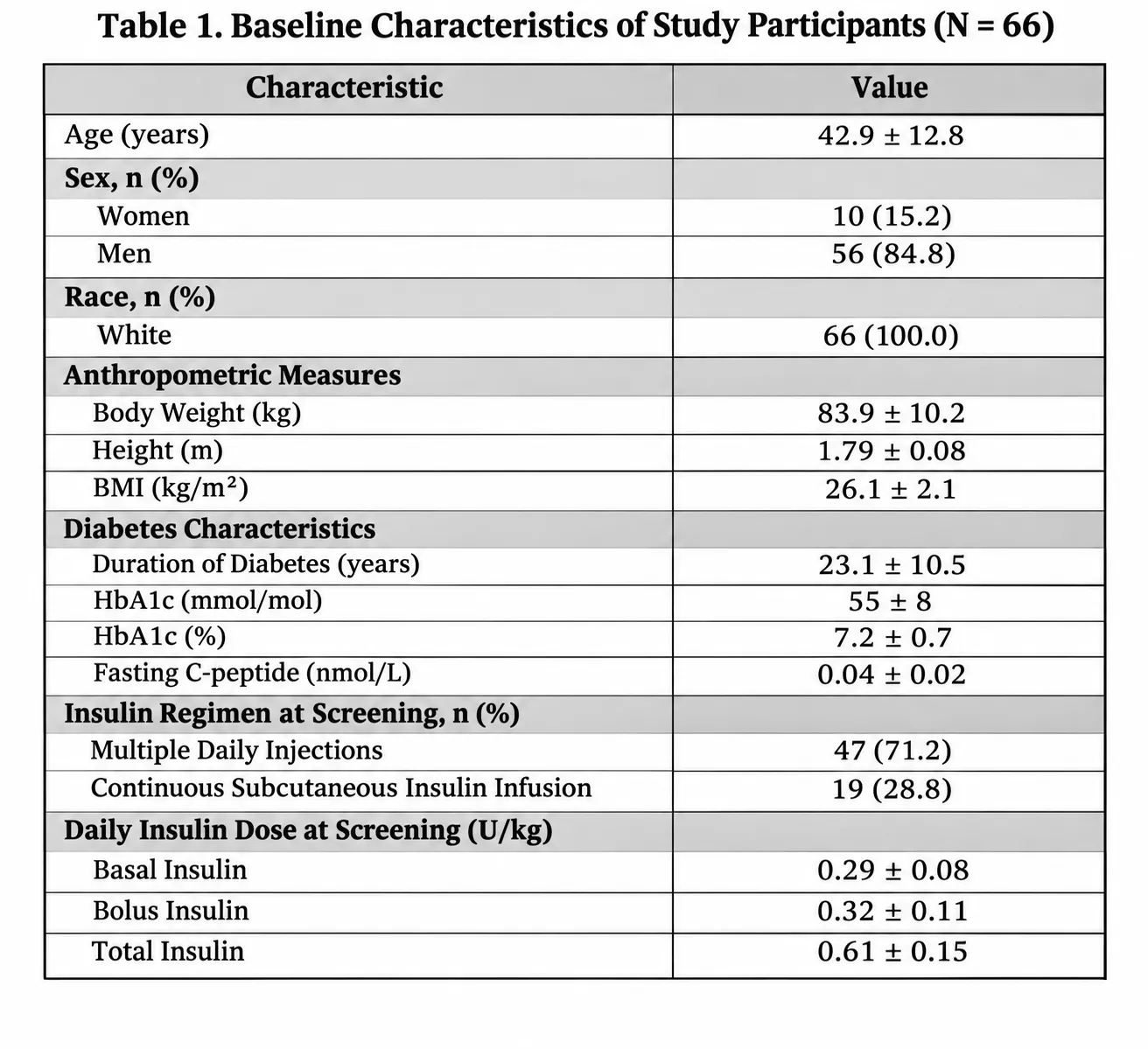
Figure None: 03
6.PHARMACODYNAMIC PROPERTIES OF ONCE A WEEK INSULIN
The pharmacodynamic characteristics of insulin icodec were evaluated using glucose clamp techniques, including automated systems such as ClampArt and STG-55, as well as conventional manual clamp procedures. In multiple-dose investigations, participants received individualized icodec doses aimed at maintaining pre-breakfast self-monitored blood glucose concentrations within predefined target ranges. These targets were 4.4-7.0 mmol/L for individuals with type 2 diabetes and 4.4-7.2 mmol/L for those with type 1 diabetes.
To ensure measurable glucose infusion during clamp studies, glucose targets were established slightly above the corresponding titration ranges. Consequently, clamp glucose concentrations were maintained at 7.5 mmol/L in studies involving type 2 diabetes and 6.7 mmol/L in those involving type 1 diabetes.
Because insulin icodec is administered once weekly, the standard clamp duration of 24-48 hours was insufficient to capture its complete pharmacodynamic activity across the dosing interval. Therefore, partial glucose clamp assessments were conducted at steady state, covering both the initial-to-mid and the final phases of the weekly treatment cycle.
To estimate the full glucose-lowering profile of icodec over one week, researchers applied a sequential pharmacokinetic-pharmacodynamic (PK-PD) modelling strategy. Initially, a pharmacokinetic model was developed from observed concentration data. This model subsequently served as the basis for constructing a pharmacodynamic model using glucose infusion rate measurements obtained during the partial clamp studies. The integrated PK-PD framework was then employed to predict the complete weekly glucose-lowering effect of insulin icodec.[15]
7. PHARMACOLOGICAL PROPERTIES OF INSULIN ICODEC ACROSS DIFFERENT PATIENT CHARACTERISTICS
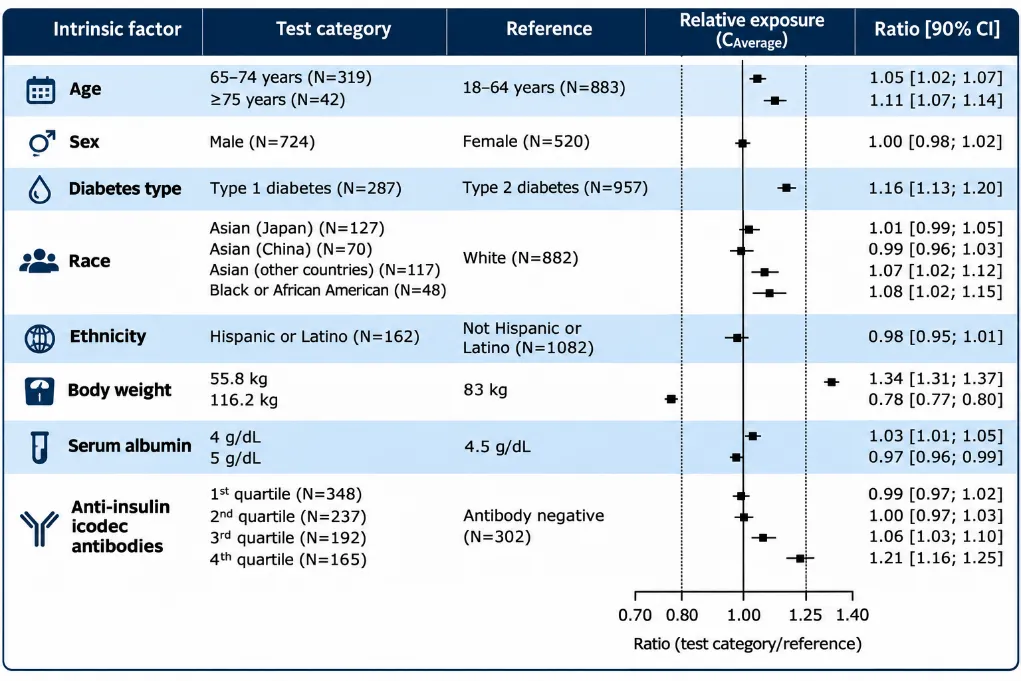
Understanding how patient-specific factors influence the pharmacokinetics and pharmacodynamics of insulin icodec is essential for ensuring effective glycaemic control and maintaining a favourable safety profile across diverse patient populations. Clinical pharmacology investigations, population pharmacokinetic analyses, and data from the ONWARDS clinical development programme have demonstrated that insulin icodec possesses highly predictable pharmacological properties with limited variability across most demographic and physiological subgroups. These findings support the use of a standardized once-weekly dosing strategy with individualized titration based on glycaemic response rather than intrinsic patient characteristics [16,17].
7.1 Age
7.1.1 Children and Adolescents
The pharmacokinetic profile of insulin icodec has been explored in children and adolescents with type 2 diabetes mellitus aged 10 to less than 18 years. Following administration, serum concentrations remained within the therapeutic range throughout the entire weekly dosing interval, indicating prolonged basal insulin coverage suitable for once-weekly administration [18].
Simulation analyses demonstrated that the concentration-time profile in younger individuals closely resembled that observed in adults, reflecting similar absorption and elimination characteristics. The gradual increase in serum concentrations after injection, followed by sustained exposure, ensures maintenance of basal insulin activity throughout the dosing cycle [19].
Although systemic exposure was modestly higher in pediatric participants, these differences were considered clinically insignificant because insulin treatment is individualized through routine dose titration according to blood glucose measurements and metabolic requirements [20]. Consequently, available evidence suggests that insulin icodec may offer a convenient and effective basal insulin option for adolescents and children with type 2 diabetes requiring insulin therapy [21].
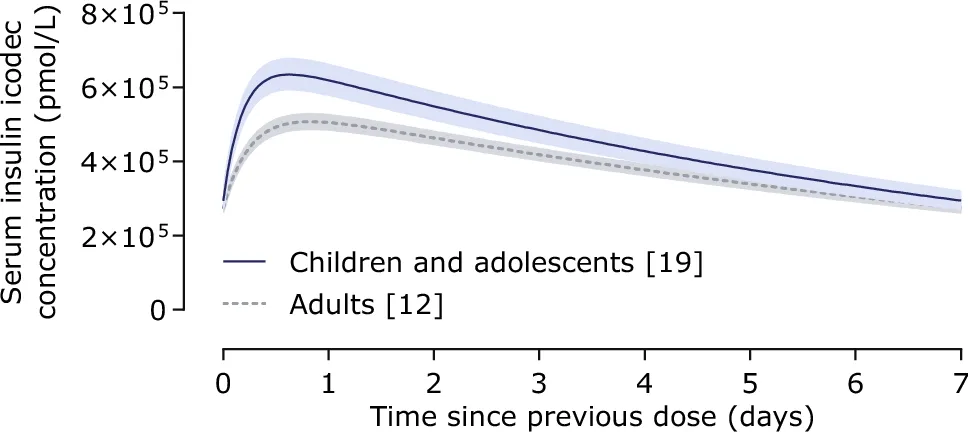
Figure None: 04
7.1.2 Elderly Individuals
Age-related physiological changes can influence drug disposition; however, pharmacokinetic analyses indicate that insulin icodec exposure remains largely unaffected by advancing age [22]. Studies involving adults aged up to 86 years demonstrated comparable serum concentrations among younger adults, elderly individuals aged 65–74 years, and those aged 75 years or older [26].
Subgroup analyses from the ONWARDS programme further revealed that reductions in glycated haemoglobin (HbA1c) were consistent across age categories. Similarly, the incidence of clinically significant or severe hypoglycaemia remained low regardless of age group, indicating a stable benefit-risk profile in elderly populations [28].
These findings suggest that routine adjustments to initial dosing or titration schedules based solely on age are not required. Instead, treatment should continue to be tailored according to individual glycaemic responses and therapeutic goals [29].
7.2 Sex
Sex-related differences often influence the pharmacokinetics of several therapeutic agents because of variations in body composition, hormone levels, and metabolic activity. However, analyses conducted with insulin icodec have shown no clinically meaningful differences in pharmacokinetic exposure between male and female participants [24].
Serum concentration profiles, overall drug exposure, and glucose-lowering efficacy remained comparable between sexes, indicating that the absorption, distribution, and elimination characteristics of insulin icodec are consistent irrespective of biological sex [25]. Therefore, no sex-specific dose adjustments are currently recommended in clinical practice [27].
7.3 Body Weight
Body weight was identified as a factor affecting systemic exposure to insulin icodec. Pharmacokinetic analyses demonstrated that exposure decreases gradually with increasing body weight, likely due to larger distribution volumes and enhanced drug clearance associated with greater body mass [30].
Despite these observations, the magnitude of the effect is not considered clinically significant because insulin dosing is routinely adjusted based on glycaemic targets rather than administered as a fixed dose [31]. Clinical studies have shown that appropriate glycaemic control can be achieved across a wide range of body weights using individualized titration algorithms, thereby minimizing the clinical impact of weight-related pharmacokinetic variation [32].
Consequently, body weight alone does not necessitate specific modifications to the recommended dosing strategy for insulin icodec.
7.4 Renal Function
Renal impairment frequently alters the pharmacokinetics of many medications, including several insulin formulations. However, dedicated investigations of insulin icodec have demonstrated minimal effects of impaired kidney function on drug exposure and glucose-lowering activity [33].
Post hoc analyses of participants with varying degrees of renal function showed comparable reductions in HbA1c and similar rates of hypoglycaemia when compared with individuals possessing normal renal function [34]. These findings support the use of standard initiation and titration protocols in patients with diabetic kidney disease while maintaining routine clinical monitoring.
7.5 Hepatic Function
The liver plays a major role in insulin metabolism, making hepatic impairment a potential concern when administering basal insulin therapies. Nevertheless, clinical pharmacology studies have indicated that insulin icodec maintains stable pharmacokinetic characteristics even in individuals with impaired hepatic function [35].
No clinically relevant alterations in exposure, duration of action, or glucose-lowering efficacy have been observed. Consequently, standard titration principles based on glycaemic response remain appropriate for patients with liver dysfunction [36].
7.6 Race and Ethnicity
Population pharmacokinetic evaluations involving participants from multiple racial and ethnic backgrounds have demonstrated similar pharmacological behaviour of insulin icodec across evaluated groups [37].
Differences in systemic exposure remained within predefined equivalence boundaries, suggesting that race and ethnicity do not meaningfully influence the pharmacokinetic profile of the drug. These findings support the broad applicability of insulin icodec across diverse global populations without the need for ethnicity-specific dosing recommendations [38].
7.7 Immunogenicity and Serum Albumin
Because insulin icodec is engineered to bind reversibly to serum albumin, potential influences of albumin concentrations and anti-drug antibodies have been carefully evaluated. Studies have shown that the development of anti-insulin icodec antibodies does not significantly affect drug exposure, efficacy, or safety outcomes [39].
Similarly, variations in serum albumin concentrations have not been associated with clinically meaningful alterations in pharmacokinetic behaviour. The reversible albumin-binding mechanism remains sufficiently robust to maintain prolonged circulation and consistent glucose-lowering activity across different albumin levels [40]
8. FUTURE PERSPECTIVES AND POTENTIAL BENEFITS OF ONCE-WEEKLY INSULIN ICODEC
The introduction of once-weekly insulin icodec represents a major advancement in basal insulin therapy and has the potential to transform the long-term management of diabetes mellitus. Through structural modifications that extend its half-life to approximately seven days, insulin icodec provides stable basal insulin coverage with a single weekly injection while maintaining glucose-lowering activity throughout the dosing interval[41].
8.1 Improved Treatment Adherence
Poor adherence to daily insulin therapy remains a major obstacle to achieving optimal glycaemic control in individuals with diabetes. By reducing injection frequency from 365 injections per year to approximately 52 injections annually, insulin icodec may enhance treatment persistence and decrease missed doses[42,44]. Improved adherence could ultimately contribute to better glycaemic outcomes and reduced risk of long-term diabetes-related complications.
8.2 Reduced Injection Burden
The requirement for daily injections is frequently associated with treatment fatigue, injection-related anxiety, and reduced willingness to initiate insulin therapy. Once-weekly basal insulin significantly decreases treatment burden and simplifies insulin administration, potentially improving patient acceptance and satisfaction[43]
8.3 Enhancement of Quality of Life
The convenience of weekly dosing may improve health-related quality of life and treatment satisfaction. Reduced injection frequency can offer greater flexibility for travel, employment, social activities, and daily routines. Consequently, individuals may experience lower treatment-related stress and improved engagement with long-term diabetes management[43,44].
8.4 Facilitation of Early Insulin Initiation
Therapeutic inertia remains a common challenge in clinical practice, often resulting in delays in insulin initiation despite poor glycaemic control. The simplified dosing regimen of insulin icodec may reduce psychological barriers among both patients and healthcare professionals, thereby promoting earlier initiation and optimization of insulin therapy[42,44].
8.5 Stable and Predictable Basal Insulin Coverage
Clinical pharmacology studies have demonstrated that insulin icodec provides predictable pharmacokinetic and pharmacodynamic properties with consistent glucose-lowering activity throughout the entire weekly dosing interval. Its prolonged and stable action may reduce fluctuations in basal insulin exposure and support sustained glycaemic control[41].
8.6 Improved Glycaemic Outcomes
Results from the ONWARDS clinical trial programme have demonstrated that insulin icodec achieves glycaemic control that is comparable or superior to several once-daily basal insulin comparators in patients with type 2 diabetes. The ability to maintain effective HbA1c reduction while reducing injection frequency highlights the therapeutic potential of once-weekly insulin therapy[45,46].
8.7 Potential Reduction in Healthcare Burden
Improved adherence, better glycaemic control, and simplified treatment administration may reduce healthcare utilization over time. Fewer diabetes-related complications, emergency visits, and hospitalizations could potentially translate into significant healthcare savings and improved patient outcomes[47].
8.8 Integration with Advanced Diabetes Technologies
Future incorporation of insulin icodec into digital-health ecosystems may support personalized diabetes management. Integration with continuous glucose monitoring systems, smart insulin pens, artificial intelligence-based dose adjustment systems, and telemedicine platforms may facilitate real-time monitoring and individualized therapeutic decision-making[44].
8.9 Special Population Benefits
Clinical studies suggest that insulin icodec maintains consistent pharmacological performance across a broad range of patient populations, including elderly individuals, patients with renal impairment, and those with varying body mass indices. These findings support its potential applicability across diverse clinical settings[22,24,34].
8.10 Advancement Toward Next-Generation Insulin Therapy
The successful introduction of insulin icodec may pave the way for future ultra-long-acting insulin formulations and glucose-responsive insulin technologies. Once-weekly insulin therapy represents a significant step toward more convenient, patient-centred, and technologically integrated diabetes care[41,44].
REFERENCES

Jadhav Anil, Jadhav Ajay, Dhanshree Deshmukh, Akanksha Nirmal, Insulin Icodec: A Paradigm Shift in Diabetes, Int. J. of Pharm. Sci., 2026, Vol 4, Issue 11, 4266-4277. https://doi.org/10.5281/zenodo.24458562
 10.5281/zenodo.24458562